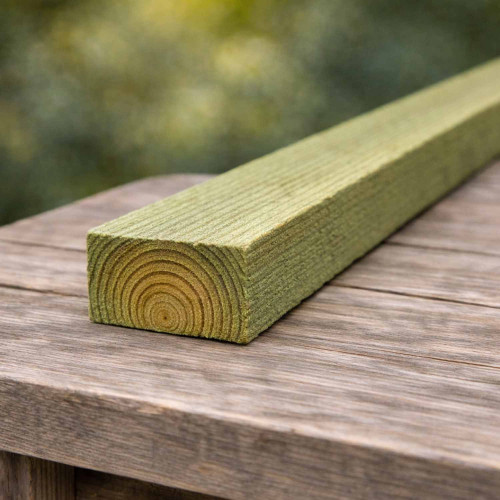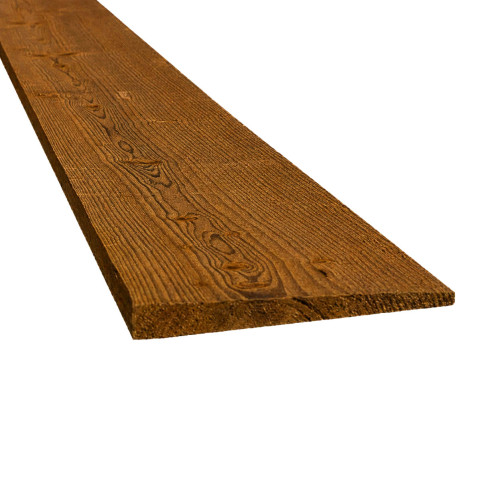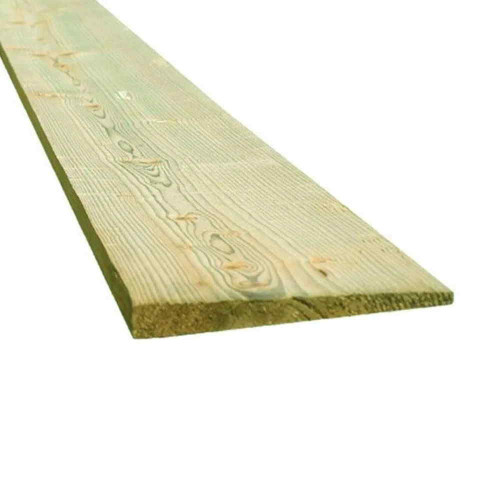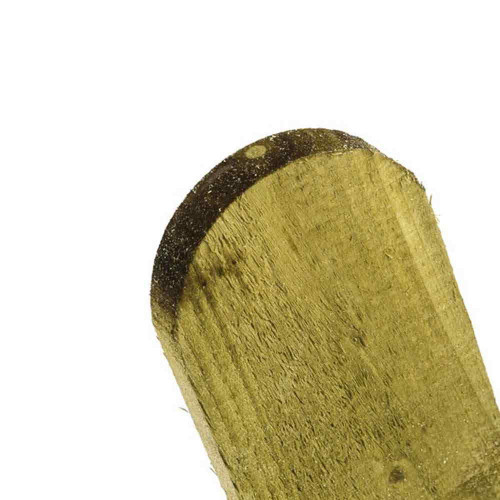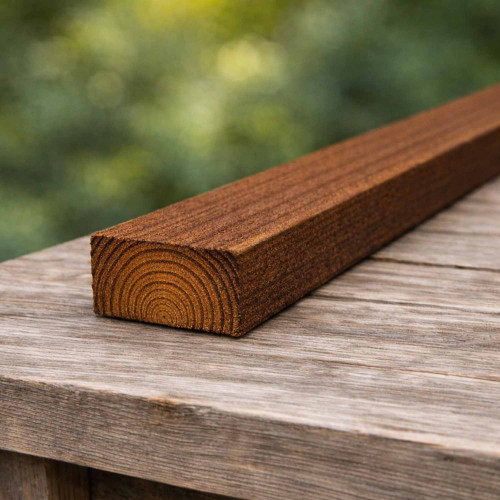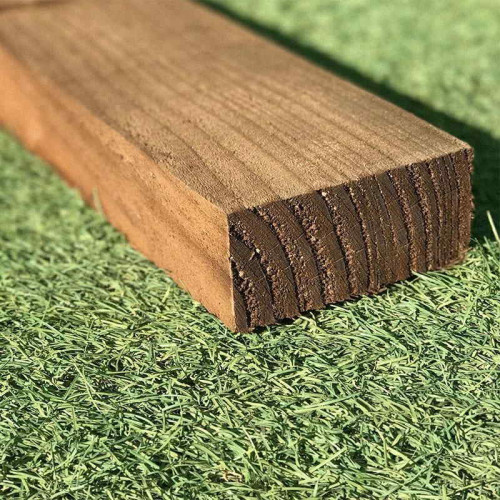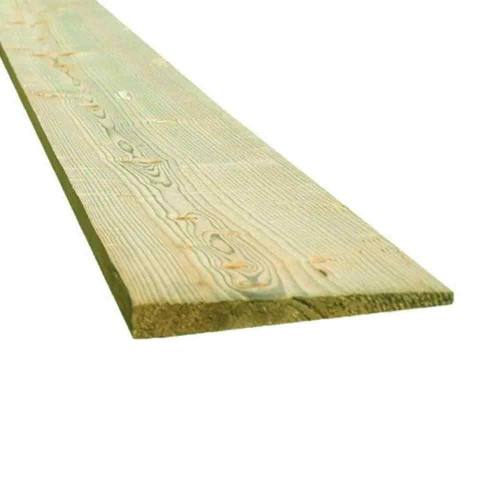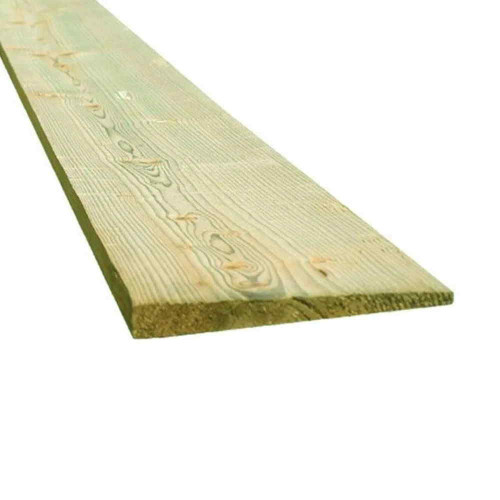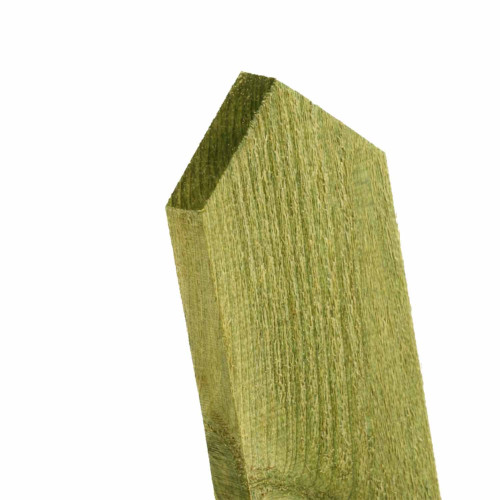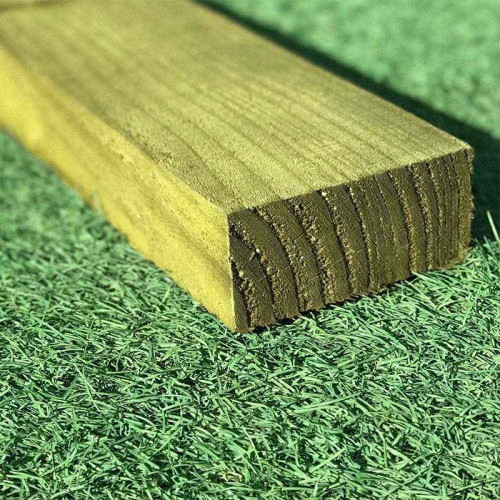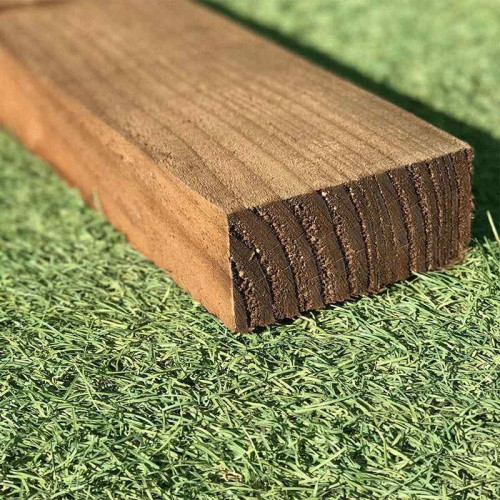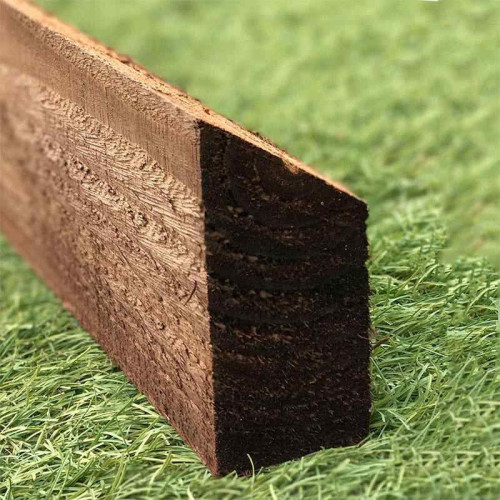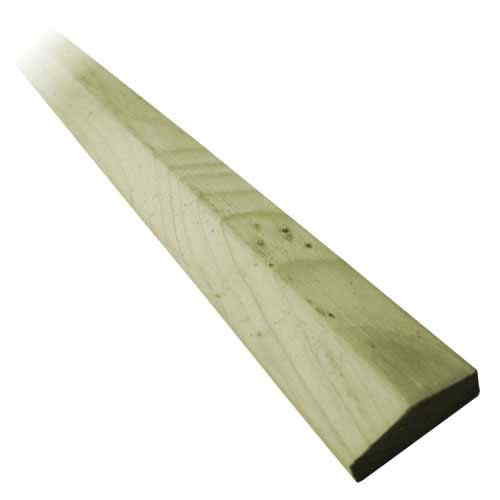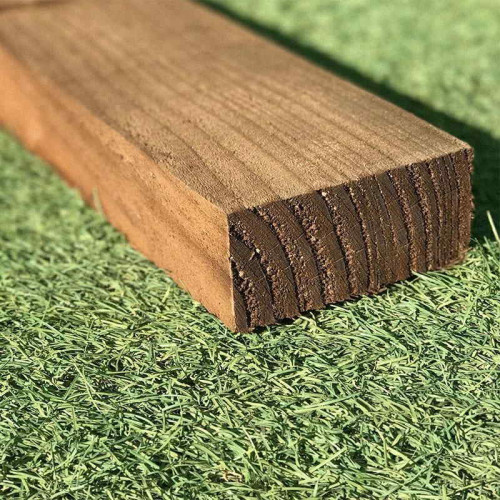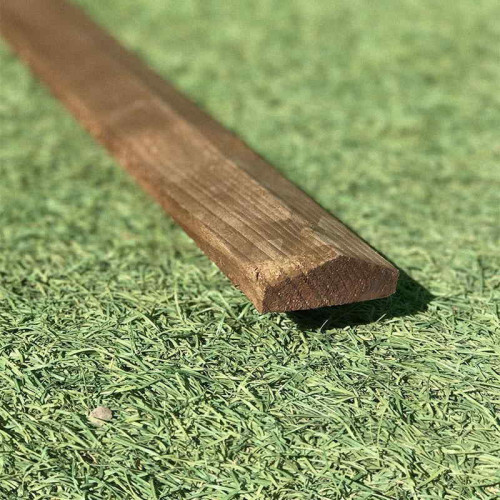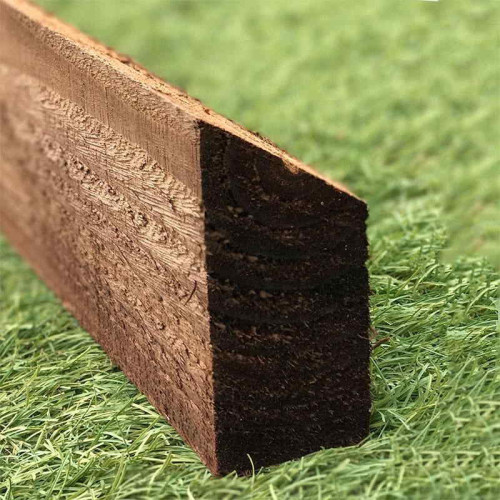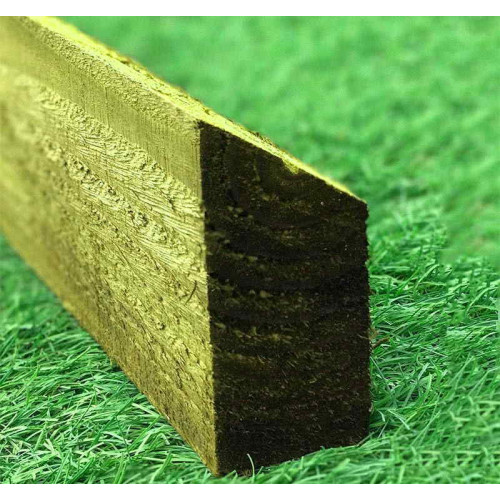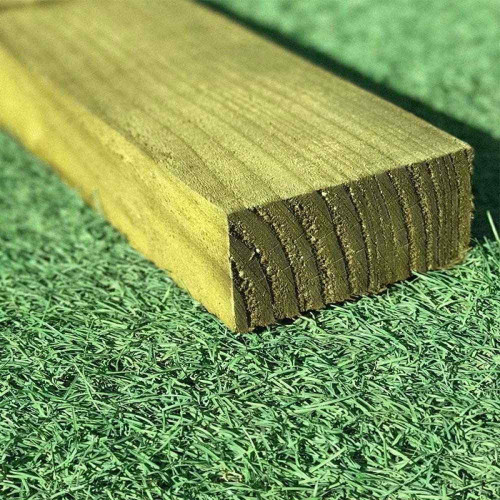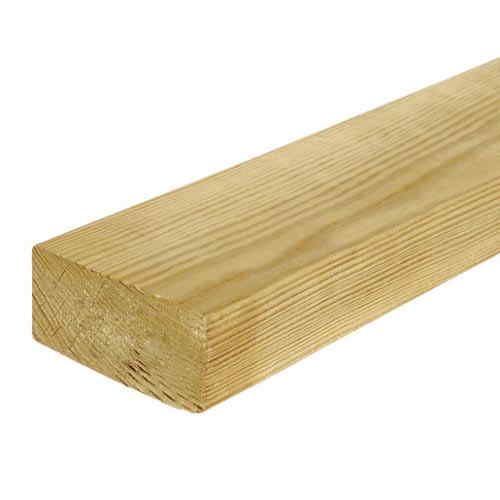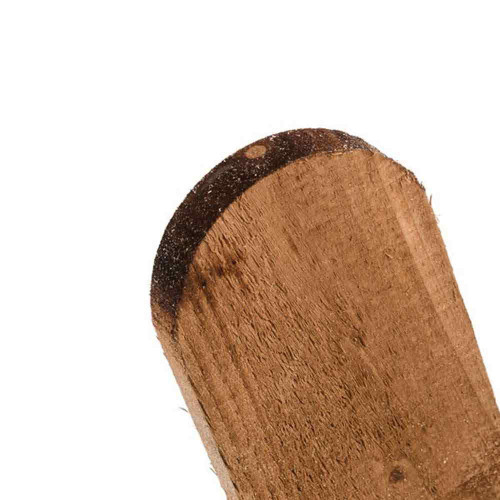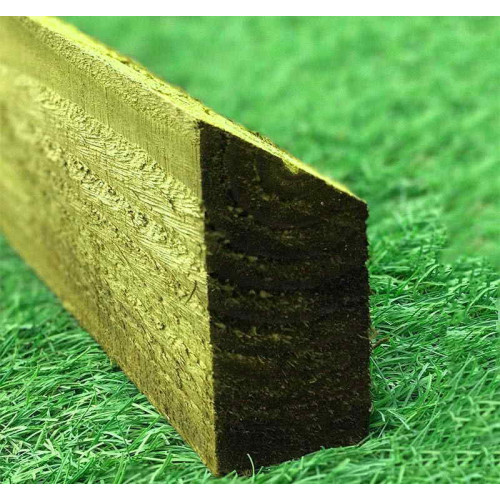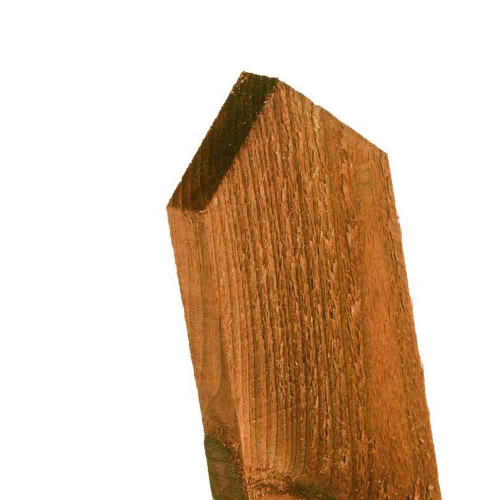



Quick answer: Green and brown pressure-treated timber are primarily different in their starting appearance, but colour alone does not tell you how well the timber has been treated. The important factors are the timber species, preservative treatment specification, intended Use Class and where the product will be installed. Brown treatment does not automatically last longer than green, and green treatment is not automatically stronger. Choose the colour you prefer, then make sure the timber itself is correctly treated for its intended fencing or landscaping application.
Green and brown pressure-treated timber are both common sights in British gardens. Fence panels, posts, gravel boards, trellis, feather edge boards and landscaping timber can all be supplied with either a greenish or warmer brown appearance.
It is easy to assume that the colour tells you something important about durability. You may have heard that brown timber lasts longer, that green timber contains more preservative or that one colour is intended for heavier-duty outdoor use.
Colour by itself does not tell you any of those things.
The more important question is whether the timber has been treated to the correct specification for where it will be used. A fence post buried in the ground is exposed to very different conditions from a trellis panel mounted above ground, even if both pieces of timber happen to be the same colour.
Green vs Brown Pressure-Treated Timber At A Glance
| Feature | Green Treated Timber | Brown Treated Timber |
|---|---|---|
| Initial appearance | Green, olive or pale green tint | Warmer brown tint |
| Is colour a treatment grade? | No | No |
| Automatically more durable? | No | No |
| Suitable for outdoor timber? | When correctly specified | When correctly specified |
| Will colour weather? | Yes | Yes |
| Can it be coated later? | Usually, once suitably dry | Usually, once suitably dry |
| Main reason to choose | Preferred green-treated appearance | Preferred warmer appearance |
What Does Pressure-Treated Timber Actually Mean?
Pressure treatment is an industrial process used to increase timber's resistance to biological deterioration such as fungal decay and wood-destroying insects.
Rather than simply applying a surface coating, preservative is introduced into the timber under controlled treatment conditions.
The required treatment is determined according to how the timber will be used.
This distinction matters because exterior timber can face very different levels of exposure.
Compare:
- A trellis panel mounted well above the ground
- A feather edge board forming part of a fence
- A gravel board touching wet soil
- A fence post buried directly in the ground
All are outdoor timber products, but they do not experience the same conditions.
Is Green Timber Treated Differently From Brown Timber?
Not necessarily.
The visible colour should not be used to determine the treatment specification.
A green or brown appearance can result from the preservative system, colouring used during treatment or the interaction between the treatment and the natural timber.
The important point for the buyer is that colour is not a recognised substitute for knowing the intended end use of the treated timber.
Two pieces of pressure-treated timber can look very similar while being intended for different applications.
Likewise, two pieces with noticeably different colours may both be appropriately treated for their respective applications.
Why Is Some Pressure-Treated Timber Green?
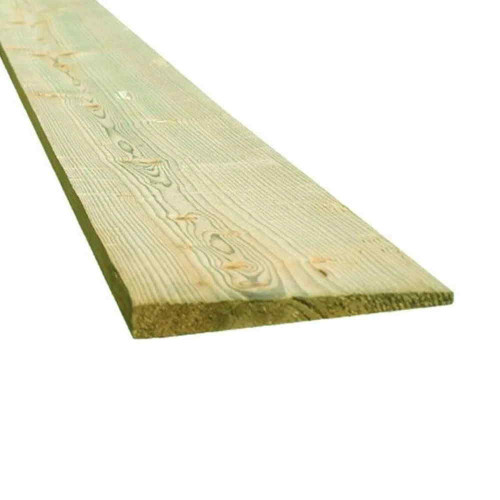
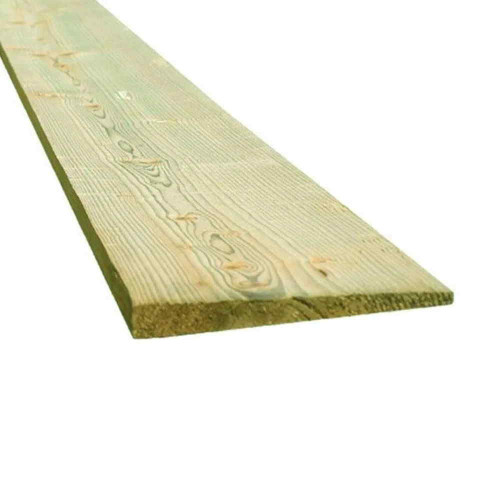
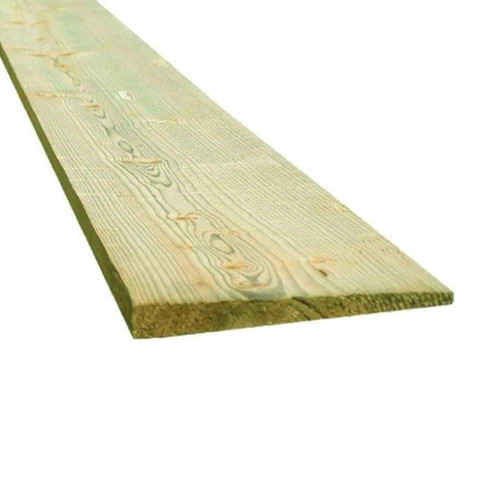
Many commonly used treated softwoods develop a greenish, olive or pale green appearance after treatment.
The exact shade can vary considerably.
You may see:
- Pale green areas
- Darker olive tones
- Natural timber-coloured areas
- Differences between individual boards
This colour variation is normal for an exterior timber product and does not mean every board will have a perfectly uniform decorative finish.
Pressure treatment is primarily a durability process rather than a factory-applied decorative paint system.
Why Is Some Pressure-Treated Timber Brown?
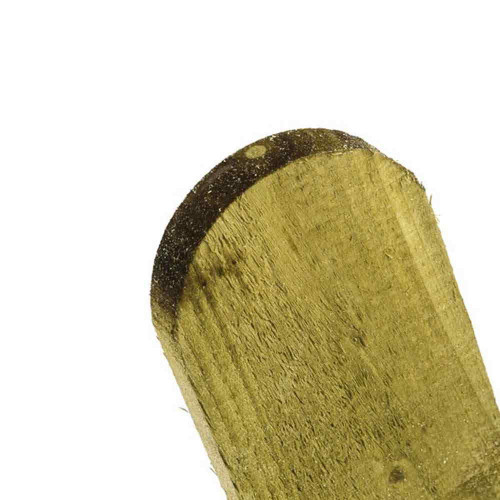
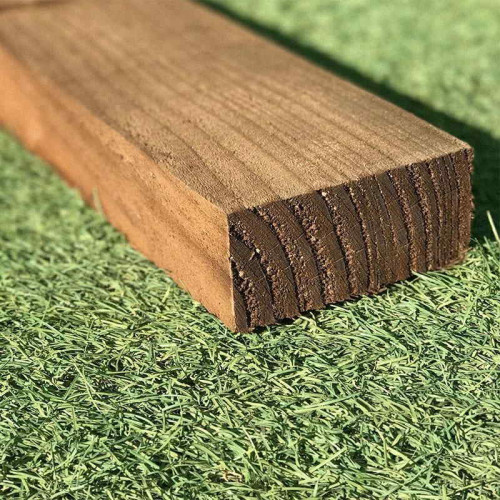
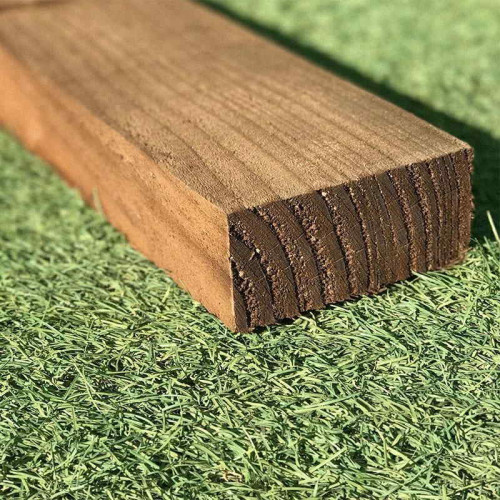
Brown pressure-treated timber has a warmer initial appearance.
For many garden projects, this can help new timber blend more readily with:
- Brickwork
- Railway sleepers
- Bark and mulch
- Traditional garden planting
- Other brown-treated fencing
The brown colour should still be regarded as the starting appearance rather than a permanent decorative finish.
Sunlight, rain and normal weather exposure will change it over time.
Does Brown Pressure-Treated Timber Last Longer Than Green?
No, not simply because it is brown.
Colour does not determine service life.
The long-term performance of treated timber depends on factors including:
- Timber species
- Preservative treatment specification
- Preservative penetration and retention
- Intended Use Class
- Ground contact
- Moisture exposure
- Installation
- Drainage
- Cutting and modification
- Maintenance
A correctly specified green-treated fence post can therefore be far more appropriate for a demanding fencing application than a brown piece of timber that was treated for a less demanding use.
The reverse can also be true.
Is Green Pressure-Treated Timber Stronger?
No.
The green colour does not make timber structurally stronger.
Structural performance depends on factors such as:
- Timber dimensions
- Species
- Grade where relevant
- Moisture
- Defects
- How the component is supported
Pressure treatment is primarily intended to improve durability against biological deterioration. It should not be confused with structural grading.
What Are Timber Use Classes?
Use Classes are used to match preservative treatment to the conditions in which timber is expected to perform.
For garden fencing, the most important distinction is usually between timber used outside above ground and timber exposed to ground contact or similarly demanding conditions.
| Typical Situation | General Treatment Category | Examples |
|---|---|---|
| Exterior timber above ground | Use Class 3 | Many fence and trellis components |
| Ground contact or exterior structural support | Use Class 4 | Fence posts and ground-contact timber |
The correct classification depends on the actual product and application, so always use timber specified for what you intend to do with it.
Why Does Use Class Matter More Than Colour?
Imagine two pieces of green-treated timber.
One is intended for exterior use above ground. The other is a fence post specifically treated for direct ground contact.
They may both look green, but their intended treatment performance is not necessarily identical.
Now imagine the ground-contact post happens to be brown instead.
Its brown appearance does not make it more or less suitable. Its treatment specification is what matters.
This is why asking only "green or brown?" is the wrong starting point when durability is important.
Ask:
- What is the timber being used for?
- Will it touch the ground?
- Will it provide exterior structural support?
- What treatment specification is appropriate?
Then choose your preferred colour where suitable options are available.
What Treatment Should Fence Posts Have?
Timber fence posts installed directly into the ground are exposed to demanding conditions, particularly around ground level where moisture and oxygen are both present.
Ground-contact fence posts should therefore be treated for that specific application.
Do not buy timber simply because it is labelled pressure treated and assume it is automatically suitable for burial.
When choosing timber posts, check that the product is intended for in-ground fencing use.
What About Wooden Gravel Boards?
Wooden gravel boards can also experience demanding moisture exposure because they sit at the lowest part of the fence.
If a softwood gravel board will be in ground contact, it requires treatment appropriate for that application.
This is another reason why the words green and brown are not enough on their own.
A green wooden gravel board and a brown wooden gravel board may look different, but their suitability depends on the treatment specification rather than the visible tint.
What About Fence Panels?
Fence panels normally sit above ground, ideally with a gravel board separating their lower timber frame from wet soil and vegetation.
Pressure-treated panels provide additional durability for exterior use.
Common pressure-treated panel styles include:
- Closeboard panels
- Ultra heavy duty closeboard panels
- Waney lap panels
- Picket panels
Green and brown options can be used to coordinate the panels with other timber components in the garden.
What About Feather Edge Boards And Rails?
Traditional closeboard fencing is constructed from individual components, commonly including feather edge boards, horizontal rails, posts and a gravel board.
Pressure-treated feather edge boards and cant rails are available in both green and brown treatment colours.
When planning this type of fence, do not choose components by colour alone.
Make sure every component is appropriate for its position in the finished fence.
What About Trellis?
Trellis is normally used above ground for:
- Climbing plants
- Fence toppers
- Garden screening
- Decorative boundaries
Traditional square and horizontal slatted trellis are available in green and brown pressure-treated options.
Colour can therefore be chosen to coordinate with:
- Fence panels
- Timber posts
- Garden gates
- Other trellis sections
If trellis is added above an existing fence, remember that the complete height and the strength of the supporting posts also need to be considered.
Does Pressure-Treated Timber Stay Green Or Brown?
No.
Both colours change outdoors.
The initial treatment colour will gradually become less prominent as the timber is exposed to:
- Sunlight
- Rain
- Changes in temperature
- General weathering
Untreated decorative surfaces of outdoor softwood commonly move towards a more muted, weathered appearance with time.
The rate is not uniform.
A south-facing fence in an exposed garden may change appearance much more quickly than a shaded fence behind established planting.
Will Green-Treated Timber Eventually Turn Brown?
Not in the sense of automatically becoming equivalent to fresh brown-treated timber.
The original green tone generally becomes less obvious as the wood weathers.
If you specifically want a richer brown decorative finish, use a suitable exterior wood stain once the timber is ready to accept the coating.
Will Brown-Treated Timber Fade?
Yes.
The brown colour is not permanent.
Without a decorative maintenance coating, the shade will gradually soften and weather.
This is important if you are buying brown timber because you want the garden to remain exactly the same shade for many years.
Exterior timber naturally changes appearance.
Will New Timber Match An Older Fence?
Usually not immediately.
If you replace one panel or post in an established boundary, the new timber may look noticeably different because the older fence has already been exposed to years of weathering.
This can happen even if:
- Both products are green-treated
- Both products are brown-treated
- They came from the same general product range
Natural timber itself varies, and weathering creates further differences.
The contrast usually becomes less obvious as the newer component begins to weather.
Why Do Pressure-Treated Boards Have Different Shades?
Colour variation is normal.
Timber is a natural material, so individual pieces can absorb treatment differently and begin with different underlying colours.
Variation may be influenced by:
- Natural timber colour
- Grain
- Moisture content
- Preservative uptake
- Drying
- Storage
Pressure-treated fencing should therefore not be expected to resemble a perfectly colour-matched manufactured plastic product.
Does A Darker Board Mean It Has More Treatment?
No reliable conclusion should be drawn from colour intensity alone.
A particularly dark brown or green piece of timber is not automatically better protected than a paler one.
Likewise, a pale board is not automatically undertreated.
Assess treated timber according to its intended specification and application rather than trying to judge treatment quality visually.
What Are Green Marks On Pressure-Treated Timber?
Fresh pressure-treated timber can show uneven green tones, darker areas or other marks associated with treatment and drying.
These can initially appear prominent, particularly on pale softwood.
They often become less noticeable as the timber dries and weathers.
Do not assume every variation in treatment colour is mould, rot or structural damage.
Actual decay is better identified by examining the physical condition of the timber rather than its colour alone.
Can Pressure-Treated Timber Still Develop Algae?
Yes.
Preservative treatment is not an anti-dirt or anti-algae coating.
A shaded timber fence can still develop green surface growth where conditions remain damp.
This should not be confused with the original green colour of pressure treatment.
Algae is surface growth that develops after exposure, while the pressure-treatment colour is associated with the treated timber itself.
Can You Mix Green And Brown Fencing?
Yes.
There is no technical reason every visible timber component has to have the same treatment colour, provided each component is correctly specified for its intended use.
The main consideration is appearance.
You might deliberately use:
- Brown panels with brown timber posts
- Green panels with green posts
- Timber panels with contrasting concrete posts
- A contrasting trellis section
Randomly mixing green and brown components along one prominent boundary can look inconsistent when newly installed.
If appearance matters, plan the colour scheme before ordering.
Which Colour Is Better With Concrete Posts?
Either can work.
Concrete posts provide a neutral structural contrast with timber panels.
Green-treated panels can create a cooler appearance, particularly around grey paving and dense planting.
Brown-treated panels introduce a warmer timber tone.
The choice is decorative rather than structural.
Which Colour Is Better With Timber Posts?
Matching the treatment colour of timber posts and panels generally produces the most consistent appearance when the fence is new.
For example:
- Brown posts with brown closeboard panels
- Green posts with green closeboard panels
Exact shade matching should still not be expected because natural timber varies between individual pieces.
Which Colour Works Best With Gravel Boards?
If you are using concrete gravel boards, either timber colour can work because the board creates a contrasting lower section.
If you are using wooden gravel boards, matching the treatment colour to the posts and panels can make the complete boundary appear more consistent.
Again, correct treatment for the gravel board's exposure is more important than its decorative colour.
Which Colour Works Best In A Modern Garden?
Green-treated timber can work well where the garden uses:
- Grey paving
- Concrete posts
- Evergreen planting
- Cooler exterior finishes
Brown can work equally well in a contemporary garden, particularly when combined with:
- Horizontal timber lines
- Dark exterior coatings
- Natural stone
- Warm-toned paving
Panel style generally has a greater effect on whether a fence feels traditional or contemporary than the initial treatment colour.
Which Colour Works Best In A Traditional Garden?
Brown is often chosen where homeowners want an immediately warmer appearance.
It can complement:
- Red brick
- Traditional closeboard fencing
- Railway sleepers
- Cottage planting
- Natural stone
Green-treated fencing is also extremely common in traditional British gardens and quickly becomes less visually dominant as planting develops around it.
Can You Paint Green Pressure-Treated Timber?
Yes, once the timber is suitably dry and ready to accept the chosen coating.
Do not rush to paint freshly treated timber simply because you dislike the initial green appearance.
Moisture remaining within fresh treated timber can affect how some coatings perform.
Allow the timber to dry appropriately and follow the coating manufacturer's instructions.
Can You Paint Brown Pressure-Treated Timber?
Yes.
The same principle applies.
Once suitably dry and prepared, brown-treated timber can be finished with an appropriate exterior timber coating.
You might paint it:
- Black
- Grey
- Green
- Brown
- Another exterior colour
The original treatment colour does not prevent later decorative finishing.
Can You Stain Pressure-Treated Timber?
Yes, using a suitable exterior timber product once the timber is adequately dry and prepared.
A stain can be useful where you want to:
- Deepen the timber colour
- Create a more uniform appearance
- Coordinate new and older sections
- Change green-treated timber to a warmer decorative shade
Always follow the stain manufacturer's preparation and application requirements.
Do You Have To Paint Or Stain Pressure-Treated Timber?
No.
Pressure treatment is not dependent on a decorative paint or stain being applied immediately afterwards.
The timber can be left to weather naturally.
A decorative coating may be added because you want:
- A particular colour
- More consistent appearance
- Reduced visual weathering
Once you introduce a decorative coating, maintaining that coating becomes part of the future upkeep.
Does Painting Make Green And Brown Timber The Same Colour?
Potentially, yes.
If both are properly prepared and coated with an opaque exterior paint, the original treatment colour may become largely irrelevant visually.
A translucent stain may show more of the underlying difference.
This means treatment colour matters much less if you already know the finished fence will be painted.
Should You Let Pressure-Treated Timber Dry Before Coating?
Yes.
Fresh treatment and storage conditions can leave timber with significant moisture.
Applying a decorative product too early can result in poor adhesion or an unsatisfactory finish.
There is no universal waiting period suitable for every piece of timber because drying depends on:
- Weather
- Season
- Timber dimensions
- Air movement
- Storage
- The coating being used
Follow the decorative coating manufacturer's moisture and preparation guidance rather than relying on an arbitrary number of days.
What Happens If You Cut Pressure-Treated Timber?
Industrial pressure treatment is applied to the timber before installation.
When you cross-cut, drill or notch the timber, you can expose areas that did not receive the same level of preservative penetration as the original outer surfaces.
For this reason, unnecessary modification should be avoided.
Where cutting or drilling is necessary, exposed areas should be treated with a suitable end-grain preservative according to the relevant product guidance.
Can You Cut A Pressure-Treated Fence Post?
Sometimes a post needs shortening, but the location of the cut matters.
Do not cut the end intended for ground contact and then bury that freshly cut surface.
If a treated fence post needs shortening, the better approach is normally to cut the top and retain the factory-treated ground-contact end.
Any exposed cut surface should then receive appropriate cut-end treatment.
Can Brush-On Preservative Replace Factory Pressure Treatment?
No.
A brush-applied cut-end treatment is useful for protecting areas exposed by necessary cutting or drilling, but it should not be regarded as equivalent to the original industrial treatment process.
This distinction is particularly important for timber that will be buried.
You cannot turn ordinary above-ground timber into a correctly treated ground-contact fence post simply by brushing preservative onto it.
Do Cut Feather Edge Boards Need Attention?
If pressure-treated feather edge boards are cross-cut during installation, dealing properly with freshly exposed timber helps preserve the integrity of the original treatment.
The same principle applies to other treated components that are:
- Cross-cut
- Drilled
- Notched
- Bored
Use a suitable product recommended for the treated timber.
Does Installation Matter More Than Green Or Brown?
In most practical fencing projects, yes.
Choosing between two treatment colours is primarily an aesthetic decision.
Installation decisions can have a much greater effect on how the fence performs.
Important factors include:
- Correct post specification
- Suitable post depth
- Secure foundations
- Keeping panels away from soil
- Using gravel boards where appropriate
- Suitable exterior fixings
- Good drainage
- Correct treatment of cut surfaces
A correctly installed green fence and a correctly installed brown fence can both perform well.
Why Are Gravel Boards Important?
Gravel boards help create separation between the main timber fence panel and ground-level moisture.
This reduces direct exposure to:
- Wet soil
- Mud splash
- Long grass
- Mulch
- Garden debris
Wooden gravel boards maintain an all-timber appearance.
Concrete gravel boards provide a rot-resistant lower section and are particularly useful where damp conditions are a concern.
Are Concrete Posts Better Than Treated Timber Posts?
Neither is automatically better for every fence.
Concrete posts do not rot and work particularly well with compatible framed fence panels and concrete gravel boards.
Pressure-treated timber posts provide:
- A natural appearance
- Easier fixing
- Easier on-site adjustment
- An all-timber fencing system
If timber posts are being installed in the ground, correct ground-contact treatment is essential.
Does Timber Treatment Stop Fence Posts Rotting Forever?
No timber treatment should be understood as making wood permanently immune to deterioration.
Pressure treatment is intended to improve durability and extend useful service in the relevant conditions.
Actual performance still depends on:
- Correct treatment specification
- Installation
- Ground conditions
- Moisture
- Damage
- Future maintenance
The correct question is therefore whether the post is fit for its intended application, not whether it is green or brown.
How Should Pressure-Treated Timber Be Stored?
Before installation, keep fencing timber sensibly supported and avoid leaving it unnecessarily in standing water or mud.
Allow air movement around stored timber where practical.
Large panels should be supported carefully rather than left in unstable positions where they could:
- Fall
- Twist
- Become damaged
Remember that fresh pressure-treated timber may have a relatively high moisture content and can feel heavier than expected.
Why Can Treated Timber Twist Or Split?
Pressure treatment does not stop timber behaving like a natural material.
As moisture content changes, timber can:
- Shrink
- Swell
- Twist
- Develop surface checks
- Develop small splits
These characteristics can occur with both green and brown pressure-treated timber.
They are not automatically evidence that the preservative treatment has failed.
Should Your Whole Fence Be The Same Treatment Colour?
It does not have to be, but matching visible timber generally creates the neatest result when the fence is first installed.
For example, you might coordinate:
- Fence panels
- Timber posts
- Wooden gravel boards
- Trellis
- Garden gates
- Capping
If certain components are only available in a different treatment colour, consider whether the contrast will actually be noticeable once the garden is planted and the timber has weathered.
What If Green And Brown Products Are Used Together?
Do not reject an otherwise correct component solely because the initial tint is different.
First ask whether:
- It is correctly sized
- It is compatible with the rest of the fence
- It is appropriately treated for its intended use
If the only difference is decorative colour, the finished boundary can potentially be unified later using a suitable exterior coating.
Which Products Are Commonly Available In Green And Brown?
Many traditional fencing and landscaping components are available with either green or brown pressure-treatment colours.
These can include:
- Closeboard fence panels
- Ultra heavy duty closeboard panels
- Waney lap panels
- Picket panels
- Timber fence posts
- Wooden gravel boards
- Feather edge boards
- Cant rails
- Trellis
- Trellis battens
- Fence capping
- Picket pales
- Railway sleepers
Not every fencing product or style is necessarily supplied in both treatment colours, so check the individual specification rather than assuming every product has an equivalent green and brown version.
Should Green Or Brown Affect Which Fence Panel You Choose?
Panel construction should normally come first.
Choose according to what the fence needs to do.
For example:
- Closeboard for substantial traditional privacy
- Waney lap for straightforward traditional screening
- Picket fencing for lower open boundaries
- Hit and miss where more airflow is desirable
- Decorative panels where appearance is a priority
Once you have chosen the appropriate panel design, consider the available treatment colour.
Should Green Or Brown Affect Which Fence Post You Choose?
No.
Choose the post according to the fence design, loading and site conditions.
For timber posts, consider:
- Post section
- Post length
- Ground contact
- Fence height
- Wind exposure
- Gate loads where relevant
Only after those requirements are satisfied should green versus brown become a deciding factor.
Is One Colour More Environmentally Friendly?
You should not assume that green or brown colour alone determines environmental performance.
A more useful assessment includes:
- Timber source
- Efficient material use
- Suitability for the application
- Service life
- Maintenance
- Replacement frequency
Using timber that is correctly specified for its application can avoid premature replacement and unnecessary material use.
Common Myths About Green And Brown Pressure Treatment
| Myth | Reality |
|---|---|
| Brown timber lasts longer | Colour alone does not determine durability |
| Green means stronger treatment | Green is not a treatment grade |
| All pressure-treated timber is the same | Treatment needs to match the intended Use Class |
| Any treated timber can be buried | Ground-contact timber needs appropriate treatment |
| A darker colour means more preservative | Colour intensity is not a reliable treatment test |
| Pressure treatment stops timber weathering | Treated timber still changes appearance outdoors |
| Pressure-treated timber never needs checking | Fences still benefit from routine inspection |
What Should You Check When Buying Pressure-Treated Timber?
Work through the following questions:
- What is the timber being used for?
- Will it be above ground or in ground contact?
- Is it providing exterior structural support?
- Is the product treated appropriately for that application?
- What size do I need?
- Will it be cut or drilled during installation?
- Do I need suitable cut-end treatment?
- Do I prefer a green or brown starting appearance?
This order places performance before decoration.
Green Pressure-Treated Timber Is A Good Choice When...
- You prefer the traditional green-treated appearance
- The timber will sit among substantial planting
- You are matching existing green-treated fencing
- You prefer cooler tones beside concrete or grey paving
- The correct product specification is available in green
Brown Pressure-Treated Timber Is A Good Choice When...
- You want a warmer initial timber appearance
- You are matching existing brown-treated fencing
- The garden contains brick, sleepers or warmer paving
- You prefer a more traditional brown boundary from installation day
- The correct product specification is available in brown
Pressure-Treated Timber Buying Checklist
- Choose the product for its intended use first.
- Do not use colour as evidence of treatment performance.
- Check ground-contact timber is appropriately specified.
- Use fence panels with suitable posts and gravel boards.
- Plan gate posts separately where required.
- Use appropriate exterior fixings.
- Avoid unnecessary cutting of treated timber.
- Treat necessary cut or drilled areas appropriately.
- Do not bury a freshly cut end of a treated fence post.
- Allow timber to dry appropriately before decorative coating.
- Expect natural colour variation.
- Expect both green and brown timber to weather outdoors.
FAQs
What Is The Difference Between Green And Brown Pressure-Treated Timber?
The most obvious difference is the initial colour. Green has a green or olive tint, while brown has a warmer appearance. Colour itself does not identify the treatment Use Class or guarantee a particular level of durability.
Is Brown Pressure-Treated Timber Better Than Green?
No. Brown is not automatically better. The important issue is whether the timber has been correctly treated for its intended use.
Does Brown Pressure-Treated Timber Last Longer?
Not simply because it is brown. Service life depends on treatment specification, application, installation, exposure and maintenance.
Is Green Pressure-Treated Timber Stronger?
No. Treatment colour does not determine structural strength.
Is Green Timber More Heavily Treated?
You cannot reliably determine preservative loading or penetration from colour alone.
Is All Pressure-Treated Timber Suitable For Fence Posts?
No. Timber installed in ground contact needs treatment suitable for that demanding application.
What Is Use Class 4 Timber?
Use Class 4 relates to timber used in demanding exterior conditions including permanent ground or fresh-water contact and certain exterior structural-support applications.
Do Fence Posts Need Use Class 4 Treatment?
Timber fence posts installed in the ground should have treatment appropriate for ground-contact fencing use.
Do Wooden Gravel Boards Need Ground-Contact Treatment?
Softwood gravel boards that are in ground contact should be treated for that application.
Can Green Pressure-Treated Timber Be Painted Brown?
Yes. Once suitably dry and prepared, it can be coated with an appropriate exterior paint or stain.
Can Brown-Treated Timber Be Painted?
Yes. Its original treatment colour does not prevent later decorative coating once the timber is ready.
Can Green Timber Be Stained Brown?
Yes. A suitable exterior stain can create a warmer decorative appearance once the treated timber has dried sufficiently.
How Long Should You Wait Before Painting Pressure-Treated Timber?
There is no single waiting period suitable for every situation. Allow the timber to dry to the condition required by the coating manufacturer.
Does Pressure-Treated Timber Need Painting?
No. Decorative paint or stain is optional. Pressure treatment provides preservative protection independently of a decorative finish.
Will Green-Treated Timber Fade?
Yes. The initial green tint will normally become less prominent as the timber weathers.
Will Brown Pressure-Treated Timber Fade?
Yes. Brown timber also changes colour when exposed to sunlight and weather.
Will New Brown Fencing Match Old Brown Fencing?
Not necessarily at first. Existing fencing will already have weathered, while new timber has a fresh treatment colour.
Why Are My Pressure-Treated Boards Different Colours?
Natural timber varies, and treatment uptake, drying and the original wood colour can all influence the visible shade.
Does Darker Pressure-Treated Timber Mean Better Treatment?
No. Colour intensity is not a reliable measure of preservative performance.
Can Green And Brown Treated Timber Be Used Together?
Yes, provided every component is suitable for its intended application. The main issue is whether you are happy with the visual contrast.
Can I Use Brown Panels With Green Posts?
Yes. It is primarily an appearance decision, provided the posts and panels are otherwise appropriate and compatible.
Can You Cut Pressure-Treated Timber?
Cross-cutting may sometimes be necessary, but unnecessary reworking should be avoided and exposed areas should receive suitable cut-end treatment.
Can I Cut The Bottom Off A Treated Fence Post?
Avoid cutting the end that will be installed in the ground. If shortening is required, retain the factory-treated ground-contact end and shorten the top where appropriate.
Does Cut-End Preservative Replace Pressure Treatment?
No. Brush-on treatment for an exposed cut surface does not reproduce the penetration achieved by industrial pressure treatment.
Why Is My Pressure-Treated Fence Going Grey?
Exterior timber naturally weathers when exposed to sunlight and rain. Pressure treatment does not permanently preserve the original decorative colour.
Does Grey Timber Mean The Treatment Has Stopped Working?
No. Surface weathering and preservative performance are different issues. A change in colour does not automatically mean the timber has lost its treatment protection.
Can Pressure-Treated Timber Still Rot?
Yes. Treatment improves durability but does not make timber permanently immune to deterioration. Correct specification and installation remain important.
Which Colour Should I Choose For A Fence?
Choose according to your preferred starting appearance once you have established that the product itself is suitable for the fencing application.
Choose Treatment Specification First, Colour Second
Green versus brown pressure-treated timber is primarily an appearance decision, but the colour should never be mistaken for a technical treatment specification.
The important question is what the timber needs to do.
A fence panel positioned above a gravel board, a wooden gravel board near wet soil and a fence post buried in the ground are exposed to different conditions. The preservative treatment needs to reflect those conditions regardless of whether the finished timber happens to look green or brown.
For ground-contact fencing, correct treatment specification is particularly important. A timber fence post should be manufactured for in-ground use, and a freshly cut post end should not simply be buried on the assumption that pressure treatment elsewhere in the post will compensate.
Once those practical requirements have been satisfied, choose the colour that works best with the garden. Green-treated fencing can blend naturally with planting and cooler landscaping materials, while brown-treated timber provides a warmer initial appearance around brick, sleepers and traditional garden designs.
Expect both to change colour with age. Pressure treatment is intended to improve durability, not permanently preserve the timber's original decorative shade.
For a complete fence, choose compatible panels or fencing timber, suitable posts, appropriate gravel boards, gates, trellis and exterior fixings as one system. Getting those structural and treatment decisions right will matter far more to the finished fence than whether the timber started life green or brown.