20,000+ Reviews between Trustpilot & Google
Free delivery when you spend £99+
Over 125,000 orders delivered

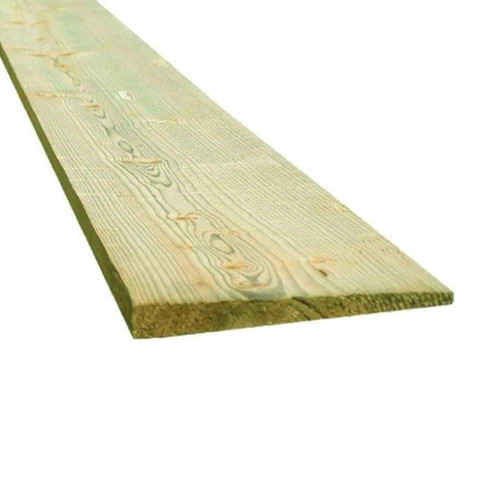
1.5m x 125x22mm 2EX Feather Edge Board - Pressure Treated Green/Natural

1.5m x 125x22mm 2EX Feather Edge Board - Pressure Treated Green
1.5m x 125x22mm 2EX Feather Edge Board - Pressure Treated Green/Natural
£1.49
EX VAT: £1.24
  • Stock: In Stock
  • Brand: East Coast Fencing
  • Model: TIMFE125_15GRN
  • Weight: 1.00kg
  • EAN: 5061025361748
Product Information
MaterialWood
Pack SizeSingle Board
Width125mm
Depth22mm 2EX
Length1.5m
TypeSawn Timber
ColourGreen/Natural
TreatmentPressure Treated

Postcode Checker

Enter your postcode to check whether we deliver to your area, plus any minimum order and delivery charge.
Your delivery information will appear here.
Free Delivery
Free delivery on orders over £99 in our standard areas.
5 Star Rated
20,000+ reviews between Google & TrustPilot.
Secure Shopping
Secure shopping with trusted checkout & payment systems.
Pay Your Way
Credit & debit card payments, plus Google Pay and Apple Pay.

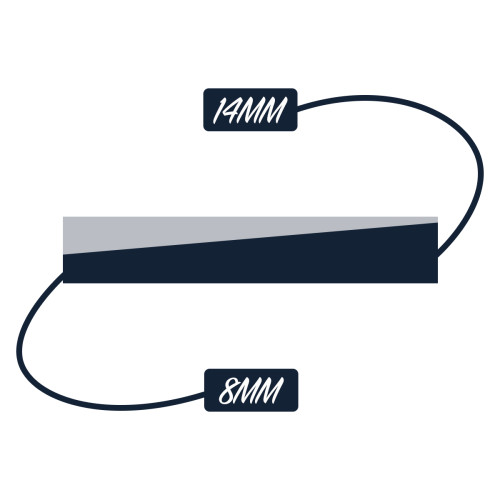
The 1.5m x 125x22mm 2EX Feather Edge Board - Pressure Treated Green/Natural provides a 1.5m vertical board for medium-height closeboard fencing. Its tapered 125 x 22mm 2EX profile allows each board to overlap the next, creating a continuous face while still letting the overall run be built to the exact width available on site.

A 1.5m board is a useful middle option when 1.2m would leave the boundary too open but 1.8m would be more height than the design requires. It can also simplify repairs on stepped fencing where one part of the run deliberately uses shorter boarding than the sections beside it.

For stepped work, decide the change in level at the posts before cutting rails or fixing boards. Keep each section visually level within its own bay and maintain the same board overlap throughout. Traditional builds may use cant rails, but the supporting framework should always match the actual fencing system being repaired or constructed.

This version has a green/natural pressure treatment rather than a brown finish. The treatment is intended for outdoor protection, not to create a uniform decorative coating, so normal differences in grain, knots, treatment marks and colour are part of the timber.

The board length is only one part of the finished height. A gravel board, ground level and the way the fencing is set out can all change the final result. If a timber base is required, the wooden gravel boards range contains compatible treated lengths for suitable closeboard builds.

Other lengths can be compared in feather edge boards. For a complete run, our feather edge fence calculator can help estimate quantities before you finalise the order.

Guides & Help

5 November 2024 0 298
If you have noticed green patches, streaks or speckles on new timber, it can look worrying at first. This is common on freshly pressure-treated wood, including fence posts, gravel boards, sleepers and..
19 August 2025 0 146
Quick answer: Green and brown pressure-treated timber are primarily different in their starting appearance, but colour alone does not tell you how well the timber has been treated. The important fa..
11 December 2023 0 146
For feather edge fencing, nails are the traditional fixing and are still widely used. Screws can also work, especially for small repairs or where you want easier removal later. The best choice depends..
11 October 2023 0 125
Timber is used across construction, landscaping, furniture, packaging, paper production and fencing. From structural softwood to garden sleepers and fence posts, it is one of the most widely used natu..
5 August 2026 0 121
Quick answer: Choose fencing timber by matching the timber profile, dimensions and treatment to the job. Feather edge boards are used for closeboard fencing, cant and square rails support boards or..
28 August 2026 0 48
Quick answer: Feather edge boards can warp, twist or cup because timber naturally changes as its moisture content rises and falls. Small amounts of movement are normal outdoors. More noticeable dis..