Choosing The Right Decorative Fence Panels
Decorative fence panels combine practical garden screening with more distinctive shapes, patterns and timber details than standard rectangular fencing.
They are suitable for patios, seating areas, landscaped boundaries and parts of the garden that are clearly visible from the house.
The range includes lattice-top, slatted, curved and patterned designs that provide different balances of privacy, light and airflow.
Decorative designs sit alongside more traditional options within our wider fence panels range. Choosing the right panel depends on the required level of screening, the style of the property and whether the fencing will be used across a complete boundary or as a feature section.
Decorative Garden Fencing
Garden fencing has a major effect on the appearance of an outdoor space. Where the boundary is regularly seen from a patio, kitchen, living area or seating space, a decorative panel can create a more considered finish than a basic utility design.
Decorative panels use shaped profiles, open lattice sections, horizontal slats and other timber arrangements to add detail to the fence line.
They can provide privacy while also acting as a backdrop for planting, furniture and landscaping.
Some styles are relatively solid, while others create partial screening and allow more light through the boundary.
Decorative Fence Panels For Patios
Decorative panels work particularly well around patios because the boundary often forms part of the main view from the seating area.
A shaped or lattice-top panel can soften the appearance of the fence and make the space feel more finished.
Slatted panels suit contemporary patios and structured landscaping, while curved and lattice designs work well with traditional planting and garden furniture.
The panel height should provide the required privacy without making the patio feel unnecessarily enclosed.
Decorative Fence Panels For Seating Areas
Outdoor seating areas often benefit from screening that creates a greater sense of privacy and separation from the rest of the garden.
Decorative panels can form a backdrop behind benches, dining furniture and sheltered seating spaces.
Closer designs provide stronger screening, while open lattice sections allow light and air through.
Climbing plants can be trained through suitable open sections to make the boundary greener over time.
Decorative Fence Panels For Complete Boundaries
Decorative panels can be installed across a complete garden boundary where appearance is a central part of the project.
Using the same design throughout creates a consistent and coordinated fence line.
Before ordering a full run, consider how the pattern will appear across corners, changes in level and gate openings.
Curved or shaped tops create a more varied upper line than rectangular panels, so the panel sequence may need careful planning.
Decorative Panels As Feature Sections
Decorative panels do not need to be used around the entire garden. They can be installed as feature sections in the most visible or regularly used areas.
For example, closeboard panels may provide solid privacy along the main boundary, while decorative panels create a more attractive finish around a patio or seating area.
This approach can balance practical requirements with design and may reduce the cost compared with using decorative panels throughout.
The panel heights and treatment colours should be coordinated so the different sections still feel connected.
Modern Decorative Fence Panels
Modern decorative panels often use clean horizontal lines, repeated slats and simple geometric details.
These designs work well with contemporary paving, rendered walls, garden rooms, raised beds and structured planting.
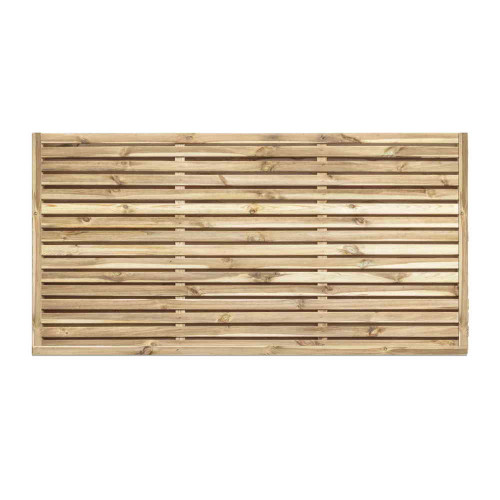
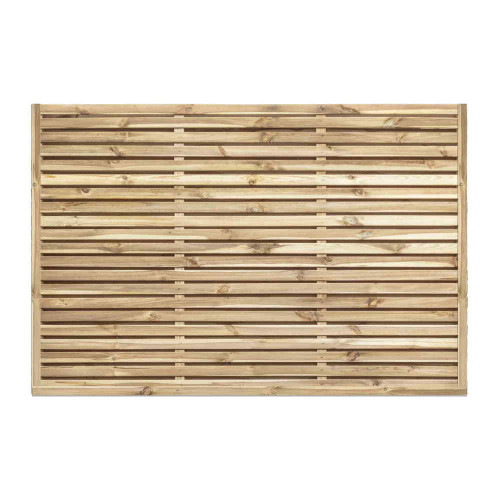
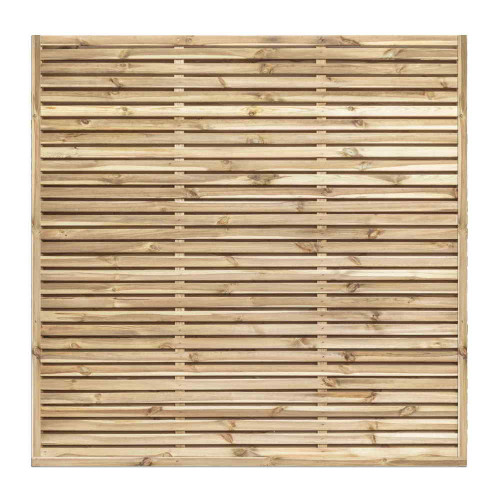
Double slatted fence panels provide useful screening while allowing light and air through the horizontal gaps.
The lighter visual effect can help smaller gardens feel less boxed in than a completely solid panel.
Traditional Decorative Fence Panels
Traditional decorative fencing commonly includes curved tops, lattice sections and more detailed timber patterns.
These designs complement cottage-style gardens, established planting and older properties.
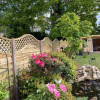
Lattice tops can soften a solid lower section and provide support for climbing plants.
The shaped outline also creates a more ornamental boundary than a standard rectangular panel.
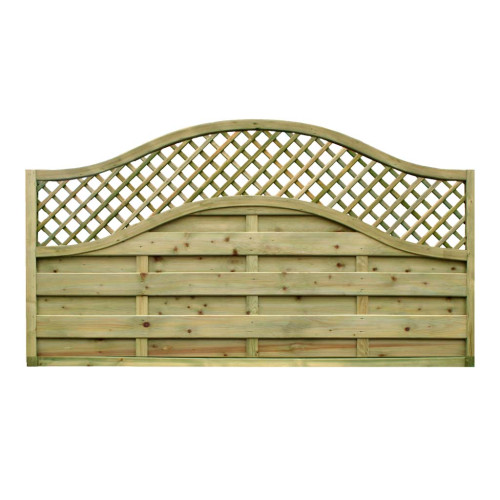
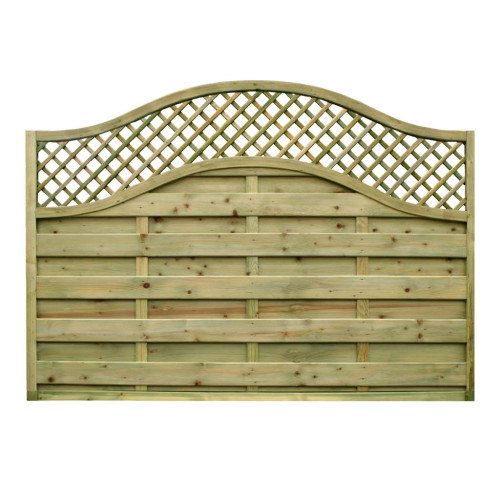
Omega Lattice Fence Panels
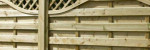
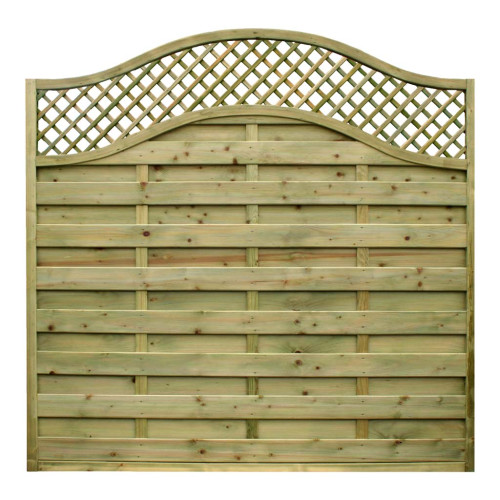
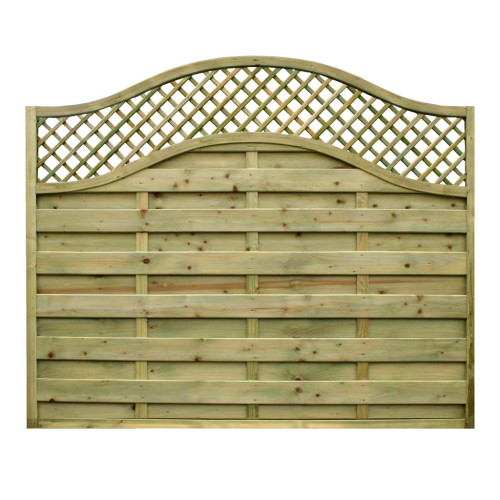
Omega lattice fence panels combine a screened lower section with a curved lattice top.
The lower part provides useful privacy, while the open lattice allows more light through the upper section.
The curved profile gives the fence line a softer appearance and works particularly well around patios, planted areas and visible boundaries.
Climbing plants can be trained through the lattice to help the panel blend into the surrounding garden.
Double Slatted Decorative Fence Panels
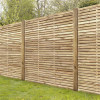
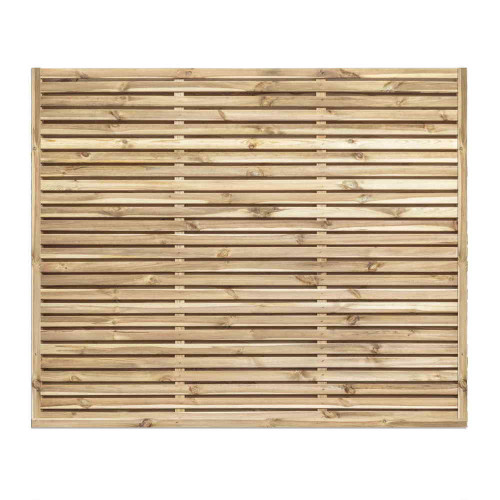
Double slatted fence panels are a contemporary decorative option with horizontal timber lines.
The slatted construction provides screening from both sides while allowing more airflow than a fully solid panel.
These panels work well around modern seating areas, garden rooms and landscaped spaces.
They can be installed throughout a boundary or used as a feature section to introduce a more modern style.
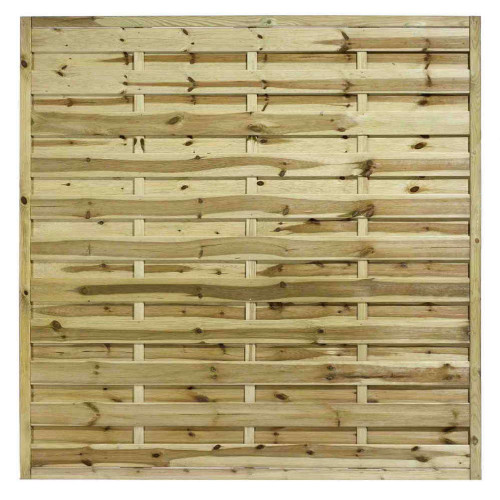
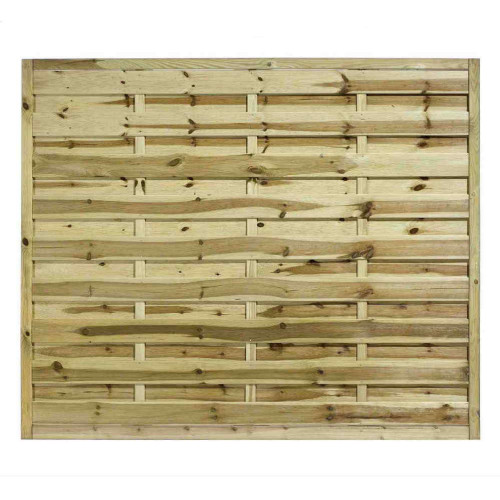
Hit And Miss Decorative Fence Panels
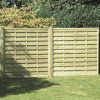
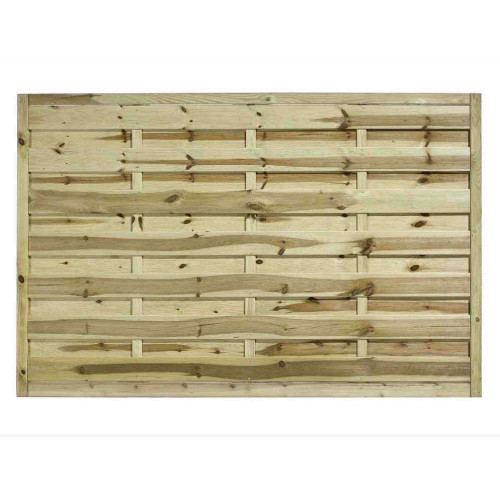
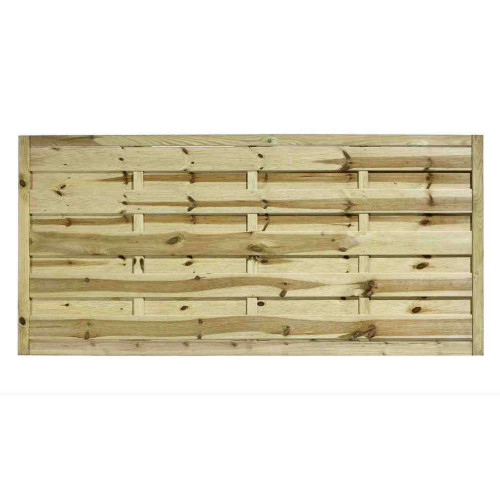
Hit and miss fence panels use alternating boards on opposite sides of the panel.
This creates a distinctive appearance while allowing air to pass through the fence.
The design offers useful screening from most viewing angles and can be considered for exposed gardens where a completely solid panel may catch more wind.
Hit and miss fencing suits both traditional and contemporary garden layouts.
Decorative Fence Panels For Privacy
Decorative fence panels can provide strong or partial privacy depending on their construction.
Panels with a solid lower section and smaller open details provide greater screening than widely spaced slatted or lattice designs.
For seating areas, consider the viewing angle and whether privacy is mainly required while sitting or standing.
A decorative panel does not need to be completely solid to make a garden feel more private.
Planting can also fill open sections and increase screening as it matures.
Decorative Fence Panels For Smaller Gardens
In a smaller garden, a tall solid fence can sometimes make the space feel narrow or enclosed.
Decorative panels with open lattice or slatted sections can provide separation while allowing more light and visual depth.
Horizontal patterns may make the boundary appear wider, while curved tops can soften a tall fence line.
The design should be chosen according to the size of the garden and the amount of privacy genuinely required.
Decorative Panels For Climbing Plants
Panels with lattice or open timber sections can provide support for climbing plants.
As the plant grows, it can soften the panel and make the boundary feel more integrated with the garden.
The panel and fixings must be able to support the weight of mature growth, particularly after rain.
Regular pruning helps control the load and prevents plants from overwhelming the fence.
Not every decorative panel is designed as a plant support, so check the construction and available openings before planting.
Decorative Fence Panel Heights
Decorative panels are available in different heights for full boundaries, moderate screening and lower garden divisions.
Taller panels provide more privacy and create a stronger visual backdrop.
Lower panels allow more views across the garden and can be suitable for front areas or internal zoning.
Shaped panels may have varying heights across the top. Check whether the listed measurement refers to the highest point, lowest point or overall product dimensions.
Standard Decorative Fence Panel Widths
Many decorative fence panels are approximately 6ft wide, which is around 1.83m.
This allows them to fit common UK post systems and standard garden fence bays.
Exact widths can vary between decorative designs, so individual product measurements should be checked carefully.
When replacing an existing panel, measure the clear opening between the posts at several points.
Do not assume that every decorative panel has exactly the same frame dimensions as a standard closeboard or waney lap panel.
Pressure Treated Decorative Fence Panels
Our decorative fence panels are pressure treated for outdoor use.
Pressure treatment helps protect the timber against rot and fungal decay, making it better suited to UK garden conditions.
The treatment colour will gradually soften as the timber is exposed to sunlight and rain.
Natural colour variation between panels and individual pieces of timber is expected.
Pressure treatment improves durability, but secure installation and sensible maintenance are still important.
Green And Natural Decorative Fence Panels
Decorative panels are commonly supplied in a green or natural pressure treated finish.
The lighter treatment colour complements lawns, hedges and planted garden boundaries.
It also allows the shape and timber pattern of the panel to remain clearly visible.
The green tint will weather and become less pronounced over time.
A compatible exterior timber treatment can be applied later if a different colour is required.
Decorative Fence Panels In Windy Gardens
Open decorative designs can allow more airflow than fully solid fence panels, but the complete structure still needs to suit the location.
Slatted, lattice and hit and miss panels may reduce the solid surface presented to wind.
Taller panels, long runs and exposed boundaries still place significant pressure on posts and foundations.
The panel type, post material, installation depth and ground conditions should all be considered together.
No decorative design removes the need for secure installation.
Using Decorative Panels With Wooden Posts
Decorative panels can be installed with wooden fence posts to create a consistent timber appearance.
Wooden posts suit gardens where the fencing forms part of the wider landscaping and a softer finish is preferred.
The posts provide straightforward fixing points for exterior brackets and screws.
Post size should suit the panel height, weight and exposure.
Careful alignment is particularly important because uneven posts can make decorative top profiles look inconsistent.
Using Decorative Panels With Concrete Posts
Many decorative panels can be installed between compatible slotted concrete posts, depending on their frame dimensions.
Concrete posts provide a rigid, low-maintenance support system and are resistant to ground-level decay.
Before ordering, check that the panel thickness and width suit the post slots.
Some decorative frames may differ from standard fence panel dimensions and may require a different installation method.
Replacing Decorative Fence Panels
A damaged decorative panel can often be replaced if the existing posts remain secure and the same design is still available.
Measure the exact width, height and frame thickness of the existing panel.
Check the top profile, pattern and treatment finish to make sure the replacement matches the surrounding run.
If the original design is no longer available, replacing several adjoining panels may create a more consistent appearance.
Inspect the posts and base before fitting the new panel, particularly where the previous section was damaged by movement or wind.
Measuring For Decorative Fence Panels
Measure the clear opening between the posts and the available height.
Check the panel width at the frame rather than estimating from the decorative pattern.
For shaped panels, confirm the dimensions at the highest and lowest points.
If the panel will sit above a gravel board, include the board height when calculating the total boundary.
Measure every bay in an existing fence run because small differences may be noticeable with patterned panels.
Installing Decorative Fence Panels
Decorative panels should be supported evenly and installed level between suitable posts.
Use exterior clips, brackets or screws appropriate for the panel frame and post material.
Take additional care with curved and shaped tops so the pattern aligns consistently across the run.
Do not lift or carry the panel by its lattice or decorative sections, as these may not be designed to support the full panel weight.
Check that the base is level before securing the panel permanently.
Caring For Decorative Fence Panels
Pressure treated decorative panels require limited routine maintenance.
Keep the bottom edge clear of wet soil, leaves and dense planting where possible.
Inspect open lattice and slatted sections for loose components after strong winds.
Control climbing plants so their weight does not distort the decorative framework.
A compatible exterior timber coating can be used to refresh the appearance, following the manufacturer’s instructions.
Buy Decorative Fence Panels From East Coast Fencing
East Coast Fencing supplies pressure treated decorative fence panels for patios, seating areas, landscaped gardens and feature boundaries.
The range includes curved, lattice, slatted and patterned designs that provide different levels of privacy, airflow and visual detail.
Whether you need one replacement panel or decorative fencing for a complete garden project, compare the available sizes, patterns and screening levels above.
East Coast Fencing is backed by more than 20,000 customer reviews across Trustpilot and Google.