

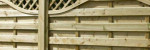

Quick answer: The best Decorative Fence Panels depend on what you want the boundary to do. Choose a more closely spaced design when privacy is the priority, a slatted or Hit & Miss style when you want a balance of screening and airflow, and lattice-style panels where light, planting and a more open appearance matter most. Before choosing, consider panel height, neighbouring sightlines, wind exposure, posts, existing garden structures and how enclosed you want the finished space to feel.
Decorative fencing gives you more choice than simply deciding how tall the boundary should be.
Different panel designs can dramatically change the amount of privacy, light and airflow around a garden.
A closely spaced contemporary panel can create a strong visual screen. A Hit & Miss design can provide separation while allowing more air movement. Lattice introduces considerably more openness and can work particularly well alongside planting.
That makes choosing Decorative Fence Panels less about finding the panel that looks best in isolation and more about deciding what the fence needs to achieve.
This guide compares the main considerations, including privacy, airflow, light, wind exposure, garden size, patios, planting, posts, height and maintenance.
What Are Decorative Fence Panels?
Decorative Fence Panels are timber fence panels designed to provide more visual interest than conventional solid boundary fencing.
The category can include designs such as:
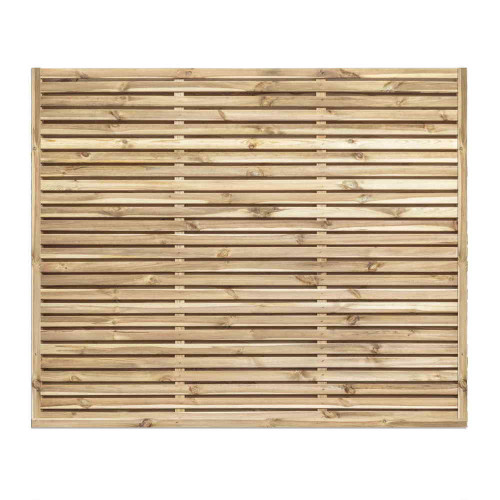
- Double Slatted Fence Panels
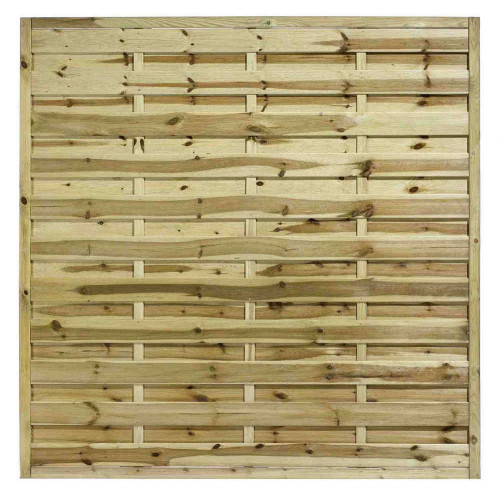
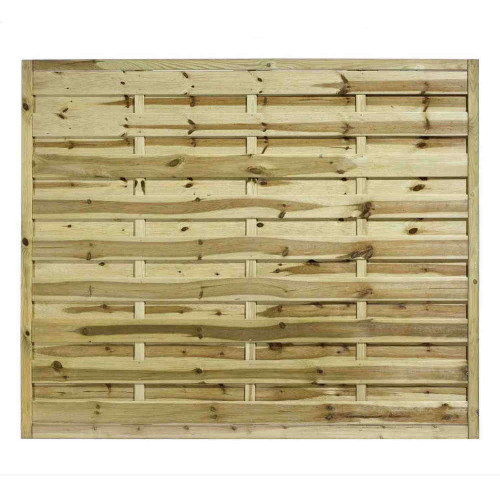
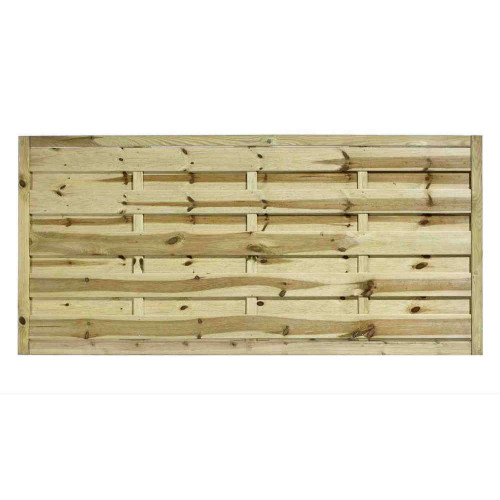
- Horizontal Hit & Miss Fence Panels
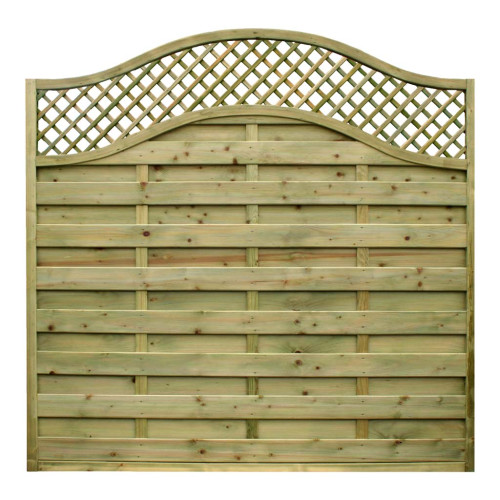
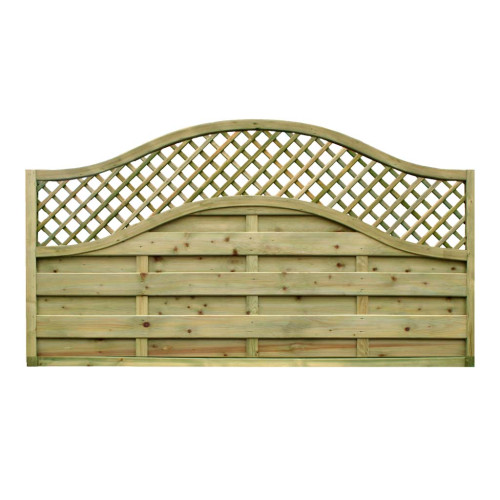
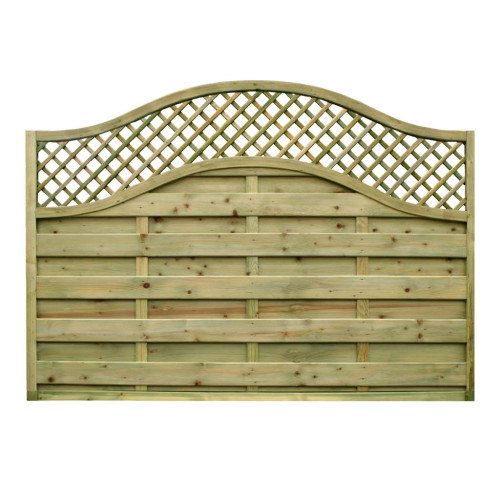
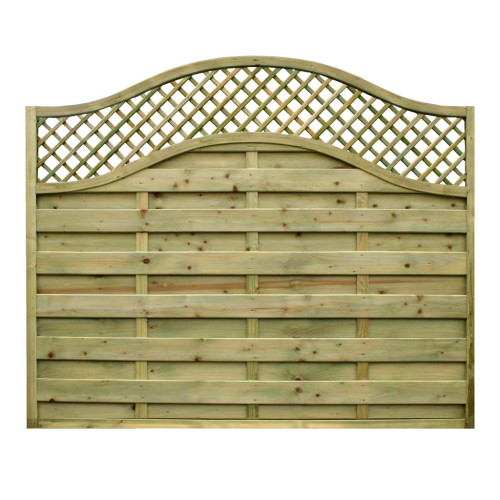
- Omega Lattice Fence Panels
- Other framed contemporary or decorative panel designs
Instead of concentrating only on creating a solid timber screen, these designs use spacing, framing, slats or lattice to produce a particular visual effect.
They can be used for complete boundaries or selected areas of a garden where appearance is especially important.
How Do Decorative Fence Panels Differ From Standard Fence Panels?
Traditional panels such as Closeboard and Waney Lap are primarily solid boundary fencing.
Decorative Fence Panels often make greater use of:
- Spacing between boards
- Horizontal lines
- Lattice sections
- Framing
- Repeated contemporary patterns
This can affect much more than appearance.
The amount of open space in a panel influences:
- Privacy
- Light transmission
- Air movement
- Views through the boundary
- How enclosed the garden feels
Which Decorative Fence Panels Offer The Most Privacy?
If privacy is the priority, look towards the more closely spaced Decorative Fence Panels.
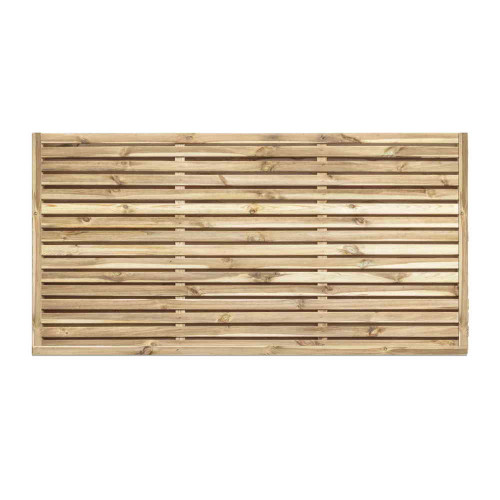
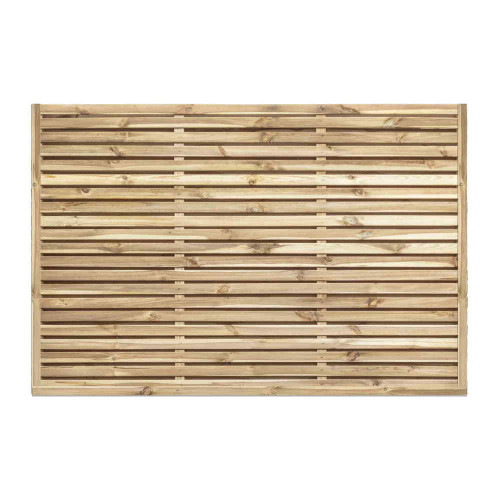
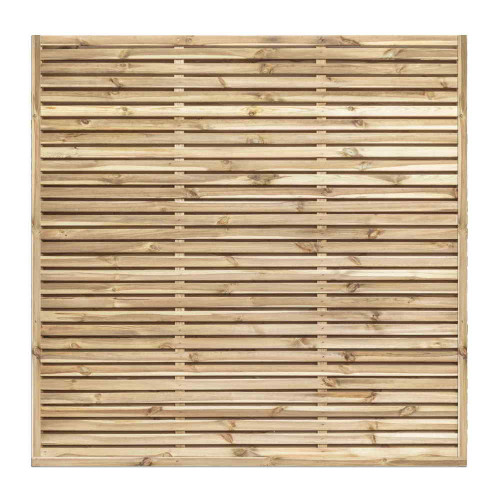
Double Slatted panels can provide substantial screening while retaining a contemporary horizontal appearance.
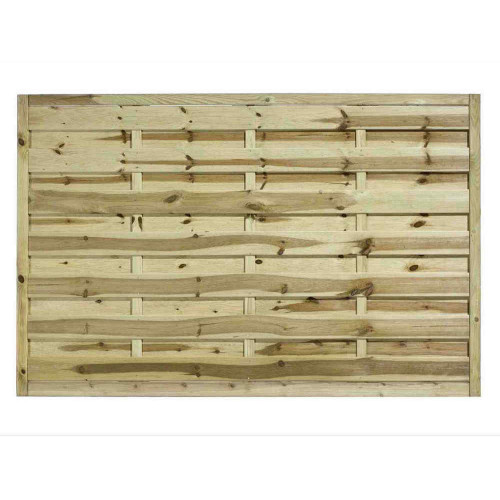
Horizontal Hit & Miss also provides useful screening, although its construction is designed to allow more airflow than a completely solid fence.
Lattice is much more open and should not normally be chosen where complete privacy is required.
| Decorative Panel Style | Privacy | Light | Airflow |
|---|---|---|---|
| Double Slatted | High to moderate | Moderate | Moderate |
| Horizontal Hit & Miss | Moderate to high | Moderate | Good |
| Omega Lattice | Low | High | High |
The exact effect depends on the individual panel design and viewing angle, so Decorative Fence Panels should not be judged only from a front-facing product photograph.
Are Double Slatted Decorative Fence Panels Good For Privacy?
Double Slatted panels are a strong choice when you want a contemporary appearance without giving up too much screening.
The repeated horizontal slats create a much more designed appearance than conventional Closeboard or Waney Lap fencing.
They can work especially well around:
- Patios
- Outdoor dining areas
- Modern extensions
- Contemporary garden landscaping
- Prominent rear boundaries
However, a slatted panel should not automatically be described as completely private.
Where there are intentional spaces within the design, some sightlines may remain depending on viewing angle and distance.
Are Hit & Miss Decorative Fence Panels Good For Privacy?
Horizontal Hit & Miss Fence Panels provide a useful compromise.
The boards are arranged to create screening while retaining air movement through the panel.
This makes them particularly interesting where you want:
- A substantial boundary
- More airflow than solid fencing
- A contemporary horizontal appearance
- Less of a solid wall effect
They are often a more balanced choice where complete visual enclosure is not essential.
Are Omega Lattice Decorative Fence Panels Good For Privacy?
Lattice is fundamentally more open.
Omega Lattice Fence Panels are better suited to situations where appearance, light and planting matter more than complete screening.
They can be used to:
- Divide different parts of a garden
- Create a decorative backdrop
- Support suitable climbing plants
- Maintain visibility between spaces
- Reduce the visual weight of a boundary
If you need strong privacy from neighbouring gardens, lattice alone is unlikely to provide it.
Which Decorative Fence Panels Allow The Most Light?
Lattice-style fencing allows the most light through because of its open construction.
Hit & Miss fencing sits somewhere between lattice and a closely spaced privacy panel.
Double Slatted fencing can still allow some light through the slat arrangement, but it will generally create more screening.
This can matter in gardens where the fence is close to:
- Flower beds
- Patios
- Windows
- Conservatories
- Small lawns
Why Does Fence Panel Light Matter?
A fence changes more than the view.
Replacing a low or open boundary with a tall, closely spaced panel can alter how light moves across the garden.
This can make a difference to:
- How enclosed a seating area feels
- The brightness of a narrow garden
- Plants growing near the boundary
- The amount of light entering nearby rooms
If the existing garden already feels shaded, moving automatically to the most private Decorative Fence Panel may not produce the best overall result.
Which Decorative Fence Panels Are Best For Airflow?
Omega Lattice provides the greatest airflow because much of the panel is open.
Horizontal Hit & Miss is also specifically useful where some wind needs to pass through the boundary.
Double Slatted panels can permit air movement depending on the spacing and construction but provide a stronger screening effect.
Where wind exposure is important, consider openness as one factor rather than assuming the heaviest-looking panel is automatically the best.
Why Is Airflow Important In A Fence?
A predominantly solid panel presents a large surface to the wind.
An open panel allows more air to pass through.
This does not mean open panels need inadequate posts or shallow foundations.
Every fence still needs appropriate support.
However, in an exposed garden, panel design can influence the amount of wind pressure transferred to the posts and foundations.
Which Decorative Fence Panels Are Best For Windy Gardens?
Horizontal Hit & Miss is particularly worth considering where you want more privacy than Picket or Lattice fencing but do not want a completely solid boundary.
Lattice allows even greater airflow but provides much less privacy.
In a windy garden, also consider:
- Panel height
- Post dimensions
- Post length
- Foundation quality
- Ground conditions
- Local exposure
A more open Decorative Fence Panel cannot compensate for failing posts.
Are Decorative Fence Panels Better Than Closeboard In Wind?
Some decorative designs allow more airflow than Closeboard.
That can be useful on exposed boundaries.
But Decorative Fence Panels are not one single construction.
A highly open lattice panel behaves very differently from a closely spaced slatted privacy panel.
Compare the actual design rather than assuming everything labelled decorative behaves in the same way.
Which Decorative Fence Panels Are Best For A Small Garden?
Small gardens often benefit from panels that provide some visual depth.
A tall completely solid boundary can make a compact space feel enclosed.
Possible choices include:
- Double Slatted panels where privacy remains important
- Hit & Miss panels where a balance of screening and openness is preferred
- Lattice where maximum openness and planting are priorities
You can also vary panel height according to the part of the garden.
Full-height privacy may be useful beside a patio while a more open boundary could work elsewhere.
Which Decorative Fence Panels Are Best For Large Gardens?
Larger gardens give you greater freedom to make the fence itself a design feature.
A substantial run of horizontal panels can reinforce the width of the garden.
Lattice can create separate planting zones without visually closing them off.
You can also use different panel styles in distinct sections where there is a natural transition.
Which Decorative Fence Panels Make A Garden Look Wider?
Horizontal lines can visually emphasise width.
For that reason, Double Slatted and Horizontal Hit & Miss panels can work particularly well in gardens where you want to strengthen the horizontal perspective.
The effect is influenced by:
- Panel colour
- Fence height
- Planting
- Length of the boundary
- Other horizontal features such as paving and raised beds
Which Decorative Fence Panels Make A Garden Feel More Open?
Lattice provides the greatest sense of openness.
Hit & Miss can also reduce the visual weight compared with a completely solid panel.
If the garden is already narrow or shaded, consider whether complete privacy is genuinely necessary along every boundary.
Sometimes a combination of privacy and openness produces a better garden than using the same solid panel everywhere.
Which Decorative Fence Panels Are Best Around A Patio?
Patios are one of the strongest applications for Decorative Fence Panels because the boundary is often highly visible from the seating area.
Choose according to the objective.
| Patio Priority | Useful Starting Point |
|---|---|
| Strong screening | Double Slatted |
| Privacy with more airflow | Horizontal Hit & Miss |
| Planting and openness | Omega Lattice |
Which Decorative Fence Panels Are Best Around Outdoor Dining Areas?
For dining areas, many customers want some separation from neighbouring gardens without making the area feel boxed in.
Hit & Miss can provide a useful balance.
Double Slatted panels can provide stronger visual screening where overlooking is more significant.
Lattice can work where planting will eventually form part of the screen.
Which Decorative Fence Panels Are Best For Overlooked Gardens?
Start by identifying where the overlooking actually occurs.
You may not need maximum-height privacy fencing around the entire garden.
Concentrating stronger Decorative Fence Panels around:
- A patio
- Outdoor seating
- A hot tub area
- A frequently used section of lawn
may provide the privacy you need without turning every boundary into a solid screen.
Do Decorative Fence Panels Provide Complete Privacy?
Not necessarily.
The word decorative describes appearance rather than a guaranteed privacy level.
Panels containing deliberate gaps may allow views through them, particularly at an angle.
If complete screening is essential, examine the panel construction carefully rather than assuming a tall panel automatically provides privacy.
Can You See Through Double Slatted Fence Panels?
Depending on the design and viewing angle, slatted fencing can retain some sightlines.
This is part of the trade-off that gives slatted panels their lighter contemporary appearance.
From normal garden viewing positions they can provide substantial screening, but they should not automatically be treated as an opaque timber wall.
Can You See Through Hit & Miss Fence Panels?
Hit & Miss construction is designed to create overlapping visual screening while maintaining spaces for airflow.
Direct views may be substantially restricted, but some sightlines can remain depending on:
- Viewing angle
- Distance
- Panel construction
This balance between screening and airflow is one of the main reasons people choose the style.
Can Decorative Fence Panels Be Used For Front Gardens?
Yes, depending on panel height, location and how much openness is wanted.
A tall privacy-focused decorative panel may feel unnecessarily enclosed for a front garden.
More open designs can work better where you want to:
- Define the boundary
- Keep planting visible
- Maintain light
- Preserve sightlines
Choose the panel according to the actual frontage rather than simply repeating what is used in the rear garden.
Can Decorative Fence Panels Be Used For Rear Boundaries?
Yes.
A rear boundary is often where taller decorative panels make the most visual impact.
They can provide an alternative to conventional Closeboard or Waney Lap where the fence is highly visible from:
- Large windows
- Patios
- Garden rooms
- Outdoor kitchens
Can Decorative Fence Panels Be Used Along Side Boundaries?
Yes.
Think particularly carefully about light in narrow side gardens and passages.
A tall closely spaced panel can make an already narrow area considerably darker.
A more open panel may maintain a better balance where maximum privacy is not required.
Which Decorative Fence Panels Work Best With Modern Houses?
Horizontal designs such as Double Slatted and Hit & Miss are natural candidates.
The repeated horizontal lines can complement:
- Modern extensions
- Large glazed doors
- Contemporary paving
- Rendered walls
- Simple raised beds
The fence does not need to match the architecture exactly, but repeating similar proportions can help the garden feel more considered.
Can Decorative Fence Panels Suit Traditional Houses?
Yes.
A decorative panel does not require an ultra-modern property.
Lattice can work particularly well with traditional planting.
Slatted panels can also provide an intentional contrast against older brickwork or period buildings.
The wider garden design matters more than the age of the house alone.
Which Decorative Fence Panels Work Best With Plants?
Lattice is particularly well suited where climbing plants are part of the design.
The open framework can provide opportunities for suitable plants to grow around the panel.
However, mature plants can become heavy.
Consider:
- The eventual weight of the plant
- Access for pruning
- Moisture around the timber
- Whether additional plant support is needed
Can Climbers Grow On Double Slatted Fence Panels?
They can be grown near them, but avoid assuming the fence should support every mature climbing plant directly.
Heavy vegetation can:
- Add weight
- Increase wind loading
- Hold moisture against timber
- Make panel replacement difficult
Independent plant supports can be useful for substantial climbers.
Can Climbers Grow On Hit & Miss Fence Panels?
Yes, but the same considerations apply.
Keep the panel accessible enough for inspection and maintenance.
One advantage of choosing a decorative panel is its appearance, so completely covering it with dense vegetation may also defeat some of the reason for buying it.
Are Decorative Fence Panels Good For Screening Bins?
Yes.
This is a useful application where full garden-boundary fencing is unnecessary.
A decorative screen can visually separate:
- Bins
- Utility areas
- Compost areas
- Garden equipment
Maintain enough airflow around enclosed areas and leave practical access for moving bins or carrying out maintenance.
Are Decorative Fence Panels Good For Screening Sheds?
They can soften the appearance of a shed or utility structure.
A lattice panel with planting can create a gradual screen.
A more solid slatted panel can conceal a less attractive view more quickly.
Do not create extremely narrow inaccessible gaps where leaves and moisture can accumulate between the fence and structure.
Can Decorative Fence Panels Divide A Garden?
Yes.
They are particularly useful for internal garden divisions because they can create separate areas without making the whole garden feel smaller.
For example:
- Lattice can divide planting areas
- Hit & Miss can separate a patio from a lawn
- Double Slatted panels can screen an outdoor dining area
Can Decorative Fence Panels Hide A Hot Tub?
A more privacy-focused decorative design can be useful around a hot tub or similar seating area.
Consider sightlines from:
- Neighbouring gardens
- Upper windows
- Nearby paths
A fence can block views at ground level without dealing with overlooking from above, so assess the actual direction of the problem.
What Heights Are Decorative Fence Panels Available In?
Available heights depend on the design.
East Coast Fencing Horizontal Hit & Miss Fence Panels are available in nominal 3ft, 4ft, 5ft and 6ft heights.
Omega Lattice Fence Panels are also available in nominal 3ft, 4ft, 5ft and 6ft heights.
Framed Contemporary Double Slatted Fence Panels are available in nominal 3ft, 4ft, 5ft and 6ft heights.
These ranges are nominally 6ft wide.
Should You Choose 3ft Decorative Fence Panels?
Three-foot Decorative Fence Panels are useful where the objective is separation without a tall boundary.
Possible applications include:
- Internal garden divisions
- Patio edges
- Lower boundaries
- Decorative planting screens
A 3ft lattice or Hit & Miss panel can define an area while preserving an open garden feel.
Should You Choose 4ft Decorative Fence Panels?
Four-foot panels provide more obvious separation while remaining below typical full privacy-fence height.
They can work well where 3ft feels too low but a 5ft or 6ft panel would dominate the space.
This height is particularly useful for internal garden zoning.
Should You Choose 5ft Decorative Fence Panels?
Five-foot panels provide substantial screening without moving immediately to the tallest option.
They can be useful around:
- Patios
- Rear boundaries
- Outdoor seating areas
- Side gardens
If the panel itself contains spaces, remember that height and privacy are separate characteristics.
Should You Choose 6ft Decorative Fence Panels?
Six-foot Decorative Fence Panels create the strongest boundary presence.
They are suitable where you want:
- Greater screening
- A prominent contemporary boundary
- Separation around frequently used outdoor spaces
The taller the panel, the more important the post system and wind exposure become.
Does Taller Decorative Fencing Always Provide More Privacy?
Not necessarily.
A taller lattice fence may still provide less privacy than a shorter, more closely spaced slatted panel.
Privacy depends on both:
- Panel height
- Panel openness
Choose these separately.
Does Decorative Fencing Need Strong Posts?
Yes.
The fact that a panel allows airflow does not remove the need for suitable supports.
Posts need to account for:
- Panel height
- Panel construction
- Wind exposure
- Ground conditions
- Gate positions
A decorative fence will only remain attractive if the structure supporting it remains straight and stable.
Can Decorative Fence Panels Be Installed With Timber Posts?
Yes, where the panel and fixing system are compatible.
East Coast Fencing timber posts are available in common sections including:
- 75 x 75mm
- 100 x 100mm
Available lengths include 1.8m, 2.4m and 3.0m.
Choose the appropriate support according to the complete fence rather than panel appearance alone.
Can Decorative Fence Panels Be Installed With Concrete Posts?
This depends on the dimensions and construction of the individual panel and the intended concrete post system.
Do not assume that every decorative panel is automatically interchangeable with a conventional panel simply because both have a nominal 6ft width.
Check:
- Actual dimensions
- Panel framing
- Post slot compatibility
- Gravel-board arrangement
Do Decorative Fence Panels Need Gravel Boards?
Gravel boards are worth considering where they are compatible with the chosen panel system.
They can help separate the main timber panel from:
- Soil
- Wet grass
- Mulch
- Rain splash
This can be especially useful with decorative panels where keeping the lower framing in good condition is important to the appearance of the fence.
Will A Gravel Board Spoil The Look Of Decorative Fencing?
It does not have to.
The key is to consider it as part of the overall design rather than adding it after selecting the panels.
Wooden gravel boards can maintain a timber appearance.
Concrete gravel boards create a more obvious contrasting base but can work well in the right garden.
Panel height should also be selected with the visible gravel board in mind.
Does A Gravel Board Increase The Finished Fence Height?
Yes, where it raises the main panel above ground.
Calculate the complete visible height rather than referring only to the nominal panel height.
This matters when deciding whether 5ft or 6ft panels are actually necessary.
Can Decorative Fence Panels Be Installed On A Slope?
Yes, rigid panels can generally be stepped as the ground rises or falls.
Each panel remains level while adjacent bays change height.
Stepping can be visually more noticeable with decorative panels because:
- Horizontal lines emphasise level changes
- Framing is more prominent
- Repeated patterns make inconsistencies obvious
Plan post positions carefully before installation.
Are Horizontal Decorative Panels Difficult On Slopes?
They are not necessarily difficult, but the stepped appearance can be more obvious than with some vertical fencing styles.
If the slope is severe, draw or mark out the intended levels before installing the posts.
This helps avoid an awkward final step near gates, walls or buildings.
Can You Mix Decorative Fence Panel Styles?
Yes, but it works best when the change is deliberate.
For example, you could use:
- Double Slatted around a patio
- Hit & Miss along an exposed boundary
- Lattice around a planted section
Use natural transition points such as corners, gates or changes in garden use.
Changing panel design every bay usually creates a less coherent appearance.
Can You Mix Decorative Fence Panels With Closeboard?
Yes.
This can be an effective way to concentrate decorative fencing where it will be most appreciated.
For example:
- Closeboard along a less visible service boundary
- Decorative panels facing the main patio
- Lattice around planting areas
This avoids paying for a decorative appearance where the fence is largely hidden.
Can Decorative Fence Panels Be Used With Trellis?
It depends on the particular design.
Some Decorative Fence Panels already contain substantial visual detail, so additional trellis can make the finished fence appear unnecessarily busy.
If extra height or planting support is required, make sure the posts and complete structure are suitable for it.
Which Decorative Fence Panels Are Easiest To Maintain?
Maintenance depends partly on how complex the panel surfaces are.
More slats, overlaps and lattice openings create additional edges to clean or coat.
A decorative fence may therefore require more care when:
- Painting
- Staining
- Removing algae
- Trimming plants
This does not make decorative fencing impractical, but it is worth considering before choosing an intricate design for a very long boundary.
Can Decorative Fence Panels Be Painted?
Timber Decorative Fence Panels can generally be given a suitable exterior decorative coating where appropriate for the particular product and once the timber is sufficiently dry.
Follow the coating manufacturer's instructions.
Decorative panels can look particularly effective when finished consistently with:
- Garden furniture
- Pergolas
- Sheds
- Planters
Are Slatted Fence Panels Harder To Paint?
They can require more time because each slat has several visible faces and edges.
Spraying may appear faster but still requires suitable preparation and careful application.
If using a brush, work coating into the edges and gaps rather than concentrating only on the front surface.
Is Lattice Difficult To Paint?
Lattice contains many intersections and edges, so decorative finishing can be more time-consuming than coating a simpler panel.
This is worth remembering if you intend to change the colour of a long run regularly.
Does Green Algae Grow On Decorative Fence Panels?
It can grow on almost any exterior timber surface where conditions remain damp and shaded.
More intricate panels can collect moisture and debris in corners.
Reduce the likelihood of persistent surface growth by:
- Maintaining airflow
- Trimming dense vegetation
- Removing wet leaves
- Keeping the base clear of soil where practical
Does Algae Mean Decorative Fence Panels Are Rotting?
No.
Algae is normally surface growth rather than proof of timber decay.
However, its presence can indicate a damp location.
Inspect the underlying panel for structural issues rather than assuming the green surface itself means the fence has failed.
How Should Decorative Fence Panels Be Cleaned?
Begin with the gentlest practical method.
- Remove loose vegetation and debris.
- Brush away dry surface material.
- Use a suitable mild timber cleaner where required.
- Use a timber-safe algae treatment for stubborn growth if necessary.
- Allow the panel to dry properly.
Take extra care around thin lattice or decorative slats.
Can You Pressure Wash Decorative Fence Panels?
Pressure washing should be approached cautiously.
Excessive pressure can:
- Raise timber fibres
- Damage edges
- Strip coatings unevenly
- Damage more delicate decorative sections
Gentle hand cleaning is often a safer starting point.
How Long Do Decorative Fence Panels Last?
There is no single lifespan that applies to every decorative panel.
Service life depends on:
- Timber treatment
- Panel construction
- Installation
- Post condition
- Ground contact
- Wind exposure
- Moisture
- Maintenance
A well-installed panel in a favourable position may perform very differently from the same style installed against constantly wet soil or supported by failing posts.
Which Decorative Fence Panels Are Most Durable?
A visual style alone is not a durability rating.
Do not assume that a panel is longer lasting simply because it appears thicker, more elaborate or more expensive.
Compare the complete product specification and make sure the supporting system suits the installation.
Are Decorative Fence Panels Worth It?
They can be particularly worthwhile where the boundary is a major part of the garden view.
A conventional fence may be entirely adequate behind a shed or dense hedge.
A more decorative panel can make greater sense where it is seen constantly from:
- Kitchen doors
- Living spaces
- Patios
- Outdoor dining areas
- Garden rooms
This is why many gardens benefit from using Decorative Fence Panels selectively rather than automatically on every boundary.
Are Decorative Fence Panels More Expensive?
Purchase cost varies according to panel design, size and construction.
More complex panel manufacture can affect the relative purchase price, but compare the complete project rather than judging value from panel cost alone.
Include:
- Posts
- Gravel boards
- Fixings
- Installation
- Gates
- Decorative finishing if planned
The best-value fence is the one that meets the purpose of the garden without requiring an unnecessary future replacement simply because the original style was unsuitable.
Should You Use Decorative Fence Panels On Every Boundary?
Not necessarily.
Look at where the fence is actually visible.
You might reserve decorative fencing for:
- The boundary facing the main seating area
- The section seen from large windows
- An outdoor dining zone
- A garden feature area
Less visible boundaries can use a different panel style if appropriate.
Which Decorative Fence Panels Are Best For Privacy Without Blocking Too Much Light?
Hit & Miss is a strong starting point because it combines meaningful screening with deliberate airflow and some visual openness.
Double Slatted fencing may provide stronger screening while still retaining the lighter appearance associated with horizontal slats.
The right choice depends on how much overlooking you actually need to prevent.
Which Decorative Fence Panels Are Best For Light And Planting?
Omega Lattice is the natural starting point.
Its open construction allows:
- Light through
- Airflow
- Views between garden areas
- Opportunities for climbing plants
It should be selected because you want openness, not because you expect it to provide full privacy.
Which Decorative Fence Panels Are Best For Privacy And Wind?
This is where compromise becomes important.
A completely solid panel maximises screening but also creates a stronger barrier to the wind.
An open panel reduces that barrier but sacrifices privacy.
Horizontal Hit & Miss sits between those extremes and is worth considering where both factors matter.
Decorative Fence Panels By Priority
| Main Priority | Useful Starting Point |
|---|---|
| Strong contemporary screening | Double Slatted |
| Privacy plus airflow | Horizontal Hit & Miss |
| Maximum light | Omega Lattice |
| Climbing plants | Omega Lattice |
| Windy garden with some screening | Horizontal Hit & Miss |
| Modern patio backdrop | Double Slatted or Hit & Miss |
| Open internal garden divider | Omega Lattice |
What Should You Measure Before Buying Decorative Fence Panels?
Measure more than the total boundary length.
Record:
- Total fence run
- Clear distance between existing posts
- Required panel height
- Changes in ground level
- Gate openings
- Existing gravel boards
- Available access
If replacing existing panels, measure several bays.
Older fence posts may no longer be perfectly spaced or upright.
Can Decorative Fence Panels Replace Standard 6ft Panels?
Potentially, but nominal width alone does not guarantee compatibility.
Check:
- Actual panel dimensions
- Panel thickness
- Post spacing
- Fixing method
- Gravel-board position
Do not order an entire replacement run based only on the description of the old panels.
Can You Replace One Decorative Fence Panel?
Yes, provided the surrounding posts and components remain sound and a compatible replacement is available.
Matching is particularly important with Decorative Fence Panels because differences in pattern can be much more noticeable than with a simple solid fence.
Try to match:
- Panel style
- Height
- Framing
- Orientation
Do Decorative Fence Panels Need Matching Gates?
A gate does not have to reproduce the exact panel design, but coordinating the two can produce a much more deliberate finish.
Consider:
- Horizontal or vertical emphasis
- Overall height
- Timber appearance
- Hardware
A traditional gate placed randomly within a strongly contemporary horizontal fence can look disconnected unless the contrast is intentional.
Common Mistakes When Choosing Decorative Fence Panels
- Choosing solely from appearance without considering privacy
- Assuming every tall panel provides complete screening
- Ignoring airflow in exposed gardens
- Using highly open lattice where privacy is essential
- Choosing the most private option for an already dark small garden
- Ignoring panel compatibility with existing posts
- Forgetting that gravel boards alter finished height
- Using heavy climbing plants without considering additional support
- Mixing too many decorative patterns along one boundary
- Ignoring access for full-size framed panels
- Allowing the main timber panel to remain against wet soil
Decorative Fence Panels Buying Checklist
- Decide how much privacy you need.
- Decide how much light you want through the boundary.
- Assess wind exposure.
- Choose the panel style.
- Select the required height.
- Measure the actual fence run.
- Check existing posts if they are being retained.
- Choose suitable posts for a new installation.
- Plan gravel boards where appropriate.
- Consider gates as part of the overall design.
- Plan for slopes and changes in level.
- Consider mature plant growth.
- Check how the fence will look from the main house and seating areas.
FAQs
What Are Decorative Fence Panels?
Decorative Fence Panels are panels designed to provide a more distinctive appearance than conventional solid boundary fencing, often using slats, lattice, framing or more open construction.
Which Decorative Fence Panels Provide The Most Privacy?
More closely spaced designs such as Double Slatted panels are a useful starting point where stronger screening is wanted.
Which Decorative Fence Panels Allow The Most Airflow?
Open lattice allows substantial airflow. Horizontal Hit & Miss also provides more airflow than a predominantly solid privacy panel.
Which Decorative Fence Panels Let Through The Most Light?
Omega Lattice is the most open of the main decorative styles discussed here and therefore allows a high level of light through the boundary.
Are Hit & Miss Fence Panels Private?
They provide useful screening while allowing airflow, although some sightlines may remain depending on viewing angle.
Are Double Slatted Fence Panels Private?
They can provide substantial screening, but intentional spacing within a slatted design can mean they are not completely opaque from every viewing angle.
Is Lattice Good For Privacy?
Not by itself where strong immediate privacy is required. Its open construction is better for light, planting and garden division.
Are Decorative Fence Panels Good For Windy Gardens?
Some designs are. Panels that allow airflow, such as Hit & Miss and lattice, can be worth considering in exposed locations. Posts and foundations still need to be suitable.
Are Decorative Fence Panels Better Than Closeboard?
Not universally. Decorative panels provide different combinations of appearance, privacy, light and airflow. Closeboard is often preferable where a straightforward solid traditional privacy fence is wanted.
Are Decorative Fence Panels Good For Small Gardens?
Yes, particularly if you choose a design that allows enough light and visual depth. Very solid tall fencing can sometimes make compact gardens feel more enclosed.
Are Decorative Fence Panels Good Around Patios?
Yes. They can provide an attractive backdrop and allow you to balance privacy with airflow and light.
Can Decorative Fence Panels Be Used For Garden Screening?
Yes. More closely spaced styles are particularly useful for screening patios, seating areas and other frequently used parts of a garden.
Can Decorative Fence Panels Hide Bins?
Yes. They can be used to screen utility areas while retaining suitable access and ventilation.
Can Decorative Fence Panels Be Used With Climbing Plants?
Yes, particularly lattice. Consider the mature weight of plants and whether independent support is needed.
Can Decorative Fence Panels Be Painted?
Timber decorative panels can generally be coated with a suitable exterior finish when the particular timber is sufficiently dry and correctly prepared.
Are Decorative Fence Panels Hard To Maintain?
Not necessarily, although designs containing numerous slats or lattice sections can take longer to clean or coat than simple flat fencing.
Can You Pressure Wash Decorative Fence Panels?
Use caution. Excessive pressure can damage timber fibres, delicate edges and decorative sections.
Do Decorative Fence Panels Need Gravel Boards?
They can benefit from compatible gravel boards where these help keep the main timber panel away from ground-level moisture.
Can Decorative Fence Panels Use Wooden Posts?
Yes, where the panel and fixing arrangement are compatible and the posts are appropriate for the height and site.
Can Decorative Fence Panels Use Concrete Posts?
Some may be compatible with suitable concrete post systems, but actual dimensions and construction should be checked before ordering.
What Heights Do Hit & Miss Fence Panels Come In?
East Coast Fencing Horizontal Hit & Miss Fence Panels are available in nominal 3ft, 4ft, 5ft and 6ft heights.
What Heights Do Omega Lattice Fence Panels Come In?
East Coast Fencing Omega Lattice Fence Panels are available in nominal 3ft, 4ft, 5ft and 6ft heights.
What Heights Do Double Slatted Fence Panels Come In?
East Coast Fencing Framed Contemporary Double Slatted Fence Panels are available in nominal 3ft, 4ft, 5ft and 6ft heights.
Can Decorative Fence Panels Be Used On A Slope?
Yes. Rigid panels are normally stepped as ground level changes, although horizontal patterns can make the stepping more visually noticeable.
Can I Mix Decorative Fence Panels With Standard Panels?
Yes. This can be an effective way to use decorative fencing in prominent parts of the garden while using a more conventional panel elsewhere.
Can I Mix Different Decorative Fence Panel Styles?
Yes, but changes normally look best at deliberate transition points such as corners, gates or different garden zones.
Which Decorative Fence Panels Are Best For A Contemporary Garden?
Double Slatted and Horizontal Hit & Miss panels are strong starting points where horizontal lines and a modern appearance are priorities.
Which Decorative Fence Panels Are Best For Planting?
Omega Lattice is particularly suited to planting because of its open construction.
Which Decorative Fence Panels Are Best For Privacy Without Blocking All The Light?
Hit & Miss and slatted designs are useful places to start because they can provide screening without creating the same completely solid visual barrier as traditional solid fencing.
Which Decorative Fence Panels Should You Choose?
Start with function rather than appearance.
If privacy is the main objective, choose a more closely spaced Decorative Fence Panel such as a Double Slatted design.
If you want privacy but also need more airflow, Horizontal Hit & Miss provides a useful balance between the two.
If light, openness and planting matter more than complete screening, Omega Lattice is the stronger starting point.
Then decide how tall the fence actually needs to be.
A 3ft or 4ft decorative panel can be enough to divide garden areas. Five-foot and 6ft panels create much stronger screening and boundary presence, but they also affect light, wind loading and the overall sense of enclosure.
Finally, treat the panel as one part of the fence rather than the complete structure.
Posts, foundations, gravel boards, gates, ground conditions and installation all affect how the finished boundary performs.
The best Decorative Fence Panels are therefore not simply the most private or the most open. They are the panels that provide the right balance of privacy, light, airflow and appearance for the particular part of the garden in which they will be used.