Choosing The Right Wooden Fence Posts
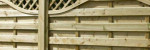
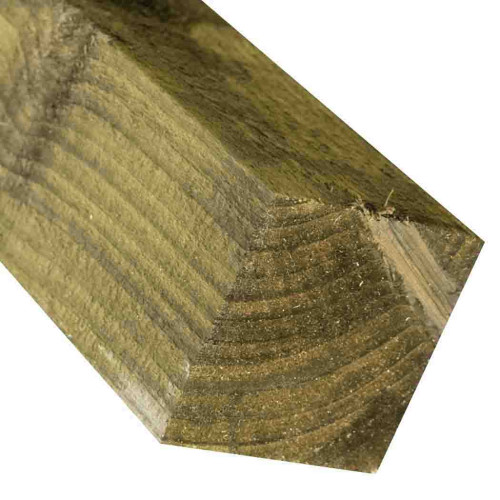
Wooden fence posts provide a natural and versatile support system for fence panels, timber-built fencing, trellis, garden screens and gates.
Timber posts are straightforward to cut, drill and fix into, making them suitable for standard fence runs as well as customised garden projects.
The range includes popular lengths and sections for lower boundaries, full-height privacy fencing, heavier installations and gate openings. Brown and green or natural pressure treated finishes are available across suitable products.
Wooden posts form part of our wider fence posts range. The correct option will depend on the fence height, panel weight, post spacing, wind exposure, ground conditions and amount of timber required below ground.
Why Choose Wooden Fence Posts?
Wooden fence posts create a consistent all-timber appearance that blends naturally with fence panels, gates, trellis and garden landscaping.
They can be drilled and cut on site, giving installers more flexibility where dimensions, ground levels or fixing positions differ from a standard layout.
Timber posts also provide direct fixing points for panel clips, brackets, rails and boards.
This makes them suitable for complete fence panels as well as traditional closeboard fencing built from individual components.
Compared with concrete posts, wooden posts are generally lighter and easier to handle, although they require careful installation because the below-ground section remains exposed to moisture.
Pressure Treated Wooden Fence Posts
Our wooden fence posts are pressure treated for outdoor use.
During treatment, preservative is forced into the timber to help protect it against rot and fungal decay.
This provides deeper protection than a decorative surface coating and improves the post’s suitability for garden fencing.
Pressure treatment does not make timber immune to decay. The section at and below ground level remains the most vulnerable area because it is regularly exposed to damp soil and limited airflow.
Correct installation, suitable drainage and regular inspection remain important throughout the life of the fence.
75mm Wooden Fence Posts
75mm wooden fence posts are widely used for general garden fencing, lighter panels, low boundaries and trellis installations.
Their smaller section makes them easier to handle and less visually dominant than larger posts.
They can be suitable for standard domestic projects where the fence height, panel weight and exposure do not require a more substantial post.
The correct section should not be selected from height alone. A tall solid panel in an exposed location may place greater demands on the post than a lower or more open design.
Check the individual product specifications and consider the complete fence system before ordering.
100mm Wooden Fence Posts
100mm wooden fence posts provide a more substantial timber section for taller fencing, heavier panels, exposed boundaries and gate installations.
The larger section can create greater visual weight and provide more material for secure fixings.
These posts are often selected for full-height privacy fencing, closeboard construction and locations where additional strength is preferred.
They are heavier than 75mm posts and require larger post holes and more foundation material.
A larger post still needs to be installed to a suitable depth and correctly supported. Increasing the section alone does not compensate for an inadequate foundation.
Wooden Fence Post Lengths
Wooden fence posts are available in different lengths to suit a range of visible fence heights and installation depths.
The total post length must include the panel, any gravel board or trellis and the section required below ground.
A common mistake is to choose a post based only on the visible panel height.
For example, a 6ft panel installed above a gravel board creates a boundary taller than 6ft and therefore requires a longer post.
Use our fence post length calculator to estimate a suitable starting length for your project.
Brown Wooden Fence Posts
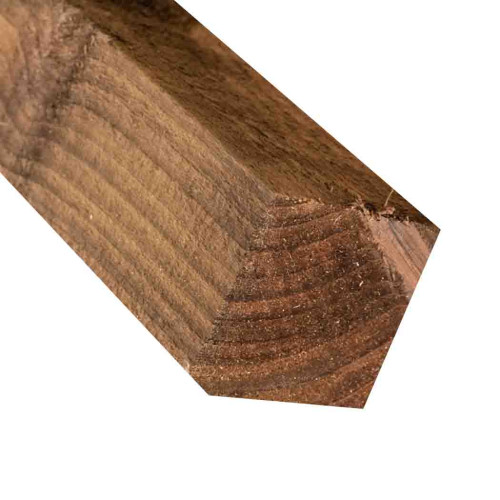
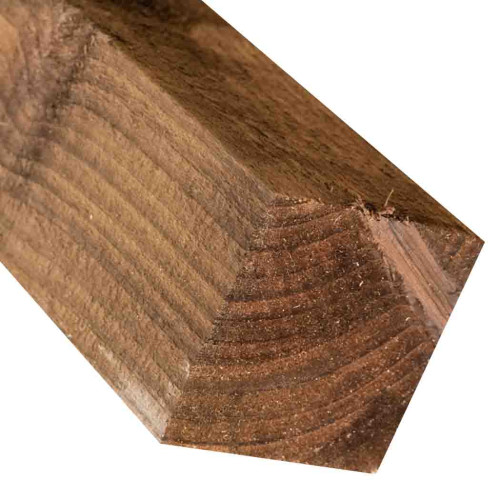
Brown pressure treated wooden posts provide a warm timber colour suited to traditional gardens and existing brown-treated fencing.
They work well with matching closeboard panels, waney lap panels, wooden gravel boards and garden gates.
The initial colour will naturally soften and weather after exposure to sunlight and rain.
New brown-treated posts may appear brighter than older timber already installed in the garden.
Natural variations in shade and grain are expected because each piece of timber absorbs treatment differently.
Green And Natural Wooden Fence Posts
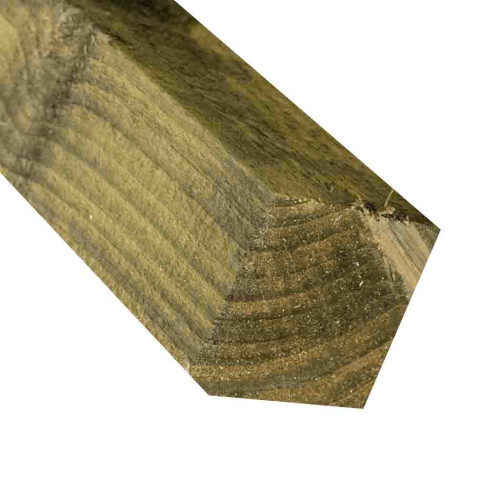
Green or natural pressure treated posts have a lighter appearance that blends naturally with lawns, hedges and planting.
The treatment may create a fresh green tint when the post is new.
This colour gradually becomes less pronounced as the timber weathers outdoors.
Green or natural posts work well with matching fence panels, trellis, rails and gravel boards.
Where posts are being added to an existing fence, a temporary colour difference should be expected until the new timber has weathered.
Wooden Posts For Closeboard Fence Panels
Closeboard fence panels are substantial and solid, so their posts must be selected carefully.
The panel can be fixed between wooden posts using appropriate clips or brackets, or attached across the post faces depending on the installation method.
Because closeboard panels catch significant wind, taller installations may require a larger post section and deeper foundation.
Ultra heavy duty panels are also heavier to handle and place additional load on the supporting structure.
Check the post spacing and panel width before setting the foundations.
Wooden Posts For Waney Lap Fence Panels
Waney lap fence panels are commonly installed with wooden posts to create a traditional all-timber boundary.
The panels can be secured using suitable exterior clips, brackets or screws.
Waney lap panels are generally lighter than closeboard alternatives, but full-height versions still catch wind and require stable posts.
A wooden gravel board may be installed beneath the panel to create a consistent timber finish.
The lower panel edge should be kept away from damp soil where possible.
Wooden Posts For Picket Fence Panels
Picket fence panels are most commonly installed with wooden posts.
The open panel design and natural post finish create a traditional boundary suited to front gardens, paths and planted areas.
Lower picket panels may not require the same post section as full-height privacy fencing.
The posts should still be set securely and positioned at a consistent height to maintain an even top line.
Where a picket gate is included, more substantial gate posts may be required at the opening.
Wooden Posts For Decorative Fence Panels
Decorative fence panels often work particularly well with wooden posts because the complete system retains a natural timber appearance.
The posts can complement curved, lattice and slatted panel designs without introducing the visual contrast of concrete.
Accurate alignment is important because decorative top profiles make uneven posts more noticeable.
Post size should be chosen according to the panel weight, height and exposure.
Exterior fixings should be suitable for pressure treated timber and the frame construction.
Wooden Posts For Trellis Panels
Wooden posts can support trellis panels used for garden screening, climbing plants and decorative boundaries.
The post section can often be lighter than that required for a solid privacy panel, depending on the trellis size and site exposure.
Open trellis allows more airflow, but mature climbing plants can add considerable weight and wind resistance over time.
The posts and fixings should therefore be selected for the expected mature planting rather than the empty trellis alone.
Regular pruning can help control the load placed on the structure.
Wooden Posts For Garden Gates
Garden gates place repeated sideways and twisting loads on their supporting posts.
A gate post may therefore need a larger timber section than the intermediate posts used elsewhere in the fence run.
The required post depends on the gate width, height, construction and weight.
Solid feather edge gates generally need more substantial support than lower picket gates.
The hinge post carries most of the gate weight and must be installed securely to prevent leaning or movement.
Explore our dedicated gate posts where a more substantial gate support is required.
Wooden Posts For Closeboard Fencing Built On Site
Wooden posts are commonly used to construct traditional closeboard fencing from individual rails and feather edge boards.
Horizontal cant rails or suitable square rails are fixed between the posts, followed by overlapping feather edge boards.
This method allows the fence to be built to non-standard widths and to follow changes in ground level more closely than complete panels.
The post spacing, number of rails and board height must be planned as one complete system.
Larger or taller closeboard fences may require more substantial posts than lower garden boundaries.
Wooden Posts With Wooden Gravel Boards
Wooden gravel boards can be installed beneath fence panels to create a consistent all-timber appearance.
They help raise the panel away from damp soil, rain splash and garden debris.
The boards can be fixed directly to wooden posts using suitable exterior fixings.
Because timber gravel boards remain close to the ground, they should be kept clear of accumulated soil and wet leaves where possible.
The gravel board height must be included when selecting the post length and total fence height.
Wooden Posts With Concrete Gravel Boards
Concrete gravel boards may be used with wooden posts where suitable fixing brackets or supports are available.
This combines the natural appearance of timber posts with a durable, rot-resistant base beneath the panels.
The fixing method and board dimensions should be checked before ordering.
Concrete gravel boards are heavy and need to be supported securely.
The visual contrast between concrete and timber should also be considered as part of the finished fence design.
Wooden Fence Posts For Windy Gardens
Wooden posts can support fencing in exposed gardens when their section, length and foundations are appropriate for the site.
Tall solid panels create greater wind load than lower or more open fencing.
Long uninterrupted runs and boundaries facing open land may require larger posts and more substantial foundations.
A 100mm post may be more appropriate than a 75mm post for some exposed full-height installations.
No post section can compensate for poor installation. The below-ground depth, post alignment and foundation size remain essential.
Wooden Posts For Sloping Ground
Wooden fence posts provide useful flexibility on sloping ground because rails, panels and boards can be fixed at different heights.
Complete panels are normally stepped from one bay to the next.
Site-built closeboard fencing can follow the ground more closely because the rails and boards are installed individually.
Post lengths may need to vary where ground levels change significantly.
The top line and below-ground depth should be planned before posts are cut or installed.
Wooden Posts In Soft Or Wet Ground
Soft or consistently wet ground can make fence post installation more difficult.
The foundation must provide sufficient support to prevent movement, and drainage around the post should be considered.
Timber exposed to prolonged moisture at ground level is at greater risk of deterioration over time.
Pressure treatment helps protect the wood, but standing water and poorly drained soil can still reduce service life.
In particularly wet conditions, concrete posts may be considered as an alternative because they do not decay at ground level.
Setting Wooden Posts In Concrete
Wooden posts are commonly set within a concrete or post-mix foundation.
The post should be positioned vertically and supported while the material sets.
The foundation surface should be shaped so that water does not collect around the timber at ground level.
The amount of material required depends on the post section, hole dimensions and soil conditions.
Use our post mix calculator to estimate a suitable starting quantity.
Always follow the product instructions and allow the foundation to set before placing heavy loads on the post.
Using Fence Post Spikes And Supports
Fence post spikes and supports provide alternative installation methods for selected timber projects.
Drive-in spikes can be used in compatible ground conditions, while bolt-down supports may be fixed to suitable concrete surfaces.
These systems are not appropriate for every fence.
Tall solid panels, exposed locations and heavy gates place significant loads on the post support.
Check the product specifications and consider the fence height, post section and wind exposure before choosing a spike or support instead of a traditional foundation.
Cutting Wooden Fence Posts
One advantage of wooden posts is that they can be cut on site where a shorter finished length is required.
Measure carefully before cutting because removed length cannot be restored.
The treated end should be positioned appropriately, and any newly exposed timber should be managed according to the treatment product guidance.
A straight, square cut produces a neater result and makes it easier to fit post caps where required.
Avoid unnecessary cutting if a standard post length already suits the project.
Drilling And Fixing Into Wooden Posts
Wooden posts provide straightforward fixing points for panels, rails, trellis and gate furniture.
Use exterior-grade screws, bolts or brackets suitable for pressure treated timber and the load being supported.
Pilot holes may help reduce splitting when using larger screws or fixing close to the timber edge.
Fixings should be long enough to achieve a secure hold without unnecessarily passing through the opposite face.
Gate hinges and heavy structural connections may require larger bolts rather than ordinary timber screws.
Replacing A Wooden Fence Post
A leaning, loose or decayed wooden post may need to be replaced even if the surrounding panels remain usable.
The panels should be removed or supported before the damaged post is taken out.
Check the original post section, length and spacing before ordering the replacement.
The old foundation may also need to be removed or broken out to create space for the new post.
If several posts show similar deterioration, replacing a larger section of the fence may be more efficient than carrying out repeated isolated repairs.
Signs A Wooden Fence Post Needs Replacing
Movement at ground level is one of the clearest signs that a wooden post may be failing.
Other warning signs include deep splitting, severe softness, visible decay and a post that no longer remains vertical.
Surface weathering and small natural cracks do not always mean the post has lost structural strength.
Inspect the area around ground level carefully because decay may be hidden below the soil.
A failing post should be addressed before it places additional strain on the panels and neighbouring posts.
Measuring A Fence Run For Wooden Posts
Measure the complete boundary and identify straight sections, corners, ends and gate openings.
Count the panel bays and determine the spacing required by the actual panel width.
A straight run normally requires one more post than the number of panels.
Site-built fencing may use different spacing depending on the rail lengths and construction method.
Measure every existing bay when carrying out repairs because older posts may not have been installed at consistent intervals.
Draw the layout before ordering to reduce the risk of missing corner or gate posts.
Setting Out Wooden Fence Posts
Mark the full fence line before digging any post holes.
Use a string line to keep the boundary straight and check the position from several viewpoints.
Measure the distance between posts carefully so panels, rails and gravel boards fit correctly.
Account for gate openings, corners and changes in ground level during the setting-out stage.
Checking the complete layout before excavation is easier than correcting a post after the foundation has set.
Installing Wooden Fence Posts
Wooden posts should be installed vertically and to a depth suitable for the fence height, exposure and ground conditions.
The post must remain supported while the foundation material sets.
Check the alignment and spacing repeatedly during installation.
The visible post height should account for the panel, gravel board and any fence-top trellis.
Avoid leaving untreated cut surfaces or damaged timber in direct ground contact.
Where the project involves tall fencing, heavy gates or difficult ground, professional installation may be appropriate.
Caring For Wooden Fence Posts
Pressure treated wooden posts require limited routine maintenance, but regular inspection can help identify problems early.
Keep soil, leaves and dense vegetation from building up around the post base.
Check for movement after strong winds and tighten loose brackets or fixings.
Inspect the timber around ground level for softness, deep splits or signs of decay.
Cut back heavy climbing plants where they place additional load on the fence.
A compatible exterior timber coating may be applied to refresh or alter the appearance, following the coating manufacturer’s instructions.
Wooden Or Concrete Fence Posts?
Wooden and concrete fence posts provide different practical and visual benefits.
Wooden posts create a natural appearance, are easier to handle and can be drilled or cut during installation.
Concrete posts resist ground-level decay and provide a rigid, low-maintenance system for compatible panels and gravel boards.
Timber posts may require replacement sooner where ground conditions remain consistently wet.
Concrete posts are heavier and more difficult to move or install.
The right choice depends on the desired appearance, maintenance priorities, installation method and type of fencing being supported.
Buy Wooden Fence Posts From East Coast Fencing
East Coast Fencing supplies pressure treated wooden fence posts for fence panels, site-built fencing, trellis, garden gates and outdoor timber projects.
The range includes popular 75mm and 100mm sections in lengths suited to low boundaries, full-height privacy fencing and more substantial installations.
Whether you need one replacement post or timber supports for a complete garden boundary, compare the available sizes, lengths and treatment finishes above.
East Coast Fencing is backed by more than 20,000 customer reviews across Trustpilot and Google.