


Quick answer: Wooden fence posts most often rot around ground level because this is where timber is repeatedly exposed to moisture, soil, air and changing weather conditions. Pressure treatment improves durability but does not make timber permanently immune to decay. The best protection comes from using posts suitable for ground contact, installing them correctly, preventing water from collecting around the base, keeping soil and mulch away from the post and dealing with drainage problems before they cause persistent damp.
A wooden fence post can look perfectly sound above ground while serious deterioration is developing around the soil line.
This is one of the most common failure points in timber fencing.
The fence panels may still be usable. The rails may be sound. The post may even look fine until you push the fence and discover movement around its base.
Understanding why this happens is useful whether you are installing new Wooden Fence Posts or deciding what to do with an older fence that has started leaning.
Why Do Wooden Fence Posts Usually Rot At Ground Level?
The ground line creates difficult conditions for timber.
The post is exposed to several things at once:
- Moist soil
- Rainwater
- Oxygen
- Organic material
- Changing temperatures
- Repeated wetting and drying
The section further underground can behave differently from the section immediately above ground, while the exposed timber higher up can dry much more easily.
The area where soil, air and timber meet can therefore remain damp enough for long periods to encourage fungal decay.
Does Pressure Treatment Stop Fence Posts Rotting?
Pressure treatment significantly improves the durability of suitable fencing timber.
It helps protect against fungal decay, rot and insect attack.
It does not make timber waterproof or permanently indestructible.
Performance still depends on:
- The treatment being suitable for the intended use
- Installation quality
- Drainage
- Ground conditions
- Physical damage
- Whether freshly cut surfaces are protected
- The loads placed on the post
A correctly treated post installed in reasonably well-drained ground is dealing with very different conditions from the same type of post sitting permanently in saturated soil.
Is All Pressure-Treated Timber Suitable For Fence Posts?
No.
"Pressure treated" describes a treatment process, but outdoor timber can be intended for different exposure conditions.
A fence rail positioned above ground does not experience the same conditions as a fence post buried permanently in soil.
If a wooden post is going directly into the ground, make sure the treatment specification is suitable for ground-contact use.
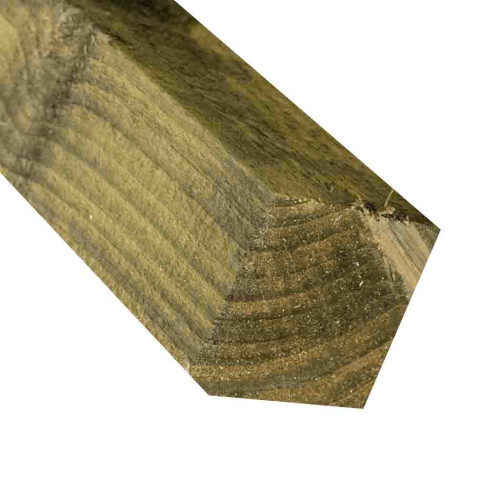
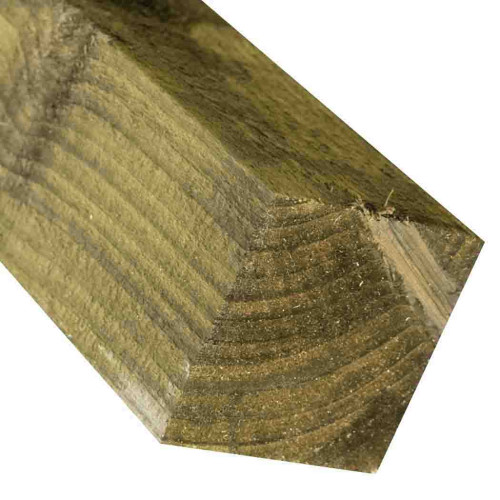
Do not choose posts purely by whether they look green or brown.
The treatment colour is mainly an appearance difference. Suitability for the application is more important.
What Makes A Fence Post Rot Faster?
| Condition | Why It Matters | What To Check |
|---|---|---|
| Standing water | Keeps timber persistently wet | Drainage around post base |
| Soil piled against post | Raises the damp ground-contact area | Finished soil level |
| Wet mulch or leaves | Traps moisture around timber | Garden debris at fence line |
| Unsuitable treatment | May not provide protection for buried use | Post specification |
| Untreated fresh cuts | Exposes internal timber | Cut ends and notches |
| Poor concrete detailing | Can allow water to sit against post | Top of foundation |
| Heavy fence loading | Movement can stress weakened timber | Fence height, panels and wind exposure |
Can Concrete Around A Wooden Post Cause Rot?
Concrete itself is not automatically the problem.
Wooden fence posts are commonly installed using concrete or post mix because the foundation needs to hold the post securely.
The detail at the top of the concrete is important.
If the finished surface forms a depression around the post, rainwater can collect directly beside the timber.
A better arrangement is one that allows surface water to drain away rather than creating a permanent puddle around the post.
The foundation must still suit the fence, post and ground conditions.
Should Concrete Finish Above Ground Around A Timber Post?
The key consideration is water management rather than following one arbitrary finish for every garden.
You do not want soil, mulch and standing water collecting around the timber-concrete junction.
Where concrete is visible at the surface, it can be finished so water sheds away from the post rather than towards it.
Avoid forming a bowl around the timber.
Should You Put Gravel Under A Wooden Fence Post?
A small amount of compacted free-draining aggregate can provide a clean base in some installations and may help when adjusting post height.
It is not a cure for poor drainage.
If the surrounding ground remains waterlogged, putting a little gravel at the bottom of the hole will not make the site dry.
Do not use a deep gravel layer that unnecessarily reduces the amount of post installed into firm ground.
The post still needs a properly designed foundation.
Why Is Waterlogged Ground A Problem For Wooden Posts?
Persistent water creates much harsher conditions for timber.
You may notice a problem if post holes:
- Fill with water while you are digging
- Remain full after rainfall has stopped
- Contain very soft mud
- Collapse around the sides
- Sit in a permanently boggy section of the garden
Do not simply install the post and assume pressure treatment removes the problem.
Where possible, investigate why the fence line remains saturated.
Improving drainage or changing the fencing system may be more effective than repeatedly replacing timber posts in the same wet holes.
Are Concrete Posts Better In Very Wet Ground?
Concrete Fence Posts have one obvious advantage in persistently damp locations: the post material itself does not rot.
That can make concrete worth considering where timber posts have repeatedly failed at ground level.
Wooden posts still have several advantages:
- Natural appearance
- Easier cutting
- Easier drilling
- Straightforward fixing of rails and panels
- Lower handling weight
- Flexibility for custom-built fencing
The right choice therefore depends on more than durability alone.
For an all-timber fence in reasonably well-drained ground, correctly specified Wooden Fence Posts remain a practical option.
Can Soil Built Up Around A Post Cause Problems?
Yes.
A post may originally have been installed correctly but become more exposed to moisture after landscaping.
This commonly happens when:
- New topsoil is added
- A flower bed is raised
- Mulch is spread against the fence
- A lawn level is increased
- Compost is stored beside the boundary
Raising the soil level effectively raises the ground-contact zone on the post.
A section of timber that was originally able to dry above ground may suddenly spend much of the year surrounded by damp material.
Can Mulch Rot A Fence Post?
Mulch itself is not attacking the post, but a thick layer can hold moisture around the timber.
The same applies to:
- Woodchip
- Compost
- Grass cuttings
- Wet leaves
- Dense vegetation
Keep these materials away from the post base where practical.
This also makes inspection easier.
Can Climbing Plants Affect Wooden Fence Posts?
Yes, particularly once plants become large.
Dense vegetation can trap moisture around timber and make it difficult to see the post base.
A mature climber can also add considerable weight and wind resistance to the fence.
This means a post that has already started weakening around ground level is asked to resist greater loads.
Keep heavy plants under control and inspect the fencing behind them periodically.
Why Does Wind Matter If Rot Is Caused By Moisture?
Rot weakens the timber. Wind exposes that weakness.
A tall fence panel transfers wind load into the posts.
If the post has lost significant material around ground level, repeated movement can eventually cause it to:
- Lean
- Crack
- Snap
- Pull loose from its foundation
This is why a fence may appear acceptable for months and then fail during one period of strong weather.
The storm may be the final load, while deterioration at the post base has been developing for much longer.
Do Bigger Wooden Fence Posts Resist Rot Better?
A larger post contains more timber, but section size should not be confused with treatment or moisture resistance.
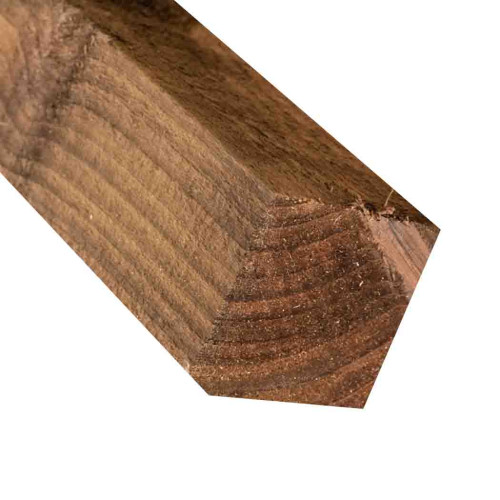
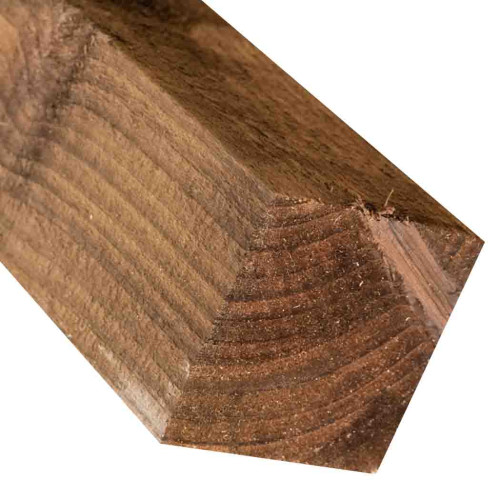
East Coast Fencing's current Wooden Fence Posts include common square sections of:
- 75 x 75mm
- 100 x 100mm
with lengths including:
- 1.8m
- 2.4m
- 3.0m
The 100mm section provides more material and a broader fixing face than a 75mm post, making it more suitable for many taller and heavier fence arrangements.
That does not mean a 100mm post can safely sit in permanently wet conditions indefinitely.
Choose the post section for the structural job and the correct treatment and installation for the environmental exposure.
Can A Fence Post Rot From The Top?
Deterioration can occur anywhere timber remains damp, although ground level is usually the area that deserves the closest attention.
The top of an exposed post receives direct rainfall.
A clean finish that sheds water is preferable to one where water can consistently collect.
Post caps can also be used as a finishing detail on suitable timber posts.
They do not solve ground-level moisture problems, but they can protect and finish the exposed top of the post.
Should You Treat A Fence Post After Cutting It?
Freshly cutting pressure-treated timber exposes an internal surface that was previously inside the post.
Where cutting, notching or drilling is necessary, use a suitable cut-end treatment where required by the timber specification.
This is particularly important for substantial cuts.
Avoid unnecessary cutting of the buried end of the post simply to make a longer post fit an incorrectly planned installation.
It is better to choose a suitable length before work starts.
Which End Of A Wooden Fence Post Should Go In The Ground?
Do not rely on visual appearance alone to decide that one end is inherently intended for burial unless the product is specifically marked or manufactured that way.
Instead, plan any required trimming before installation.
If you need to shorten a treated post, consider keeping the factory-treated end intended for ground contact intact where the product guidance requires it and make any necessary alterations in accordance with the treatment instructions.
Protect fresh cuts appropriately.
Does Post Length Affect The Risk Of Failure?
Post length mainly affects how much timber is available for the visible fence and the below-ground installation.
A common mistake is buying a post that only matches the visible fence height.
For example, a 1.8m post cannot support a 1.8m-high fence if a substantial section of that same post also needs to be installed below ground.
East Coast Fencing's 1.8m posts are more naturally suited to lower fencing and garden structures.
The 2.4m versions provide greater flexibility for many full-height garden fences, while 3.0m versions are available where additional overall length is genuinely required.
Post depth must still suit:
- Fence height
- Post section
- Ground conditions
- Wind exposure
- Panel weight
- Any gravel board or trellis
Can A Post Rot Because It Was Installed Too Shallow?
Shallow installation does not directly cause fungal decay, but it can contribute to post movement.
A post that rocks repeatedly places mechanical stress around the ground line.
Cracks, movement and failed foundations can make the complete installation less stable and may create areas where water collects.
Correct depth and secure foundations therefore matter even though they are not timber preservatives in themselves.
How Can You Tell If A Wooden Fence Post Is Rotting?
Do not rely only on colour.
Weathered timber can turn grey or develop dark staining while remaining structurally sound.
More useful warning signs include:
- Soft timber around ground level
- Crumbling wood
- Significant movement when the post is pushed
- The fence leaning around one particular post
- Deep deterioration around the base
- Fixings pulling from weakened timber
- The post narrowing noticeably at ground level
- A post snapping during windy weather
Check several points around the post rather than inspecting only the most visible face.
Is A Crack In A Wooden Fence Post The Same As Rot?
No.
Timber posts can develop checks and splits as their moisture content changes.
Large timber sections are particularly prone to visible surface checking.
A crack does not automatically mean fungal decay is present.
The questions to ask are:
- Is the surrounding timber still firm?
- Is the post stable?
- Does the split materially affect the fixing area?
- Is there soft or crumbling timber?
- Is the crack getting substantially worse?
A dry surface check in otherwise firm timber is very different from a post that can be pushed apart around a rotten base.
Why Is My Wooden Fence Post Leaning?
Rot is one possibility, but not the only one.
A wooden post can lean because:
- The foundation has moved
- The hole was too shallow
- The ground has softened
- The post was not installed plumb
- The fence catches excessive wind
- A heavy gate is loading the post
- The timber has failed at ground level
Do not assume every leaning post needs the same repair.
Check whether the post itself is deteriorated or whether a sound post is moving within a failed foundation.
Can A Rotten Wooden Fence Post Be Repaired?
Sometimes.
If deterioration is concentrated around ground level but enough strong timber remains above it, a concrete repair spur may provide a practical repair.
The spur is installed beside the existing wooden post and secured into the ground with concrete or post mix.
The remaining sound timber is then bolted to the spur.
This transfers much of the structural support into the new concrete component.
When Is A Concrete Repair Spur Suitable?
A repair spur may be worth considering when:
- The upper post remains sound
- Deterioration is mainly around ground level
- The fence panels are still usable
- Only one or two posts have failed
- The fence line can still be brought back into position
- There is enough strong timber for secure bolting
A repair spur supports the remaining wooden post.
It does not restore rotten timber.
When Should A Rotten Fence Post Be Replaced?
Replacement is usually more appropriate when:
- Rot extends well above ground level
- The post has snapped badly
- There is insufficient sound timber for a repair spur
- Several structural fixings have failed
- The post is badly twisted as well as rotten
- The fence line needs substantial realignment
- A heavily loaded gate post has failed
If many posts along the same boundary are deteriorating, assess the fence as a whole.
Repeated local repairs can eventually cost more effort than rebuilding a fence whose main support system has reached the end of its useful life.
Should You Replace One Rotten Post Or The Whole Fence?
A single rotten post does not mean every Fence Panel needs replacing.
Inspect each component separately.
Check:
- Neighbouring posts
- Fence panels
- Rails
- Gravel boards
- Panel clips and brackets
- Gate posts
If the rest of the fence remains sound, repairing or replacing one post is often entirely reasonable.
If several posts are soft and multiple panels are deteriorating, more extensive replacement may make better sense.
How Do You Help Stop New Wooden Fence Posts Rotting?
Good durability starts before the first hole is filled.
- Choose suitable treated posts: Use timber specified for the intended ground-contact application.
- Select the correct section: Match 75mm or 100mm posts to the height, weight and exposure of the fence.
- Select enough post length: Allow for both the visible fence and the required below-ground section.
- Inspect the ground: Identify waterlogging and obvious drainage problems before installation.
- Install a secure foundation: The post should not rock or move under normal fence loads.
- Manage surface water: Avoid creating a hollow around the post where rain can collect.
- Protect necessary cuts: Apply suitable cut-end treatment where required.
- Keep soil levels sensible: Do not later bury additional untreated sections of the post.
- Clear wet debris: Remove leaves, compost and mulch from around the base.
- Inspect periodically: Catch movement and moisture problems before the post becomes structurally weak.
Should You Paint The Bottom Of A Fence Post?
A surface coating should not be treated as a substitute for the correct ground-contact timber specification.
Paint, stain and other decorative treatments mainly affect the exposed surface.
The critical protection for a buried post comes from:
- Appropriate preservative treatment
- Correct installation
- Drainage
- Good detailing around ground level
A brush-on coating cannot turn unsuitable above-ground timber into properly specified ground-contact material.
Do Fence Post Caps Prevent Rot?
Post caps can protect and finish the exposed top of a wooden post.
They may help reduce direct weathering of the end grain at the top.
They do not protect the buried section or solve standing water around the ground line.
Use post caps as a finishing detail rather than treating them as the main defence against post failure.
Should You Keep Grass Away From Fence Posts?
It is sensible where practical.
Long wet grass can hold moisture around the timber and make inspection difficult.
Keep vegetation under reasonable control around wooden posts.
Take care when using a strimmer.
Repeatedly striking the base of a wooden post can physically damage the surface and remove timber from exactly the area that already experiences the hardest conditions.
How Often Should Wooden Fence Posts Be Checked?
A complicated maintenance programme is unnecessary.
Inspecting the fence periodically and after particularly severe weather is usually enough to spot developing problems.
Pay particular attention to:
- Posts hidden behind shrubs
- Posts beside raised beds
- Low sections of the garden
- Areas where water collects
- Gate hinge posts
- Posts supporting tall solid panels
Movement often becomes noticeable before complete failure.
Why Do Gate Posts Need Extra Attention?
A gate post is subjected to different loading from an ordinary fence post.
The gate hangs from one side and applies repeated leverage every time it opens and closes.
Wind can add further force, particularly with tall solid Garden Gates.
A gate hinge post that starts weakening at ground level may show symptoms such as:
- The gate dropping
- The latch no longer lining up
- The post leaning towards the opening
- Movement when the gate is operated
Do not keep adjusting the gate hardware if the real problem is a deteriorating post.
Can You Avoid Ground Contact Completely?
Some fencing applications use metal post supports rather than burying the timber directly.
Examples can include bolt-down supports and drive-in supports for suitable lighter applications.
These are not automatically appropriate for every full-height privacy fence.
The support system still has to resist the loads created by the fencing and the site.
For substantial panel fencing, choose the post-support method based on structural requirements rather than simply trying to keep every piece of timber above soil.
Common Mistakes That Shorten Wooden Fence Post Life
- Using timber not specified for ground contact
- Choosing post size purely by price
- Installing posts too shallow for the fence
- Ignoring waterlogged ground
- Allowing concrete to form a water-catching hollow
- Piling soil against the post after installation
- Building raised beds directly around posts
- Leaving wet leaves and mulch around the base
- Leaving fresh cuts untreated where treatment is required
- Assuming green or brown colour proves suitability
- Allowing heavy climbing plants to overload the fence
- Ignoring movement until the post snaps
- Trying to repair badly rotten timber with larger screws
FAQs
Why Do Wooden Fence Posts Rot Where They Meet The Ground?
The ground line combines moisture, soil and air around the timber. This can keep the post damp for long periods and creates conditions where fungal decay can develop.
Do Pressure-Treated Fence Posts Still Rot?
They can eventually. Pressure treatment improves timber durability but does not make wood permanently immune to moisture, decay or physical damage.
How Do I Stop Wooden Fence Posts Rotting?
Use posts correctly treated for ground contact, install them securely, manage drainage, keep soil and wet organic material away from the base and protect fresh cuts where required.
Does Concrete Make Wooden Fence Posts Rot?
Concrete itself is not automatically responsible. Problems are more likely where water is allowed to collect around the timber or where the surrounding ground remains persistently saturated.
Can A Rotten Wooden Fence Post Be Saved?
Sometimes. A concrete repair spur may be suitable where deterioration is concentrated around ground level and enough structurally sound timber remains above it. Badly deteriorated posts should be replaced.
Does A Crack Mean My Wooden Fence Post Is Rotten?
No. Surface checking and splitting can occur as natural timber dries. Rot is more closely associated with soft, crumbling or structurally weakened timber. Check post stability as well as appearance.
Are 100mm Wooden Fence Posts Better Than 75mm Posts?
A 100 x 100mm post provides a more substantial section and broader fixing face, making it more suitable for many tall or heavy fences. A 75 x 75mm post can be appropriate for lighter fencing, picket panels and trellis. Neither size is immune to rot if installed in unsuitable conditions.
Should I Replace Wooden Posts With Concrete Posts If They Keep Rotting?
It is worth considering if the fence line remains persistently wet or timber posts have repeatedly failed. Concrete posts do not rot, although they are heavier and create a different appearance and fencing system.
Protect The Ground Line And You Protect The Fence
The most vulnerable part of many wooden fence posts is not the top that receives direct rain. It is the relatively small section around ground level.
That is where moisture, air, soil and structural loading all meet.
Pressure treatment gives timber important protection, but the rest of the installation still needs to be right. Choose a post suitable for ground contact, select enough section and length for the fence, install it securely and avoid creating conditions where water remains trapped around the base.
After installation, keep soil, mulch and wet garden debris away from the post where practical and inspect the fence if it starts moving.
If one post eventually deteriorates, assess the damage before replacing the whole fence. A local repair spur or individual replacement may be enough where the surrounding panels and posts remain sound.
If the same boundary repeatedly suffers from rotten timber posts, investigate the ground conditions rather than treating each failure as an isolated problem. Improving drainage or moving to a concrete-post system may provide a more appropriate long-term solution.