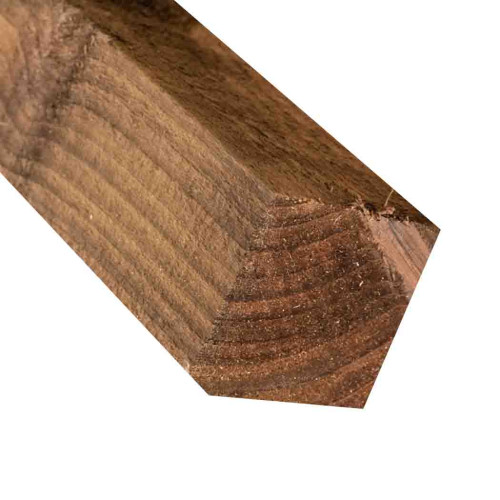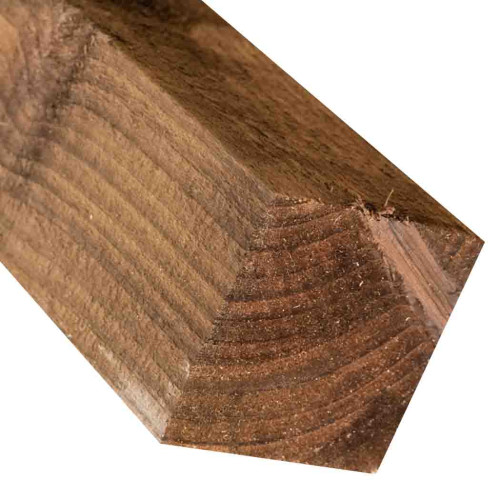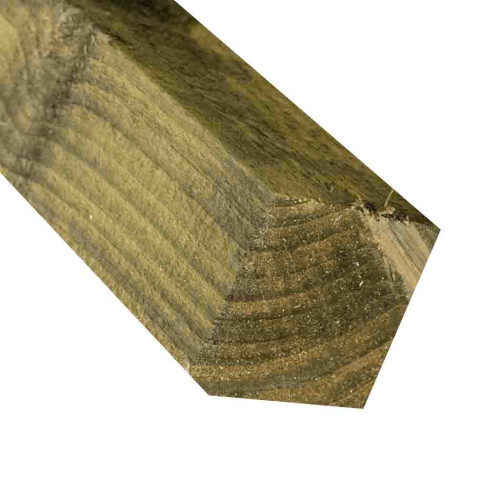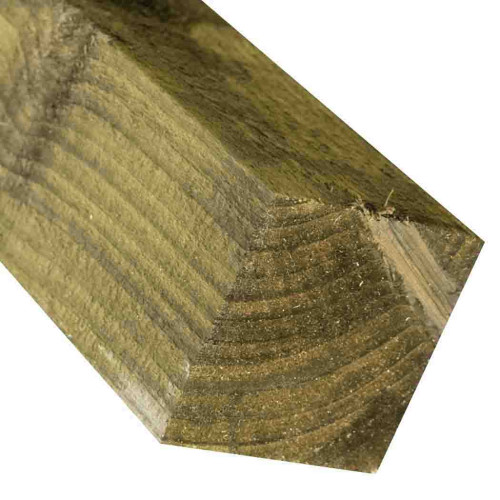




Quick answer: Choose a wooden fence post long enough for both the finished fence height above ground and the section needed below ground. A 1.8m post is generally suited to lower fencing, while 2.4m posts are commonly more useful for full-height garden fencing. A 3.0m post provides extra length for taller structures, substantial changes in level or installations requiring more timber below ground. Post length should always be considered alongside post section, fence type, ground conditions and wind exposure.
One of the easiest fencing mistakes to make is buying posts that match the height you want above ground.
If you want a 1.8m fence, a 1.8m wooden post might initially sound right.
It is not.
A substantial part of the post must also support the fence below ground, which means the overall post needs to be considerably longer than the visible part of the finished boundary.
East Coast Fencing's current Wooden Fence Post range includes common lengths of 1.8m, 2.4m and 3.0m in suitable 75 x 75mm and 100 x 100mm sections.
Each length has a useful place. The important part is matching it to the complete fence rather than choosing by one dimension alone.
What Do Fence Post Lengths Actually Mean?
A post described as 2.4m long measures approximately 2.4m from end to end.
That total length needs to cover two separate parts of the installation:
- The section visible above ground
- The section installed below ground
It may also need to account for:
- A Gravel Board beneath the Fence Panel
- Trellis above the main fence
- Changes in ground level
- A small amount of post showing above the panel
This is why post length should be calculated after deciding the complete fence arrangement.
1.8m vs 2.4m vs 3.0m Fence Posts At A Glance
| Post Length | Typical Starting Point | Main Consideration |
|---|---|---|
| 1.8m | Low fencing, picket fencing and garden divisions | Limited length once below-ground support is allowed for |
| 2.4m | Many full-height domestic fences | Useful balance of visible and below-ground length |
| 3.0m | Taller structures, changing levels and demanding installations | Extra length should solve a genuine requirement |
When Is A 1.8m Wooden Fence Post Suitable?
A 1.8m post is most useful where the finished fencing is relatively low.
Typical applications can include:
- 0.6m Picket Fence Panels
- 0.9m Picket Fence Panels
- Lower Trellis Panels
- Garden divisions
- Decorative boundaries
- Other lightweight garden structures where suitable
Current East Coast Fencing Picket Fence Panels are available in nominal heights of approximately 0.6m, 0.9m and 1.2m.
A 1.8m post therefore provides considerably more flexibility with the lower two heights than it would with a full 1.8m privacy panel.
Can You Use A 1.8m Post For A 1.8m Fence?
Not if the post needs to be installed into the ground.
If the complete post is only 1.8m long and the required visible fence height is also 1.8m, there is no meaningful post length remaining below ground.
This is one of the most important measurements to understand before ordering fencing materials.
The height of the panel and the length of the post are not supposed to be identical.
Is A 1.8m Post Long Enough For A 1.2m Fence?
It may be suitable in some installations because there is approximately 600mm of total length remaining after allowing 1.2m above ground.
That simple calculation does not automatically approve the installation.
You still need to consider:
- Ground conditions
- Post section
- Fence weight
- Wind exposure
- Whether a Gravel Board is included
- The foundation method
A low open fence in a sheltered garden places different demands on its posts from a solid boundary in an exposed position.
When Is A 2.4m Wooden Fence Post Suitable?
A 2.4m post is one of the most useful lengths for ordinary domestic fencing.
It provides considerably more overall length than a 1.8m version without moving into the size and handling requirements of a 3.0m post.
Applications can include suitable:
- Full-height Fence Panels
- Closeboard fencing
- Waney Lap Fence Panels
- Decorative Fence Panels
- Taller Picket fencing
- Privacy screens
The exact suitability still depends on how much of that 2.4m length will remain above ground.
Why Are 2.4m Posts Commonly Used With 6ft Fencing?
A nominal 6ft fence is approximately 1.8m high.
A 2.4m post provides another approximately 600mm of overall length beyond that visible height.
That makes it a much more logical starting point than a 1.8m post for many full-height installations.
However, the calculation becomes different when a Gravel Board is added below a full-height panel.
What Happens If You Add A Gravel Board?
A Gravel Board contributes to the total visible height of the fence.
For example, a 1.8m Fence Panel above a 150mm Gravel Board creates a combined panel-and-board section of approximately:
1.95m.
The same 1.8m panel above a 305mm Gravel Board creates approximately:
2.105m.
This matters when selecting the post.
A 2.4m post used with a 2.105m panel-and-board arrangement leaves relatively little of its overall length available for installation below ground.
The fence should therefore be designed as a complete system before the post length is chosen.
Should You Use A Shorter Panel Above A Gravel Board?
Often, if you want to keep the complete boundary close to a particular finished height.
For example:
- A 1.65m panel plus a 150mm Gravel Board gives approximately 1.80m.
- A 1.50m panel plus a 305mm Gravel Board gives approximately 1.805m.
These arrangements provide a useful lower protective section without automatically making the complete fence substantially taller.
They can also make a 2.4m post much more practical because more of its length remains available below ground.
When Do You Need A 3.0m Wooden Fence Post?
A 3.0m post provides another 600mm compared with a 2.4m post.
That extra length is useful where the fence design genuinely needs it.
Possible situations include:
- Taller garden structures
- Substantial changes in ground level
- Fence and Trellis combinations
- Installations requiring additional below-ground length
- Selected substantial garden screens
- Situations where a 2.4m post leaves insufficient total length
Do not choose 3.0m posts automatically because longer sounds stronger.
A longer post is only useful when the additional length is required by the design.
Does A Longer Post Make A Fence Stronger?
Not by itself.
Fence strength depends on the complete installation.
A long post with a small section and poor foundation can still produce a weak fence.
Important factors include:
- Post section
- Post length
- Amount installed below ground
- Ground strength
- Foundation quality
- Panel height
- Panel design
- Wind exposure
Length is one part of the specification rather than a substitute for all the others.
What Is The Difference Between Post Length And Post Section?
Length tells you how much timber you have from one end of the post to the other.
Section tells you how substantial the post is across its width and depth.
Current East Coast Fencing Wooden Fence Posts include:
- 75 x 75mm posts
- 100 x 100mm posts
Both sections are available in useful lengths including 1.8m, 2.4m and 3.0m across suitable products.
This means you might choose between:
- 1.8m x 75 x 75mm
- 2.4m x 75 x 75mm
- 3.0m x 75 x 75mm
- 1.8m x 100 x 100mm
- 2.4m x 100 x 100mm
- 3.0m x 100 x 100mm
Increasing the length does not produce the same result as increasing the section.
Is A 3.0m 75mm Post Better Than A 2.4m 100mm Post?
They solve different problems.
The 3.0m post provides greater overall length.
The 100mm post provides a more substantial cross-section and broader fixing face.
The correct choice depends on whether the installation needs:
- Additional below-ground length
- A taller visible structure
- A larger structural section
- Greater fixing area
For a tall heavy fence, simply choosing a long 75mm post may not provide the same structural arrangement as choosing an appropriately sized 100mm post.
What Length Post Is Suitable For Picket Fencing?
Picket fencing generally requires less visible post height than full privacy fencing.
Current Picket Fence Panels are available at approximately 0.6m, 0.9m and 1.2m high.
This makes 1.8m posts relevant to many picket installations, depending on ground conditions and the required amount of support below ground.
For a 0.9m picket panel, for example, a 1.8m post gives substantially more total length to work with than is available when the same post is used with a 1.5m or 1.8m panel.
What Length Post Is Suitable For Closeboard Fencing?
Traditional Closeboard fencing can be built at several heights, so there is no single correct post length.
For a full-height approximately 1.8m boundary, a 2.4m post is a more realistic starting point than a 1.8m post.
If the fence incorporates substantial Gravel Boards, unusual ground levels or extra height, a longer post may be required.
Closeboard fencing also forms a relatively solid barrier, so the post section and exposure of the garden deserve careful consideration.
What Length Post Is Suitable For Waney Lap Fence Panels?
The same basic calculation applies.
Add together the visible components of the finished fence, then make sure enough post length remains for the installation below ground.
A 1.8m Waney Lap panel should not normally be matched with a 1.8m wooden post simply because the nominal numbers are the same.
A 2.4m post gives much more useful length for a full-height installation.
What Length Post Do Decorative Fence Panels Need?
Current decorative ranges such as Double Slatted, Hit & Miss and Omega Lattice Fence Panels are available in different heights.
Start with the actual panel height.
Then add:
- Any Gravel Board
- Required clearance
- Any post projection above the panel
The post must cover that visible arrangement and still provide sufficient length below ground.
Do not assume every decorative panel uses the same post simply because they share a standard approximately 1.8m width.
What If You Put Trellis On Top Of The Fence?
Trellis adds visible height and can also add load.
A fence using:
- 1.5m of main fencing
- 300mm of Trellis
already reaches approximately 1.8m before any Gravel Board is considered.
Add a 150mm Gravel Board and the combined visible section becomes approximately 1.95m.
This calculation can quickly change which post length is practical.
Remember that climbing plants can make trellis heavier and less open over time.
Do Sloping Gardens Need Longer Posts?
Sometimes.
Panel fences on sloping ground are commonly stepped between bays.
This means one post may need to accommodate the higher panel on one side and the lower panel on the other.
Changes in ground level can therefore affect how much visible post is required.
Set out the complete run before ordering all the posts.
On a complicated slope, identical post lengths may not be appropriate at every position.
Should Every Post In The Fence Be The Same Length?
On a simple level boundary, using consistent post lengths normally makes setting out straightforward.
There are situations where different lengths may make sense.
Examples include:
- A stepped garden
- A change from low fencing to a taller privacy section
- A gate requiring a different post arrangement
- Trellis added only to one part of the boundary
Plan those transitions before installation rather than improvising them after the holes have been dug.
Do Garden Gate Posts Need To Be Longer?
They may need to be more substantial in both length and section.
A Garden Gate is different from a Fence Panel because its weight hangs from one post.
The hinge post experiences repeated sideways loading every time the gate opens and closes.
East Coast Fencing's current substantial timber Gate Post option is approximately 3.0m long with a 150 x 150mm section.
That illustrates an important point.
A post suitable for an ordinary lightweight fence bay is not automatically suitable for a substantial gate simply because both are made from treated timber.
Can You Cut A 3.0m Post Down To 2.4m?
Timber can be cut, but buying a much longer post simply to shorten every piece usually adds unnecessary handling and waste.
Where a treated post is cut, protect the newly exposed timber with a suitable cut-end treatment where required by the treatment specification.
It is generally better to choose the closest suitable standard length from the start.
Can You Cut The Bottom Off A Pressure-Treated Fence Post?
Avoid unnecessary alteration to the section intended for burial.
If trimming is required, consider the treatment specification and protect freshly exposed timber appropriately.
Planning the correct post length before installation reduces the need for substantial cuts.
Can You Leave Extra Post Above The Fence?
A small amount of visible post above the panel can form part of the intended design, particularly where post caps are used.
Leaving a large unnecessary section above the Fence Panel is different.
It can:
- Look unfinished
- Increase the visible prominence of the posts
- Interfere with capping or Trellis
Work out the required finished post height rather than simply setting every post to its full supplied length.
Should You Buy Longer Posts Just In Case?
A small amount of planning allowance is useful.
Buying substantially longer posts than required for every bay is usually unnecessary.
Longer timber:
- Costs more to transport and handle
- Is heavier
- May need cutting
- Creates additional waste
The better approach is to measure the fence run and establish the finished heights before ordering.
How Do You Calculate The Fence Post Length You Need?
Start with the complete visible fence rather than the panel alone.
- Choose the Fence Panel height: Use the actual metric dimension where possible.
- Add the Gravel Board: Common concrete heights include approximately 150mm and 305mm.
- Add any Trellis: Include the complete intended topper height.
- Decide the post finish: Allow for any intended projection above the fencing.
- Assess the below-ground requirement: Consider fence height, post section, exposure and ground conditions.
- Choose the next suitable standard post length: Compare the result with available 1.8m, 2.4m and 3.0m posts.
Example: Low Picket Fence
Suppose you are installing a 0.9m Picket Fence Panel.
A 1.8m post provides:
1.8m - 0.9m = 0.9m
of total remaining length before allowing for any difference in finished post height or ground level.
This gives considerably more installation flexibility than using the same post with tall privacy fencing.
Example: 1.8m Fence Panel
Now consider a full-height panel approximately 1.8m high.
A 1.8m post provides no additional length beyond the panel itself.
A 2.4m post provides approximately:
2.4m - 1.8m = 0.6m
before considering other details.
This demonstrates why 2.4m posts are much more relevant to many full-height garden fences.
Example: 1.8m Panel With A 150mm Gravel Board
The combined visible component height is approximately:
1.8m + 0.15m = 1.95m.
A 2.4m post would then have approximately:
2.4m - 1.95m = 0.45m
of total remaining length.
That simple calculation shows why you cannot select a post from the panel height alone.
Example: 1.5m Panel With A 305mm Gravel Board
The visible panel-and-board section is approximately:
1.5m + 0.305m = 1.805m.
A 2.4m post then has approximately 595mm remaining before other installation allowances.
This arrangement produces a broadly 1.8m-high visible fence while using more concrete at ground level and less timber panel height.
Does Wind Exposure Affect Post Length?
Yes, because the amount of post support required cannot be separated completely from the loads on the fence.
A tall solid fence in an exposed garden places substantial force on its posts.
Wind loading is affected by:
- Fence height
- Panel solidity
- Local exposure
- Post spacing
Do not reduce the below-ground section simply because a shorter post is easier to install.
If the fence design requires more support than the selected post length allows, choose a more appropriate post.
Do Hit & Miss Panels Need Shorter Posts Because They Let Wind Through?
Not automatically.
Hit & Miss panels allow more airflow than a completely solid privacy panel, but they still have substantial dimensions and a framed construction.
Post length still needs to account for:
- Visible panel height
- Any Gravel Board
- Required below-ground support
Panel openness is one consideration rather than a reason to ignore the rest of the specification.
Can A Fence Post Be Too Long?
A post can certainly be unnecessarily long for the job.
Installing significantly more timber below ground than the fence design requires is not automatically beneficial.
It means:
- Deeper excavation
- More handling
- Potentially more foundation material
- More work around underground services
Choose enough length for the installation rather than simply the longest product available.
What Should You Check Before Digging Post Holes?
Before excavation, confirm the complete layout.
Check:
- Boundary line
- Panel width
- Post width
- Panel height
- Gravel Board height
- Trellis height
- Changes in ground level
- Gate locations
- Likely underground services
Do not begin digging based only on the nominal 1.83m width of a Fence Panel.
The posts themselves also occupy space along the fence line.
Common Mistakes When Choosing Fence Post Length
- Buying a post the same length as the visible fence height
- Forgetting the Gravel Board when calculating total height
- Adding Trellis after the posts have already been ordered
- Using a longer 75mm post as a substitute for choosing an appropriate post section
- Assuming every garden needs 3.0m posts
- Choosing 1.8m posts for full-height fencing because the panels are described as 6ft
- Ignoring changes in ground level
- Using ordinary fence posts for substantial gates without checking the additional load
- Cutting large amounts from every post because the project was not measured first
- Forgetting to protect fresh cuts where required
FAQs
What Lengths Do Wooden Fence Posts Come In?
East Coast Fencing's current range includes common Wooden Fence Post lengths of 1.8m, 2.4m and 3.0m across suitable 75 x 75mm and 100 x 100mm options.
Is A 1.8m Fence Post Long Enough For A 6ft Fence?
No for a normal post installed into the ground, because the full 1.8m length would already be required above ground for an approximately 1.8m fence.
Is A 2.4m Post Suitable For A 6ft Fence?
It is a common and much more practical starting point for many full-height garden fences. The final suitability depends on post section, ground conditions, fence design, Gravel Boards and exposure.
When Should I Use A 3m Fence Post?
A 3.0m post is useful where additional overall length is genuinely needed, such as selected taller structures, significant changes in ground level or installations requiring greater below-ground allowance.
Can I Use 1.8m Posts For Picket Fencing?
Yes, they can be suitable for many low Picket Fence installations. Current Picket Fence Panels are available at approximately 0.6m, 0.9m and 1.2m high.
Does A Gravel Board Change The Fence Post Length I Need?
Yes. The Gravel Board adds to the visible fence height. A 150mm board adds approximately 150mm, while a 305mm board adds approximately 305mm beneath the panel.
Is A Longer Fence Post Always Stronger?
No. Post section, foundation, ground conditions, installation depth and fence loading all matter. Additional length is useful only when it contributes to a correctly designed installation.
Should Gate Posts Be Longer Than Fence Posts?
They can require a different specification because a gate places repeated leverage on its hinge post. Current substantial East Coast Fencing timber Gate Posts are approximately 3.0m long with a 150 x 150mm section.
Calculate The Whole Fence Before Choosing The Post
Choosing between a 1.8m, 2.4m and 3.0m wooden fence post becomes much easier once you stop looking at the Fence Panel in isolation.
Start with the finished visible height.
Add the panel, Gravel Board, Trellis and any intended post projection. Then make sure the post still provides enough length for a secure below-ground installation appropriate to the fence and ground conditions.
For lower Picket Fencing and garden divisions, 1.8m posts can provide useful proportions. For many full-height domestic fences, 2.4m posts are the more practical starting point. A 3.0m post is useful when additional length is genuinely required rather than simply as an automatic upgrade.
Finally, choose the post section separately. A longer 75 x 75mm post does not perform the same job as a more substantial 100 x 100mm post, and a normal fence post should not automatically be expected to carry a substantial Garden Gate.
Measure the complete fence first. Choosing the post length afterwards is considerably easier than trying to redesign the fence around posts that are already too short.