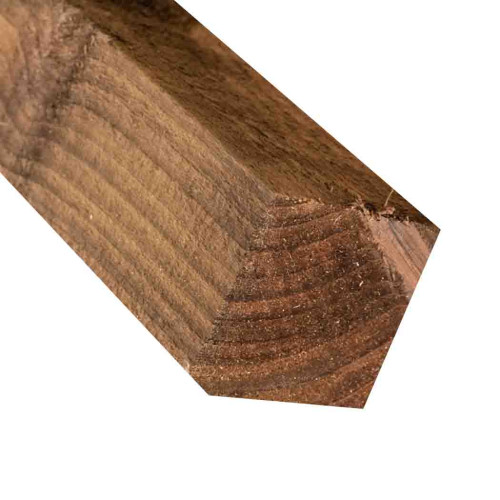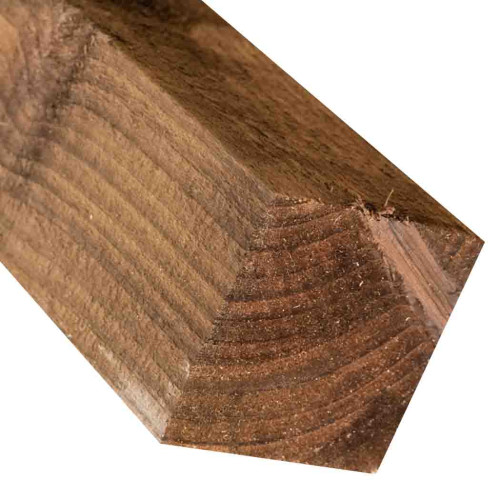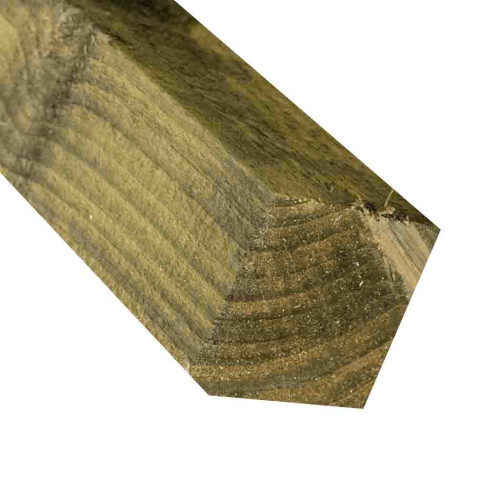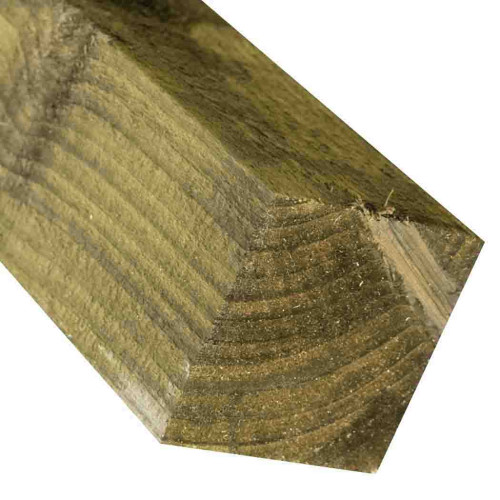



Quick answer: Wooden fence posts can develop cracks and splits as the timber gains and loses moisture outdoors. Small surface checks are common in substantial sections of natural timber and do not automatically mean a post is failing. A split deserves more attention when it passes deeply through the post, affects important fixings, allows part of the timber to move independently or appears alongside rot, severe twisting or movement at ground level.
Finding a long crack down the side of a wooden fence post can look alarming.
In many cases, however, the post has not suddenly broken.
Timber naturally changes as its moisture content changes. Larger sections such as 75 x 75mm and 100 x 100mm fence posts can develop visible checks or splits as the outside of the timber dries at a different rate from the material further inside.
Some of these changes are mainly cosmetic. Others can affect how well the post supports fence panels, rails, trellis or a garden gate.
The useful question is therefore not simply whether the post has a crack. You need to look at the size, depth and position of the split, the condition of the surrounding timber and whether the post is still stable.
Why Do Wooden Fence Posts Crack?
Changing moisture content is one of the main reasons.
A wooden fence post is permanently exposed to changing outdoor conditions. It can become wetter during periods of rain and then dry during warm, sunny or windy weather.
The outer part of a substantial timber section may dry more quickly than the centre.
As different parts of the post shrink at different rates, stresses develop within the timber. The surface can then open along the grain.
Other factors that influence cracking include:
- Natural grain direction
- Knots
- Growth-ring pattern
- How quickly the timber dries
- Exposure to sun and wind
- Storage before installation
- Fixing positions
- Physical loads placed on the post
This means two posts from the same fence run can weather differently.
What Is A Timber Check?
A check is a split that develops as timber dries.
It normally follows the grain and may be most visible on one face of a post.
Checking is particularly noticeable in thicker pieces of timber because the outside and centre cannot always change moisture content at exactly the same rate.
A check can look dramatic because it may extend for a considerable distance along the post.
Length alone does not tell you how serious it is.
A long but relatively shallow surface check can be less significant than a shorter split that passes through most of the post and affects a structural fixing.
Does A Crack Mean A Wooden Fence Post Is Defective?
Not automatically.
Fence posts are structural outdoor timber rather than indoor furniture or decorative joinery.
Natural features such as grain variation, knots, checking and changes in appearance should be expected to some extent.
A post should instead be judged by whether it can still perform its job.
Ask:
- Is the post still upright?
- Does it move at ground level?
- Is the surrounding timber firm?
- Are the Fence Panels or rails still securely attached?
- Has the split affected an important fixing point?
- Can sections of the post move independently?
If the answer to the structural questions is reassuring, the visible crack may simply be part of normal timber movement.
What Does A Normal Fence Post Crack Look Like?
There is no single appearance that makes a crack automatically harmless, but common surface checking tends to have several characteristics.
The timber around the crack remains:
- Firm
- Structurally connected
- Stable when the fence is pushed
- Capable of holding its fixings
The post itself should remain broadly straight and securely installed.
The crack may open and close slightly as moisture conditions change.
That is different from a post where the split has effectively separated one section of timber from another.
When Is A Split In A Fence Post More Serious?
Look more closely when the split:
- Passes deeply through the timber
- Runs through a major fixing point
- Allows one side of the post to move separately
- Extends through the post from one face to another
- Is associated with substantial twisting
- Has caused part of the timber to break away
- Appears alongside soft or rotten timber
- Is present in a gate hinge post carrying a heavy load
A crack becomes important when it changes the structural behaviour of the post rather than merely its appearance.
How Can You Tell A Surface Check From Structural Damage?
| What You Find | What It May Mean | What To Check Next |
|---|---|---|
| Long shallow crack | Normal timber checking may be possible | Post stability and timber firmness |
| Crack around a screw or bolt | Fixing may have stressed the timber | Whether the fixing still holds securely |
| Split passes through opposite faces | More significant structural separation | Movement and remaining timber section |
| Crack with soft timber | Possible decay rather than simple checking | Ground line and surrounding post |
| Crack with severe twist | Greater timber movement | Panel alignment and fixing condition |
| Post moves when pushed | Possible post or foundation failure | Ground-level timber and foundation |
Why Do 100mm Fence Posts Develop Large Checks?
A 100 x 100mm post is a substantial section of natural timber.
The larger the section, the more opportunity there is for differences in moisture between the outer surface and the centre.
This can make checking visually more obvious than it is on thinner timber components.
East Coast Fencing's current Wooden Fence Post range includes both 75 x 75mm and 100 x 100mm square sections.
The 100mm posts provide a broader fixing face and a more substantial support for taller or heavier fencing, but being larger does not mean they will remain visually free from natural checks.
Do 75mm Fence Posts Split Too?
Yes.
A 75 x 75mm wooden post can also check, split or twist as moisture conditions change.
The smaller section does not make the timber immune to natural movement.
Current 75mm posts are generally used for lighter fencing, Picket Fence Panels, trellis and other suitable garden structures.
When checking a crack, apply the same principles regardless of post size.
Look at the depth, location and structural effect rather than assuming a smaller post is safer simply because the crack looks narrower.
Does Pressure Treatment Cause Fence Posts To Split?
The more useful explanation is moisture movement within the timber.
Pressure-treated fencing remains natural wood.
The treatment improves resistance to fungal decay, rot and insect attack, but it does not stop timber gaining and losing moisture after installation.
A treated post can therefore:
- Check
- Shrink
- Swell
- Twist
- Change colour
None of those changes on their own prove the preservative treatment has failed.
Does Pressure Treatment Stop A Crack Getting Worse?
No.
Preservative treatment and structural timber movement are separate issues.
A pressure-treated post may continue changing as it weathers.
Some checks may become more visible during dry conditions and less noticeable after wetter weather.
A crack that is continually widening, affecting fixings or allowing the post to deform should be inspected rather than dismissed simply because the timber is treated.
Why Do Fence Post Cracks Look Bigger In Summer?
Dry weather can reduce the moisture content of the exposed timber.
As the wood contracts, checks may open more visibly.
During wetter periods the timber can absorb moisture again and some openings may reduce.
This seasonal behaviour is one reason photographs taken months apart can make the same post appear quite different.
Do not judge the post only by the width of a surface check on one particularly dry day.
Check whether the structure itself remains sound.
Can Sunlight Make One Side Of A Post Crack More?
Different faces of a fence post can experience different conditions.
One side may receive direct afternoon sun while another remains shaded behind a Fence Panel or planting.
The sunny face can dry more quickly.
This uneven exposure can contribute to differences in movement across the post.
It is therefore quite possible for one face to develop more noticeable checking than the others.
Can Poor Storage Cause Wooden Posts To Split Or Twist?
Storage can contribute to unnecessary movement before installation.
Fence posts should be kept reasonably well supported rather than left with one end hanging in the air or sitting irregularly across loose materials.
A good storage area should be:
- Firm
- Level
- Suitable for supporting the length of the timber
- Clear of standing water
Install posts reasonably promptly rather than leaving them scattered around the garden for extended periods.
Good storage cannot eliminate natural timber movement, but it avoids adding unnecessary distortion before the fence is even built.
Can Screws Make A Wooden Fence Post Split?
Yes, particularly if substantial fixings are positioned badly.
A screw or bolt places local stress into the timber.
Splitting is more likely when:
- A large fixing is installed close to an edge
- A fixing is driven very close to the top of a post
- Several large fixings are crowded into one small area
- The timber is particularly dry
- The fixing is overtightened
- A suitable pilot hole has not been used where one is required
This matters when attaching Fence Panels, rails, Garden Gates and Garden Gate Furniture.
Should You Pre-Drill Wooden Fence Posts?
Pre-drilling can be sensible when installing substantial screws or bolts, particularly near vulnerable edges.
A suitable pilot hole reduces the amount of force required to drive the fixing and can lower the chance of the timber splitting.
The hole should still be appropriate for the particular fixing.
An oversized pilot hole removes the material the screw needs to grip.
Can Bolts Split A Gate Post?
They can if the fixing arrangement is poor.
Gate posts need particular care because the post carries repeated sideways load from the hanging gate.
Large bolts may be used for suitable gate hardware, but their position should leave enough sound timber around the holes.
A split through a gate hinge or bolt position is more significant than a superficial check on an unloaded face of an ordinary intermediate fence post.
The gate should not be allowed to continue loading a visibly failing fixing area.
Why Does The Position Of A Split Matter?
Not every part of the post experiences the same structural demand.
A crack deserves closer attention if it passes through:
- Fence panel fixings
- Rail connections
- Gate hinges
- Gate bolts
- Trellis supports
- A narrowed or notched section of timber
A similar-looking crack on an otherwise unloaded face may have much less practical effect.
Can A Split Fence Post Still Hold Fence Panels?
Often, yes, where the split is relatively minor and there is still plenty of sound timber around the fixings.
Check each panel connection.
Look for:
- Loose screws
- Fixings pulling through the timber
- Panel clips moving
- Cracks extending directly through screw positions
- The panel pulling away from the post
If the fixings remain secure and the post does not move, a surface check may have little practical effect.
Can Water Get Into A Fence Post Crack And Cause Rot?
Cracks can expose additional timber surface to moisture.
That does not mean every check will immediately start rotting.
The bigger concern is prolonged damp.
Conditions that deserve attention include:
- Water regularly collecting around the post
- Soil or mulch covering the cracked section
- Dense vegetation preventing drying
- A deep split around ground level
The ground line remains particularly important because this is where wooden fence posts are most vulnerable to long-term moisture exposure.
How Can You Tell The Difference Between A Split And Rot?
A split is a physical separation along the timber.
Rot involves deterioration of the wood itself.
Sound timber around a check should remain firm.
Rotten timber may be:
- Soft
- Crumbly
- Easily penetrated with a blunt tool
- Unable to hold screws securely
A post can have both problems at once.
Do not assume that every split is rot, but equally do not assume a large crack is harmless if the surrounding wood has become soft.
Should You Fill Cracks In A Wooden Fence Post?
Filling a normal surface check is rarely the most important job.
A filler may improve appearance, but it does not restore structural strength to a badly split post.
It may also crack again as the timber continues moving outdoors.
Instead, decide whether the post is structurally sound.
If it is sound, the check may simply be left as part of the natural timber.
If it is structurally failing, filling the visible opening does not solve the problem.
Should You Screw Across A Split To Close It?
Do not automatically drive screws sideways through a post simply to make a visible crack disappear.
Closing the gap cosmetically does not necessarily restore the original timber section.
It can also introduce further local stresses.
If a split is serious enough to threaten the structural integrity of the post, assess whether reinforcement, repair or replacement is actually required rather than improvising a cosmetic fix.
Can You Use Metal Straps Around A Split Fence Post?
A metal strap may restrain movement in some timber repairs, but it should not be treated as a universal solution.
Before adding reinforcement, establish:
- Why the post split
- Whether the timber is rotten
- Whether the foundation remains secure
- What load the post carries
- Whether suitable sound timber remains
A strap around a rotten post or failed foundation does not correct the underlying problem.
Can A Concrete Repair Spur Fix A Split Wooden Post?
A concrete repair spur is mainly intended to support an existing wooden post that has weakened around ground level while usable timber remains above.
It is not automatically the correct repair for a split higher up the post.
If the timber around the intended bolt positions is badly split, the post may not provide a reliable connection to the spur.
Repair spurs make most sense where:
- The upper post remains structurally sound
- The main failure is at ground level
- The surrounding fencing remains usable
- There is sound timber available for secure bolting
If the split affects much of the usable post, replacement is generally more sensible.
When Should A Split Wooden Fence Post Be Replaced?
Replacement deserves serious consideration when:
- The post has split into independently moving sections
- The split passes through critical fixing positions
- The timber is also rotten
- The post cannot hold panels or rails securely
- The post is severely twisted
- The foundation is failing as well
- The post carries a gate and the hinge area is damaged
- The fence moves excessively in ordinary wind
Do not wait for complete collapse if the supporting post has clearly lost its structural integrity.
Do You Need To Replace The Fence Panels Too?
No, not simply because one wooden post needs replacement.
Fence Panels, posts and Gravel Boards can often be assessed separately.
If the panels remain sound, they may be removed temporarily while the failed post is replaced and then reinstalled.
Before reusing a panel, check:
- The frame
- The panel fixings
- The lower edge
- Any damage caused by movement around the failed post
There is little reason to discard sound panels simply because one structural support has failed.
Can A Split Post Be Used For Trellis?
Only if the post remains structurally suitable.
Adding Trellis Panels increases the height of the structure and can introduce extra wind loading.
Climbing plants can add further weight as they mature.
Do not add trellis to an existing wooden post that is already:
- Loose
- Rotten
- Severely split
- Leaning
Repair or replace the supporting structure first.
Can A Split Gate Post Be Left In Place?
Gate posts need a stricter assessment than ordinary posts because they carry a moving load.
A current garden gate may be around 900mm wide, but different styles vary greatly in height, weight and construction.
A low open Picket Gate and a tall solid Feather Edge Gate do not place identical demands on the hinge post.
If a split affects the hinge fixings, bolts or structural section of the post, investigate it promptly.
Symptoms can include:
- The gate sagging
- The latch falling out of alignment
- Hinge screws loosening repeatedly
- The post moving when the gate opens
Can Painting Stop A Wooden Fence Post Splitting?
No surface coating can guarantee that a natural timber post will never check or split.
Paint or stain can affect how the exposed surface interacts with weather, but timber will still respond to changing moisture conditions.
Do not paint over a structural problem and assume it has been repaired.
If the post is badly split, rotten or moving, deal with that first.
Do Post Caps Stop Fence Posts Cracking?
Post caps help finish and protect the exposed top of suitable wooden fence posts.
They do not eliminate natural timber movement throughout the full post section.
A post can still develop checks on its faces even when the top is capped.
Use caps as a useful finishing detail rather than as a guarantee against splitting.
How Can You Reduce The Risk Of Serious Post Splitting?
Natural checking cannot be completely prevented, but good handling and installation help avoid unnecessary damage.
- Store posts on a firm, level and well-supported surface.
- Install timber reasonably promptly.
- Select a post section suitable for the fence.
- Use enough post length for the intended installation.
- Keep posts plumb while foundations set.
- Avoid forcing twisted posts into alignment using Fence Panels.
- Position substantial fixings away from vulnerable edges.
- Pre-drill where appropriate.
- Do not overtighten screws and bolts.
- Protect fresh cuts where required.
- Keep excessive soil and wet debris away from the post base.
- Do not overload a lightweight post with heavy panels, trellis or a substantial gate.
How Should You Inspect A Cracked Fence Post?
- Look at the whole post: Do not focus only on the most visible crack.
- Check whether it is upright: Significant leaning may indicate another problem.
- Push the fence gently: Look for movement at ground level.
- Inspect the crack: Check how deep it appears and whether it passes through another face.
- Check the timber: Look for softness or crumbling around the split.
- Inspect fixings: Pay particular attention where screws, bolts or brackets cross the damaged area.
- Check connected components: Look at panels, rails, trellis or gate hinges.
- Decide whether it is cosmetic or structural: Repair or replace the post if its ability to support the fence has been compromised.
Common Mistakes When Dealing With Split Fence Posts
- Assuming every surface check means the post has failed
- Ignoring a deep split because the post is pressure treated
- Filling the crack without checking structural condition
- Driving large screws across a split without understanding the problem
- Ignoring soft timber around the crack
- Leaving damaged gate hinge fixings under load
- Adding Trellis Panels to a post that is already weak
- Replacing Fence Panels without inspecting the posts supporting them
- Using paint to hide deterioration
- Assuming a larger 100mm post cannot split
- Overtightening bolts and screws near timber edges
FAQs
Are Cracks In Wooden Fence Posts Normal?
Some surface checking is normal in natural timber, particularly in substantial post sections. What matters is whether the post remains stable, firm and capable of holding its fixings securely.
Why Has My New Fence Post Split?
A relatively new post can develop checks as its moisture content changes after installation. Rapid drying, natural grain and uneven exposure can make these splits more visible.
Will A Fence Post Crack Close Again?
A check may become narrower during wetter conditions and open more during dry weather as the timber changes moisture content. A serious structural split should not be expected to repair itself.
Does A Split Mean The Post Is Rotten?
No. Splitting and rot are different. Check whether the timber around the crack remains firm. Soft, crumbly wood and loss of structural strength are stronger indicators of decay.
Can You Repair A Split Wooden Fence Post?
Minor checks often require no structural repair. Serious splitting may require reinforcement or complete post replacement depending on its location, depth and the condition of the surrounding timber.
Should I Replace A Cracked 4 x 4 Fence Post?
Not solely because a crack is visible. A 100 x 100mm post can develop natural checks. Replace it when the damage affects structural integrity, fixings, stability or is accompanied by serious decay.
Can A Split Fence Post Still Support A Fence Panel?
Yes, where the split is superficial and there is sufficient sound timber around the panel fixings. Check that the panel remains secure and the post does not move.
Are Split Gate Posts More Serious?
They can be because a gate places repeated leverage on the hinge post. A split affecting hinges, bolts or a major part of the post section deserves prompt inspection.
Judge The Post By Its Strength, Not Just Its Appearance
A wooden fence post does not need to remain visually perfect to remain structurally useful.
Natural timber checks, changes colour and moves as outdoor moisture conditions change. This is particularly visible in substantial 75 x 75mm and 100 x 100mm post sections.
Start by checking stability. A firm, upright post with a shallow surface check and secure fixings may need no meaningful intervention.
A deep split through important fixings, soft timber, independent movement between sections or a post that rocks at ground level is a different matter.
Pay particular attention to gate posts and posts carrying tall, heavy or exposed fencing because the loads are greater.
The practical rule is simple. Do not replace a sound wooden fence post merely because natural timber has checked, but do not dismiss a crack when it has started affecting the structure the post is there to support.