


Quick answer: Choose Closeboard Fence Panels if your priority is a solid, traditional boundary with strong privacy and a straightforward appearance. Choose Decorative Fence Panels if appearance, light, airflow or creating a more designed garden space matters as much as screening. Decorative styles such as Double Slatted, Horizontal Hit & Miss and Omega Lattice offer different balances of privacy and openness. The best choice depends on the part of the garden, wind exposure, required height, surrounding landscaping and how visible the fence will be.
Closeboard Fence Panels and Decorative Fence Panels can both create an attractive garden boundary, but they approach the job very differently.
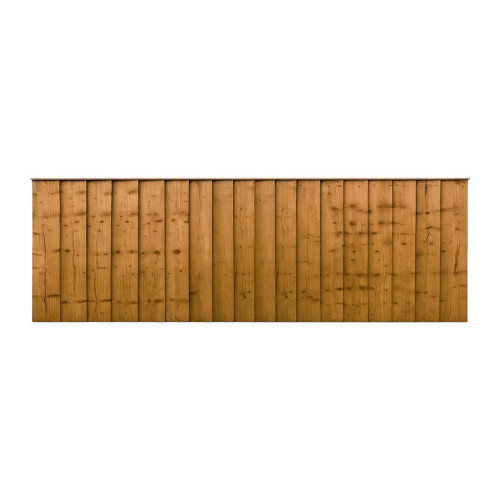
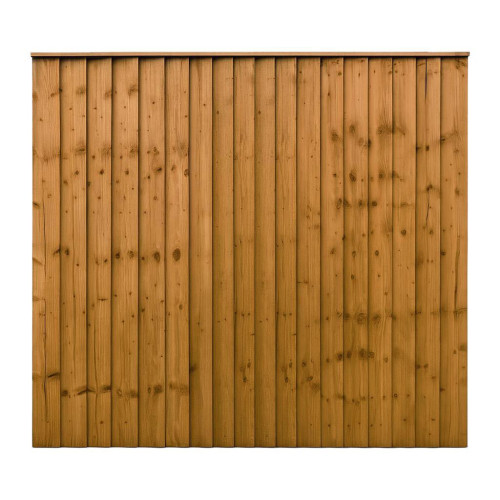
Closeboard is fundamentally practical. Its overlapping vertical boards create a largely solid screen with the familiar appearance of traditional UK garden fencing.
Decorative fencing gives you more options. Horizontal slats, Hit & Miss construction and lattice can make the fence a deliberate part of the garden design rather than simply the structure around its edge.
That does not mean Decorative Fence Panels are automatically better-looking, or that Closeboard is only appropriate where appearance does not matter.
The right choice depends on what the fence actually needs to achieve.
This guide compares Decorative Fence Panels and Closeboard Fence Panels for privacy, light, airflow, wind exposure, patios, garden size, maintenance, installation, posts, gravel boards and overall appearance.
What Are Closeboard Fence Panels?
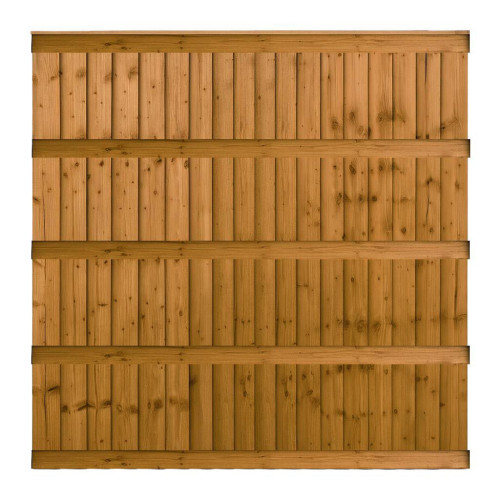
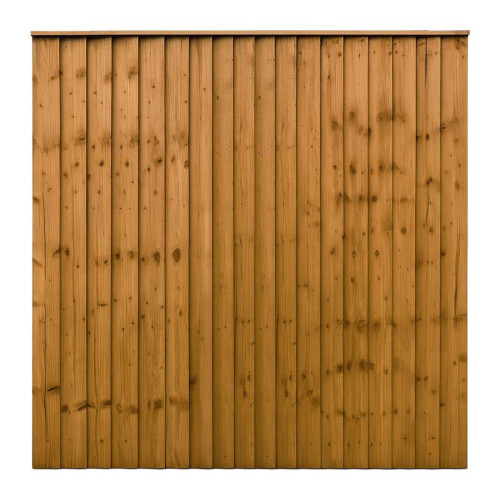
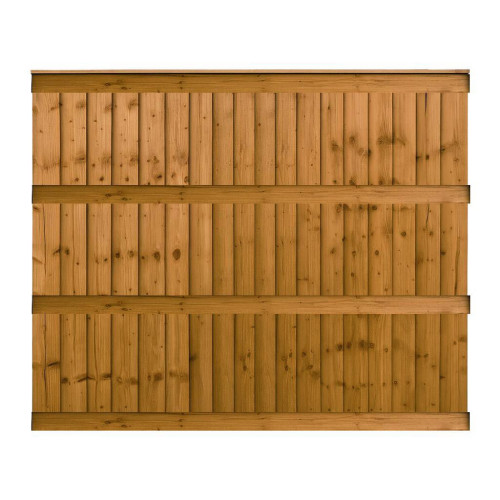
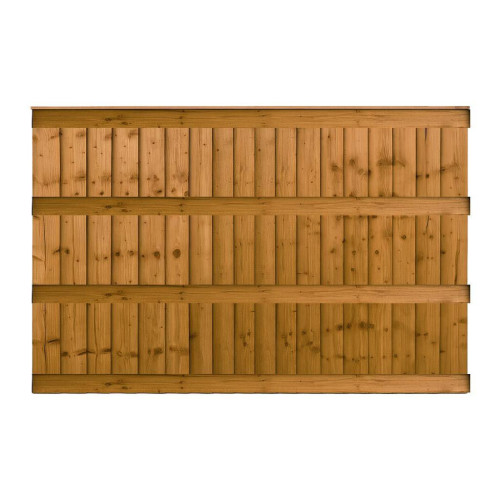
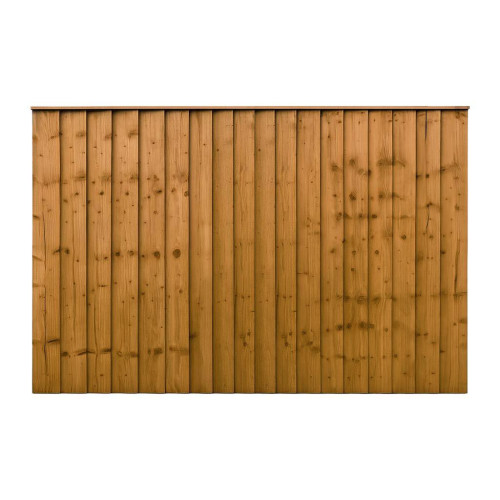
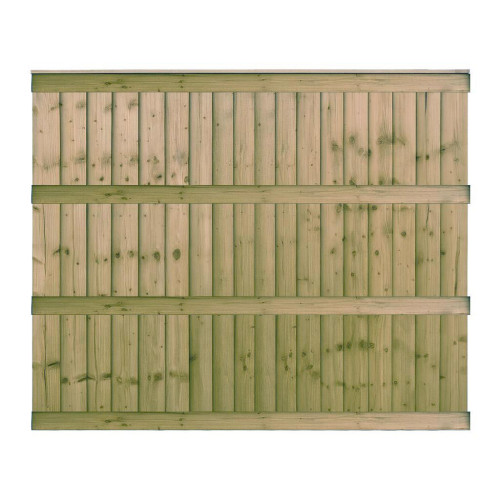
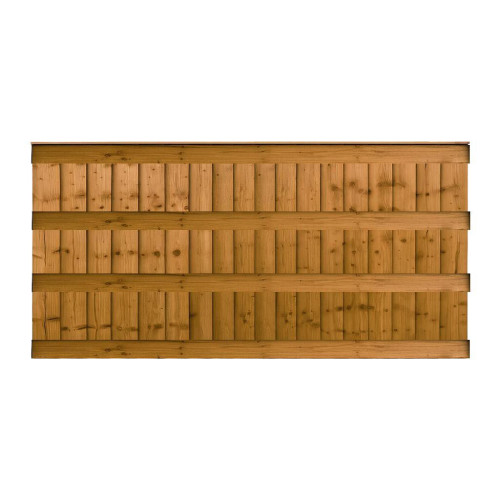
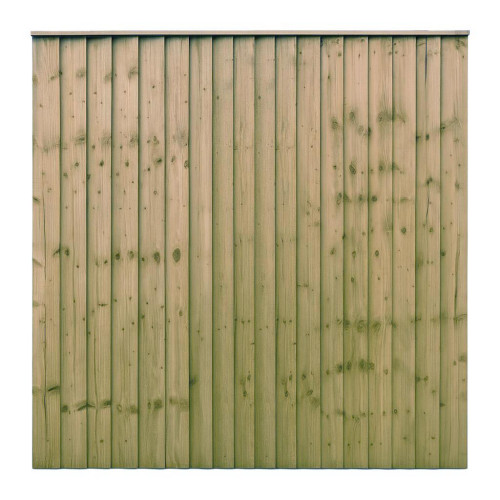
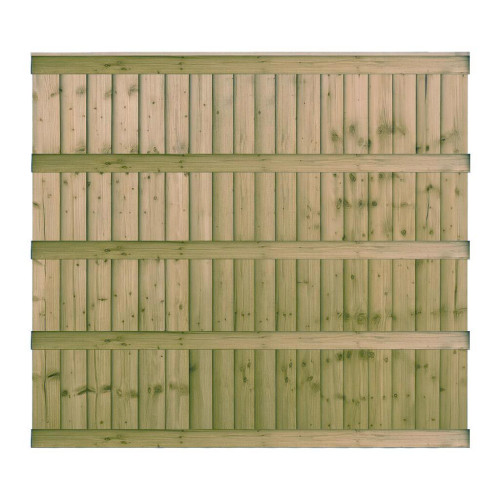
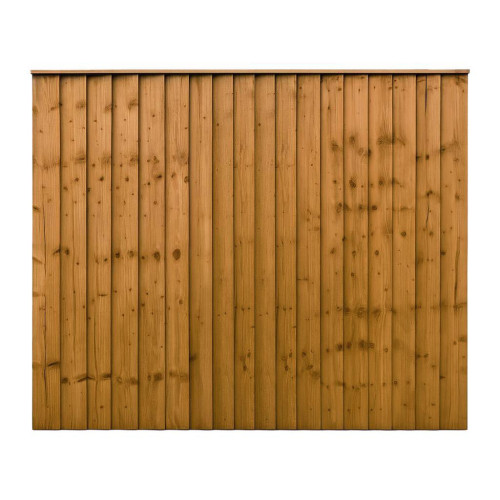
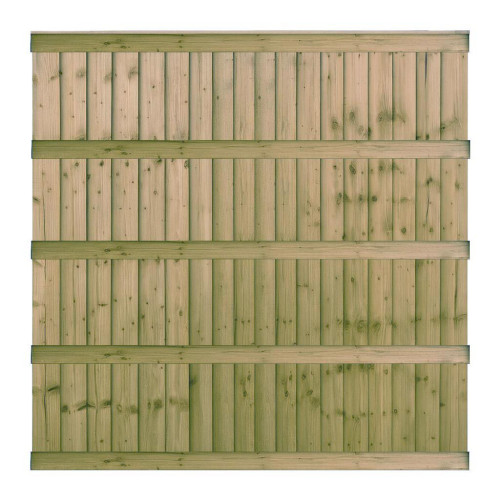
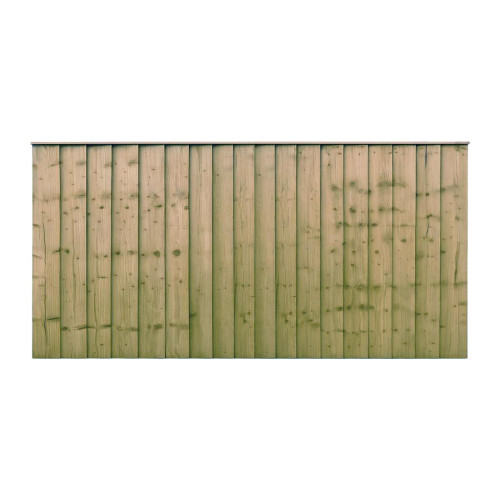
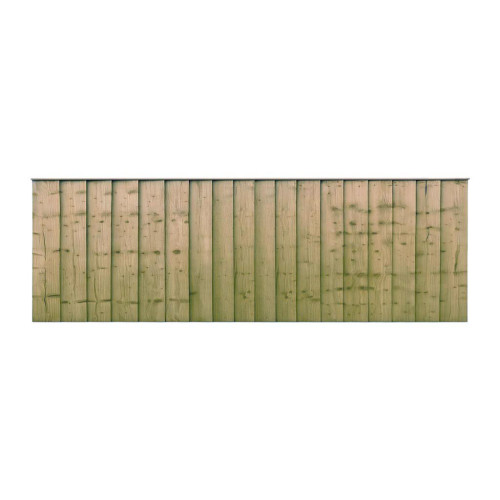
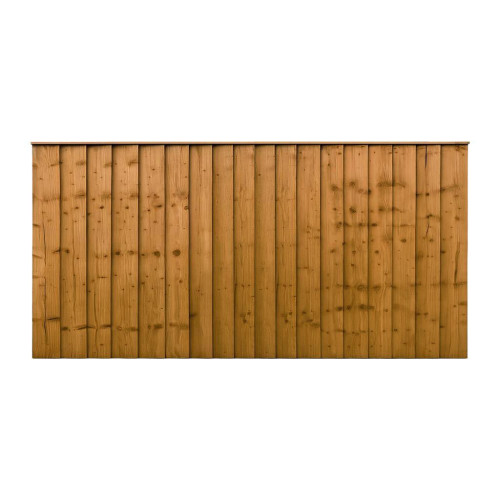
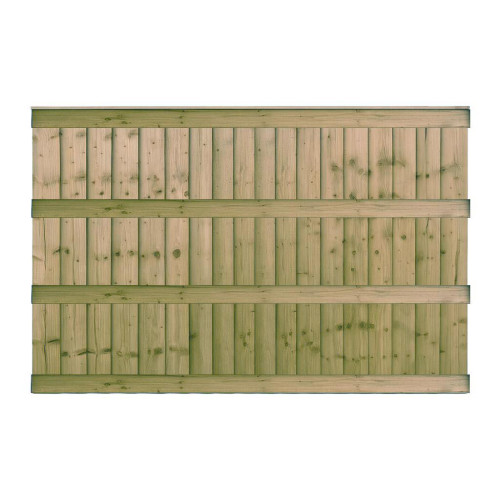
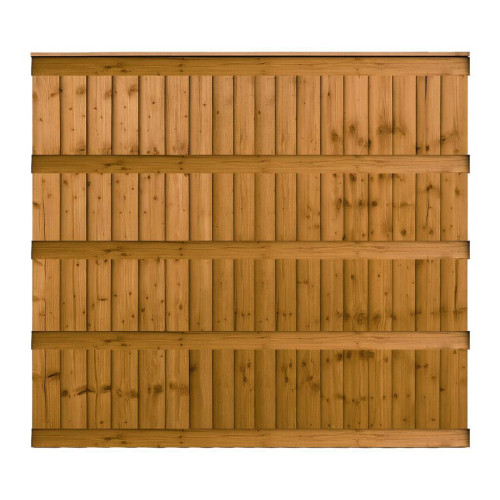
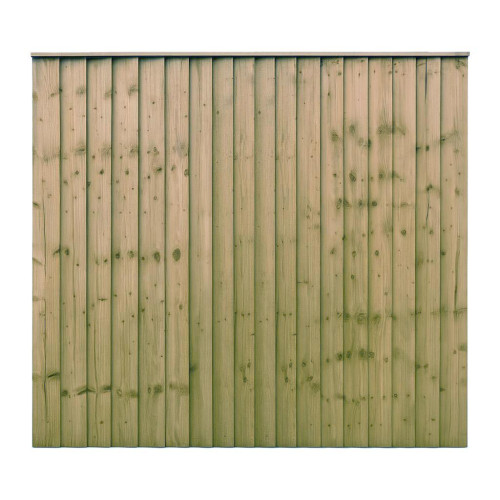
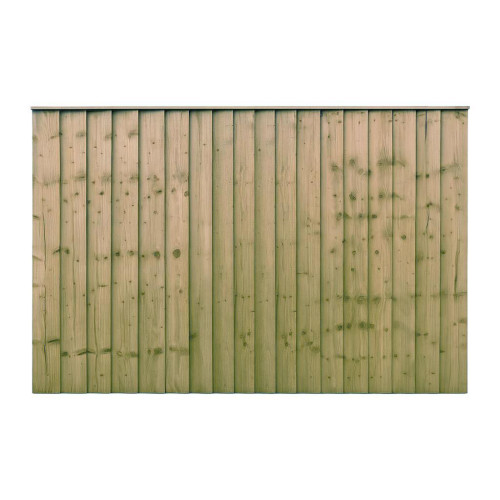
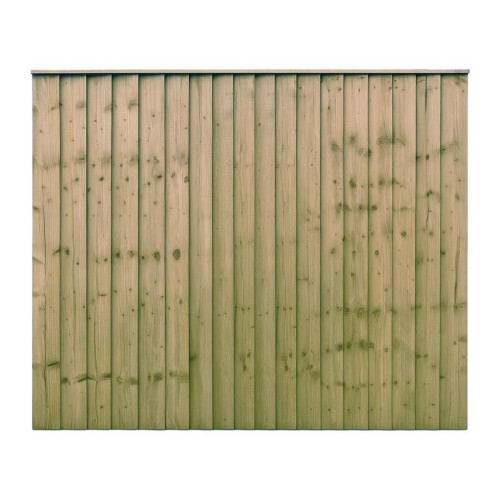
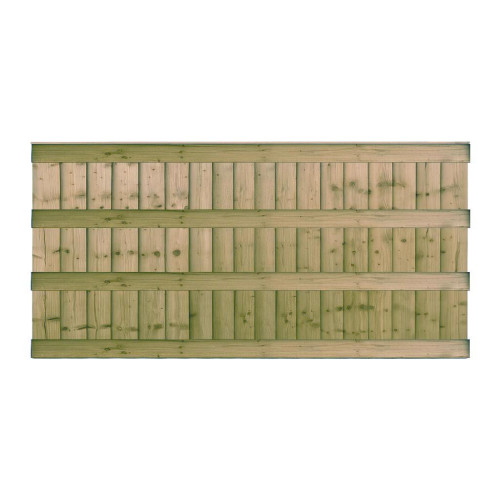
Closeboard Fence Panels use vertically arranged overlapping boards to create a solid timber screen.
They reproduce the familiar appearance of traditional Closeboard fencing within a prefabricated panel that can be installed between suitable fence posts.
Closeboard is commonly used for:
- Rear garden boundaries
- Side boundaries
- Privacy fencing
- Replacing old solid panels
- Long residential fence runs
East Coast Fencing Standard Closeboard Fence Panels are nominally 6ft wide and available in 2ft, 3ft, 4ft, 5ft, 5ft 6in and 6ft heights.
Ultra Heavy Duty Closeboard Fence Panels are nominally 6ft wide and available in 3ft, 4ft, 5ft, 5ft 6in and 6ft heights.
Both ranges are available pressure treated in brown and green.
What Are Decorative Fence Panels?
Decorative Fence Panels place greater emphasis on design, pattern and the relationship between screening and openness.
East Coast Fencing decorative styles include options such as:
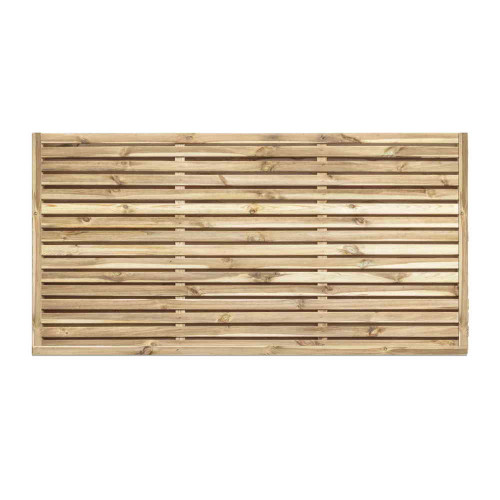
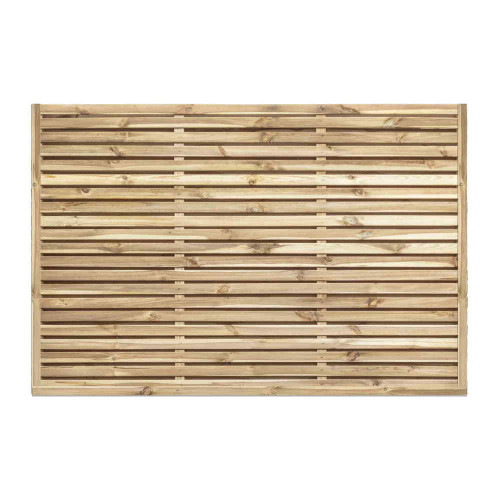
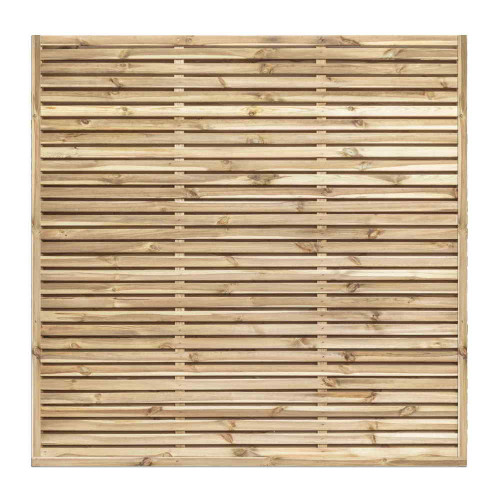
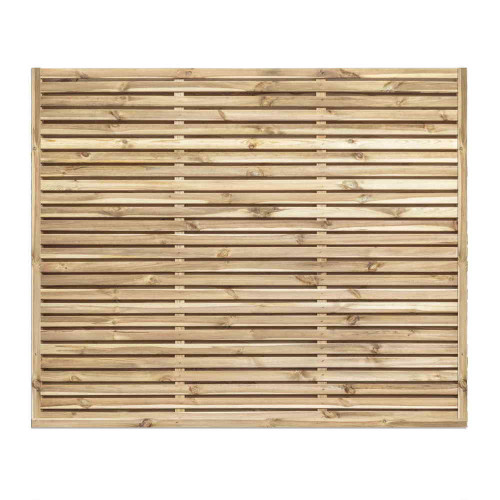
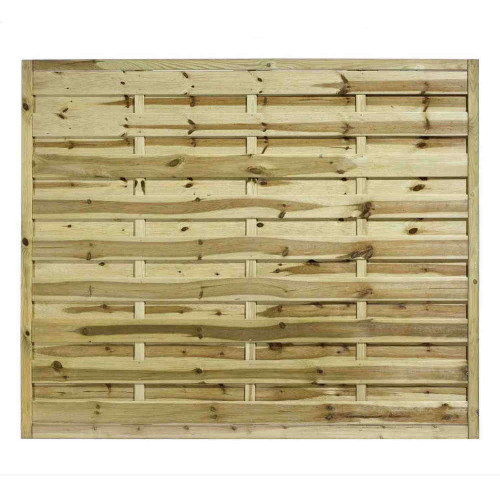
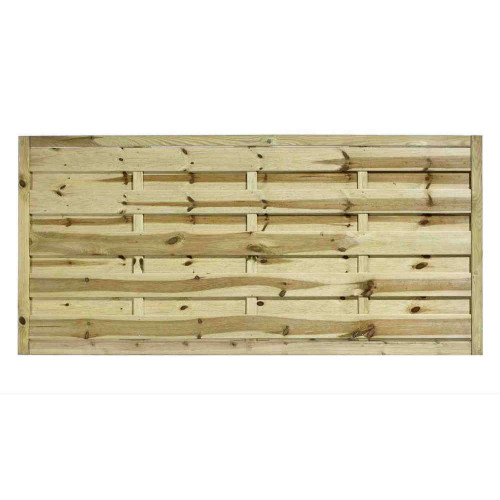
- Framed Contemporary Double Slatted Fence Panels
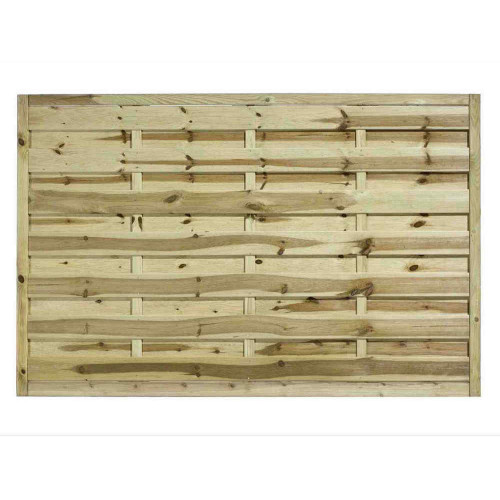
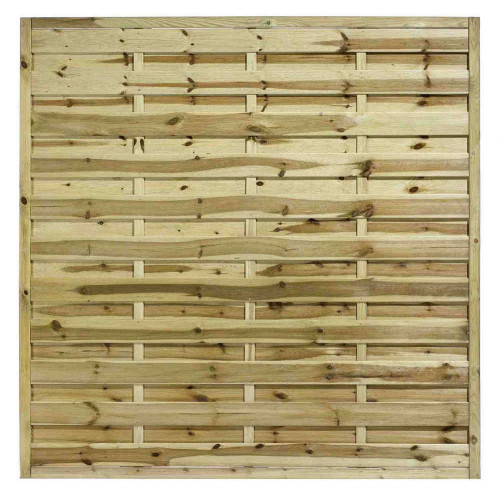
- Horizontal Hit & Miss Fence Panels
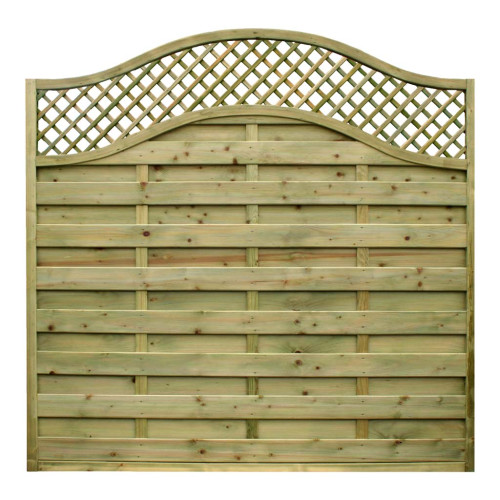
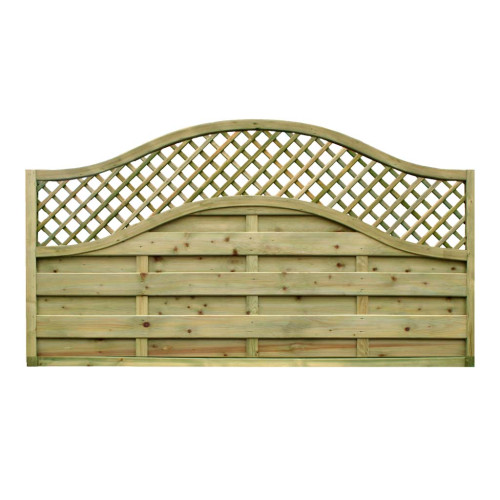
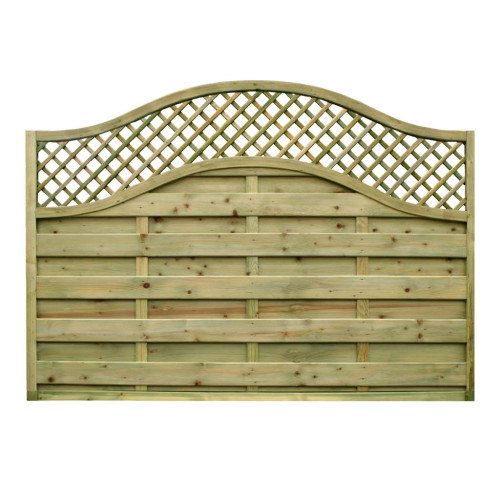
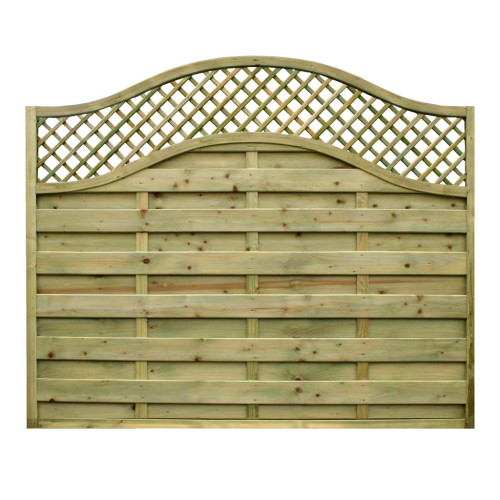
- Omega Lattice Fence Panels
These designs use slats, gaps, framing or lattice to create a more distinctive appearance than a conventional solid Closeboard boundary.
Different Decorative Fence Panels can therefore perform very differently.
A Double Slatted panel may provide substantial screening, while an Omega Lattice panel is intentionally much more open.
What Is The Main Difference Between Decorative Fence Panels And Closeboard?
The main difference is the balance between function and openness.
Closeboard concentrates on creating a solid traditional boundary.
Decorative fencing gives you more control over:
- Privacy
- Light
- Airflow
- Views through the fence
- Visual style
| Feature | Closeboard Fence Panels | Decorative Fence Panels |
|---|---|---|
| Appearance | Traditional | Traditional to contemporary |
| Privacy | High | Varies by design |
| Light through boundary | Low | Low to high |
| Airflow | Low | Varies by design |
| Design choice | Consistent traditional look | Greater range of visual effects |
| Best starting point for | Straightforward private boundary | Design-led garden boundary |
Which Is Better For Privacy?
Closeboard is the simpler choice when strong privacy is the main requirement.
Its overlapping vertical boards form a largely solid screen.
Decorative Fence Panels require more consideration because privacy varies considerably between designs.
For example:
- Double Slatted panels can provide substantial screening
- Horizontal Hit & Miss can provide screening while allowing more airflow
- Omega Lattice is intentionally open and offers much less privacy
If you simply want to block ordinary ground-level views through the boundary, Closeboard is difficult to misunderstand.
If you want privacy without creating such a visually solid wall, a suitable Decorative Fence Panel may offer a better compromise.
Does Decorative Fencing Give Complete Privacy?
Not always.
A decorative panel may be tall without being completely opaque.
Slatted and Hit & Miss designs can allow some sightlines depending on:
- The spacing of the boards
- Viewing angle
- Distance from the fence
This can be desirable if you want the garden to feel lighter and less enclosed.
It can be a disadvantage if complete visual screening is essential.
Which Is Better For An Overlooked Garden?
Start by identifying where the overlooking actually happens.
If neighbouring views affect the whole rear boundary, full-height Closeboard may provide the simplest answer at ground level.
If the privacy issue is concentrated around a patio or seating area, Decorative Fence Panels can be used more selectively.
A design-led screen around the main outdoor living space may provide enough separation without replacing every boundary with the same panel.
Remember that fencing at ordinary garden height cannot necessarily prevent overlooking from upper-storey windows.
Which Lets More Light Into The Garden?
Decorative Fence Panels generally offer more opportunities to preserve light.
Closeboard creates a predominantly solid screen.
This can cast stronger shade, particularly where a tall fence is close to:
- Patios
- Flower beds
- Windows
- Narrow side passages
Lattice and more open decorative designs allow significantly more light through.
Hit & Miss and slatted fencing sit between those extremes.
Which Is Better For A Dark Garden?
Decorative fencing is worth serious consideration where the garden already feels shaded.
A tall solid Closeboard boundary may worsen the sense of enclosure if:
- The garden is narrow
- The fence is close to the house
- Neighbouring buildings already restrict light
- Large trees create additional shade
An open or partially open decorative panel can preserve more light while still defining the boundary.
That does not mean Closeboard should never be used in a shaded garden.
You might use solid fencing only where privacy is necessary and a more open design elsewhere.
Which Provides Better Airflow?
Decorative Fence Panels can provide considerably greater airflow.
Closeboard is predominantly solid.
Air therefore has to move over and around the fence rather than passing freely through it.
Decorative designs with intentional openings can reduce this barrier effect.
Horizontal Hit & Miss is particularly relevant where you want useful screening without completely blocking airflow.
Omega Lattice allows even more air through, but provides less privacy.
Which Is Better For Windy Gardens?
It depends on how much privacy you need.
Closeboard can be used successfully in windy locations when the complete fence is appropriately specified, but its solid construction creates significant wind resistance.
More open Decorative Fence Panels allow air to pass through the boundary.
That can be useful in exposed gardens.
However, do not assume an open panel means posts and foundations are unimportant.
Every fence still needs suitable support.
Does Closeboard Catch More Wind Than Decorative Fence Panels?
Compared with genuinely open decorative designs, yes.
But Decorative Fence Panels vary.
A lattice panel and a closely spaced Double Slatted panel do not present the same degree of openness.
When wind is a major consideration, examine the actual panel construction rather than relying on category labels.
Is Hit & Miss Better Than Closeboard For Wind?
Horizontal Hit & Miss is worth considering in exposed gardens because its construction permits more air movement.
It can offer a useful middle ground between:
- Solid privacy fencing
- Completely open fencing
Closeboard may still be preferable where maximum screening is required.
The choice is therefore a balance between privacy and airflow.
Which Is Better For A Rear Garden?
Both can work extremely well.
Choose Closeboard when:
- You want straightforward privacy
- You prefer a traditional boundary
- The fence is primarily functional
- You want a consistent solid backdrop
Consider Decorative Fence Panels when:
- The fence is highly visible from the house
- The garden has a strong design scheme
- A patio faces directly towards the fence
- You want more light or airflow
- You want the boundary itself to become a feature
Which Is Better For A Side Garden?
Closeboard can provide useful privacy along a side passage or side boundary.
However, narrow spaces are where tall solid fencing can have the strongest effect on light.
Decorative fencing can be useful where you want to maintain:
- Air movement
- Light
- A less enclosed appearance
Side passages can also channel strong gusts between buildings, making wind exposure another useful consideration.
Which Is Better For A Front Garden?
Closeboard can be used at lower heights, but a solid panel may feel visually heavy where the intention is simply to define a front boundary.
Some Decorative Fence Panels can provide a lighter appearance.
However, decorative does not automatically mean suitable for a front garden.
A tall Double Slatted privacy panel can still create a substantial visual barrier.
Choose the height and openness according to the particular frontage.
Which Is Better Around A Patio?
Decorative Fence Panels are particularly strong around patios because these are areas where the fence is constantly visible.
A conventional Closeboard panel may perform perfectly well, but a design-led panel can make the fence feel more like part of the landscaping.
Consider:
- Double Slatted for stronger contemporary screening
- Horizontal Hit & Miss for screening with additional airflow
- Lattice where planting and openness are more important
If the patio requires simple maximum privacy, Closeboard remains a practical option.
Which Is Better Around An Outdoor Dining Area?
Decorative panels often make sense because appearance is especially noticeable around spaces where people spend significant time.
Think about:
- Neighbouring sightlines
- Wind
- Evening light
- Nearby planting
- How close seating is to the fence
A completely solid fence can provide strong privacy but may also make a small dining area feel boxed in.
A partially open decorative panel may create a better balance.
Which Is Better Around A Garden Room?
Decorative Fence Panels can complement garden rooms particularly well where horizontal lines or contemporary landscaping are already present.
Double Slatted or Hit & Miss designs can reinforce that visual style.
Closeboard is useful where the fence should act as a neutral traditional backdrop rather than another design feature competing with the building.
Which Looks Better In A Modern Garden?
Decorative fencing provides more options for contemporary gardens.
Horizontal panels work naturally with:
- Modern paving
- Rendered walls
- Garden rooms
- Large glazed doors
- Simple raised beds
Closeboard can still work in modern landscaping, particularly where planting or other garden features soften the boundary.
The fence does not need to be contemporary simply because the house is.
Which Looks Better In A Traditional Garden?
Closeboard is an obvious choice for traditional gardens because its vertical overlapping boards are familiar throughout UK residential fencing.
Decorative panels can also work.
Omega Lattice can combine particularly well with:
- Climbing plants
- Cottage-style borders
- Traditional planting
The best option depends on whether you want the fence to disappear behind planting or remain a noticeable part of the design.
Which Makes A Small Garden Look Bigger?
More open Decorative Fence Panels can help preserve visual depth.
When you can see light, planting or partial views through a boundary, the eye is less likely to stop at one continuous solid surface.
Horizontal lines can also emphasise width.
A full-height Closeboard fence provides stronger enclosure.
This can be useful where privacy is essential, but in a compact garden it may make the space feel smaller.
Which Makes A Garden Feel More Private?
Closeboard generally gives the strongest immediate impression of enclosure.
That can be desirable in a rear garden where neighbouring properties are close.
Decorative fencing can create a more subtle form of privacy by interrupting views rather than completely blocking them.
The better approach depends on whether you want:
- Complete visual separation
- Partial screening
- A sense of enclosure without a solid barrier
Which Is Better For Long Fence Runs?
Both can work, but think carefully about how repetitive the design will become.
Closeboard creates a regular sequence of vertical boards that forms a fairly neutral background.
This can work particularly well behind:
- Hedges
- Shrubs
- Long borders
A decorative panel can have a much stronger pattern.
Across a long boundary, that pattern becomes a significant visual feature.
If you like the design, this can look excellent.
If the fence should disappear behind planting, Closeboard may be the quieter choice.
Which Is Better If The Fence Is Mostly Hidden?
Closeboard often makes more sense where most of the boundary will eventually be hidden behind:
- Dense shrubs
- A hedge
- A shed
- Outbuildings
There is limited benefit in choosing an intricate Decorative Fence Panel if the design will almost never be visible.
You can instead reserve decorative panels for the sections facing patios, windows or other important viewpoints.
Can You Mix Decorative Fence Panels And Closeboard?
Yes.
This can be one of the most practical ways to design a garden fence.
For example:
- Closeboard along the rear service boundary
- Double Slatted panels around the patio
- Hit & Miss along a more exposed side boundary
- Lattice around a planted garden division
The change works best where there is a natural transition.
Where Should You Change From Closeboard To Decorative Fence Panels?
Useful transition points include:
- A garden gate
- A corner
- A building
- A change in ground level
- The start of a patio
- A change in garden use
A deliberate change usually looks better than switching panel style randomly halfway along an uninterrupted boundary.
Can Decorative Fence Panels Replace Existing Closeboard Panels?
Potentially.
If the new panel dimensions and support system are compatible, you may be able to change the style without completely rebuilding the boundary.
Before ordering, check:
- Actual clear distance between posts
- Panel height
- Panel thickness
- Post condition
- Gravel board arrangement
Nominally similar dimensions do not automatically guarantee a perfect replacement fit.
Can Closeboard Replace Decorative Fence Panels?
Potentially, provided the existing support system is compatible.
This may be useful if a homeowner decides that stronger privacy is now more important than the original decorative appearance.
Again, measure the actual bays rather than ordering replacement panels solely from the nominal size.
Which Is Better If You Are Replacing Only One Broken Panel?
Match the surrounding fence where possible.
A single Closeboard panel installed between decorative panels will usually look accidental.
The reverse is equally true.
For an isolated repair, match:
- Panel style
- Height
- Construction
- Appearance
Changing the whole design is more appropriate when replacing a complete section or full fence run.
Which Is Stronger?
You cannot responsibly compare every Decorative Fence Panel with every Closeboard panel using one simple strength ranking.
Panel construction varies.
East Coast Fencing also offers both Standard and Ultra Heavy Duty Closeboard Fence Panels, which themselves differ in how substantial the panel is.
The strength of the finished fence additionally depends on:
- Posts
- Foundations
- Panel height
- Ground conditions
- Exposure
- Installation quality
Do not judge the entire fence from the appearance of the panel alone.
Which Is Better With Timber Posts?
Both categories can work with suitable timber support systems where compatible.
Wooden posts create an all-timber appearance that works naturally with both traditional and contemporary panels.
East Coast Fencing wooden fence posts are available in common sections including:
- 75 x 75mm
- 100 x 100mm
Available lengths include 1.8m, 2.4m and 3.0m.
Choose according to the complete fence height, exposure and installation.
Which Is Better With Concrete Posts?
Closeboard panels are commonly used within compatible slotted concrete post systems.
Decorative panel compatibility should be checked individually because framing and panel thickness can differ.
Do not assume a decorative panel will fit simply because it has the same nominal width as an existing Closeboard panel.
Do Closeboard Fence Panels Need Gravel Boards?
Gravel boards are strongly worth considering beneath timber Closeboard panels.
They help separate the main panel from:
- Soil
- Wet grass
- Mulch
- Rain splash
Both timber and concrete options can be used where compatible with the fencing system.
Do Decorative Fence Panels Need Gravel Boards?
Decorative panels can also benefit from suitable gravel boards.
Keeping the lower frame away from wet ground is useful both practically and visually.
However, think about the appearance.
A prominent concrete board beneath a contemporary timber panel creates a different finished look from an all-timber arrangement.
Wooden Or Concrete Gravel Boards?
Wooden gravel boards give the fence a more continuous timber appearance.
East Coast Fencing wooden gravel boards are available in 1.83m, 2.4m and 3.0m lengths with a common 150mm depth.
Concrete gravel boards create a durable non-timber lower section.
They are commonly used with concrete posts.
Choose according to:
- Panel style
- Post system
- Appearance
- Handling requirements
Does A Gravel Board Affect The Finished Fence Height?
Yes.
If the gravel board is visible above ground, it adds to the overall enclosure height.
This applies whether you use Closeboard or Decorative Fence Panels.
Do not select a 6ft panel and then treat the gravel board as irrelevant to the final height.
What Heights Do Closeboard Fence Panels Come In?
Standard Closeboard Fence Panels are available in:
- 2ft
- 3ft
- 4ft
- 5ft
- 5ft 6in
- 6ft
Ultra Heavy Duty Closeboard Fence Panels are available in:
- 3ft
- 4ft
- 5ft
- 5ft 6in
- 6ft
What Heights Do Decorative Fence Panels Come In?
East Coast Fencing Framed Contemporary Double Slatted, Horizontal Hit & Miss and Omega Lattice Fence Panels are available in nominal:
- 3ft
- 4ft
- 5ft
- 6ft
This gives both categories useful flexibility across different garden applications.
Which Category Offers More Height Choice?
Standard Closeboard offers the broadest range because it also includes 2ft and 5ft 6in options.
This can make Closeboard particularly useful where an intermediate or very low solid boundary is required.
Decorative fencing still covers the main 3ft to 6ft panel heights used across many garden projects.
Should You Choose 5ft Or 6ft?
Choose according to the amount of screening you actually require.
Six-foot panels provide a taller boundary, but they:
- Catch more wind
- Block more light where the design is solid
- Create a stronger sense of enclosure
A 5ft panel may provide enough screening around many patios and rear gardens.
Do not choose maximum height automatically.
Which Is Better On A Slope?
Both rigid Closeboard and Decorative Fence Panels are normally stepped as ground levels change.
Decorative horizontal patterns can make steps more visually noticeable because the eye follows the lines across each bay.
Closeboard's vertical boarding can sometimes make changes in level feel less prominent.
For very irregular ground, a site-built fencing system may offer greater flexibility than rigid panels.
Which Is Easier To Install?
Both are panel fencing systems, so the broad installation process is similar.
However, panel construction can affect handling.
Decorative framed panels may need particularly careful handling to avoid damaging:
- Slats
- Lattice
- Decorative framing
Substantial Closeboard panels can also be heavy and awkward.
Access can therefore matter as much as the actual installation.
Which Is Easier To Carry Through A House Or Side Passage?
Any nominal 6ft wide fence panel can be awkward in restricted access.
Measure:
- Side gates
- Passage widths
- Garage openings
- Tight corners
Decorative panels may require extra care because their appearance depends on keeping the detailed sections undamaged during handling.
Which Is Easier To Maintain?
Closeboard is generally visually simpler.
Decorative panels may contain:
- More edges
- More gaps
- Lattice intersections
- Additional framing
This can make cleaning or decorative coating more time-consuming.
The difference becomes particularly noticeable across a long fence run.
Which Is Easier To Paint?
Closeboard still has overlapping boards, so it is not a completely flat surface.
However, intricate Decorative Fence Panels can require more careful work around slats and lattice.
If you plan to repaint the fence regularly, consider the amount of detailed timber surface involved before selecting the most elaborate design.
Can Closeboard Fence Panels Be Painted?
Yes.
Pressure-treated Closeboard can generally be given a suitable exterior decorative finish once the timber is sufficiently dry and correctly prepared.
Follow the coating manufacturer's instructions.
Can Decorative Fence Panels Be Painted?
Timber Decorative Fence Panels can also generally be coated where appropriate for the specific product.
The main difference is the amount of detail involved.
A Double Slatted or lattice panel may require more care to achieve even coverage across:
- Edges
- Gaps
- Slats
- Internal corners
Which Is More Likely To Show Algae?
Either can develop green surface growth in damp and shaded conditions.
Algae is influenced more by the environment than whether the panel is described as Decorative or Closeboard.
Common factors include:
- Persistent shade
- Dense vegetation
- Poor airflow
- Wet leaves
- Slow drying
Is Algae Harder To Clean From Decorative Fence Panels?
It can be.
Lattice and closely spaced slats contain more corners and edges.
This can make hand cleaning more time-consuming than on a simpler panel.
Use gentle cleaning methods and avoid excessive pressure that could damage decorative timber sections.
Which Lasts Longer?
There is no responsible universal answer based only on panel style.
Service life depends on:
- Timber treatment
- Construction
- Installation
- Posts
- Moisture exposure
- Wind
- Ground clearance
- Maintenance
A well-installed Decorative Fence Panel can outlast a badly installed Closeboard panel, and the reverse is equally possible.
Is Closeboard More Durable Because It Looks Heavier?
Appearance alone is not a durability specification.
Closeboard is available in substantial constructions, including Ultra Heavy Duty panels, but the finished fence still relies on appropriate posts and installation.
Likewise, a more open Decorative Fence Panel should not automatically be described as weak because there are spaces within its design.
Which Is Better For Climbing Plants?
Omega Lattice is particularly suitable where suitable climbing plants are an intentional part of the design.
Closeboard can also sit behind planting, but heavy mature climbers should not automatically rely on the fence as their only structural support.
Dense climbers can:
- Add weight
- Increase wind loading
- Hold moisture against timber
- Make maintenance difficult
Independent plant supports can be useful for vigorous climbers.
Which Is Better Around Hedges?
Closeboard is often practical behind a hedge because the fence itself may eventually become largely hidden.
A Decorative Fence Panel can be unnecessary where its design will not be visible.
If the hedge is being used as part of the garden design and the fence remains visible through gaps, lattice or another open panel may create a more integrated appearance.
Which Is Better For Screening Bins And Utility Areas?
Either can work.
Closeboard provides straightforward screening.
A decorative slatted panel can conceal utility areas while giving them a more intentional appearance.
Consider airflow around:
- Bins
- Compost areas
- Garden equipment
A completely enclosed space can become awkward to access and clean.
Which Is Better For Garden Zoning?
Decorative Fence Panels generally have the advantage.
Internal garden divisions rarely need the same level of privacy as the main property boundary.
A Decorative Fence Panel can separate:
- Patio and lawn
- Dining and play areas
- Vegetable garden and ornamental garden
- Utility and leisure areas
without making each section feel isolated.
Is Closeboard Too Solid For Dividing A Garden?
It can be.
A Closeboard panel may create more separation than necessary within the same garden.
That can be useful where you genuinely want to hide a utility area, but for ordinary zoning, Hit & Miss or Lattice may maintain a stronger visual connection between spaces.
Which Is Better For Pets?
A solid Closeboard panel can provide useful containment because there are no deliberate gaps through the main panel.
Decorative Fence Panels need to be assessed individually.
Consider:
- Size of openings
- Panel height
- Gaps beneath the fence
- Gate openings
- The behaviour of the animal
Lattice or open slats may not suit small pets where containment is critical.
Which Is Better For Dogs?
Closeboard is often the simpler option where a dog needs a solid visual and physical boundary.
Some dogs react strongly to seeing movement through an open fence, while others benefit from greater visibility.
A decorative design may be suitable depending on:
- Dog size
- Jumping ability
- Behaviour
- Panel openings
Do not rely on panel height alone.
Which Is Better For A Garden Where Appearance Is The Main Priority?
Decorative Fence Panels provide the greater design choice.
They can be coordinated with:
- Paving
- Pergolas
- Garden rooms
- Planters
- Outdoor furniture
Closeboard remains attractive in its own right, but it is intended to give a more familiar traditional appearance rather than act as a highly distinctive design feature.
Which Is Better If You Want The Fence To Disappear Into The Background?
Closeboard is often the stronger choice.
Its regular vertical construction forms a relatively neutral backdrop once planting matures.
A strong horizontal or lattice pattern can continue drawing attention even after the garden is established.
That is beneficial when the fence itself is part of the design, but less useful where planting should dominate.
Are Decorative Fence Panels Worth The Extra Attention To Design?
They can be where the boundary is one of the main surfaces visible from the house or patio.
The difference between an ordinary fence and a design-led fence becomes more significant when you look directly at it every day.
Decorative panels may be less valuable behind:
- A garage
- A dense hedge
- A large shed
- Heavy planting
Think about visibility rather than assuming every metre of boundary requires the same level of finish.
Which Is More Cost Effective?
Panel purchase prices vary by style, construction and height.
Compare the complete fencing system rather than assuming that one category is always cheaper.
Include:
- Panels
- Posts
- Gravel boards
- Fixings
- Gate requirements
- Installation
- Future decorative maintenance
Closeboard can be particularly cost effective where the requirement is simply a strong traditional privacy boundary.
Decorative panels can provide greater value where improving the appearance of a highly visible garden area is itself an important objective.
Should You Spend More On Decorative Panels Around A Patio?
This can be a sensible way to prioritise the budget.
If most of the boundary is hidden but the patio faces one highly visible section, you do not necessarily need the same premium decorative appearance everywhere.
A mixed approach can concentrate design attention where it has the greatest effect.
Decorative Fence Panels vs Closeboard By Use Case
| Situation | Useful Starting Point |
|---|---|
| Maximum straightforward privacy | Closeboard |
| Modern patio backdrop | Decorative Fence Panels |
| Privacy plus airflow | Horizontal Hit & Miss |
| Climbing plants and openness | Omega Lattice |
| Traditional rear boundary | Closeboard |
| Small shaded garden | Consider a more open Decorative Fence Panel |
| Highly visible seating area | Decorative Fence Panels |
| Fence mostly hidden by hedge | Closeboard may be sufficient |
| Internal garden division | Decorative Fence Panels |
| Straightforward dog boundary | Closeboard is a useful starting point |
Common Mistakes When Choosing Between Decorative Fence Panels And Closeboard
- Choosing only on appearance without considering privacy
- Assuming every Decorative Fence Panel allows the same amount of airflow
- Assuming every tall decorative panel provides complete privacy
- Using a completely solid fence in a garden where light is already limited
- Choosing an intricate decorative design for a fence that will be hidden by a hedge
- Ignoring wind exposure
- Focusing on the panel while retaining failing posts
- Assuming nominal 6ft panels are always interchangeable
- Forgetting gravel boards when calculating finished height
- Mixing different panel styles without a deliberate transition
- Ignoring how much maintenance detailed slats or lattice may require
Decorative Fence Panels vs Closeboard Buying Checklist
- Decide how much privacy is required.
- Assess how much light the garden receives.
- Consider wind exposure.
- Decide whether the fence should be a feature or a background.
- Choose the required height.
- Measure the actual fence run.
- Check existing post condition if retaining them.
- Confirm panel compatibility with the intended posts.
- Choose suitable gravel boards where required.
- Plan gates as part of the finished design.
- Consider slopes and changes in ground level.
- Think about mature planting.
- Check access for carrying full-size panels into the garden.
FAQs
Are Decorative Fence Panels Better Than Closeboard Fence Panels?
Not universally. Decorative panels offer more choice over appearance, light and airflow. Closeboard provides straightforward solid privacy and a traditional appearance.
Which Is Better For Privacy?
Closeboard is the simpler choice for strong screening. Some Decorative Fence Panels also provide substantial privacy, but this depends on their construction.
Which Is Better For A Modern Garden?
Decorative styles such as Double Slatted and Horizontal Hit & Miss are strong choices where a contemporary appearance is important.
Which Is Better For A Traditional Garden?
Closeboard is a natural traditional choice, although decorative lattice can also work well with traditional planting.
Which Is Better For Wind?
More open Decorative Fence Panels can permit greater airflow. Closeboard remains suitable where supported by an appropriate post and foundation system.
Does Closeboard Block More Light?
Generally yes, because it is a predominantly solid panel. More open decorative designs allow additional light through the boundary.
Are Decorative Fence Panels Private?
Some provide substantial screening, while others are intentionally open. Check the individual design rather than assuming all decorative panels provide the same privacy.
Can You See Through Double Slatted Fence Panels?
Some sightlines can remain depending on the construction and viewing angle, although the design can provide substantial screening.
Can You See Through Hit & Miss Fence Panels?
Hit & Miss is designed to balance screening with airflow, so some viewing angles may provide limited sightlines.
Is Lattice Good For Privacy?
No, not where complete immediate privacy is required. Its strengths are openness, light and suitability for planting.
Which Fence Is Better Around A Patio?
Decorative fencing is particularly attractive around patios where the fence is highly visible. Closeboard is useful where straightforward maximum screening is the priority.
Which Is Better For A Small Garden?
A more open Decorative Fence Panel can help a compact garden feel less enclosed. Closeboard may still be appropriate where privacy outweighs openness.
Which Is Better For A Large Garden?
Either. Large gardens can use Closeboard as a neutral background or Decorative Fence Panels as a prominent design element.
Which Is Better For Dogs?
Closeboard is a useful starting point for a solid enclosure. Decorative panels need to be assessed for gaps, height and the behaviour of the individual dog.
Can Decorative Fence Panels Replace Closeboard Panels?
Potentially, provided the panel dimensions, thickness and support system are compatible.
Can Closeboard Replace Decorative Fence Panels?
Potentially. Measure the existing bays and check the posts before changing panel type.
Can You Mix Decorative Fence Panels With Closeboard?
Yes. Using Decorative Fence Panels in highly visible areas and Closeboard elsewhere can work particularly well.
Where Should You Change Fence Panel Style?
Natural transition points include corners, gates, buildings, patios and changes in garden level or use.
Which Is Easier To Paint?
Closeboard is generally simpler. Decorative designs with multiple slats or lattice sections can require more detailed coating work.
Which Is Easier To Clean?
Closeboard generally has fewer intricate edges. Decorative lattice and slatted panels can take more time to clean thoroughly.
Do Both Need Gravel Boards?
Both can benefit from suitable gravel boards where these help keep the main timber panels away from ground-level moisture.
Can Both Use Timber Posts?
Yes, where the posts and fixing arrangement are appropriate to the panel and complete fence.
Can Both Use Concrete Posts?
Closeboard is commonly used with compatible slotted concrete posts. Decorative panel compatibility should be checked for the specific panel design.
Which Lasts Longer?
There is no universal answer based on style alone. Treatment, construction, installation, moisture, wind and support all affect service life.
Which Is Better Value?
Closeboard can offer strong value where straightforward privacy is required. Decorative panels can offer better value where the appearance of a highly visible boundary is an important part of the garden design.
Are Decorative Fence Panels Worth Using On Every Boundary?
Not necessarily. They can be concentrated around prominent areas such as patios and seating zones while another suitable fencing style is used elsewhere.
Which Is Best For Privacy Without Blocking Too Much Light?
A decorative design such as Hit & Miss or a suitable slatted panel is worth considering where you want screening without creating the same solid barrier as Closeboard.
Decorative Fence Panels Or Closeboard Fence Panels: Which Should You Choose?
Choose Closeboard Fence Panels when the priority is a straightforward solid garden boundary.
They provide strong privacy, a familiar traditional appearance and a wide choice of heights. They are particularly well suited to rear boundaries, long fence runs and situations where the fence needs to perform its job without becoming the main visual feature of the garden.
Choose Decorative Fence Panels when the fence itself forms an important part of the garden design.
Double Slatted panels can provide a contemporary screened backdrop. Horizontal Hit & Miss can balance privacy with airflow. Omega Lattice can preserve light and create opportunities for planting.
You also do not have to choose one category for the entire garden.
Using Closeboard where strong privacy is required and Decorative Fence Panels around patios, seating areas or more visible sections can provide a practical balance between performance and appearance.
Whichever style you choose, consider the complete fencing system.
Panel height, posts, foundations, gravel boards, wind exposure, ground levels and maintenance all contribute to the finished result.
The best fence is therefore not automatically the most decorative or the most solid. It is the one that gives each part of the garden the right balance of privacy, light, airflow and appearance.