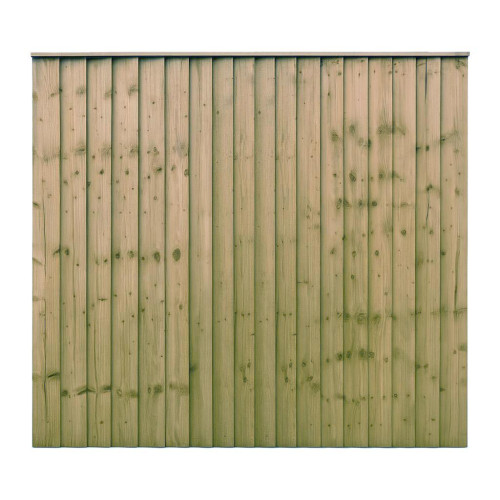
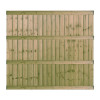
Manufactured in-house by East Coast Fencing, this 5ft 6in closeboard fence panel measures 1830mm wide by 1650mm high and is supplied in a green/natural pressure-treated finish. It is intended for gardens that need a high level of privacy while keeping the fence 150mm below the full-height 1800mm option, making it a useful intermediate size when 1.5m is not quite enough. The solid-looking feather edge face makes it a different proposition from picket or trellis fencing: the overlapping boards reduce direct sight lines while the chosen height controls how enclosed the boundary feels.
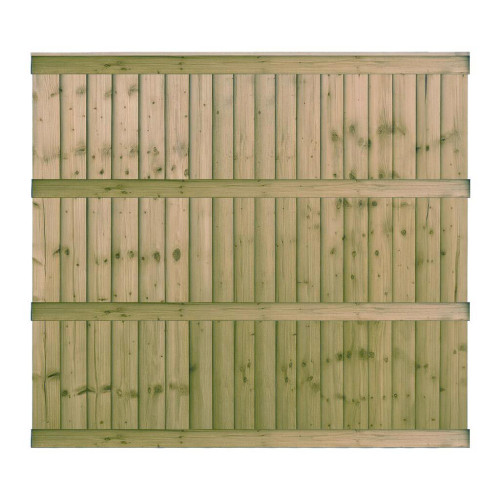
At 1650mm high, this panel is close enough to full height that it should be planned as a substantial boundary component, not simply a taller version of a low garden divider. The standard build steps up to four backing rails at this size. That is an important specification change from the 1.5m standard panel, and it gives a useful reference point when deciding whether the five-rail Ultra version is necessary for the site.
The standard panel is built from 18 feather edge boards at 125mm wide, fixed across 4 backing rails measuring 75 x 32mm. It is an unframed closeboard design with a listed 45mm depth, and a timber capping strip finishes the top. The capping covers the exposed top line of the boards and encourages rain to run off rather than remaining on that edge. Because we manufacture the panel ourselves, these construction details are part of the product specification rather than assumptions based on a generic closeboard panel.
Choosing green/natural rather than brown does not change the panel layout or rail count; it changes the initial treated appearance. This makes it useful where the customer wants the lighter, more natural-looking treated timber finish across panels, posts or other timber components. For this 5ft 6in size, the standard build uses 4 rails. Where the boundary is more exposed or extra support is a priority, compare it with the corresponding Ultra Heavy Duty panel in our closeboard fence panels range.
A good installation keeps the panel itself out of direct ground contact. Use a suitable gravel board where the fence line runs over soil or other damp ground, and establish the base line before the panels are fitted. The extra height means careful post setting and support at the base become increasingly important. Plan the complete bay, including any gravel board, before choosing post length so the finished visible height and below-ground fixing are considered together. If the garden slopes, plan the steps between bays first so one corner of the panel is not forced into the soil simply to keep the top line continuous.
Check the support system at the same time as the panels. Suitable fence posts need to be set straight and at the correct spacing for the actual panel width, with the post length chosen around the required visible fence and below-ground fixing. On replacement work, measure between the existing posts before ordering. If a panel is trimmed, any fresh cut timber should be re-treated rather than left exposed. These checks are more useful than relying on the nominal 6ft width alone.