

Quick answer: Feather edge boards can warp, twist or cup because timber naturally changes as its moisture content rises and falls. Small amounts of movement are normal outdoors. More noticeable distortion can be encouraged by poor storage, inconsistent fixing, insufficient overlap, excessive moisture, damaged rails or forcing boards into position. A slightly moved board may still be perfectly serviceable. Repair becomes more important when movement creates large gaps, splits the timber, pulls fixings loose or affects the stability of the fence.
Feather edge fencing is designed around a material that moves.
Timber is not dimensionally fixed. It absorbs and releases moisture depending on the weather, and individual boards can shrink, swell, bow, twist or develop surface checks as they adjust.
That is one reason feather edge boards overlap rather than being fitted tightly edge-to-edge.
The overlap provides some tolerance for natural movement while maintaining a largely continuous privacy screen.
Problems start when normal timber movement becomes large enough to create gaps, loose boards, failed fixings or an uneven fence line.
This guide explains the different types of movement, why they happen and what you can realistically do about them.
What Is The Difference Between Warping, Twisting And Cupping?
These terms are often used interchangeably, but they describe different changes in timber shape.
| Type Of Movement | What It Looks Like | Typical Effect On Fencing |
|---|---|---|
| Bow | Board curves along its length | Middle may pull away from rails or adjoining boards |
| Cup | Board curves across its width | Edges may lift or overlap unevenly |
| Twist | Board rotates along its length | One end may sit correctly while the other lifts |
| Shrinkage | Board becomes slightly narrower | Overlap reduces and gaps can become more visible |
| Surface checking | Small splits form along the grain | Usually cosmetic unless deep or around fixings |
One board can show more than one type of movement at the same time.
Why Does Feather Edge Timber Move?
The main reason is changing moisture content.
Outdoor fencing repeatedly goes through wet and dry periods.
Timber may absorb moisture during prolonged rain and release it during warm, dry or windy weather.
As moisture changes, timber dimensions change as well.
Individual boards can react differently because timber naturally varies in:
- Grain direction
- Density
- Knots
- Growth-ring pattern
- Initial moisture content
Two neighbouring boards from the same pack therefore do not necessarily move in exactly the same way.
Does Pressure Treatment Stop Feather Edge Boards Warping?
No.
Pressure treatment improves timber's resistance to biological deterioration such as rot and fungal decay.
It does not prevent normal moisture movement.
Pressure-treated feather edge boards can still:
- Shrink
- Swell
- Twist slightly
- Cup
- Develop surface checks
- Change colour as they weather
This does not automatically mean the treatment has failed or the board is defective.
Why Is Feather Edge Timber Tapered?
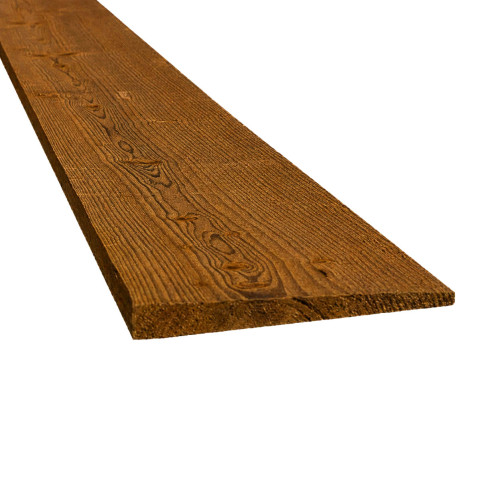
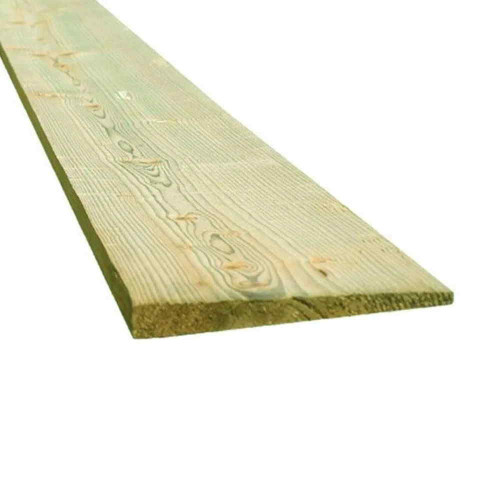
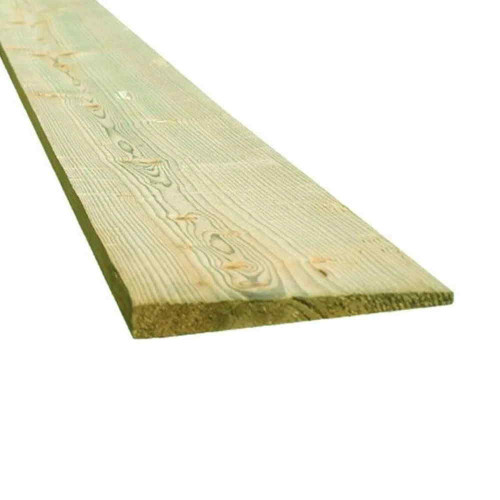
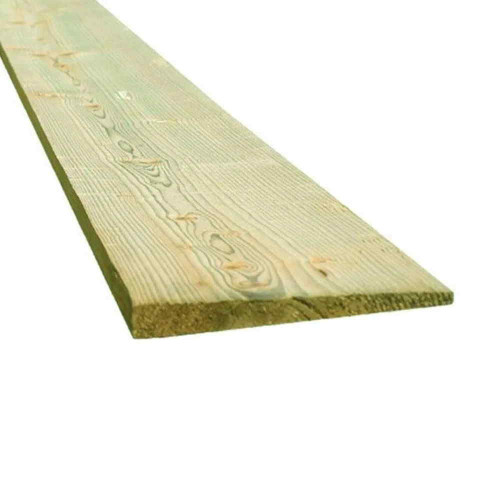
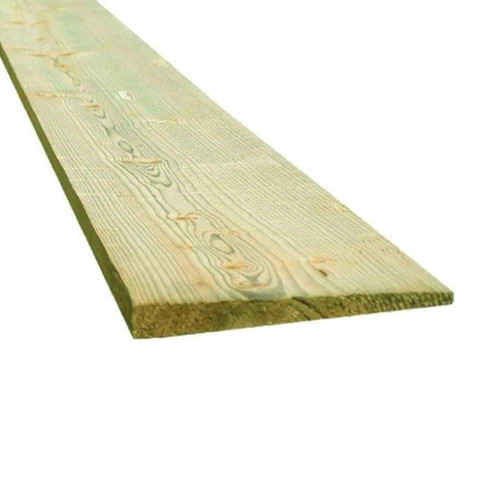
A feather edge board is thicker along one edge and thinner along the other.
The thick edge overlaps the thin edge of the neighbouring board.
East Coast Fencing's current feather edge range uses nominal 125 x 22mm 2EX boards in lengths including:
- 0.9m
- 1.2m
- 1.5m
- 1.65m
- 1.8m
- 2.1m
The tapered profile allows a closeboard fence to form a continuous face without using a full-thickness rectangular board at every position.
The overlap also helps accommodate natural timber movement.
Why Is Overlap So Important?
If feather edge boards were installed edge-to-edge, even modest shrinkage could quickly create clear sightlines through the fence.
Overlap provides a margin.
As an individual board becomes slightly narrower, part of the neighbouring board is still covered.
This is why consistent overlap is more important than trying to stretch each board across the maximum possible width.
Too little overlap can create visible gaps after ordinary drying.
Excessive overlap, on the other hand, uses more boards than necessary and makes setting out less efficient.
Can Incorrect Fixing Make Feather Edge Boards Warp?
It can contribute to problems.
Fixings need to hold the board securely to the supporting rails without unnecessarily restricting the natural movement of the overlapping timber.
Problems can arise when:
- Fixings are overdriven
- Boards split around nails or screws
- Fixings miss the supporting rail
- Boards are forced flat against badly aligned rails
- Several overlapping boards are pinned rigidly together unnecessarily
- Too few fixing points are used
The board should be attached to the supporting structure rather than relying on neighbouring feather edge boards to hold it in place.
Should You Nail Through Two Feather Edge Boards?
In normal closeboard construction, avoid unnecessarily fixing through several overlapping layers in a way that locks neighbouring boards tightly together.
The aim is for each board to remain securely attached to its rails while the overlapping arrangement can accommodate ordinary timber movement.
A fixing that passes through multiple moving boards can increase the risk of splitting or irregular movement if the boards try to change dimensions independently.
Are Nails Or Screws Better For Feather Edge Boards?
Both can be suitable when the fixings are intended for exterior timber and the installation method is appropriate.
Nails are widely used for large closeboard runs because they can be efficient to install.
Screws can make an individual board easier to remove during later repair.
Whichever method is chosen:
- Fix into sound rails
- Use exterior-grade fixings
- Avoid overdriving the head
- Keep fixing positions consistent
- Take care near board ends
If the timber is particularly dry or a fixing is close to an end, a suitable pilot hole may reduce splitting when using screws.
Can Poor Rails Make Boards Look Warped?
Yes.
Sometimes the feather edge boards are not the main problem.
Traditional closeboard fencing relies on horizontal rails supported between fence posts.
If a rail:
- Bows
- Rotates
- Breaks
- Comes loose
- Pulls away from the post
several boards can move together.
This can make an entire section of fencing appear distorted.
If several neighbouring boards suddenly look uneven, inspect the supporting rail before replacing individual boards.
Why Are Cant Rails Commonly Used For Closeboard Fencing?
Cant rails have a shaped rather than fully rectangular profile.
They provide the horizontal structure to which the feather edge boards are fixed.
The angled shape also avoids creating the same broad horizontal upper surface as a simple square rail.
East Coast Fencing currently supplies pressure-treated cant rails in useful lengths including 2.4m and 3.0m for suitable closeboard construction.
The number and arrangement of rails should match the height and design of the fence.
Can Boards Warp Because The Fence Has Too Few Rails?
Insufficient support can allow longer boards to move more freely between fixing points.
A taller board needs the supporting framework to control it across its height.
Do not simply copy the rail arrangement from a much lower fence when building a tall closeboard boundary.
The complete structure should be designed around:
- Board length
- Post spacing
- Fence height
- Wind exposure
- Rail section
Why Do Feather Edge Boards Move More After Hot Weather?
Dry conditions can reduce the moisture content of the timber.
The boards may become slightly narrower and some existing natural stresses within the wood can become more visible.
You may notice:
- Overlap appearing smaller
- More visible surface checking
- Individual boards pulling slightly away from the fence face
- Loose-looking fixings
This does not mean you should immediately push every board tightly together.
Some movement may reverse as wetter conditions return.
Why Do Boards Change In Wet Weather?
Timber can absorb moisture and swell.
A board that looked slightly shrunken during a dry summer may become fuller again during wetter conditions.
If the boards were installed with no allowance for movement, swelling can create pressure within the fence.
This is another reason not to force feather edge boards tightly together as though they were indoor joinery.
Can Storing Feather Edge Boards Incorrectly Cause Warping?
Yes.
Timber left unsupported before installation can change shape.
Store loose feather edge boards:
- On a firm surface
- With support along the stack
- Off wet ground
- Without one end hanging unsupported
- In a way that avoids creating a permanent bend
Install timber reasonably promptly rather than leaving individual boards scattered around the garden for long periods.
A board that has already developed a severe twist before installation is harder to fix neatly into a straight fence.
Should You Force A Twisted Board Straight?
Minor movement can sometimes be controlled by carefully positioning the board against sound rails and fixing it securely.
There is a limit.
Trying to pull a badly twisted board flat using increasingly large screws can:
- Split the feather edge board
- Damage the rail
- Pull fixings through the timber
- Leave excessive stress in the completed fence
If one loose board is severely distorted while the rest of the fencing is straight, replacing that individual board may be the cleaner repair.
Can You Replace One Warped Feather Edge Board?
Yes.
This is one of the practical advantages of site-built closeboard fencing.
Individual boards can be replaced without automatically rebuilding the whole fence.
Before removing the board, check:
- The rails are sound
- The surrounding boards remain secure
- The fence post is stable
- The replacement board is the correct length
- The existing overlap can be reproduced
Carefully remove the old fixings, insert the replacement into the existing overlap pattern and attach it to the structural rails with suitable exterior fixings.
Can You Turn A Warped Board Around And Refit It?
Usually there is little benefit if the board has developed substantial permanent distortion.
Reversing it may simply move the problem to the opposite direction.
It can also disturb the established overlap pattern.
Where a board has become badly twisted, split or cupped, replacement is generally more straightforward than repeatedly refitting it.
Can A Feather Edge Board Be Too Warped To Use?
Yes.
Some movement is acceptable in natural fencing timber, but reject or replace a board where distortion prevents it from performing properly.
Examples include:
- A severe twist that prevents consistent overlap
- A bow that cannot sit against the rails
- A deep split through an important fixing area
- A thin edge that has broken away extensively
- A board that repeatedly pulls its fixing loose
The aim is not furniture-grade perfection.
The board simply needs to form a secure, consistent part of the fence.
Are Small Splits In Feather Edge Boards Normal?
Small surface checks can occur as timber dries.
They do not necessarily mean the board needs replacing.
Look more closely when a split:
- Runs through most of the board thickness
- Continues through a fixing point
- Allows a large section to move independently
- Causes the thin edge to detach
- Prevents the board remaining securely fixed
Judge the board by its structural condition rather than simply the presence of a visible line.
Why Do Gaps Appear Between Feather Edge Boards?
Reduced overlap is one common cause.
This may happen because:
- Boards have dried and become slightly narrower
- The original overlap was too small
- A board has twisted away from its neighbour
- A fixing has failed
- The supporting rail has moved
If the fence was originally built with generous, consistent overlap, modest shrinkage should not immediately produce large sightlines.
Can You Simply Push Gapped Boards Back Together?
Not always.
If one loose board has moved because its fixing failed, repositioning and refixing it may work.
If an entire run has dried slightly, pushing every board sideways can create problems elsewhere and reduce overlap at the end of the fence.
Find the cause first.
If the original construction used too little overlap, the problem may require more substantial alteration than moving one board.
Should Feather Edge Boards Touch The Ground?
Ideally, the main feather edge boards should be kept away from persistently wet ground.
A gravel board can create the lower edge of the fence so the vertical boards begin above it.
This reduces direct contact with:
- Wet soil
- Standing water
- Grass
- Mulch
- Wet garden debris
Prolonged damp can cause much more serious problems than ordinary seasonal movement because it can eventually contribute to decay.
Can Rot Look Like Warping?
Yes.
As timber deteriorates it may lose strength around fixings and begin moving away from the rails.
A board may then appear twisted or bowed when the real problem is that the timber has become too weak to remain securely fixed.
Check the lower fence particularly carefully.
Press suspicious timber gently with a blunt tool.
Sound timber should remain reasonably firm. Soft or crumbling material indicates a different problem from simple moisture movement.
Can Heavy Plants Distort Feather Edge Fencing?
Yes.
Mature climbing plants can add substantial weight to a fence.
After rain, wet foliage can become heavier still.
Plant growth can also pull on individual boards or conceal loose rails and damaged fixings.
If fencing behind a mature climber is becoming distorted, inspect the plant load as well as the timber.
A repair will not last if the same excessive load remains attached afterwards.
Does Painting Or Staining Stop Boards Warping?
No finish can guarantee that natural timber will remain completely dimensionally stable.
A suitable exterior coating may change the appearance and provide surface protection, but it does not remove the underlying effect of changing moisture conditions.
Do not try to correct a structural timber problem simply by applying more stain.
Fix loose boards, failed rails and damaged components first.
Should Both Sides Of Feather Edge Fencing Be Treated?
Pressure-treated boards already receive preservative treatment during manufacture.
If a decorative surface coating is later applied, follow the coating manufacturer's instructions regarding timber preparation, moisture condition and coverage.
Pay particular attention to freshly cut timber.
Cutting treated timber exposes material inside the board, so an appropriate cut-end treatment should be applied where required.
Can Capping Reduce Feather Edge Problems?
Capping can provide a neater finished top and additional protection to exposed upper edges where it is correctly fitted.
It can also help visually tie the top of a traditional closeboard fence together.
It does not compensate for:
- Poor post alignment
- Failed rails
- Badly warped boards
- Insufficient overlap
- Weak fixings
Treat capping as a finishing component rather than a repair for a failing fence structure.
Why Do Some Boards Move More Than Others?
Natural variation.
One piece of timber may contain straighter grain while another includes knots or a different growth-ring orientation.
As both boards dry, their movement can therefore differ.
This is normal in rough-sawn fencing timber.
A closeboard fence should be assessed as a functional outdoor structure rather than against the standards expected of manufactured indoor joinery.
How Can You Reduce Feather Edge Board Movement?
You cannot eliminate timber movement, but good practice can reduce avoidable problems.
- Use pressure-treated boards intended for exterior fencing.
- Store timber flat and properly supported before installation.
- Reject severely distorted boards rather than forcing them into place.
- Build the post and rail structure accurately.
- Use enough rails for the fence height and design.
- Keep the feather edge overlap consistent.
- Use appropriate exterior fixings.
- Avoid overdriving nails and screws.
- Do not unnecessarily pin several overlapping boards together.
- Keep main boards away from persistent wet ground.
- Use gravel boards where appropriate.
- Control heavy climbing plants.
- Treat fresh timber cuts where required.
How Do You Repair A Single Warped Feather Edge Board?
- Inspect the rail: Confirm the support behind the board is sound.
- Check the fixing: Establish whether the board has moved because a nail or screw failed.
- Assess the distortion: Decide whether the board can sit naturally back against the fence.
- Support the board: Bring minor movement back into position carefully.
- Refix into sound timber: Use a suitable exterior fixing in the supporting rail.
- Check the overlap: Make sure privacy coverage remains consistent.
- Replace if necessary: Use a new board if the old one is severely twisted, split or rotten.
When Should You Repair More Than The Individual Board?
If several boards are moving together, look deeper into the fence.
Possible structural causes include:
- A broken cant rail
- A loose rail-to-post connection
- A leaning fence post
- Rot around the rail ends
- Large-scale plant loading
- Wind damage
Replacing several feather edge boards while leaving a failed support behind them is unlikely to produce a lasting repair.
When Does Closeboard Fencing Need More Extensive Replacement?
Individual boards are highly repairable.
More extensive work becomes sensible when failure affects the structure behind them.
Look for:
- Several rotten rails
- Loose or leaning posts
- Widespread decay
- Numerous split or detached boards
- A fence line that has moved significantly out of alignment
- Repeated failures after previous repairs
At that point, replacing isolated boards may simply move the repair from one weak area to the next.
Common Mistakes With Feather Edge Boards
- Fitting boards edge-to-edge instead of overlapping them
- Using too little overlap to save timber
- Forcing severely twisted boards into the fence
- Overdriving fixings
- Fixing into rotten rails
- Pinning overlapping boards together unnecessarily
- Using too few supporting rails for a tall fence
- Leaving boards directly against wet ground
- Ignoring heavy plant growth
- Assuming pressure treatment prevents movement
- Replacing boards without checking leaning posts
- Leaving freshly cut treated timber unprotected
FAQs
Is It Normal For Feather Edge Boards To Warp?
Some natural movement is normal because timber responds to changes in moisture. Minor bowing, checking or dimensional change does not automatically mean a board has failed.
Why Are My Feather Edge Boards Twisting?
Timber grain, moisture changes, storage and installation conditions can all contribute. Check that the boards are securely fixed to straight, sound rails and are not being forced by surrounding components.
Will A Warped Fence Board Straighten Again?
Some movement can change with the weather, but a severely distorted board may not return to its original shape. Replace an individual board if it can no longer sit securely within the fence.
Should Feather Edge Boards Be Fixed Tight Together?
They should overlap consistently rather than being installed edge-to-edge or clamped tightly together. The construction needs to accommodate normal timber movement.
How Much Should Feather Edge Boards Overlap?
The overlap should be consistent across the fence and sufficient to maintain screening as the timber moves. Calculate quantities from the effective cover of the chosen board arrangement rather than the full nominal board width.
Can You Replace One Feather Edge Board?
Yes. Individual board replacement is one of the advantages of traditional closeboard construction, provided the supporting rails and posts remain sound.
Does Pressure-Treated Feather Edge Warp?
It can. Pressure treatment improves resistance to biological decay but does not prevent natural shrinkage, swelling, twisting or checking.
Why Are Gaps Appearing In My Feather Edge Fence?
Possible causes include timber shrinkage, insufficient original overlap, twisted boards, loose fixings or movement in the supporting rails. Check the structure before simply pushing the boards together.
Allow Timber To Move Without Letting The Fence Become Loose
Feather edge fencing works well because the design accepts that outdoor timber will move.
The boards overlap, so the fence does not rely on every piece staying exactly the same width for its entire life.
A little movement is therefore not a reason to start replacing otherwise sound timber.
Concentrate on what affects the function of the fence. Boards should remain securely attached to sound rails, overlap should continue to provide screening and the posts should keep the complete run aligned.
Where one board has become badly twisted or split, replace that component. Where several boards move together, inspect the rails and posts before doing anything else.
The best closeboard fences are not the ones where timber never moves. They are the ones designed and installed well enough to accommodate normal movement while remaining secure, private and straightforward to repair.