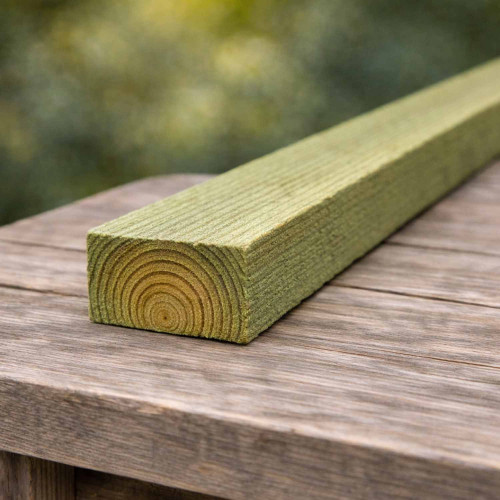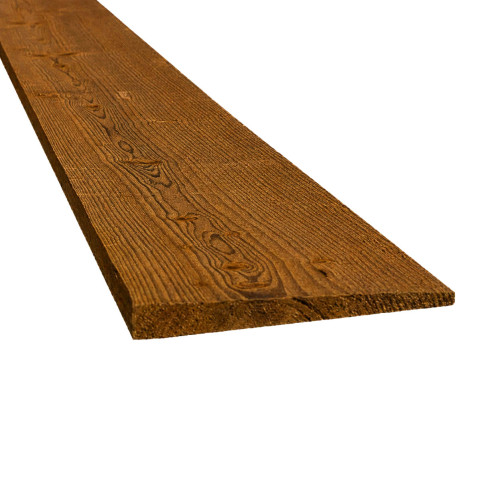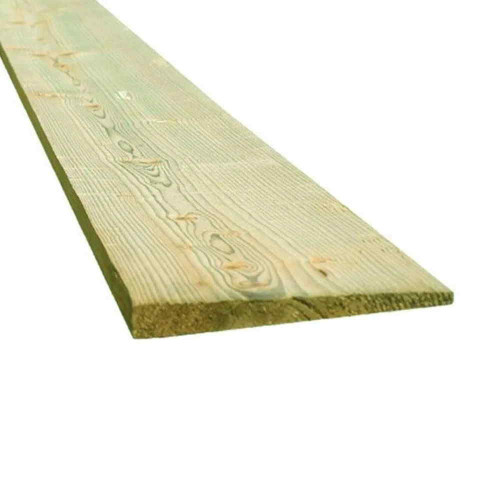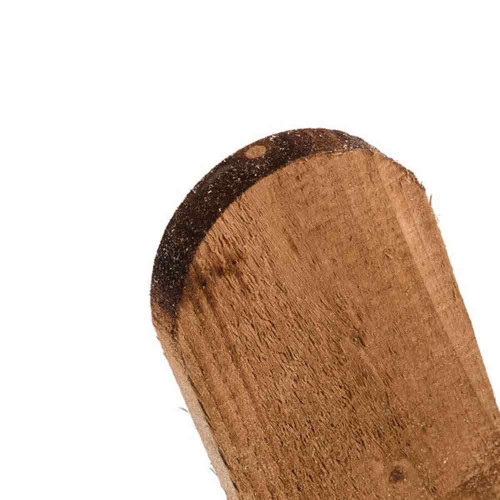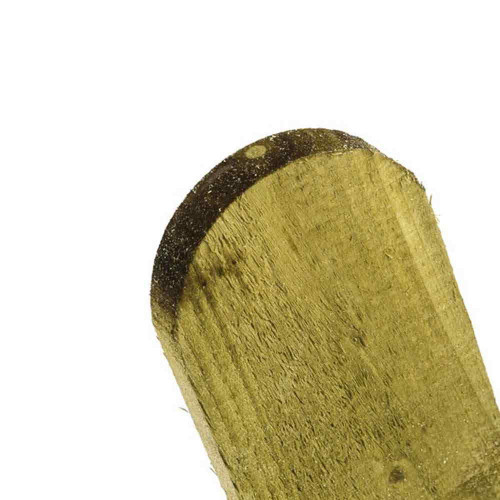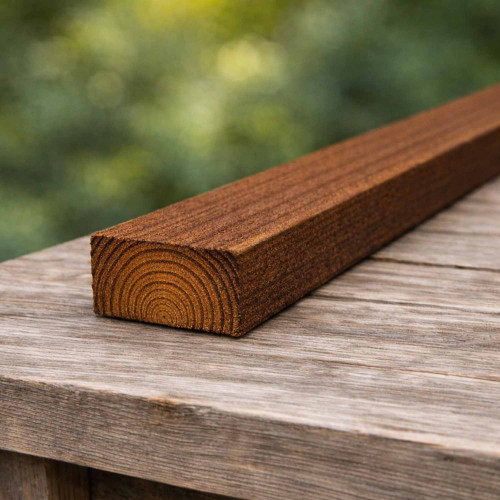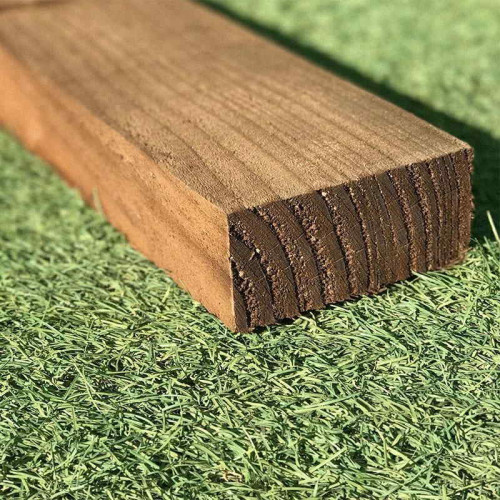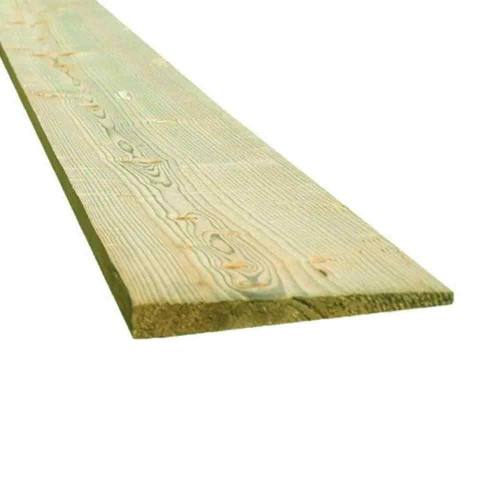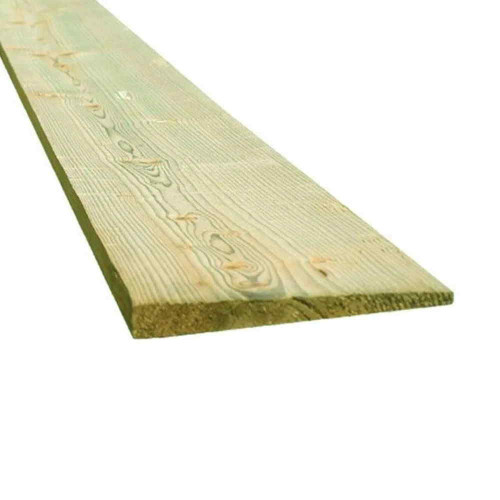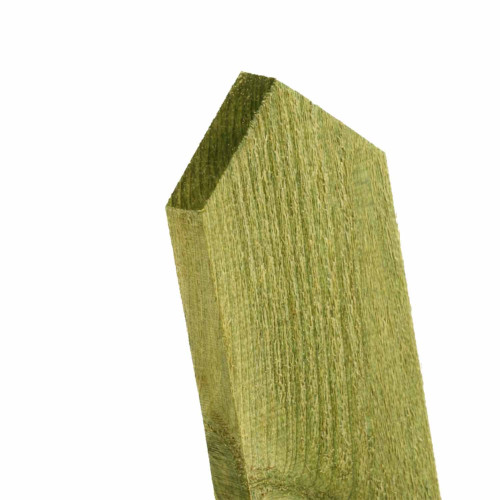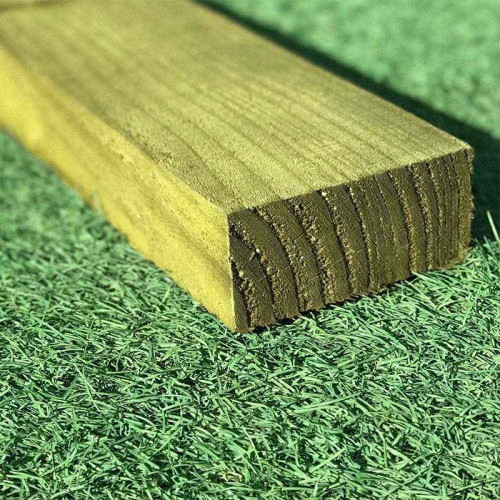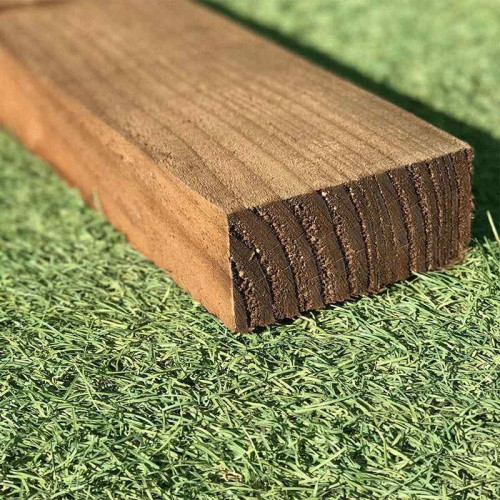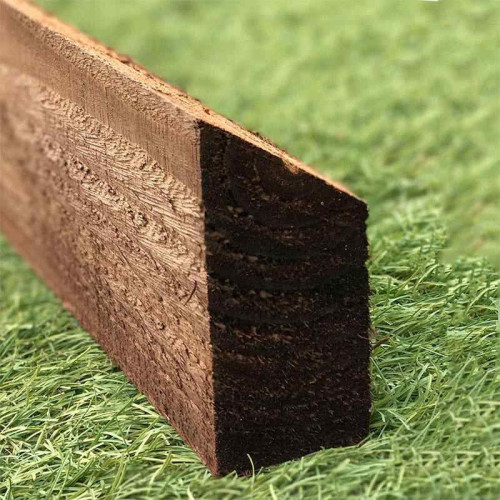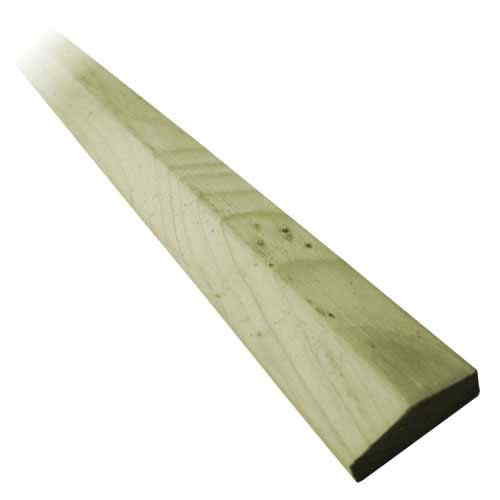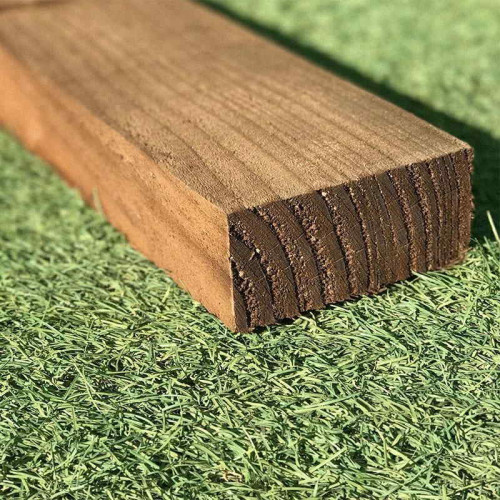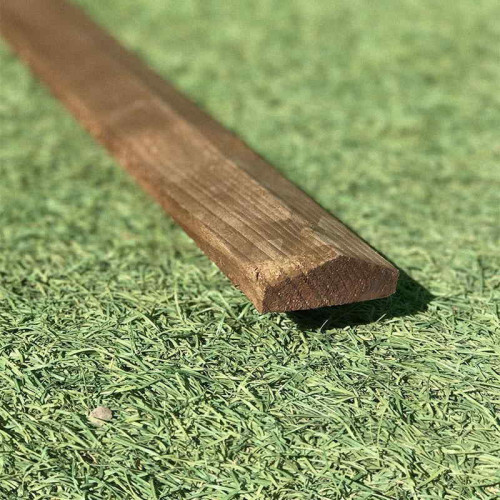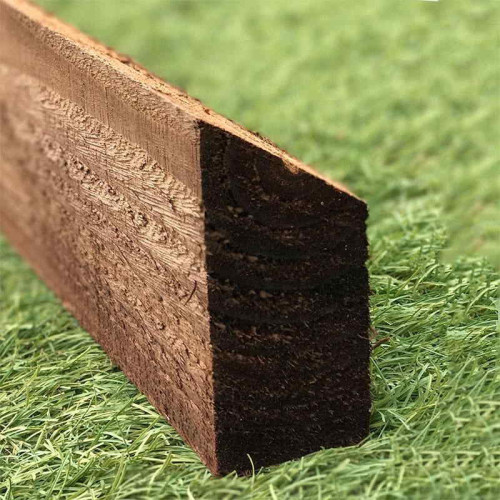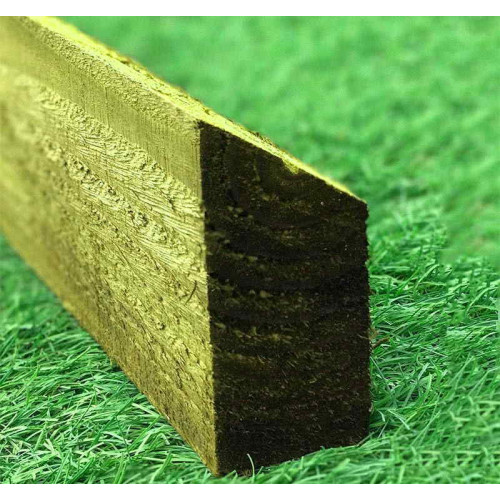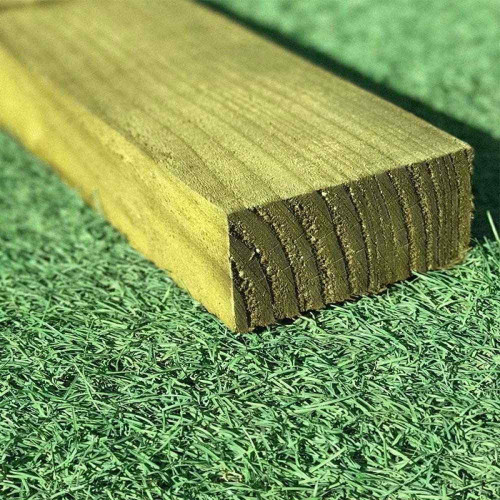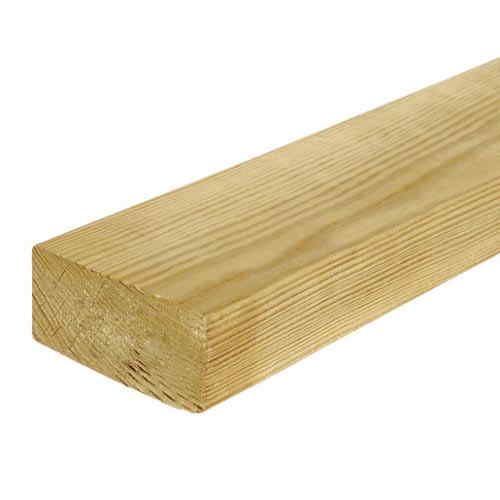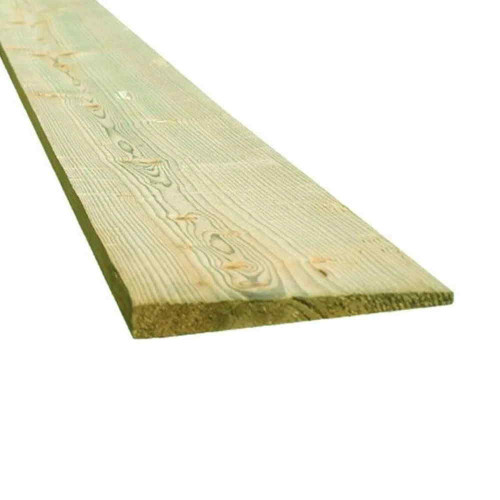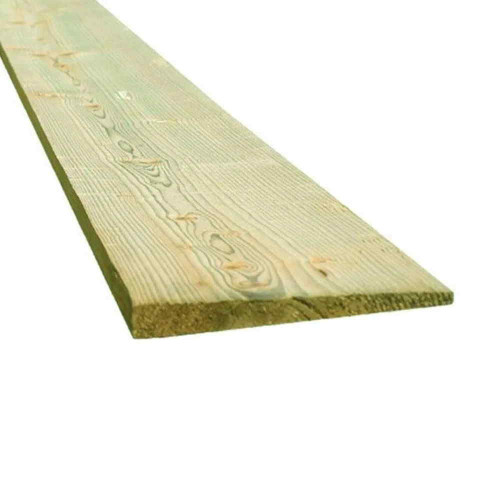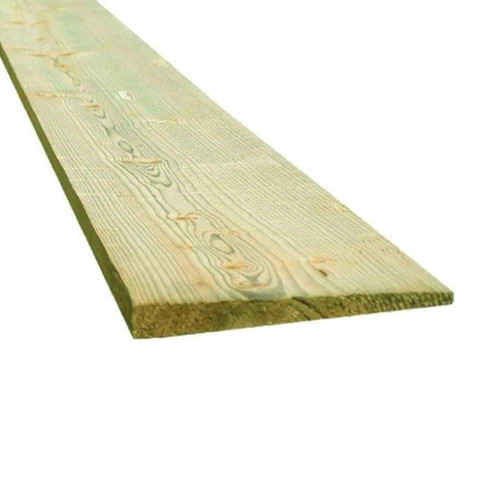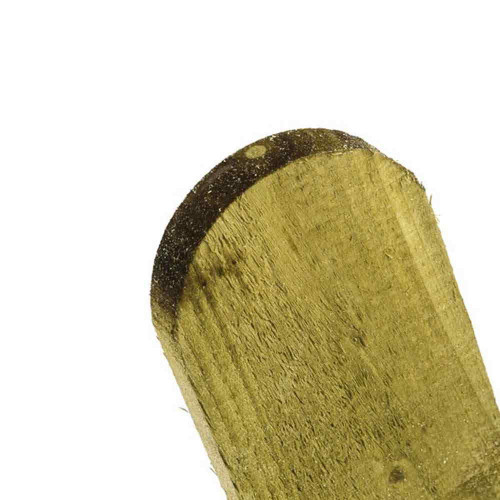



Quick answer: Choose fencing timber by matching the timber profile, dimensions and treatment to the job. Feather edge boards are used for closeboard fencing, cant and square rails support boards or pales, wallplates provide fixing points against suitable walls, backrails repair or build framed panels, trellis battens space trellis from a surface, capping finishes compatible panels, and picket pales create open fencing. Measure the complete project, allow for overlaps and cuts, and protect every fresh cut.
Fencing timber includes the individual boards, rails, battens and finishing sections used to build, repair or adapt a garden fence. Buying the correct timber allows a fence to be designed around the site rather than relying entirely on pre-built fence panels.
Individual timber components are useful for closeboard fencing, picket fencing, panel repairs, wall-mounted sections, trellis supports and custom-width boundary installations. They are also useful where a standard 1.83m fence panel will not fit the available space.
The correct product depends on its purpose, dimensions, treatment, support spacing and exposure. A thin batten intended for trellis should not be used as a structural fence rail, while a substantial cant rail may be unnecessary for a small decorative screen.
This timber buying guide explains the main products in the range, including feather edge boards, cant rails, square or MOT rails, wallplates, fence panel backrails, trellis battens, fence capping, picket pales and wooden gravel boards. It also covers measuring, quantities, pressure treatment, cutting, fixings, storage, natural timber movement and common buying mistakes.
What Should You Consider Before Buying Fencing Timber?
Start with a measured design rather than ordering a collection of timber lengths and deciding how to use them afterwards.
Consider:
- The type of fence or repair
- The required finished height
- The total boundary length
- The distance between posts
- The number and position of rails
- The required board overlap or pale spacing
- Whether gravel boards are included
- Whether the timber will touch soil
- The site's wind exposure
- The position of gates, walls and corners
- The required treatment colour
- The number of cuts and likely waste
- The required screws, nails, brackets and treatments
Do not choose timber by length alone. Its width, thickness, shape and intended position within the fence are equally important.
Fencing Timber Products At A Glance
| Timber Product | Main Use | Available Dimensions |
|---|---|---|
| Feather Edge Board | Vertical closeboard fencing | 125 x 22mm, lengths from 0.9m to 2.1m |
| Cant Rail | Horizontal support for closeboard fencing | 125 x 47mm, 2.4m and 3.0m lengths |
| MOT Rail | General fencing rail and support | 87 x 38mm x 3.6m |
| Wallplate | Creating a timber fixing face | 100 x 47mm in selected lengths |
| Fence Panel Backrail | Panel framing and repairs | 75 x 32mm x 1.83m |
| Trellis Batten | Mounting and spacing trellis | 38 x 16mm x 1.83m |
| Fence Capping | Finishing a compatible panel top | 45 x 16mm x 1.83m |
| Picket Pale | Open picket fencing | 75 x 19mm, 0.9m and 1.2m lengths |
| Wooden Gravel Board | Protecting the bottom of fencing | 150mm high, selected lengths |
What Is Pressure-Treated Timber?
Pressure treatment introduces preservative into timber to improve its resistance to fungal decay and insect attack.
It is particularly useful for fencing because timber remains outdoors throughout the year and is repeatedly exposed to rain, damp air and changing temperatures.
Pressure treatment does not make timber:
- Waterproof
- Completely maintenance free
- Immune to rot
- Unable to split or move
- Suitable for every structural application
Correct installation, drainage, fixings and maintenance remain important.
Brown Or Green Pressure-Treated Timber?
Much of the available fencing timber is supplied in pressure-treated brown and pressure-treated green finishes.
Pressure-Treated Brown Timber
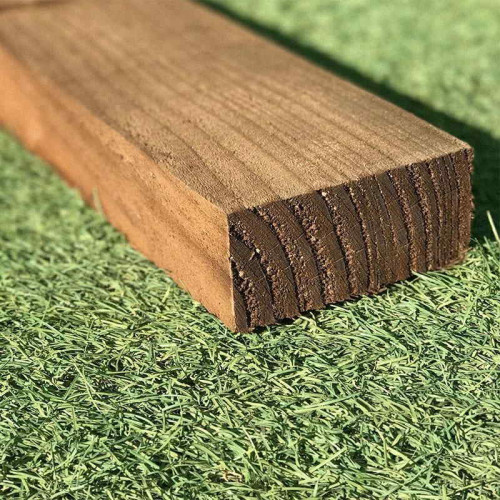
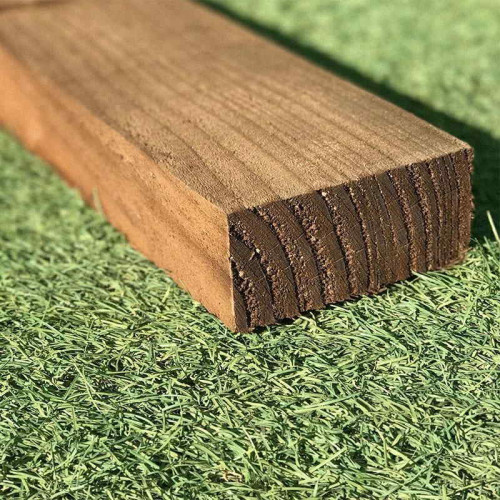
Brown-treated timber has a warmer initial appearance. It works naturally with brown fence panels, wooden posts, gravel boards, trellis and garden gates.
Pressure-Treated Green Timber
Green-treated timber has a lighter, more natural initial treatment colour. It can be matched with green-treated posts, panels, gravel boards and trellis.
The difference is mainly visual. Both finishes will change as the timber is exposed to sunlight and weather.
Natural variation should be expected between individual pieces. Colour can also be affected by:
- Moisture content
- Timber grain
- Knots
- Treatment absorption
- Storage conditions
- Exposure after installation
Brown And Green Timber Compared
| Feature | Brown Treatment | Green Treatment |
|---|---|---|
| Initial appearance | Warm brown tone | Lighter natural or green tone |
| Typical use | Traditional timber fencing | Natural and contemporary fencing |
| Weathering | Changes over time | Changes over time |
| Pressure treated | Yes | Yes |
What Do Timber Dimensions Mean?
Timber dimensions are normally shown as length followed by width and thickness, although product naming formats vary.
For example, a 1.83m x 75 x 32mm backrail is approximately:
- 1.83m long
- 75mm wide
- 32mm thick
Check the product's actual stated dimensions rather than relying only on familiar names such as rail, batten or wallplate.
The same length can perform very differently depending on its section. A 38 x 16mm trellis batten is not interchangeable with a 125 x 47mm cant rail.
What Are Feather Edge Boards?
Feather edge boards are tapered vertical boards used to create closeboard fencing. One edge is thicker than the other, allowing adjoining boards to overlap.
They are fixed vertically to horizontal rails and normally sit above a gravel board.
Feather edge fencing is suitable for:
- Rear garden boundaries
- Custom-width fence bays
- Sloping gardens
- Repairs to traditional closeboard fencing
- Long fence runs
- Projects where individual boards may need replacing
Because the boards are fitted individually, the fence can be adjusted more easily than a rigid framed panel.
What Feather Edge Board Sizes Are Available?
The available feather edge boards have a nominal 125 x 22mm 2EX profile and are supplied in brown and green pressure-treated finishes.
Available lengths include:
- 0.9m
- 1.2m
- 1.5m
- 1.65m
- 1.8m
- 2.1m
Which Feather Edge Board Length Do You Need?
Select the length by considering the required board height, gravel board, ground level and any top clearance or capping.
| Board Length | General Buying Context |
|---|---|
| 0.9m | Low closeboard fencing and short repairs |
| 1.2m | Medium-low boundaries |
| 1.5m | Higher screening below maximum privacy height |
| 1.65m | Useful where a gravel board forms part of an approximately 1.8m system |
| 1.8m | Full-height privacy boarding where the design permits |
| 2.1m | Higher custom work or boards requiring additional cutting |
These are general project contexts rather than guaranteed finished fence heights. The exact arrangement depends on the rails, gravel board and ground levels.
How Many Feather Edge Boards Do You Need?
Feather edge boards overlap, so their effective cover width is less than their full 125mm nominal width.
To calculate the quantity:
- Measure the complete boarded length in millimetres.
- Decide the required overlap.
- Calculate the effective cover width of one board.
- Divide the run length by the effective cover width.
- Round up to a whole board.
- Add a reasonable allowance for cuts and unsuitable pieces.
Use a consistent overlap across the complete fence. Too little overlap can create gaps as timber moves, while excessive overlap increases material use and can produce an uneven finish.
Should Feather Edge Boards Be Vertical?
Feather edge boards are normally installed vertically as part of traditional closeboard fencing.
The thicker edge of each board overlaps the thinner edge of the previous board. The direction should remain consistent along the fence.
Vertical boards allow rainwater to run down the timber rather than remaining along horizontal laps.
Can Feather Edge Boards Be Cut?
Yes. They can be shortened to follow steps, changes in height and sloping fence lines.
After cutting:
- Remove loose fibres
- Treat the fresh cut where required
- Keep the cut square where it meets a rail or gravel board
- Avoid placing an untreated cut directly against wet soil
Use a guide or marked cutting line when several boards need the same finished length.
What Are Cant Rails?
Cant rails are substantial horizontal rails used in traditional closeboard fencing. Their shaped profile provides a fixing face for feather edge boards and helps shed water from the upper surface.
The available range includes nominal 125 x 47mm 2EX cant rails in:
- 2.4m lengths
- 3.0m lengths
- Pressure-treated brown
- Pressure-treated green
Cant rails are fixed between or onto suitable fence posts and support the vertical boards.
Should You Choose 2.4m Or 3.0m Cant Rails?
The correct length depends on the post spacing and fence design.
2.4m Cant Rails
A 2.4m rail can suit shorter bays, standardised traditional fencing layouts and projects where manageable individual lengths are preferred.
3.0m Cant Rails
A 3.0m rail can suit longer planned bays or provide additional cutting flexibility.
Do not increase the distance between posts simply because a longer rail is available. Rail span, fence height, wind exposure and post strength must be considered together.
How Many Cant Rails Does A Fence Need?
The number of horizontal rails depends on the height of the boards and the complete fence design.
Lower fencing may need fewer rails than a tall privacy fence. Taller boards normally need support at several points to reduce movement and bowing.
When planning rail positions:
- Keep the lower rail clear of wet soil
- Support the middle of longer boards
- Provide secure fixing near the top
- Allow for gravel boards
- Avoid weakening post connections
Follow an appropriate fencing design rather than selecting the number of rails solely to reduce material use.
What Is An MOT Rail?
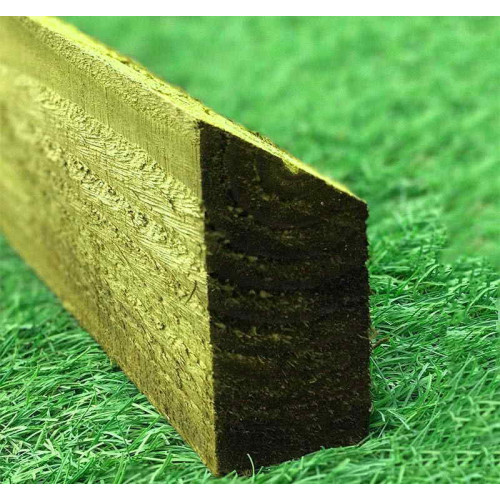
The available MOT rail is a pressure-treated rectangular timber rail measuring approximately 87 x 38mm x 3.6m.
Brown and green pressure-treated versions are available.
It can be used as a general fencing rail where its dimensions suit the design, including some picket, post-and-rail and custom garden structures.
Before using it, check:
- The span between supports
- The weight and spacing of the attached boards or pales
- The number of rails required
- The site's wind exposure
- The fixing method
Do not assume that every rectangular rail can replace a cant rail. Their shape and fixing faces differ.
Cant Rails And MOT Rails Compared
| Feature | Cant Rail | MOT Rail |
|---|---|---|
| Nominal section | 125 x 47mm | 87 x 38mm |
| Profile | Shaped or angled | Rectangular |
| Available lengths | 2.4m and 3.0m | 3.6m |
| Typical use | Closeboard feather edge fencing | General rail and custom fencing work |
What Is A Wallplate?
A wallplate is a rectangular timber section that can provide a secure timber fixing surface against suitable masonry, posts or an existing structure.
The available wallplates have a nominal section of 100 x 47mm and include selected lengths such as:
- 1.8m
- 2.1m
- 2.4m
Pressure-treated brown products are available across selected lengths, with pressure-treated green also available in selected sizes.
What Can A Wallplate Be Used For?
A wallplate may be useful where:
- A fence finishes against a suitable wall
- A garden gate or panel requires a timber fixing face
- Trellis needs a substantial mounting section
- A custom timber frame meets masonry
- Direct panel fixing to the wall would be difficult
The wall and fixings must be capable of supporting the intended load. Do not rely on render, loose mortar or damaged bricks.
How Do You Choose A Wallplate Length?
Match the wallplate to the required fixing height while allowing for:
- Ground clearance
- Fence or gate height
- Top and bottom fixings
- The position of sound masonry
- Any gravel board or threshold
It may be better to cut a longer wallplate than to join several short sections in a heavily loaded position.
Can A Wallplate Support A Garden Gate?
A wallplate may provide a fixing surface for some gates when attached to sound structural masonry with suitable fixings.
Gate loads include:
- The weight of the gate
- Repeated opening and closing
- Wind pressure
- Leverage from the hinges
- Impact from slamming
Do not assume that an ordinary wall or lightweight fixing arrangement can carry a substantial gate. The masonry and complete connection should be assessed.
What Is A Fence Panel Backrail?
A fence panel backrail is a horizontal framing component used within framed timber panels.
The available backrail measures approximately:
- 1.83m long
- 75mm wide
- 32mm thick
Pressure-treated brown and green options are available.
What Can Fence Panel Backrails Be Used For?
Backrails may be used for:
- Repairing a damaged fence panel frame
- Reinforcing a compatible timber panel
- Building a custom framed panel
- Replacing a rotten lower or middle rail
- Supporting boards within a panel repair
The remaining panel frame and boards must be sound enough to justify repair.
Can A Backrail Repair A Rotten Fence Panel?
It may repair localised damage where the rest of the panel is structurally sound.
A backrail repair is less suitable where:
- Both side frames are rotten
- Most boards are loose
- The panel is severely twisted
- Fixings no longer hold
- Decay affects several rails
Correct the cause of the damage, such as direct soil contact or a failed gravel board, before refitting the panel.
What Are Trellis Battens?
Trellis battens are narrow pressure-treated timber sections used to mount trellis or create a small gap between a trellis panel and another surface.
The available battens measure approximately:
- 1.83m long
- 38mm wide
- 16mm thick
Brown and green pressure-treated finishes are available.
Why Use Battens Behind Trellis?
A batten can:
- Create space for climbing stems
- Improve airflow
- Provide a straight fixing surface
- Keep trellis away from uneven masonry
- Make painting and maintenance easier
- Reduce moisture trapping against a wall
The batten must be fixed to sound material. Its narrow section is not intended to replace a substantial fence post or structural rail.
Can Trellis Battens Be Used For Other Jobs?
They may suit light spacing, packing and decorative tasks where their dimensions are appropriate.
They should not automatically be used for:
- Supporting heavy fence panels
- Gate framing
- Long structural spans
- Retaining soil
- Load-bearing building work
What Is Fence Capping?
Fence capping is a finishing section fitted along the top of a compatible fence panel or boarded fence.
The available capping measures approximately:
- 1.83m long
- 45mm wide
- 16mm thick
Pressure-treated brown and green versions are available.
What Does Fence Capping Do?
Fence capping can:
- Create a neat finished top line
- Cover the upper ends of compatible boards
- Match the panel treatment colour
- Reduce direct rain exposure to the panel top
- Improve the appearance of panel repairs
It does not make the panel waterproof and should not be expected to compensate for rotten or poorly framed timber.
Will Capping Fit Every Fence Panel?
No. Check the width and shape of the panel top.
Capping may be unsuitable for:
- Curved decorative panels
- Picket panels
- Panels with integral top rails
- Very thick framed panels
- Uneven or damaged panel tops
Measure the complete top edge and check how the capping will be fixed before ordering.
How Much Fence Capping Do You Need?
Measure the total length to be capped and divide it by the usable length of each capping section.
Allow for:
- End cuts
- Corner joints
- Damaged sections
- Short fence bays
- Any deliberate overhang
Position joints over secure framing where possible rather than leaving unsupported ends.
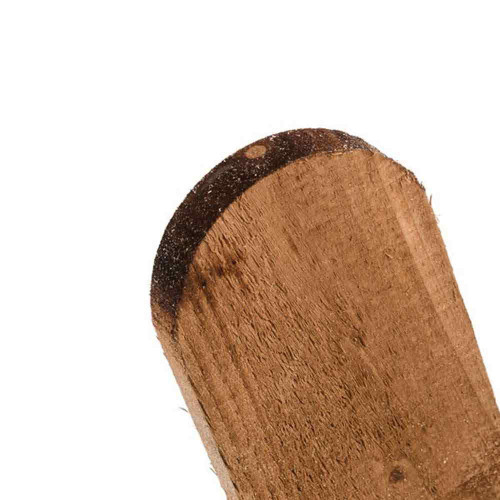
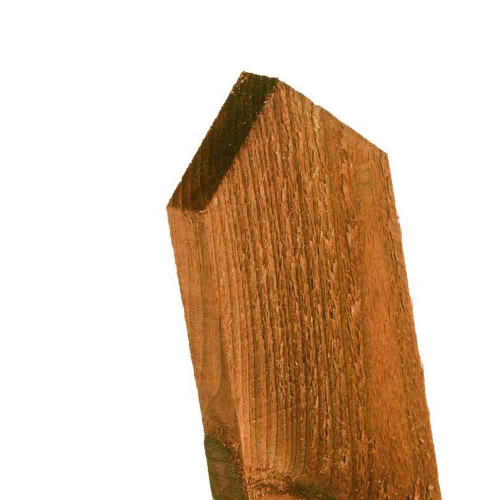
What Are Picket Pales?
Picket pales are individual vertical boards fixed to horizontal rails to create an open fence.
The available pales have a nominal section of 75 x 19mm and are supplied in:
- 0.9m lengths
- 1.2m lengths
- Point-top designs
- Round-top designs
- Pressure-treated brown
- Pressure-treated green
Point-Top Or Round-Top Picket Pales?
Point-Top Pales
Point-top pales provide a sharper traditional appearance and a more defined upper line.
Round-Top Pales
Round-top pales create a softer outline that suits cottage-style boundaries and family gardens.
The difference is primarily visual. Both types require consistent spacing and secure rail fixings.
Should You Choose 0.9m Or 1.2m Picket Pales?
The correct length depends on the required fence height and the position of the lower rail or gravel board.
| Pale Length | General Buying Context |
|---|---|
| 0.9m | Lower front garden and decorative fencing |
| 1.2m | Taller open fencing and increased containment |
Actual finished height may be lower than the full pale length depending on ground clearance and the fixing arrangement.
How Far Apart Should Picket Pales Be?
The spacing depends on appearance, privacy and whether the fence needs to contain children or pets.
Closer spacing:
- Uses more pales
- Provides more screening
- Reduces the size of openings
- Increases wind resistance slightly
Wider spacing:
- Creates a more open appearance
- Uses fewer pales
- Allows more light and airflow
- May not contain small pets
Use a spacer block to maintain a consistent gap during installation.
How Many Picket Pales Do You Need?
To calculate the approximate number:
- Measure the fence run in millimetres.
- Add the pale width to the chosen gap.
- Divide the total run by that combined measurement.
- Round up to a whole pale.
- Check how the end gaps will look.
- Add an allowance for cuts and damaged pieces.
Adjust the spacing slightly across the complete bay rather than leaving a noticeably narrow or wide gap at one end.
What Are Wooden Gravel Boards?
Wooden gravel boards sit beneath fence panels or individual boards and separate the timber fence from damp ground.
The available wooden gravel boards are approximately 150mm high and include:
- 1.83m lengths
- 2.4m lengths
- 3.0m lengths
- Pressure-treated brown
- Pressure-treated green
They can form part of closeboard fencing, framed panel systems and custom timber boundaries.
Which Gravel Board Length Should You Choose?
Match the board length to the post spacing and rail system.
A 1.83m board suits many standard fence-panel bays. Longer 2.4m and 3.0m boards can suit traditional closeboard construction and custom fence runs.
Do not use a longer gravel board to justify excessive post spacing. The board, rails and panels still need suitable support.
Can Wooden Gravel Boards Be Cut?
Yes. They can be reduced to suit shortened end bays and custom layouts.
After cutting:
- Treat the fresh end
- Check that it is fully supported
- Use suitable exterior fixings
- Avoid burying the cut end in wet soil
Which Timber Do You Need For Closeboard Fencing?
A traditional closeboard fence normally combines several components.
The material list may include:
- Wooden or concrete fence posts
- Cant rails
- Feather edge boards
- Wooden or concrete gravel boards
- Fence capping where required
- Exterior screws or nails
- Post mix
- Cut-end treatment
The exact quantity and dimensions depend on the fence height, post spacing and ground conditions.
Which Timber Do You Need For Picket Fencing?
A custom picket fence may require:
- Wooden fence posts
- Suitable horizontal rails
- Round-top or point-top picket pales
- A gravel board or lower clearance where appropriate
- Exterior screws or nails
- Post mix or suitable post supports
- A matching picket gate
Choose the pale spacing before calculating quantities.
Which Timber Do You Need For A Fence Panel Repair?
A panel repair may use:
- Fence panel backrails
- Feather edge boards
- Fence capping
- Short timber battens
- Exterior screws or nails
- Cut-end treatment
Match the dimensions of the original frame as closely as possible. A repair rail that is significantly thinner than the original may not provide adequate support.
Which Timber Do You Need For Wall-Mounted Trellis?
A wall-mounted trellis installation may require:
- Trellis panels
- Pressure-treated trellis battens
- Suitable masonry fixings
- Exterior timber screws
- Spacers where required
- Plant ties or support wires
The fixings must carry the trellis and the mature weight of the plants.
Can Fencing Timber Be Used For Structural Building Work?
Do not assume that fencing timber is suitable for load-bearing construction, roofing, decking joists, building frames or other regulated structural work.
Structural timber may need:
- A recognised strength grade
- Specified dimensions
- Controlled moisture content
- Documented treatment
- Engineering calculations
- Compliance with building requirements
Use fencing timber for the fencing and garden applications for which its profile and dimensions are suitable.
Can Fencing Timber Be Used To Retain Soil?
Ordinary rails, backrails, battens and feather edge boards should not be treated as retaining-wall components.
Wet soil creates significant sideways pressure. A substantial retaining feature requires appropriate posts, structural timbers, foundations and drainage.
Do not rely on:
- Fence panels
- Feather edge boards alone
- Trellis battens
- Panel backrails
- Fence capping
to support a raised bank of soil.
How Do You Measure Timber For A Fence Project?
- Measure the boundary: Record the complete length in metres.
- Identify every post: Include ends, corners, junctions and gate positions.
- Choose the bay width: Base this on the rail or panel system.
- Choose the fence height: Include gravel boards and capping.
- Plan the rails: Record their number and length in every bay.
- Calculate boards or pales: Allow for overlap or spacing.
- Prepare a cutting list: Identify every shortened component.
- Add fixings and treatments: Include fresh-cut protection.
How Much Extra Timber Should You Order?
A small allowance is useful for projects with several cuts, corners or irregular ground levels.
Extra material may be required for:
- Damaged ends
- Cutting errors
- Knots in fixing positions
- Short infill sections
- Repairs discovered during installation
- Natural timber variation
Do not order excessive quantities without suitable storage. Long pressure-treated timber needs level support and ventilation.
Can Pressure-Treated Timber Be Cut?
Yes. Most fencing timber can be cut with suitable woodworking tools.
Use:
- A sharp hand saw
- A circular saw
- A mitre saw where the timber fits safely
- A jigsaw for suitable smaller sections
Support the timber securely and keep hands clear of the cutting line.
Should Fresh Cuts Be Treated?
Fresh cuts can expose timber that has not received the same level of preservative as the original outer surface.
Apply a suitable cut-end treatment where required, particularly when the cut will:
- Face upwards
- Touch damp material
- Sit inside a joint
- Be hidden after installation
- Be used close to the ground
Follow the treatment instructions and allow it to dry where necessary.
Should Timber Be Pre-Drilled?
Pre-drilling can reduce splitting, especially:
- Near board ends
- Near narrow edges
- In thin picket pales
- In trellis battens
- When using large screws
- When timber is relatively dry
The pilot-hole size should suit the chosen fixing.
Should You Use Nails Or Screws?
Both can be used in suitable fencing applications.
Nails
Nails can make installation quick and allow some movement in fencing boards. They need to be suitable for exterior treated timber.
Screws
Screws provide a removable connection and can make later repairs easier. They also need to be suitable for exterior use and the timber thickness.
Do not use fixings that are so long they protrude through the opposite face or so close to an edge that they split the timber.
Which Fixings Should Be Used With Treated Timber?
Use exterior-grade fixings compatible with pressure-treated timber and the expected exposure.
Consider:
- Corrosion resistance
- Fixing length
- Diameter
- Head style
- Required holding strength
- Whether the fixing will remain visible
Highly exposed, coastal or persistently damp locations may require a higher level of corrosion resistance.
Can Pressure-Treated Timber Be Painted?
Yes, once it is sufficiently dry.
Fresh pressure-treated timber can contain considerable moisture. Applying paint too soon may cause:
- Poor adhesion
- Blistering
- Uneven colour
- Trapped moisture
- Premature coating failure
Use a coating intended for exterior timber and follow the preparation instructions.
Can Pressure-Treated Timber Be Stained?
Yes. Exterior timber stain can alter the colour while retaining more visible grain than an opaque paint.
Clean and dry the surface first. Test the stain on an offcut or inconspicuous area because the existing brown or green treatment can affect the finished shade.
Do You Need To Treat Every Face?
Where a decorative coating is being used, consistent coverage generally produces a more even appearance and reduces uneven moisture absorption.
Edges, ends, joints and sheltered rear faces are often missed during maintenance.
Do not seal visibly wet timber inside thick non-breathable coatings.
Will Timber Shrink After Installation?
Timber can shrink as it loses moisture. This can create:
- Small gaps
- Visible fixing heads
- Movement at joints
- Changes in board overlap
- Minor surface checking
Allowing suitable overlap in feather edge fencing helps accommodate ordinary movement.
Will Fencing Timber Warp Or Twist?
Some movement is normal because timber is a natural material.
Movement can be influenced by:
- Moisture content
- Uneven drying
- Grain direction
- Knots
- Storage
- Support spacing
- Fixing position
Install timber promptly and support it correctly during storage.
Are Knots And Splits Normal?
Knots, grain variation and small surface checks are ordinary features of timber.
Inspect more carefully where:
- A deep split affects a fixing point
- A knot has fallen out
- The piece is severely twisted
- A section is soft or decayed
- A rail cannot sit firmly against its support
A cosmetic surface check is different from structural damage through most of the section.
Can Wet Timber Be Installed?
Pressure-treated fencing timber is often supplied with some retained moisture. It can normally be used for its intended fencing application, but very wet timber is heavier and may move as it dries.
Do not force swollen timber into an opening that is already too tight.
For painting or staining, allow it to dry sufficiently first.
How Should Fencing Timber Be Stored?
Store timber on firm, level bearers above wet ground.
Long sections should be supported at several points to reduce bowing.
Good storage should:
- Keep timber clear of mud
- Allow ventilation
- Protect against accidental damage
- Prevent pieces rolling or falling
- Keep similar sizes organised
- Avoid prolonged uneven loading
Do not wrap wet timber tightly in plastic without ventilation.
Should Timber Be Stored Flat Or Upright?
Long rails and boards are normally best stored flat on level supports.
Shorter pieces may be stored upright if they are fully restrained and cannot bow, fall or create a safety risk.
Thin battens and pales can distort if left leaning at a shallow angle.
What Should You Check When Timber Arrives?
Inspect the delivery before cutting or installation.
Check:
- The correct product type
- The correct length
- The correct width and thickness
- The correct treatment colour
- The correct quantities
- Serious impact damage
- Severe twisting
- Deep splits
- Areas of softness or decay
Ordinary variations in colour, knots and grain are expected.
How Do You Check Timber Quality?
Look beyond the visible colour of the treatment.
Check whether the timber is:
- Reasonably straight for the intended use
- Free from major breakage
- Correctly shaped
- Sound around intended fixing points
- Consistent enough to match adjoining components
- Suitable for the span and load
A slight curve may be manageable in an individual feather edge board but more problematic in a long rail.
How Do You Maintain Fencing Timber?
Inspect exposed timber several times each year and after severe weather.
Maintenance includes:
- Removing leaves and wet soil
- Checking loose fixings
- Replacing split boards
- Repairing damaged rails
- Maintaining paint or stain
- Cleaning algae carefully
- Protecting fresh cuts
- Improving drainage
- Trimming plants to maintain airflow
Pay particular attention to the bottom of boards, exposed end grain and joints between rails and posts.
When Should Fencing Timber Be Replaced?
Replacement may be required where:
- The timber is soft or crumbling
- Fixings no longer hold
- A rail has broken
- A board has split through its fixing points
- A wallplate is pulling away
- A backrail no longer supports the panel
- A gravel board is allowing the fence to drop
- Severe twisting prevents safe alignment
Investigate why the component failed before fitting a replacement.
Common Timber Buying Mistakes
- Buying by length without checking width and thickness
- Using trellis battens as structural rails
- Using backrails where substantial cant rails are required
- Forgetting feather edge overlap when calculating quantities
- Forgetting picket gaps when calculating pales
- Choosing rail length before setting post spacing
- Ignoring gravel-board height
- Failing to treat cut ends
- Using indoor screws or nails
- Assuming pressure-treated timber cannot rot
- Painting timber while it is still wet
- Leaving long rails unsupported during storage
- Ordering brown boards with green rails unintentionally
- Using fencing timber for unverified structural building work
- Allowing ordinary fence timber to retain substantial soil
- Failing to allow for cuts, corners and repairs
Timber Buying Checklist
Before ordering, confirm:
- The project type
- The full measured length
- The required finished height
- The timber product and profile
- The length of each component
- The width and thickness
- The pressure-treatment colour
- The number of posts
- The number and position of rails
- The feather edge overlap
- The picket pale spacing
- The gravel-board arrangement
- The cutting plan
- The waste allowance
- The fixing type and quantity
- The cut-end treatment
- Delivery access
- Dry, level storage
FAQs
What Is The Best Timber For Closeboard Fencing?
Pressure-treated feather edge boards fixed to suitable cant rails and posts form a traditional closeboard fence. Gravel boards help protect the bottom of the boards.
What Size Feather Edge Boards Are Available?
The available boards have a nominal 125 x 22mm 2EX profile in lengths of 0.9m, 1.2m, 1.5m, 1.65m, 1.8m and 2.1m.
Are Feather Edge Boards Brown Or Green?
Both pressure-treated brown and pressure-treated green options are available.
How Many Feather Edge Boards Do I Need?
Divide the total fence length by the effective cover width of one overlapping board, then round up and add an allowance for cuts and waste.
What Is A Cant Rail Used For?
It is a shaped horizontal rail used to support vertical feather edge boards in closeboard fencing.
What Cant Rail Sizes Are Available?
The available cant rails have a nominal 125 x 47mm 2EX section in 2.4m and 3.0m lengths.
What Is An MOT Rail Used For?
It is a rectangular pressure-treated rail used for suitable general fencing and custom rail applications.
What Size Is The MOT Rail?
The available MOT rail measures approximately 87 x 38mm x 3.6m.
What Is A Wallplate?
It is a rectangular timber section fixed to a suitable wall or structure to provide a timber fixing face.
What Wallplate Section Is Available?
The available wallplates have a nominal 100 x 47mm section in selected lengths.
Can A Wallplate Hold A Gate?
It may support a suitable gate when fixed correctly to sound structural masonry. The wall and fixings must be capable of carrying repeated gate loads.
What Is A Fence Panel Backrail?
It is a horizontal panel-frame component used for building, reinforcing or repairing compatible timber fence panels.
What Size Is The Fence Panel Backrail?
The available backrail measures approximately 1.83m x 75 x 32mm.
What Are Trellis Battens Used For?
They create a fixing surface and gap behind wall-mounted trellis, improving airflow and leaving space for climbing stems.
What Size Are The Trellis Battens?
The available battens measure approximately 1.83m x 38 x 16mm.
What Is Fence Capping Used For?
It provides a neat finished edge along the top of compatible timber panels or boarded fencing.
Will Fence Capping Fit Every Panel?
No. Check the width, shape and framing of the panel top before ordering.
What Size Picket Pales Are Available?
The available pales measure approximately 75 x 19mm and are supplied in 0.9m and 1.2m lengths.
Are Round-Top Or Point-Top Pales Better?
The choice is mainly visual. Round-top pales provide a softer outline, while point-top pales create a sharper traditional finish.
Can Feather Edge Boards Be Used As Picket Pales?
They are different products. Feather edge boards are tapered and designed to overlap, while picket pales are individual rectangular boards installed with gaps.
Can Picket Pales Be Installed Without Gaps?
They can be positioned closely, but they are designed primarily for open fencing. A closeboard system is normally more suitable where solid privacy is required.
Can Pressure-Treated Timber Be Cut?
Yes. Protect exposed cuts with a suitable cut-end treatment where required.
Can Pressure-Treated Timber Be Painted?
Yes, once it has dried sufficiently. Use a suitable exterior timber coating.
Can Brown Timber Be Painted Green?
Yes, with a compatible opaque exterior coating. The existing treatment colour may affect stains and translucent finishes.
Will Treated Timber Turn Grey?
Untreated exposed surfaces commonly become more weathered and muted over time. Decorative coatings can be used where a particular colour is preferred.
Why Is My Pressure-Treated Timber Wet?
Treatment and outdoor storage can leave timber with a relatively high moisture content. Allow it to dry before applying paint or stain.
Why Has Timber Split?
Surface checks can appear as timber dries and moves. Deep splits affecting structural integrity or fixings require closer inspection.
Why Has Timber Twisted?
Natural grain, moisture changes, storage and uneven drying can all cause movement.
Should Timber Be Stored Outside?
Fencing timber can be stored outdoors for a limited period if it is raised above wet ground, supported evenly and ventilated.
Should Timber Be Covered?
It can be protected from prolonged rain, but avoid tightly wrapping wet timber without ventilation.
Do I Need Stainless Steel Fixings?
The required corrosion resistance depends on exposure, timber treatment and the project. Use fixings rated for exterior treated timber and consider higher resistance in coastal or persistently damp locations.
Can Fence Timber Be Used For Decking?
Do not assume fencing timber is suitable for decking structures. Decking components may require specific dimensions, grading and surface properties.
Can Fence Timber Be Used For A Shed?
Fencing timber may suit minor non-structural details, but it should not automatically replace graded structural timber in a shed frame or roof.
Can Timber Rails Be Fixed Directly To Concrete Posts?
They may be attached using a suitable purpose-designed fixing arrangement, but avoid drilling reinforced concrete posts without confirming a safe method.
Can Timber Be Fixed Directly To Brick?
A wallplate or batten can be fixed to sound masonry with suitable fixings. Do not rely on loose render or damaged mortar.
Can Wooden Gravel Boards Touch The Ground?
They are intended to protect the fence at ground level, but prolonged saturation and deep burial will shorten their useful life.
What Timber Should Be Used To Repair A Fence Panel?
A matching fence panel backrail, feather edge board or capping section may be suitable, depending on which part has failed.
Should New Timber Match The Existing Treatment Colour?
Matching brown with brown or green with green gives a more consistent initial appearance. New and old timber may still differ until the new material weathers.
Choose Timber By Profile, Not Just Length
The timber section determines its job. Feather edge boards form the vertical face of closeboard fencing, cant rails support those boards, MOT rails provide a rectangular general rail, wallplates create substantial fixing faces, and backrails repair or frame compatible panels.
Trellis battens are intended for light mounting and spacing, capping finishes panel tops, picket pales form open boundaries, and wooden gravel boards protect fencing near ground level.
Measure every component, calculate overlaps and spacing, and plan the post and rail system before ordering. Use pressure-treated brown or green timber to match the wider fence, but expect natural variation and weathering.
Protect fresh cuts, use suitable exterior fixings and store long timber on level supports. Correct product selection, installation and drainage will have a greater effect on the finished fence than choosing timber by price or appearance alone.