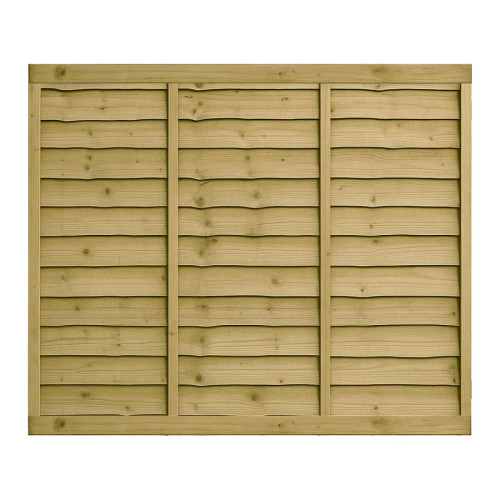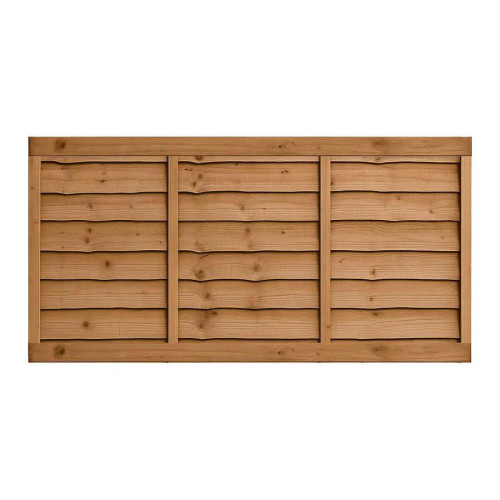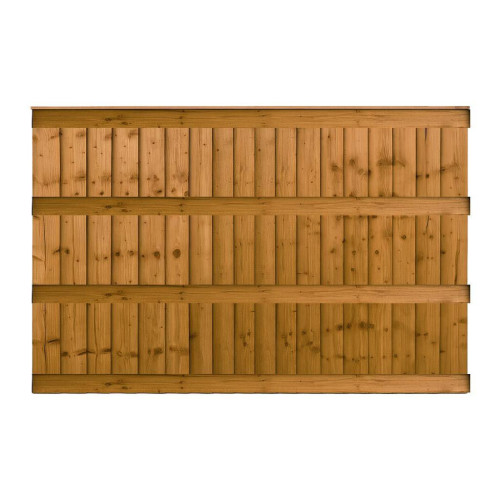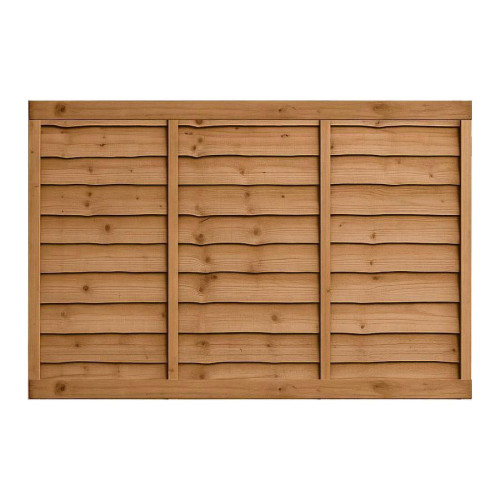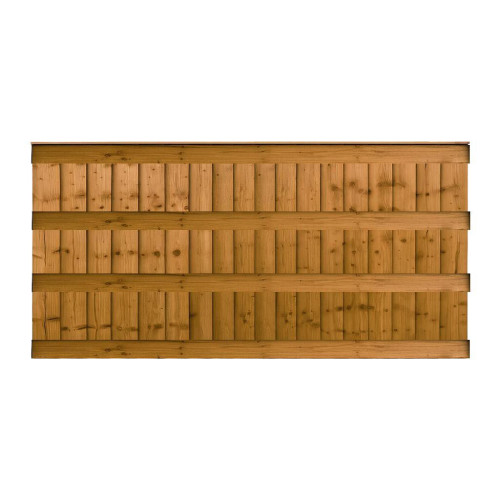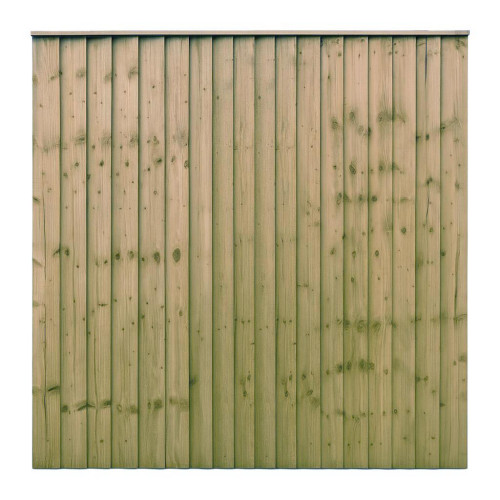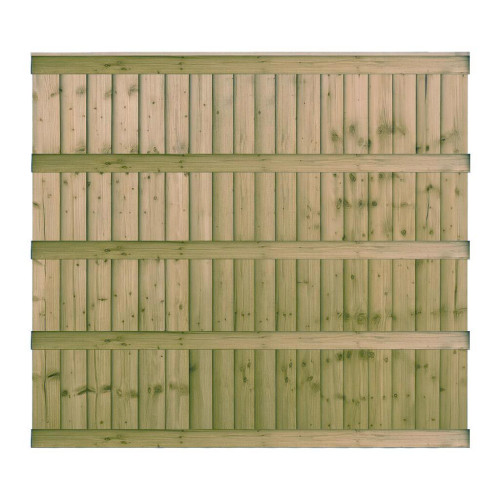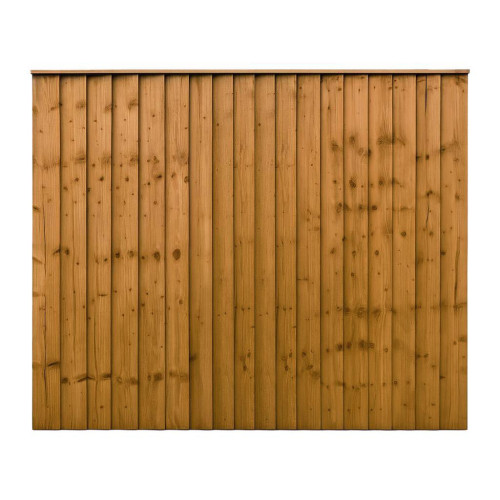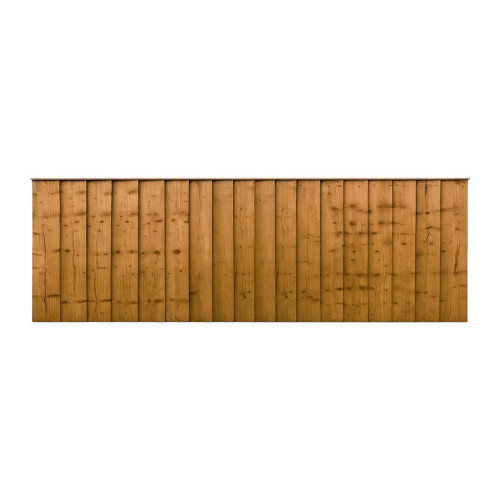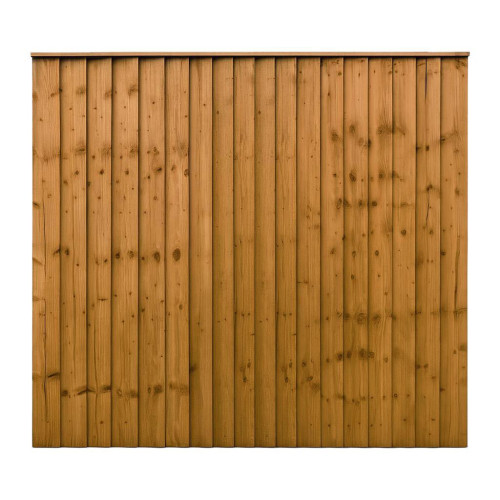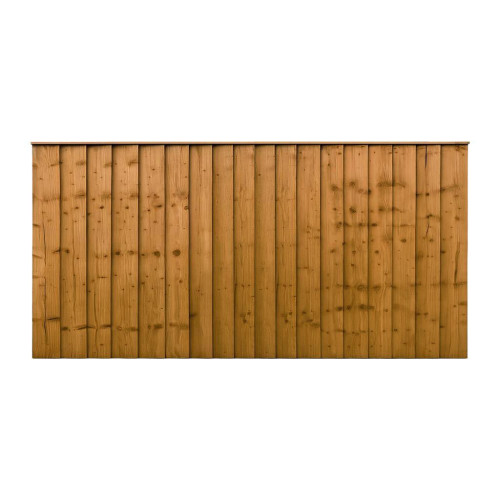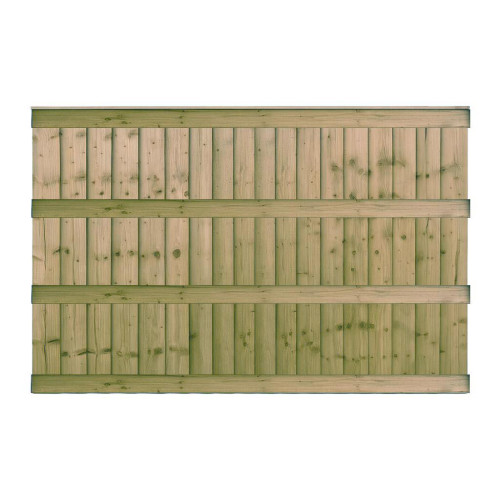


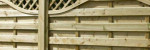

Quick answer: Choose Closeboard fence panels if you want a more substantial traditional privacy fence with overlapping vertical boards. Choose Waney Lap if you prefer the familiar horizontal overlap appearance and want a straightforward traditional panel for a sheltered garden. Both are available in several heights and pressure-treated colours. The better choice depends on appearance, exposure, existing posts, required privacy, handling and whether you are matching an existing fence.
Waney Lap and Closeboard are two of the most familiar timber fence panel styles used in UK gardens.
At first glance, both perform a similar job. They create a solid boundary, provide useful privacy and can be installed between timber or compatible concrete posts.
The important difference is construction.
Waney Lap uses horizontal overlapping boards. Closeboard uses vertically arranged overlapping boards within a framed panel. That difference affects appearance, how substantial the panel feels and which type makes the most sense for a particular garden.
Neither style is automatically right for every boundary. A sheltered garden, an exposed site, a replacement panel and a completely new fence can all lead to different choices.
What Is A Waney Lap Fence Panel?
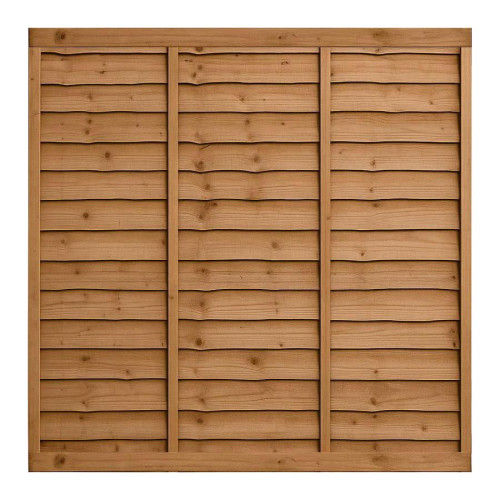
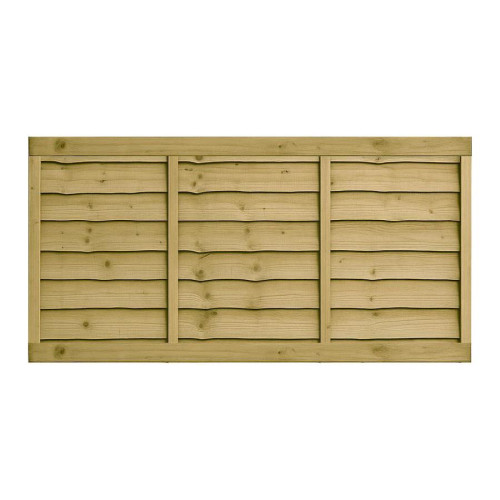
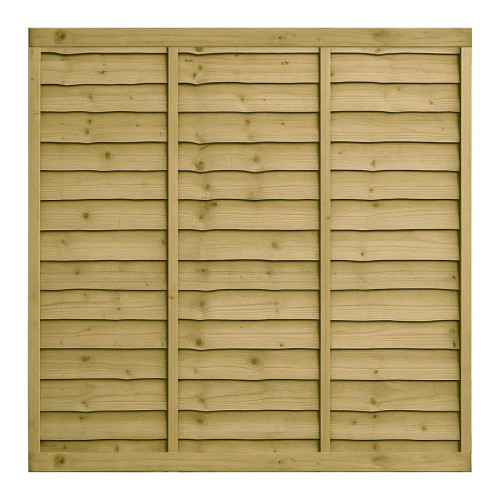
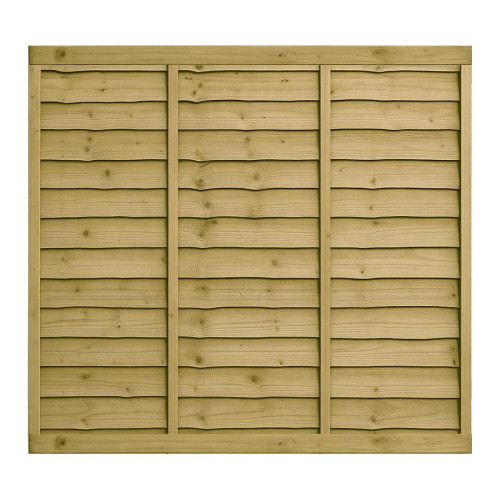
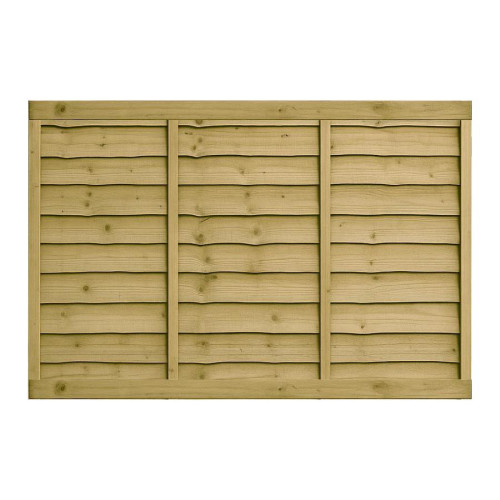
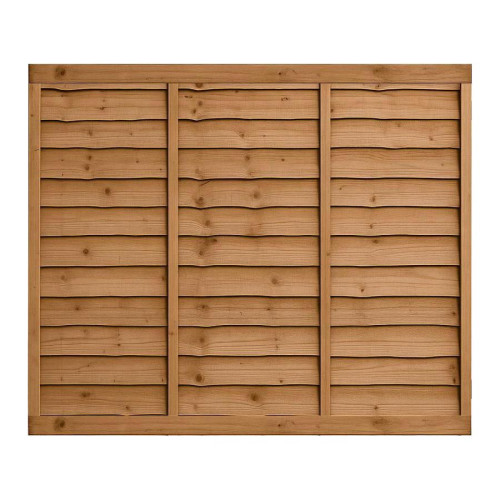
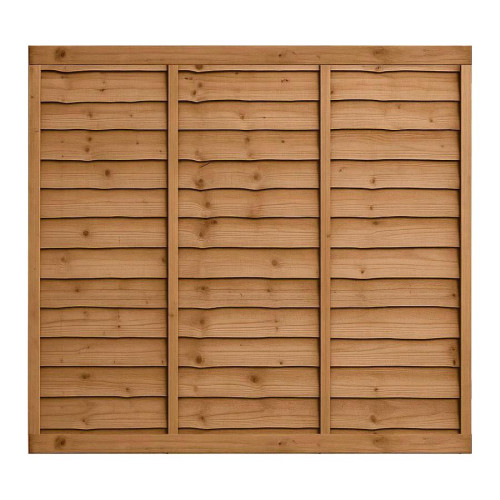
A Waney Lap fence panel is made using horizontal timber boards that overlap one another.
The overlapping arrangement creates a largely solid screen while producing the familiar layered appearance associated with traditional lap fencing.
Waney Lap is commonly used for:
- Rear garden boundaries
- Side fences
- Replacing existing lap panels
- General garden screening
- Traditional residential fencing
East Coast Fencing Waney Lap panels are nominally 6ft wide and available in common heights including 3ft, 4ft, 5ft, 5ft 6in and 6ft.
They are available pressure treated in brown and green.
What Is A Closeboard Fence Panel?
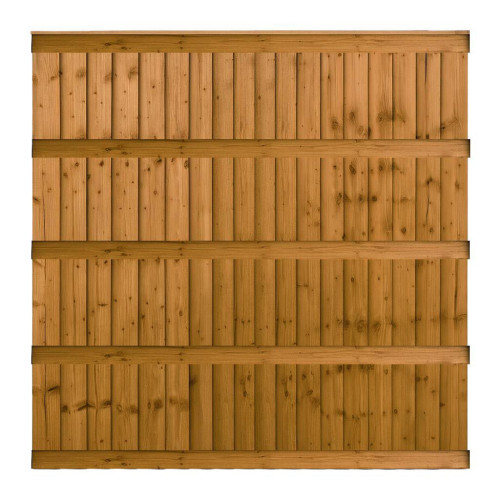
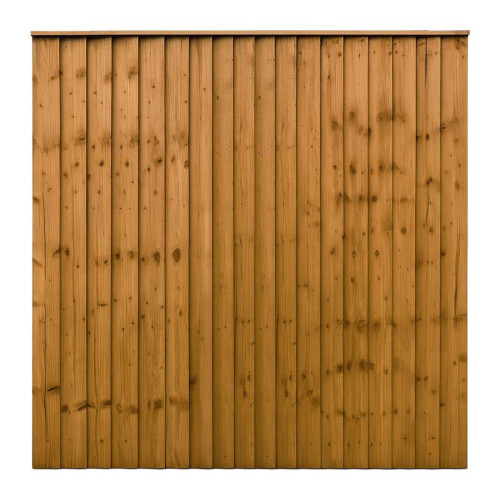
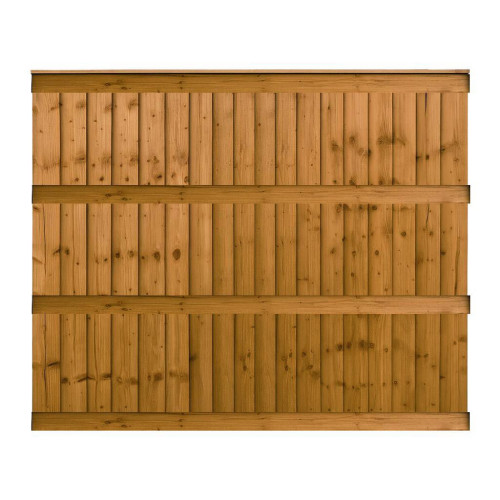
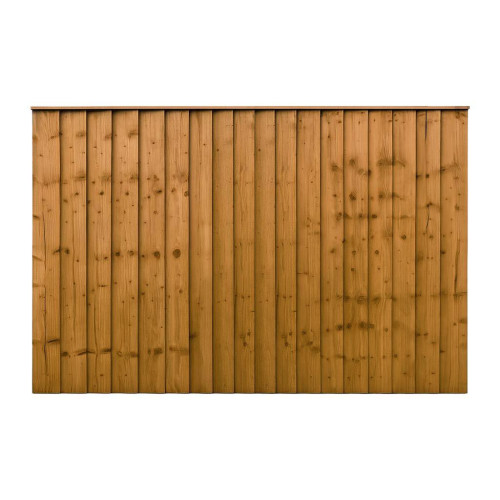
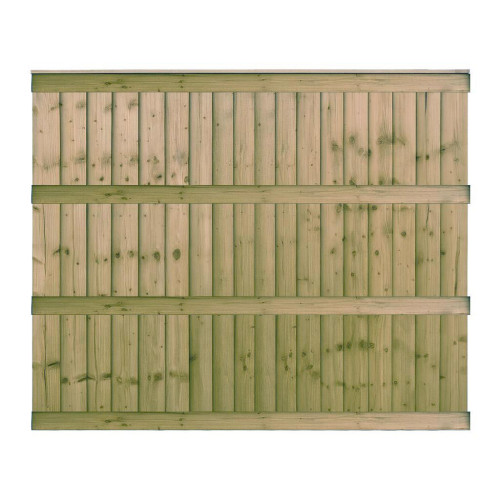
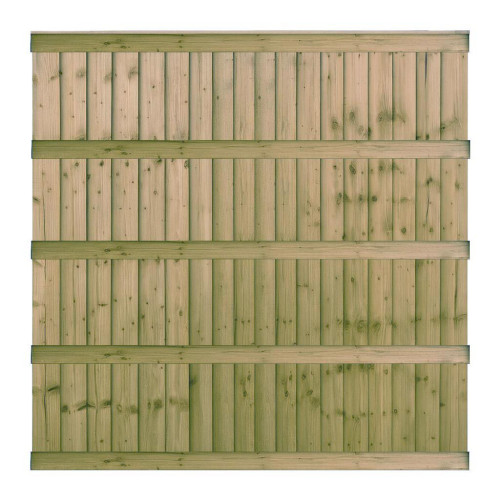
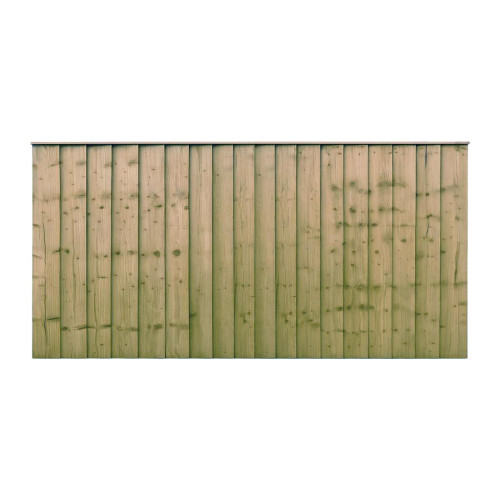
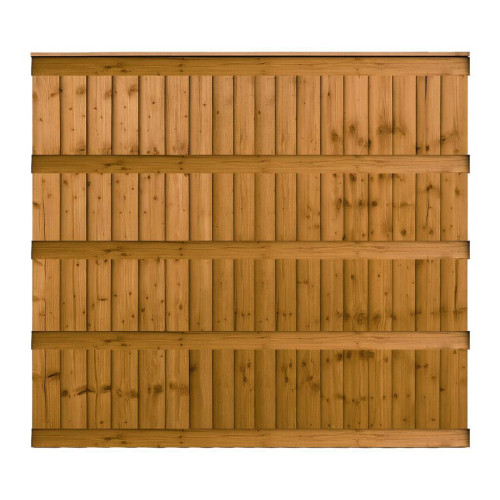
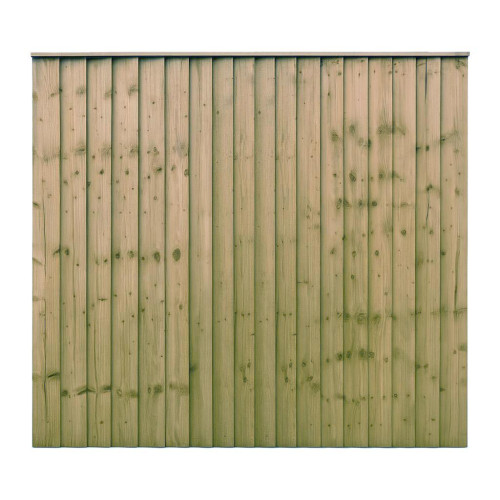
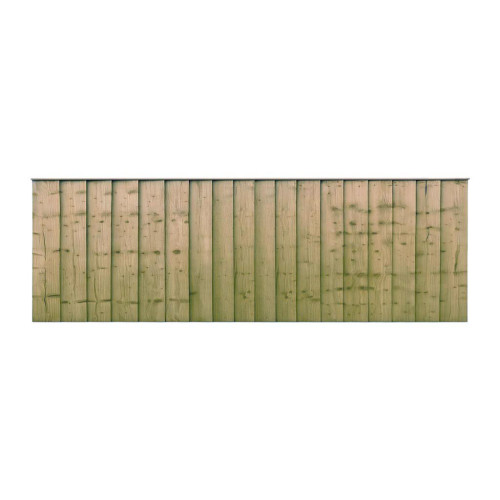
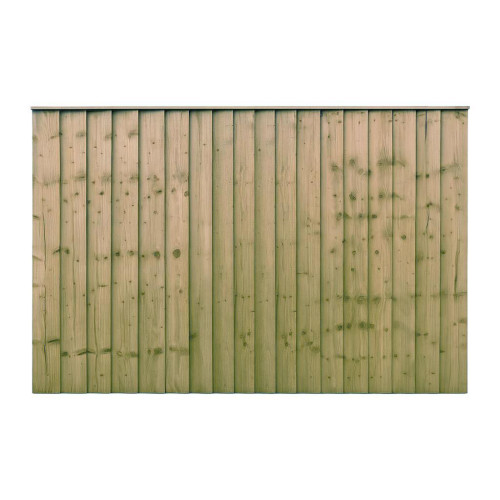
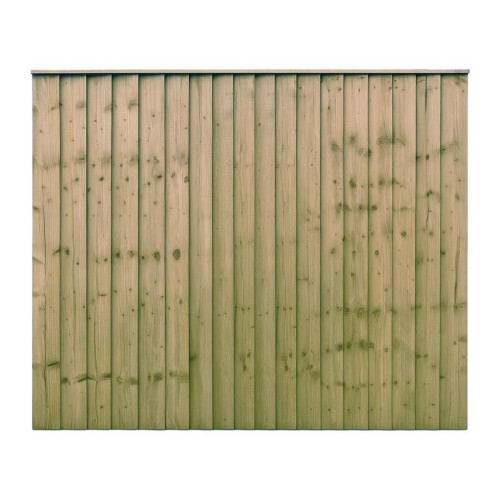
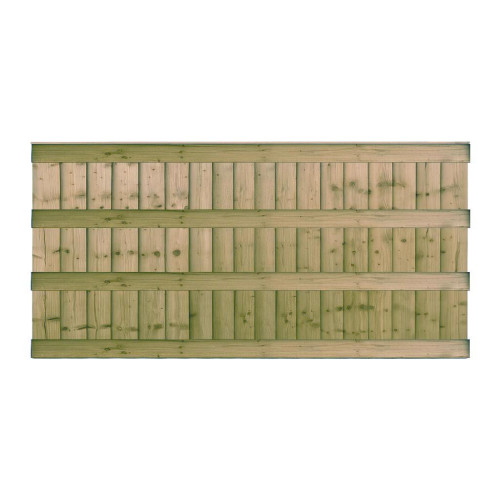
A Closeboard fence panel uses vertically arranged overlapping boards within a panel frame.
This recreates the appearance of traditional site-built Closeboard fencing while allowing the fence to be installed as complete prefabricated panels.
Closeboard is commonly chosen for:
- Privacy fencing
- Rear boundaries
- Long garden fences
- Replacing solid timber panels
- Projects where a more substantial appearance is wanted
Standard East Coast Fencing Closeboard panels are nominally 6ft wide and available in heights including 2ft, 3ft, 4ft, 5ft, 5ft 6in and 6ft.
Ultra Heavy Duty Closeboard panels are available in 3ft, 4ft, 5ft, 5ft 6in and 6ft heights.
Both Standard and Ultra Heavy Duty ranges are available pressure treated in brown and green.
What Is The Main Difference Between Waney Lap And Closeboard?
The main difference is the direction and construction of the boards.
Waney Lap uses horizontal overlapping boards.
Closeboard uses vertical overlapping boards.
This gives each panel a noticeably different visual character.
| Feature | Waney Lap | Closeboard |
|---|---|---|
| Board direction | Horizontal | Vertical |
| Overall appearance | Traditional layered look | Traditional substantial look |
| Privacy | High | High |
| Nominal width | 6ft | 6ft |
| Typical height range | 3ft to 6ft | 2ft to 6ft depending on range |
| Pressure-treated colours | Brown and green | Brown and green |
| Best starting point for | Traditional general-purpose fencing | More substantial privacy fencing |
Which Is Better For Privacy?
Both can provide strong privacy because both are largely solid timber panel styles.
In practice, height usually has a greater impact on privacy than choosing between Waney Lap and Closeboard.
A 6ft Waney Lap panel will normally provide more screening than a 4ft Closeboard panel simply because it is taller.
When privacy is the priority, consider:
- Panel height
- Ground levels
- Gaps beneath the panels
- Gravel boards
- Neighbouring sightlines
Closeboard may feel visually more substantial, but both styles are suitable for creating a private rear boundary.
Which Is Stronger, Waney Lap Or Closeboard?
Closeboard is generally the more substantial panel style, particularly when comparing Waney Lap with Ultra Heavy Duty Closeboard.
That does not mean a Waney Lap fence is inherently unsuitable for a normal domestic garden.
The strength of a finished fence depends on much more than the panel.
You also need to consider:
- Post dimensions
- Post material
- Post condition
- Foundation depth
- Ground conditions
- Fence height
- Wind exposure
- Fixings
A strong panel on weak posts can still produce a poor fence.
Which Is Better In A Windy Garden?
Neither Waney Lap nor Closeboard is an open fencing style.
Both present a relatively solid surface to the wind.
That means exposure should be considered carefully, particularly with 5ft and 6ft panels.
If the garden is very exposed, the more important questions are:
- How tall does the fence actually need to be?
- Are the posts substantial enough?
- Are the posts set correctly?
- Are the existing posts already moving?
- Would a more open panel design suit the site better?
If you specifically want a solid traditional privacy fence, Closeboard may be the more substantial choice, but the support system still matters more than the product name alone.
Which Looks Better?
This is largely personal preference.
Waney Lap has a recognisable horizontal layered appearance.
It works well in gardens where a simple, traditional timber boundary is wanted.
Closeboard has stronger vertical lines and often appears more substantial.
It can suit:
- Traditional gardens
- Modern gardens where a simple solid boundary is wanted
- Long rear boundaries
- Gardens where the fence itself is visually prominent
If appearance is the deciding factor, compare the complete fence rather than an individual loose panel.
Posts, gravel boards, gates and treatment colour all affect the final result.
Which Is Better For A Rear Garden?
Both are suitable.
Choose Waney Lap where:
- You like its traditional horizontal appearance
- You are replacing existing Waney Lap panels
- The site is reasonably sheltered
- You want a straightforward solid garden boundary
Choose Closeboard where:
- You want a more substantial-looking panel
- Privacy is a major priority
- You prefer vertical boarding
- You are planning a long-term replacement fence
Which Is Better For A Side Boundary?
Either style can work well along the side of a property.
Consider how enclosed the area already feels.
A full-height solid panel in a narrow side passage can make the space darker.
If the boundary needs security and privacy, that may be acceptable.
If light matters more, a lower panel or a more open design may be preferable.
Also consider wind. Narrow gaps between buildings can sometimes channel strong gusts through a side passage.
Which Is Better For A Front Garden?
Neither Waney Lap nor full-height Closeboard is usually the first style associated with an open front boundary.
However, lower Closeboard panels can be useful because Standard Closeboard is available down to a nominal 2ft height.
Waney Lap starts at higher nominal panel heights.
For front gardens where openness is important, Picket fencing may provide a more natural fit.
Is Waney Lap Cheaper Than Closeboard?
Purchase cost varies by panel height, treatment, construction and the wider fencing system.
Waney Lap is often considered when customers want a traditional panel without moving to a more substantial Closeboard construction.
However, avoid choosing purely from panel price.
Compare the total project, including:
- Panels
- Posts
- Gravel boards
- Post mix
- Fixings
- Gate requirements
- Removal of old fencing
- Installation
A modest difference in panel cost can become relatively unimportant once the whole fence is considered.
Which Is Better Value?
The better-value panel is the one that suits the site and avoids unnecessary replacement.
Waney Lap can provide sensible value in a sheltered garden where its construction meets the requirement.
Closeboard can represent better value where the customer specifically wants a more substantial panel and would otherwise be dissatisfied with a lighter option.
Buying the cheapest panel and replacing it with something different shortly afterwards is rarely good value.
Which Is Easier To Replace?
If your existing fence already uses standard-sized panels between posts, both styles can be relatively straightforward to replace where the dimensions match.
The main rule is to measure rather than assume.
Check:
- Clear distance between posts
- Existing panel height
- Gravel-board height
- Post condition
- Whether the posts are still upright
Older fences are not always installed at perfectly consistent centres.
Can I Replace Waney Lap With Closeboard?
Potentially, yes.
If the existing posts and bay dimensions are suitable, Closeboard panels can sometimes replace Waney Lap panels without rebuilding the entire fence.
Before doing so, check:
- The new panel width
- The panel thickness and compatibility
- The condition of the posts
- The weight and construction of the replacement panel
- The gravel board
- The completed height
If the old posts are already weak, fitting a more substantial panel without addressing the support may create another problem.
Can I Replace Closeboard With Waney Lap?
Again, potentially.
The dimensions and support system need to match.
Changing from Closeboard to Waney Lap is more than a repair decision because the appearance of the boundary will change noticeably.
If only one panel needs replacing, matching the surrounding style normally gives the cleanest result.
Should I Mix Waney Lap And Closeboard Panels?
You can where the dimensions and fencing system allow it, but the change in style will be visible.
Mixing works better where there is a natural visual break, such as:
- A gate
- A corner
- A shed
- A change in level
- A different section of garden
Alternating the two panel styles along one uninterrupted boundary can look accidental rather than intentional.
Which Is Easier To Handle?
Full-size timber fence panels are awkward regardless of style.
A nominal 6ft wide panel can be difficult to move through:
- Narrow side passages
- Garages
- Gates
- Terraced properties
More substantial Closeboard panels can require greater attention to handling.
Before ordering, think about how the panels will physically reach the boundary.
Can One Person Install A Fence Panel?
It may be physically possible with some smaller panels, but full-size fencing is generally much easier and safer to control with help.
The challenge is not simply lifting the panel.
You need to:
- Carry it safely
- Position it accurately
- Keep it level
- Hold it while fixing or sliding it into place
Wind can make handling a large solid panel particularly awkward.
Which Works Better With Concrete Posts?
Both Waney Lap and Closeboard can be used with compatible slotted concrete posts.
Concrete posts are commonly paired with concrete gravel boards to create a system where the main visible fence remains timber while ground-level structural components are concrete.
Check panel dimensions and post spacing before ordering.
Which Works Better With Wooden Posts?
Both can be installed with suitable wooden posts.
Wooden posts produce a continuous timber appearance and can be straightforward to work with during installation.
East Coast Fencing timber posts are available in dimensions including:
- 75 x 75mm
- 100 x 100mm
Common lengths include 1.8m, 2.4m and 3.0m.
Select posts according to the fence height, exposure and installation rather than panel style alone.
Do Waney Lap Panels Need Gravel Boards?
They do not have to be used in every installation, but gravel boards are highly useful beneath timber fence panels.
They help separate the bottom of the panel from:
- Soil
- Wet grass
- Mulch
- Mud splash
This can reduce exposure of the main panel to persistent ground-level moisture.
Do Closeboard Panels Need Gravel Boards?
The same principle applies.
A gravel board can protect the lower edge of the timber panel from direct ground contact and splashback.
Both wooden and concrete gravel boards can be used where compatible with the fencing system.
Wooden Or Concrete Gravel Boards?
Wooden gravel boards maintain an all-timber appearance.
East Coast Fencing wooden gravel boards are available in lengths including 1.83m, 2.4m and 3.0m with a common 150mm depth.
Concrete gravel boards provide a non-timber lower section and are commonly used with concrete posts.
Concrete options include smooth and recessed designs in different depths.
Choose based on:
- Post system
- Appearance
- Handling
- Finished fence height
Does A Gravel Board Change The Overall Fence Height?
Yes.
If the gravel board is visible above the surrounding ground, it contributes to the overall height of the fence.
This matters particularly when using:
- 5ft panels
- 5ft 6in panels
- 6ft panels
Calculate the finished height before deciding which panel to buy.
Should I Choose A 5ft Or 6ft Waney Lap Panel?
Choose according to the amount of privacy you actually need.
Five-foot panels can provide useful screening while retaining slightly more openness.
Six-foot panels provide stronger ground-level privacy.
Remember that adding a gravel board can increase the completed height beyond the nominal panel measurement.
Should I Choose A 5ft Or 6ft Closeboard Panel?
The same reasoning applies.
A 5ft Closeboard panel may be sufficient where the garden is already relatively private.
A nominal 6ft panel is useful where stronger screening is required.
If you want an intermediate option, both Standard and Ultra Heavy Duty Closeboard are available in 5ft 6in heights.
Which Offers More Height Options?
Standard Closeboard offers the broadest range.
| Height | Waney Lap | Standard Closeboard | Ultra Heavy Duty Closeboard |
|---|---|---|---|
| 2ft | No | Yes | No |
| 3ft | Yes | Yes | Yes |
| 4ft | Yes | Yes | Yes |
| 5ft | Yes | Yes | Yes |
| 5ft 6in | Yes | Yes | Yes |
| 6ft | Yes | Yes | Yes |
Which Is Better For A Low Garden Boundary?
Standard Closeboard has the advantage if you specifically want a very low Closeboard-style panel because it is available in a nominal 2ft height.
For a more open visual effect, Picket fencing may still be worth considering instead of a solid low panel.
Which Is Better For A Long Fence Run?
Either can be used successfully.
On a long boundary, visual consistency becomes particularly important.
Closeboard creates repeated vertical lines, while Waney Lap produces continuous horizontal layering.
Before committing to a long fence, consider:
- How dominant the fence will appear
- Whether it is viewed from the house
- The size of the garden
- Planting against the boundary
- Changes in ground level
A style that looks attractive in one panel can feel quite different across ten or twenty bays.
Which Is Better In A Small Garden?
A tall solid fence of either style can make a small garden feel enclosed.
If privacy is necessary, this may be an acceptable trade-off.
You can reduce the visual weight by:
- Choosing a lower panel where possible
- Using planting to soften the boundary
- Using trellis in appropriate areas
- Avoiding unnecessarily tall fencing on every side
The direction of the boards can also affect the visual impression.
Horizontal Waney Lap can emphasise width, while vertical Closeboard can visually emphasise height.
Which Is Better In A Large Garden?
Large gardens can usually accommodate either style easily.
A substantial Closeboard fence can suit a long rear boundary particularly well.
Waney Lap can provide a softer traditional backdrop where the fence is partially screened by planting.
You do not necessarily need one style or height around the entire property.
Which Is Better With Climbing Plants?
Neither fence should automatically be treated as a plant support structure.
Heavy climbing plants can add considerable weight and hold moisture against the panels.
If you want climbers, consider:
- Independent trellis
- Suitable battens
- Separate plant supports
This makes future panel replacement easier and reduces the load directly applied to the fence.
Which Fence Is Easier To Paint?
Both can be painted or stained once the pressure-treated timber is suitably dry and prepared for the chosen coating.
Waney Lap has numerous horizontal overlaps that can require care around edges and joints.
Closeboard has overlapping vertical boards that also create recessed areas.
Neither style is completely flat, so brushing or spraying requires attention to coverage.
Can You Paint Pressure-Treated Waney Lap?
Yes.
Allow the timber to dry appropriately and use a coating suitable for exterior treated wood.
Follow the coating manufacturer's instructions rather than applying paint immediately simply because installation is complete.
Can You Paint Pressure-Treated Closeboard?
Yes, under the same principle.
Pressure treatment does not prevent later decorative finishing.
It is also not necessary to paint the fence solely because it has been pressure treated.
Brown Or Green Waney Lap?
Brown and green describe the initial appearance of the pressure-treated timber.
Choose whichever works better with:
- Existing fencing
- Garden buildings
- Posts
- Gates
- The surrounding planting
Do not use colour alone as an indication of treatment quality or expected lifespan.
Brown Or Green Closeboard?
The same applies.
Green is not automatically more heavily treated, and brown does not automatically last longer.
Treatment performance depends on the actual treatment specification and intended use, not the visible colour alone.
Does Waney Lap Need More Maintenance?
Both panel types benefit from routine inspection.
Maintenance needs are influenced by:
- Exposure
- Vegetation
- Moisture
- Ground clearance
- Decorative coatings
- Condition of posts
Do not assume panel style alone determines maintenance.
Which Type Lasts Longer?
There is no responsible single lifespan figure that applies to every Waney Lap or Closeboard fence.
Service life depends heavily on:
- Timber treatment
- Ground contact
- Drainage
- Post installation
- Wind exposure
- Maintenance
- Vegetation and moisture around the fence
A correctly installed and maintained fence in a sheltered site may perform very differently from the same product installed badly in persistently wet ground.
Which Is Better If The Existing Fence Keeps Failing?
Do not automatically blame the panel style.
If several fences have failed in the same place, investigate:
- Rotten posts
- Shallow foundations
- Very exposed wind conditions
- Poor drainage
- Panels sitting in soil
- Incorrect post spacing
Replacing Waney Lap with Closeboard while retaining failed posts may simply transfer the problem to a new panel.
Which Is Better For Concrete Posts And Gravel Boards?
Both can work well in a compatible slotted concrete system.
This arrangement is particularly useful where you want:
- Timber panels above ground
- Concrete at ground level
- Replaceable individual panels
- A straightforward panel-based fence
Measure the bay dimensions and make sure the chosen panels fit correctly before ordering.
Which Is Better For Timber Posts And Wooden Gravel Boards?
Both can produce a traditional all-timber fence.
This combination can be visually softer than concrete posts and gravel boards.
Make sure:
- The posts are suitably sized
- The gravel boards fit the bay
- The lower timber is kept in appropriate conditions
- The complete fence is installed correctly
Can Waney Lap Be Used On A Slope?
Yes, generally by stepping rigid panels as the ground rises or falls.
Each panel remains approximately level, with successive bays changing height.
Large or irregular changes in ground level may produce pronounced steps.
Can Closeboard Panels Be Used On A Slope?
Yes, using the same stepped-panel principle.
If you want the fence to follow a slope continuously rather than in steps, traditional site-built Closeboard fencing using individual feather edge boards may provide greater flexibility.
Waney Lap vs Site-Built Closeboard: Is That The Same Comparison?
No.
A Closeboard fence panel is a prefabricated section.
Traditional Closeboard fencing can also be constructed on site using:
- Posts
- Cant rails
- Gravel boards
- Individual feather edge boards
Site-built Closeboard provides more flexibility around unusual dimensions and slopes.
This article primarily compares Waney Lap panels with Closeboard panels rather than panel fencing with a completely site-built system.
Which Is Better For Repairs?
If one panel has failed, matching what is already there is normally the simplest option.
Choose the same:
- Style
- Height
- Treatment colour where possible
A new panel may initially appear different because fresh pressure-treated timber has not weathered at the same rate as the existing fence.
Can I Replace Only One Waney Lap Panel?
Yes, if the surrounding posts and gravel board remain serviceable.
Measure the actual opening before ordering.
If the replacement does not fit, investigate whether:
- The posts have moved
- The original fence used a different panel width
- The bay was installed inaccurately
Can I Replace Only One Closeboard Panel?
Yes, under the same conditions.
Try to match Standard with Standard and Ultra Heavy Duty with Ultra Heavy Duty where possible so the replacement looks consistent with the surrounding fence.
Which Is Better For DIY Installation?
Neither requires a fundamentally different level of planning simply because of the board direction.
The main DIY issues are:
- Setting posts accurately
- Keeping bays consistent
- Handling large panels
- Maintaining level
- Working with concrete components where used
Waney Lap may be easier to handle than a more substantial Closeboard panel in some cases, but access and panel height can matter just as much.
What Measurements Do I Need Before Ordering?
Measure:
- Total fence run
- Clear bay widths
- Existing panel height
- Gravel-board height
- Post dimensions
- Changes in ground level
- Gate openings
For replacement fencing, take measurements at several bays rather than relying on a single panel.
What Else Do I Need Besides The Panels?
A complete fence may also require:
- Wooden or concrete fence posts
- Wooden or concrete gravel boards
- Post mix
- Compatible fixings
- Garden gates
- Suitable gate posts
- Exterior gate hardware
Plan the complete fencing system before deciding which panel appears cheaper or easier.
Waney Lap vs Closeboard By Garden Type
| Situation | Useful Starting Point |
|---|---|
| Typical sheltered rear garden | Either |
| Customer wants a more substantial panel | Closeboard |
| Matching an existing Waney Lap fence | Waney Lap |
| Matching an existing Closeboard fence | Closeboard |
| Very low solid boundary required | Standard Closeboard |
| Traditional horizontal appearance preferred | Waney Lap |
| Traditional vertical appearance preferred | Closeboard |
| Very exposed garden | Assess complete system and consider airflow |
Common Mistakes When Choosing Between Waney Lap And Closeboard
- Choosing solely on panel price
- Assuming Closeboard alone makes a fence windproof
- Ignoring weak existing posts
- Ordering nominal dimensions without measuring
- Forgetting the gravel board when calculating height
- Mixing panel styles accidentally along one boundary
- Choosing 6ft automatically when a lower panel would be sufficient
- Assuming treatment colour tells you how long the timber will last
- Ignoring access for full-size panels
- Trying to repair rotten structural components with paint or stain
Waney Lap Or Closeboard Buying Checklist
- Decide which appearance you prefer.
- Choose the required panel height.
- Check how much privacy you actually need.
- Assess wind exposure.
- Measure all existing bays if replacing panels.
- Check existing post condition.
- Choose timber or concrete posts for a new fence.
- Choose compatible gravel boards.
- Calculate the completed fence height.
- Choose brown or green pressure-treated timber.
- Plan gate positions.
- Check access for delivery and installation.
FAQs
Is Closeboard Better Than Waney Lap?
Closeboard is generally the more substantial panel style, but Waney Lap remains a practical traditional choice for many sheltered domestic gardens.
Is Waney Lap Good For Privacy?
Yes. Waney Lap panels provide solid screening and are widely used for private rear garden boundaries.
Is Closeboard Good For Privacy?
Yes. Closeboard is one of the most common solid privacy fencing styles.
Which Is Stronger, Waney Lap Or Closeboard?
Closeboard generally provides the more substantial panel construction, especially in Ultra Heavy Duty form. The complete fence strength still depends on posts, foundations and installation.
Which Is Better In High Winds?
Both are relatively solid panels and therefore catch wind. For exposed gardens, design the complete fence carefully and consider whether an airflow-permitting style may be more appropriate.
Which Is Cheaper?
Costs vary by height, range and complete fencing system. Compare panels, posts, gravel boards, fixings and installation rather than looking only at one component.
Which Lasts Longer?
There is no universal lifespan comparison. Treatment, installation, drainage, exposure and maintenance all have major effects on service life.
Can I Replace Waney Lap With Closeboard?
Potentially, if the dimensions and existing posts are suitable.
Can I Replace Closeboard With Waney Lap?
Potentially, subject to the same compatibility checks.
Can I Use Waney Lap With Concrete Posts?
Yes, where the panel dimensions suit the slotted concrete post system.
Can I Use Closeboard Panels With Concrete Posts?
Yes, provided the dimensions are compatible.
Do Waney Lap Panels Need Gravel Boards?
They are not mandatory in every installation, but a suitable gravel board can help keep the main timber panel away from soil and ground-level moisture.
Do Closeboard Panels Need Gravel Boards?
The same applies. Gravel boards are a useful part of many panel fencing systems.
Can I Paint Waney Lap Panels?
Yes, once the pressure-treated timber is sufficiently dry and prepared for a suitable exterior coating.
Can I Paint Closeboard Panels?
Yes, under the same conditions.
Is Brown Waney Lap Better Than Green?
Not simply because of colour. Brown and green are treatment colours and should not be treated as durability grades.
Is Brown Closeboard Better Than Green?
No. Choose according to appearance unless a verified product specification gives you another reason.
What Heights Do Waney Lap Panels Come In?
East Coast Fencing Waney Lap panels are available in nominal 3ft, 4ft, 5ft, 5ft 6in and 6ft heights.
What Heights Do Closeboard Panels Come In?
Standard Closeboard is available from nominal 2ft through to 6ft, while Ultra Heavy Duty Closeboard is available from 3ft through to 6ft.
Which Is Better For A Small Garden?
Either can work, but avoid using more height than necessary because a tall solid fence can make a compact garden feel enclosed.
Which Is Better For Dogs?
Both can provide a solid boundary. Choose the required height and make sure gaps beneath panels and around gates are secure.
Which Is Easier To Install?
Both are conventional panel fencing products. Handling, panel height, post system and site access are often more important than whether the boards run horizontally or vertically.
Which Is Best For Replacing An Existing Fence?
Usually the panel style that matches the existing boundary, provided the remaining posts and other components are still serviceable.
Waney Lap Or Closeboard: Which Should You Buy?
Choose Waney Lap if you want a familiar traditional panel with horizontal overlapping boards and a straightforward solid boundary for a typical garden.
Choose Closeboard if you prefer vertical boarding, want a more substantial-looking fence or want the option of moving up to an Ultra Heavy Duty panel.
For privacy, focus on panel height as much as panel style.
For windy gardens, focus on the complete fence rather than assuming one panel automatically solves exposure problems.
For replacement work, measure the existing bays and inspect the posts before changing styles.
And for a completely new fence, compare the whole system, including posts, gravel boards, fixings, gates and installation.
Both Waney Lap and Closeboard remain practical pressure-treated timber fencing options. The better choice is the one that matches the appearance, exposure and construction requirements of the particular garden rather than whichever panel happens to be described as stronger, cheaper or more popular.