





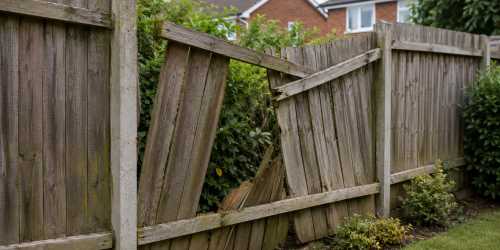
In most cases, you cannot force your neighbour to repair or replace a broken fence just because it looks bad, offers poor privacy or makes your garden feel untidy. Whether they have to do anything depends on who owns the fence, what the title documents say, whether there is a legal obligation to maintain it, whether the fence is dangerous, and whether it is causing damage or interfering with your property rights.
This can be frustrating. A broken fence panel, rotten post or collapsed boundary can affect privacy, security, pets, children and the appearance of your garden. However, the law does not usually require a neighbour to keep a fence in good decorative condition simply because the person next door wants it improved.
That does not mean you have no options. You may be able to speak to your neighbour, agree a shared repair, check the deeds, install your own fence on your side of the boundary, report a genuinely dangerous structure, or take advice if the broken fence is causing damage. This guide explains what you can and cannot do when your neighbour’s fence is broken.
Can you force a neighbour to fix a broken fence?
Usually, no. You generally cannot force a neighbour to repair or replace a fence just because it is old, ugly, leaning slightly or no longer gives you the privacy you want.
You may have a stronger position if:
- The title documents clearly require them to maintain the boundary
- There is a written boundary agreement
- The fence is dangerous
- The fence is falling onto your land
- The broken fence has damaged your property
- The neighbour caused the damage
- The fence is part of a legal obligation, covenant or estate requirement
- The broken boundary affects livestock or a specific duty in a rural setting
For ordinary domestic garden fencing, the most practical solution is often negotiation or installing your own independent fence on your side of the boundary.
First question: who owns the fence?
Before asking anyone to repair a fence, you need to know who owns it. Many fence disputes become difficult because both neighbours assume ownership without checking.
Fence ownership may be shown in:
- Title deeds
- Transfer documents
- Conveyance documents
- Title plans
- T marks where used
- Boundary agreements
- Property information forms from when the house was bought
- Previous written agreements between neighbours
There is no automatic rule that says the left-hand fence or right-hand fence belongs to a particular property. The documents matter more than the side.
The left fence and right fence myth
Many homeowners believe they are responsible for the fence on the left, or the fence on the right. This is a myth. There is no general UK law that assigns fence responsibility by left or right side.
One house may be responsible for the left boundary, another for the right, both for one boundary, or neither in the way people expect. Some title documents show T marks, but many do not. Even where there are plans, they may show general boundaries rather than exact legal lines.
Do not rely on:
- Which side the fence rails face
- Which side looks like the “good side”
- What a previous owner said informally
- What neighbours in other houses do
- The left-hand or right-hand rule
Check the documents before making demands.
What if the fence belongs to your neighbour?
If the broken fence belongs to your neighbour, you cannot normally replace it, remove it, paint it, drill into it, attach trellis to it or force them to upgrade it without permission.
Your neighbour may choose to leave their fence in poor condition unless there is a legal reason they must act.
You should not:
- Take down their broken fence
- Replace it with your own panels in the same position
- Attach screening to it
- Paint or stain your side without permission
- Fix trellis or plant supports to it
- Lean heavy items against it
- Cut posts, rails or panels
- Move the boundary line
The side facing your garden is still part of their property if they own the fence.
What if the fence belongs to you?
If the fence belongs to you, then you are usually responsible for deciding whether to repair or replace it. Your neighbour cannot normally force you to upgrade it simply because they prefer a different style, colour or height.
However, you should act responsibly if your fence is dangerous, leaning onto their land or causing damage.
If the fence is yours, you may be responsible for:
- Replacing broken fence panels
- Repairing rotten posts
- Making dangerous sections safe
- Preventing panels falling into neighbouring land
- Keeping gates secure where relevant
- Complying with any legal or title obligations
Even where there is no duty to maintain a decorative boundary, allowing a dangerous structure to remain can create wider problems.
What if the fence is shared?
If the fence is shared, both neighbours should agree what happens. Shared ownership can arise through title documents, a formal boundary agreement, or a practical arrangement where both sides have contributed to and maintained the fence.
For shared fences, agree:
- Whether repair or replacement is needed
- Who will pay
- What fence panels will be used
- Whether timber or concrete posts will be used
- Whether gravel boards will be fitted
- Fence height
- Fence colour or finish
- Who will arrange installation
- Whether access is needed
- Who will maintain the fence later
Put the agreement in writing, especially if costs are being split.
Can you make a neighbour pay for a new fence?
Usually, no. You normally cannot make a neighbour pay for a new fence just because you want the boundary improved. They may only have to pay if there is a clear legal obligation, agreement or responsibility shown in the property documents.
A neighbour may agree to contribute if:
- The fence is shared
- They also benefit from the repair
- The cost is reasonable
- The proposed fence is similar to the old one
- They have been consulted before work starts
- The arrangement is put in writing
Do not replace a fence first and expect your neighbour to pay afterwards. Agree costs before ordering materials or booking an installer.
Can you repair your neighbour’s fence yourself?
Not without permission. Even if your neighbour’s fence is broken, it is still their property if they own it. Repairing it without consent can create a dispute, especially if they dislike the work or claim damage has been caused.
Ask permission before:
- Replacing panels
- Adding screws or brackets
- Fitting trellis
- Installing gravel boards
- Cutting damaged timber
- Painting or staining
- Attaching screening
- Removing broken sections
If they agree, confirm what you are allowed to do and who will pay.
Can you install your own fence next to their broken fence?
Yes, in many cases you can install your own independent fence on your side of the boundary. This is often the most practical option when a neighbour will not repair their fence.
Your new fence should be:
- Entirely on your land
- Within permitted height limits
- Built without damaging the neighbour’s fence
- Supported by your own posts
- Installed without trespassing
- Clear of shared access routes
- Compliant with any covenants or planning restrictions
This lets you regain privacy and security without interfering with their property.
Problems with building a second fence
Building your own fence inside the boundary can solve the immediate problem, but it needs careful planning. A narrow gap between two fences can collect weeds, leaves and rubbish. It can also make future maintenance difficult.
Before building a second fence, consider:
- How much garden space you will lose
- Whether the gap can be maintained
- Whether the broken fence may collapse into the gap
- Whether posts and concrete will stay fully on your land
- Whether the finished height is lawful
- Whether drainage will be affected
- Whether pets could get trapped in the gap
In some situations, a freestanding screen, trellis panel or planting may be better than a full second fence.
What if the broken fence is falling into your garden?
If your neighbour’s fence is falling into your garden, ask them to make it safe. Take clear photos and keep communication polite and factual.
Explain:
- Which part of the fence is failing
- How it is affecting your garden
- Whether it is damaging plants, paving or structures
- Whether it creates a safety concern
- Whether children or pets use the area
- What you are asking them to do
If the fence is dangerous or causing damage, your position may be stronger than if the issue is only appearance. If they still refuse, consider getting professional legal advice before taking further action.
What if the fence is dangerous?
A dangerous fence is different from an unattractive fence. If a fence is likely to fall and injure someone or damage property, the owner may need to make it safe.
Danger signs include:
- Posts snapped at ground level
- Panels hanging loose
- Fence leaning heavily into your garden
- Sharp broken timber
- Loose concrete posts
- Broken concrete gravel boards
- Unstable wall or boundary structure
- Gate posts moving dangerously
For a dangerous structure affecting public land, a council may be interested. For a private garden dispute, you may need legal advice if the owner refuses to act.
What if the fence damages your property?
If a neighbour’s broken fence damages your property, take photos and record what happened. For example, a collapsing panel may damage planting, a shed, a greenhouse, a garden gate, paving, trellis or your own fence.
Keep evidence such as:
- Photos of the fence before and after damage
- Dates of previous warnings
- Messages sent to the neighbour
- Photos of the damage
- Repair quotes
- Receipts for repairs
- Any installer or surveyor comments
If damage is significant, consider legal advice or your home insurance position.
Can the council make a neighbour repair a garden fence?
For an ordinary private garden fence that is simply unattractive or broken, the council will not usually get involved. Councils are more likely to act where there is a planning breach, danger to the public or a structure affecting a public highway.
The council may be relevant if:
- The fence is dangerously leaning into a pavement or road
- The fence breaches planning height rules
- The fence affects visibility at a road or driveway
- The property is listed and unauthorised works have occurred
- Conservation area controls have been breached
- A wall or structure is dangerous
For private boundary ownership and repair disputes, the council is usually not the right route.
Can planning rules help you force a repair?
Planning rules generally control whether a fence can be erected, altered or increased in height. They do not usually require a neighbour to maintain a normal domestic fence in good condition.
Planning may matter if the broken fence is replaced with something too high or unsuitable, or if you decide to build your own fence.
Check planning rules if:
- You want a fence over 2 metres high
- The fence is next to a highway used by vehicles
- The fence is at the front of the property
- The property is listed
- The property is in a conservation area
- Permitted development rights have been removed
- You want to add trellis or screening on top
Planning rules may limit what can be built, but they are not usually a tool for forcing cosmetic fence repairs.
What if the broken fence affects privacy?
Loss of privacy is one of the most common reasons people want a neighbour to repair their fence. Unfortunately, a neighbour is not usually required to maintain a fence purely to preserve your privacy unless there is a specific legal obligation.
Practical privacy options include:
- Installing your own fence on your land
- Adding freestanding trellis
- Using slatted screening near a seating area
- Planting climbers on your own supports
- Using raised beds with screening plants
- Replacing a shared fence by agreement
- Using temporary screening while discussions continue
If you install your own privacy solution, check height rules and keep it on your land.
What if the broken fence affects pets?
A broken fence can make a garden unsafe for dogs or other pets. If the fence belongs to your neighbour, they may still not be legally required to replace it just because you need pet security.
Practical options include:
- Temporary pet fencing on your side
- Your own independent fence
- Concrete or timber gravel boards to close gaps
- A secure garden gate
- Mesh fixed to your own posts
- Supervising pets until the boundary is secure
Do not attach mesh or screening to your neighbour’s fence without permission.
What if the broken fence affects children?
If children use the garden, a broken fence can create safety concerns. Sharp timber, loose panels and unstable posts should be dealt with carefully.
If the broken fence belongs to your neighbour, write to them politely and explain the safety issue. If possible, include photos and ask for the dangerous section to be made safe.
In the meantime:
- Keep children away from the damaged area
- Do not let them climb on loose panels
- Remove sharp debris from your side if safe to do so
- Use temporary barriers on your land
- Consider your own fence or screening if the issue continues
Safety concerns should be treated more seriously than purely cosmetic complaints.
What if the neighbour caused the damage?
If your neighbour damaged the fence, responsibility may depend on who owns it and what happened. If they damage your fence, you can ask them to repair it or pay for repair. If they damage their own fence, you may still not be able to force them to replace it unless it affects you legally or creates a danger.
Examples include:
- A vehicle hitting a fence post
- A tree or branch falling onto panels
- Building work damaging posts
- Garden landscaping undermining the fence
- Heavy items leaning against the fence
- Children or pets breaking panels
Gather evidence before accusing anyone. Photos, dates and calm communication matter.
What if your neighbour’s tree damaged the fence?
If a tree or large branch damages a fence, responsibility can be complicated. It may depend on ownership of the tree, whether the damage was foreseeable, whether the tree was clearly dangerous and who owns the fence.
Before taking action, check:
- Who owns the tree
- Who owns the fence
- Whether the tree was known to be unsafe
- Whether the tree is protected
- Whether insurance applies
- Whether further damage is likely
Do not cut protected trees or enter neighbouring land without permission.
What if the fence is broken because of storms?
Storm damage is common. A neighbour may not automatically be at fault because wind damaged their fence. However, if the fence was already rotten, leaning or dangerous and they ignored warnings, the situation may be different.
After storm damage:
- Take photos
- Make your own garden safe
- Tell the neighbour what has happened
- Do not remove their fence without permission unless there is an immediate safety need
- Check insurance if there is property damage
- Agree repair or replacement if possible
If the fence is yours, inspect posts, panels, gravel boards and gates before the next storm.
Can you use a concrete repair spur for a neighbour’s broken post?
A concrete repair spur can be a good way to support a timber fence post that has rotted at ground level. However, if the fence belongs to your neighbour, you need permission before fitting one.
A repair spur may help when:
- The upper part of the timber post is still sound
- The post has failed mainly at ground level
- The panels are still usable
- The fence is leaning but not completely collapsed
- The owner agrees to the repair
If the post is rotten throughout or the panels are failing, full replacement may be better.
Can you ask your neighbour to split the cost?
Yes, you can ask. They do not have to agree unless there is a legal obligation or existing agreement, but many neighbours will contribute if the proposal is fair.
To improve the chances of agreement:
- Get a clear quote
- Suggest a reasonable fence style
- Avoid unnecessary upgrades
- Explain the shared benefit
- Offer a simple cost split
- Agree ownership and future maintenance
- Put the agreement in writing
Do not pressure your neighbour into paying for a more expensive fence than they need or want.
Can you replace the fence and send them the bill?
This is usually a bad idea unless there is a clear agreement or legal basis. If you replace a fence without agreement and then send the neighbour a bill, they may refuse to pay.
Before spending money, confirm:
- Who owns the fence
- Who is responsible for maintenance
- Whether the neighbour agrees to the work
- Whether they agree to the cost
- Whether they agree to the chosen materials
- Whether they agree to the installer
Without agreement, you may be left paying the full cost.
Can you remove a broken fence panel that has fallen into your garden?
If a panel has fallen into your garden, it may still belong to your neighbour. You can usually move it if necessary to make your garden safe, but avoid disposing of it or damaging it without speaking to them first.
Practical steps:
- Take photos before moving it
- Move it only as much as needed for safety
- Tell the neighbour what has happened
- Ask them to collect or deal with it
- Keep messages factual
- Do not throw it away without agreement
If it is dangerous, prioritise safety but keep evidence.
Can you attach screening to hide the broken fence?
You can use screening on your own supports, but you should not attach it to your neighbour’s fence without permission. Screening can add wind load and may damage an already weak fence.
Better options include:
- Freestanding trellis panels
- Posts set on your land
- Slatted screens around seating areas
- Planters with climbing plants
- Temporary screens supported independently
- Your own fence inside the boundary
Do not use a weak neighbouring fence as the support for your own privacy solution.
Can you paint or stain a broken neighbour’s fence?
No, not without permission. Even if the fence looks poor from your side, it is still your neighbour’s property if they own it.
Painting without permission can create problems if:
- The colour is unwanted
- Paint leaks through to the other side
- The treatment damages plants
- Spray affects paving, cars or walls
- The neighbour says the fence has been damaged
If you want a better view, use your own screening or fence rather than altering theirs.
Can you report a broken fence to a landlord?
If the neighbouring property is rented, the tenant may not own the fence or be responsible for exterior repairs. You may need to contact the landlord or letting agent.
When reporting it, include:
- The address
- Photos of the damage
- Whether the fence is dangerous
- Whether it is falling into your garden
- Whether it affects pets or children
- What outcome you are asking for
Keep the tone factual. The landlord may need time to check responsibility.
Can you claim on insurance?
Home insurance may help in some situations, but policies vary. Many policies treat fences differently from the main building, and storm damage to fences may have exclusions or limits.
Check your policy if:
- Your own fence has been damaged
- A neighbour’s fence has damaged your property
- There has been storm damage
- A vehicle or tree caused the damage
- Legal expenses cover may apply
Contact your insurer for policy-specific advice.
How to speak to a neighbour about a broken fence
Start with a calm, practical conversation. Many people delay repairs because they are busy, unsure who owns the fence or worried about cost.
A useful approach is:
- Explain the issue clearly
- Show photos if needed
- Ask whether they know who owns the fence
- Suggest checking the deeds
- Offer to discuss repair options
- Ask whether they would consider sharing costs if appropriate
- Give them time to respond
- Keep written records afterwards
A polite message is often more effective than a demand.
Example wording for a broken fence message
You can adapt this wording if you need to contact a neighbour:
Hello, I wanted to let you know that the fence panel between our gardens appears to be broken and is leaning into my side. I am not sure from the documents who is responsible for that boundary, so I thought it would be best to raise it with you before either of us does anything. Would you be happy to check and discuss what repair might be sensible?
If there is a safety concern, you can add:
I am concerned that the panel may fall further, especially in windy weather, so it would be useful to agree how to make it safe.
What if the neighbour ignores you?
If your neighbour ignores you, your next step depends on the seriousness of the problem.
If the issue is mainly appearance or privacy, your practical option may be to install your own fence or screening on your land. If the issue is danger, damage or trespass, you may need further advice.
Useful steps include:
- Send a polite written follow-up
- Keep copies of messages
- Take dated photos
- Check ownership documents
- Consider mediation
- Ask your insurer about legal expenses cover
- Seek legal advice if damage or danger continues
Do not retaliate by damaging, removing or altering their fence.
When mediation may help
Mediation can help where both neighbours disagree but want to avoid an expensive legal dispute. It is often useful for boundary and fence repair disagreements.
Mediation may help resolve:
- Who pays for repairs
- Whether the fence is shared
- What style of replacement is suitable
- Access for installation
- Disputes about height
- Disputes about boundary position
- Ongoing communication problems
If the issue is a precise legal boundary dispute, a surveyor or solicitor may also be needed.
When to get legal advice
Most broken fence issues should not need legal action. However, advice may be sensible if the issue involves land ownership, significant damage, danger or repeated refusal to deal with a serious problem.
Consider advice if:
- The boundary position is disputed
- The fence is falling onto your land
- Your property has been damaged
- The neighbour has ignored repeated safety warnings
- You are being threatened over a fence repair
- A covenant or title obligation is unclear
- You are considering court action
- The dispute could affect a property sale
Boundary disputes can become expensive quickly, so get advice before taking drastic steps.
Practical alternatives if your neighbour will not repair the fence
If you cannot force repair, focus on what you can control.
Options include:
- Install your own fence on your land
- Use freestanding trellis panels
- Create privacy with planters and climbers
- Use slatted screening around the patio
- Add a secure side gate
- Use temporary pet fencing
- Improve planting along the boundary
- Agree to pay for the repair yourself with permission
- Use a concrete repair spur if the owner agrees
For most homeowners, an independent fence is the most practical long-term answer when the neighbour refuses to act.
Best fencing options when replacing a failed boundary
If you are able to replace the fence, choose a system that avoids the same problem happening again.
Good options include:
- Closeboard fence panels for privacy and strength
- Feather edge fencing for custom runs
- Concrete posts in wet or exposed gardens
- Pressure treated timber posts where a natural look is preferred
- Concrete gravel boards to protect panel bases
- Timber gravel boards for a softer appearance
- Slatted panels for modern screening
- Hit and miss panels for airflow in windy gardens
- Secure garden gates with strong gate posts
A broken fence is an opportunity to improve posts, gravel boards and fixings, not just swap one tired panel for another.
Common mistakes in neighbour fence repair disputes
Fence disputes often get worse because people act before checking ownership or responsibility.
Avoid these mistakes:
- Assuming the broken fence is your neighbour’s responsibility
- Relying on the left-side or right-side myth
- Replacing the fence and sending a bill afterwards
- Removing your neighbour’s fence without consent
- Painting or attaching screening without permission
- Ignoring a genuinely dangerous fence
- Letting pets escape while waiting for repair
- Failing to take photos
- Not putting shared cost agreements in writing
- Starting a boundary argument without evidence
Stay factual, document the problem and separate legal responsibility from personal preference.
Checklist: what to do when your neighbour’s fence is broken
- Take clear photos of the broken fence
- Check whether it is dangerous
- Check whether it is damaging your property
- Look at your title documents
- Do not rely on left or right fence assumptions
- Speak to your neighbour politely
- Ask whether they know who owns the boundary
- Agree any shared repair in writing
- Do not alter their fence without permission
- Consider your own independent fence if they refuse
- Check planning height rules before building your own fence
- Get advice if the fence is dangerous or causing damage
Frequently asked questions
Can I force my neighbour to fix their broken fence?
Usually, no. You can normally only force action if there is a clear legal obligation, the fence is dangerous, it is causing damage, or another specific legal issue applies.
Does my neighbour have to maintain their fence?
Not always. They may only have to maintain it if the title documents, a covenant, an agreement or another legal duty says so.
Can I make my neighbour pay half for a new fence?
Usually not unless they agree or there is a legal obligation. Always agree shared costs in writing before work starts.
Can I repair my neighbour’s fence from my side?
Not without permission. If the fence belongs to your neighbour, it is still their property even on the side facing your garden.
Can I put up my own fence if my neighbour will not repair theirs?
Yes, in many cases you can install your own fence on your land, provided it complies with planning rules and does not interfere with their property or access rights.
Can I remove a broken fence panel that has fallen into my garden?
You can move it if needed for safety, but take photos first and tell your neighbour. Do not dispose of their property without agreement unless you have taken proper advice.
Can the council make my neighbour repair a fence?
Usually not for a normal private garden fence. The council may become involved if the fence is dangerous to the public, breaches planning rules or affects a highway.
What if my neighbour’s broken fence lets my dog escape?
You may need to secure your own garden using temporary fencing, gravel boards, a gate repair or your own independent fence. Your neighbour may not be required to maintain their fence for your pet unless a specific obligation applies.
Can I attach screening to my neighbour’s broken fence?
No, not without permission. Screening can add wind load and may damage the fence further. Use your own posts or freestanding screening instead.
What should I do if the broken fence is dangerous?
Take photos, keep away from the dangerous area, tell the owner in writing and ask them to make it safe. If there is immediate danger to public land or serious damage risk, seek appropriate advice or contact the relevant authority.
Final thoughts
You usually cannot force a neighbour to repair or replace a broken fence just because it looks bad or no longer gives you privacy. Fence responsibility depends on ownership, title documents, agreements, covenants and whether the fence is dangerous or causing damage.
Start by checking who owns the fence. Do not rely on left-side or right-side myths. If the fence belongs to your neighbour, do not repair, remove, paint or attach anything to it without permission. If the fence is shared, agree repair costs and materials in writing before work starts.
If your neighbour refuses to repair the fence, the most practical solution is often to install your own fence, trellis or screening on your side of the boundary, using your own posts and keeping within planning height limits. If the fence is dangerous, falling into your garden or causing damage, document the issue and seek advice before taking further action.