



Quick answer: Choose a feather edge garden gate when privacy and a solid traditional appearance are the priorities, a picket gate for an open front garden or internal boundary, and a double slatted gate for a contemporary finish with some airflow. Measure the clear opening rather than buying to the nominal gap, allow for hinges and latch clearance, and use substantial gate posts, suitable exterior gate furniture and a secure foundation.
A garden gate needs to provide reliable access while matching the surrounding fence, posts and landscaping. Unlike a fixed fence panel, it is repeatedly opened, closed and exposed to leverage from its own weight, wind and everyday use.
Choosing a gate therefore involves more than matching its height to the fence. The opening width, post strength, hinge length, ground clearance, latch position, opening direction and finished path level all affect how well it operates.
This garden gates buying guide explains the main gate types, available sizes, pressure-treatment colours, gate posts, hinges, latches and bolts. It also covers measuring, installation planning, privacy, security, children, pets, sloping ground, maintenance and common ordering mistakes.
What Should You Consider Before Buying A Garden Gate?
Start by deciding how the gate will be used and what it needs to match.
Consider:
- The clear width of the opening
- The required gate height
- The height and style of the adjoining fence
- Whether privacy is required
- Whether children or pets use the garden
- The direction the gate should open
- The position of the hinges and latch
- The condition and size of the supporting posts
- The slope and finished level beneath the gate
- The site's wind exposure
- The preferred treatment colour
- The required gate furniture
- Whether a lockable arrangement is needed
Do not order a gate using only the distance between two existing posts. The gate itself must normally be narrower than the opening so there is room for hinges, movement and latch clearance.
Garden Gate Types At A Glance
| Gate Type | Privacy | Typical Use | Main Consideration |
|---|---|---|---|
| Feather Edge Gate | High | Side passages and rear gardens | Weight and wind loading |
| Round-Top Picket Gate | Low | Front gardens and open boundaries | Pale spacing and ground gap |
| Point-Top Picket Gate | Low | Traditional open entrances | Sharper decorative top |
| Double Slatted Gate | Moderate to high | Contemporary garden entrances | Views may remain possible from some angles |
What Is A Feather Edge Garden Gate?
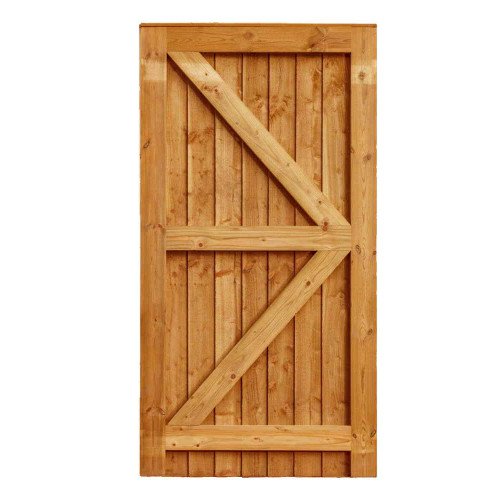
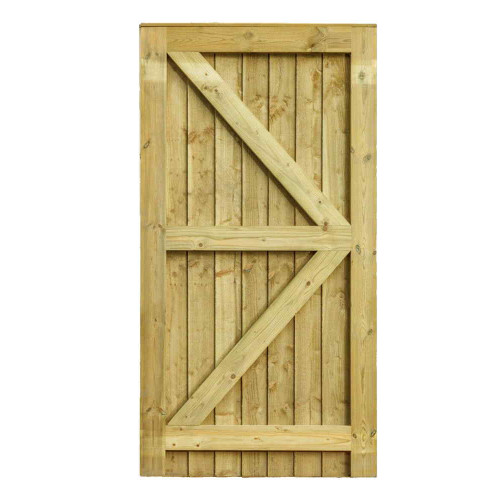
A feather edge garden gate uses overlapping vertical timber boards within a framed construction. It provides a solid appearance that works naturally with closeboard fencing and traditional feather edge boundaries.
The available fully framed premium feather edge garden gate measures approximately 1.75m high by 0.9m wide and is offered in pressure-treated brown and pressure-treated green finishes.
It is suitable for:
- Side passages
- Rear garden entrances
- Private patios
- Access between a house and boundary fence
- Matching closeboard fence panels
- Gardens containing children or dogs
- Areas where views through the entrance need to be restricted
What Are The Benefits Of A Feather Edge Gate?
A solid feather edge gate provides:
- A high level of privacy
- A traditional timber appearance
- Good compatibility with closeboard fencing
- Reduced visibility for dogs reacting to activity outside
- A substantial framed entrance
- Several possible positions for latches and bolts
The solid face also catches more wind than an open picket gate. Substantial posts, long hinges and suitable foundations are therefore important.
Is A Feather Edge Gate Suitable For A Windy Garden?
It can be used in an exposed garden, but the complete installation must be designed for the wind pressure.
Consider:
- Using a substantial hinge post
- Providing an adequate post foundation
- Using hinges long enough to spread the load
- Fitting a reliable latch
- Preventing the gate from being left unsecured
- Using a gate stop where appropriate
A solid gate can place sudden force on its hinges and post when caught by a strong gust.
What Is A Picket Garden Gate?
A picket gate uses spaced vertical pales rather than a solid boarded face. It defines an entrance without blocking light or views.
Picket gates are commonly used for:
- Front gardens
- Paths
- Cottage-style entrances
- Internal garden divisions
- Separating a lawn from a planting area
- Matching picket fence panels
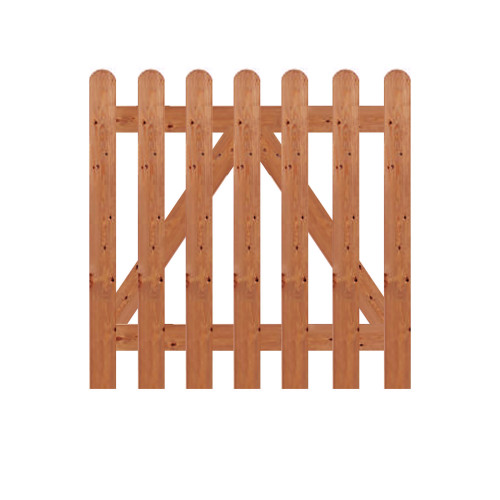
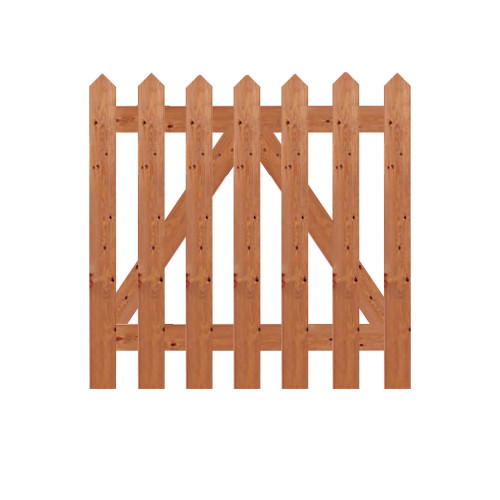
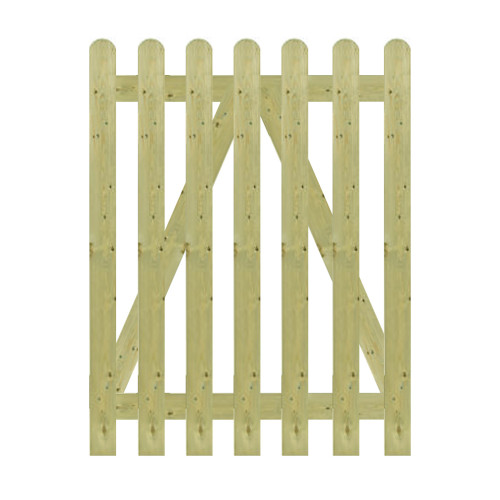
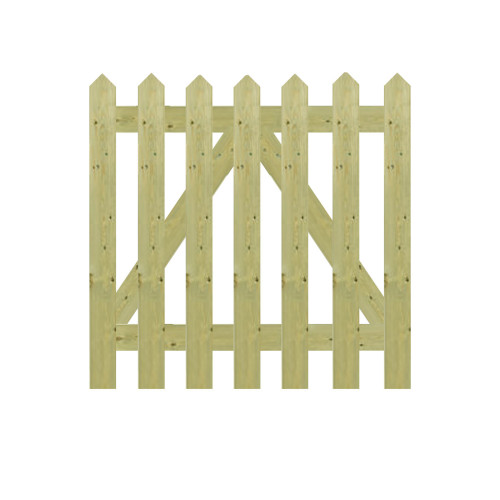
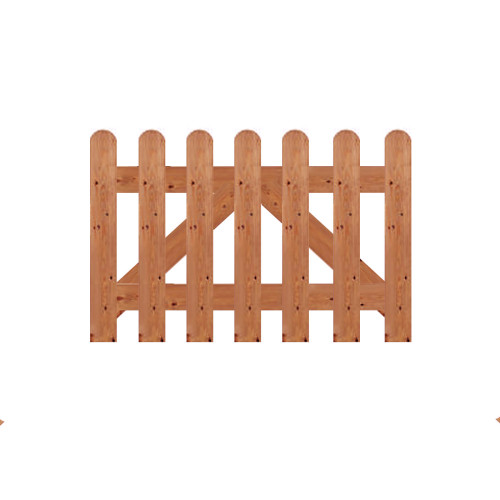
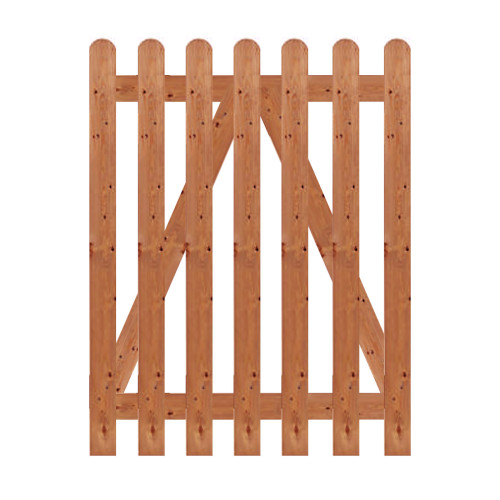
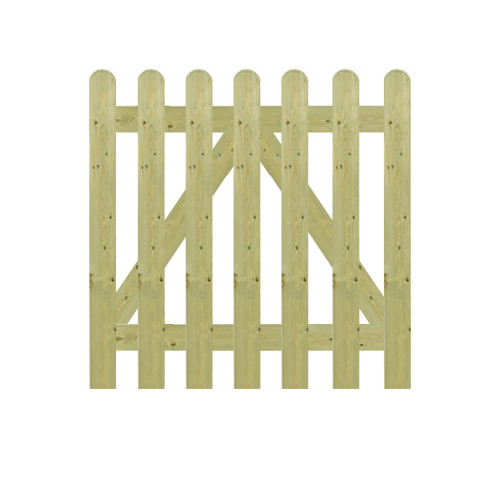
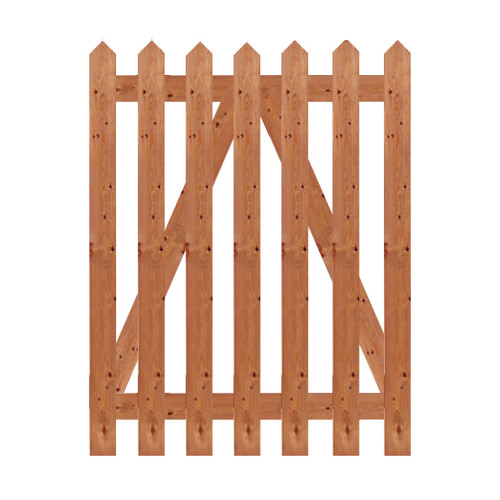
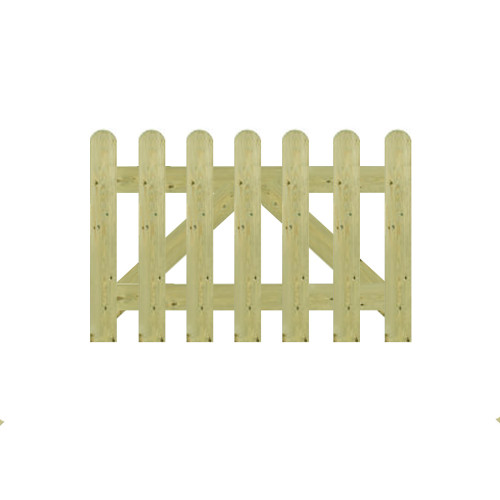
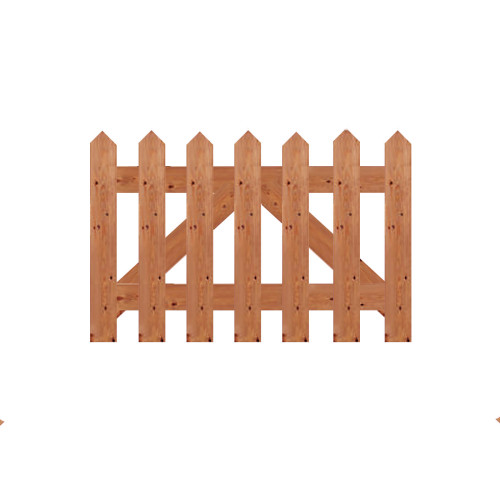
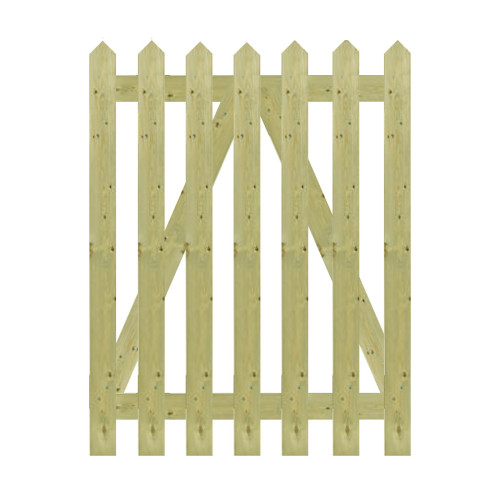
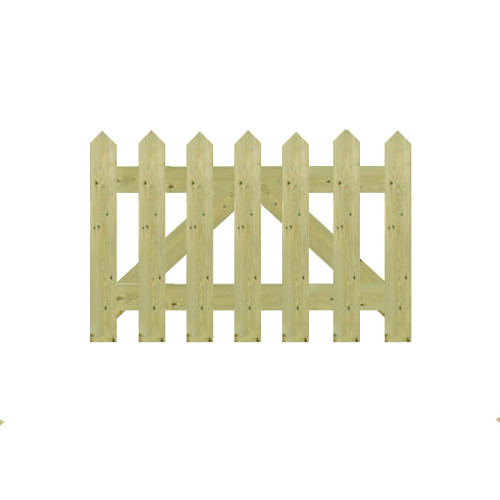
The available range includes round-top and point-top picket gates in pressure-treated brown and pressure-treated green finishes.
What Picket Gate Sizes Are Available?
The supplied picket gate range is approximately 0.9m wide and includes nominal heights of:
- 0.6m
- 0.9m
- 1.2m
Each height is available in round-top and point-top designs across brown and green pressure-treated options.
| Picket Gate Size | General Buying Context |
|---|---|
| 0.6m x 0.9m | Low decorative entrances and internal divisions |
| 0.9m x 0.9m | Traditional front garden entrances |
| 1.2m x 0.9m | Taller open boundaries and improved containment |
Check whether the product dimensions are listed as height by width or width by height before ordering.
Round-Top Or Point-Top Picket Gate?
Round-Top Picket Gates
A round-top gate has softer curved pale ends. It suits cottage-style gardens, family gardens and boundaries where a less angular appearance is preferred.
Point-Top Picket Gates
A point-top gate provides a sharper traditional outline. It can match point-top picket fence panels and individual point-top pales.
The choice is mainly visual. Both designs need the correct posts, hinges and latch.
Are Picket Gates Suitable For Children?
A picket gate may be suitable where the opening size, latch and overall height are appropriate.
Check:
- The space between the pales
- The gap beneath the gate
- Whether the top can be climbed
- The latch height
- Whether fingers can become trapped near hinges
- Whether the gate can swing into a path or play area
No standard garden gate should automatically be treated as a child-safety gate without assessing the complete installation.
Are Picket Gates Suitable For Dogs?
They may suit larger dogs that cannot pass between the pales or beneath the gate. They may be unsuitable for small dogs, puppies or animals that climb.
Check:
- The pale spacing
- The clearance beneath the gate
- Spaces beside the posts
- The latch security
- Whether the dog can push the gate open
- Whether the dog reacts to views outside
A solid feather edge gate may be a better choice where visual screening and escape prevention are priorities.
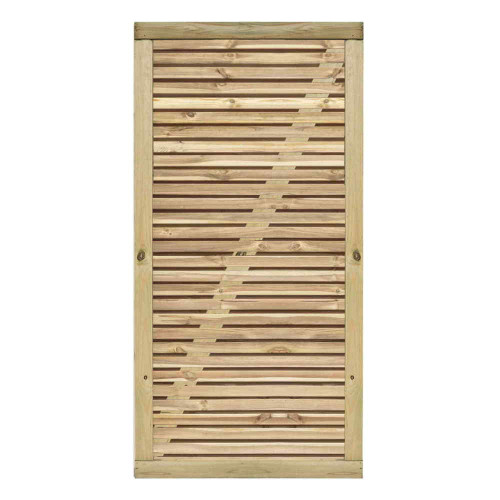
What Is A Contemporary Double Slatted Garden Gate?
A double slatted garden gate uses horizontal slats arranged to provide screening from both sides while retaining a modern linear appearance.
The available framed contemporary double slatted garden gate measures approximately 1.8m high by 0.9m wide.
It is suitable for:
- Modern rear gardens
- Contemporary side entrances
- Matching double slatted fence panels
- Patio and garden-room access
- Entrances where filtered light and airflow are preferred
Is A Double Slatted Gate Fully Private?
It can provide substantial screening, but the intentional gaps between slats may allow limited views from some angles.
Privacy depends on:
- The viewing angle
- The distance from the gate
- The position of nearby windows
- Differences in ground level
- The direction of the slats
Choose a solid feather edge gate where complete immediate screening is the main requirement.
Which Garden Gate Should You Choose?
| Priority | Suitable Gate Type |
|---|---|
| Maximum privacy | Fully framed feather edge gate |
| Open front garden | Round-top or point-top picket gate |
| Contemporary appearance | Double slatted gate |
| Matching closeboard fencing | Feather edge gate |
| Matching picket panels | Picket gate with the same top style |
| Airflow | Picket or double slatted gate |
| Reduced outside views for dogs | Solid feather edge gate |
How High Should A Garden Gate Be?
The gate height should normally relate to the adjoining fence and the purpose of the entrance.
Lower gates are suitable where:
- The boundary is mainly decorative
- Visibility is useful
- The entrance is in a front garden
- Privacy is not required
Taller gates are suitable where:
- The entrance leads to a private rear garden
- The surrounding fence is tall
- Children or pets need to be contained
- Views into the garden need to be restricted
- Additional security is preferred
The highest part of a shaped picket gate determines its maximum height.
Should A Gate Be The Same Height As The Fence?
It often looks most consistent when the gate follows the height and style of the adjoining fence, but an exact match is not always necessary.
A gate may be slightly lower where:
- A visual entrance feature is preferred
- The fence includes gravel boards
- The gate needs additional ground clearance
- The gate has a curved or shaped top
A 1.75m feather edge gate can work beside fencing whose total height is close to 1.8m, depending on the finished ground and post arrangement.
How Wide Should A Garden Gate Be?
The correct width depends on how the entrance will be used.
A gate approximately 0.9m wide suits many pedestrian garden entrances and side passages. Wider access may be needed for:
- Large wheelbarrows
- Garden machinery
- Bins
- Bicycles
- Mobility equipment
- Large items being moved into the garden
The width stated for the gate is not necessarily the required distance between the posts. Fitting clearances must be included.
How Do You Measure For A Garden Gate?
Measure the clear distance between the two finished supporting surfaces.
Take measurements at:
- The top of the opening
- The middle
- The bottom
Also measure the height from the finished ground or path to the intended top of the gate.
Check:
- Whether the posts are upright
- Whether the opening narrows at any point
- The thickness of the hinges
- The latch arrangement
- The required ground clearance
- The direction of opening
- Any slope beneath the gate
Use the narrowest reliable measurement when planning the gate width.
How Much Clearance Does A Garden Gate Need?
A timber gate needs enough space to open without binding as the timber moves with changes in moisture.
Clearance is normally needed:
- Between the gate and hinge post
- Between the gate and closing post
- Beneath the gate
- Behind hinges and surface-mounted furniture
The exact allowance depends on the hinge type, gate construction, post alignment and installation method.
Too little clearance can cause sticking. Too much clearance can create visible gaps, reduce security and allow pets to escape.
Should You Measure The Gate Or The Opening First?
Measure the opening first when replacing an existing gate. Then choose a gate that fits after allowing for all necessary clearances.
For a completely new installation, it is often better to obtain or confirm the actual gate dimensions before setting both gate posts.
Nominal dimensions should not be used as a substitute for an actual measured product.
Can A Garden Gate Be Cut To Width?
Some timber gates can be reduced, but altering a framed gate is more involved than trimming an ordinary fence board.
Cutting may require:
- Removing part of the frame
- Repositioning a side stile
- Refixing boards or slats
- Shortening braces
- Treating exposed timber
- Restoring the strength of the frame
Picket gates may be easier to alter than complex decorative or double slatted gates, but the remaining frame must stay square and strong.
Where possible, plan the post opening around the gate rather than modifying a new framed gate.
Can A Garden Gate Be Cut To Height?
Minor trimming may be possible on some square solid gates, but cutting the top or bottom can remove important frame components.
Do not cut:
- A shaped picket top
- A decorative slatted pattern
- A main frame rail
- A diagonal brace without rebuilding the frame
Choose a suitable gate height rather than relying on major alteration.
What Are Gate Posts?
Gate posts are substantial timber posts used to support the moving gate and its furniture.
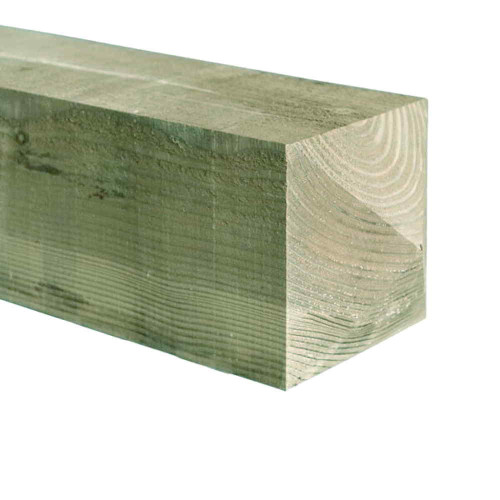
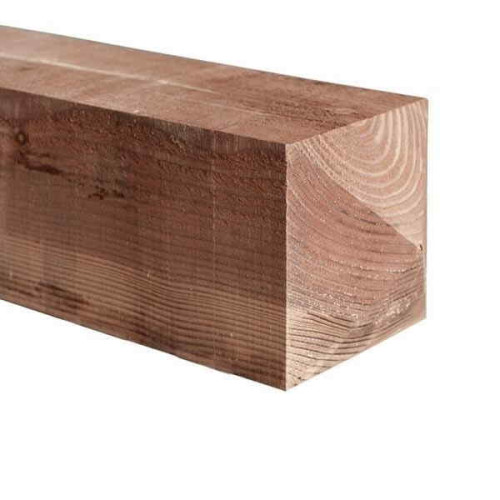
The available gate-post range includes pressure-treated 3.0m posts with a 150mm square section and a pyramid top. Brown and green finishes are available.
A gate post must resist:
- The weight of the gate
- Leverage from the hinges
- Repeated opening and closing
- Wind pressure
- Impact from slamming
- Movement from the latch and closing stop
Why Are Gate Posts Larger Than Ordinary Fence Posts?
A fixed fence panel spreads its load between two posts. A gate hangs mainly from the hinge post and places a turning force on it.
A substantial gate post provides:
- More timber for secure hinge fixings
- Greater resistance to twisting
- More rigidity
- A larger section for a strong foundation
- Better support for a tall solid gate
Using a large post with a shallow or weak foundation will not produce a reliable entrance.
Do Both Sides Need Gate Posts?
The hinge post carries the greatest load, but the closing post also needs to remain upright so the gate meets the latch correctly.
Using substantial posts on both sides can help:
- Keep the opening square
- Support the latch and stop
- Match the visual weight of the entrance
- Reduce movement between the gate and adjoining fence
Can A Gate Be Fixed To A Wall?
A suitable timber wallplate may sometimes be fixed to sound structural masonry to provide a hinge or latch surface.
Before using a wall:
- Check the brick or block condition
- Avoid relying on render alone
- Check for pipes and cables
- Use fixings suitable for the masonry and gate load
- Check whether the wall is strong enough for repeated movement
A lightweight garden wall or loose brick pier may not be suitable for a tall solid gate.
Can A Gate Be Hung From A Concrete Fence Post?
Concrete fence posts are not normally as straightforward to use as timber gate posts because drilling can encounter reinforcement and may damage the post.
A separate timber gate post, suitable wallplate or purpose-designed fixing arrangement is generally easier to plan.
Do not drill reinforced concrete posts without confirming an appropriate method.
What Gate Furniture Do You Need?
Gate furniture is the metalwork that allows the gate to open, close and remain secured.
A typical gate may need:
- A pair of tee hinges
- A ring latch or another closing latch
- A pad bolt where lockable closure is required
- A gate stop
- Suitable exterior screws or bolts
The available range includes a gate furniture pack, 450mm medium tee hinges supplied as a pair, a 150mm ring latch and a 150mm pad bolt.
What Are Tee Hinges?
Tee hinges have a long horizontal strap that fixes across the gate and a shorter vertical section that fixes to the hinge post.
The available medium tee hinges have an approximate strap length of 450mm and are supplied as a pair with a bright zinc-plated finish.
The long strap helps spread the gate load across the frame.
How Long Should Gate Hinges Be?
The correct hinge length depends on:
- The gate width
- The gate weight
- The frame construction
- The position of the horizontal rails
- The wind exposure
- The fixing material
The hinge strap should fix into substantial framing rather than only thin feather edge boards, picket pales or slats.
A tall solid gate normally needs more substantial support than a low picket gate.
Should A Gate Have Two Or Three Hinges?
Many ordinary pedestrian gates use two suitable hinges, but a third hinge may be considered for a particularly tall, heavy or exposed gate.
The correct number depends on:
- The gate manufacturer's construction
- The hinge capacity
- The post and frame
- The fitting method
- The expected use
Adding a third small hinge does not compensate for undersized main hinges or a weak post.
What Is A Ring Latch?
A ring latch allows the gate to be opened by turning a ring handle. Many designs provide operation from both sides of the gate.
The available bright zinc-plated ring latch measures approximately 150mm.
A ring latch is suitable for:
- General garden access
- Side gates
- Picket gates
- Feather edge gates
- Entrances that do not require a high-security lock
The latch needs to align accurately with its keep on the closing post.
What Is A Pad Bolt?
A pad bolt slides horizontally into a keeper and can normally accept a padlock where the design permits.
The available bright zinc-plated pad bolt measures approximately 150mm.
It can be used where:
- A lockable garden entrance is required
- Additional restraint is wanted
- The gate needs securing during strong winds
- A secondary closing point is useful
A pad bolt is only one part of the security arrangement. The gate, posts, hinges, screws and padlock all need to resist tampering.
What Is A Gate Furniture Pack?
A gate furniture pack groups compatible components required for an ordinary gate installation.
Before buying a pack, check:
- Which components are included
- The hinge length
- The supplied fixings
- The finish
- The gate size it is intended to support
- Whether a lockable bolt is included
Do not assume every pack is suitable for every gate weight and width.
What Does BZP Mean On Gate Furniture?
BZP refers to a bright zinc-plated finish used to provide corrosion resistance to steel ironmongery.
Outdoor gate furniture should still be inspected for:
- Rust
- Loose screws
- Wear at hinge pins
- Damage to the zinc coating
- Movement around fixing holes
Coastal and persistently damp locations can be particularly demanding for metal components.
Which Way Should A Garden Gate Open?
A gate can often be arranged to open in either direction, depending on the frame and furniture.
Choose the direction by considering:
- Available space
- The path layout
- Steps and slopes
- Bins and garden storage
- Pedestrian movement
- The position of the latch
- Whether the gate could swing into a public route
- The prevailing wind
An inward-opening gate is often convenient where opening outwards would obstruct a pavement or shared access.
Does A Garden Gate Have A Left Or Right Side?
A gate is commonly described by the side on which it is hinged when viewed from a chosen direction, but terminology can vary.
Avoid relying only on left-hand or right-hand descriptions. Record:
- Which post will carry the hinges
- Which direction the gate will swing
- Which face will carry the hinge straps
- Which side should operate the latch
A simple sketch prevents confusion during installation.
How Much Ground Clearance Does A Gate Need?
The gate needs enough clearance to open over the highest point of the path or ground.
Consider:
- Changes in paving level
- Gravel movement
- Grass growth
- Seasonal ground movement
- Leaves and debris
- The upward slope through the opening arc
Too little clearance causes rubbing and moisture damage. Too much clearance can create an escape gap for pets or reduce privacy.
How Do You Fit A Gate On Sloping Ground?
A rectangular gate swings through an arc, so rising ground can prevent it opening fully.
Possible solutions include:
- Opening the gate towards the lower ground
- Increasing the ground clearance
- Adjusting the surrounding path level
- Using a stepped fence arrangement
- Selecting a shorter gate where appropriate
Do not simply cut a large diagonal section from a framed gate without assessing its construction.
Can A Gate Open Over Gravel?
Yes, but loose gravel can build up beneath the gate and obstruct it.
Provide:
- A firm threshold or controlled level
- Enough clearance
- Edging to reduce gravel migration
- Regular maintenance
A narrow paved strip beneath the gate can provide a more predictable operating surface.
Can A Gate Open Over Grass?
Yes, but grass growth and soft ground may cause rubbing.
Keep the swing area:
- Trimmed
- Free from soil build-up
- Reasonably level
- Firm enough to avoid deep wear
Repeated dragging can damage the bottom of the gate and loosen the hinge post.
Which Gate Is Best For A Front Garden?
A round-top or point-top picket gate is a common choice for a front garden because it creates a clear entrance without fully screening the property.
Choose the height based on:
- The adjoining picket fence
- Children and pets
- The visibility needed near a driveway
- The appearance of the house
- The required level of security
Which Gate Is Best For A Side Passage?
A fully framed feather edge gate is suitable where privacy and restricted access are priorities.
A double slatted gate is an alternative where a contemporary appearance and some airflow are preferred.
Check that the side passage provides enough space for the gate to open without striking:
- The house wall
- Bins
- Drainpipes
- Steps
- Outdoor taps
- The adjoining fence
Which Gate Is Best For A Modern Garden?
A framed double slatted gate provides a modern horizontal appearance that works naturally with double slatted fence panels, rendered walls, garden rooms and contemporary paving.
Use ironmongery positioned carefully so the metalwork does not disrupt the intended clean appearance.
Which Gate Is Best For Privacy?
A solid feather edge gate provides the highest immediate privacy within the available range.
Privacy can still be reduced by:
- A large ground gap
- Spaces beside the posts
- A gate lower than the fence
- Higher neighbouring ground
- Views from upper windows
Which Gate Is Best For Security?
A tall solid framed gate with substantial posts, secure hinges and a suitable lockable bolt provides a stronger starting point than a low open gate.
Security depends on the complete system:
- The gate frame
- The hinge-post foundation
- The hinge length
- The fixing heads
- The latch or bolt
- The padlock where used
- Spaces around the gate
- The height of nearby fencing
No ordinary timber garden gate should be described as completely secure against determined forced entry.
How Can You Make A Gate Harder To Lift Off?
Some surface-mounted hinge arrangements can be vulnerable if the gate can be lifted from its pins.
Possible precautions include:
- Using an appropriate hinge arrangement
- Positioning one hinge pin in an opposing direction where suitable
- Using security fixings
- Adding a suitable anti-lift detail
- Keeping the gate securely latched
The method must remain compatible with the hinge design and allow safe maintenance.
Can A Gate Be Locked From Both Sides?
Some latch and lock arrangements allow operation from both sides, while a simple pad bolt may be accessible from only one side.
Consider:
- Emergency access
- Fire escape routes
- Who needs to use the gate
- Whether a key is required
- Whether the lock can be reached over the gate
A garden access gate should not create an unsafe escape restriction.
Which Gate Is Best For Children?
A tall framed gate with a secure latch positioned beyond easy reach may help control access, but the complete entrance must be assessed.
Check for:
- Climbable rails
- Finger traps
- Sharp point-top pales
- A latch children can operate
- Large ground gaps
- The gate swinging into a play area
- A heavy gate closing unexpectedly
Which Gate Is Best For Dogs?
A solid feather edge gate is often the most practical choice because it blocks direct views and contains fewer openings.
For any gate, check:
- The bottom clearance
- The gaps beside both posts
- The latch strength
- Whether the dog can jump the gate
- Whether the dog can operate the latch
- Whether digging is possible beneath the opening
A separate ground-level barrier may be needed for persistent diggers.
Which Gate Is Best For Windy Locations?
Picket gates allow the most air to pass through. Double slatted gates allow some airflow, while solid feather edge gates catch more wind.
For exposed locations:
- Use substantial gate posts
- Form suitable foundations
- Use adequately sized hinges
- Fit a reliable latch or bolt
- Prevent the gate slamming
- Keep the gate closed when not in use
Brown Or Green Garden Gates?
Brown and green refer to the initial colour of the pressure treatment.
Pressure-treated brown gates provide a warmer appearance and can match brown fence panels, posts and gravel boards.
Pressure-treated green gates have a lighter, more natural treatment colour and can match green-treated fencing products.
Both colours will change as the timber weathers. Natural variation between boards should be expected.
What Does Pressure Treatment Do?
Pressure treatment introduces preservative into timber to improve resistance to fungal decay and insect attack.
It does not make a gate:
- Waterproof
- Unable to warp
- Maintenance free
- Immune to rot
- Suitable for permanent ground contact
The gate should remain clear of soil and standing water.
Can A Pressure-Treated Gate Be Painted?
Yes, once the timber has dried sufficiently.
Before painting:
- Clean the surface
- Allow the timber to dry
- Remove algae and loose material
- Use a suitable exterior timber product
- Follow the coating instructions
Apply the coating to accessible edges and both faces where appropriate to maintain a consistent appearance.
Can A Gate Be Stained?
Yes. An exterior timber stain can change the colour while retaining more visible grain than an opaque paint.
The existing brown or green treatment may affect the final colour, so test the stain on an inconspicuous area where possible.
Will A Timber Gate Expand Or Shrink?
Yes. Timber responds to changes in moisture.
A gate may:
- Expand during wet weather
- Shrink during dry periods
- Develop small surface checks
- Move slightly within its frame
- Need latch or hinge adjustment
This is why suitable fitting clearance is important.
Why Do Garden Gates Sag?
A gate can sag when its outer edge drops away from the hinge post.
Common causes include:
- Loose hinge screws
- Undersized hinges
- A weak or leaning post
- Failure of the diagonal brace
- A distorted frame
- Excessive gate weight
- Repeated slamming
A sagging gate should be inspected before simply moving the latch lower.
Which Direction Should A Gate Brace Run?
On a traditional ledged and braced timber gate, a compression brace commonly rises from the lower hinge side towards the upper latch side.
The exact frame design may differ on fully framed and decorative products. Do not alter or remove a brace without understanding how the gate is supported.
How Are Garden Gates Installed?
A typical installation follows these stages:
- Confirm the gate dimensions: Measure the actual product.
- Plan the opening: Allow for hinges, latch clearance and timber movement.
- Set the posts: Install substantial posts upright and parallel.
- Allow foundations to become ready: Keep the posts braced.
- Position the gate: Support it on temporary blocks at the correct height.
- Mark the hinges: Align them with substantial frame rails.
- Fix the hinges: Use suitable exterior fixings.
- Test the swing: Check the full opening arc.
- Fit the latch: Align it accurately with the closing post.
- Fit any bolt or stop: Confirm the gate closes without excessive force.
Should The Gate Posts Be Installed Before The Gate Arrives?
It is safer to confirm the actual gate dimensions before permanently setting both posts.
Setting posts from nominal measurements alone can leave:
- An opening that is too narrow
- Excessive side gaps
- Insufficient hinge clearance
- A latch that cannot reach
How Deep Should Gate Posts Be?
The required depth depends on:
- The post length and section
- The gate height and weight
- The soil condition
- The site's wind exposure
- The width of the foundation
- Whether the post also supports fencing
A gate post normally needs a more substantial foundation than an ordinary lightweight fence post.
Do not reduce the below-ground length simply because excavation is difficult.
Can Gate Posts Be Set In Post Mix?
Rapid-setting post mix can be used for suitable gate-post installations when the hole dimensions, ground and product instructions are appropriate.
Post mix cannot compensate for:
- A shallow hole
- Weak surrounding ground
- Standing water
- An undersized post
- Poor bracing
- A foundation that is too narrow
Can Gate Posts Be Surface Mounted?
Surface mounting may be possible on a sound structural concrete base or suitable wall, but the support and anchors must resist the leverage created by the moving gate.
Ordinary paving slabs, thin screed and decorative garden walls may not provide adequate support.
Should A Gate Have A Stop?
A gate stop gives the closing edge a firm position and reduces force on the latch.
It can help:
- Align the gate consistently
- Prevent over-closing
- Protect the latch
- Reduce rattling
- Limit movement in strong wind
The stop should not create a sharp projection or obstruct the opening.
How Do You Stop A Gate Slamming?
Gate slamming may be reduced by:
- Changing the opening direction
- Using a reliable latch
- Adding a suitable stop
- Using a controlled closing device where appropriate
- Reducing excessive hinge play
- Keeping the gate secured in strong winds
Repeated slamming can loosen posts, hinges and frame joints.
How Do You Stop A Gate Rattling?
Rattling usually occurs where the gate moves inside the latch or against its stop.
Check:
- Latch alignment
- Hinge wear
- Loose screws
- Gate-post movement
- Excessive side clearance
- A missing or poorly positioned stop
How Do You Maintain A Garden Gate?
Inspect the gate several times each year and after severe weather.
Routine maintenance includes:
- Tightening hinge screws
- Checking the latch alignment
- Inspecting the gate posts
- Removing soil and leaves from beneath the gate
- Cleaning algae carefully
- Maintaining paint or stain
- Checking for rot at the bottom rail
- Inspecting metalwork for corrosion
- Correcting small areas of sag before they worsen
Should Gate Hinges Be Lubricated?
Some hinge pins benefit from a suitable lubricant, but avoid products that attract excessive dirt or damage nearby finishes.
Clean corrosion and inspect the fixings before lubricating. Lubrication will not correct a loose post or badly worn hinge.
How Long Do Timber Garden Gates Last?
There is no fixed lifespan for every gate.
Durability depends on:
- Pressure treatment
- Frame construction
- Post stability
- Ground clearance
- Drainage
- Wind exposure
- Hinge and latch quality
- Maintenance
- How frequently the gate is used
A pressure-treated gate supported by stable posts and kept clear of wet soil should generally perform better than one that drags on the ground or repeatedly slams.
When Should A Garden Gate Be Replaced?
Replacement may be more practical where:
- The frame is extensively rotten
- The hinge fixings no longer hold
- The gate is severely twisted
- Several boards or slats have failed
- The brace has broken
- The gate cannot be made square
- Repair would leave the entrance unsafe
Check the posts before fitting a new gate. A replacement will not remain aligned on a leaning or rotten hinge post.
Can A Garden Gate Be Repaired?
Localised repairs may be possible where most of the frame remains sound.
Possible repairs include:
- Replacing loose boards
- Refixing a brace
- Replacing hinges
- Adjusting a latch
- Adding suitable frame fixings
- Replacing a rotten post
Do not use a new latch position to hide serious sagging or structural failure.
What Should You Check Before Delivery?
Garden gates and 3.0m gate posts are bulky products.
Check:
- Vehicle access
- The unloading area
- The width of side passages
- Tight corners
- Steps
- Low entrances
- Safe storage space
- Whether enough people are available for handling
How Should A Garden Gate Be Stored?
Store the gate flat on level supports or upright with full restraint.
Avoid:
- Leaning it at a shallow angle
- Leaving one corner unsupported
- Resting it on wet soil
- Placing heavy products on top
- Leaving it exposed to strong wind
- Wrapping wet timber tightly in plastic
Install it promptly where possible.
What Should You Check When A Gate Arrives?
Inspect the gate before installation.
Check:
- The correct gate style
- The actual height and width
- The treatment colour
- The frame condition
- Loose boards, pales or slats
- Damage to corners
- Severe twisting
- The position of frame rails for hinges
Natural variations in timber grain, knots, moisture and colour are expected.
Common Garden Gate Buying Mistakes
- Buying a gate the same width as the complete opening
- Failing to allow hinge and latch clearance
- Measuring the opening at only one height
- Using ordinary fence posts for a heavy solid gate
- Setting posts before confirming the actual gate size
- Choosing hinges that are too short
- Fixing hinges only into thin boards or slats
- Forgetting the gate furniture
- Ignoring the direction of opening
- Failing to check the swing over rising ground
- Leaving excessive gaps around a pet gate
- Choosing a picket gate when complete privacy is required
- Assuming a slatted gate blocks every view
- Using an unsecured solid gate in a windy location
- Painting pressure-treated timber before it has dried
- Fitting a new gate to a leaning post
Garden Gate Buying Checklist
Before ordering, confirm:
- The gate style
- The actual gate width
- The actual gate height
- The clear opening width
- The finished ground level
- The required ground clearance
- The hinge side
- The opening direction
- The post size and length
- The post foundation method
- The hinge type and length
- The latch type
- Whether a pad bolt is required
- The fixing type
- The treatment colour
- Compatibility with the adjoining fence
- Pet and child requirements
- Delivery access
- Safe storage
FAQs
What Is The Best All-Round Garden Gate?
A fully framed feather edge gate is a practical all-round choice for private rear garden and side access. A picket gate is generally more suitable for an open front garden.
What Garden Gate Sizes Are Available?
The available range includes 1.75m x 0.9m feather edge gates, a 1.8m x 0.9m double slatted gate and 0.9m-wide picket gates in 0.6m, 0.9m and 1.2m heights.
What Is The Standard Width Of A Garden Gate?
Approximately 0.9m is a common pedestrian-gate width within the available range. Always measure the product and allow fitting clearance.
Should The Gate Be Narrower Than The Opening?
Yes. Space is needed for the hinges, latch clearance and ordinary timber movement.
How Much Smaller Should A Gate Be Than The Opening?
The exact allowance depends on the hinge and latch arrangement. Confirm the furniture dimensions and installation method rather than using one fixed allowance for every gate.
What Height Gate Is Best For Privacy?
A tall solid gate close to the height of the adjoining fence provides the most privacy.
Are Feather Edge Gates Private?
Yes. Their overlapping solid boards provide a high level of immediate screening.
Are Double Slatted Gates Private?
They provide substantial screening, although limited views may remain possible through the slats from some angles.
Are Picket Gates Secure?
They define an entrance and can be securely latched, but their low, open design provides less privacy and physical deterrence than a tall solid gate.
Are Picket Gates Suitable For Dogs?
They may suit larger dogs, but check the pale spacing, ground gap, gate height and latch carefully.
Are Point-Top Gates Better Than Round-Top Gates?
The difference is mainly visual. Point-top gates create a sharper traditional outline, while round-top gates provide a softer finish.
Can A Gate Open Outwards?
It can where the swing does not obstruct a public route, shared access or neighbouring land.
Can A Gate Open Both Ways?
Some hinge and latch arrangements permit two-way movement, but most garden gates are planned to open in one direction for better control and alignment.
Can You Reverse A Garden Gate?
Many un-fitted timber gates can be arranged for either hinge side, but frame and brace construction should be checked first.
Which Side Should The Gate Hinges Be On?
Choose the side that provides the clearest opening, strongest support and most convenient latch access.
What Size Posts Do Garden Gates Need?
The available substantial gate posts measure 3.0m long with a 150mm square section. The correct post depends on gate weight, height, ground and exposure.
Can A Garden Gate Use An Ordinary Fence Post?
A low lightweight gate may suit an appropriately sized post, but tall or heavy gates normally benefit from substantial dedicated gate posts.
Can A Gate Be Fitted Between Concrete Posts?
It may be possible with a suitable independent timber fixing arrangement, but concrete fence posts should not be drilled without confirming a safe method.
What Hinges Are Used For A Timber Garden Gate?
Tee hinges are commonly used because their long straps spread the load across the gate frame.
Are 450mm Hinges Suitable For A Garden Gate?
They may suit many ordinary pedestrian gates. Confirm suitability against the gate weight, width, frame and exposure.
What Is A Ring Latch?
It is a gate latch operated by turning a ring handle, often allowing the gate to be opened from both sides.
What Is A Pad Bolt?
It is a sliding bolt that can provide additional closure and may accept a padlock where the design permits.
Does A Gate Furniture Pack Include Everything?
Contents vary. Check the included hinges, latch, fixings and any bolt before ordering.
Can A Garden Gate Be Locked?
Yes. A suitable pad bolt, lock or other gate-security arrangement can be fitted. Check access requirements and escape safety.
Should A Garden Gate Touch The Ground?
No. It needs clearance to open and to keep the bottom timber away from wet soil and debris.
Why Is My Garden Gate Sticking?
Possible causes include timber swelling, insufficient clearance, a sagging frame, loose hinges, leaning posts or raised ground beneath the swing.
Why Is My Garden Gate Sagging?
Common causes include loose hinges, weak posts, failed bracing, frame movement and excessive gate weight.
Can A Sagging Gate Be Repaired?
Often, yes, if the frame and posts remain sound. Repair the underlying cause rather than only repositioning the latch.
Can A Garden Gate Be Painted?
Yes. Allow pressure-treated timber to dry and use a suitable exterior timber coating.
Can Brown And Green Gates Be Repainted?
Yes. An opaque exterior paint can cover either treatment colour, although suitable preparation is still required.
Do Timber Gates Warp?
Some movement can occur as timber responds to moisture. Correct framing, storage, installation and maintenance reduce avoidable distortion.
Should A Garden Gate Have A Brace?
Traditional timber gates generally need suitable framing or bracing to resist sagging. Do not remove structural frame components.
Does A Garden Gate Need Planning Permission?
Many ordinary replacement gates do not require an application, but restrictions can depend on height, location, listed status and proximity to a highway. Check the requirements for the specific property before installing a significantly higher gate.
Can You Replace A Gate Without Replacing The Posts?
Yes, if the existing posts are upright, sound, correctly spaced and strong enough for the replacement gate.
Choose The Gate, Posts And Furniture Together
The best garden gate depends on its location and purpose. Feather edge gates provide solid privacy, picket gates create open traditional entrances, and double slatted gates provide contemporary screening with some airflow.
Measure the clear opening at several heights and allow for hinges, latch clearance, timber movement and the ground beneath the swing. Do not set new posts until the actual gate dimensions are known.
Use substantial gate posts for tall and heavy gates. Match the hinges to the gate frame and weight, then choose a ring latch, pad bolt or gate furniture pack that provides the required access and security.
A correctly selected gate should match the fence, open freely and remain securely supported. The posts, foundations and ironmongery are as important as the timber gate itself.