





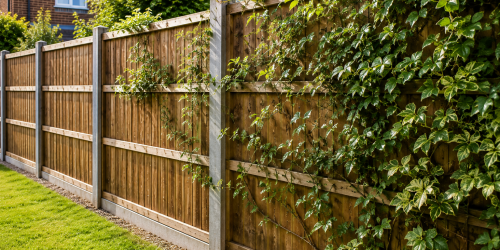
Your neighbour should not grow plants up your fence without your permission if the fence belongs to you. A fence is private property, and the side facing your neighbour’s garden does not automatically give them the right to attach climbers, wires, trellis, hooks, planters, screening or plant supports to it. Even plants that look harmless can add weight, trap moisture, damage panels and make maintenance more difficult.
This does not mean every climbing plant near a fence is a legal problem. A neighbour can usually grow plants in their own garden. The issue is whether those plants are being supported by your fence, attached to your fence, damaging your fence or crossing into your garden. If the plant is on their land but is using your fence as a structure, they should ask first.
This guide explains what you can do if your neighbour is growing plants up your fence, including ownership, boundary responsibility, climbing plants, ivy, trellis, plant damage, overhanging growth, roots, fence repairs, neighbour disputes and practical ways to solve the problem without making matters worse.
Can a neighbour use your fence to support plants?
If the fence belongs to you, your neighbour should not use it to support plants without your permission. This includes fixing wires, trellis, mesh, brackets, hooks or plant ties to the fence. It also includes allowing heavy climbing plants to rely on your fence for support if that causes damage or interferes with maintenance.
A neighbour should not attach:
- Trellis panels
- Plant support wires
- Climbing plant mesh
- Hooks
- Hanging baskets
- Planters
- Screening
- Lights
- Artificial greenery
- Heavy climbers trained directly onto the fence
If they want climbing plants, they should use their own posts, freestanding trellis, plant frames or wall-mounted supports on their own property.
First check who owns the fence
Before challenging your neighbour, confirm whether the fence is actually yours. Many fence disputes start because one side assumes ownership based on position, appearance or local myths.
Fence ownership may be shown in:
- Title deeds
- Transfer documents
- Conveyance documents
- Title plans
- T marks where used
- Boundary agreements
- Property information forms from when you bought the house
- Previous written agreements with neighbours
There is no universal rule that the left fence or right fence is automatically yours. Check the documents before accusing a neighbour of using your property without permission.
What if the fence belongs to your neighbour?
If the fence belongs to your neighbour, they can usually grow plants up it from their side, provided they do not damage your property, trespass into your garden or create another legal problem. You cannot normally stop them using their own fence just because you dislike the planting.
However, you may still have concerns if:
- The plant grows over into your garden
- The plant damages your shed, paving, wall or greenhouse
- The plant blocks light excessively
- The plant makes your side of the boundary difficult to maintain
- The plant causes damp or debris on your side
- The fence becomes unsafe and falls into your garden
The ownership of the fence affects what you can demand. If the fence is theirs, your options are usually limited to dealing with growth crossing into your property and any damage caused.
What if the fence is shared?
If the fence is jointly owned or maintained by agreement, neither side should overload it, damage it or make unilateral changes that affect the other. Growing heavy climbers on a shared fence can become a problem if it makes the fence unsafe or harder to repair.
For a shared fence, agree before adding:
- Climbing plants
- Trellis toppers
- Plant wires
- Screening
- Hanging baskets
- Planters
- Large shrubs tied into the fence
A shared fence should remain usable and maintainable for both neighbours.
Why climbing plants can damage fences
Climbing plants can look attractive, but they can also shorten the life of a fence if they are uncontrolled. The main issues are weight, moisture and access.
Plants can damage fencing by:
- Adding weight to panels and posts
- Catching wind and increasing strain
- Trapping moisture against timber
- Hiding rot and loose fixings
- Growing between boards and forcing gaps open
- Pulling trellis or panel frames out of shape
- Making repairs difficult
- Encouraging moss, algae and damp staining
- Dropping leaves and debris into the fence base
A light annual climber is very different from mature ivy, wisteria, honeysuckle or climbing rose growth that has been left for years.
Can ivy damage a fence?
Yes. Ivy can damage a fence, especially if it becomes thick, woody and heavy. It can grow into gaps, trap moisture, hide decay and pull at weak boards or fixings. It can also make it difficult to inspect the fence.
Ivy is most likely to cause problems where:
- The fence is already old
- The panels are lightweight
- The posts are timber and damp
- The ivy is mature and woody
- The fence is exposed to wind
- The ivy grows through gaps and joints
- The plant is not pruned regularly
If ivy is growing from your neighbour’s side onto your fence, raise the issue early. It is easier to manage before it becomes thick and structural.
Can climbing roses damage a fence?
Climbing roses can damage a fence if they are tied directly to the panels, become too heavy or scrape timber in windy weather. Thorns can also make fence maintenance difficult.
Climbing roses are better supported by:
- Freestanding trellis
- Plant wires on the owner’s own posts
- Arches
- Pergolas
- Obelisks
- Purpose-built plant frames
If a neighbour wants climbing roses, they should not rely on your fence as the support unless you have agreed.
Can wisteria damage a fence?
Wisteria can become very heavy and woody. It is usually too vigorous to be treated casually on a lightweight garden fence. If it is trained onto a fence without proper support, it can strain panels, rails and posts.
Wisteria should be supported by a strong structure that belongs to the person growing it. A standard timber fence panel is not always suitable for mature wisteria.
Can clematis or honeysuckle damage a fence?
Clematis and honeysuckle are often lighter than ivy or wisteria, but they can still cause problems if they are dense, wet, unmanaged or tied directly to your fence. They may also make painting, staining or replacing panels harder.
These climbers are better grown on:
- Freestanding trellis panels
- Posts set inside the neighbour’s garden
- Lightweight plant frames
- Obelisks
- Wires fixed to the neighbour’s own structure
The issue is not just the plant type. It is whether the plant is using your fence without permission.
Can my neighbour attach trellis to my fence?
No, not without your permission. Trellis adds weight and wind load, and the fixings can damage the fence. Even if the trellis is on their side, it should not be attached to your fence if you own it.
Trellis can cause problems because it:
- Adds height
- Catches wind
- Puts strain on posts
- Creates extra fixing holes
- Supports heavy plant growth
- Makes maintenance harder
- May push the fence over permitted height limits
If your neighbour wants trellis, they should use their own posts and keep the structure on their land.
Does trellis count towards fence height?
Yes, trellis can count towards the overall height of the boundary structure. If a neighbour attaches trellis or a plant support to a fence, the total height may become relevant under planning rules.
As a general guide, planning permission may be needed if a fence, wall or gate is over 2 metres high, or over 1 metre high where it is next to a highway used by vehicles, including the footpath of that highway. Local restrictions, listed buildings, conservation areas, planning conditions and covenants can also matter.
Before adding trellis, check:
- Who owns the fence
- Current fence height
- Proposed trellis height
- Whether the fence is near a highway
- Whether planning conditions apply
- Whether the property is listed or in a conservation area
- Whether both neighbours agree
A neighbour cannot avoid height issues by calling the addition “only trellis” if it is physically part of the boundary structure.
Can my neighbour grow plants over the top of my fence?
A neighbour can grow plants in their own garden, but if branches, stems or foliage cross into your garden, you may usually cut them back to the boundary, provided you do not trespass or damage the main plant unnecessarily. You should not cut beyond the boundary into their garden.
When cutting back overhanging growth:
- Only cut growth on your side
- Do not enter their garden without permission
- Do not damage the fence
- Do not cut protected trees without checking
- Offer the cuttings back if appropriate
- Avoid cutting during nesting season if birds are present
- Use safe tools and avoid damaging the main plant
If the plant is a protected tree, or if the property is in a conservation area, check before cutting.
What about roots under the fence?
Roots can cross boundaries underground. If roots are damaging your property, the issue can be more complex than overhanging stems. Roots may affect paving, walls, drains, sheds, fence posts or raised beds.
Before cutting roots, consider:
- Whether the plant is a tree or hedge
- Whether it is protected
- Whether cutting roots could make the plant unstable
- Whether damage has actually occurred
- Whether professional advice is needed
- Whether insurance may be involved
Do not cut major roots without understanding the consequences, especially near trees.
Can my neighbour’s plants make my fence rot?
Yes. Dense plant growth can trap moisture against timber, reduce airflow and hide early signs of rot. This is especially problematic with wooden fence panels, timber posts, timber gravel boards and feather edge fencing.
Plants can increase rot risk by:
- Keeping timber damp after rain
- Holding wet leaves against panels
- Blocking sunlight and airflow
- Dropping debris around post bases
- Hiding damaged areas
- Encouraging algae and moss
- Making it difficult to repaint or stain timber
If your neighbour’s planting is causing your fence to deteriorate, document the issue with photos and ask them to cut it back or provide independent support.
Can my neighbour’s plants pull my fence over?
Heavy climbers can contribute to a fence leaning or failing, especially in wind. The plant may not be the only cause, but it can add weight and wind resistance to an already weak fence.
This is more likely if:
- The posts are old or rotten
- The fence panels are lightweight
- The plant is mature and woody
- The plant is wet and heavy
- The fence is in a windy location
- Trellis toppers have been added
- The plant has not been pruned
If the fence is yours and your neighbour’s plant is pulling it over, ask them to remove the plant from the fence and support it independently.
Can my neighbour drill into my fence for plant wires?
No, not without permission. Drilling into someone else’s fence can damage the timber, weaken rails or posts and create points where water enters.
This applies to:
- Eye screws
- Vine eyes
- Plant wire fixings
- Trellis brackets
- Hooks
- Clips
- Mesh staples
- Cable ties fixed through panels
If the fence is yours, your neighbour should use their own freestanding plant support system.
Can my neighbour hang baskets or planters on my fence?
No, not without permission. Hanging baskets and planters can add significant weight, especially after watering or rain. They can also stain timber, increase damp and pull fixings loose.
Hanging planters are a problem because they:
- Add concentrated weight
- Wet the fence repeatedly
- Leave marks and stains
- Can split thin boards
- May damage panel frames
- Can make the fence lean if repeated along a run
If your neighbour wants hanging baskets, they should use their own posts, wall brackets or freestanding stands.
Can my neighbour attach artificial greenery to my fence?
No, not without permission. Artificial greenery, privacy rolls and screening can add wind load and may damage the fence through fixings, ties or trapped moisture.
Artificial screening can be especially problematic because it:
- Catches wind
- Hides damage
- Traps moisture
- Requires fixings or ties
- Can make panels rattle
- Can make an old fence fail sooner
If they need privacy, they should install their own screening on their own supports.
Can my neighbour grow plants against my concrete posts?
Concrete posts do not rot like timber, but plants can still create issues. Dense growth can hide cracks, make panel replacement difficult, push into post slots or trap damp against timber panels between the posts.
With concrete fence posts, check for:
- Plants growing into post slots
- Climbers wrapping around posts
- Roots disturbing the base
- Vegetation stopping panels being lifted out
- Wet growth against timber panels
- Damage to gravel boards
Concrete posts are more resilient, but they are not permission for a neighbour to use your fence system as a plant frame.
Can my neighbour grow plants against my gravel boards?
Plants growing against gravel boards may not be a major problem if they are light and controlled, but heavy soil, roots and dense growth can create issues. Timber gravel boards are more vulnerable than concrete gravel boards.
Problems can include:
- Timber gravel boards staying damp
- Soil building up above board level
- Roots pushing boards out of place
- Plants hiding rot
- Panel bases staying wet
- Reduced airflow along the fence line
Ask your neighbour to keep soil and planting clear of your timber fence components where they are causing damage.
Can I cut plants off my fence?
If the fence is yours and your neighbour’s plants are growing on or attached to it without permission, you can usually ask them to remove the plants and supports. If growth is on your side, you may be able to cut it back to the boundary, but avoid damaging the main plant or entering their land.
Before cutting, consider:
- Who owns the fence
- Where the plant is rooted
- Whether the plant is protected
- Whether birds are nesting
- Whether cutting will damage the fence further
- Whether the neighbour has been asked to remove it
- Whether professional help is needed for heavy growth
For mature ivy or heavy climbers, sudden removal can damage old panels. Cut carefully and support the fence if needed.
Can I remove plant wires from my fence?
If plant wires, hooks or fixings have been attached to your fence without permission, you can ask the neighbour to remove them. If you remove them yourself, do it carefully so the fence is not damaged further.
Before removing fixings:
- Take photos
- Tell the neighbour what you have found
- Check whether the plant will collapse or be damaged
- Remove fixings carefully
- Fill or treat holes in timber if needed
- Avoid leaving sharp metal exposed
If the neighbour disputes ownership, pause and check documents before taking further action.
What if the plant is rooted in my garden?
If the plant is rooted in your garden, it is likely your responsibility to control it, even if it grows over the fence. Your neighbour can usually ask you to cut it back if it crosses into their garden or causes damage.
Control your own climbers by:
- Using your own trellis or wires
- Keeping growth off a neighbour’s fence
- Pruning regularly
- Checking the fence for moisture damage
- Keeping stems away from gates and hinges
- Preventing growth into gutters, sheds or walls
The same principles apply both ways. Do not use a neighbour’s fence as a plant support without consent.
What if the plant is rooted in their garden but on my fence?
If the plant is rooted in their garden but using your fence, ask them to remove it from your fence and support it independently. Keep the request factual and focus on property damage or maintenance concerns.
You might explain that:
- The fence belongs to you
- The plant is attached without permission
- The growth is adding weight
- The fence needs maintenance
- The plant is trapping moisture
- You are concerned about damage
- You want them to provide their own support
Photos can help keep the conversation clear.
What if plants have damaged my fence?
If your neighbour’s plants have damaged your fence, document the damage before removing anything. You may need evidence if you later ask them to contribute to repairs.
Record:
- Photos of the plant on the fence
- Photos of fixings, wires or trellis
- Rot or broken timber
- Loose panels or rails
- Leaning posts
- Damage date where known
- Messages sent to the neighbour
- Repair quotes
Then ask your neighbour to remove the plant from your fence and discuss repair. If the damage is serious and they refuse, consider legal advice.
What if the plant is causing a fence to lean?
A leaning fence should be checked quickly. Heavy plant growth can hide rotten posts or make a weak fence fail in wind.
Check:
- Whether the posts move at ground level
- Whether panels are distorted
- Whether plant stems are pulling the fence
- Whether trellis has been added
- Whether the fence is rotten
- Whether the plant is wet and heavy
- Whether there is a risk of collapse
If the fence is unsafe, ask for the growth to be removed and the fence made safe. If it is your fence, you may need to repair the posts or panels after the plant is removed.
What if the plant is blocking fence maintenance?
If the fence is yours, you are entitled to maintain it. A neighbour’s plant should not prevent you from repairing, staining, replacing or inspecting your own fence.
Maintenance blocked by plants may include:
- Replacing panels
- Repairing posts
- Fitting gravel boards
- Painting or staining
- Replacing trellis
- Checking for rot
- Installing new fixings
Ask your neighbour to cut the plant back from your fence before work starts. If you need access to their garden, get permission first.
What if birds are nesting in the plants?
Take care when cutting dense climbers, hedges or shrubs, especially in nesting season. It is not worth creating a wildlife issue over a routine fence dispute.
Before cutting, check for:
- Active nests
- Bird movement in dense growth
- Eggs or chicks
- Protected species
- Dense ivy or hedging
If birds are nesting, delay non-urgent cutting until the nest is no longer active.
Can high hedges rules help?
High hedge rules are separate from ordinary fence and climbing plant disputes. They usually concern evergreen or semi-evergreen hedges that affect reasonable enjoyment of a property. A climbing plant on a fence is not automatically a high hedge issue.
High hedge rules may be relevant if:
- The growth is formed by two or more trees or shrubs
- It is mostly evergreen or semi-evergreen
- It is over 2 metres high
- It affects light or enjoyment
- You have tried to resolve it with the neighbour first
For a plant attached to your fence, ownership and damage are usually the more direct issues.
Can I ask my neighbour to use freestanding trellis instead?
Yes. Freestanding trellis is often the best compromise. It allows your neighbour to grow climbers without using your fence as the support.
Good alternatives include:
- Trellis panels fixed to their own posts
- Plant wires on their own structure
- Obelisks
- Arches
- Pergolas
- Planters with built-in trellis
- Slatted screens on independent posts
This protects your fence while still allowing planting near the boundary.
Best plants to grow near a fence without damaging it
If you or your neighbour want planting near a fence, choose plants that can be controlled and supported independently.
Safer options include:
- Climbers on freestanding trellis
- Annual climbers in pots
- Lightweight clematis on independent supports
- Small shrubs planted away from the fence line
- Container plants that can be moved
- Raised bed planting kept below fence level
- Screening plants pruned regularly
Avoid letting any plant become so heavy that the fence becomes part of its structure.
Fence types most vulnerable to plant damage
Some fence types cope with plant growth better than others, but no fence should be used without permission if it belongs to someone else.
More vulnerable fence types include:
- Old lap fence panels
- Lightweight decorative panels
- Thin trellis panels
- Rotting timber posts
- Untreated timber fences
- Fence panels without gravel boards
- Panels already loose in posts
Stronger closeboard panels and concrete posts may cope better with weather, but heavy plants can still make maintenance difficult and increase wind load.
How to protect your fence from plant damage
If you own the fence, keep it clear enough to inspect and maintain.
Good practice includes:
- Keeping plants off the panels unless deliberately supported
- Using your own trellis rather than relying on panels
- Cutting back heavy growth
- Keeping soil below gravel board level
- Clearing wet leaves from the base
- Checking posts after storms
- Repainting or staining timber when needed
- Treating cut or damaged timber
- Replacing loose fixings promptly
Plants and fences can work well together, but the planting should not shorten the life of the boundary.
How to speak to your neighbour about plants on your fence
Start with a direct but polite conversation. Many neighbours do not realise they need permission or that the plant is damaging the fence.
Keep the discussion focused on practical issues:
- The fence belongs to you
- The plant is attached to it
- You are concerned about weight or moisture
- You need to maintain or repair the fence
- You want them to support the plant independently
- You are asking them to cut it back by a specific date
A calm request is more likely to work than starting with threats.
Example message to send your neighbour
You could adapt this wording:
Hello, I wanted to mention the climbing plant on the fence between our gardens. I believe the fence belongs to me, and the plant appears to be using it for support. I am concerned it may damage the panels and make maintenance difficult. Could you please remove the plant from the fence and support it independently on your side?
If the fence already needs maintenance, you could add:
I am planning to inspect and maintain the fence, so I need the growth cut back from it first.
What if your neighbour refuses?
If your neighbour refuses to remove plants from your fence, keep records and avoid damaging their plants unnecessarily. Your next step depends on the severity of the issue.
You can:
- Send a written follow-up
- Take dated photos
- Check fence ownership documents
- Cut back growth that crosses into your garden where lawful
- Ask for mediation
- Get a repair quote if damage has occurred
- Seek legal advice if serious damage continues
Do not enter your neighbour’s garden or destroy the plant on their side without advice.
What if you are not sure who owns the fence?
If ownership is unclear, do not remove fixings or cut plants aggressively until you have checked. The fence may be yours, theirs or shared.
Steps to take:
- Check title documents
- Look for boundary agreements
- Check old purchase documents
- Ask the neighbour what they understand
- Look for evidence of who installed it
- Get professional advice if the dispute is serious
If the fence is shared, try to agree a practical approach rather than treating it as one person’s decision.
Should you remove the fence and replace it?
If the fence is badly damaged by plant growth, replacement may be better than repair. This is especially true if panels are rotten, posts are leaning or fixings no longer hold.
Consider replacement if:
- The panels are rotten
- Posts have failed at ground level
- Ivy has grown through the structure
- The fence is leaning
- The trellis is broken or overloaded
- The fence needs repeated repairs
- The plant cannot be removed without damaging old panels
When replacing, consider stronger posts, gravel boards and a separate plant support system so the problem does not return.
Best fence options if plants are part of the garden design
If planting is important, choose a fence and support system that separates the boundary from the plant load.
Good options include:
- Closeboard fence panels with separate trellis in front
- Concrete posts with freestanding plant supports
- Slatted screens fixed to their own posts
- Raised beds set away from the fence
- Planters with built-in trellis
- Garden arches for climbers
- Pergolas for heavier plants
The fence should define the boundary. The plant support should carry the plants.
Common mistakes with plants and fences
Many plant-related fence disputes are avoidable.
Common mistakes include:
- Assuming the side facing your garden is yours
- Attaching trellis without permission
- Letting ivy cover an old fence
- Using fence panels as plant supports
- Ignoring the weight of wet climbers
- Drilling plant wires into a neighbour’s fence
- Hanging planters on lightweight panels
- Not pruning climbers regularly
- Letting soil build up against timber gravel boards
- Removing plants during nesting without checking
- Cutting beyond the boundary
Plants are easier to manage before they become part of the fence structure.
Checklist: what to do if your neighbour is growing plants up your fence
- Confirm who owns the fence
- Take photos of the plant and any fixings
- Check whether the plant is attached or merely growing nearby
- Check for damage, rot or leaning
- Ask the neighbour to remove the plant from your fence
- Suggest independent supports or freestanding trellis
- Cut back growth on your side where lawful
- Do not enter their garden without permission
- Check for nesting birds before cutting dense growth
- Keep records of messages and damage
- Get advice if serious damage continues
Frequently asked questions
Can my neighbour grow ivy up my fence?
Not without your permission if the fence belongs to you and the ivy is using it for support. Ivy can become heavy, trap moisture and damage panels or posts.
Can my neighbour attach trellis to my fence for plants?
No, not without your permission. Trellis adds weight and wind load and can damage the fence through fixings.
Can I cut my neighbour’s plants off my fence?
You can usually cut back growth that crosses into your garden, but you should not enter their land or cut beyond the boundary. If the plant is attached to your fence, ask them to remove it and keep records.
Can my neighbour drill plant wires into my fence?
No. Drilling into your fence without permission can damage your property.
What if the plants have damaged my fence?
Take photos, keep records and ask your neighbour to remove the plant and discuss repair. If damage is serious and they refuse, consider legal advice.
Can plants make a wooden fence rot?
Yes. Dense plants can trap moisture, reduce airflow, hide decay and keep timber wet, increasing the risk of rot.
Can my neighbour grow plants against my fence if they do not attach them?
They can usually grow plants in their own garden, but they should not allow them to damage your fence, cross excessively into your garden or rely on your fence for support without permission.
Can I stop my neighbour’s plants coming over my fence?
You can usually cut back overhanging growth to the boundary, but you must not trespass or cut protected plants without checking the rules.
Can my neighbour hang baskets on my fence?
No, not without your permission. Hanging baskets add weight and moisture and can damage panels or posts.
What is the best alternative to growing plants up a neighbour’s fence?
Freestanding trellis, planters with built-in supports, arches, obelisks and independent posts are better options because they do not rely on someone else’s fence.
Final thoughts
Your neighbour should not grow plants up your fence without permission if the fence belongs to you. They can grow plants in their own garden, but they should not use your fence as a support, drill into it, attach trellis, hang planters from it or let heavy climbers damage it.
The first step is to confirm fence ownership. Do not rely on left-side or right-side myths. If the fence is yours, ask your neighbour to remove the plant from the fence and support it independently. If the plant crosses into your garden, you can usually cut it back to the boundary, provided you do not trespass or damage protected plants.
Climbing plants and fences can work well together when planned properly. The safest approach is to keep the fence as the boundary and use separate plant supports for climbers. That protects the fence, keeps maintenance simple and avoids an unnecessary neighbour dispute.