





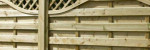

A rattling fence is usually a sign that something is moving when it should not be. The cause is often simple: a loose fixing, a panel sitting badly in its posts, a gravel board chattering in the slot, a gate latch knocking in the wind or a fence post moving at ground level. In many cases, the fence panel itself is not the real problem. The noise is coming from the way the panel, post, rail, bracket or gate hardware is moving in gusts.
The best way to stop fence panels rattling is to find the exact point of movement first. Do not start replacing panels or adding screws randomly. A few minutes of checking can show whether you need new fixings, fresh fence panel clips, a post repair, a gravel board adjustment, new gate furniture or a replacement fence panel.
This guide explains why fence panels rattle, how to find the source of the noise, and how to fix the most common causes using practical fencing materials such as exterior screws, brackets, fence posts, gravel boards, trellis panels, post mix and replacement fence panels.
Why do fence panels rattle?
Fence panels rattle because wind is making part of the fence move. That movement may be tiny, but it can still create a loud tapping, knocking or chattering sound. The noise is usually worse in gusty weather because the fence is being pushed and released repeatedly.
Common causes include:
- Loose panel clips
- Old nails or screws working loose
- Panels moving in concrete post slots
- Timber shrinking and leaving gaps
- Panels sitting out of square
- Loose rails or frame joints
- Gravel boards moving
- Gate latches knocking
- Trellis toppers flexing in wind
- Fence posts rocking in the ground
- Rotten timber around fixing points
The fence may still look normal, but if there is movement at a fixing point, the sound can travel along the run and make it seem as though the whole fence is rattling.
Start by finding the exact source of the noise
Before repairing anything, identify what is actually rattling. Pick a breezy day if possible, or gently push the fence by hand. Listen carefully and watch where the movement starts.
Check these areas first:
- Where each fence panel meets the post
- Fence panel clips and brackets
- Concrete post slots
- Panel rails and frame joints
- Gravel boards
- Trellis toppers
- Gate hinges and latches
- Post bases at ground level
If you can stop the noise by holding one part still with your hand, you have found the problem area. Once the source is clear, the repair is usually straightforward.
Check whether the fence post is moving
Always check the posts before blaming the panels. If a post is loose, every panel attached to it can move and rattle. Tightening the panel may only hide the problem temporarily.
Push each post gently and look for movement at ground level. A sound post should not rock noticeably.
Signs of a loose post include:
- The whole bay moves when pushed
- Cracks around the concrete footing
- Soil moving at the post base
- The post leaning slightly
- Panels rattling on both sides of the post
- The post feeling soft or rotten near the ground
If the post moves, sort the post first. A rattling panel fixed to an unstable post will keep coming loose.
Loose panel fixings
Loose fixings are one of the most common causes of fence rattle. Nails can work loose over time, and screws can back out as timber expands and contracts through wet and dry weather.
This is common on older timber posts, lightweight panels and fences that face regular wind.
Signs of loose fixings include:
- Panel clips moving on the post
- Screws sitting proud
- Nail heads visible or loose
- Brackets twisting
- Panel edges tapping against the post
- Fixings rusted or weakened
How to fix loose panel fixings
Remove tired or rusted fixings and replace them with suitable exterior-grade screws, brackets or fence panel clips. Do not use indoor screws, as they can rust quickly outdoors.
Use fixings that are:
- Suitable for exterior use
- Compatible with treated timber
- Long enough to grip properly
- Not so large that they split the post or panel frame
- Corrosion-resistant
If the timber around the old fixing has gone soft, move the fixing point slightly or replace the damaged timber.
Fence panel edge tapping against the post
A fence panel can rattle if its edge taps against the post in the wind. This often happens when the panel is slightly loose, slightly undersized or not sitting squarely between the posts.
It can also happen after wet weather. Timber swells when damp, then shrinks as it dries. This movement can create small gaps that allow the panel to chatter.
How to fix panel edge rattle
Re-seat the panel so it sits squarely and is supported evenly. Then re-fix it with suitable panel clips or brackets.
Check:
- The panel is level
- The panel is not twisted
- The posts are plumb
- The panel is not wedged too tightly
- The fixing points are secure
- The panel frame is not split or rotten
The panel should be held firmly, but not forced so tightly that it bows or strains the frame.
Panels rattling in concrete fence posts
Concrete fence posts are strong and long-lasting, but panels can rattle inside the slots if there is too much movement. This can happen if the panel is slightly undersized, the post spacing is not accurate or the panel has worn at the edges.
Concrete post rattles often sound like a dull knock or repeated clatter during gusts.
How to fix rattling panels in concrete posts
First, check that the panel is fully seated in the slot and that the gravel board below it is stable. If the post line is straight and the panel is sound, small movement may be reduced with suitable packing or fixing methods designed for fencing.
Check:
- The panel is seated fully in both slots
- The post spacing is correct
- The panel is not damaged at the edges
- The gravel board is not loose
- The posts are not leaning
- The panel is the correct size for the bay
Do not force thick packing into the slot if it puts pressure on the panel or post. The aim is to reduce movement without damaging the system.
Loose gravel boards
Gravel boards can rattle if they are not seated correctly, if brackets have loosened or if they are moving inside concrete post slots. A loose gravel board can sound like a panel rattle because the noise comes from the same fence bay.
This is common where timber gravel boards have warped, concrete gravel boards are not seated properly or brackets have loosened over time.
How to fix a rattling gravel board
Check whether the gravel board is moving by pushing it gently. If it shifts, inspect the brackets, clips or post slots.
To fix the problem:
- Re-seat the gravel board
- Tighten or replace brackets
- Replace rusted fixings
- Check the gravel board is the correct length
- Replace cracked concrete gravel boards
- Replace rotten timber gravel boards
A secure gravel board also helps support the panel and keeps the timber away from damp soil.
Loose rails or frame joints
Some fence panels rattle because the panel frame itself has loosened. The rails, battens or frame joints may move slightly in the wind, creating a creaking, knocking or tapping sound.
This is more likely in older panels that have been through several winters, especially if the timber has dried, warped or split.
Signs include:
- Creaking when the panel is pushed
- Loose frame corners
- Movement between rails and boards
- Gaps opening at joints
- Nails working loose
- Panel feeling flexible rather than rigid
How to fix loose panel joints
If the panel is otherwise sound, add suitable exterior screws to pull the joint tight again. Pre-drill if the timber is at risk of splitting.
If the panel is rotten, badly warped or weak across several joints, replacement is usually the cleaner fix. Reinforcing a failing panel may only delay the problem.
Fence posts rocking in the ground
If a fence post rocks at the base, the whole bay can rattle. This is a more serious problem than a loose bracket because it affects the structure of the fence.
Posts can move because:
- The post hole was too shallow
- The footing has failed
- The post has rotted at ground level
- The concrete has cracked
- The ground is soft or wet
- Heavy panels are catching the wind
- A gate is pulling the post out of alignment
How to fix a rocking fence post
The right repair depends on why the post is moving. If the post is sound but the footing has failed, it may need resetting with suitable post mix or concrete. If the post is rotten, replacement is the better long-term answer.
Possible fixes include:
- Re-setting the post
- Replacing the post
- Using a concrete repair spur where suitable
- Improving drainage around the post
- Replacing heavy damaged panels
- Upgrading to concrete posts on exposed runs
Do not keep tightening panels to a moving post. The post must be stable first.
Rattling gate latch or hinges
Sometimes the fence is not the problem at all. A nearby garden gate can make enough noise to sound like the whole fence is rattling.
Gate noise often comes from:
- Loose latch
- Worn latch keep
- Drop bolt moving in the wind
- Loose hinge screws
- Gate frame twisting
- Gate hitting the stop
- Gate post movement
How to fix a rattling gate
Tighten hinge screws, adjust the latch so it closes firmly and replace worn gate furniture where needed. If the gate is dropping or pulling the post, check the gate post and hinge fixings.
For a secure gate, check:
- Hinges are tight
- The latch lines up properly
- The gate has a stop if needed
- The drop bolt is held firmly
- The gate post is stable
- The frame is not loose or rotten
A small latch adjustment can often stop a surprisingly loud rattle.
Trellis toppers catching the wind
Trellis panels and fence toppers can rattle because they sit higher than the main fence and catch more wind. Even lightweight trellis can create noise if it is fixed only to a thin panel frame or if the brackets are loose.
Trellis movement is more likely where:
- The topper is added to an older panel
- The posts are not tall enough
- Fixings are too small
- Climbing plants have added weight
- The garden is exposed to gusts
- The trellis is cracked or loose
How to fix rattling trellis
Fix trellis into a strong structure, not just a weak panel edge. Use suitable brackets and exterior screws, and make sure the posts can support the extra height and wind load.
Check:
- Trellis is securely fixed
- Posts are strong enough
- Fixings are evenly spaced
- Climbers are not overloading the panel
- The total fence height is acceptable
- The trellis is not attached to a neighbour’s fence without permission
If the trellis is fragile or badly weathered, replacement may be safer than repeated repairs.
Wind funnels and exposed gardens
Some fences rattle because the garden is naturally exposed to stronger gusts. Wind can be channelled between houses, down side passages, across open fields or around corners. This extra force quickly finds any weak point.
Wind funnel areas include:
- Side passages
- Corner plots
- Gardens backing onto open land
- Gaps between buildings
- Exposed coastal gardens
- Long straight fence runs
How to reduce rattling in windy gardens
Focus on stiffness and airflow. Strong posts, secure fixings and well-supported panels make the biggest difference. In exposed areas, a semi-open panel style may perform better than a fully solid panel.
Consider:
- Concrete fence posts
- Strong pressure treated timber posts
- Deeper post holes
- Closeboard panels for strength
- Hit and miss panels for airflow
- Slatted panels for reduced wind pressure
- Exterior-grade fixings
- Avoiding weak trellis toppers
If several bays are tired, replacing the run may be better value than chasing one rattle at a time.
Timber movement and seasonal rattles
Timber expands and contracts with moisture changes. A fence may be quiet in wet weather, then start rattling after a dry spell when the timber shrinks slightly. It may also rattle after winter if fixings have loosened through repeated movement.
Seasonal movement can affect:
- Panel frames
- Feather edge boards
- Slatted panels
- Timber posts
- Timber gravel boards
- Gate frames
- Trellis panels
This is normal, but fixings should still hold the fence securely. If movement creates repeated noise, the panel needs better support.
Rattling feather edge fencing
Feather edge fencing can rattle if boards are loose, rails have weakened or fixings have worked free. Individual boards can tap against each other or against the rail if they are not properly secured.
Check:
- Loose feather edge boards
- Split boards around nails
- Loose rails
- Rotten arris rails or cant rails
- Missing fixings
- Boards touching the ground
Replace failed fixings with suitable exterior nails or screws. If the rail is rotten, refixing the board will not solve the problem for long.
Rattling slatted fence panels
Slatted fence panels can rattle if individual battens are loose or if the panel frame is flexing. Because slatted panels have multiple timber pieces, one loose slat can create a noticeable tapping noise.
Check:
- Loose slats
- Split screw points
- Loose frame joints
- Panel movement in posts
- Wind exposure
- Fixings rusting or backing out
Secure loose slats with suitable exterior screws. Do not overtighten, as this can split the timber.
Rattling lap fence panels
Lap panels can rattle if the overlapping boards loosen or if the panel frame weakens. Lightweight lap panels may flex more in the wind than heavier closeboard panels.
Check:
- Loose overlap boards
- Frame movement
- Panel clips
- Post spacing
- Rot at the panel base
- Movement in concrete slots
If a lap panel is old and flexible across the whole frame, replacement may be more practical than reinforcement.
Rattling fence panels after a storm
Storms often loosen fixings, shift posts and expose weak joints. A fence that starts rattling after strong wind should be checked quickly.
After a storm, inspect:
- Post movement
- Panel clips
- Loose screws
- Cracked panels
- Loose gravel boards
- Gate hinges
- Trellis toppers
- Rails and frame joints
Small movement can become larger damage if left until the next storm.
Should you replace the panel or repair it?
Repair is usually worthwhile if the panel is sound and only the fixings are loose. Replacement is better if the timber is rotten, badly warped or weak across the frame.
Repair the panel if:
- The frame is solid
- The timber is not rotten
- The panel sits square
- Only a bracket or fixing has failed
- One loose joint can be tightened
Replace the panel if:
- The frame is rotten
- The panel is badly warped
- Several joints are loose
- The panel flexes heavily in wind
- The bottom edge has decayed
- The panel is the wrong size for the bay
Trying to save a failed panel can cost more time than fitting a new one.
Should you replace the post or repair it?
Post repair depends on the post condition. If the post is sound but loose, resetting may work. If it is rotten at ground level, a concrete repair spur may help in some cases. If it is rotten throughout, replacement is best.
Repair may be suitable if:
- The upper post is sound
- The fence panels are still usable
- The post has failed mainly at ground level
- A concrete repair spur can be fitted securely
Replacement is better if:
- The post has snapped
- The timber is soft above ground
- The post is badly leaning
- The gate is pulling it over
- Several posts in the run are failing
A rattling fence with rotten posts is not a fixing problem. It is a structural problem.
Best fixings for stopping fence rattles
Use fixings designed for outdoor fencing. The right fixing depends on the post type, panel type and repair location.
Useful fixing products include:
- Fence panel clips
- Exterior wood screws
- Galvanised screws
- Stainless steel screws for exposed areas
- Galvanised nails
- Ring shank nails
- Angle brackets
- Gate hinges
- Gate latches
- Drop bolts
Do not use cheap indoor screws or lightweight brackets outdoors. They can rust, loosen and create the same problem again.
Quick fence rattle diagnosis checklist
Use this checklist to find the source of the noise.
- Push each post and check for movement
- Hold the panel edge against the post and listen
- Check every panel clip or bracket
- Look for loose screws or nails
- Check whether the panel sits square
- Push the gravel board gently
- Check concrete post slots for panel movement
- Inspect rail and frame joints
- Check gate latch, hinges and drop bolt
- Inspect trellis toppers and climbing plant supports
- Look for rotten timber around fixing points
- Check whether wind is funnelled through the area
Work from the ground up. Posts first, then gravel boards, panels, trellis and gates.
Tools and materials you may need
Most rattling fence repairs need only basic tools and fixings.
You may need:
- Drill driver
- Screwdriver bits
- Exterior screws
- Fence panel clips
- Angle brackets
- Hammer
- Galvanised nails
- Spirit level
- Post level
- Post mix or concrete
- Concrete repair spur
- Replacement fence post
- Replacement gravel board
- Replacement fence panel
- Gate latch or hinges
For heavy concrete posts, gravel boards or full panel replacement, plan safe lifting before starting.
How to stop fence panels rattling in timber posts
Timber posts usually use clips, brackets, screws or nails to hold the panel. These can loosen over time.
To stop rattling:
- Check the post is stable
- Remove loose or rusted fixings
- Fit new exterior-grade screws
- Use fence panel clips where suitable
- Make sure the panel is square
- Add brackets only where they improve support
- Replace rotten timber if fixings no longer grip
If the screw will not grip, the timber may be too damaged to hold a repair.
How to stop fence panels rattling in concrete posts
With concrete posts, the panel usually sits in a slot rather than being screwed directly to the post. Rattling often comes from movement inside the slot.
To reduce movement:
- Check the panel is correctly seated
- Check the gravel board is stable
- Make sure the post is plumb
- Check the panel is the correct size
- Replace damaged panels
- Use suitable anti-rattle packing or clips where appropriate
- Do not force panels into misaligned slots
If the concrete post is cracked or leaning, the post may need replacement or resetting.
How to prevent fence rattles coming back
Once repaired, take a few steps to stop the rattle returning.
- Use exterior-grade fixings
- Replace rusted or undersized brackets
- Keep panels properly supported
- Check posts after storms
- Keep timber away from damp soil
- Use gravel boards where needed
- Control heavy climbing plants
- Maintain gates and latches
- Replace rotten timber promptly
- Do not overload weak fence panels with trellis
A quiet fence is usually a fence with minimal movement.
When a rattling fence needs replacing
A rattle is sometimes the first sign that a fence is nearing the end of its life. If several bays are moving, panels are rotten or posts are failing, repair may not be worthwhile.
Consider replacing the fence if:
- Several posts move at ground level
- Multiple panels are loose or rotten
- The fence leans along the run
- Fixings no longer hold
- Gravel boards are rotten or broken
- The fence has repeated storm damage
- The panel style is unsuitable for a windy location
- The fence needs constant repairs
In a windy garden, replacing tired panels with stronger panels and better posts can be more effective than repeated small repairs.
Common mistakes when fixing a rattling fence
Most failed repairs happen because the obvious noise is treated, but the underlying movement is ignored.
Common mistakes include:
- Tightening panels before checking posts
- Using indoor screws outdoors
- Adding too many fixings to rotten timber
- Ignoring loose gravel boards
- Forcing panels into concrete slots
- Leaving gate latches loose
- Adding trellis to weak panels
- Using fixings that are too short
- Not checking wind exposure
- Repairing one bay when the full run is failing
Find the movement first, then choose the repair.
Frequently asked questions
Why does my fence rattle in the wind?
Your fence is rattling because part of it is moving in gusts. The cause may be a loose fixing, moving panel, loose gravel board, gate latch, trellis topper or unstable post.
How do I stop a fence panel rattling against a post?
Re-seat the panel so it sits squarely, then secure it with suitable fence panel clips, brackets or exterior screws. Check the post is stable first.
Why do panels rattle in concrete posts?
Panels can rattle in concrete post slots if they are slightly loose, undersized, worn or not fully seated. Check panel size, post alignment and gravel board position.
Can loose fence posts cause rattling?
Yes. If the post moves, the panel will move with it. A loose post should be reset, repaired with a suitable spur or replaced if rotten.
Can a gate sound like a rattling fence?
Yes. A loose latch, hinge or drop bolt can sound like the fence is rattling. Check nearby gates before repairing panels.
What fixings should I use to stop fence rattles?
Use exterior-grade screws, fence panel clips, brackets or galvanised fixings suitable for outdoor treated timber. Avoid indoor screws.
Should I use foam or wedges to stop panels rattling?
Only use materials suitable for fencing and outdoor conditions. Do not force wedges or packing in a way that stresses the panel or post. The better fix is usually proper support and correct alignment.
Will replacing fence panels stop rattling?
It will help if the panels are loose, rotten or badly warped. It will not solve the problem if the posts, gravel boards or gate hardware are causing the noise.
Why does my fence only rattle after dry weather?
Timber shrinks as it dries, which can open small gaps around fixings or post slots. Those gaps can let panels move in the wind.
When should I replace a rattling fence?
Replace the fence if several posts are loose, multiple panels are rotten, fixings no longer grip or the fence keeps failing after repairs.
Final thoughts
A rattling fence is usually caused by movement at one specific point. The most common causes are loose panel fixings, panels tapping against posts, movement in concrete post slots, loose gravel boards, unstable posts, worn panel joints or a rattling gate latch nearby.
Start by finding the exact source of the noise. Push the posts, hold each panel edge, check clips and brackets, inspect gravel boards and test the gate hardware. Once you know what is moving, the repair is usually simple.
Use proper exterior fixings, re-seat panels squarely, tighten or replace brackets and repair loose gate furniture. If a post is moving, deal with the footing or replace the post before fixing the panel. If several bays are tired, replacing the run with stronger fence panels, secure posts and gravel boards may be the better long-term solution.