





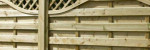

The strongest type of garden fence for UK weather is usually a well-built closeboard or feather edge fence supported by strong posts, set properly into the ground, and protected at the base with gravel boards. For many gardens, the most durable combination is pressure treated closeboard fence panels or feather edge fencing with concrete fence posts and concrete gravel boards. This gives a good balance of strength, privacy, rot resistance and repairability.
However, the strongest fence is not always the same as the best fence for every garden. A solid 6ft closeboard fence may be excellent for privacy, but in a very exposed or windy location, a design that allows some airflow, such as hit and miss fencing or slatted fence panels, may cope better with gusts. In wet gardens, concrete posts and gravel boards may matter more than the panel style. In coastal areas, fixings and corrosion resistance become especially important.
This guide explains what makes a garden fence strong in UK weather, compares the best fence types, and shows how to choose a fence that can cope with wind, rain, frost, wet soil and everyday garden use.
What does “strongest fence” actually mean?
A strong garden fence is not just a heavy panel. Strength comes from the full fencing system. The panels, posts, rails, gravel boards, fixings, post depth and ground conditions all work together.
A strong fence should be able to:
- Resist wind pressure
- Stay upright in wet ground
- Avoid early rot at the base
- Hold panels securely
- Keep gates aligned
- Cope with seasonal timber movement
- Resist everyday knocks and garden wear
- Be repaired section by section if needed
- Maintain privacy and security
If any part of the system is weak, the whole fence can fail. A strong panel fitted to shallow posts is not a strong fence.
The strongest all-round garden fence for UK homes
For most UK gardens, the strongest all-round option is closeboard fencing or feather edge fencing with robust posts and gravel boards.
A strong domestic setup might include:
- Pressure treated closeboard fence panels or feather edge boards
- Concrete fence posts or heavy-duty pressure treated timber posts
- Concrete gravel boards or treated timber gravel boards
- Exterior-grade screws, nails or brackets
- Correct post depth
- Good drainage around the fence line
- Strong gate posts where a gate is included
This type of fence is popular because it is strong, private, familiar, repairable and suited to many British gardens.
Why closeboard fencing is so strong
Closeboard fencing is one of the strongest traditional timber fencing styles. It uses vertical feather edge boards fixed to horizontal rails, creating a dense and robust barrier. It can be built on site or supplied as ready-made closeboard fence panels.
Closeboard fencing works well because:
- The overlapping boards create good privacy
- The structure is stronger than many lightweight lap panels
- Individual boards can often be replaced
- It works with timber or concrete posts
- It can be used with gravel boards
- It suits straight runs and many sloping gardens
- It has a traditional appearance that suits most properties
For a long-lasting boundary, closeboard fencing is usually one of the safest choices.
Closeboard panels versus feather edge fencing
Closeboard panels and feather edge fencing are closely related, but they are not always the same thing. Closeboard fence panels are pre-made panels. Feather edge fencing is often built on site using individual feather edge boards, rails and posts.
Closeboard panels are useful because they are:
- Quick to install
- Available in standard sizes
- Good for replacement fencing
- Compatible with slotted concrete posts
- Strong compared with many basic panels
Feather edge fencing built on site can be useful because it is:
- Flexible on sloping ground
- Easier to adjust to odd lengths
- Strong when built with good rails and posts
- Repairable board by board
- Suited to long continuous runs
If the garden is level and uses standard bays, closeboard panels may be simpler. If the garden slopes or needs a custom run, feather edge fencing may be better.
Are lap fence panels strong?
Lap fence panels, also called overlap panels or waney lap panels, are common and affordable. They can be perfectly suitable for sheltered gardens, but they are not usually the strongest option for harsh weather.
Lap panels are often chosen because they are:
- Budget-friendly
- Widely available
- Easy to replace
- Light enough to handle
- Suitable for many simple garden boundaries
The downside is that lightweight lap panels can flex more in strong wind and may not last as well as heavier closeboard panels in exposed gardens.
Lap panels are best for:
- Sheltered gardens
- Short fence runs
- Budget replacements
- Lower-risk boundaries
- Temporary or lower-cost fencing projects
For exposed sites, a stronger panel style is usually better.
Are hit and miss fence panels stronger in wind?
Hit and miss fencing can be a strong choice for windy gardens because it allows some air to pass through. The boards are usually arranged alternately on each side of the panel or rails, reducing the sail effect compared with a fully solid fence.
Hit and miss panels are useful because they:
- Allow airflow
- Reduce wind pressure
- Look good from both sides
- Offer partial privacy
- Feel less harsh than solid panels
- Can suit exposed gardens
They are not always as private as closeboard panels from every angle, but they can be more forgiving in gusty locations.
If your fence keeps blowing down, the strongest solution may not be a heavier solid panel. It may be a better-supported, more wind-permeable design.
Are slatted fence panels strong?
Slatted fence panels can work well in modern gardens and can help reduce wind pressure because air passes between the slats. Their strength depends on the thickness of the battens, the frame quality, the fixings and the posts.
Slatted fencing is useful for:
- Modern garden screening
- Patio privacy
- Windier gardens where airflow helps
- Garden zoning
- Overlooked seating areas
- Decorative boundary sections
However, not all slatted panels are equally strong. Thin battens, weak frames or poor fixings can rattle or break in exposed conditions.
For stronger slatted fencing, choose:
- Pressure treated timber
- Robust battens
- A strong frame
- Secure exterior fixings
- Suitable posts
- Correct post spacing
Double slatted panels may offer more privacy than single slatted panels, but they may also catch more wind.
Are picket fences strong?
Picket fencing can be durable when built properly, but it is not designed to provide the same strength, privacy or wind resistance as a full-height closeboard fence. It is usually a decorative or boundary-marking fence.
Picket fencing is best for:
- Front gardens
- Low boundaries
- Decorative areas
- Separating garden zones
- Cottage-style gardens
- Keeping small pets away from beds where suitable
Because picket fences are lower and more open, they can cope with wind reasonably well. However, they do not provide full privacy or strong rear garden security.
Are trellis panels strong enough for fencing?
Trellis panels are useful for screening and climbing plants, but they should not usually be treated as the strongest form of fencing. Trellis is more open and lighter than a full fence panel.
Trellis is best used for:
- Supporting climbing plants
- Adding height to a fence where permitted
- Light privacy screening
- Garden dividers
- Decorative panels
- Softening solid fences
Trellis can catch wind once climbing plants grow through it, especially when the plant growth is wet and heavy. It needs strong fixings and suitable posts.
If privacy and strength are the main priorities, use trellis as a topper or screen rather than the main fence structure.
Concrete posts versus wooden posts
Posts are often more important than panels. A fence with strong panels and weak posts will still fail. For UK weather, concrete posts are often the strongest low-maintenance choice because they do not rot at ground level.
Concrete posts are good for:
- Wet gardens
- Exposed fence lines
- Long-term durability
- Heavy panels
- Slotted panel systems
- Concrete gravel boards
- Panel replacement
Wooden posts are good for:
- A natural appearance
- All-timber designs
- Lower material weight
- Decorative fencing
- Budget-conscious installations
- Gardens where concrete would look too harsh
Pressure treated timber posts can perform well, but they must be suitable for ground contact and installed correctly.
Why concrete posts make fences stronger
Concrete posts improve fence durability because they remove one of the most common failure points: timber post rot at ground level. Many fences fail not because the panels are bad, but because the wooden posts soften, lean or snap where they enter the ground.
Concrete posts help because they:
- Do not rot
- Support panels firmly
- Work well with concrete gravel boards
- Make panel replacement easier
- Are suitable for damp ground
- Can handle many standard domestic fence panels
The disadvantages are weight and appearance. Concrete posts are heavy to install and can look more industrial than timber posts.
Are wooden posts strong enough?
Wooden fence posts can be strong enough when they are correctly chosen and installed. The key is to use the right size, treatment and footing.
Wooden posts should be:
- Pressure treated
- Suitable for ground contact
- Long enough for the fence height
- Set deep enough
- Protected from trapped water
- Installed with suitable post mix or concrete
- Kept clear of soil and wet leaves at the base
If a garden is sheltered and well drained, timber posts may be perfectly suitable. If the garden is wet, exposed or prone to post rot, concrete posts may be the stronger option.
Why gravel boards matter
Gravel boards sit below the fence panel and help protect the bottom edge from soil, wet grass and splashback. They do not make the panel stronger in every direction, but they improve the overall durability of the fence system.
Gravel boards help by:
- Keeping timber panels off the ground
- Reducing rot at the panel base
- Closing gaps under the fence
- Improving pet security
- Creating a neater finish
- Protecting panels from strimmer damage
- Helping panels sit more consistently
Concrete gravel boards are the most durable option. Timber gravel boards can look more natural, but they still need treatment and maintenance.
Strongest fence for high winds
The strongest fence for high winds is not always the most solid fence. Solid panels create more wind pressure because they act like sails. In very windy gardens, a semi-open design can be stronger in practice because it allows air to pass through.
Good choices for windy gardens include:
- Hit and miss fence panels
- Slatted fence panels
- Closeboard panels with very strong posts
- Feather edge fencing with robust rails and posts
- Concrete posts
- Lower fence heights where privacy allows
- Metal railings where privacy is not required
If you need maximum privacy, closeboard panels with concrete posts can work well. If wind exposure is severe, hit and miss or slatted panels may reduce the force on the structure.
Strongest fence for wet gardens
In wet gardens, rot resistance matters as much as panel strength. A strong timber panel will not last well if it sits in damp ground or is fixed to posts that rot at the base.
For wet gardens, consider:
- Concrete fence posts
- Concrete gravel boards
- Pressure treated fence panels
- Pressure treated rails and feather edge boards
- Good drainage along the fence line
- Panels kept clear of soil
- Regular removal of wet leaves
Wet gardens are one of the best reasons to upgrade from timber posts to concrete posts.
Strongest fence for coastal gardens
Coastal gardens face wind, rain and salt air. Salt can speed up corrosion in unsuitable fixings, hinges and brackets. Timber and concrete can both work, but the fixings and metalwork need extra care.
For coastal fencing, consider:
- Concrete posts
- Concrete gravel boards
- Pressure treated timber panels
- Stainless steel or suitable corrosion-resistant fixings
- Galvanised or protected gate hardware
- Panel styles that allow airflow
- Regular inspection after storms
In coastal locations, a fence is only as strong as its weakest fixing.
Strongest fence for privacy
For privacy, closeboard fencing is one of the strongest and most practical choices. It creates a solid visual screen and is more robust than many lightweight panel styles.
Good privacy options include:
- Closeboard fence panels
- Feather edge fencing
- Solid timber fence panels
- Double slatted fence panels
- Fence panels with trellis toppers where suitable
For overlooked gardens, a combination of fence panels, trellis and planting can work well. Remember that trellis counts towards the overall fence height and should be installed securely.
Strongest fence for security
Security fencing in a domestic garden should feel solid, well supported and difficult to force open. Fence panels matter, but gates are often the weakest point.
For better garden security, consider:
- Closeboard fence panels
- Strong posts
- Secure side gates
- Heavy-duty gate hinges
- Reliable latches and locks
- No large gaps under panels
- Gravel boards
- Good visibility from the house where appropriate
A strong fence with a weak gate is not a secure boundary. Gate posts, hinges and locks need the same attention as the fence run.
Strongest fence for dogs and pets
For dogs, the strongest fence is one that is tall enough, secure at the base and resistant to pushing or digging. Concrete gravel boards are often useful because they close gaps and protect the bottom of the fence.
Pet-friendly fencing should include:
- Strong fence panels
- Secure posts
- Gravel boards
- No gaps under panels
- Secure garden gates
- Reliable gate latches
- Strong corners and returns
- Regular checks for digging or chewing
Closeboard panels with concrete posts and gravel boards are often a good choice for pet-secure gardens.
Strongest fence for sloping gardens
Sloping gardens need careful planning. Standard fence panels are usually installed in steps, while feather edge fencing built on site can follow the slope more naturally.
Strong options for sloping gardens include:
- Feather edge fencing built on site
- Stepped closeboard panels
- Concrete posts with suitable post lengths
- Gravel boards to manage gaps
- Custom rails and boards where needed
The key is to avoid large gaps under panels and to make sure each post is deep enough, even where the ground level changes.
Strongest fence for a front garden
Front gardens often have different requirements from rear gardens. Height restrictions may apply near roads and pavements, and the fence should suit the street scene.
Strong front garden options include:
- Picket fencing
- Low closeboard fencing where suitable
- Metal railings
- Short decorative panels
- Timber posts or concrete posts depending on appearance
- Secure pedestrian gates
For front gardens, the strongest choice is not always the tallest. It must be safe, legal, neat and suited to the property.
Does fence height affect strength?
Yes. Taller fences catch more wind and place more load on posts. A 6ft solid panel will put more pressure on posts than a 3ft picket fence.
Height affects:
- Wind load
- Post depth requirements
- Post size
- Panel weight
- Fixing strength
- Gate stability
- Planning considerations
If the garden is exposed, think carefully before choosing the tallest solid panels. A slightly lower or more open fence may last better.
Does fence panel weight affect strength?
Panel weight can be both an advantage and a disadvantage. Heavier panels may be more robust, but they also put more load on posts and are harder to handle.
Heavy panels need:
- Stronger posts
- Deeper foundations
- Better fixings
- Safer lifting
- Accurate installation
- Suitable gravel boards where needed
A heavy panel fitted badly may fail sooner than a lighter panel fitted correctly.
Are metal fences stronger than timber fences?
Metal fencing can be very strong, especially for open railings and security boundaries. It handles wind well because air passes through it. However, it does not provide the same privacy as solid timber fencing unless combined with planting or screening.
Metal fencing is good for:
- Front gardens
- Driveways
- Security boundaries
- Open windy locations
- Decorative railings
- Low-maintenance boundary marking
Timber fencing is usually better for:
- Privacy
- Rear garden boundaries
- Traditional garden appearance
- Noise reduction compared with open railings
- Flexible replacement and repair
For most rear gardens, timber panels with strong posts remain the more practical choice.
Are composite fences strong?
Composite fencing can be durable and low maintenance, but strength depends on the specific system. Some composite fence systems are robust, while others rely heavily on correct installation and compatible posts.
Composite fencing may suit:
- Modern gardens
- Low-maintenance boundaries
- Homeowners who do not want to stain timber
- Consistent colour schemes
- Damp areas where rot resistance is important
Potential issues include expansion, contraction, panel weight and system-specific replacement parts. Always follow the manufacturer’s installation guidance.
Are vinyl fences strong?
Vinyl or PVC fencing can resist rot and moisture, but it is not automatically the strongest option for UK weather. Quality varies, and some systems may be vulnerable to cracking or impact damage.
Vinyl fencing may be useful where low maintenance is the priority, but for many UK gardens, pressure treated timber with concrete posts is more familiar, easier to repair and better suited to standard fence panel replacement.
The strongest fence is usually a system, not one product
The strongest fence is built as a complete system. Choosing a strong panel is only the start.
A strong fencing system includes:
- Suitable fence panels
- Posts matched to the panel height and weight
- Correct post depth
- Good post mix or concrete use
- Gravel boards where needed
- Exterior-grade fixings
- Strong gate posts
- Good drainage
- Proper alignment
- Ongoing maintenance
If a fence fails, the cause is often the post, footing or fixing rather than the panel itself.
Best post depth for a strong fence
Post depth depends on fence height, ground conditions, exposure and whether the post supports a gate. Taller, heavier and more exposed fences need more support.
When planning post holes, consider:
- Finished fence height
- Panel weight
- Wind exposure
- Ground type
- Whether the soil is wet or loose
- Whether gravel boards are used
- Whether the post supports a gate
- Whether the fence is on a slope
Do not set posts too shallow. Shallow posts are one of the most common reasons fences lean, rattle or blow down.
Best fixings for a strong fence
Fixings are small but important. Weak screws, rusty nails or poor brackets can let panels move even when the posts and panels are sound.
Use fixings such as:
- Exterior wood screws
- Galvanised screws
- Stainless steel screws in exposed or coastal areas
- Ring shank nails where suitable
- Fence panel clips
- Strong angle brackets
- Heavy-duty gate hinges
- Reliable latches and locks
Do not use indoor screws for outdoor fencing. They can corrode and fail.
Best fence for stormy weather
For stormy weather, the best fence is one that combines strong support with sensible wind management.
Good storm-resistant choices include:
- Closeboard panels with concrete posts
- Feather edge fencing with strong rails and posts
- Hit and miss panels in exposed areas
- Slatted panels where airflow is useful
- Concrete gravel boards in wet gardens
- Well-set gate posts
- Exterior-grade fixings
After storms, inspect posts, panels, gravel boards, trellis and gates. Small movement should be fixed before the next period of strong wind.
Common mistakes that make fences weaker
Many fencing failures are caused by installation mistakes rather than bad materials.
Common mistakes include:
- Using posts that are too short
- Setting posts too shallow
- Using weak timber posts in wet ground
- Letting panels touch soil
- Not using gravel boards in damp gardens
- Using unsuitable fixings
- Adding trellis to weak panels
- Ignoring wind exposure
- Installing heavy gates on weak posts
- Using too much water in post mix
- Not bracing posts while they set
- Leaving cut timber ends untreated
Good materials can still fail if the installation is poor.
How to make an existing fence stronger
If your current fence is still mostly sound, you may be able to strengthen it rather than replace it.
Possible improvements include:
- Replacing loose fixings
- Adding proper fence panel clips
- Repairing or replacing weak posts
- Fitting concrete repair spurs to suitable timber posts
- Adding gravel boards where panels touch soil
- Replacing damaged panels
- Removing heavy uncontrolled climbers
- Checking gate posts and hinges
- Cutting back planting that traps moisture
- Improving drainage along the fence line
If several posts are rotten or the fence leans along the run, replacement may be more sensible than repair.
When should you replace a fence rather than repair it?
Repairing one weak point can be worthwhile. Repairing a whole failing fence one section at a time can become expensive and frustrating.
Consider replacement if:
- Several posts are loose or rotten
- Panels are warped or broken
- The fence leans along the run
- Rails are rotten
- Fixings no longer grip
- The fence has repeated storm damage
- The current panel style is unsuitable for the site
- You need better privacy or security
- Gates no longer hang correctly
A full replacement allows you to improve the system with stronger posts, better panels, gravel boards and more suitable fixings.
Best strong fence combinations
The strongest fence for your garden depends on the conditions.
- Best all-round option: closeboard panels with concrete posts and concrete gravel boards
- Best for privacy: closeboard or feather edge fencing with strong posts
- Best for windy gardens: hit and miss panels or slatted panels with robust posts
- Best for wet gardens: pressure treated panels with concrete posts and concrete gravel boards
- Best for dogs: closeboard panels, gravel boards and secure gates
- Best for slopes: feather edge fencing built on site or stepped closeboard panels
- Best for front gardens: picket fencing, low decorative panels or metal railings where appropriate
- Best for modern gardens: slatted fence panels with strong posts and quality fixings
For most rear garden boundaries, closeboard fencing remains the strongest practical choice.
Buying checklist for the strongest garden fence
Before buying, check:
- Is the garden exposed to wind?
- Is the ground wet or poorly drained?
- Do you need full privacy?
- Do you need pet security?
- Are gates included?
- Will concrete posts look acceptable?
- Are gravel boards needed?
- Is the fence height within permitted limits?
- Are the posts long enough?
- Are the panels pressure treated?
- Are the fixings suitable for outdoor use?
- Will the fence be easy to repair later?
Choose the fence as a complete system, not as separate parts chosen in isolation.
Installation checklist for a strong fence
During installation, check:
- Fence line is marked accurately
- Post holes are deep enough
- Posts are plumb
- Posts are braced while setting
- Post mix or concrete is used correctly
- Panels are not forced between misaligned posts
- Gravel boards are seated properly
- Panels are level and supported
- Fixings are corrosion-resistant
- Cut timber ends are treated
- Gate posts are strong enough
- Panels are kept away from damp soil
A careful installation is the main difference between a fence that lasts and a fence that fails early.
Maintenance checklist for keeping a fence strong
Even the strongest fence needs occasional maintenance.
- Check posts after storms
- Tighten loose fixings
- Replace damaged panels promptly
- Clear wet leaves from the base
- Keep soil below timber panel level
- Cut back heavy climbers
- Check gate hinges and latches
- Treat exposed cut timber
- Repaint or stain timber when needed
- Inspect gravel boards for movement or damage
Small maintenance jobs help prevent major repairs later.
Frequently asked questions
What is the strongest type of garden fence?
For most UK gardens, closeboard or feather edge fencing with strong posts and gravel boards is the strongest practical choice. Concrete posts and concrete gravel boards make the system more durable in wet or exposed conditions.
What is the strongest fence panel?
Closeboard fence panels are among the strongest common timber fence panels. They are usually stronger than lightweight lap panels and provide good privacy.
Are concrete posts better than wooden posts?
Concrete posts are better for rot resistance and long-term durability in wet ground. Wooden posts look more natural and are easier to handle but must be properly treated and installed.
What fence is best for high winds?
Hit and miss fencing, slatted panels, metal railings and lower fences can perform well because they allow airflow. If full privacy is needed, closeboard panels with very strong posts are a common option.
Are gravel boards necessary?
They are not always essential, but they are strongly recommended in many gardens. Gravel boards protect timber panels from damp soil and help create a stronger, neater fence base.
Are lap panels strong enough?
Lap panels can be suitable for sheltered gardens and budget fencing, but they are usually not the strongest choice for exposed or storm-prone sites.
Is feather edge fencing stronger than fence panels?
Feather edge fencing built on site can be very strong, especially on slopes or custom runs. Closeboard panels are convenient and strong, but built-on-site feather edge fencing can be more adaptable.
Does a taller fence need stronger posts?
Yes. Taller fences catch more wind and place more load on the posts. They need suitable post length, depth and strength.
What is the best fence for a wet garden?
Pressure treated panels with concrete posts and concrete gravel boards are a strong choice for wet gardens because they reduce ground-level rot.
How can I make my existing fence stronger?
Replace loose fixings, repair weak posts, add concrete repair spurs where suitable, install gravel boards, replace damaged panels and remove heavy growth that is pulling on the fence.
Final thoughts
The strongest type of garden fence for UK weather is usually not one single product. It is a complete fencing system. For most homes, pressure treated closeboard panels or feather edge fencing with concrete posts, gravel boards and proper exterior fixings gives the best balance of strength, privacy and durability.
In windy gardens, consider airflow as well as strength. Hit and miss fencing or slatted panels can reduce wind pressure. In wet gardens, concrete posts and concrete gravel boards can make a major difference. In coastal areas, corrosion-resistant fixings and strong gate hardware matter as much as the panel choice.
Choose the fence based on the conditions in your garden. A strong panel, strong posts, correct post depth, suitable gravel boards and good installation will always outperform a heavy panel installed badly. Build the fence as a system, maintain it after storms, and it will stand a much better chance against UK weather.