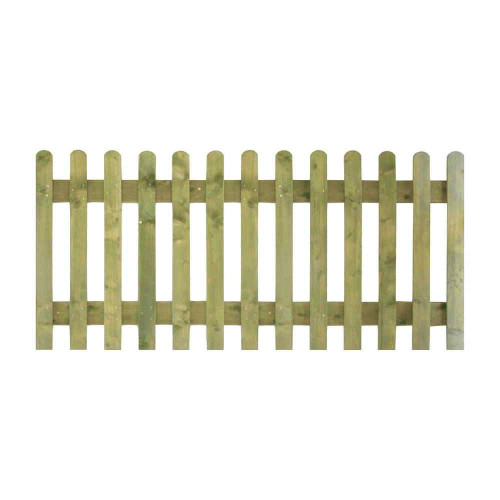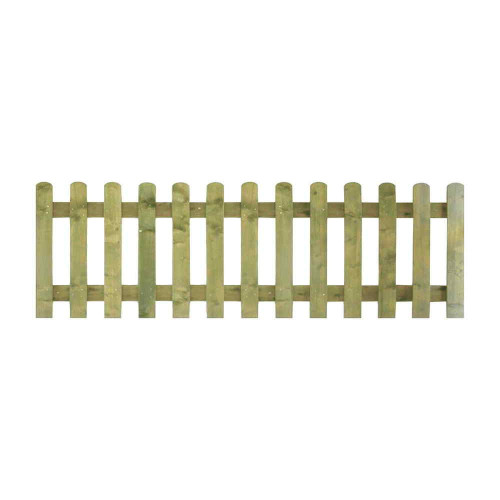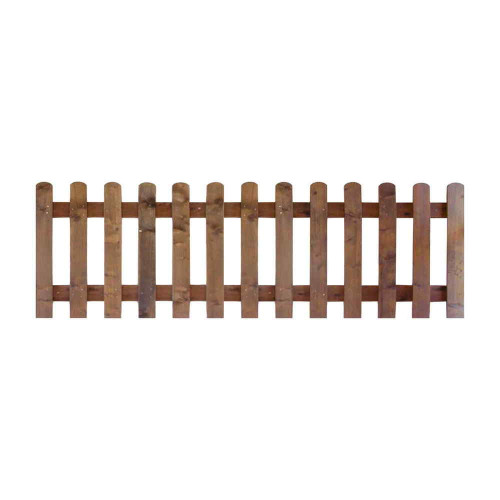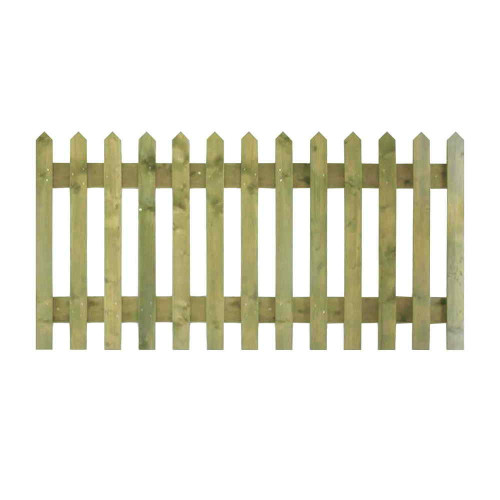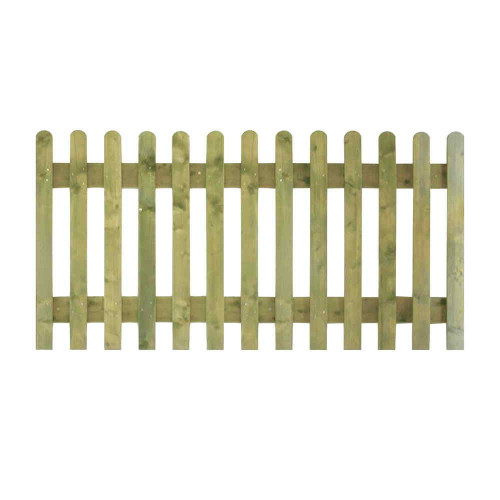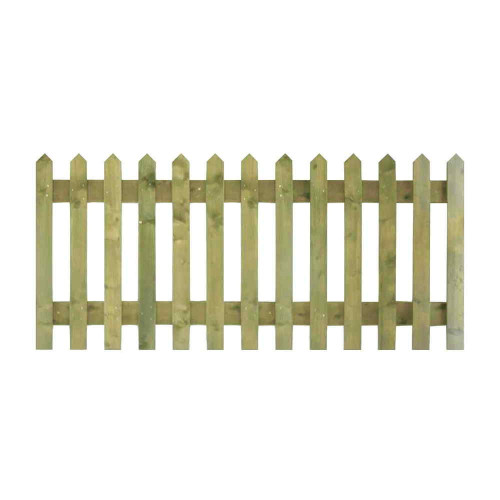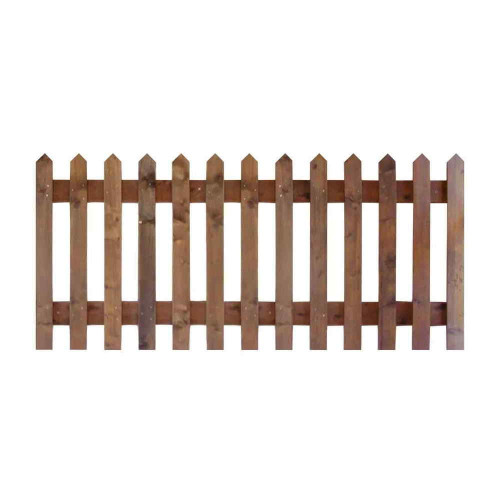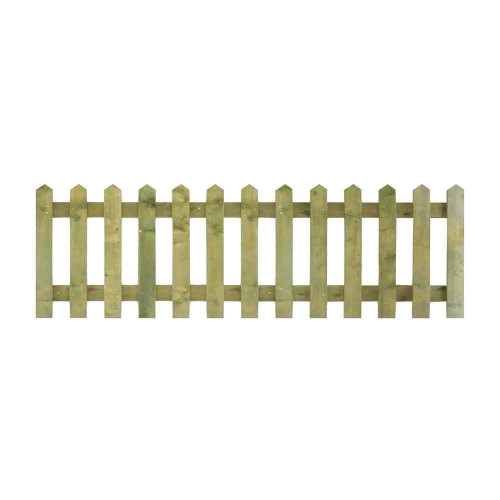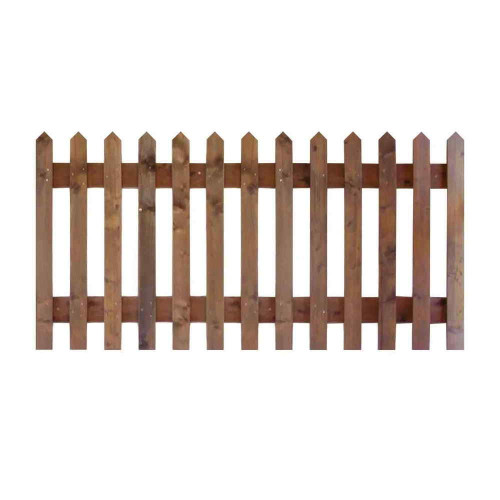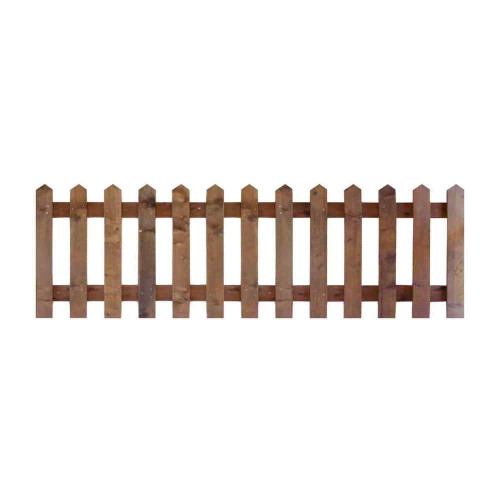



Quick answer: Choose Picket Fence Panels when you want the quickest and simplest way to create a regular low boundary. The pales are already spaced and fixed to supporting rails, so installation mainly involves setting posts and fitting complete panels. Choose individual Picket Pales when you need custom widths, unusual spacing, a fence that follows a difficult slope or repairs to an existing picket fence. Panels usually save installation time, while individual pales provide much greater control over the finished fence.
Picket fencing can be built in two quite different ways.
You can install complete Picket Fence Panels between posts, or build the fence on site from individual Picket Pales and horizontal rails.
Both approaches can create the same familiar open timber boundary, but they suit different gardens.
If the boundary is straight, the ground is reasonably level and standard panel sizes work, complete panels are usually the simpler option. If the garden contains awkward widths, significant slopes or an existing fence that only needs partial repair, individual pales can be much more flexible.
What Is the Difference Between Picket Fence Panels and Picket Pales?
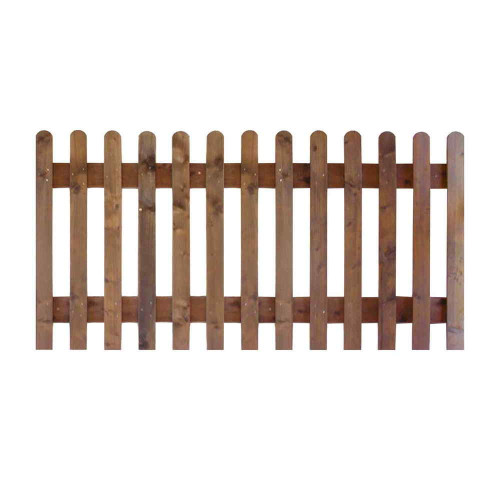
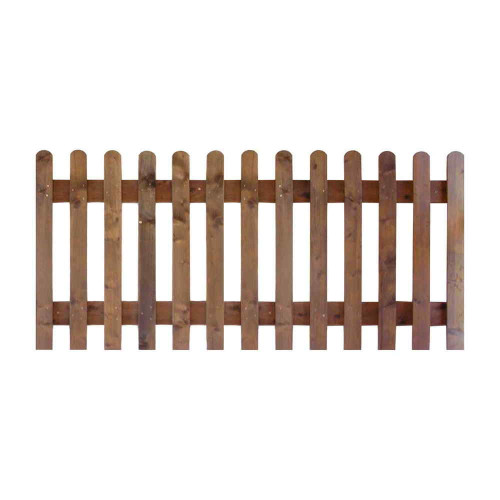
Picket Fence Panels are complete pre-assembled sections.
The vertical pales have already been:
- Positioned
- Spaced
- Aligned
- Fixed to horizontal supporting rails
You install the complete panel between suitable posts.
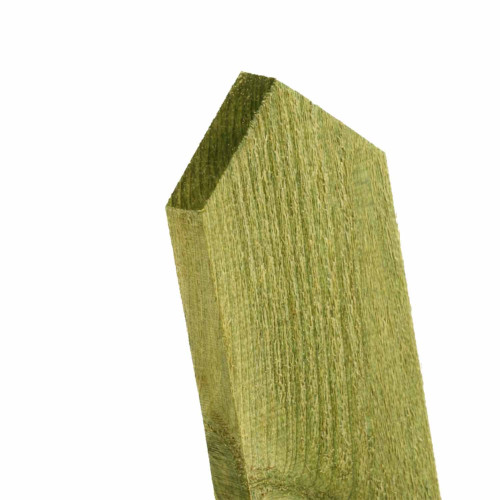
Individual Picket Pales are separate vertical timber boards.
To create a complete fence from them, you also need to provide the supporting rails and install every pale individually.
Which Is Easier to Install?
For a straightforward boundary, Picket Fence Panels are usually easier.
Much of the repetitive assembly work has already been completed.
Instead of measuring and fixing every individual pale, you mainly need to:
- Set out the fence line.
- Install suitable posts.
- Position the complete panel.
- Level it.
- Secure the supporting rails or frame to the posts.
This can make a considerable difference across a longer fence run.
When Are Individual Picket Pales Better?
Individual pales become more useful whenever the fence needs to depart from standard panel geometry.
They are particularly useful for:
- Custom-width fence bays
- Sloping ground
- Curved or irregular layouts
- Replacing individual damaged pales
- Matching an existing fence
- Choosing your own pale spacing
- Building around awkward obstacles
Instead of adapting a completed rectangular panel, you build the fence to suit the site.
Picket Fence Panels vs Picket Pales at a Glance
| Consideration | Picket Fence Panels | Individual Picket Pales |
|---|---|---|
| Installation speed | Faster | More assembly required |
| Spacing | Pre-set | Fully customisable |
| Standard straight boundary | Very convenient | Suitable but slower |
| Custom-width bay | May need modification | Very flexible |
| Steep slope | Normally stepped | More adaptable |
| Local repairs | Complete panel may be replaced | Individual pales can be replaced |
| Consistency | Factory-set spacing | Depends on setting out |
What Sizes Are Picket Fence Panels Available In?
The current East Coast Fencing Picket Fence Panels are nominally 1.83m wide.
Current panel heights include:
- 2ft, approximately 600mm
- 3ft, approximately 900mm
- 4ft, approximately 1200mm
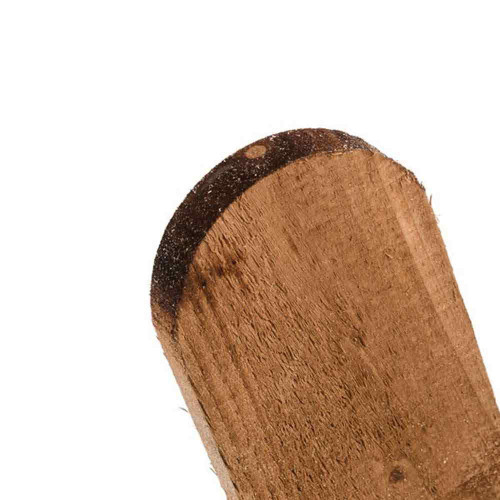
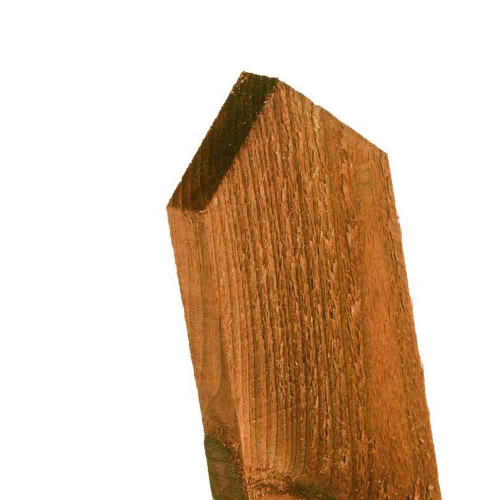
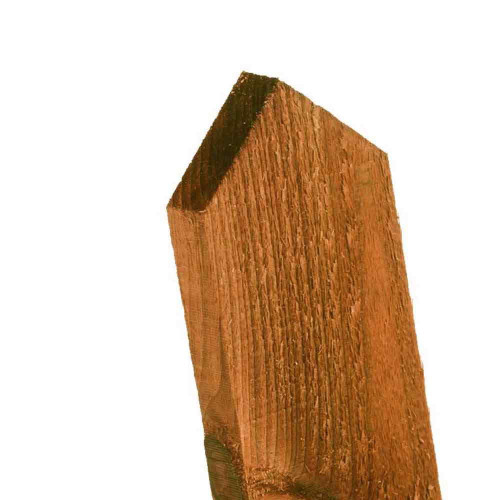
Both Round Top and Point Top versions are available.
The current range is pressure treated and includes brown and green/natural finishes.
What Sizes Are Individual Picket Pales Available In?
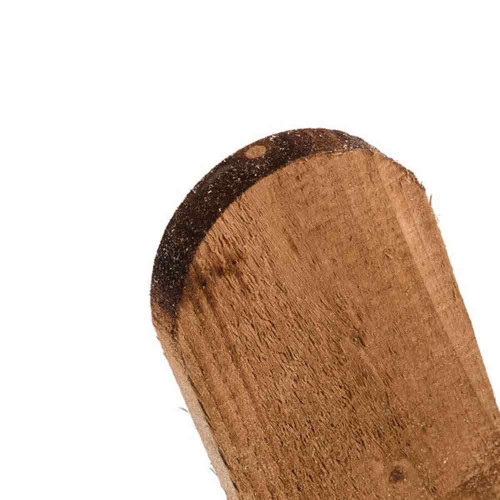
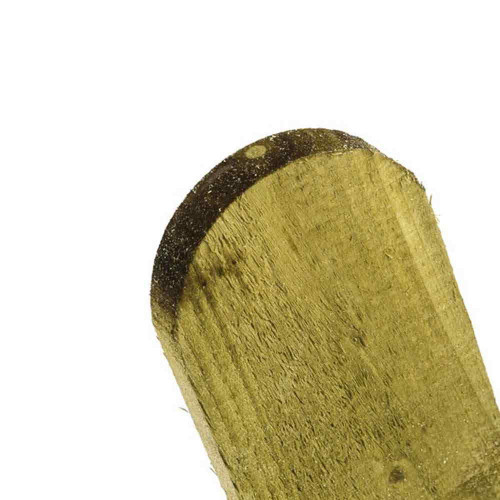
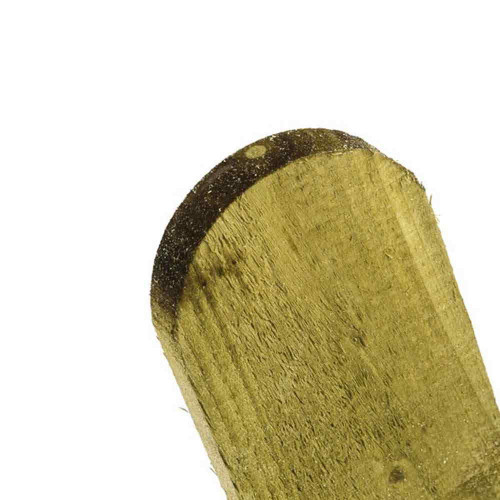
The current individual Picket Pale range includes nominal 75 x 19mm pales in:
- 0.9m lengths
- 1.2m lengths
Both Round Top and Point Top profiles are available, with brown and green/natural pressure-treated finishes across the range.
These individual components are particularly suited to building approximately 3ft and 4ft picket fencing or creating custom sections around a wider picket project.
Why Complete Panels Are Usually Faster
Think about a 10-metre fence.
With complete panels, the repeated vertical pales have already been assembled into approximately 1.83m-wide sections.
With individual pales, every board needs to be:
- Positioned
- Checked for vertical alignment
- Spaced consistently
- Fixed to the rails
The difference becomes more noticeable as the fence gets longer.
Does Faster Installation Mean Panels Are Always Better?
No.
Pre-assembly saves time only when the completed panel actually suits the space.
If every panel needs extensive modification because the boundary is:
- Steep
- Curved
- Irregular
- Split into unusual bay widths
the apparent convenience can disappear.
That is where building from individual pales becomes more attractive.
Which Option Is Better for a Straight Front Garden?
Complete Picket Fence Panels are normally the obvious choice.
A typical front boundary may consist of:
- Several regular panel bays
- A matching gate
- Timber posts
If the dimensions work cleanly, there is little benefit in assembling every pale individually unless you specifically want custom spacing or another bespoke detail.
Which Option Is Better Beside a Driveway?
Either can work.
Complete panels are convenient along the main straight part of the driveway.
Individual pales become useful near:
- The entrance
- An unusual end section
- A wall
- A gate opening
where the available space may not correspond neatly with one complete panel width.
Which Option Is Better Around a Path?
Complete panels work well alongside long straight paths.
Individual pales provide more flexibility where a path:
- Changes direction
- Curves
- Meets several gates
- Passes through irregular planting
The more complicated the layout becomes, the more useful site-built fencing can be.
Which Is Better for a Cottage-Style Garden?
Both can create an appropriate traditional appearance.
The choice is more about geometry than garden style.
Complete Round Top Picket Fence Panels provide a neat repeated pattern that works naturally with informal planting and cottage-style front gardens.
Individual Round Top Picket Pales can create the same character while providing greater control over:
- Spacing
- Bay width
- Ground level changes
Which Option Is Better on Sloping Ground?
This is one of the clearest reasons to consider individual pales.
Complete Picket Fence Panels are rigid rectangular sections.
On a slope, they are normally installed in steps.
Each complete panel remains level, while successive bays begin higher or lower.
What Does Stepped Picket Fencing Look Like?
The top of each complete panel remains horizontal.
As the ground rises, the next panel is installed higher.
This creates a staircase effect along the fence line.
On a gentle gradient, the individual steps may be small.
On a steep hill, they can become much more noticeable.
Why Are Individual Pales More Flexible on a Slope?
A site-built picket fence does not depend on one rigid rectangular panel.
The horizontal rails can be positioned to suit the boundary and the individual pales can then be installed one at a time.
This gives you greater control over:
- The top line
- Ground clearance
- Pale position
- Changes in gradient
It can produce a smoother result where standard stepped panels would create large jumps.
Do Individual Pales Have to Follow the Slope?
No.
They simply provide more options.
You might still construct the fence in level sections if that suits the garden.
The difference is that you are not constrained by the dimensions of a complete factory-assembled panel.
Which Option Is Better for Uneven Ground?
Individual pales generally offer greater flexibility.
Uneven ground is different from one consistent slope.
The fence line might:
- Rise
- Dip
- Flatten
- Rise again
Rigid panels can still work, but you may end up with several awkward steps.
A site-built picket fence can respond more gradually.
What About Small Bumps and Dips?
You do not necessarily need custom fencing just because the lawn is not perfectly flat.
Minor ground variation can often be accommodated by setting complete panels at a consistent height and leaving sensible clearance underneath.
The individual-pale approach becomes more valuable when the variation is large enough to make complete panels look awkward.
Which Option Is Better for a Custom-Width Boundary?
Individual Picket Pales.
This is one of their strongest advantages.
A complete panel has a predetermined width.
If the final fence bay is much narrower than a standard panel, you either need to modify a completed panel or build that section separately.
With individual pales, the width is created on site.
Why Are Final Fence Bays Often Awkward?
A garden boundary rarely divides perfectly into standard panel widths.
For example, after allowing for:
- Posts
- A gate
- Corners
- Walls
you may end up with one final bay that is considerably narrower than the others.
Planning that bay before setting the posts is always preferable.
Can You Cut a Complete Picket Fence Panel Narrower?
Yes, but it requires more thought than simply cutting one board.
A panel contains:
- Horizontal supporting rails
- Several vertical pales
- Pre-set spacing
If you shorten the panel significantly, you may need to:
- Cut the rails
- Remove one or more pales
- Re-establish the end spacing
- Secure the shortened section properly
A site-built end bay can often look cleaner.
Can You Combine Complete Panels and Individual Pales?
Yes, and this is often the most practical answer.
You do not have to choose one system for the entire fence.
A sensible project might use:
- Complete Picket Fence Panels for the regular bays
- Individual Picket Pales for one narrow final section
- A matching Picket Gate at the entrance
This combines installation speed with custom flexibility.
Can Individual Pales Help Around a Garden Gate?
Yes.
Gate openings frequently leave small sections of fencing on either side that do not correspond neatly with complete panel widths.
Individual pales can be useful for constructing:
- A narrow infill section
- A short return
- A custom section between the gate and a wall
The gate itself still needs suitable Gate Posts and appropriate Garden Gate Furniture.
Which Option Gives More Control Over Pale Spacing?
Individual pales.
With complete panels, the spacing has already been determined during manufacture.
With individual pales, you choose the gap.
This can be useful where:
- You are matching an existing fence
- You want a particular visual rhythm
- You need slightly closer or wider spacing
Consistent spacing remains essential if you want the fence to look professionally finished.
How Do You Keep Individual Pale Spacing Consistent?
Use a spacer rather than measuring every gap independently.
A simple timber spacer cut to the required width can be positioned between each pale as you work.
The installation sequence becomes:
- Fix the first pale vertically.
- Position the spacer.
- Place the next pale against it.
- Check the pale is vertical.
- Fix it to the rails.
- Repeat across the fence.
This reduces cumulative measuring errors.
Why Does Pale Spacing Matter So Much?
The repeated vertical pattern is the main visual feature of picket fencing.
If one gap is noticeably different, the eye tends to find it quickly.
Irregular spacing can also make:
- Gate sections
- End bays
- Repairs
look obviously different from the original fence.
Which Option Gives the Neatest Spacing?
Complete panels provide the simplest route to consistent spacing because the pales have already been positioned during manufacture.
Individual pales can look equally neat, but the installer is responsible for maintaining the pattern.
This is one reason pre-assembled panels appeal to DIY installers.
Can Individual Pales Match Existing Picket Fence Panels?
Potentially.
Check:
- Pale width
- Pale thickness
- Top profile
- Height
- Spacing
- Treatment colour
The current East Coast Fencing individual pales are nominally 75 x 19mm and available in Round Top and Point Top versions.
That makes them useful for repairs and custom work, but you should still compare them with the actual existing fence before assuming an exact match.
Are Individual Picket Pales Better for Repairs?
Usually, yes, where only one or two boards are damaged.
If a complete panel has one broken pale but the supporting rails remain sound, local repair may be possible.
Replacing one matching pale can avoid replacing an otherwise serviceable panel.
When Should You Replace the Whole Panel Instead?
A complete replacement may be more sensible if:
- Several pales are damaged
- The supporting rails are broken
- The panel is badly distorted
- The whole panel has become loose
- The surrounding construction has significantly deteriorated
Do not spend time replacing several decorative pales if the structural rails carrying them are already failing.
Which Is Easier to Repair in Future?
They offer different types of repairability.
With complete panels, you can potentially replace one whole damaged bay without rebuilding the surrounding fence.
With site-built picket fencing, you can potentially replace:
- One pale
- Several pales
- A rail
individually.
The component-built approach therefore offers more granular repair options.
Which Option Is Better for a Long Straight Boundary?
Picket Fence Panels usually make more sense.
If you are installing several identical bays across straight, level ground, there is little advantage in repeatedly recreating the same pre-assembled panel on site.
Complete panels provide:
- Consistent spacing
- Consistent rail positions
- Faster installation
This is exactly the type of project they are designed for.
Which Is Better for a Short Decorative Section?
It depends on the width.
If the space happens to suit a complete panel, the panel is convenient.
If the decorative section is:
- Only a metre wide
- Positioned between a wall and gate
- An unusual shape
individual pales may produce a cleaner custom result.
Which Is Better for Garden Zoning?
Both.
Picket fencing is useful for dividing:
- Lawns
- Vegetable gardens
- Paths
- Play areas
- Planted sections
Complete panels are particularly convenient when those divisions are straight.
Individual pales are better when the shape of the garden division is more bespoke.
Which Is Better Around a Vegetable Garden?
Complete panels provide a quick way to create a neat perimeter.
The open design allows considerably more light through than solid fencing.
Individual pales become more useful where:
- The vegetable plot has unusual dimensions
- Raised beds create short custom sections
- Several narrow gates are involved
Neither standard option should automatically be treated as guaranteed protection against every animal.
Are Picket Fence Panels Better for DIY Projects?
For many DIY installers, yes.
The pre-assembled construction removes the need to establish identical pale spacing across every bay.
The main challenges become:
- Post spacing
- Post alignment
- Panel level
- Gate installation
There are fewer individual components to position.
Are Individual Pales Difficult to Install?
Not necessarily, but they require more repetitive setting out.
You need to build the support structure first and then maintain:
- Consistent spacing
- Vertical alignment
- A consistent top line
- Secure fixings
The process is straightforward, but mistakes can accumulate if each pale is positioned independently without spacers and reference lines.
What Structure Do Individual Picket Pales Need?
Picket pales are not a complete fence on their own.
They need suitable horizontal rails supported between appropriately positioned timber posts.
The rails provide the structure that:
- Supports the pales
- Keeps the fence aligned
- Transfers loads into the posts
The number and position of rails should suit the intended fence height and construction.
Why Shouldn't Pales Be Fixed Directly to Nothing but Each Other?
Individual pales are vertical boards, not the horizontal structural members of the fence.
Without suitable rails, there is no continuous framework transferring the fence load between the posts.
Think of the pales as the visible boundary and the rails as the structure carrying them.
What Posts Should Be Used?
Timber posts are the natural choice for both complete Picket Fence Panels and site-built picket fencing.
They provide straightforward fixing points and maintain an all-timber appearance.
Post size and installation should suit:
- Fence height
- Ground conditions
- Wind exposure
- Whether the post also supports a gate
Can Existing Timber Posts Be Reused?
Yes, where they remain suitable.
Check for:
- Movement at ground level
- Significant decay
- Leaning
- Damaged fixing areas
Existing posts can be particularly useful when repairing or rebuilding a section from individual Picket Pales.
Do Picket Fence Panels Need Gravel Boards?
Not automatically.
Picket fencing is normally low and open, and a large solid gravel board can substantially change its appearance.
The more important principle is keeping the lower timber away from persistent contact with damp soil and trapped vegetation.
A gravel board may still be useful where:
- Soil sits high against the boundary
- The ground is particularly damp
- A firm lower edge is required
Does Site-Built Picket Fencing Need a Gravel Board?
The same principle applies.
Building from individual pales does not mean the bottom of the timber should be buried in wet ground.
Plan the rail and pale height so the fence maintains appropriate clearance while still creating the boundary you need.
Which Option Is Better for Keeping a Consistent Top Line?
Complete panels make this relatively easy.
Level each panel carefully and the pale tops arrive already aligned within that panel.
With individual pales, you need a reference line.
A taut string line can help keep all pale tops at the intended level across the complete run.
What Happens If Individual Pales Vary Slightly?
Small dimensional and visual variation is normal in natural timber.
However, the installation should still aim to create an even overall line.
Do not continually measure each pale from uneven ground.
Use a consistent reference so small variations in the lawn do not translate into an irregular fence top.
Round Top or Point Top Works With Either Method
You do not need to choose complete panels just to access one top style.
The current range includes both Round Top and Point Top profiles in:
- Complete Picket Fence Panels
- Individual Picket Pales
This means the panels-versus-pales decision can be based primarily on the layout rather than the decorative profile.
Can Round Top Panels Be Combined With Individual Round Top Pales?
Yes, potentially.
This is useful where most of the boundary uses complete panels but one custom section needs site-built fencing.
Check the actual pale dimensions, spacing and finished height so the transition looks deliberate.
Can Point Top Panels Be Combined With Individual Point Top Pales?
Yes, subject to the same checks.
The top profile can remain consistent even when the construction method changes.
This can make an awkward final bay appear like part of the original fence rather than a later addition.
Should You Mix Round Top and Point Top Picket Fencing?
You can, but it is normally cleaner to keep one profile across a continuous visible run.
A change can make sense at a clear transition such as:
- A gate
- A corner
- A separate garden zone
Randomly alternating profiles usually makes the boundary look less consistent.
Which Option Gives More Control Over Fence Height?
Individual pales give greater control because you are building the fence from components.
However, the current complete Picket Fence Panel range already provides common low-boundary heights of approximately:
- 600mm
- 900mm
- 1200mm
If one of those standard heights suits the project, a complete panel avoids unnecessary custom work.
What If You Want a 2ft Custom-Built Picket Fence?
The current individual Picket Pales are supplied in longer 0.9m and 1.2m sizes, so creating a substantially lower site-built fence would involve additional cutting.
If the garden simply needs a standard 2ft boundary, complete 2ft Picket Fence Panels may therefore be the easier option.
Which Option Uses Less Timber?
This cannot be answered simply from whether the fence is panelled or site-built.
Material use depends on:
- Pale spacing
- Rail sizes
- Post spacing
- Fence height
- Waste from cutting
A custom-built fence with unnecessarily close spacing could use more pales than required, while modifying several complete panels could create offcuts and waste.
Which Option Is Cheaper?
Do not compare only the apparent cost of one pale with one complete panel.
For a site-built fence you also need to account for:
- Rails
- Posts
- Fixings
- Additional installation time
- Potential cutting waste
A complete panel includes a substantial amount of assembly work already completed.
The better-value option depends on the project.
When Complete Panels Often Provide Better Value
Picket Fence Panels usually make strong practical sense where:
- The boundary is long and straight
- Standard heights work
- Standard panel widths fit efficiently
- Installation time matters
- You want consistent factory-set spacing
When Individual Pales Often Provide Better Value
Individual Picket Pales can make more sense where:
- You are repairing only a few damaged pales
- The fence contains several non-standard widths
- The slope would require extensive panel modification
- You already have usable posts and rails
- You specifically need custom spacing
Do Both Options Need Exterior Fixings?
Yes.
Whatever construction method you choose, use suitable fixings intended for outdoor use and compatible with pressure-treated timber.
For complete panels, fix the structural supporting rails appropriately to the posts.
For site-built fencing, each pale needs secure fixing to the horizontal rails.
Which Option Is Easier to Paint or Stain?
Neither completely avoids the repetitive nature of coating picket fencing.
The gaps between pales create many:
- Faces
- Edges
- Recessed areas
Complete panels can be coated as assembled sections.
With individual pales, you may have greater access to the components before final assembly, although the preferred method depends on the coating and project.
Do Either Need Painting Immediately?
No.
The current Picket Fence Panels and individual Picket Pales are pressure treated for outdoor use.
They can be left in their treated timber appearance and allowed to weather naturally.
A compatible exterior coating can be used later if you want to change or refresh the colour.
Brown or Green/Natural?
Both complete panels and individual pales are available in brown and green/natural pressure-treated options within the current range.
Brown provides a warmer starting appearance.
Green/natural blends readily with:
- Lawns
- Hedges
- Planted borders
Both will naturally change colour as they weather outdoors.
Which Option Is Better for Future Changes?
Individual-pale construction offers more flexibility if you expect to modify the boundary later.
You can potentially:
- Replace individual boards
- Alter a short section
- Rebuild around a new gate
Complete panels are more modular.
If one whole bay needs changing, replacing the panel can be quick where the posts remain suitable.
What If You Add a Gate Later?
This is where site-built components can become useful.
Removing one complete panel to create a gate may leave narrow spaces on either side.
Individual rails and pales can be used to rebuild those short sections without requiring another full-width panel.
Which System Is Better in Wind?
The broad open character of picket fencing allows much more airflow than solid privacy panels regardless of whether it is panel-built or site-built.
The difference between complete panels and individual pales is usually less important than:
- Overall fence height
- Pale spacing
- Post specification
- Post installation
A poorly supported custom fence is not automatically stronger than a correctly installed panel fence.
Which Is Better for Pets?
Neither option is automatically suitable for every animal.
For dogs, check:
- Fence height
- Pale spacing
- Ground clearance
- Gate gaps
- Whether the dog jumps or digs
Individual pales allow you to choose the spacing, which can be useful when smaller gaps are required.
Complete panels are more convenient where their existing spacing already suits the intended use.
Do Not Assume Picket Fencing Will Contain Every Pet
The open design is one of the main reasons people choose picket fencing.
That same openness can make it unsuitable for:
- Very small dogs
- Dogs that jump
- Animals that climb
Choose the boundary based on the animal rather than appearance alone.
Which Is Better for Children?
The construction method is less important than the finished condition of the fence.
Check for:
- Secure pales
- Stable posts
- Suitable gate fittings
- No protruding damaged fixings
- No badly splintered timber
Ordinary domestic picket fencing should not be treated as a specialist safety barrier simply because it defines an area.
How Do You Decide Before Ordering?
Walk the entire fence line.
Ask:
- Is the ground reasonably level?
- Is the boundary straight?
- Do standard panel widths fit efficiently?
- Does a standard 2ft, 3ft or 4ft panel height suit the job?
- Are there awkward corners or narrow bays?
- Will you need custom pale spacing?
- Are you repairing an existing picket fence?
The answers usually make the right construction method fairly obvious.
Use Picket Fence Panels When
- You want the quickest straightforward installation.
- The fence run is straight.
- The ground is level or only gently sloping.
- Standard panel widths work well.
- Standard 2ft, 3ft or 4ft heights suit the boundary.
- You want pre-set pale spacing.
- You are creating a conventional front garden fence.
- You want a matching panel-and-gate layout.
Use Individual Picket Pales When
- You need a custom-width fence.
- The garden has a significant slope.
- The boundary contains several irregular sections.
- You need to repair isolated damaged pales.
- You want to control pale spacing.
- You are matching an unusual existing fence.
- You are constructing narrow sections around a gate.
- A complete rigid panel would require extensive modification.
Use a Combination When
Many real gardens are best served by both.
For example:
- Five standard Picket Fence Panels across the main frontage
- A matching Picket Gate
- Individual pales and rails for the short section between the gate and house
Or:
- Complete panels along level ground
- A site-built picket section where the garden begins to slope steeply
There is no requirement for the complete boundary to use only one construction method.
Common Mistakes When Choosing Between Panels and Pales
- Buying complete panels before measuring the final bay
- Assuming every boundary divides perfectly into 1.83m sections
- Using rigid panels on a steep slope without planning the steps
- Building an entire fence pale by pale when standard panels would have worked perfectly
- Choosing individual pales without budgeting for rails and extra fixings
- Spacing individual pales by eye rather than using a spacer
- Failing to use a reference line for the pale tops
- Trying to repair a structurally failed panel by replacing only decorative pales
- Modifying several complete panels rather than building one custom end bay
- Assuming a matching top profile guarantees an exact dimensional match
- Forgetting to plan the gate before installing the surrounding fence
Picket Fencing Project Checklist
- Measure the complete boundary.
- Identify straight and irregular sections.
- Measure changes in ground level.
- Mark the gate position.
- Calculate how many complete panel bays fit cleanly.
- Identify any custom-width sections.
- Choose Round Top or Point Top.
- Choose the required fence height.
- Choose brown or green/natural treatment appearance.
- Use complete Picket Fence Panels for regular bays where practical.
- Use individual Picket Pales where greater flexibility is required.
- Provide suitable horizontal rails for site-built sections.
- Use spacers to keep individual pale gaps consistent.
- Use appropriate exterior fixings.
- Keep lower timber away from persistent damp ground.
- Check the complete top line before finishing the project.
FAQs
Are Picket Fence Panels Easier Than Individual Picket Pales?
Yes, for most standard straight boundaries. The pales are already spaced and fixed to supporting rails, so there is much less assembly on site.
Are Individual Picket Pales Better on a Slope?
They can be. Individual pales provide greater flexibility where stepped complete panels would create large or awkward changes in height.
Can You Build a Whole Fence From Individual Picket Pales?
Yes. The pales are fixed to suitable horizontal rails supported between timber posts.
Can Picket Pales Be Used to Repair Picket Fence Panels?
Potentially. Where one matching pale is damaged but the supporting rails remain sound, local replacement may be practical.
Can You Mix Picket Fence Panels and Individual Pales?
Yes. Complete panels can be used for the regular sections and individual pales for narrow, sloping or otherwise custom parts of the boundary.
How Wide Are Picket Fence Panels?
The current East Coast Fencing panels are nominally 1.83m wide.
What Heights Are Picket Fence Panels Available In?
The current range includes nominal 2ft, 3ft and 4ft panel heights.
What Size Are Individual Picket Pales?
The current East Coast Fencing range includes nominal 75 x 19mm pales in 0.9m and 1.2m lengths.
Can You Buy Round Top Individual Picket Pales?
Yes. Round Top pales are currently available alongside complete Round Top Picket Fence Panels.
Can You Buy Point Top Individual Picket Pales?
Yes. Point Top versions are currently available in both complete panels and individual pales.
Are Picket Fence Panels Pressure Treated?
Yes. The current East Coast Fencing Picket Fence Panels are pressure treated for outdoor use.
Are Individual Picket Pales Pressure Treated?
Yes. The current individual pales are also pressure treated.
Can You Cut a Picket Fence Panel Narrower?
Yes, but significant shortening affects the horizontal rails and pale spacing. A custom site-built section from individual pales may be neater for narrow bays.
Which Is Better for a Long Straight Fence?
Complete Picket Fence Panels are normally more convenient because their spacing and assembly are already completed.
Which Is Better for an Awkward Garden?
Individual Picket Pales provide more flexibility where the fence has unusual widths, significant slopes or several custom sections.
Which Is Better for Repairs?
Individual pales are particularly useful for isolated local repairs, while a complete panel can be replaced when an entire bay is damaged.
Which Is Better Around a Gate?
Complete panels work well where the remaining bays fit neatly. Individual pales are useful for creating narrow infill sections beside the gate posts.
Which Option Gives More Control Over Spacing?
Individual Picket Pales. Their spacing is established during installation rather than being fixed during panel manufacture.
Do Individual Picket Pales Need Rails?
Yes. Suitable horizontal rails provide the structural support needed to create a complete site-built picket fence.
Which Option Is Better for DIY?
Complete panels are usually simpler for a standard fence. Individual pales require more setting out but can be easier to adapt where the garden itself is irregular.
Should You Buy Picket Fence Panels or Build From Individual Pales?
For a normal straight front garden boundary, complete Picket Fence Panels are usually the sensible starting point.
They are already assembled, the pale spacing has been established and the supporting rails are part of the panel. Once the posts are correctly positioned, installation can progress one complete bay at a time.
Individual Picket Pales become more valuable when the garden stops being standard.
If the fence has an awkward final width, a significant slope, several short sections around a gate or an existing picket boundary that only needs local repairs, building part or all of the fence from individual pales gives you much more control.
There is also no reason to treat the decision as all or nothing.
One of the most practical approaches is to use complete Picket Fence Panels wherever standard bays work and individual Picket Pales only where the site requires something custom.
This keeps installation efficient while still allowing the fence to respond properly to the actual garden rather than forcing the garden layout to suit a standard panel.