


Quick answer: Choose fencing ironmongery by matching the fixing or fitting to the timber dimensions, weight, exposure and installation surface. Use suitably sized tee hinges for garden gates, a ring latch for everyday access, a pad bolt where additional restraint or padlocking is required, 46mm panel clips for compatible framed panels, and security brackets to reduce panel lifting. Post spikes suit appropriate firm ground, while bolt-down supports require a sound structural base.
Ironmongery includes the metal fittings, brackets, hinges, latches, bolts, clips, screws and post supports used to assemble and secure fencing, garden gates and related timber structures.
These components may be smaller than the fence panels, posts and gates they support, but they have a major effect on how the completed installation performs. An unsuitable hinge can allow a gate to sag, an undersized clip may not hold a panel correctly, and a post support fixed to a weak surface can move even when the timber post itself is substantial.
Choosing ironmongery therefore involves more than matching its colour or general appearance. The dimensions of the timber, expected load, wind exposure, fixing surface, corrosion resistance and maintenance requirements all need to be considered.
This ironmongery buying guide explains gate furniture, tee hinges, ring latches, pad bolts, fence-panel clips, security brackets, long flush-head screws, drive-in post spikes and bolt-down post supports. It also covers measuring, choosing fixings, outdoor finishes, installation, maintenance and common buying mistakes.
What Should You Consider Before Buying Ironmongery?
Start with the component being installed rather than choosing the metalwork first.
Consider:
- The size and weight of the gate, panel or timber
- The thickness of the timber frame
- The wooden post section
- Whether the fixing will carry a permanent load
- Whether the component moves during use
- The amount of wind exposure
- Whether the installation is in soil, concrete or masonry
- The required level of security
- Whether the fitting needs to be operated from both sides
- The corrosion resistance required
- The number and length of screws or bolts
- Whether later adjustment or removal will be needed
Do not assume that every fitting described as outdoor ironmongery is suitable for every garden project. A lightweight picket gate places different loads on its hinges from a tall solid feather edge gate.
Ironmongery Products At A Glance
| Product | Main Use | Available Size Or Format | Main Check |
|---|---|---|---|
| Gate Furniture Pack | General garden gate installation | Pack format | Confirm included components |
| Medium Tee Hinges | Hanging timber garden gates | 450mm, supplied as a pair | Gate weight and frame position |
| Ring Latch | Opening and closing a gate | 150mm | Gate thickness and alignment |
| Pad Bolt | Additional gate restraint | 150mm | Keeper position and padlock compatibility |
| Fence-Panel Clip | Attaching compatible panels to timber posts | 46mm | Panel-frame thickness |
| Panel Security Bracket | Reducing panel lifting | Bracket format | Post and panel compatibility |
| Flush-Head Screws | Long timber connections | 150mm, packs of 10 or 50 | Required embedment and timber thickness |
| Drive-In Fence Spike | Supporting a wooden post in suitable ground | 75 x 75 x 600mm or 100 x 100 x 600mm | Ground strength and post size |
| Bolt-Down Post Support | Mounting a post on a structural base | 75 x 75mm or 100 x 100mm | Base and anchor strength |
What Is Garden Gate Furniture?
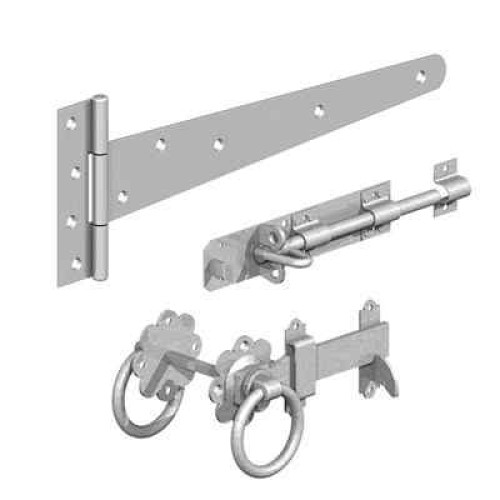
Garden gate furniture is the collective name for the metal fittings used to hang, open, close and secure a gate.
A typical installation may use:
- A pair of hinges
- A ring latch
- A pad bolt
- A gate stop
- Exterior screws or bolts
- A padlock where required
Not every gate needs every component. A low picket gate may require only hinges and a basic latch, while a private side gate may benefit from a latch, pad bolt and more substantial fixings.
What Is A Gate Furniture Pack?
A gate furniture pack groups together fittings intended for an ordinary garden gate installation.
A pack can simplify purchasing because several necessary components are supplied together. However, buyers should still check exactly what is included.
Before choosing a pack, confirm:
- The hinge type
- The hinge length
- The latch type
- Whether a bolt is included
- Whether fixing screws are included
- The metal finish
- The intended gate size
- Whether the gate needs to be lockable
Do not assume a general gate furniture pack is automatically suitable for a particularly heavy, wide or exposed gate.
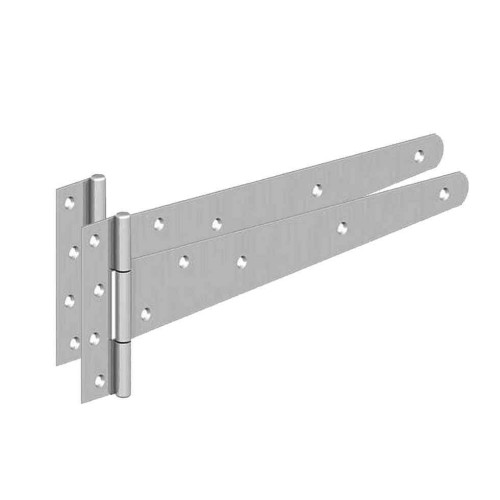
What Are Tee Hinges?
Tee hinges are commonly used to hang timber garden gates. They have a long horizontal strap that fixes across the gate and a shorter vertical leaf that fixes to the gate post or wallplate.
The available medium tee hinges measure approximately 18 inches or 450mm and are supplied as a pair.
The long strap spreads the load across a larger part of the gate frame than a small butt hinge.
Tee hinges are commonly suitable for:
- Feather edge garden gates
- Picket gates
- Framed timber gates
- Side passage gates
- Garden divisions
How Do You Choose The Right Hinge Length?
The correct hinge length depends on the gate width, weight, frame and exposure.
A longer hinge strap generally spreads load over more of the gate, provided it is fixed into substantial framing.
Consider:
- The gate width
- The gate height
- Whether the face is solid or open
- The thickness of the gate frame
- The position of the horizontal rails
- The site's wind exposure
- The hinge-post material
- The number and size of the fixings
Do not choose a hinge solely because its strap fits across the gate. It must also be appropriate for the gate's weight and repeated movement.
Are 450mm Tee Hinges Suitable For Every Gate?
No single hinge size is suitable for every garden gate.
A pair of 450mm medium tee hinges may suit many ordinary pedestrian timber gates, but suitability should be confirmed against:
- The actual gate weight
- The gate width
- The quality of the frame
- The fixing positions
- The strength of the post
- Wind exposure
A particularly heavy or tall solid gate may need a more substantial hinge arrangement or additional professional assessment.
Should A Gate Have Two Or Three Hinges?
Many ordinary timber garden gates are hung using two appropriately sized hinges.
A third hinge may be considered where:
- The gate is unusually tall
- The gate is heavy
- The frame has a suitable middle rail
- The gate receives frequent use
- The location is exposed
Adding a third small hinge does not correct an undersized hinge post, weak gate frame or inadequate main hinges.
Where Should Tee Hinges Be Fixed?
The horizontal straps should be positioned over substantial gate rails or framing.
Do not rely on fixing them only into:
- Thin feather edge boards
- Picket pales
- Decorative slats
- Rotten timber
- Split frame edges
The vertical hinge leaves must also be fixed into a sound gate post or suitable structural wallplate.
Which Way Should Tee Hinges Face?
The hinge arrangement depends on the required opening direction and whether the hinge straps should be visible from inside or outside the garden.
Consider:
- The direction the gate opens
- Access to the hinge fixings
- The risk of the gate being lifted
- The position of the gate brace
- The appearance from each side
Where security is important, exposed removable fixings may need additional protection.
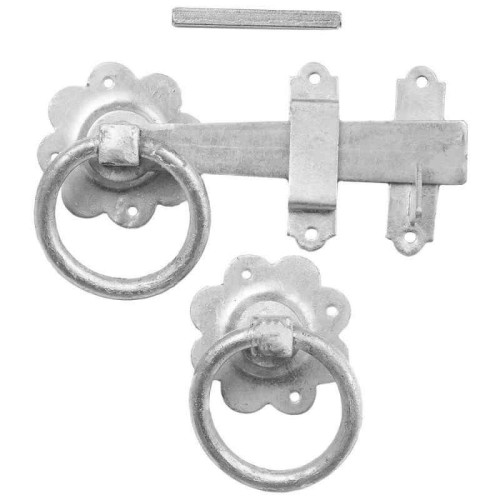
What Is A Ring Latch?
A ring latch is a traditional gate-closing mechanism operated by turning a circular handle.
The available bright zinc-plated ring latch measures approximately 6 inches or 150mm.
Many ring-latch arrangements allow the gate to be operated from both sides, making them practical for regularly used garden entrances.
They suit:
- Side gates
- Picket gates
- Feather edge gates
- Garden divisions
- Gates that do not require a key-operated lock
How Do You Choose A Ring Latch?
Check:
- The thickness of the gate
- The latch-bar length
- The position of the gate frame
- The required handle height
- The closing-post position
- Whether access is needed from both sides
- Whether children should be able to reach it
The latch should be positioned where its fixings enter substantial timber rather than only thin surface boards.
How Should A Ring Latch Be Aligned?
The latch bar and keep must meet without the gate being forced upwards, downwards or sideways.
Before fixing permanently:
- Hang and align the gate.
- Check that the gate swings freely.
- Position the gate against its stop.
- Mark the latch and keep positions.
- Test the movement before tightening every fixing.
If the gate later sags, investigate the hinges and posts rather than repeatedly moving the latch lower.
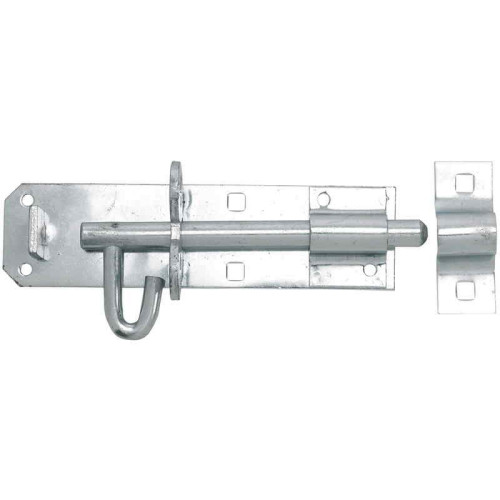
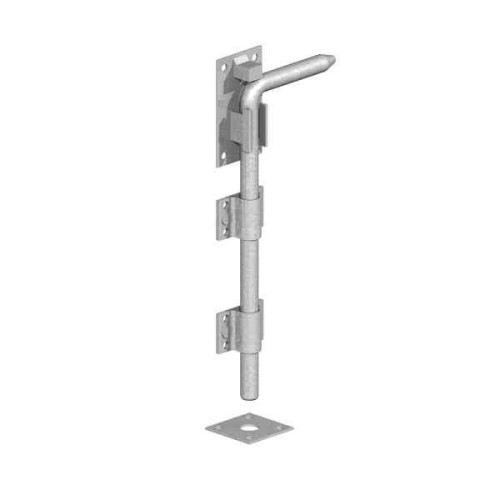
What Is A Pad Bolt?
A pad bolt is a sliding metal bolt used to hold a gate closed. Many pad bolts include a hole that can accept a suitable padlock.
The available bright zinc-plated pad bolt measures approximately 6 inches or 150mm.
A pad bolt may be useful where:
- A gate needs additional restraint
- A padlock will be used
- A private side entrance needs securing
- A solid gate needs to be held during windy weather
- A secondary closing point is required
Is A Pad Bolt A Lock?
A pad bolt restrains the gate but is not necessarily a complete locking system by itself.
Security depends on:
- The strength of the bolt
- The keeper
- The padlock
- The mounting screws or bolts
- The gate frame
- The gate posts
- Whether the fixings can be removed from outside
A strong padlock will not improve security if the bolt is fixed only into a thin or rotten board.
Where Should A Pad Bolt Be Fitted?
Fit it where both the bolt body and keeper can be secured to substantial timber or another suitable structural surface.
Check that:
- The bolt slides freely
- The keeper remains aligned
- The gate can reach its stop
- The padlock is accessible where required
- The bolt cannot be operated easily from the unwanted side
- The fitting does not create a sharp projection
Ring Latch Or Pad Bolt?
A ring latch is primarily used for convenient everyday opening and closing. A pad bolt provides additional restraint and may permit padlocking.
| Feature | Ring Latch | Pad Bolt |
|---|---|---|
| Primary purpose | Regular gate operation | Restraint and optional padlocking |
| Operation from both sides | Often possible | Usually fitted for one-side access |
| Convenience | High | Moderate |
| Padlock use | Not normally its main function | Possible where the design permits |
A gate can use both a ring latch and a pad bolt where convenient access and additional security are required.
What Does BZP Mean?
BZP means bright zinc plated. A zinc coating is applied to steel to provide resistance to ordinary corrosion and create a bright metallic finish.
The supplied tee hinges, ring latch and pad bolt are described as bright zinc-plated products.
Bright zinc plating does not mean the fitting can never rust. Durability depends on:
- Exposure to rain
- Salt in coastal air
- Damage to the coating
- Water collecting around joints
- Contact with incompatible materials
- Maintenance
Is Bright Zinc Plating Suitable Outdoors?
Bright zinc-plated gate furniture is used for many ordinary outdoor garden applications.
Inspect it regularly, particularly where:
- The garden is close to the coast
- The fitting remains wet
- Plants grow around the metalwork
- The zinc surface has been scratched
- Water collects around screw heads
Highly exposed or corrosive environments may require a fitting with a higher level of corrosion resistance.
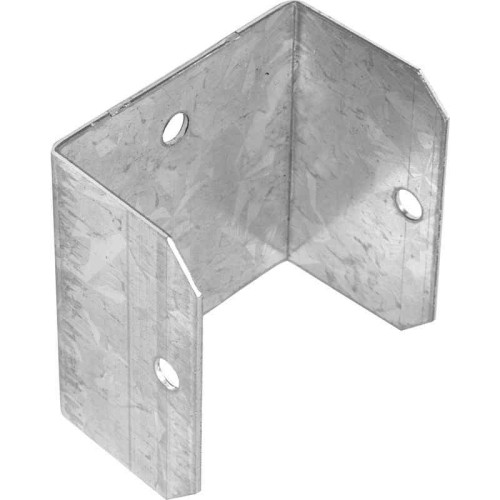
What Are Fence-Panel Clips?
Fence-panel clips are metal brackets used to attach compatible framed fence panels to wooden fence posts.
The available fence-panel clip is described as 46mm.
Panel clips can:
- Hold the panel frame against the post
- Create consistent fixing points
- Reduce the need to screw through the panel frame at an angle
- Make future panel removal more manageable
- Support straightforward framed-panel installation
What Does The 46mm Panel-Clip Size Mean?
The clip dimension must be compared with the thickness of the fence-panel frame it is intended to hold.
Before ordering, measure the panel frame rather than relying only on the panel style or nominal width.
Check:
- The panel-frame thickness
- The post width
- The clip opening
- The screw-hole positions
- The number of clips required per side
- Whether the panel is square and undamaged
A clip that is too narrow may not accept the frame. A clip that is too wide may not hold it securely.
How Many Panel Clips Do You Need?
The required number depends on:
- The panel height
- The panel weight
- The frame construction
- The wind exposure
- The post material
- The clip manufacturer's instructions
Clips are normally placed on both sides of the panel at suitable heights. Taller or heavier panels may require more fixing points than low lightweight panels.
Do not reduce the number of clips simply to save installation time.
Can Panel Clips Be Used With Concrete Posts?
Panel clips are primarily associated with attaching framed panels to wooden posts.
Compatible panels installed between slotted concrete posts are normally held by the post slots and supported above a gravel board.
A different bracket may be required where a timber panel is being attached to a concrete surface. Do not drill reinforced concrete fence posts without confirming an appropriate method.
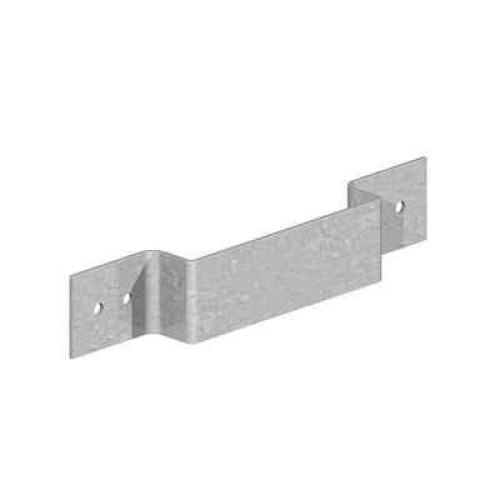
What Is A Fence-Panel Security Bracket?
A fence-panel security bracket is intended to reduce the risk of a compatible panel being lifted or removed from its position.
It is particularly relevant to panel systems where a panel could otherwise be raised vertically, such as some slotted concrete-post installations.
A security bracket may help:
- Reduce accidental panel lifting
- Restrict unauthorised panel removal
- Keep panels more securely positioned during strong wind
- Reduce movement where panels are loose in post slots
The bracket should not be used as a substitute for correctly spaced posts, a suitable gravel board or a properly sized panel.
Do Security Brackets Stop All Fence-Panel Movement?
No. A bracket may restrict upward movement, but rattling or sideways movement can still occur if:
- The panel is too narrow for the bay
- The concrete posts are leaning
- The gravel board is damaged
- The panel frame is twisted
- The post slots are excessively wide
- The panel is not seated correctly
Identify the cause of the movement before adding brackets or packing materials.
Are Security Brackets Burglar-Proof?
No ordinary fence-panel bracket should be described as completely burglar-proof.
A security bracket can increase the effort required to lift a panel, but the overall boundary also depends on:
- Panel strength
- Fence height
- Post condition
- Gate security
- Access to the fixings
- Nearby walls or structures
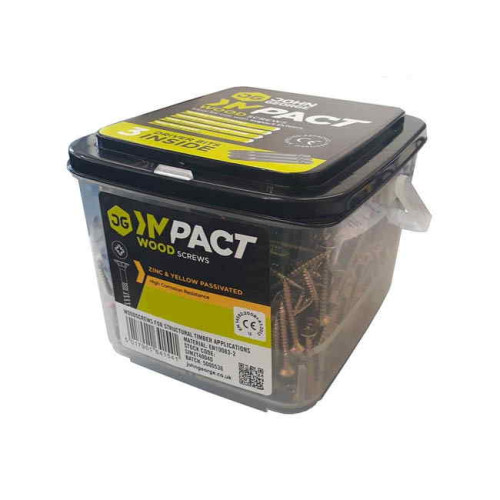
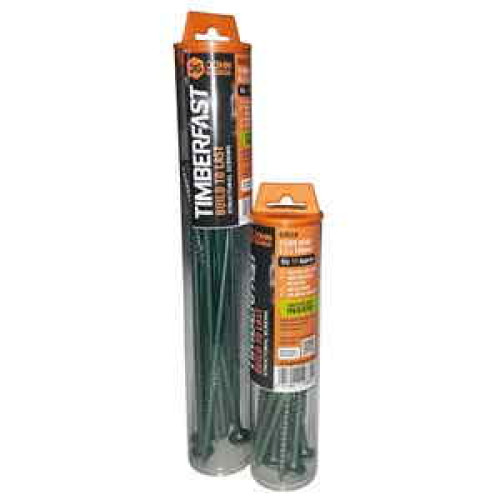
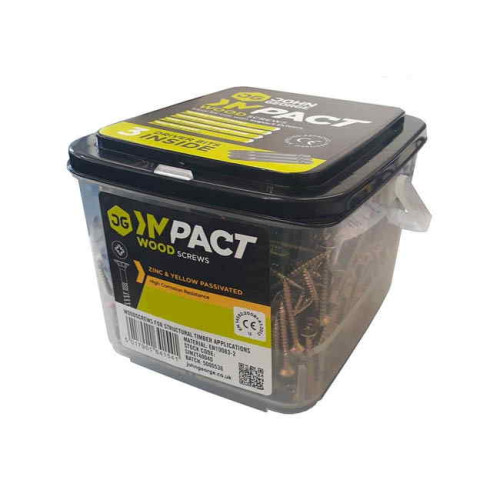
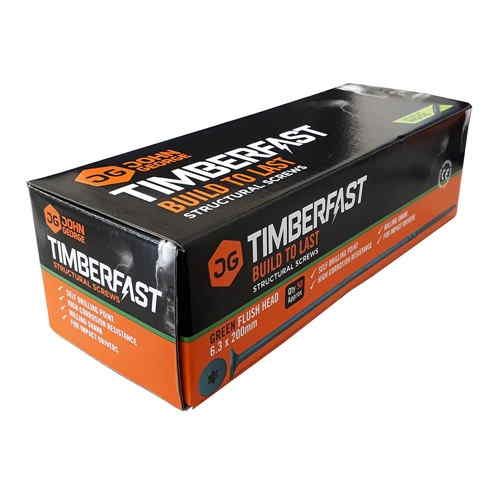
What Are Flush-Head Screws?
Flush-head screws are designed so the head can sit close to or within the surface of the material when installed correctly.
The available range includes 150mm flush-head screws supplied in:
- A tube of 10
- A box of 50
Long screws can be useful for substantial timber connections where shorter general-purpose screws would not provide enough embedment.
What Can 150mm Screws Be Used For?
Possible fencing and landscaping uses include suitable connections between:
- Substantial rails and posts
- Thick timber framing
- Landscaping sleepers
- Gate framing
- Timber supports
- Other compatible heavy timber components
The exact suitability depends on the screw diameter, head, coating, drive type, load and timber dimensions. Confirm the product specification for the intended connection.
How Do You Choose The Correct Screw Length?
A screw must pass through the first component and achieve sufficient embedment in the second without protruding dangerously.
Consider:
- The thickness of the first timber
- The required embedment
- The direction of the connection
- Whether the screw head needs to sit flush
- The distance from timber ends and edges
- The expected load
- The risk of splitting
A 150mm screw may be too long for ordinary fence boards or picket pales and too short for some very substantial connections.
Should Long Screws Be Pre-Drilled?
Pre-drilling can reduce splitting and make long screws easier to install, especially in substantial or relatively dry timber.
It is useful:
- Near timber ends
- Near narrow edges
- When several screws are close together
- When driving through thick sections
- Where accurate alignment is important
The pilot-hole diameter should suit the screw and the connection. A hole that is too large can reduce holding strength.
Should Screw Heads Be Countersunk?
A flush-head screw may form its own seating in suitable timber, but very hard or dry surfaces may benefit from a prepared recess.
Do not drive the head excessively below the timber surface. Overdriving can:
- Crush the timber fibres
- Reduce the effective connection
- Trap water in a deep recess
- Make later removal difficult
- Damage the screw drive
Should You Buy A Pack Of 10 Or 50 Screws?
Choose the pack size from a measured fixing schedule.
A pack of 10 may suit:
- A small repair
- One short sleeper connection
- A limited gate-framing job
- Testing compatibility before a larger project
A box of 50 may suit:
- Several sleeper joints
- A longer fencing project
- Multiple substantial timber connections
- Trade or repeated use
Allow a small number for damaged heads or changes to the fixing plan, but avoid buying large quantities without confirming suitability.
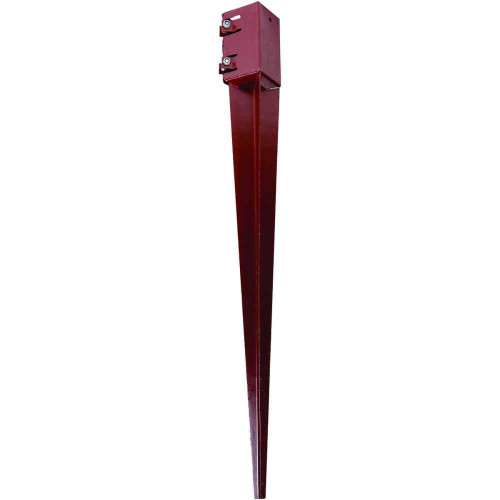
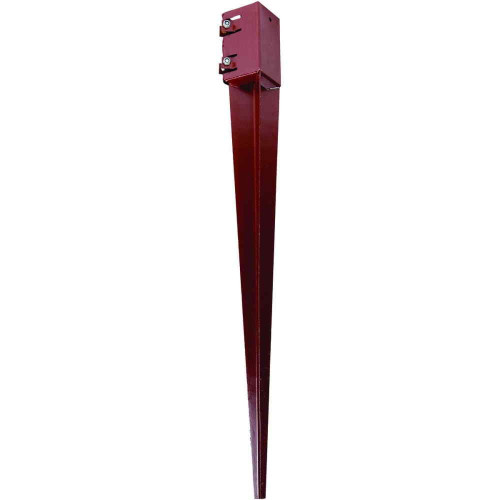
What Are Drive-In Fence Post Spikes?
A drive-in fence spike is a metal post support driven into suitable soil. The wooden post is secured inside the square upper socket.
The available brown drive-in spikes include:
- 75 x 75mm post socket with a 600mm driven section
- 100 x 100mm post socket with a 600mm driven section
The socket size must match the wooden post section.
When Are Drive-In Post Spikes Suitable?
They may be suitable for:
- Lower fencing
- Picket fencing
- Light garden divisions
- Trellis screens
- Firm, consistent soil
- Projects where conventional excavation is being reduced
Suitability still depends on the fence height, panel solidity, ground and exposure.
When Should Drive-In Spikes Be Avoided?
They may be unsuitable where:
- The ground is very soft
- The soil is waterlogged
- The ground contains extensive rubble
- Large roots obstruct the position
- The fence uses tall solid panels
- The boundary is highly exposed
- The support cannot be driven vertically
- Underground services may be present
Do not drive a spike into the ground until the area has been checked for cables, pipes and other services.
Should You Choose A 75mm Or 100mm Post Spike?
Match the support socket to the actual wooden post dimensions.
| Post Spike | Matching Nominal Post | General Buying Context |
|---|---|---|
| 75 x 75 x 600mm | 75 x 75mm wooden post | Lower or lighter fencing |
| 100 x 100 x 600mm | 100 x 100mm wooden post | More substantial timber posts |
A larger spike and post do not compensate for unsuitable ground.
How Do You Install A Drive-In Post Spike?
A typical installation involves:
- Confirming the fence line and checking for underground services.
- Marking the exact support position.
- Using a suitable driving tool or sacrificial timber block.
- Checking alignment repeatedly while driving.
- Correcting small deviations before the spike is fully installed.
- Inserting the matching post.
- Securing the post using the support's intended fixings.
- Checking the post remains upright before adding panels or rails.
Do not strike the open metal socket directly with an unsuitable hammer because it may distort and prevent the post fitting.
Can A Drive-In Spike Be Removed?
Removal may be possible, but a correctly installed spike can be difficult to extract from firm ground.
Repeated removal and reinsertion can disturb the soil and reduce its ability to support the spike.
Plan the fence line accurately before installation.
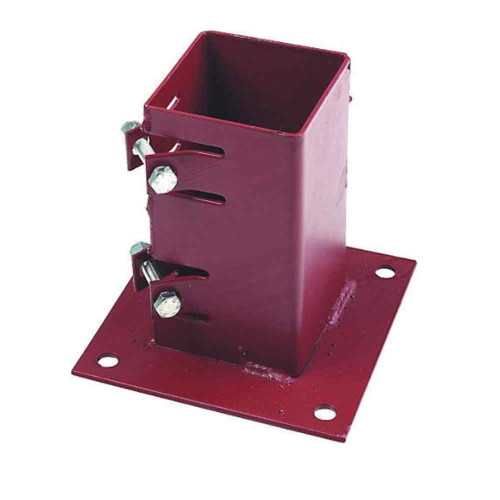
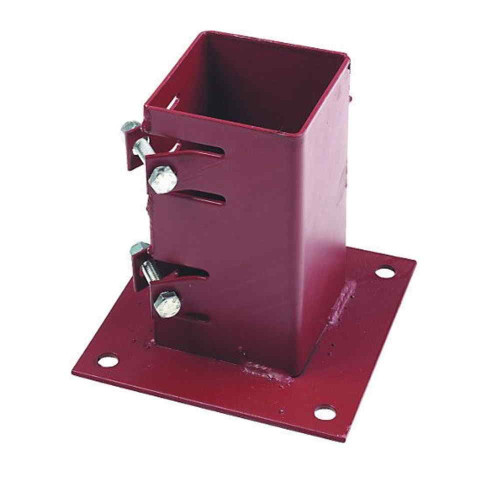
What Are Bolt-Down Post Supports?
A bolt-down post support holds a timber post above a suitable concrete, masonry or structural base.
The available brown supports include sizes for:
- 75 x 75mm wooden posts
- 100 x 100mm wooden posts
The flat base plate is secured using suitable anchors, while the timber post is fixed inside the upper socket.
Where Can Bolt-Down Post Supports Be Used?
They may be suitable on:
- Sound structural concrete
- A suitably designed concrete footing
- A substantial wall
- A verified structural slab
- Other bases capable of resisting the fence load
They should not automatically be fixed to:
- Loose paving slabs
- Thin patio flags
- Cracked concrete
- Weak screed
- Loose brickwork
- Decorative walls not designed for fencing loads
Why Is The Base Important?
The support may be strong, but it can only transfer loads into the surface beneath it.
A tall fence creates leverage at the base of the post. If the concrete or masonry is thin, cracked or poorly anchored, the support may loosen or pull away.
Check:
- The base thickness
- The edge distance for the anchors
- The concrete condition
- The fixing depth
- The fence height
- The panel wind resistance
- The post section
Which Bolt-Down Support Size Do You Need?
Match the socket to the post section.
A 75 x 75mm support is intended for a compatible 75 x 75mm timber post, while a 100 x 100mm support is intended for a compatible 100 x 100mm post.
Check the post's actual dimensions, particularly where:
- The timber is wet and swollen
- The post is old
- The product comes from another manufacturer
- The post has been planed or altered
Do not force an oversized post into the socket or pack a substantially undersized post with loose scraps.
Drive-In Spike Or Bolt-Down Support?
| Feature | Drive-In Spike | Bolt-Down Support |
|---|---|---|
| Installation surface | Suitable firm soil | Sound structural base |
| Main installation method | Driven into ground | Secured with anchors |
| Excavation | Normally limited | Not normally required in the fixing area |
| Main risk | Weak or obstructed soil | Weak base or unsuitable anchors |
| Post clearance | Post held above surrounding soil | Post held above the base |
Are Post Supports Suitable For Tall Fence Panels?
They are not automatically suitable for every tall solid fence.
A high closeboard or waney lap panel creates significant wind pressure. Suitability depends on:
- The support type
- The post section
- The panel height
- The number of panels
- The ground or structural base
- The wind exposure
- The manufacturer's intended application
Conventional concrete-set posts may be more appropriate where the fence is tall, solid or exposed.
Can Post Supports Be Used For Garden Gates?
A garden gate places repeated moving and leveraged loads on its hinge post.
Do not assume that an ordinary drive-in spike or bolt-down support is suitable for a tall or heavy gate.
Gate-post support must account for:
- The gate weight
- The gate width
- The hinge leverage
- Wind pressure
- Repeated opening and closing
- The strength of the base or soil
A substantial gate post set into a suitable foundation is often the more dependable arrangement.
What Other Fixings Might A Fencing Project Need?
Depending on the project, a complete installation may also require:
- Exterior timber screws
- Structural screws
- Exterior nails
- Masonry anchors
- Coach screws or bolts
- Washers
- Suitable wall plugs
- Gravel-board brackets
- Gate stops
- Plant-support fixings for trellis
Only use products that suit the material, load and environment. Do not substitute lightweight general-purpose fixings for structural connections.
What Is The Difference Between A Screw, Bolt And Nail?
Screws
Screws use threads to pull components together and can normally be removed for adjustment or repair.
Bolts
Bolts commonly pass through a component and are secured with a nut and washer. They are useful where a strong connection or clamping force is required.
Nails
Nails are driven into timber and can provide a quick fixing for suitable fencing boards and rails.
The correct choice depends on the components and the type of movement expected.
How Do You Choose Exterior Fixings?
Check:
- The material being fixed
- The thickness of every component
- The expected load
- The corrosion resistance
- The head type
- The drive type
- The required fixing depth
- Whether the connection needs to be removed later
Fixings used with pressure-treated timber should be suitable for that timber and for outdoor exposure.
Can Indoor Screws Be Used For Fencing?
Indoor screws should not normally be used for permanent outdoor fencing simply because they are available.
They may corrode, stain the timber or lose strength when exposed to moisture.
Use fixings rated for exterior conditions and the intended load.
How Far From A Timber Edge Should A Fixing Be?
Fixings placed too close to the end or edge of a board can split the timber.
The required edge distance depends on:
- The fixing diameter
- The timber thickness
- The grain direction
- Whether a pilot hole is used
- The load direction
Pre-drill vulnerable positions and avoid clustering several large screws in a small area.
Should Washers Be Used With Bolts?
A washer spreads pressure around the bolt head or nut and can reduce crushing of the timber surface.
It is particularly useful with:
- Gate-post connections
- Repair brackets
- Structural timber joints
- Connections tightened with a nut
Do not overtighten bolts into soft timber. The washer should distribute pressure rather than becoming deeply embedded.
How Do You Choose Masonry Fixings?
The fixing must suit the specific masonry material.
Brick, block, concrete and stone can require different anchors. Check:
- The condition of the masonry
- The anchor diameter
- The fixing depth
- The distance from edges
- Whether the material is hollow or solid
- The load from the gate, fence or trellis
Do not rely on render or loose mortar to support substantial gate furniture, wallplates or bolt-down posts.
Can Ironmongery Be Fitted To Concrete Fence Posts?
Concrete fence posts may contain steel reinforcement. Drilling into them can damage the post, expose reinforcement or weaken an edge.
Use a suitable purpose-designed arrangement where metalwork needs to connect to concrete posts.
Avoid casual drilling, particularly close to:
- Post slots
- Edges
- Existing cracks
- Exposed reinforcement
Can Ironmongery Be Reused?
Some fittings can be reused if they remain straight, secure and free from serious corrosion.
Inspect:
- Hinge-pin wear
- Elongated screw holes
- Bent straps
- Corrosion
- Cracks
- Damaged threads
- Worn latch components
- Distorted post-support sockets
Replacement is often more practical where a safety-critical fitting has been bent or heavily corroded.
Can Old Screw Holes Be Reused?
An old hole may no longer provide sufficient holding strength, especially where the timber is soft, split or repeatedly repaired.
Possible options include:
- Using a sound new fixing position
- Replacing the damaged timber
- Using an appropriately larger fixing where suitable
- Repairing the hole using a recognised timber-repair method
Do not repeatedly drive screws into a loose hole and expect the connection to remain secure.
How Do You Maintain Gate Ironmongery?
Inspect hinges, latches and bolts several times each year and after severe weather.
Check for:
- Loose screws
- Rust
- Wear around hinge pins
- Gate sag
- Latch misalignment
- Bent components
- Damage to the zinc coating
- Timber splitting around fixings
A loose fitting should be investigated rather than repeatedly tightened into damaged timber.
Should Gate Hinges Be Lubricated?
Some hinge pins and moving latch components benefit from a suitable lubricant.
Before lubricating:
- Remove loose dirt
- Check for corrosion
- Tighten sound fixings
- Confirm that the post is upright
Lubrication will not correct a bent hinge, rotten post or sagging gate frame.
How Do You Maintain Post Supports?
Inspect post spikes and bolt-down supports for:
- Movement
- Rust
- Loose post fixings
- Cracked concrete
- Loose anchors
- Water trapped around the socket
- Timber decay immediately above the support
Movement in the support may indicate a problem with the ground or structural base rather than the visible metal socket.
Can Ironmongery Be Painted?
Some metal fittings can be painted with a suitable exterior metal coating if a different appearance is required.
Before coating:
- Clean the metal
- Remove loose corrosion
- Use a compatible primer where required
- Avoid covering moving hinge surfaces excessively
- Keep latch mechanisms free to operate
Painting over rust without suitable preparation will not stop continuing corrosion.
What Should You Check When Ironmongery Arrives?
Inspect the products before installation.
Check:
- The correct product type
- The correct dimensions
- The correct pack quantity
- The required finish
- Missing components
- Bent brackets
- Damaged threads
- Distorted hinge straps
- Corrosion or damaged plating
- Post-support sockets that are out of shape
Confirm that any included screws are suitable for the specific gate, post or panel rather than assuming they will suit every installation.
How Should Ironmongery Be Stored?
Keep metal fittings dry and organised before installation.
Store them:
- Off wet ground
- Inside their packaging where practical
- Away from corrosive chemicals
- With matching components together
- Where small screws and keepers will not be lost
Heavy post supports should be stacked securely so they cannot fall or damage surrounding products.
Common Ironmongery Buying Mistakes
- Choosing hinges by appearance rather than gate weight
- Fixing hinges only into thin boards or slats
- Using an ordinary fence post for a heavy gate
- Ordering a ring latch without checking the gate thickness
- Assuming a pad bolt alone makes a gate secure
- Using a panel clip that does not match the frame thickness
- Using too few panel clips
- Adding a security bracket without correcting loose posts
- Using 150mm screws in timber that is too thin
- Driving long screws without considering splitting
- Buying a 75mm support for a 100mm post
- Using drive-in spikes in soft or rubble-filled ground
- Bolting post supports to ordinary paving slabs
- Using indoor screws outdoors
- Ignoring coastal or damp exposure
- Drilling concrete posts without checking for reinforcement
- Reusing heavily corroded or bent fittings
- Failing to check what is included in a furniture pack
Ironmongery Buying Checklist
Before ordering, confirm:
- The gate, panel or post being installed
- The timber dimensions
- The expected weight and load
- The required hinge length
- The number of hinges
- The required latch type
- Whether a pad bolt is required
- Whether the gate needs to be lockable
- The fence-panel frame thickness
- The number of panel clips
- Whether security brackets are required
- The screw length and pack quantity
- The wooden post section
- Drive-in or bolt-down support
- The ground or base condition
- The required corrosion resistance
- The required drill bits and tools
- Any masonry anchors or washers
- Safe storage before installation
FAQs
What Is Fencing Ironmongery?
It is the collective term for metal fittings used to assemble, operate and secure fences, gates, panels and posts.
What Ironmongery Is Needed For A Garden Gate?
A typical gate needs suitable hinges, a latch, exterior fixings and often a gate stop. A pad bolt may be added for additional restraint or padlocking.
What Is Included In A Gate Furniture Pack?
Pack contents can vary. Check the supplied hinges, latch, bolt and fixings before ordering.
What Size Tee Hinges Are Available?
The available medium tee hinges measure approximately 450mm or 18 inches and are supplied as a pair.
Are 450mm Hinges Suitable For A Feather Edge Gate?
They may suit many ordinary framed pedestrian gates, but suitability depends on the gate weight, width, frame and exposure.
How Many Hinges Does A Garden Gate Need?
Many gates use two suitably sized hinges. A heavy or tall gate may require a different or additional arrangement.
Should Tee Hinges Be Fixed To The Gate Rails?
Yes. The straps should normally align with substantial frame rails rather than only thin surface boards.
What Is A Ring Latch Used For?
It provides a convenient way to open and close a garden gate, often from both sides.
What Size Ring Latch Is Available?
The available bright zinc-plated ring latch measures approximately 150mm or 6 inches.
Can A Ring Latch Be Locked?
A ring latch is primarily an operating latch. Add a suitable lockable bolt or other security fitting where locking is required.
What Is A Pad Bolt Used For?
It holds a gate closed and may allow a padlock to be fitted where the design permits.
What Size Pad Bolt Is Available?
The available bright zinc-plated pad bolt measures approximately 150mm or 6 inches.
Can A Gate Use A Ring Latch And Pad Bolt?
Yes. The ring latch can provide everyday access, while the pad bolt provides additional restraint or locking.
What Does BZP Mean?
It means bright zinc plated, a metallic finish used to improve corrosion resistance.
Does Bright Zinc Plating Rust?
It can eventually corrode, particularly where the coating is damaged or the fitting is exposed to salt and persistent moisture.
What Size Fence-Panel Clip Is Available?
The available fence-panel clip is described as 46mm.
Will A 46mm Clip Fit Every Fence Panel?
No. Measure the panel-frame thickness and compare it with the clip before ordering.
How Many Panel Clips Are Needed Per Panel?
The number depends on panel height, weight, frame design and exposure. Use enough clips on both sides to support the panel correctly.
Can Panel Clips Be Used With Concrete Posts?
They are primarily used for attaching compatible framed panels to wooden posts. Slotted concrete posts normally retain panels without conventional panel clips.
What Does A Fence-Panel Security Bracket Do?
It helps reduce the risk of a compatible panel being lifted or removed vertically.
Do Panel Security Brackets Stop Rattling?
They may restrict some movement, but they will not correct an undersized panel, leaning posts or a damaged gravel board.
What Size Flush-Head Screws Are Available?
The available screws are 150mm long and are supplied in packs of 10 or 50.
Are 150mm Screws Suitable For Fence Boards?
They are generally too long for thin fence boards. They are more relevant to suitable substantial timber connections.
Can 150mm Screws Be Used For Railway Sleepers?
They may suit some sleeper connections, depending on the joint direction, timber thickness, required embedment and screw specification.
Should 150mm Screws Be Pre-Drilled?
Pre-drilling may reduce splitting and make installation easier, particularly near timber ends or in dry timber.
What Drive-In Post Spike Sizes Are Available?
Brown spikes are available for 75 x 75mm and 100 x 100mm wooden posts, with a 600mm driven section.
Are Drive-In Spikes Suitable For A 6ft Fence?
They are not automatically suitable for tall solid fencing. Ground strength, exposure, panel design and post size must all be considered.
Can A Drive-In Spike Be Used In Clay?
It may be possible where the clay is firm and consistent. Very wet, cracked, stony or obstructed clay can make accurate installation difficult.
Can A Drive-In Spike Be Used In Sandy Soil?
Loose sandy ground may not grip the spike adequately, particularly for tall or heavily loaded fencing.
What Bolt-Down Support Sizes Are Available?
Brown bolt-down supports are available for 75 x 75mm and 100 x 100mm wooden posts.
Can A Bolt-Down Post Support Be Fixed To Paving Slabs?
Ordinary paving slabs may not provide sufficient structural resistance for a fence. Use a sound base designed to carry the load.
Can A Bolt-Down Support Be Fixed To A Wall?
It may be possible where the wall is structurally suitable and appropriate anchors are used. Decorative or damaged walls may be unsuitable.
Can Post Supports Be Used For Gates?
Do not assume that ordinary post supports can carry the repeated leveraged load of a heavy garden gate. A substantial foundation may be required.
Do Metal Post Supports Stop Wooden Posts Rotting?
They keep the post above surrounding soil or the structural base, reducing direct ground contact. The timber can still decay if water remains trapped around the socket.
Can Old Gate Hinges Be Reused?
They may be reused if they are straight, secure and free from serious wear or corrosion.
Why Are My Hinge Screws Coming Loose?
Possible causes include soft timber, undersized screws, gate sag, movement in the post or repeated slamming.
Why Is My Gate Latch No Longer Aligned?
The gate may have sagged, the hinge post may be leaning or the fixings may have loosened. Identify the movement before repositioning the latch.
Can Gate Ironmongery Be Painted?
Some fittings can be coated with a suitable exterior metal product after cleaning and preparation. Keep moving components free to operate.
Should Gate Hinges Be Oiled?
Some hinge pins benefit from a suitable lubricant. Lubrication will not repair worn hinges or unstable posts.
Can Ironmongery Be Used With Pressure-Treated Timber?
Yes, provided the fittings and fixings are suitable for treated timber and outdoor exposure.
Should Exterior Fixings Be Stainless Steel?
The required corrosion resistance depends on the location and application. Coastal and persistently damp environments may require higher corrosion resistance than sheltered inland gardens.
Can You Drill Into A Concrete Fence Post?
Concrete posts may contain reinforcement. Avoid drilling them without confirming that the method is safe and appropriate.
Choose Ironmongery For The Load And Surface
The correct ironmongery depends on what is being installed and where its load will be transferred.
Use tee hinges sized for the gate, frame and exposure. Choose a ring latch for everyday access and add a pad bolt where additional restraint or padlocking is required. Match 46mm panel clips to the actual panel-frame thickness, and use security brackets only as part of a correctly fitted panel system.
Long 150mm flush-head screws suit selected substantial timber connections rather than every fencing job. Drive-in spikes must match the wooden post and be installed in suitable firm ground, while bolt-down supports require sound structural concrete or masonry.
Measure every timber section, inspect the fixing surface and calculate the required quantities before ordering. Reliable ironmongery, correctly installed into sound timber, posts and foundations, helps the complete fence or gate remain secure, aligned and serviceable.