


Quick answer: Yes, timber fence topper trellis can usually be cut to fit a narrower fence bay, but it should not simply be sawn through and installed with loose lattice ends. Cutting normally removes part of the outer frame, so the shortened edge needs to be properly supported or reframed. Measure the actual opening before cutting, preserve the trellis pattern where practical and protect freshly exposed pressure-treated timber with a suitable cut-end treatment where required.
Standard fence topper trellis is designed around common fence-panel widths, but real gardens do not always finish in perfect full bays.
You may have a narrow section beside a gate, a final bay that is less than 1.83m wide, posts that were positioned for an older fence or a boundary that changes direction at an awkward point.
Timber trellis is much easier to adapt than concrete fencing components, but cutting it properly requires more thought than shortening an ordinary board.
The lattice or slats form part of a framed panel. Remove part of that frame without rebuilding the cut edge and you can leave individual timber pieces unsupported.
The aim is therefore not merely to make the topper shorter. It is to create a smaller trellis panel that still behaves like a complete panel when it is installed.
Can Fence Topper Trellis Be Cut To Width?
Yes.
Reducing the width is one of the most common modifications where a standard trellis topper needs to fit a non-standard fence bay.
Many current East Coast Fencing topper-suitable trellis panels are approximately 1.83m wide.
This works naturally above a standard fence-panel bay, but a real opening may be shorter because of:
- A gate
- A wall
- A corner
- An existing post position
- A final shortened fence bay
- A garden building or other fixed obstruction
Where the trellis is timber, shortening is possible. The important part is recreating a supported edge after the cut.
Why Can You Not Just Saw Through The Trellis?
A finished trellis panel normally has an outer structure that holds the internal timber pattern together.
If you cut 300mm from one end, you may cut through:
- The outer frame
- Horizontal lattice pieces
- Vertical lattice pieces
- Slatted components
The newly cut ends can then be left unsupported.
This can make the panel:
- Loose
- Flexible
- More prone to individual battens moving
- Difficult to fix securely
- Visually unfinished
A clean cut is only the first part of the job.
The new edge needs to function as an edge of the panel rather than looking like the middle of a trellis that happened to be sawn through.
Which Fence Topper Trellis Is Easiest To Shorten?
The exact work depends on the trellis pattern.
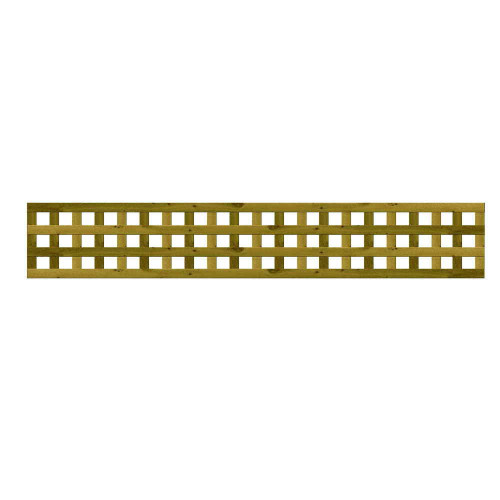
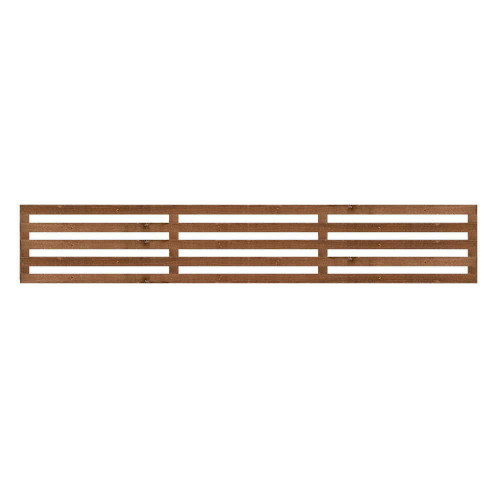
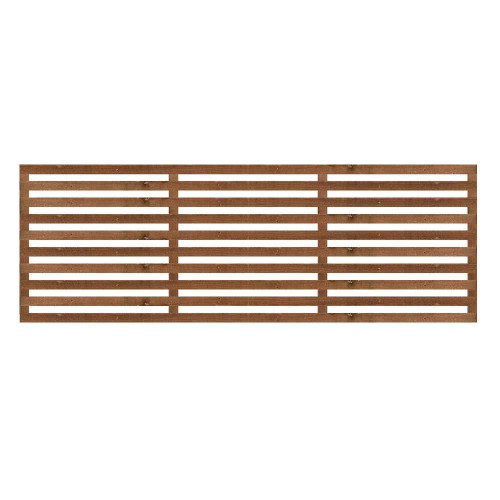
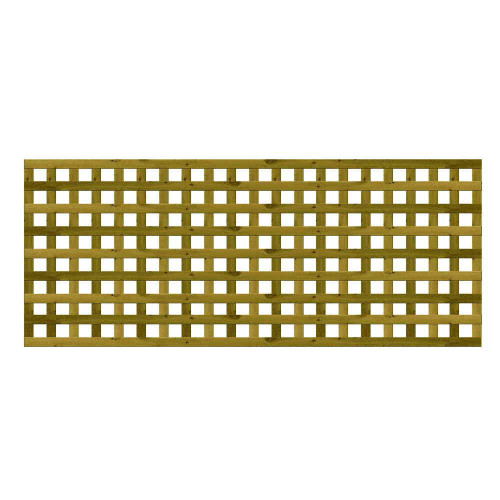
| Trellis Type | Main Cutting Consideration | Pattern After Cutting |
|---|---|---|
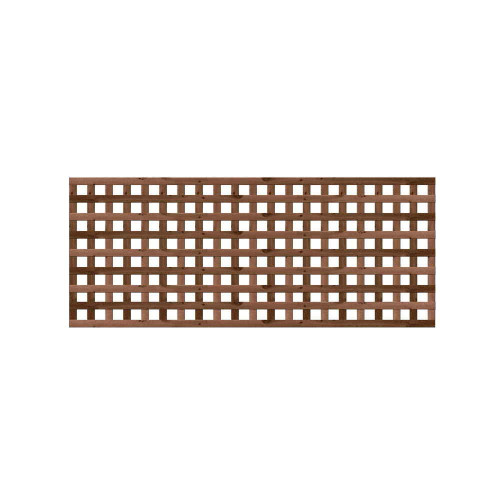
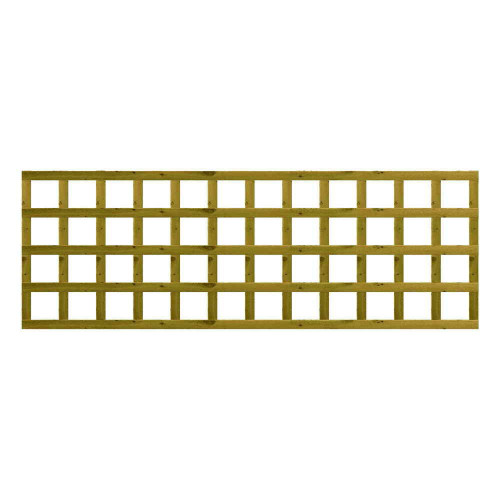
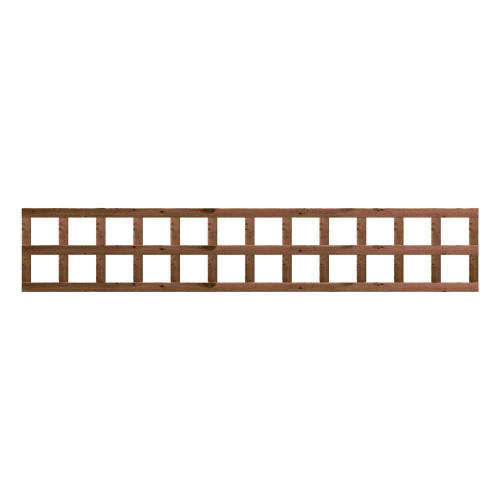
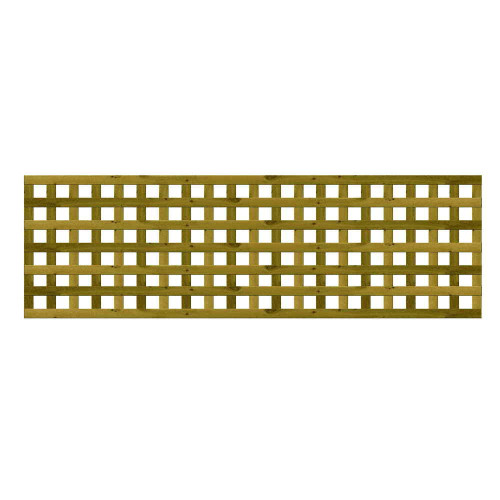
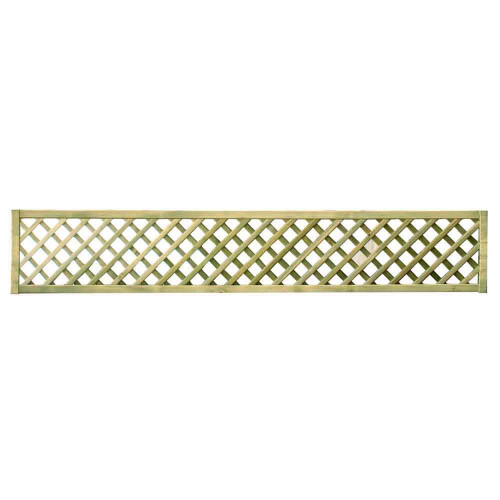
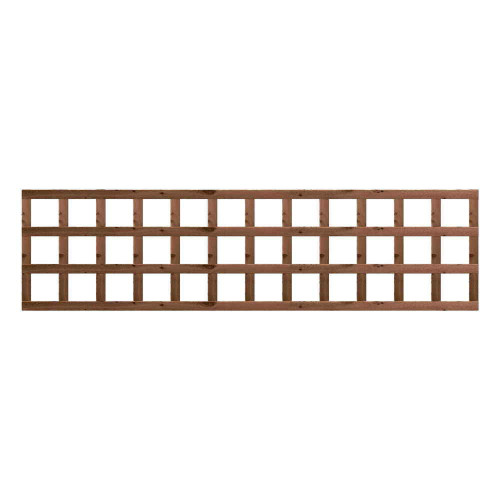
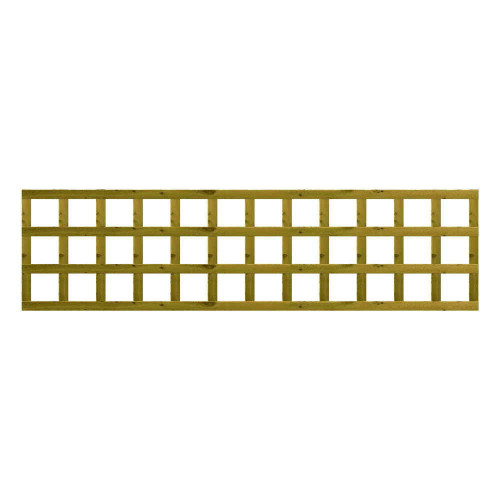
| Traditional Square Trellis | Rebuild the cut frame edge | Large squares make spacing easy to see |
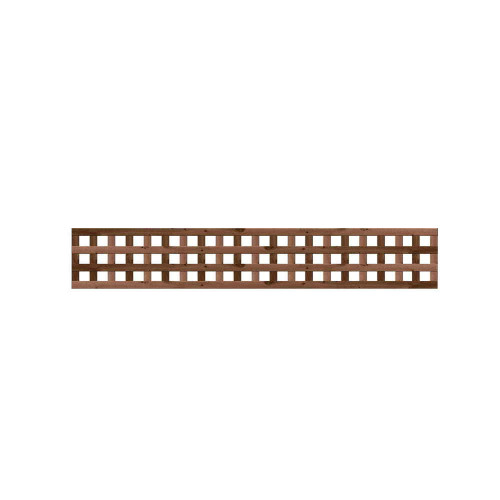
| Privacy Square Trellis | More lattice intersections to deal with | Closer squares make uneven cuts noticeable |
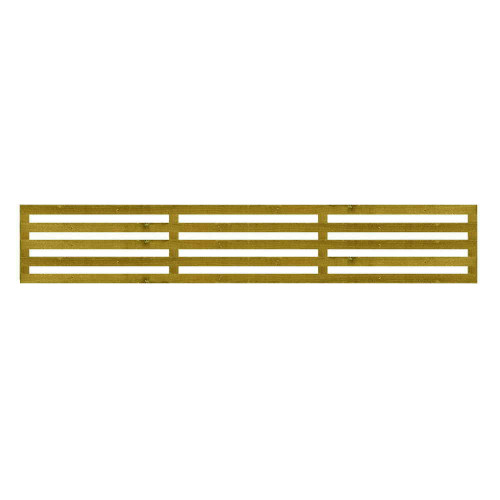
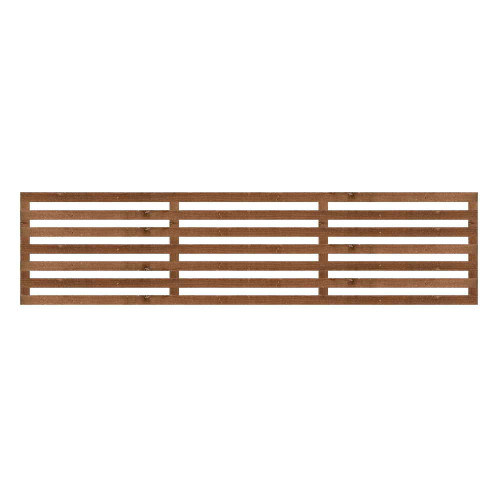
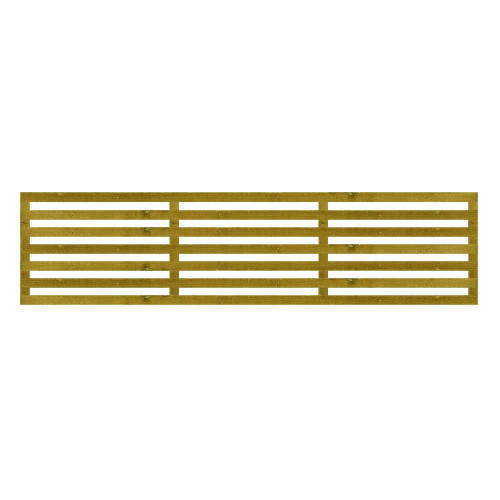
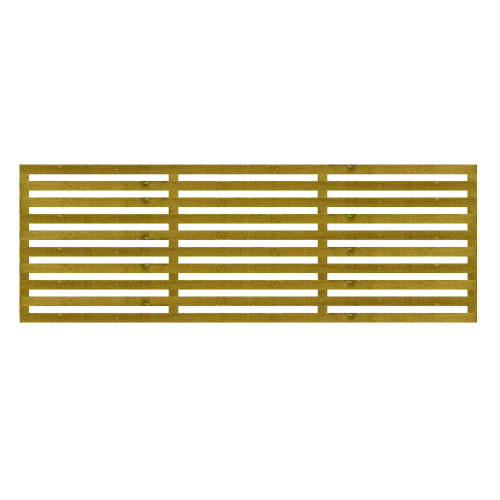
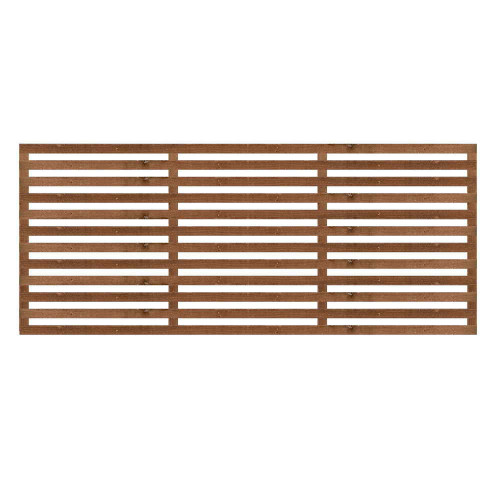
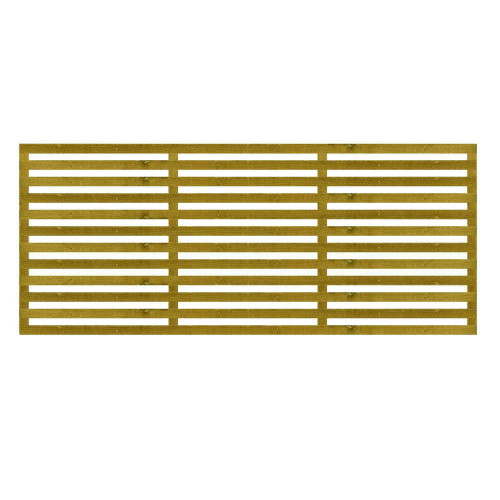
| Horizontal Slatted Trellis | Every horizontal slat may need supporting at the new end | Keep the vertical finishing edge straight |
None of these products should simply be cut and left with unsupported timber ends.
How Is Traditional Square Trellis Constructed?
Current East Coast Fencing Traditional Square Trellis is manufactured in-house from pressure-treated 16 x 38mm rough-sawn trellis batten.
The openings are approximately 100mm square.
This relatively open pattern makes it useful for:
- Climbing plants
- Decorative fence tops
- Light screening
- Maintaining airflow
The approximately 100mm pattern also means a poorly positioned cut can be visually obvious.
Before cutting, look at where the existing lattice lines fall and decide where the new outer edge should sit.
Can Privacy Square Trellis Be Cut?
Yes, with the same basic requirement to support the new edge.
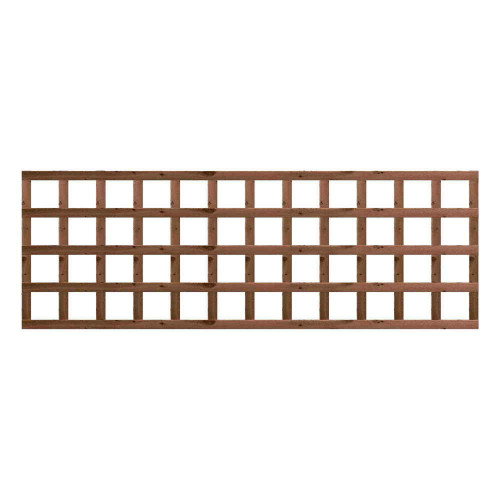
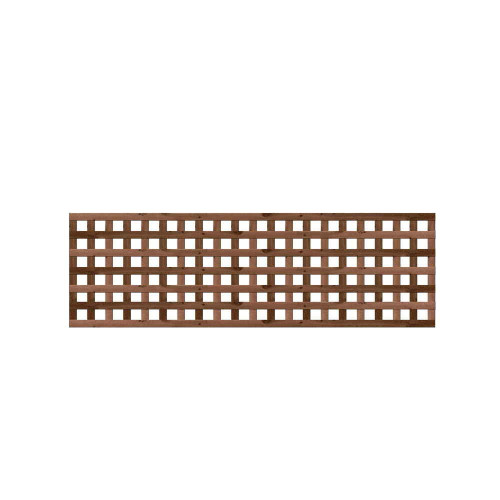
Current East Coast Fencing Privacy Square Trellis is also manufactured in-house from pressure-treated 16 x 38mm rough-sawn trellis batten.
Its openings are approximately 50mm square.
This means there are more lattice sections across a given width than on Traditional Square Trellis.
The closer pattern provides greater filtered screening, but it also means that a random cut through the panel can leave several short pieces requiring support.
Plan the cut around the pattern rather than simply measuring the required width and immediately putting a saw through it.
Can Horizontal Slatted Trellis Be Cut To Width?
It can be adapted, but the horizontal layout needs careful support at the new end.
Unlike square lattice, Horizontal Slatted Trellis uses repeated horizontal timber lines.
When the panel is shortened, those slats are cut at the same new vertical edge.
They need to remain secured to suitable supporting timber.
If the finished edge is crooked or the slat ends do not line up neatly, the result will be particularly noticeable because the horizontal pattern draws the eye along the fence.
Is It Better To Order A Smaller Trellis Size Instead?
Where a suitable standard size already solves the problem, yes.
Cutting makes most sense when the problem is an unusual width rather than simply choosing the wrong standard height.
For example, current topper-suitable trellis includes common heights around:
- 300mm
- 450mm
- 600mm
If you need a 300mm-high topper, it normally makes little sense to buy a 600mm product and cut its height in half.
Choose the closest standard height first.
Use cutting where the fence bay itself creates an unusual width that cannot reasonably be solved with a normal panel.
Can You Cut Fence Topper Trellis To Height?
Potentially, but reducing the height can require more rebuilding than shortening the width.
If you cut across the top of a square trellis panel, you may remove the complete upper frame and cut through several vertical lattice pieces.
The new top then needs a suitable finishing and supporting piece.
Horizontal Slatted Trellis can be different because reducing the height may involve removing complete horizontal slats rather than cutting through every slat.
The exact construction of the particular panel therefore matters.
If a standard 300mm, 450mm or 600mm product gives the required height, use that rather than modifying a taller panel without good reason.
Should You Cut Trellis From One Side Or Both Sides?
Usually, shortening from one end is simpler.
Cutting equal amounts from both sides may preserve visual symmetry in some decorative layouts, but it also means creating two new edges instead of one.
That produces more:
- Cutting
- Reframing
- Freshly exposed timber
- Opportunity for measurement errors
For most ordinary rectangular trellis, one properly rebuilt cut edge is the practical approach.
Visual symmetry matters more with patterns where the precise lattice arrangement is particularly noticeable.
How Do You Measure Trellis For An Existing Fence Bay?
Measure the actual space rather than relying on the original panel description.
An older fence that was built around nominal 1.83m panels may no longer have identical bays.
Posts can:
- Lean slightly
- Twist
- Move with the ground
- Have been positioned inconsistently from new
Measure at the height where the topper will actually sit.
Do not assume that a measurement taken at ground level is automatically identical above the Fence Panels.
Should Trellis Fit Tightly Between The Posts?
No panel should need to be forced into place.
The trellis needs sufficient room for installation and natural timber movement while still having suitable fixing points.
A topper cut exactly to a tight opening can become difficult to position.
Pressure-treated timber can also change slightly as its moisture content changes outdoors.
Measure carefully and consider the actual fixing arrangement rather than aiming for a friction fit between the posts.
Should You Cut Trellis Before Or After Fitting The Fence?
For a new fence, set out the main posts and Fence Panels accurately first.
Once the real topper bay is established, the trellis can be measured against the finished support positions.
For an existing fence, measure the actual opening before carrying the trellis to the cutting area.
Avoid cutting several toppers purely from one assumed dimension unless you have checked that all bays are genuinely the same.
What Tools Do You Need To Cut Timber Trellis?
The exact tools depend on the panel and how the new edge will be rebuilt, but a typical job may require:
- Tape measure
- Pencil
- Square
- Suitable timber saw
- Drill or driver
- Exterior-grade screws or other appropriate fixings
- Suitable replacement framing timber
- Cut-end preservative where required
- Eye protection
- Gloves
Support the panel securely while cutting.
Trellis contains relatively small timber sections, so allowing the panel to bounce or twist while sawing can damage joints away from the actual cut.
Should You Use A Hand Saw Or Power Saw?
Either can be suitable where used correctly.
A hand saw gives good control for occasional cuts through smaller trellis timber.
A suitable powered saw can make repetitive cuts faster, but care is needed around thin components and intersections.
Whatever tool is used:
- Support the panel properly
- Mark the cut accurately
- Keep hands clear of the blade
- Use appropriate eye protection
- Do not rush through loose lattice
How Do You Shorten Fence Topper Trellis Properly?
- Measure the finished opening: Measure where the trellis will actually be installed.
- Inspect the trellis pattern: Decide where the new edge can sit without leaving unnecessarily awkward short sections.
- Mark the finished width: Use a square or straight reference so the new edge is vertical.
- Plan the replacement frame: Work out how the cut lattice or slat ends will be supported before sawing.
- Support the panel: Lay or clamp it securely without distorting the lattice.
- Make the cut: Work cleanly through the relevant timber components.
- Rebuild the edge: Secure the cut ends to suitable framing so the shortened panel remains coherent.
- Protect fresh cuts: Apply suitable cut-end treatment where required for the pressure-treated timber.
- Check the panel: Make sure nothing is loose before lifting it into position.
- Fix to structural supports: Secure the completed topper to sound posts or suitable framing rather than relying solely on the Fence Panel below.
Why Does The New Edge Need Reframing?
The outer frame does more than make the panel look neat.
It provides a structural edge that holds the internal trellis arrangement together and gives the installer somewhere substantial to fix the panel.
A properly rebuilt edge helps:
- Control individual lattice ends
- Keep the panel square
- Create a cleaner appearance
- Provide a stronger fixing area
Without it, you may end up trying to attach individual thin lattice pieces directly to the Fence Post.
That is a poor substitute for a complete framed edge.
Can You Reuse The Frame Piece You Cut Off?
Sometimes the original outer framing timber can potentially be separated and repositioned, depending on how the panel is constructed and how cleanly it can be removed.
Do not assume this will always be practical.
Trying to prise apart a completed pressure-treated trellis can:
- Split the frame
- Damage lattice pieces
- Pull out fixings
- Leave damaged timber unsuitable for a neat new edge
Using suitable replacement framing timber can sometimes be simpler than trying to preserve every original component.
Do Fresh Cuts In Pressure-Treated Trellis Need Treating?
Cutting exposes timber that was previously inside the section.
Where required by the treatment specification, use a suitable cut-end preservative intended for exterior treated timber.
Pay particular attention to:
- New frame ends
- Cut lattice ends
- Any replacement timber that has been altered
A decorative paint or stain should not automatically be treated as a substitute for appropriate cut-end protection.
Will Cutting Trellis Remove Its Pressure Treatment?
It does not make the complete panel untreated.
The remaining timber retains its existing treatment.
The issue is the newly exposed cut surface.
This is why unnecessary cutting should be avoided and genuine cut surfaces dealt with appropriately.
Can You Cut Brown And Green Trellis In The Same Way?
Yes.
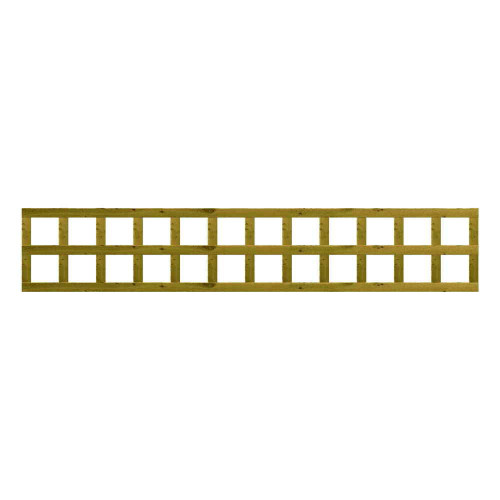
Brown and green or natural versions are both pressure-treated timber products across suitable current East Coast Fencing trellis ranges.
The treatment colour does not fundamentally change the cutting method.
If replacement framing is added, choose timber that suits the existing panel if appearance matters.
Remember that even matching treatment colours can vary naturally between pieces and will weather after installation.
Can You Make Two Short Toppers From One Full Panel?
Potentially, but plan the framing requirement before assuming one standard trellis will neatly become two finished panels.
Dividing one framed panel creates:
- Two cut edges
- Additional framing requirements
- More freshly exposed timber
The quantity of usable finished trellis therefore depends on more than simply dividing 1.83m by two.
You also need to account for the timber used to create proper new edges.
Can A Cut Trellis Panel Be Used Next To A Garden Gate?
Yes, and this is one of the most likely places to need a non-standard width.
A fence run may consist of several full approximately 1.83m bays followed by a Garden Gate and a shorter remaining space.
The main consideration is where the topper should visually stop.
Possible arrangements include:
- Trellis above the fence only
- A separate feature above the gate
- Trellis ending neatly at the Gate Post
Do not automatically extend ordinary topper trellis across the top of a moving gate.
The gate and static fence are separate structures.
Can You Cut Trellis To Fit Between Concrete Fence Posts?
Potentially, but first establish exactly how the topper will be supported.
Slotted Concrete Fence Posts are commonly used to support Fence Panels and Gravel Boards.
An added trellis topper may need:
- A compatible slot arrangement
- A separate timber support frame
- Another suitable fixing method
A shortened timber trellis does not automatically become compatible with every concrete-post system merely because its width fits between the posts.
Avoid casually drilling or modifying reinforced concrete posts to compensate for a poorly planned topper installation.
Can You Cut Trellis To Fit Between Wooden Fence Posts?
Yes, and timber posts generally make custom topper work more straightforward.
They provide a timber surface for suitable exterior fixings and can support a framed trellis edge directly where the installation is properly designed.
Before fitting, check that the Wooden Fence Posts are:
- Sound
- Upright
- Secure in the ground
- High enough for the topper
- Suitable for the additional exposed area
There is little value in carefully adapting the trellis if the post supporting it is already moving.
Can You Cut Trellis For A Sloping Fence?
Usually, it is better to step rectangular trellis sections with the fence rather than cutting the top or bottom at an angle to follow the ground.
Keeping individual topper panels rectangular:
- Preserves the manufactured pattern
- Keeps the frames easier to support
- Produces cleaner joints at posts
On a slope, each Fence Panel and trellis section can move up or down at the next post.
Trying to rake a square lattice panel can create awkward partial openings and complicated framing.
What If The Final Fence Bay Is Very Narrow?
A narrow final bay deserves planning before the main fence is installed.
If possible, avoid creating an unnecessarily tiny leftover section by adjusting the layout across the run before all posts are fixed.
Where a narrow topper genuinely is required, make sure it remains wide enough to:
- Retain a sensible trellis pattern
- Have two properly supported edges
- Accept secure fixings
A very thin strip of lattice may add little useful screening or plant support and can look like an accidental leftover.
Should You Shorten Every Topper If The Fence Run Is Not A Multiple Of 1.83m?
Not normally.
Use full-width panels for as much of the run as practical and deal with the genuine shortened section where required.
Cutting a little from every topper increases:
- Labour
- Waste
- The number of modified edges
- The chance of inconsistent patterns
One properly planned shortened bay is usually cleaner than unnecessarily modifying every trellis panel.
How Do You Keep The Trellis Pattern Looking Consistent?
Look along the complete fence before fixing the shortened section.
With Traditional Square or Privacy Square Trellis, consider:
- Where the vertical lattice lines fall
- The size of the final opening beside the frame
- Whether adjoining panel patterns appear reasonably balanced
The goal does not need to be mathematical perfection.
It should simply look deliberate rather than leaving one tiny partial square beside an otherwise regular pattern if that can reasonably be avoided.
Does Cutting Trellis Make It Weaker?
A well-adapted panel can remain perfectly useful for its intended topper role.
The problem is poor modification.
Removing a frame and leaving loose internal timber makes the panel weaker and more difficult to secure.
Rebuilding the new edge restores the basic framed arrangement needed to hold the trellis together.
The finished topper still depends on the supporting Fence Posts or frame for its overall stability.
Should Cut Trellis Be Fixed Through The Lattice?
Use the substantial framed parts of the topper for primary fixing where the product and installation allow.
Thin lattice battens are intended to form the pattern rather than act as the main structural fixing point.
Fixing through small pieces can:
- Split them
- Pull them out of alignment
- Give poor support
This is another reason a properly framed cut edge matters.
What If The Existing Fence Is Not Straight?
Do not cut every topper individually to disguise major post movement.
If bays vary substantially because Wooden Fence Posts or Concrete Fence Posts are leaning, deal with the supporting fence first.
Otherwise you may produce several custom-sized trellis panels that only fit a fence that is already failing.
Check the posts with a spirit level and inspect for movement before measuring the final topper widths.
Common Mistakes When Cutting Fence Topper Trellis
- Assuming every existing fence bay is exactly 1.83m wide
- Cutting before checking where the lattice pattern falls
- Sawing through the panel and leaving the cut ends unsupported
- Using thin lattice strips as the main fixing points
- Buying a tall trellis and unnecessarily cutting it down instead of choosing a standard topper height
- Forgetting to protect fresh pressure-treated timber cuts where required
- Trying to force a slightly oversized topper between posts
- Cutting every panel when only the final bay needs shortening
- Ignoring leaning or rotten Fence Posts
- Cutting trellis diagonally to follow a slope instead of considering stepped sections
- Assuming a width that fits between Concrete Fence Posts guarantees fixing compatibility
- Failing to consider how the shortened pattern will look beside full-width panels
FAQs
Can You Cut A 1.83m Fence Topper Trellis Shorter?
Yes. Timber trellis can usually be shortened to suit a narrower bay, but the cut edge should be properly supported or reframed rather than leaving loose lattice or slat ends.
Can You Cut Traditional Square Trellis?
Yes. Current East Coast Fencing Traditional Square Trellis uses pressure-treated 16 x 38mm rough-sawn trellis batten with approximately 100mm openings. Plan the new edge around the lattice pattern where practical.
Can You Cut Privacy Square Trellis?
Yes. Privacy Square Trellis can be shortened, although its approximately 50mm openings mean there are more lattice pieces to deal with across a cut edge.
Can Horizontal Slatted Trellis Be Shortened?
Yes, provided the horizontal slats are properly supported at the new end. Do not simply cut all of the slats and leave the ends without suitable framing.
Can You Cut Trellis To Height?
Potentially, but use an available standard height where practical. Cutting the height may remove an outer frame and require several internal pieces to be secured to a new top edge.
Do You Need To Treat Cut Trellis?
Fresh cuts in pressure-treated timber should receive suitable cut-end protection where required by the treatment specification. Cutting does not make the complete panel untreated, but it does expose new timber surfaces.
Can You Cut Trellis With A Hand Saw?
Yes. A suitable sharp hand saw can be used for timber trellis. Support the panel properly so small lattice sections are not damaged while sawing.
Can You Cut Trellis To Fit A Narrow Final Fence Bay?
Yes. This is one of the most useful reasons to adapt a topper. Measure the actual final opening, plan the lattice pattern and create a properly framed new edge before installation.
Turn The Cut Section Back Into A Complete Trellis Panel
Fence topper trellis is adaptable, which is useful because real fence runs rarely divide perfectly into identical 1.83m bays.
The key is to think beyond the saw cut.
Measure the finished opening first. Choose the closest suitable standard topper height. Look at how the lattice or slats are arranged and make the width adjustment where it produces a sensible finished pattern.
After cutting, make sure the shortened edge is properly supported. A trellis panel should still have a coherent frame rather than a row of unsupported timber ends.
Protect newly exposed pressure-treated timber where required and fix the finished topper back to sound Fence Posts or another suitable supporting structure.
Done properly, shortening one trellis panel is a practical way to finish an awkward fence bay. Done badly, it can turn a complete framed topper into a loose collection of battens that is difficult to fix and unlikely to look right.