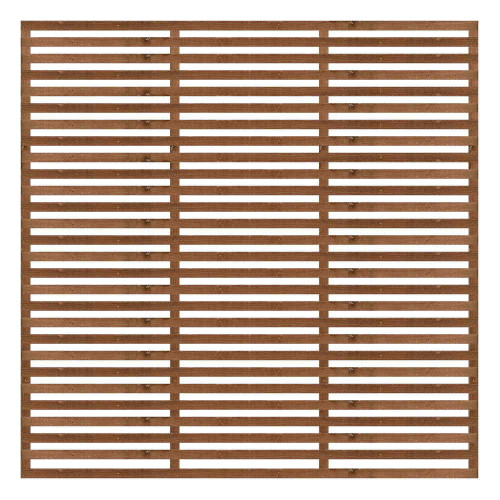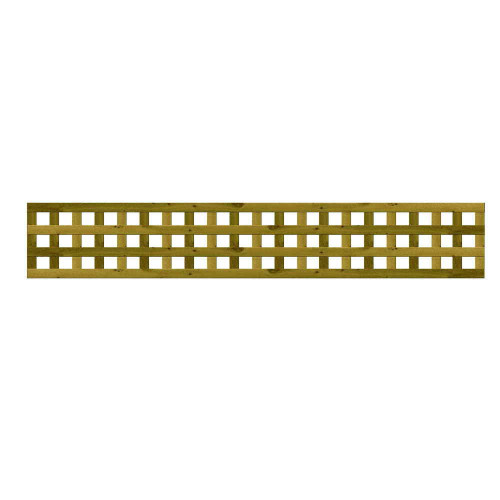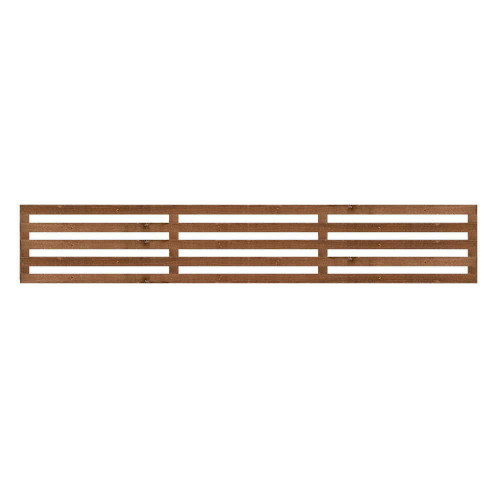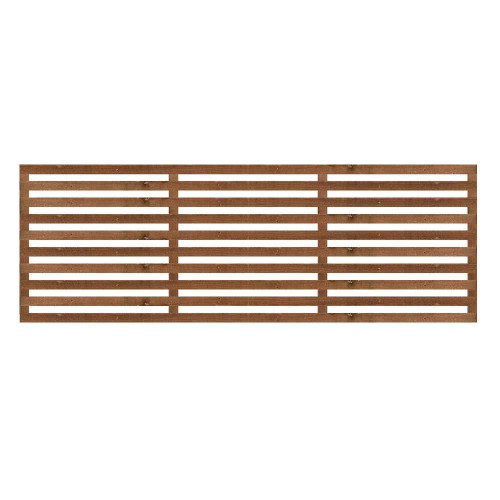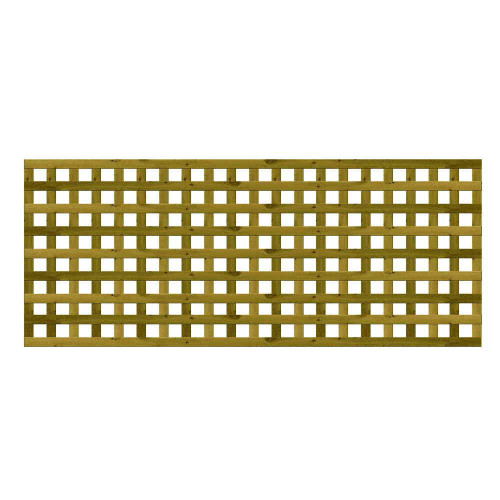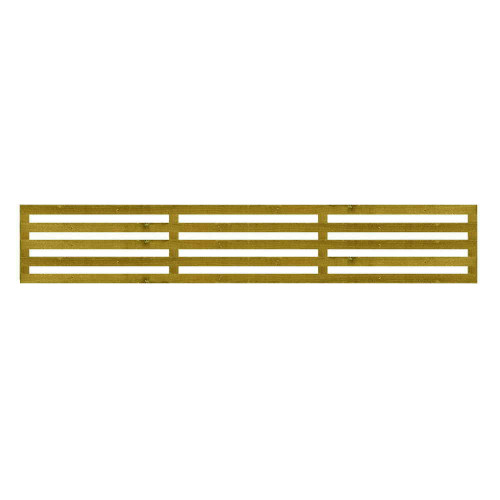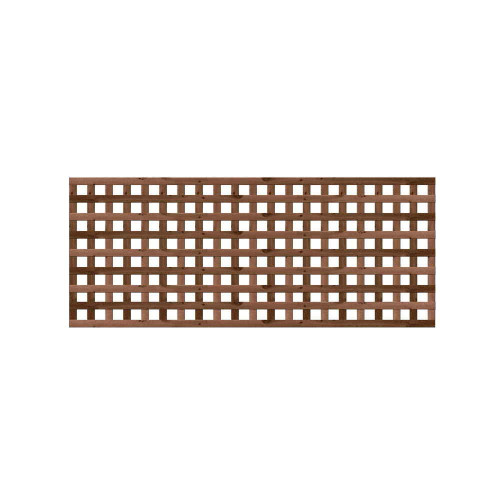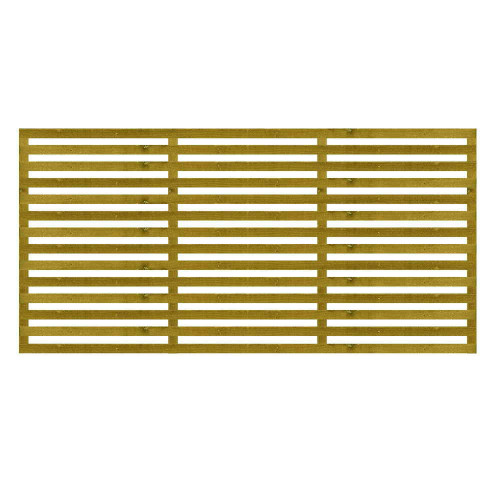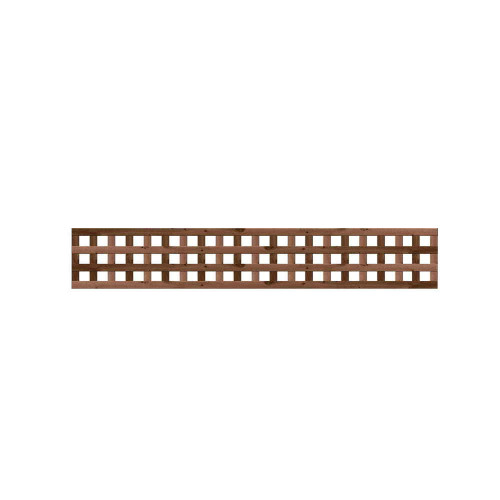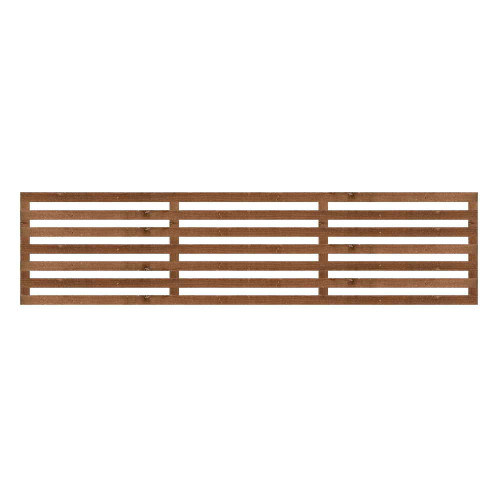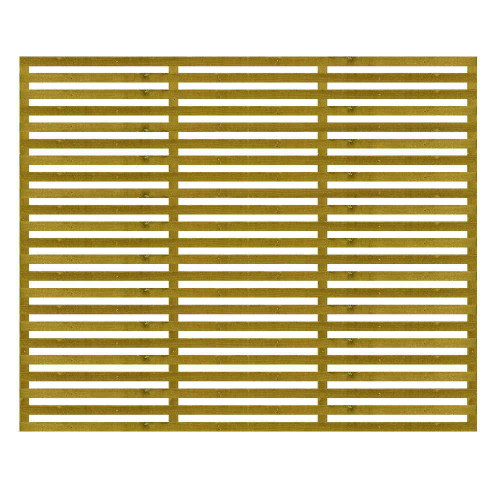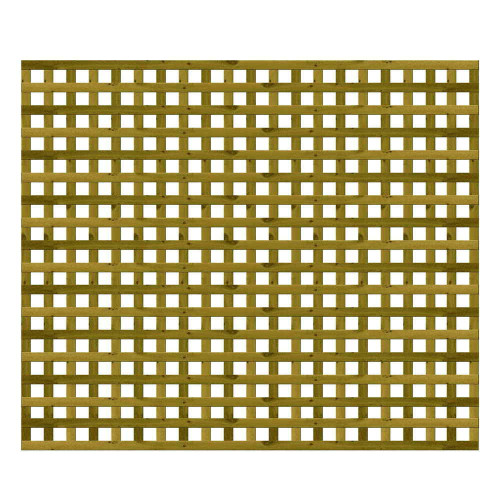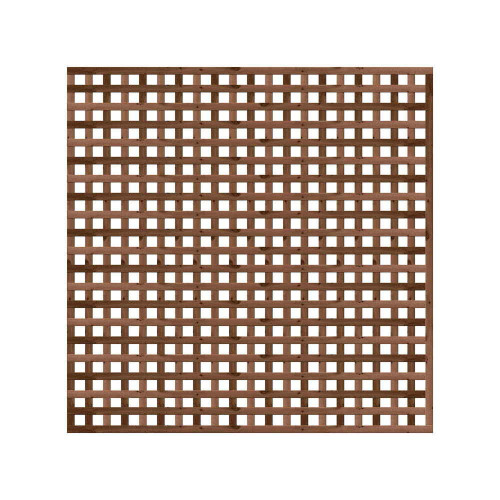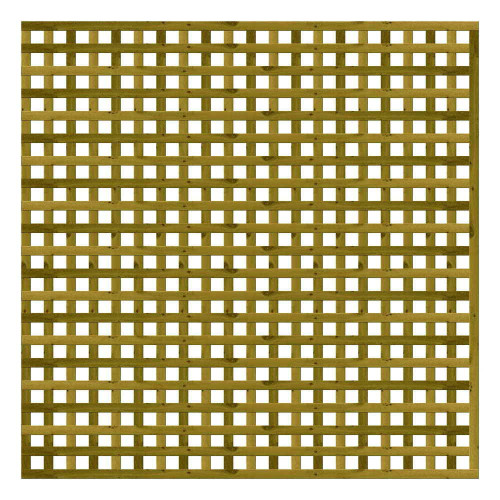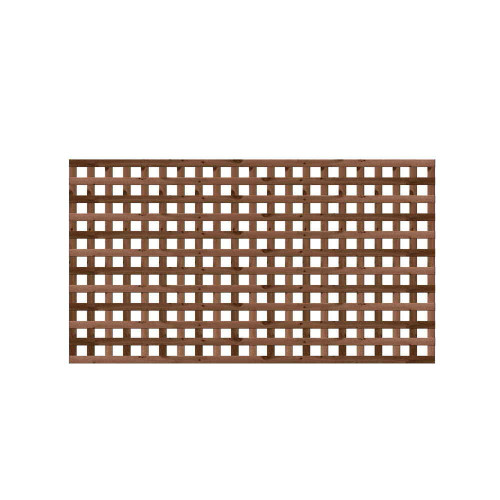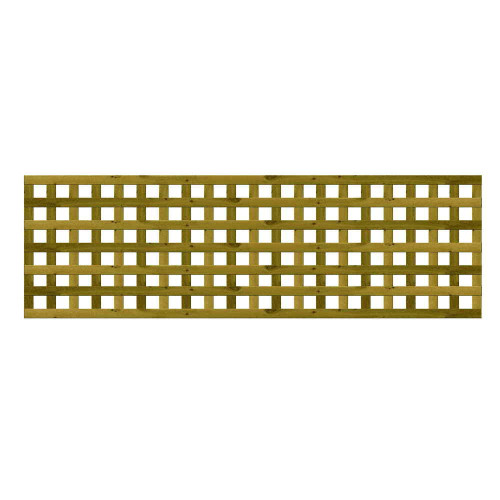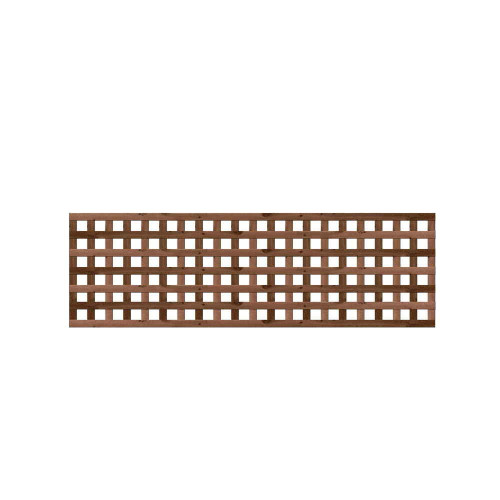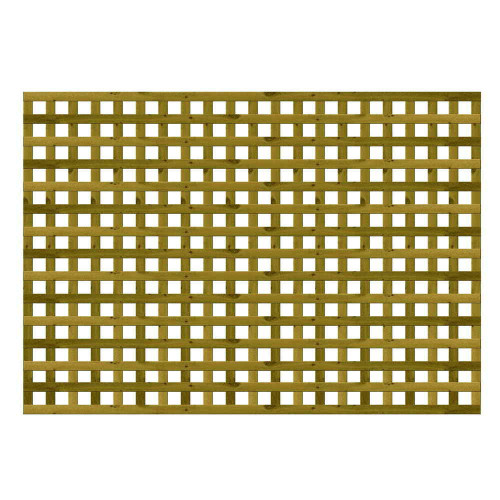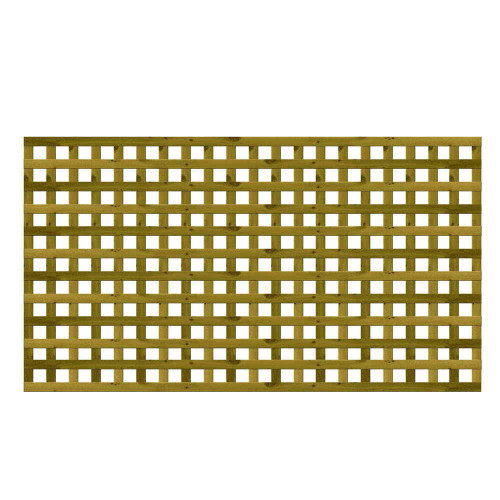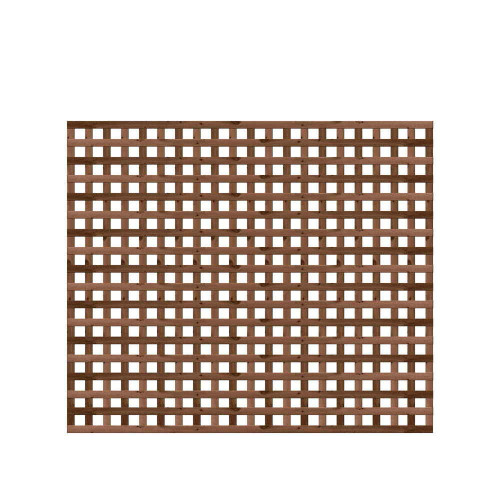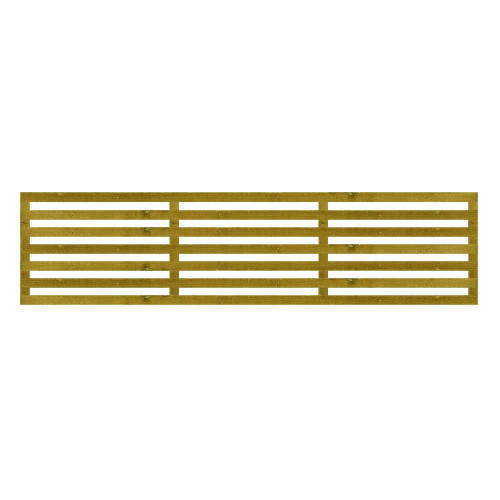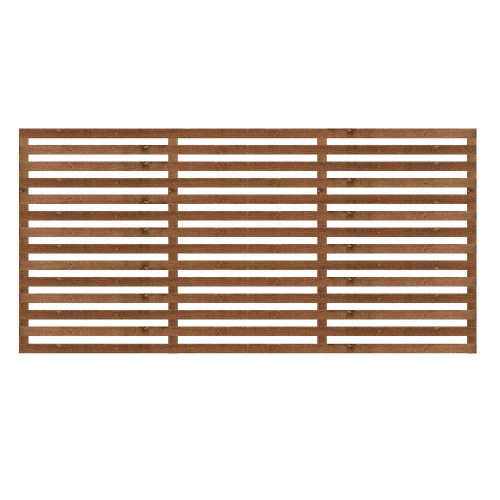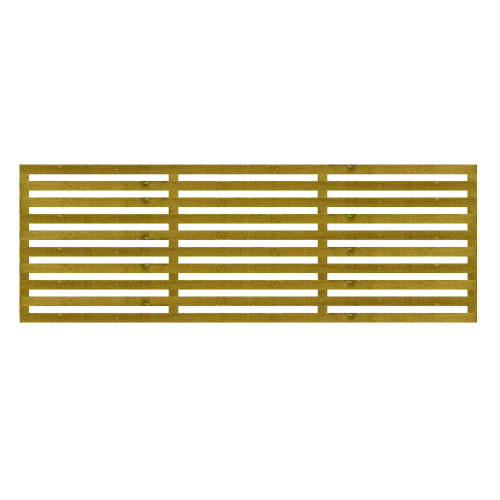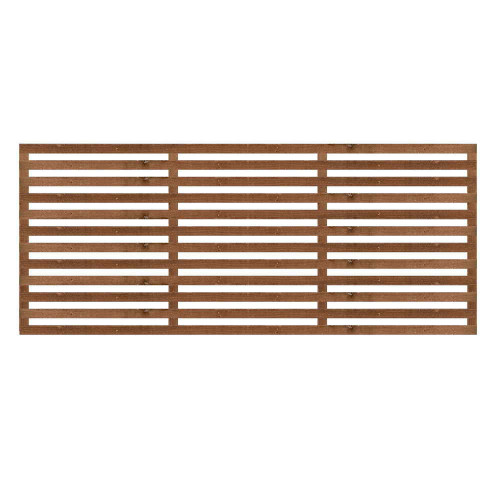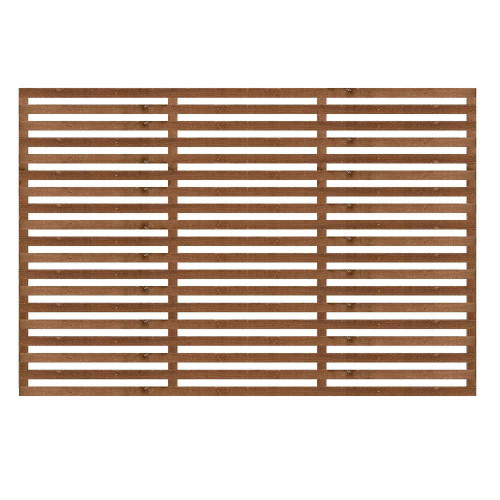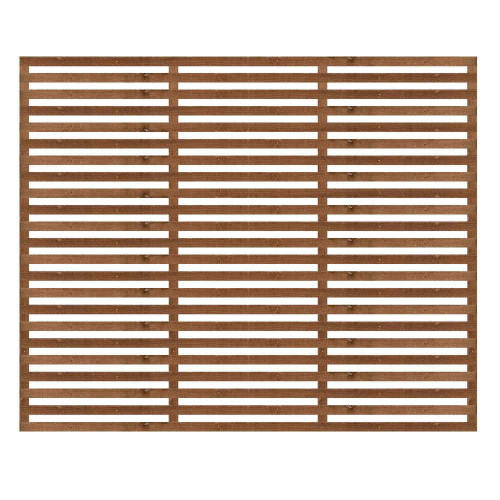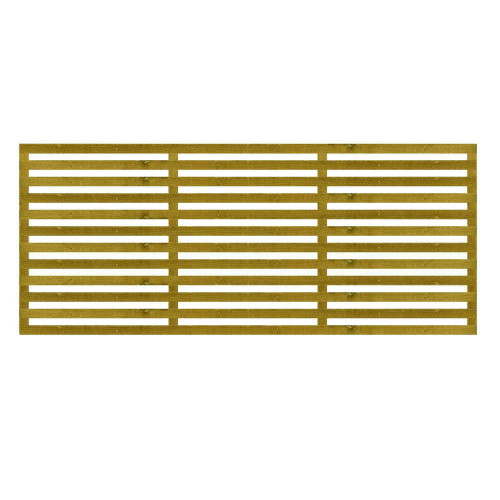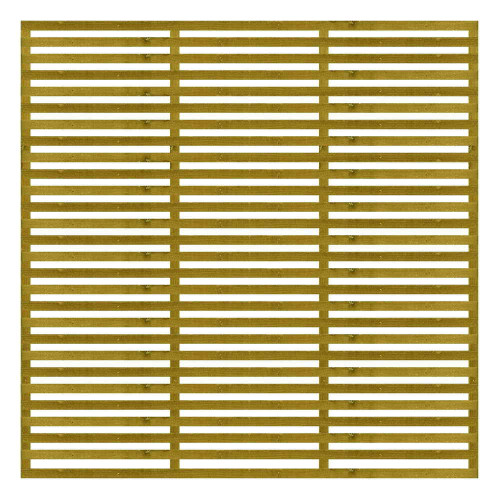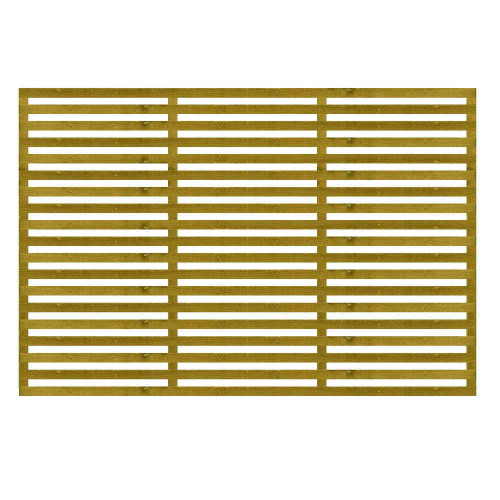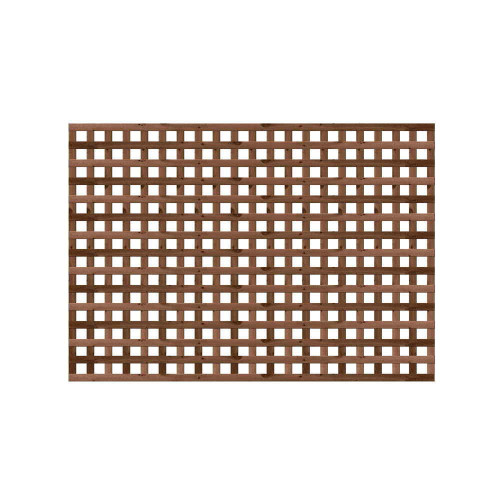



Quick answer: Choose Horizontal Slatted Trellis when you want contemporary horizontal lines, filtered screening and a screen that still feels light and open. Choose Privacy Square Trellis when closer visual interruption, climbing-plant support and a more traditional lattice appearance matter more. East Coast Fencing's current Privacy Square Trellis uses approximately 50mm openings, while Horizontal Slatted Trellis uses repeated horizontal battens. Neither is completely private like a solid Fence Panel, so consider actual sightlines as well as the panel height.
Horizontal Slatted Trellis and Privacy Square Trellis are both designed to provide more screening than very open decorative lattice without creating a completely solid timber barrier.
They achieve that result in different ways.
Horizontal Slatted Trellis uses repeated horizontal timber lines. Privacy Square Trellis uses a close square grid with openings of approximately 50mm.
The difference affects much more than appearance. It changes sightlines, plant support, how the panel feels in a small garden and how easily you can visually connect one area of the garden with another.
If you are choosing between the two, start with what the screen needs to do rather than which pattern you prefer in isolation.
What Is Horizontal Slatted Trellis?
Horizontal Slatted Trellis is a framed timber screen built around repeated horizontal battens.
East Coast Fencing manufactures the current range from pressure-treated rough-sawn timber.
The design creates strong horizontal lines while leaving regular openings through the panel.
This gives it a combination of:
- Filtered screening
- Light transmission
- Airflow
- Plant support
- A contemporary appearance
Current approximately 1.83m-wide products are available in several useful heights, from low topper-sized sections through to much taller screens.
What Is Privacy Square Trellis?
Privacy Square Trellis uses horizontal and vertical battens to create a close square grid.
Current East Coast Fencing Privacy Square Trellis uses approximately 50mm square openings and is manufactured in-house from pressure-treated 16 x 38mm rough-sawn trellis batten.
The smaller apertures make it noticeably denser than Traditional Square Trellis, which uses approximately 100mm openings.
Privacy Square Trellis therefore provides:
- Closer filtered screening
- Numerous plant-training points
- Good airflow
- Useful light transmission
- A regular traditional grid
Despite the name, it is still trellis rather than solid privacy fencing.
Horizontal Slatted vs Privacy Square Trellis At A Glance
| Feature | Horizontal Slatted Trellis | Privacy Square Trellis |
|---|---|---|
| Pattern | Horizontal battens | Close square grid |
| Appearance | Contemporary | Traditional to neutral |
| Immediate screening | Filtered | Closer filtered screening |
| Light | Good | Good |
| Airflow | Good | Good |
| Climbing Plants | Good with training | Very good |
| Fence Topper | Well suited | Well suited |
| Garden Zoning | Excellent | Very good |
Which Trellis Gives More Privacy?
Privacy Square Trellis generally provides the closer visual screen because its approximately 50mm square openings repeatedly interrupt the view in both directions.
Horizontal Slatted Trellis can also provide useful screening, but its horizontal gaps create longer continuous sightlines.
This means the amount you can see through it can change considerably according to:
- Your distance from the panel
- The viewing angle
- The height of the viewer
- The position of the screen
Neither should be treated as a replacement for a solid Closeboard or similarly private Fence Panel where complete visual screening is essential.
Why Does Viewing Angle Matter With Horizontal Slats?
A slatted screen can look relatively closed from one position and noticeably more open from another.
The horizontal timber interrupts a straight view, but the gaps continue across much of the panel width.
Someone standing at a different height or moving closer to the screen may therefore gain a clearer sightline through those gaps.
This matters particularly around:
- Patios
- Outdoor dining areas
- Seating areas
- Garden rooms
If privacy is important, assess the screen from the actual positions where people will stand or sit.
Does Privacy Square Trellis Block Every Sightline?
No.
The smaller square openings provide closer screening, but they remain openings.
At short distances you can still see through them.
The product works better when the goal is to:
- Break up direct views
- Make a seating area feel more enclosed
- Support plants that will provide additional cover
- Retain light and airflow
If the requirement is that someone immediately beside the boundary should not be able to see through it, use a more solid fencing solution.
Which Is Better For A Modern Garden?
Horizontal Slatted Trellis is usually the more obvious choice.
The straight repeated lines complement:
- Contemporary paving
- Rendered walls
- Modern extensions
- Garden rooms
- Linear raised beds
- Structured planting
The horizontal emphasis can make the panel itself a visible design feature rather than simply a support that disappears behind plants.
Which Is Better For A Traditional Garden?
Privacy Square Trellis often integrates more naturally with traditional fencing and planting.
The regular square pattern works well alongside:
- Closeboard fencing
- Waney Lap Fence Panels
- Cottage-style planting
- Brick walls
- Traditional patios
That does not mean Horizontal Slatted Trellis cannot be used in an older garden.
A contemporary screen can create an effective contrast against established brick, mature shrubs and traditional planting.
Which Is Better For Climbing Plants?
Privacy Square Trellis has an advantage where plant support is one of the main reasons for installing the panel.
The approximately 50mm grid provides frequent intersections and openings in both directions.
This gives stems and plant ties numerous points to work with.
Horizontal Slatted Trellis can still support climbing plants, but many climbers need more guidance because the principal timber members run in one direction.
Do not assume every climber will naturally weave itself neatly through horizontal slats.
Can Clematis Grow On Horizontal Slatted Trellis?
Yes, with suitable guidance.
Clematis climbs by wrapping leaf stems around relatively small supports.
Depending on the trellis construction and the individual plant, it may benefit from:
- Soft plant ties
- Additional thin support
- Regular early training
Privacy Square Trellis gives a young plant more repeated points to work through without changing the appearance of the screen substantially.
Can Climbing Roses Grow On Slatted Trellis?
Yes, but climbing roses generally require tying and training rather than attaching themselves automatically.
The horizontal arrangement can actually be useful because long rose stems can be trained sideways across the panel.
This encourages the plant to spread over the screen rather than simply growing vertically.
Remember that a mature climbing rose can become heavy.
Make sure the panel, posts and fixings are suitable for the eventual plant rather than just the young rose at planting time.
Which Is Better For Evergreen Screening?
Either can work as the support behind suitable planting.
Privacy Square Trellis provides more immediate screening before the plants mature.
Horizontal Slatted Trellis creates a cleaner visible structure during periods when planting is sparse.
Evergreen climbers can substantially change the behaviour of either screen.
Once foliage fills the openings, it can add:
- Weight
- Wind resistance
- Moisture around the timber
An open trellis covered by dense evergreen growth may behave much more like a solid screen in windy conditions.
Which Lets More Light Through?
Both are intended to preserve more light than solid fencing.
The exact result depends on the amount of timber and spacing in the particular panel.
Horizontal Slatted Trellis gives clear horizontal openings.
Privacy Square Trellis creates many smaller openings spread evenly across the panel.
Light behaviour also changes once plants are introduced.
A bare Privacy Square panel may remain reasonably bright, while the same panel covered by dense ivy can become much darker.
Which Provides Better Airflow?
Both allow air to pass through the panel.
This makes either considerably more open than a predominantly solid Fence Panel.
Airflow is useful where you want to:
- Avoid heavily enclosing a patio
- Create internal garden divisions
- Screen planting without forming a solid wall
- Reduce the visual mass of a tall timber screen
Do not translate "allows airflow" into "does not catch wind".
Both panels still need sound posts and appropriate fixings.
Which Is Better In A Windy Garden?
There is no useful universal winner.
Both are open timber screens, so both allow more air through than solid fencing when unplanted.
The important factors are:
- Panel height
- Post section
- Post foundations
- Fixings
- Exposure
- Future plant coverage
A low bare Horizontal Slatted Trellis topper may place relatively little additional demand on a sound fence.
A tall Privacy Square panel covered by mature evergreen planting is a very different installation.
Which Is Better For A Fence Topper?
Both work well as topper styles.
Your choice depends mainly on the look and level of screening required.
Choose Horizontal Slatted Trellis When:
- You want a contemporary top line
- The trellis itself should remain visually prominent
- You want filtered rather than close screening
- The adjoining garden already uses horizontal timber details
Choose Privacy Square Trellis When:
- You want closer filtered screening
- Climbing plants are an important part of the design
- A square lattice complements the existing fencing
- You want smaller openings above a solid lower panel
Current useful topper heights include approximately 300mm, 450mm and 600mm across suitable trellis products.
Does A 300mm Topper Provide Much Privacy?
It can interrupt views over the existing fence, but it remains a relatively shallow addition.
A 300mm Horizontal Slatted Trellis is mainly a finishing component with some additional screening.
A 300mm Privacy Square Trellis gives a closer pattern across the same height.
If the problem is overlooking substantially above the existing fence, a deeper topper may be required.
Always consider the complete finished fence height and supporting structure before increasing the topper size.
What About 450mm Trellis?
A 450mm panel creates a much clearer upper section.
It provides more useful area for:
- Screening
- Climbing plants
- Decorative impact
The difference between the two patterns also becomes more noticeable as the topper becomes deeper.
Horizontal slats create a broad linear band, while Privacy Square Trellis produces a closer lattice screen.
What About 600mm Trellis?
At approximately 600mm high, the trellis becomes a significant part of the finished boundary.
This is where Horizontal Slatted Trellis begins to work as both a topper and a meaningful screen.
A 600mm Privacy Square Trellis creates a relatively large area of close lattice.
With either option, inspect the existing Fence Posts carefully before installation because another 600mm of timber creates noticeably more exposed area than a shallow topper.
Which Is Better As A Freestanding Garden Screen?
Horizontal Slatted Trellis is particularly effective for freestanding garden zoning.
It can divide:
- Patios and lawns
- Dining and seating areas
- Garden rooms and surrounding planting
- Utility areas
- Different landscaping zones
The horizontal lines define the space without creating the appearance of another conventional boundary fence.
Privacy Square Trellis is preferable where the division also needs to support substantial planting or provide closer visual separation.
Which Is Better Around A Patio?
Horizontal Slatted Trellis works particularly well around contemporary patios because it provides enough definition to create an outdoor room while retaining visual depth.
Privacy Square Trellis works well where:
- The patio is overlooked
- Climbing plants will form part of the finished screen
- A closer lattice feels more appropriate to the garden
If immediate strong privacy is required, neither may be as suitable as a more substantial Fence Panel.
Which Is Better For A Small Garden?
Horizontal Slatted Trellis can be particularly effective because the repeated horizontal lines draw the eye sideways.
This can visually emphasise width in a narrow garden.
The openings also prevent the panel from feeling like a completely solid wall.
Privacy Square Trellis can still work well in a compact garden, especially where planting will eventually soften the grid.
The smaller openings can make it feel slightly more enclosed, which may be useful around a seating area but less desirable along every side of a narrow space.
Which Is Better For Hiding Bins Or Utility Areas?
Neither should automatically be selected where complete concealment is required.
Horizontal gaps and square openings both allow some visibility.
Privacy Square Trellis provides the closer immediate screen of the two.
For bins, equipment or other objects you want fully hidden, a more solid screen may be more effective.
Trellis works better where the aim is to soften the view rather than completely remove it.
Which Looks Better Beside Raised Beds?
Horizontal Slatted Trellis works particularly naturally with modern Railway Sleeper or timber raised beds.
The repeated horizontal lines can visually relate to stacked landscaping timber.
Privacy Square Trellis works particularly well where the raised bed contains climbers that will use the screen.
Whichever style you choose, keep the soil contained within the raised bed.
Do not bank soil directly against the trellis.
Can Either Trellis Be Fixed To A Wall?
Yes, with a suitable fixing arrangement.
Allowing some space behind the trellis can make it easier to:
- Train plant stems
- Use plant ties
- Improve airflow
- Maintain the wall
- Decorate or maintain the trellis later
Privacy Square Trellis gives climbers more openings to weave through.
Horizontal Slatted Trellis can create a cleaner architectural backdrop where plants are secondary to the timber design.
Can Horizontal Slatted And Privacy Square Trellis Be Mixed?
Yes, but use natural transition points.
For example, you might use:
- Horizontal Slatted Trellis around a modern patio
- Privacy Square Trellis around a planted seating area
- Horizontal slats beside a garden room
- Privacy lattice against a wall with climbers
Good places to change style include:
- Corners
- Paths
- Gates
- Changes in level
- Edges of patios
A random change halfway along one straight uninterrupted screen is harder to make look deliberate.
Can They Be Installed On Sloping Ground?
Yes.
Rigid rectangular trellis panels are normally stepped as ground level changes.
Keeping each panel level matters particularly with Horizontal Slatted Trellis.
The strong horizontal lines make even a small unwanted angle easy to see.
Privacy Square Trellis also benefits from accurate installation because the repeated grid quickly reveals a panel that is out of level.
Can Horizontal Slatted Trellis Be Cut To Width?
Timber trellis can be altered where necessary, but cutting a finished framed panel needs planning.
Horizontal slats cut at one end must remain securely supported by a suitable new frame edge.
Do not simply saw through the panel and leave multiple unsupported batten ends.
Use a standard size where possible and modify only where the actual fence bay requires it.
Can Privacy Square Trellis Be Cut To Width?
Yes, with the same basic caution.
Cutting through Privacy Square Trellis can release several horizontal lattice sections from the outer frame.
The approximately 50mm pattern also makes poorly proportioned final openings easy to notice.
Plan:
- The finished width
- The new frame position
- The remaining square pattern
before cutting.
Are Both Pressure Treated?
Current East Coast Fencing Horizontal Slatted and Privacy Square Trellis ranges are pressure treated for outdoor use.
Pressure treatment improves the durability of the timber, but it does not turn the panels into maintenance-free products.
Natural timber can still:
- Weather
- Change colour
- Develop surface algae
- Move slightly as moisture levels change
Keep the panels sensibly clear of standing water and unnecessary soil contact.
Do Brown And Green Trellis Perform Differently?
The treatment colour should mainly be treated as an appearance choice rather than a ranking of structural quality.
Brown treatment creates a warmer darker initial tone.
Green or natural treatment leaves a different initial appearance that suits many other pressure-treated fencing products.
Neither is equivalent to opaque paint.
Expect:
- Natural grain
- Knots
- Saw texture
- Colour variation
- Gradual weathering
Which Is Easier To Paint?
Both require more work than a solid flat panel because several faces and edges remain visible.
Horizontal Slatted Trellis requires access to:
- Slat faces
- Slat edges
- Frames
- Visible surfaces between the gaps
Privacy Square Trellis contains considerably more intersections and smaller openings, which can make decorative coating more time-consuming.
If you intend to apply a decorative finish, doing so before dense climbing plants become established is considerably easier.
Which Is Easier To Clean?
Horizontal Slatted Trellis is generally a little simpler because its layout contains long straight timber surfaces and larger continuous gaps.
Privacy Square Trellis has more corners and lattice intersections where:
- Leaves
- Cobwebs
- Plant debris
- Algae
can collect.
For either panel, begin with gentle brushing rather than aggressive pressure washing.
Excessive pressure can damage timber fibres and roughen the surface.
Does One Last Longer Than The Other?
There is no useful universal lifespan advantage based simply on whether the timber is arranged horizontally or as a square grid.
Durability depends more on:
- Timber treatment
- Installation
- Ground clearance
- Exposure
- Fixings
- Plant loading
- Maintenance
A properly supported, pressure-treated panel kept away from persistent ground moisture has a much better starting point than either pattern installed badly.
Which Needs Stronger Posts?
Post requirements should be based on the complete screen rather than pattern alone.
A tall panel needs more support than a shallow topper.
A heavily planted panel needs more support than a bare decorative screen.
A highly exposed screen needs more careful foundations than the same panel in a sheltered internal garden position.
Consider:
- Panel height
- Total run length
- Wind exposure
- Post spacing
- Future planting
before selecting the supports.
Common Mistakes When Choosing Between Them
- Assuming Privacy Square Trellis is completely private because of its name
- Choosing Horizontal Slatted Trellis without checking viewing angles
- Buying a tall screen where a low topper would solve the actual problem
- Ignoring future climbing-plant weight
- Choosing a trellis pattern before deciding how much light to retain
- Fixing tall panels to inadequate posts
- Allowing timber trellis to remain in persistent soil contact
- Assuming an open panel creates no wind load
- Using the panel as a retaining structure behind raised soil
- Cutting a framed panel without rebuilding the cut edge
- Mixing several trellis styles without a clear visual transition
- Forgetting that mature planting can eventually hide most of the timber pattern
Which Should You Choose?
Choose Horizontal Slatted Trellis when the screen itself is meant to form a visible contemporary garden feature.
It is particularly suited to:
- Modern patios
- Garden rooms
- Internal garden zoning
- Raised-bed backdrops
- Contemporary Fence Topper Trellis
Choose Privacy Square Trellis where the emphasis is on closer filtered screening and planting.
It is particularly suited to:
- Climbing-plant screens
- Overlooked seating areas
- Traditional fencing
- Wall-mounted planting support
- Fence toppers requiring smaller openings
If complete immediate privacy is required, move beyond trellis and consider a more solid Fence Panel instead.
FAQs
Is Horizontal Slatted Trellis More Private Than Privacy Square Trellis?
Usually not overall. Horizontal Slatted Trellis provides useful visual interruption, but Privacy Square Trellis uses approximately 50mm openings to create a closer grid. Actual privacy still depends on height, distance and viewing angle.
Can You See Through Privacy Square Trellis?
Yes. It remains an open lattice product rather than a solid panel. The smaller openings make views less direct but do not remove them completely.
Which Trellis Is Better For Climbing Plants?
Privacy Square Trellis is particularly convenient because its close grid provides repeated points for stems and plant ties. Horizontal Slatted Trellis also works well, particularly for plants that can be trained sideways.
Which Trellis Is Better For A Modern Garden?
Horizontal Slatted Trellis is generally the more contemporary choice because of its strong linear appearance.
Can Both Types Be Used As Fence Toppers?
Yes. Lower-height versions can form attractive toppers where the existing posts and support arrangement are suitable for the added height.
Which Trellis Lets More Light Through?
Both allow significantly more light through than solid fencing. The exact difference depends on the spacing and panel dimensions, as well as whether climbing plants eventually cover the openings.
Which Is Better For A Windy Garden?
Both allow airflow when bare, but neither removes the need for strong posts and secure fixings. Dense mature planting can greatly increase the wind resistance of either panel.
Can Horizontal Slatted And Privacy Square Trellis Be Used Together?
Yes. Use natural transition points such as corners, gates, paths or separate garden zones so the change in pattern looks intentional.
Choose The Pattern From The Job The Screen Needs To Do
Horizontal Slatted Trellis and Privacy Square Trellis sit in a similar part of the fencing range, but they solve different garden problems particularly well.
Horizontal Slatted Trellis is the stronger choice when contemporary appearance, garden zoning and clean horizontal lines are central to the design.
Privacy Square Trellis is the stronger choice when closer filtered screening and climbing-plant support matter more.
Neither provides the complete immediate privacy of solid fencing.
Before ordering, stand where the screen will actually be viewed from. Decide how much visibility is acceptable, how much light you want to retain and whether planting will eventually fill the openings.
Then choose the panel height and supporting posts around that finished screen.
The right choice is not simply horizontal versus square. It is whether you want the timber pattern itself to be the feature, or whether you want a closer framework that planting can gradually turn into a greener screen.