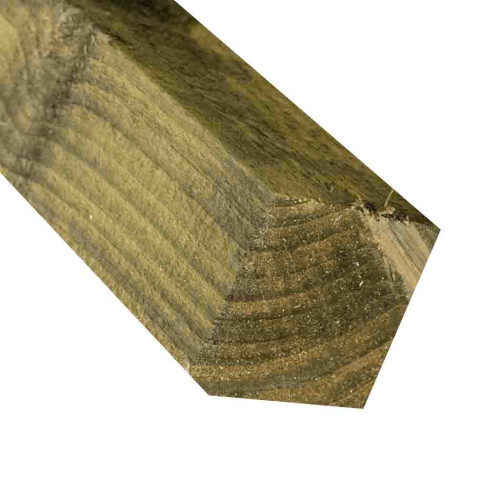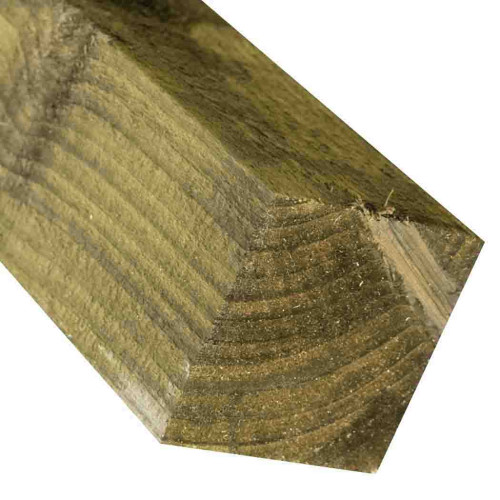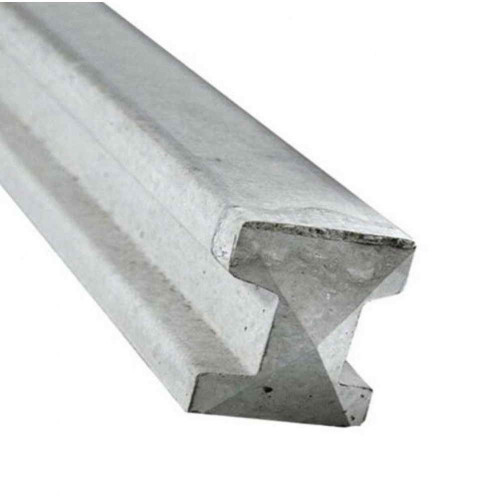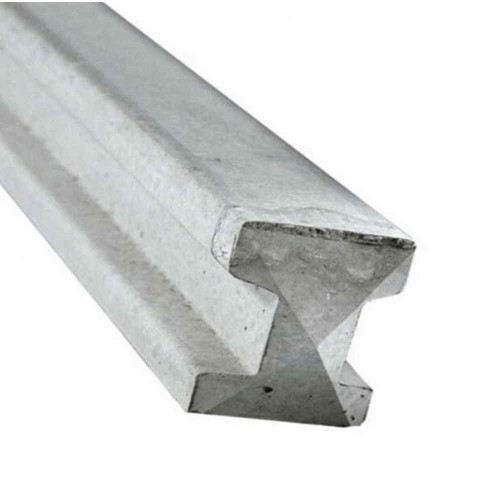




Quick answer: Choose fence posts by matching the material, length and section to the fence height, panel weight, ground conditions and wind exposure. Pressure-treated wooden posts provide a natural finish and straightforward fixing, while slotted concrete posts resist rot and simplify panel replacement. Use intermediate, end, corner and three-way posts in the correct positions, and choose a substantially larger gate post where the post must carry a moving garden gate.
Fence posts are the structural foundation of a garden fence. Fence panels, gravel boards, trellis and garden gates all rely on the posts remaining upright, correctly spaced and firmly supported.
Choosing the wrong post can lead to leaning, movement, rattling panels, damaged fixings and premature failure. A lightweight decorative boundary may only need modest supports, while a tall solid fence in an exposed garden places much greater pressure on every post and foundation.
This fence posts buying guide explains the differences between wooden and concrete fence posts, available sizes, post types, treatment colours, gate posts, repair spurs and post supports. It also covers calculating post length, planning corners and gates, working with different ground conditions and choosing compatible fence panels and gravel boards.
What Should You Consider Before Buying Fence Posts?
Start with the complete fence design rather than choosing the posts separately.
Consider:
- The finished height of the fence
- The height and weight of the fence panels
- Whether gravel boards will be fitted
- Whether trellis will be added above the panels
- The total length of the boundary
- The site's wind exposure
- The ground and soil conditions
- Whether the fence changes direction
- Whether a garden gate is included
- Whether the posts will be set in the ground or surface mounted
- The preferred appearance
- How much future maintenance is acceptable
The strongest post is not automatically the correct post. It must also suit the panel system, gravel boards, installation method and layout.
Fence Post Types At A Glance
| Post Type | Main Use | Key Advantage | Main Consideration |
|---|---|---|---|
| Wooden Fence Post | Timber panels, rails and trellis | Natural appearance and easy fixing | Needs protection from prolonged moisture |
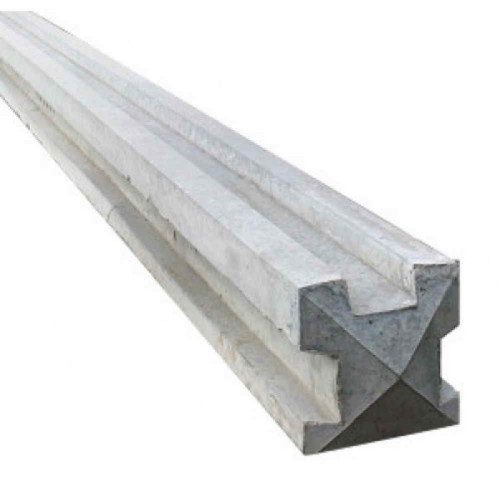
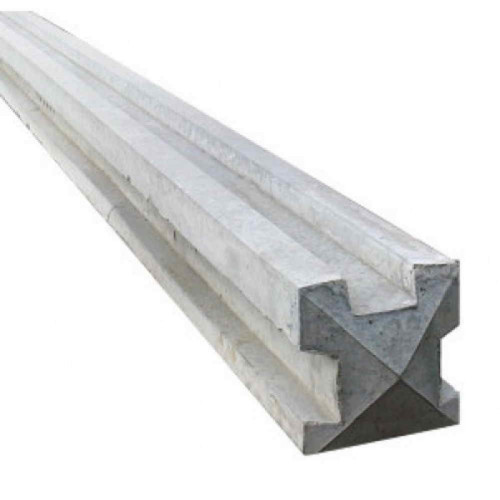
| Concrete Intermediate Post | Straight fence runs | Slotted on opposite sides | Heavy to handle |
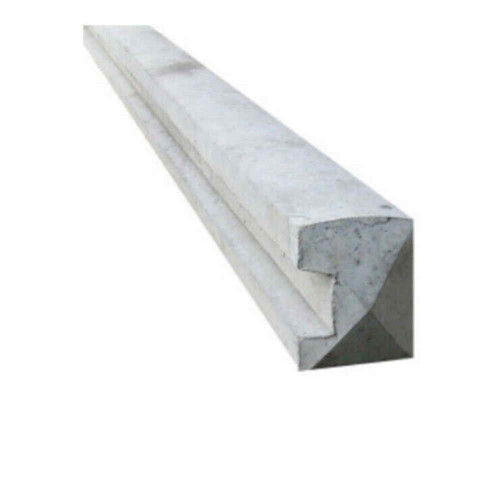
| Concrete End Post | Finishing a fence run | Single panel slot | Must face the correct direction |
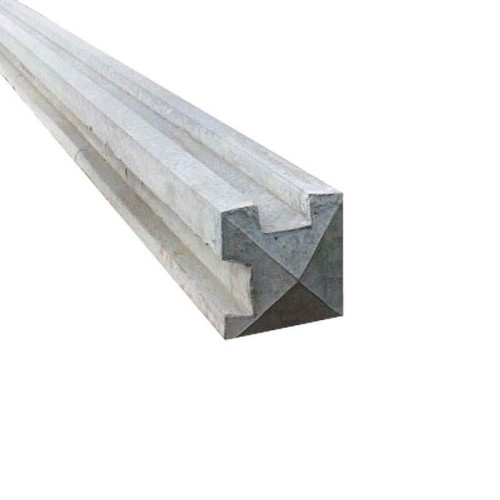
| Concrete Corner Post | A 90-degree change in direction | Slots positioned around the corner | Requires accurate alignment |
| Concrete Three-Way Post | Junctions and branching fence lines | Accepts panels in three directions | Must match the planned layout |
| Timber Gate Post | Supporting a garden gate | Substantial section for hinges and load | Requires a suitable foundation |
| Concrete Repair Spur | Supporting a damaged timber post | Can avoid replacing the complete fence | The remaining timber must be sound enough |
| Drive-In Post Spike | Suitable lighter timber structures | Avoids a conventional concrete foundation | Depends heavily on firm ground |
| Bolt-Down Post Support | Mounting timber posts on a solid base | Keeps timber above the surface | The base and fixings must resist the load |
Should You Choose Wooden Or Concrete Fence Posts?
Wooden and concrete posts can both support a durable fence when they are correctly selected and installed. The better option depends on appearance, handling, maintenance and the type of fencing being used.
Wooden Fence Posts
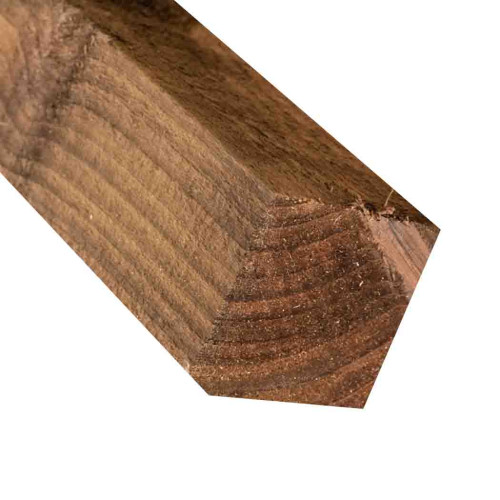
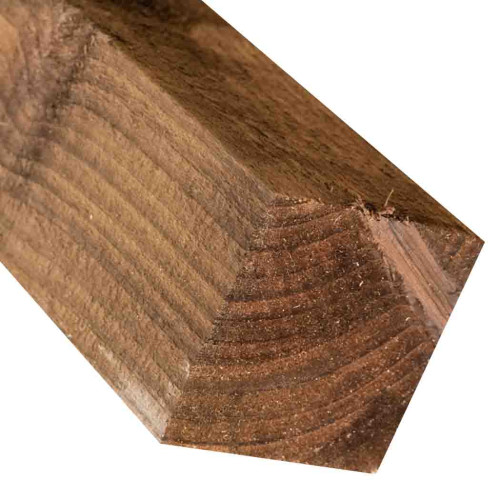
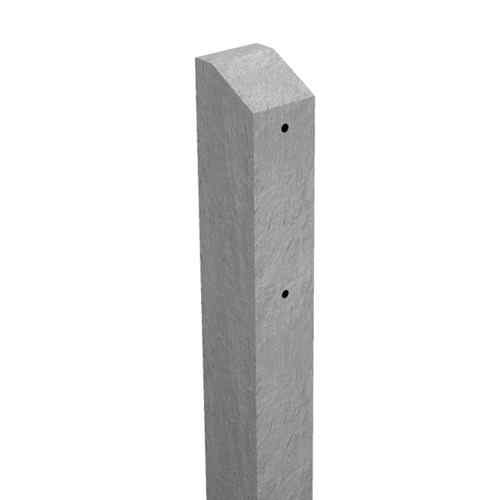
Pressure-treated wooden fence posts provide a traditional appearance and work naturally with timber fence panels, rails, gravel boards and trellis.
They are easy to drill and accept fence panel clips, brackets, exterior screws and other ironmongery. Wooden posts can also be cut where an unusual finished height is required.
The main limitation is their exposure to moisture at ground level. This area is particularly vulnerable because it is where damp soil, air and timber meet.
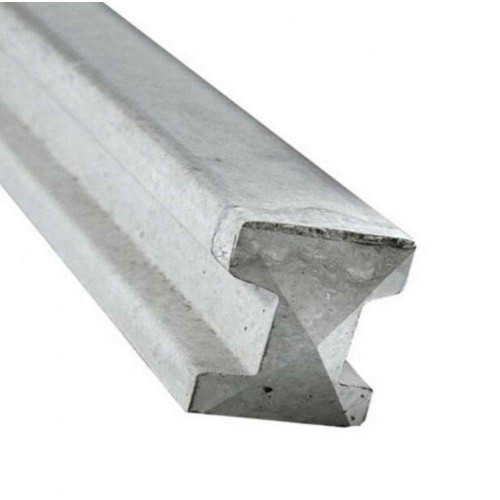
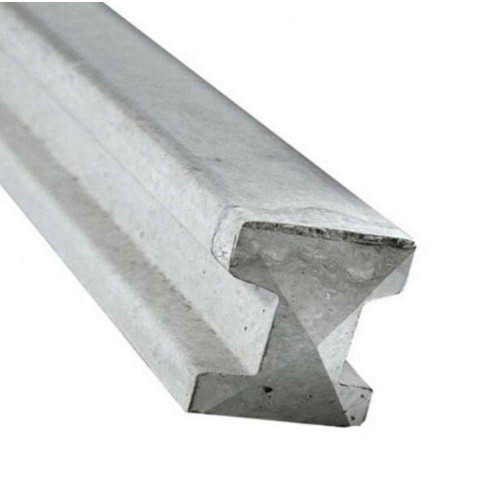
Concrete Fence Posts
Concrete fence posts do not rot and are commonly combined with slotted fence panels and concrete gravel boards.
They are particularly useful where individual panels may need replacing later. Once the panel above is safely removed, a compatible replacement can normally be lowered between the post slots.
Concrete posts are considerably heavier than timber. Installation requires careful handling, substantial foundations and accurate spacing.
| Feature | Wooden Posts | Concrete Posts |
|---|---|---|
| Appearance | Natural timber finish | Practical concrete finish |
| Handling | Relatively light | Heavy |
| Fixing panels | Clips, brackets or screws | Panels slide into slots |
| Ground-level rot | Possible over time | Does not rot |
| Cutting and alteration | Relatively straightforward | Should not normally be cut |
| Panel replacement | Fixings need removing | Compatible panels can be lifted from slots |
| Typical matching gravel board | Wooden or suitably fixed concrete | Slotted concrete or compatible timber |
What Wooden Fence Post Sizes Are Available?
The available wooden fence post range includes 75 x 75mm and 100 x 100mm sections in several lengths. Both pressure-treated brown and pressure-treated green finishes are available.
Available lengths include:
- 1.8m
- 2.4m
- 3.0m
The correct combination of section and length depends on the fence height, loading and installation method.
Should You Choose 75 x 75mm Or 100 x 100mm Wooden Posts?
75 x 75mm Wooden Posts
A 75 x 75mm post is a practical choice for lower or lighter fencing where the site is reasonably sheltered.
Possible uses include:
- Low picket fencing
- Trellis panels
- Internal garden divisions
- Lower decorative fence panels
- Lightweight structures supported by suitable foundations
Do not assume a smaller post is suitable simply because it is easier to handle. Tall solid panels create considerable leverage in strong winds.
100 x 100mm Wooden Posts
A 100 x 100mm post provides a more substantial section for taller and heavier fencing.
It is commonly considered for:
- Closeboard fence panels
- Waney lap panels
- Decorative framed panels
- Six-foot privacy fencing
- More exposed boundaries
- Projects where additional rigidity is preferred
A larger section does not replace the need for sufficient post length and a properly formed foundation.
Wooden Fence Post Size Comparison
| Post Size | Typical Suitability | Main Consideration |
|---|---|---|
| 75 x 75mm | Lower and lighter fencing | May be unsuitable for tall solid panels |
| 100 x 100mm | Taller and more substantial fencing | Heavier and requires a larger foundation |
| 150 x 150mm Gate Post | Supporting a substantial garden gate | Requires careful alignment and foundation design |
What Length Wooden Fence Post Do You Need?
The post must be long enough to provide the required height above ground while leaving sufficient material below ground or inside the chosen support.
Calculate the above-ground height by adding:
- The fence panel height
- The gravel-board height
- Any trellis or topper
- Any required clearance or capping allowance
Then allow enough additional length for the foundation or support method.
For example, a fence using a 1.8m panel above a gravel board needs a post considerably longer than 1.8m when the post will be set into the ground.
Do not choose the underground allowance from fence height alone. Soil strength, wind exposure, panel design and post section all affect the required foundation.
Wooden Fence Post Lengths At A Glance
| Post Length | General Buying Context |
|---|---|
| 1.8m | Lower fencing or surface-mounted applications, subject to design |
| 2.4m | Commonly considered for taller garden fencing |
| 3.0m | Higher systems, deeper foundations or substantial applications |
These are planning contexts rather than fixed installation rules. The post and foundation should be selected for the actual site.
What Does Pressure-Treated Timber Mean?
Pressure treatment introduces preservative into the timber to improve resistance to fungal decay and insect attack.
It does not make a post waterproof or immune to rot. Timber posts still need:
- Correct installation
- Suitable drainage
- Protection around fresh cuts
- Regular inspection
- Clearance from trapped leaves and debris
The ground line is normally the most vulnerable area because the timber is exposed to moisture, soil and air.
Brown Or Green Wooden Fence Posts?
Pressure-treated brown posts provide a warmer initial appearance, while pressure-treated green posts retain a lighter, more natural treatment colour.
The difference is mainly visual. Both finishes will weather and change colour outdoors.
Choose a finish that works with:
- The fence panels
- Wooden gravel boards
- Trellis panels
- The garden gate
- Existing sheds or timber structures
Timber is a natural product, so exact colour and grain will vary between posts.
Do Wooden Posts Twist Or Split?
Some movement is natural as timber adjusts to outdoor moisture levels. Posts may develop surface checks, small splits or slight changes in shape.
Minor surface changes do not automatically mean the post has failed. More serious concerns include:
- Severe twisting that prevents correct installation
- Deep structural splits
- Extensive softness or decay
- A post that will not remain aligned
- Damage around important fixings
Store timber posts on a firm, level surface and install them promptly to reduce unnecessary movement.
What Concrete Fence Post Types Are Available?
Concrete fence posts are available in different slot arrangements for straight runs, ends, corners and junctions.
The range includes:
- Intermediate concrete posts
- End concrete posts
- Corner concrete posts
- Three-way concrete posts
Lengths include approximately:
- 5ft or 1.5m
- 6ft or 1.8m
- 7ft or 2.1m
- 8ft or 2.4m
- 9ft or 2.7m
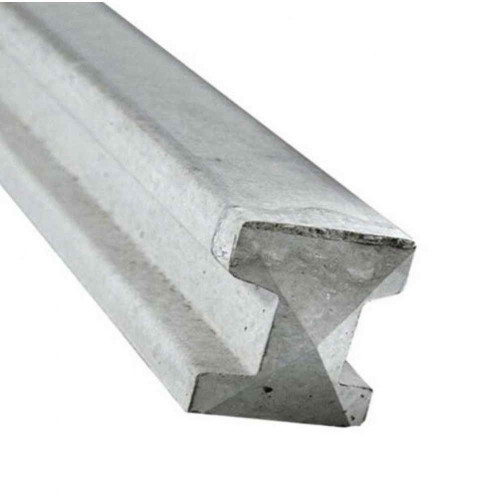
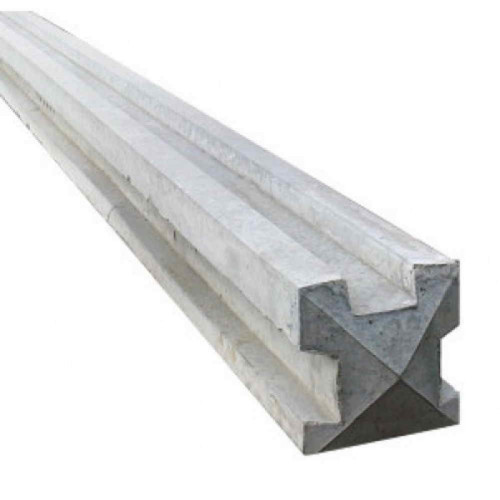
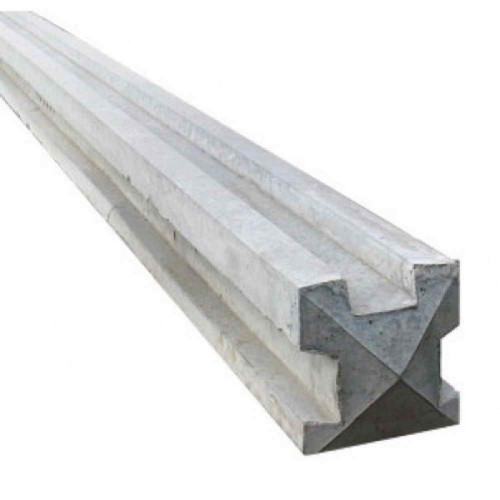
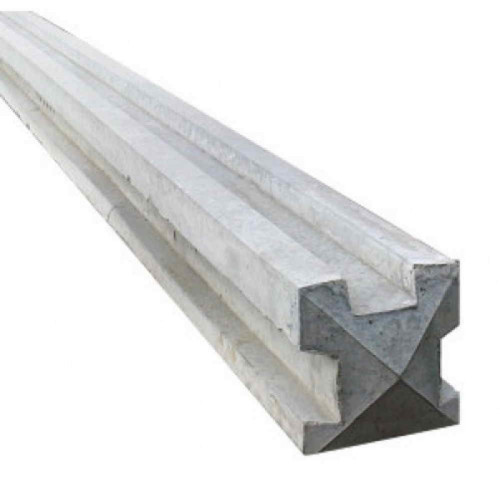
What Is A Concrete Intermediate Fence Post?
An intermediate post is used along a straight fence run. It has slots on opposite sides so one panel can finish and the next can begin.
Intermediate posts normally make up most of a straight concrete-post fence.
Use them where:
- The fence continues in a straight line
- Compatible fence panels are fitted on both sides
- Concrete or compatible wooden gravel boards are being used
Do not use an intermediate post where the fence finishes, changes direction or branches.
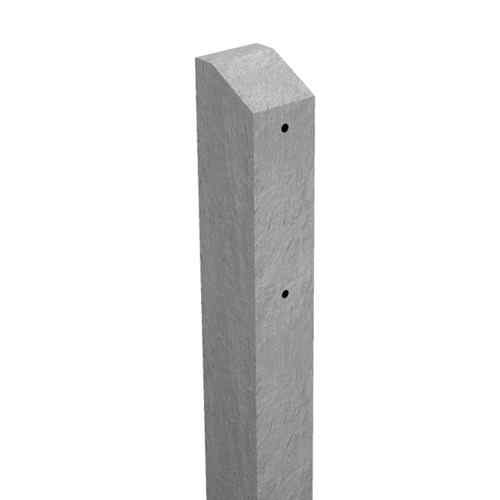
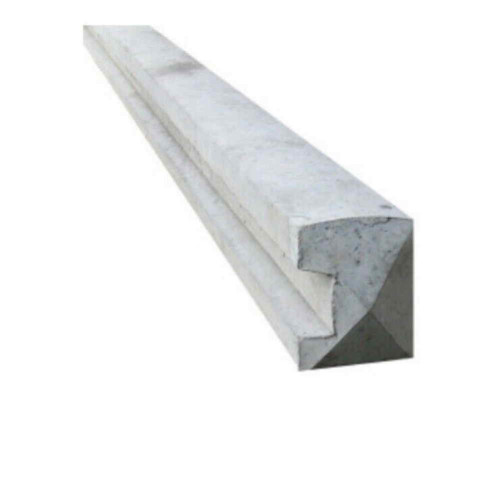
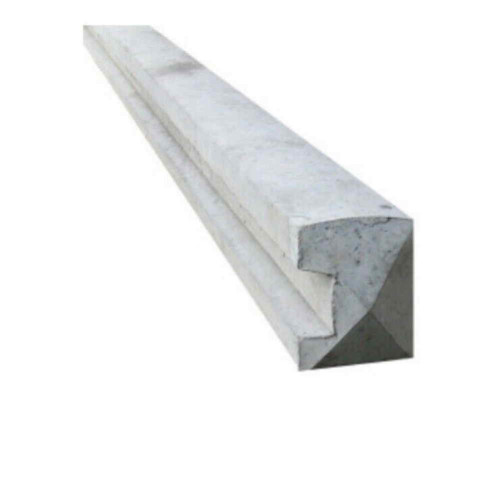
What Is A Concrete End Fence Post?
An end post has a slot on one side. It provides a finished outer face at the end of a fence run.
End posts are used:
- Beside a building
- At the end of a boundary
- Next to a gate opening where appropriate
- Where no panel continues beyond the post
Check the slot direction before setting the post. Installing it the wrong way round can leave the slot facing away from the fence panel.
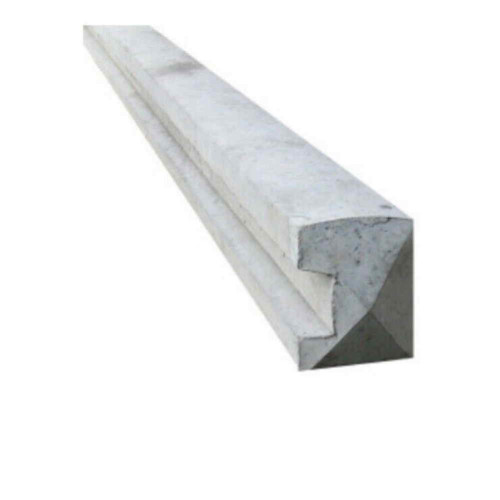
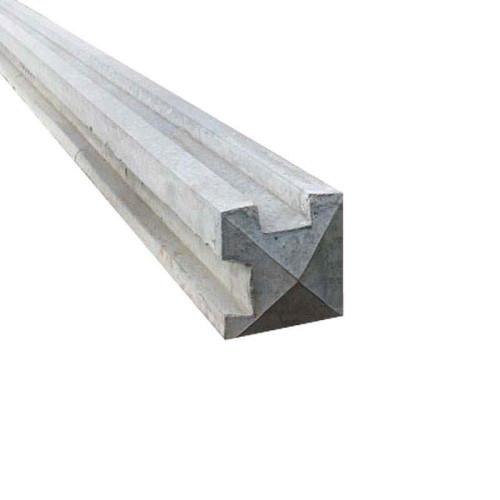
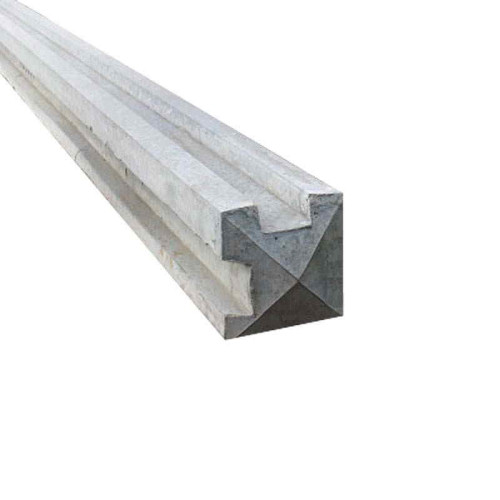
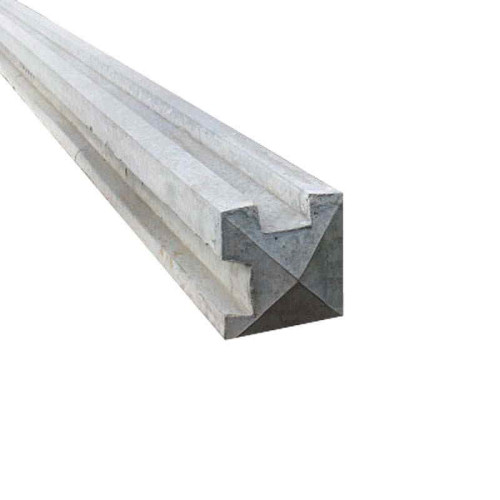
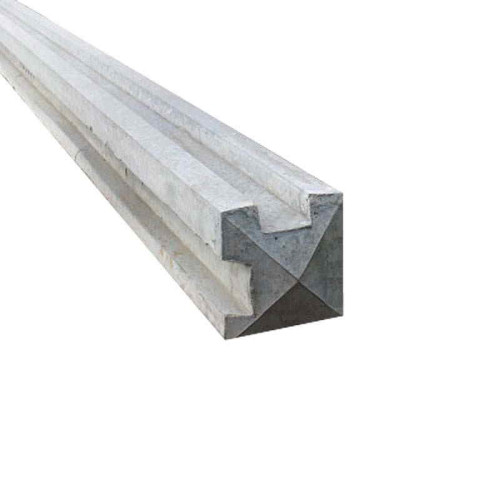
What Is A Concrete Corner Fence Post?
A corner post accepts panels on adjoining sides and is used where the fence changes direction.
It is normally required for a turn close to 90 degrees. The exact layout should be planned before excavation begins.
Corner foundations may experience force from more than one direction, so accurate setting and suitable support are important.
What Is A Concrete Three-Way Fence Post?
A three-way post allows fence panels to meet from three directions. It is useful where one fence line joins another.
Possible uses include:
- Dividing two rear gardens from a shared rear boundary
- Creating an internal garden enclosure
- Forming a T-shaped fence junction
- Connecting a side boundary to a cross fence
Plan the slot orientation carefully. A three-way post cannot correct a fence layout that has not been measured accurately.
Concrete Post Types Comparison
| Post Type | Number Of Fence Directions | Typical Position |
|---|---|---|
| Intermediate | Two in a straight line | Between panels |
| End | One | End of a fence run |
| Corner | Two around a corner | Change in direction |
| Three-Way | Three | T-junction or branching fence |
What Length Concrete Fence Post Do You Need?
Choose a post long enough for the complete above-ground fence and the required foundation depth.
The above-ground section may include:
- A fence panel
- A 6in or 12in gravel board
- A trellis topper
- Ground clearance
For example, an 8ft concrete post is often considered for a fence system with approximately 6ft above ground and a substantial section below ground. This is not suitable for every site, and deeper or larger foundations may be needed in weak or exposed ground.
A 9ft post may be appropriate where the fence system is taller, where a larger gravel board is used or where additional below-ground length is required.
Concrete Fence Post Length Guide
| Concrete Post Length | Approximate Metric Length | General Buying Context |
|---|---|---|
| 5ft | 1.5m | Low fence systems |
| 6ft | 1.8m | Lower to medium-height fencing |
| 7ft | 2.1m | Medium-height systems |
| 8ft | 2.4m | Commonly considered for taller garden fencing |
| 9ft | 2.7m | Higher systems or greater below-ground allowance |
The correct post length must be confirmed against the actual panel, gravel board, ground and foundation design.
Will Fence Panels Fit Concrete Posts?
Many standard framed fence panels are designed to fit compatible slotted concrete posts. However, nominal dimensions do not guarantee compatibility.
Check:
- The clear width between post slots
- The panel's actual width
- The panel-frame thickness
- The slot width
- The gravel-board length and thickness
- Whether the posts are upright and parallel
Existing concrete posts may have moved over time. Measure each opening at the top, middle and bottom before buying replacement panels.
Can Concrete Posts Be Used With Wooden Gravel Boards?
Compatible pressure-treated wooden gravel boards can be fitted between suitable slotted concrete posts when their dimensions match the slots and opening.
Wooden boards are lighter and easier to handle than concrete, but they need greater protection from prolonged ground moisture.
Check the thickness and length before ordering. Do not force an oversized timber board into a narrow concrete slot.
Can Wooden Posts Be Used With Concrete Gravel Boards?
Concrete gravel boards can be combined with wooden posts using a suitable support or bracket system.
The installation must account for the weight of the board and the loads placed on the fixings. Do not rely on lightweight clips that are not intended to support concrete products.
Concrete gravel boards are heavy and should be handled by enough people or suitable lifting equipment.
What Are Gate Posts?
Gate posts are substantially larger posts designed to support the weight and movement of a garden gate.
The available range includes 3.0m pressure-treated timber gate posts with a 150mm square section in brown and green finishes.
A gate post may need to resist:
- The static weight of the gate
- Repeated opening and closing
- Wind pressure on the gate
- Leverage from the hinges
- Slamming and accidental impact
Do not automatically use an ordinary fence post as a hinge post for a large or heavy gate.
Do Both Sides Of A Gate Need Large Posts?
The hinge post normally carries the greatest load, but the closing post must also support the latch, keep the opening square and resist movement.
Using suitable posts on both sides can help maintain a consistent gate opening.
Plan the following before setting either post:
- Gate width
- Gate height
- Hinge type and length
- Opening direction
- Ground clearance
- Latch position
- Finished path or paving level
What Are Concrete Repair Spurs?
A concrete repair spur is used to reinforce a timber post that has failed or decayed near ground level.
The available range includes 75 x 75mm and 100 x 100mm concrete repair spurs.
The spur is set into a new foundation beside the damaged timber post. The remaining sound section of timber is then fixed to it with suitable bolts or screws.
A repair spur may be suitable where:
- The post has decayed close to the ground
- The upper part remains reasonably sound
- The panels are still serviceable
- The fence can be supported during the repair
- A new foundation can be formed safely
When Is A Repair Spur Not Suitable?
A repair spur is not a complete cure for every damaged post.
Replace the timber post where:
- Rot extends well above ground level
- The timber will not hold fixings
- The post is deeply split
- The fence design places excessive load on the repair
- The original layout or spacing is incorrect
- Several surrounding components have failed
The repair is only as strong as the remaining timber, the new foundation and the connection between them.
What Are Drive-In Fence Post Spikes?
A drive-in fence spike is a metal support driven into suitable ground. A matching timber post is secured inside the upper socket.
The available range includes a brown 75 x 75mm post spike with a 600mm driven section.
Post spikes can be useful for:
- Lower fencing
- Lightweight garden divisions
- Suitable firm ground
- Projects where excavation is being minimised
They are not automatically suitable for tall solid panels, soft ground, rubble-filled soil or very exposed boundaries.
What Are Bolt-Down Post Supports?
Bolt-down supports hold a timber post above a solid surface. The support is fixed to concrete or another suitable structural base.
The available range includes brown supports for:
- 75 x 75mm wooden posts
- 100 x 100mm wooden posts
They may be useful on:
- Sound concrete bases
- Suitable structural slabs
- Walls designed to carry the fence load
- Other correctly prepared foundations
Do not bolt a tall fence to ordinary paving slabs or an unverified wall. The fixing is only as strong as the material beneath it.
Post Support Methods Compared
| Method | Suitable Surface | Main Benefit | Main Limitation |
|---|---|---|---|
| Post Set In Post Mix | Excavated soil | Common fencing method | Requires suitable hole and firm ground |
| Drive-In Spike | Suitable firm soil | Less excavation | Difficult in stones, rubble or weak ground |
| Bolt-Down Support | Sound structural base | Keeps timber above ground | Depends on base and anchor strength |
| Concrete Repair Spur | New foundation beside an existing post | Repairs some failed timber posts | Requires sound timber above the failure |
Should Fence Posts Be Set In Post Mix?
Rapid-setting post mix is widely used for ordinary fence-post installation. It allows a post to be positioned, braced and secured without mixing a conventional batch of concrete separately.
Follow the instructions supplied with the product. The correct sequence and water quantity may differ between products.
Post mix cannot compensate for:
- A hole that is too shallow
- Loose mud at the base
- Collapsing soil
- Standing water
- A post that is too small
- Poor bracing
- An undersized foundation
How Deep Should A Fence Post Be?
There is no single depth suitable for every fence. Required depth depends on:
- Fence height
- Panel solidity
- Post length and section
- Wind exposure
- Ground strength
- Foundation width
- Whether the post carries a gate
- Whether the fence includes gravel boards or trellis
A commonly used starting point is to allow a substantial proportion of the post below ground, but exposed, weak or waterlogged sites may require a deeper or wider foundation.
Do not shorten the underground section simply because the ground is difficult to dig.
How Wide Should A Post Hole Be?
The hole must provide enough space for a suitable mass of post mix or concrete around the post.
The required width depends on:
- The post section
- The fence height
- The ground condition
- The expected wind load
- Whether the post supports a gate
A narrow hole may not provide enough resistance to sideways movement. An unnecessarily large hole increases material use and excavation without correcting weak surrounding ground.
How Far Apart Should Fence Posts Be?
Post spacing is determined by the actual width of the fence panels, gravel boards or rail system.
For framed panels, use the panel itself or its confirmed measurement to establish the next post position.
Remember to allow for:
- Post width
- Concrete-post slot depth
- Panel clips or brackets
- Installation tolerance
- Changes in direction
- Gate openings
Do not set a complete run of posts using only a nominal 6ft measurement. Small errors can accumulate and leave later panels unable to fit.
How Many Fence Posts Do You Need?
A straight run of fence panels normally requires one more post than the number of panel bays.
For example, a straight fence with five panels normally needs six posts.
Additional or specialised posts may be needed for:
- Corners
- Three-way junctions
- Garden gates
- Changes in level
- Shortened end panels
- Separate trellis sections
Prepare a simple plan and mark every intermediate, end, corner, three-way and gate post before ordering.
How Do You Measure A Fence Line For Posts?
- Identify the boundary: Confirm the intended fence position before digging.
- Measure the total length: Record the distance in metres.
- Choose the panel system: Confirm actual panel and gravel-board dimensions.
- Mark corners: Note every change in direction.
- Mark gate openings: Include gate posts and clearances.
- Plan the bays: Position full panels before deciding where a shortened section will sit.
- Check levels: Identify slopes and steps.
- Check access: Make sure posts and materials can reach the site.
Which Posts Are Best For A Windy Garden?
Wind creates sideways pressure on fence panels, particularly solid closeboard and waney lap designs.
For exposed sites, consider:
- A substantial post section
- Longer posts
- Wider or deeper foundations
- Concrete posts
- Open or semi-open fence panels
- Shorter panel bays where the design allows
- Reducing unnecessary fence height
A larger wooden or concrete post can improve the system, but the foundation and surrounding ground remain critical.
Which Posts Are Best For Clay Soil?
Clay can be firm when dry but soft and waterlogged after prolonged rain. It may also shrink during dry weather.
When buying posts for clay ground:
- Allow for suitable foundation dimensions
- Avoid installing into collapsing wet holes
- Check surface drainage
- Use gravel boards to protect timber panels
- Consider concrete posts where ground-level rot is a concern
The material of the post does not solve unstable ground by itself.
Which Posts Are Best For Sandy Or Loose Soil?
Loose soil may provide less resistance to sideways movement. A wider or deeper foundation may be required to distribute the load.
Drive-in spikes may be unsuitable where the soil cannot grip the support firmly.
Inspect the hole sides and remove loose material before setting the post.
Which Posts Are Best For Waterlogged Ground?
Concrete posts do not rot, which makes them a practical option for persistently damp sites. However, they can still lean if their foundations are surrounded by weak soil.
Pressure-treated timber may also be used where drainage and ground-line protection are properly managed.
Do not pour post mix into uncontrolled standing water unless the specific product instructions permit the conditions and method.
Which Posts Are Best For Coastal Or Exposed Locations?
Coastal and open locations can experience strong winds and salt-laden air. Choose the complete system for the exposure rather than selecting posts by appearance alone.
Consider:
- Substantial posts
- Secure foundations
- Panels that allow some airflow
- Exterior-grade fixings
- Regular inspection of metal components
- Concrete posts where timber decay is a concern
Can Fence Posts Be Installed On A Slope?
Yes. Posts remain vertical while rigid fence panels are normally stepped up or down the slope.
A sloping garden may require:
- Different post lengths
- Deeper foundations at some positions
- Additional gravel boards
- Shortened panels
- Careful control of the finished height
Plan the level of every panel and gravel board before ordering the posts.
Can Fence Posts Be Fixed On Top Of A Wall?
Posts can sometimes be surface mounted using bolt-down supports or other engineered fixings, but the wall or concrete base must be strong enough to resist wind loads.
Do not assume that any brick wall is suitable. Loose bricks, shallow walls and decorative garden walls may not provide enough structural support.
A tall solid fence can place considerable leverage on a surface-mounted post.
Can You Attach A Post To A Building?
A timber wall plate or suitable post may be fixed to some masonry structures using appropriate fixings.
Before drilling, check:
- The condition of the masonry
- The position of damp-proof courses
- Hidden services
- The required fixing depth
- Whether the structure can carry the load
Do not rely on weak render or damaged brickwork.
How Do Fence Posts Work With Gravel Boards?
Gravel boards sit beneath fence panels and keep timber away from damp soil.
When selecting posts, include the gravel board in the total above-ground height.
The available gravel-board choices include:
- Pressure-treated wooden gravel boards
- Smooth concrete gravel boards
- Recessed or rebated concrete gravel boards
- Different board heights
Check that the post length, slot and fixing system suit the selected board.
Do You Need Different Posts For Trellis?
Low trellis panels may be fixed to ordinary timber posts where the post dimensions and foundations suit the load.
Where trellis is added above a fence panel, the post must support the combined height.
Check:
- The full finished height
- The post length above ground
- How the trellis will be fixed
- Whether climbing plants will increase wind load
- Whether the existing post is strong enough
A trellis covered in mature plants can place considerably more load on the post than an empty panel.
How Should Fence Posts Be Stored?
Wooden Posts
Store wooden posts on level bearers above wet ground. Support the full length and avoid leaving them leaning for long periods.
Keep the stack ventilated. Tightly wrapping damp timber can trap moisture.
Concrete Posts
Concrete posts should be supported on firm, level ground and protected from rolling or falling.
Do not stack them where children can climb or where the ground may soften beneath the weight.
How Should Concrete Posts Be Handled?
Concrete posts are heavy and awkward. Use enough people or suitable lifting equipment.
Wear appropriate gloves and footwear, and plan the route from the delivery point to the post holes.
Avoid:
- Dragging posts over finished paving
- Dropping them onto hard ground
- Standing underneath a lifted post
- Trying to carry long concrete posts alone
- Leaving them upright without support
What Should You Check When Fence Posts Arrive?
Inspect the delivery before installation.
Check for:
- Correct material
- Correct length
- Correct timber section
- Correct treatment colour
- Correct concrete slot arrangement
- Serious cracks or impact damage
- Severe timber twisting
- Deep structural splits
- Correct quantities
Small variations in timber grain, knots and colour are natural. Concrete may also have minor surface variation that does not affect its structural use.
How Do You Maintain Wooden Fence Posts?
Inspect wooden posts around ground level at least several times a year and after severe weather.
Maintenance includes:
- Removing soil and leaves from around the post
- Checking for softness or movement
- Protecting fresh cuts with a suitable treatment
- Maintaining decorative coatings where used
- Checking panel clips and screws
- Repairing drainage problems
- Preventing dense plants from trapping moisture
Post caps can reduce direct rain entering exposed end grain, although they do not solve decay at ground level.
How Do You Maintain Concrete Fence Posts?
Concrete posts require relatively little routine maintenance, but they should still be inspected.
Check for:
- Leaning
- Movement in the foundation
- Major cracks
- Exposed reinforcement
- Damaged slots
- Loose gravel boards
- Panels rattling or lifting
Do not drill into concrete posts without understanding their reinforcement and structural role.
Common Fence Post Buying Mistakes
- Choosing a post that is only as long as the visible fence
- Forgetting to include the gravel-board height
- Forgetting to include trellis
- Using 75 x 75mm posts for an unsuitable heavy fence
- Using ordinary fence posts for a substantial gate
- Ordering only intermediate concrete posts
- Forgetting corner, end or three-way posts
- Setting posts before checking actual panel dimensions
- Using drive-in spikes in soft or rubble-filled ground
- Bolting posts to ordinary paving slabs
- Assuming pressure-treated timber cannot rot
- Ignoring wind exposure
- Using more post mix instead of correcting a poor foundation
- Buying concrete posts without planning safe handling
- Using a repair spur where the remaining post is badly rotten
Fence Post Buying Checklist
Before ordering, confirm:
- The fence panel type
- The panel width and height
- The gravel-board type and height
- Any trellis height
- The total finished fence height
- The wooden post section or concrete post type
- The required post length
- The number of intermediate posts
- The number of end posts
- The number of corner posts
- The number of three-way posts
- The number and size of gate posts
- The ground conditions
- The site's wind exposure
- The foundation method
- The amount of post mix required
- Panel clips, brackets, screws or bolts
- Delivery and handling access
FAQs
Are Wooden Or Concrete Fence Posts Better?
Concrete posts resist rot and simplify panel replacement. Wooden posts provide a natural appearance and are easier to drill, cut and fix to. The better option depends on the fence design, site and preferred maintenance level.
What Size Wooden Post Is Best For A 6ft Fence?
A substantial 100 x 100mm post is commonly considered for six-foot solid fencing. The correct length and foundation still depend on the panels, gravel boards, wind exposure and soil.
Can You Use 75 x 75mm Posts For Fence Panels?
They may suit lower or lighter fencing. Tall solid panels may require a more substantial 100 x 100mm post.
What Length Post Do You Need For A 6ft Fence?
The post must be longer than the visible six-foot section so enough can be set below ground. Gravel boards and trellis must also be included in the calculation.
What Is The Difference Between An End And Intermediate Concrete Post?
An intermediate post has slots on opposite sides for a straight run. An end post has one slot and finishes the fence line.
When Do You Need A Corner Concrete Post?
Use a corner post where two fence runs meet at approximately 90 degrees.
When Do You Need A Three-Way Post?
Use a three-way post where panels meet from three directions, such as a T-shaped fence junction.
Can You Use A Concrete Intermediate Post At The End?
It may leave an unused visible slot. An end post provides a neater finish and is designed for the position.
Can You Cut A Concrete Fence Post?
Concrete posts should not normally be cut. They may contain steel reinforcement, and cutting can damage the post or expose the reinforcement.
Can You Cut A Wooden Fence Post?
Yes. Use a suitable saw and protect fresh cuts with an appropriate timber treatment where required.
Do Pressure-Treated Wooden Posts Need Painting?
No immediate decorative coating is normally required. They may be painted or stained later once sufficiently dry.
Why Do Wooden Posts Rot At Ground Level?
The ground line is repeatedly exposed to moisture, soil and air. Poor drainage and trapped debris increase the risk.
Can Concrete Posts Lean?
Yes. Concrete does not rot, but the post can lean if the foundation is too small, the ground is weak or the post was not aligned correctly.
Can A Repair Spur Fix A Rotten Fence Post?
It can reinforce some posts that have failed near ground level, provided the remaining timber is sound enough to hold the fixings.
Are Drive-In Spikes Suitable For A 6ft Fence?
They are not automatically suitable for tall solid fencing. Their performance depends on the ground, post size, panel type and wind exposure.
Can Bolt-Down Supports Be Fixed To Paving Slabs?
Ordinary paving slabs may not provide adequate structural resistance. Bolt-down supports need a sound base designed to carry the fence load.
Do Gate Posts Need To Be Larger Than Fence Posts?
Usually, yes. Gates create moving and leveraged loads, so substantial gate posts and foundations are normally required.
How Many Posts Are Needed For Six Fence Panels?
A straight run of six panels normally needs seven posts. Corners, gates and junctions may change the quantity and post types.
Can You Mix Wooden And Concrete Posts?
It is possible, but the panels, gravel boards and fixings must be compatible. Mixed systems may also have a less consistent appearance.
Should Fence Posts Be Installed Before The Panels?
Posts are normally set first, but the actual panels or confirmed dimensions should be used to control the spacing.
Can Fence Posts Be Reused?
Sound posts may sometimes be reused. Check their length, alignment, structural condition and compatibility with the new fence before relying on them.
Choose Posts For The Complete Fence
The right fence post depends on the complete boundary, not only the panel height. Consider the fence panels, gravel boards, trellis, gates, ground conditions and wind exposure together.
Pressure-treated wooden posts provide a traditional finish and flexible fixing options. Concrete intermediate, end, corner and three-way posts provide a durable slotted system that does not rot at ground level.
Use substantial gate posts for moving gates, concrete repair spurs only where the remaining timber is sound, and post spikes or bolt-down supports only where the ground or base is suitable.
Measure the layout carefully, choose enough post length for the foundation and plan every corner, end and junction before ordering. A correctly selected and installed post system gives fence panels and gravel boards the support they need to remain secure and aligned.