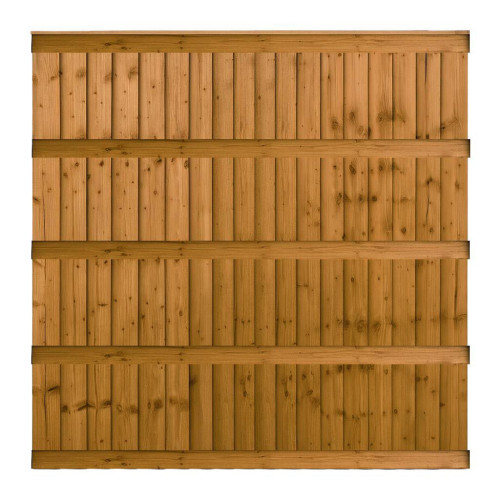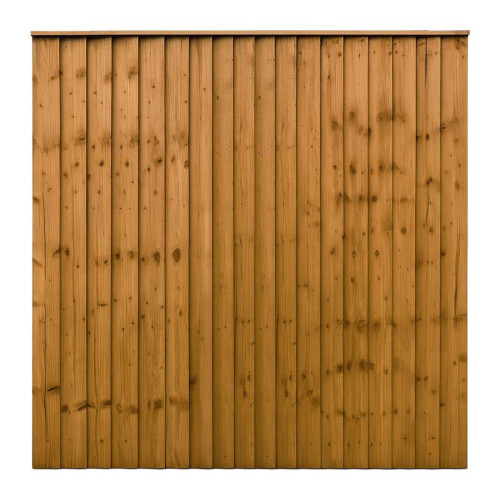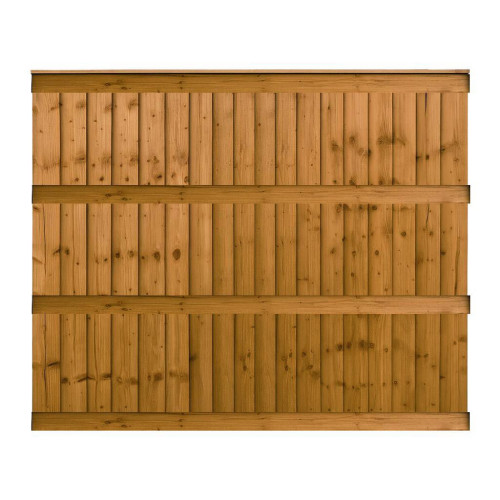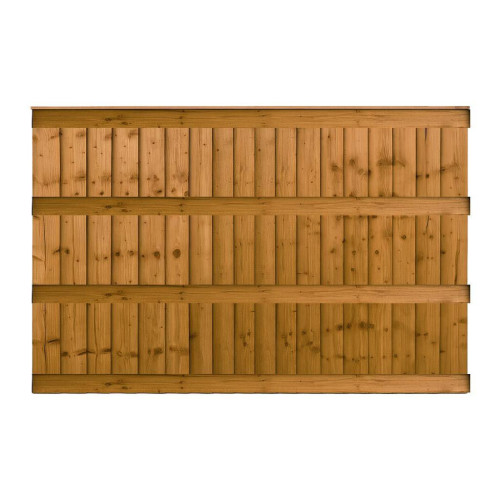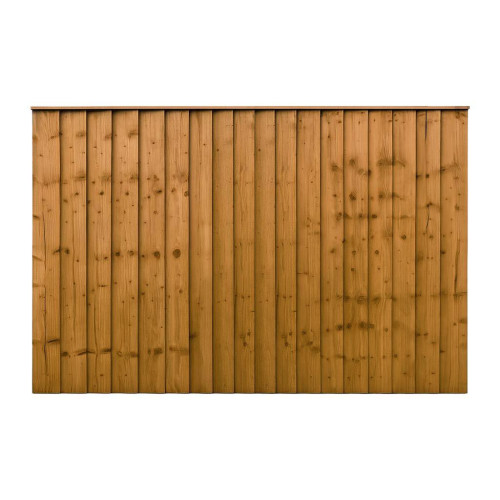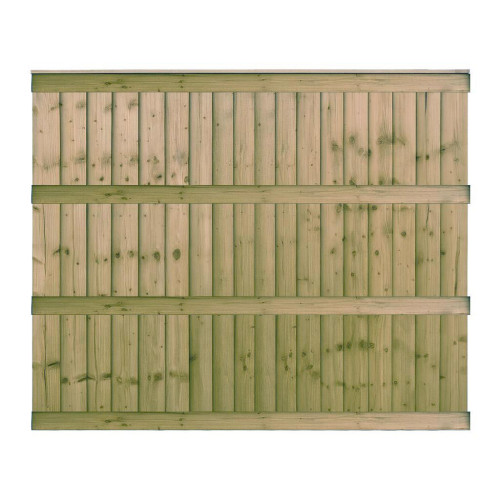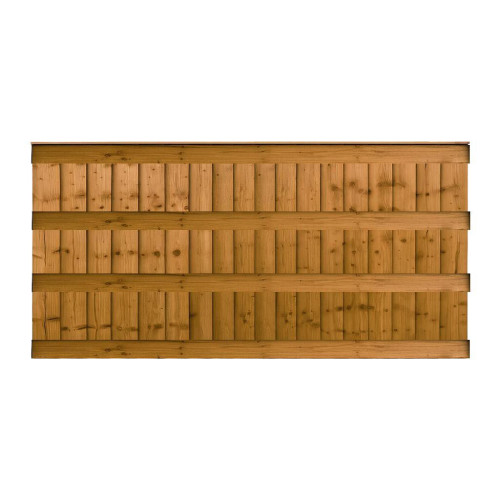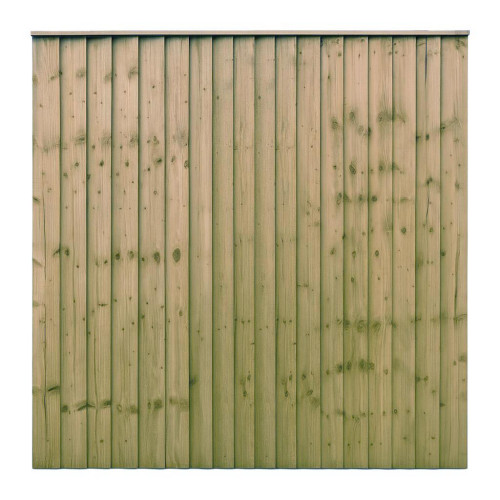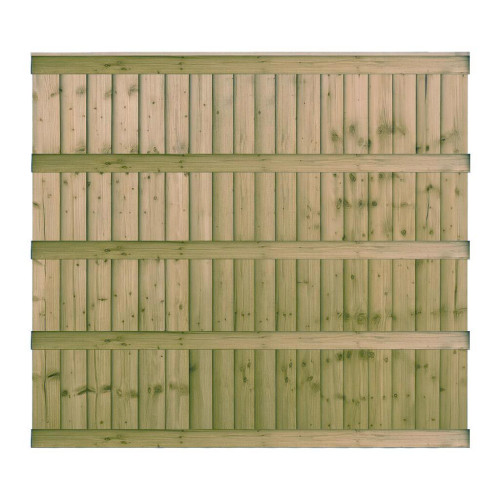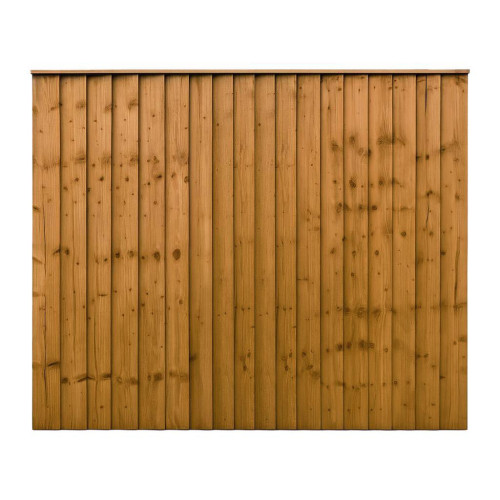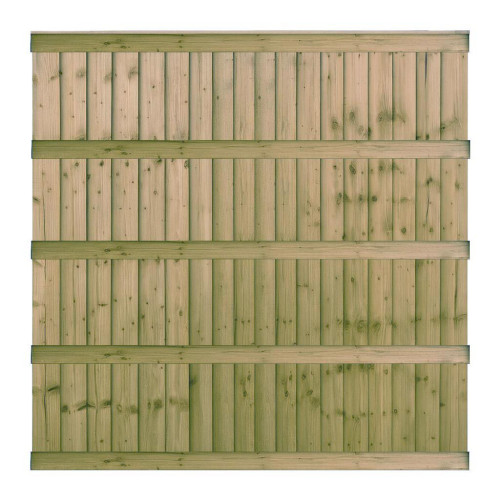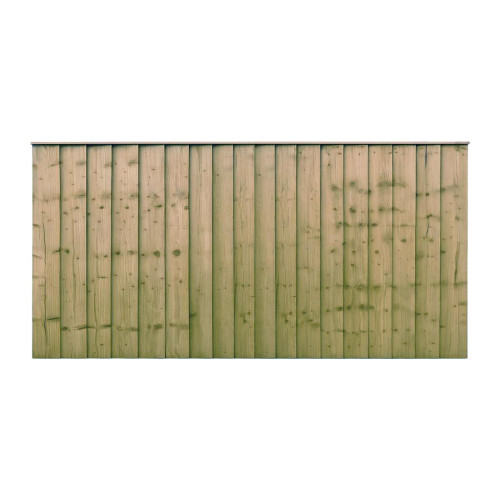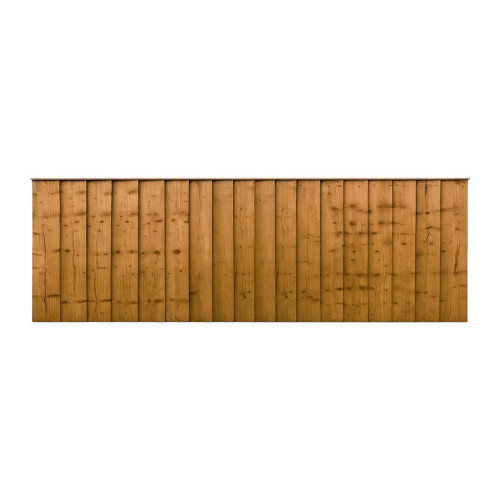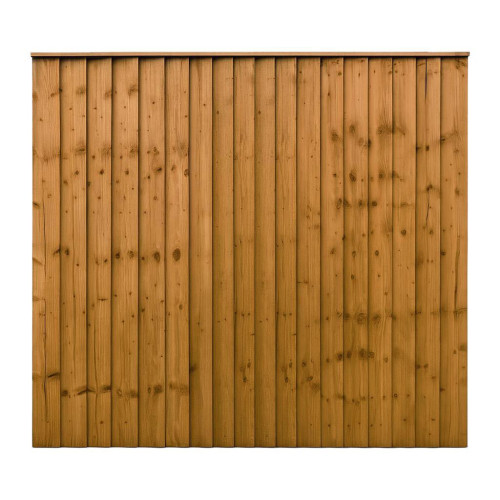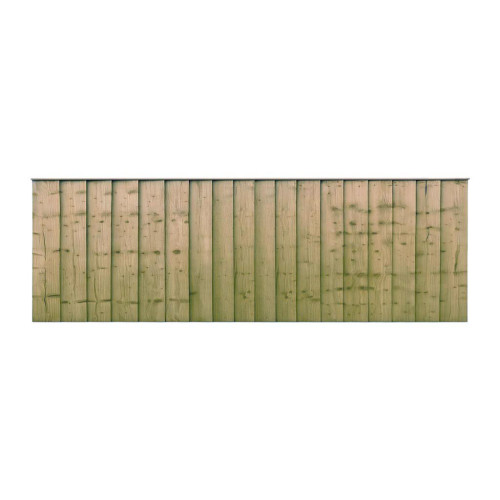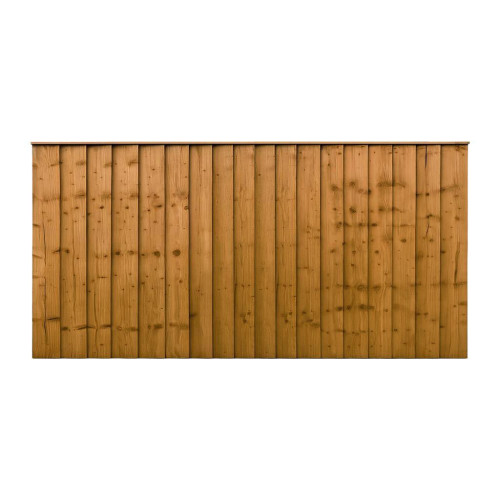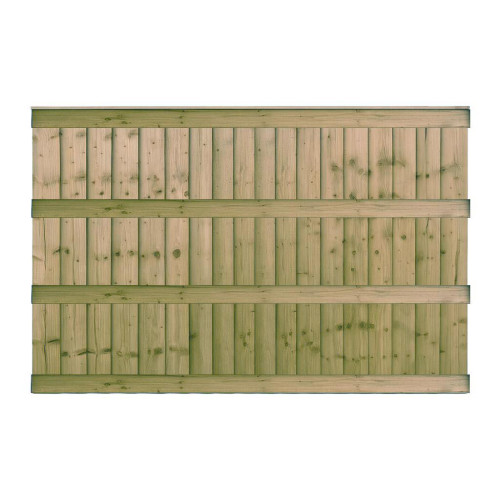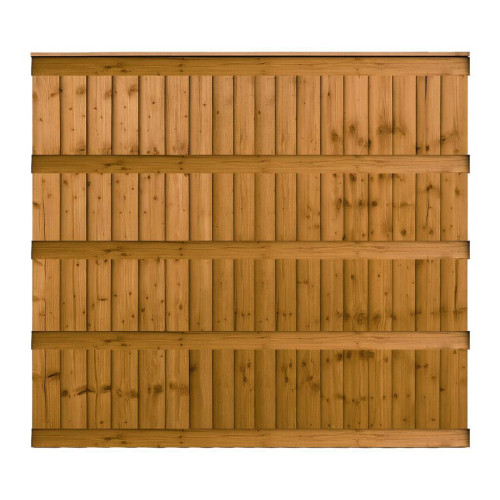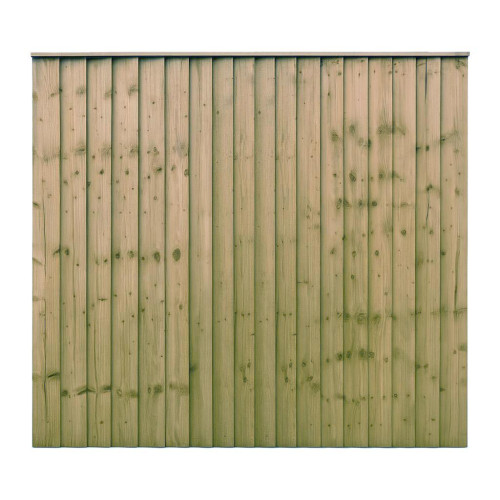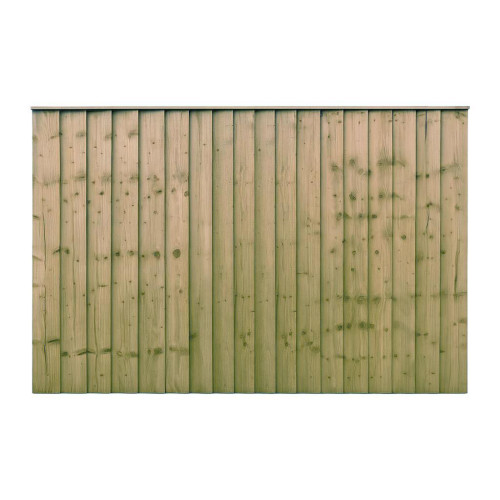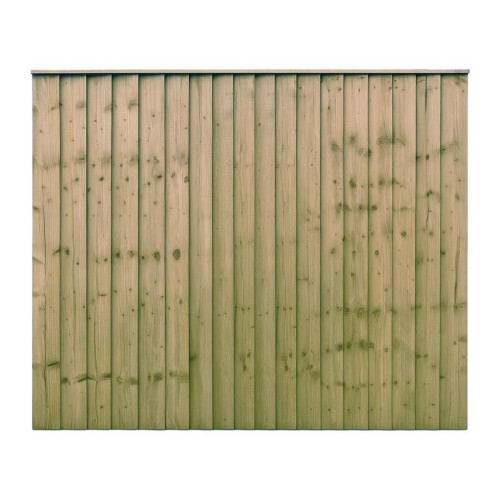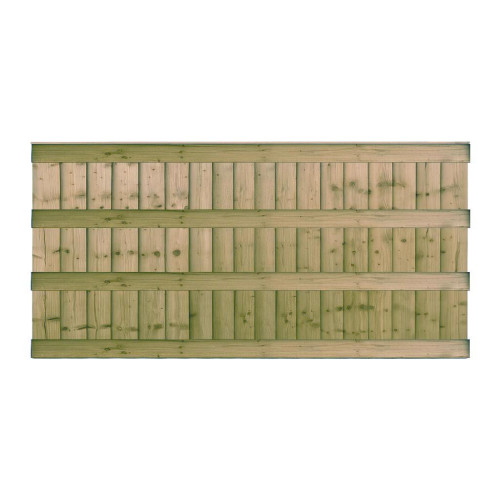

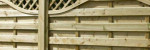
Quick answer: Closeboard Fence Panels have two visibly different sides. The cleaner face shows the overlapping vertical feather edge boards, while the reverse exposes the horizontal backing rails that support them. Either face can potentially point towards your garden where the chosen post system allows, so orientation is mainly a decision about appearance, access and consistency. It should not be used as a substitute for proper posts, foundations or fixings. Decide the direction before installing the first panel and keep the whole run consistent.
Closeboard Fence Panels are not identical on both sides.
From one side you mainly see the overlapping feather edge boards. Turn the panel around and the horizontal backing rails become a prominent part of its appearance.
That difference leads to a common installation question: which side should face your garden?
There is no useful one-size-fits-all answer based solely on the panel. The better orientation depends on which appearance you want to see, how the fence will be maintained, what happens at gates and corners, and whether you are matching an existing run.
What Is The Front Of A Closeboard Fence Panel?
The visually cleaner face is the side dominated by the overlapping vertical feather edge boards.
On current East Coast Fencing Closeboard Fence Panels, those boards create the familiar solid-looking Closeboard surface.
The panel face therefore has:
- Strong vertical lines
- Overlapping tapered boards
- Very little visual interruption from the structural rails
- A traditional finished Closeboard appearance
This is normally what people mean when they refer to the "front", "finished side" or "good side" of a Closeboard panel.
Those are useful visual descriptions rather than separate structural specifications.
What Is On The Back Of A Closeboard Fence Panel?
The reverse shows the horizontal members supporting the feather edge boards.
Current East Coast Fencing panels use 75 x 32mm backing rails, with the number of rails changing according to panel height and whether the panel is Standard or Ultra Heavy Duty.
The rails provide repeated fixing points for the vertical boards.
They are therefore not temporary manufacturing pieces that should be removed or hidden. They form an important part of the finished panel.
The rail side simply has a more structural appearance.
How Different Do The Two Sides Look?
| Feature | Feather Edge Face | Backing Rail Face |
|---|---|---|
| Main visible timber | Vertical feather edge boards | Boards plus horizontal rails |
| Appearance | Cleaner and simpler | More structural |
| Privacy | Strong | Strong |
| Rail access | Rails on opposite side | Directly visible |
| Typical visual preference | Where a finished backdrop is wanted | Where structural access is useful |
The difference is especially noticeable on taller panels because more of the rail-side construction is visible.
How Are Current Closeboard Fence Panels Constructed?
Understanding the construction makes the orientation decision easier.
A current approximately 1830mm-wide East Coast Fencing Closeboard panel uses:
- 18 overlapping feather edge boards
- Feather edge boards nominally 125mm wide
- 75 x 32mm horizontal backing rails
- An unframed Closeboard construction
- An overall listed panel depth of approximately 45mm
- Timber weather capping along the upper edge
- Pressure-treated timber for exterior use
The front and rear therefore perform different visual roles, but they are parts of the same assembled panel.
Does The Feather Edge Face Have To Point Outwards?
Not because of the Closeboard panel itself.
The panel does not become unusable simply because the feather edge face points towards your garden rather than away from it.
Instead, decide which view matters most.
You may prefer the feather edge face towards your garden where:
- The fence forms a prominent backdrop to a patio
- You see the boundary directly from the house
- The garden has a clean, simple design
- You do not want horizontal rails interrupting the vertical pattern
That is an appearance decision rather than a claim that one direction is structurally correct in every installation.
Why Might You Put The Rail Side Towards Your Garden?
There are practical reasons for doing so.
Keeping the backing rails on your side gives easier visual access to much of the panel structure.
You can more readily inspect:
- Loose feather edge board fixings
- Split backing rails
- Movement between boards and rails
- Areas needing local repair
- The condition of the rail ends
This can be useful because the backing rails are important structural components.
If one feather edge board loosens, access to the rail side can make diagnosis easier.
It does not necessarily mean every repair can be completed entirely from that side, but the main supporting components remain visible.
Which Side Is Easier To Maintain?
The rail side generally provides more direct access to the structure of the panel.
The feather edge face is simpler to inspect for:
- Cracked boards
- Warped boards
- Surface weathering
- Changes in overlap
- Decorative coating condition
The rail side makes it easier to inspect:
- Backing rails
- Board fixing positions
- Rail splitting
- Structural movement
Neither side eliminates maintenance.
Ideally, a fence should have enough access around it for reasonable inspection rather than being permanently buried behind dense planting.
Does Panel Direction Affect Privacy?
Not significantly where the panel is sound.
The privacy comes primarily from the overlapping feather edge boards.
Turning the complete panel around does not remove that overlap.
A person looking from either side is still looking at the same substantially solid arrangement of timber.
If visible gaps have appeared, investigate:
- Loose boards
- Timber movement
- Failed fixings
- Insufficient overlap
- Damaged rails
Reversing the panel is not a repair for gaps.
Does The Direction Affect Wind Resistance?
Do not choose panel orientation as a wind-strength strategy.
Closeboard is a predominantly solid fencing style whichever way it faces.
Wind pressure still needs to be transferred through the panel into:
- The Fence Posts
- The fixings or post slots
- The foundations
- The ground
In an exposed garden, concentrate on the complete fencing system rather than assuming turning the panel around will make a weak fence withstand strong winds.
Panel height also matters. A full 1.8m Closeboard panel presents substantially more area to the wind than a low 0.9m panel.
Which Way Should Closeboard Panels Face With Wooden Posts?
Wooden Fence Posts give you considerable flexibility because suitable panel clips, brackets or other exterior fixing arrangements can be used according to the installation.
Before fixing the first panel, decide:
- Which side you want to see from the garden
- Whether future access to the backing rails matters
- How a gate will look beside the panels
- Which face existing panels already present
- Whether corners will expose the reverse unexpectedly
Then keep the orientation consistent.
Alternating panel direction by accident is far more noticeable than either deliberate choice.
Which Way Should Closeboard Panels Face In Slotted Concrete Posts?
With compatible slotted Concrete Fence Posts, the panel sits between the post slots rather than relying on face-fixing directly through the concrete.
That means the visual orientation should be considered before the panel is lowered into place.
Check that:
- The complete panel profile is compatible with the slots
- The actual bay width is suitable
- The panel sits correctly on the Gravel Board or intended base
- Both edges remain properly contained within the slots
The fact that one side contains backing rails should not distract from basic fit.
Do not force a panel into a concrete post opening simply to maintain a preferred orientation.
Should Existing Panels Determine The Direction?
Usually, yes, if you are replacing only part of a fence.
Imagine a six-panel run where five panels show the feather edge face towards the garden.
Installing the sixth with its backing rails facing the garden would create an obvious visual interruption.
Before ordering or installing a replacement, inspect the existing run from both sides.
Check:
- Current panel direction
- Post condition
- Actual bay width
- Gravel Board height
- Treatment colour
- Panel height
A new panel can already appear different because fresh pressure-treated timber has not weathered to the same colour as the older fence. Reversing its orientation unnecessarily makes the difference even more noticeable.
What Happens At A Corner?
Corners deserve planning because both faces of the fence may become visible from different parts of the garden.
If two boundaries meet at approximately 90 degrees, decide whether the feather edge faces should:
- Both point towards the main garden
- Follow the orientation of existing boundaries
- Change deliberately at the corner
There is no benefit in discovering the problem after several bays have already been installed.
Lay out the direction of the complete run before setting or fixing panels.
How Should Closeboard Panels Meet A Garden Gate?
A gate is often where inconsistent fencing becomes particularly noticeable.
Feather Edge Gates and Closeboard panels share a similar vertical-board appearance, but the exact construction is not necessarily identical.
Stand back and consider the complete elevation before installation.
Look at:
- The visible face of the panels
- The visible face of the gate
- Gate posts
- Hinges
- Latch position
- Any visible structural rails
A mechanically sound installation can still look poorly planned if the panel face, gate face and hardware appear to change direction without reason.
Does A Gravel Board Decide Which Way The Panel Faces?
No.
A Gravel Board performs a different job.
It provides a lower section beneath the timber panel and can help separate that panel from:
- Wet soil
- Long grass
- Mud splash
- Leaves
- Garden debris
Concrete and wooden Gravel Boards can both be used within suitable fencing systems.
The board should support or sit beneath the panel correctly, but it does not determine which visual face of the Closeboard panel must point towards your garden.
Does Standard Or Ultra Heavy Duty Change Which Way The Panel Should Face?
No general orientation rule changes simply because the panel has additional backing rails.
What changes is how much structure you see from the rail side.
For example, current full-height panels use:
- Four 75 x 32mm backing rails on the 1.8m Standard Closeboard panel
- Five 75 x 32mm backing rails on the 1.8m Ultra Heavy Duty Closeboard panel
The extra rail gives the Ultra panel more frequent support through the height of the feather edge boards.
It also means the difference between the feather edge face and rail face is especially obvious.
Choose Standard or Ultra according to the required construction. Choose orientation according to how the installed fence needs to work and look.
Should You Turn A Panel Around To Hide Damaged Boards?
No.
If the feather edge face has visible damage, turning the panel around does not repair it.
Inspect the damage instead.
A single broken board may potentially be replaced if:
- The backing rails remain sound
- The surrounding boards remain secure
- The panel is not badly distorted
If several rails or boards have failed, consider whether complete panel replacement is more appropriate.
Does Pressure Treatment Protect Both Sides?
The current Closeboard range is pressure treated for exterior use.
The treatment is not a decorative coating applied only to whichever side is intended to face the weather.
Turning the panel does not convert one side into an untreated interior face.
However, pressure treatment does not remove the need for sensible installation.
Keep the panel away from persistent soil contact, protect freshly cut surfaces where required and maintain adequate access for inspection.
Does Brown Or Green Treatment Affect Panel Direction?
No.
Brown and green or natural treatment options primarily change the initial appearance of the timber.
They do not establish a different front and back orientation.
Whichever colour you choose, the visual distinction remains:
- Vertical feather edge face on one side
- Horizontal supporting rails on the other
Both colours will also change as the timber weathers outdoors.
Can Both Sides Be Painted?
Potentially, once the treated timber is suitable for the chosen exterior coating and the coating manufacturer's preparation requirements have been followed.
If you plan to paint the complete fence, remember that the rail side takes more work.
It contains additional:
- Edges
- Junctions
- Rail surfaces
- Board-to-rail intersections
If you can access only one side easily, consider future coating and maintenance before deciding which face points where.
Can You Change The Direction Later?
Potentially, but doing so can be unnecessarily disruptive.
With a removable panel between suitable slotted concrete posts, it may be physically possible to lift the panel out, rotate it and reinstall it if the dimensions and surrounding structures permit.
With panels fixed to wooden posts, changing direction means releasing the panel from its existing fixing arrangement before reinstalling it.
Full-size Closeboard panels are substantial pieces of timber fencing.
Do not undertake unnecessary lifting merely because the orientation was not considered before installation.
Does The Rail Side Prove Who Owns The Fence?
No.
The direction in which a fence has been installed should not be treated as reliable evidence of ownership.
Different installers and previous property owners may have chosen different orientations for practical or visual reasons.
If ownership of a boundary genuinely matters, establish it from appropriate property information and agreements rather than assuming that the garden facing the backing rails must own the fence.
What If Both Gardens Want The Finished Face?
This is where product choice can matter.
Traditional Closeboard construction naturally has a noticeable difference between its two sides.
If equally balanced appearance from both sides is one of the most important requirements, it may be worth considering whether another fence design is more appropriate before installation.
Some alternative panel constructions are deliberately designed to provide a more balanced appearance from each side.
That does not make Closeboard unsuitable for shared boundaries. It simply means its structural character should be understood before choosing it.
Common Mistakes When Choosing Closeboard Panel Direction
- Installing the first panel without considering the rest of the fence run
- Alternating panel direction accidentally
- Assuming the backing rails are temporary and can be removed
- Choosing orientation as a substitute for suitable wind-resistant installation
- Ignoring how the panels will meet a Garden Gate
- Forgetting that corners can expose both faces
- Installing a replacement panel opposite to every existing panel
- Assuming the rail side proves fence ownership
- Forcing a panel into incompatible Concrete Fence Post slots
- Ignoring future access for repairs and coating
FAQs
Which Is The Good Side Of A Closeboard Fence Panel?
The visually cleaner side is normally the face showing the overlapping vertical feather edge boards. The reverse shows the horizontal backing rails supporting those boards.
Should The Rails Face My Garden?
They can if that arrangement suits the installation. Having the rails accessible can make inspection of the panel structure easier, while pointing the feather edge face towards the garden creates a cleaner visual backdrop.
Does A Closeboard Panel Work The Same Way Both Ways Round?
The same feather edge boards and backing rails remain part of the panel whichever garden sees each face. Orientation should therefore be planned mainly around appearance, access, consistency and the chosen fixing system rather than being treated as a different panel specification.
Can I Turn A Closeboard Panel Around In Concrete Posts?
Potentially, if the panel is compatible with the slots and can be removed safely. Check the complete panel profile, bay width, available lifting space and base before attempting to rotate an installed panel.
Does Turning A Closeboard Panel Around Improve Wind Resistance?
Do not rely on it. Closeboard remains a substantially solid panel whichever way it faces. Posts, foundations, panel height, ground conditions and secure support are far more important when planning for wind exposure.
Which Side Is Easier To Repair?
The rail side gives direct visual access to the horizontal supports and many board fixing positions. That can make diagnosis and some repairs easier, although the best repair method depends on the particular damage.
Should Every Closeboard Panel Face The Same Direction?
Usually, yes. A consistent direction gives the fence a deliberate appearance. Changes can be made at corners or other logical transition points, but accidentally alternating panels tends to look untidy.
Does The Side With The Rails Show Who Owns The Fence?
No. Panel orientation is not reliable evidence of boundary ownership. Establish ownership separately if it is important.
Choose The Direction Before You Install The First Panel
The practical difference between the two faces of a Closeboard Fence Panel is easy to understand once you look at its construction.
One side presents the clean vertical pattern of overlapping feather edge boards. The other exposes the horizontal backing rails that support those boards.
If appearance inside your garden matters most, you may prefer the feather edge face towards you. If convenient access to the supporting structure is more useful, the rail side may be preferable.
Whichever direction you choose, keep the complete run consistent and plan gates, corners and replacement bays before fixing anything permanently.
Do not expect orientation to correct weak posts, unsuitable foundations, damaged panels or excessive wind exposure. Those are separate structural issues.
A well-planned Closeboard fence should combine the orientation you want to look at with a panel, post, Gravel Board and fixing system that works properly as a complete boundary.