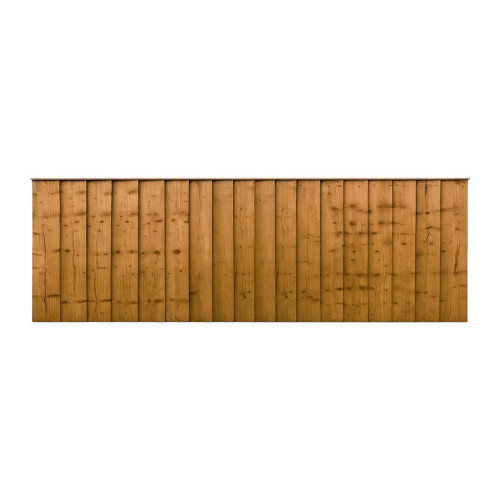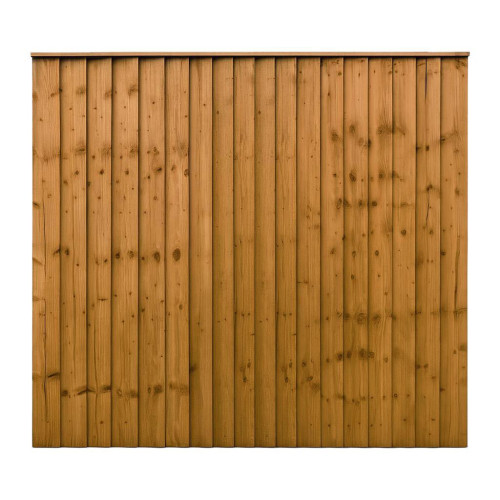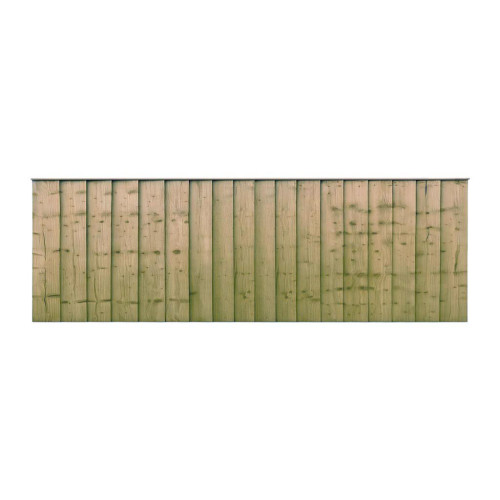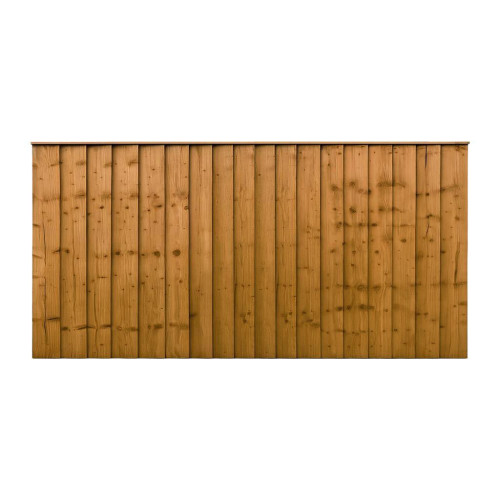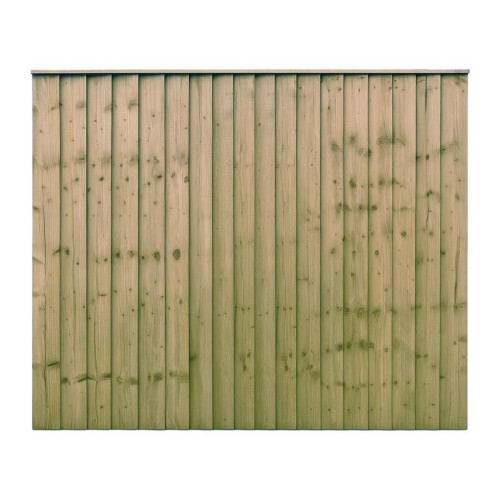



Quick answer: The strength of Closeboard Fence Panels comes from the complete construction, not simply from how thick or heavy the finished panel feels. Look at the feather edge boards, how much they overlap, the number and size of backing rails, the quality of the fixings, pressure treatment and the way the panel is supported once installed. East Coast Fencing manufactures its Closeboard panels in-house, with Standard and Ultra Heavy Duty versions providing different levels of board support.
Two Closeboard Fence Panels can look very similar from the front while being constructed quite differently behind the boards.
That matters because the visible feather edge face provides the privacy, but much of the panel's stiffness comes from the supporting rails behind it and the way the boards are fixed to those rails.
East Coast Fencing manufactures its Closeboard Fence Panels in-house, which makes it possible to look beyond broad descriptions such as "heavy duty" and explain what actually changes within the construction.
If you are comparing panels for a new boundary, understanding the boards, overlap, backing rails, treatment and support system is considerably more useful than judging quality from appearance alone.
What Is a Closeboard Fence Panel Made From?
A typical Closeboard Fence Panel consists primarily of:
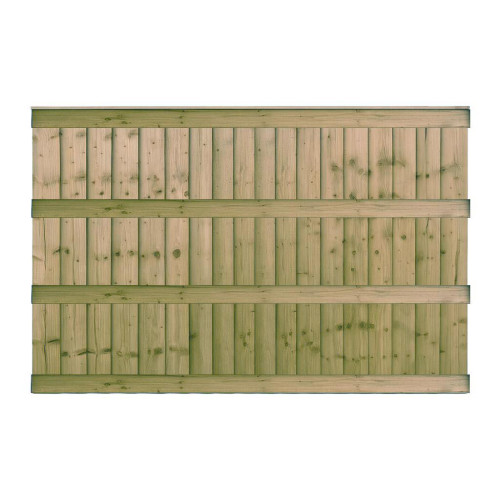
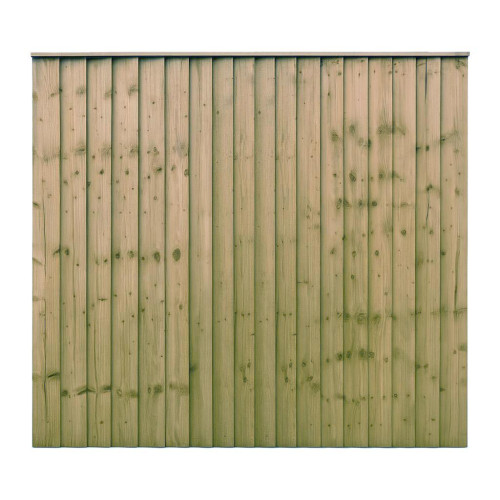
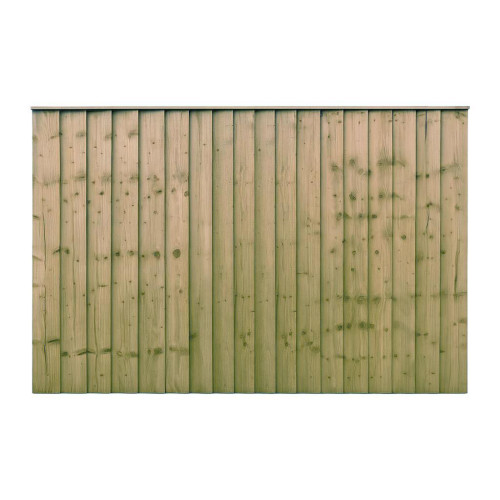
- Vertical feather edge boards
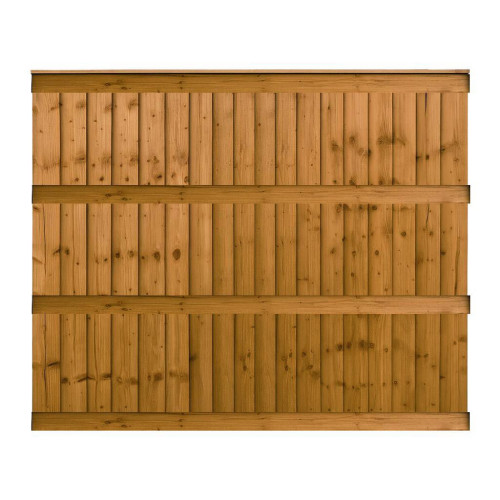
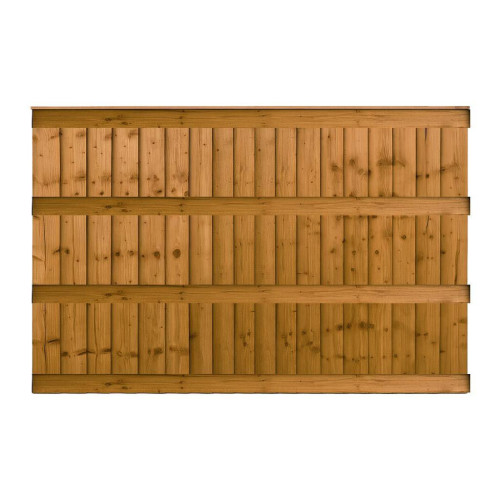
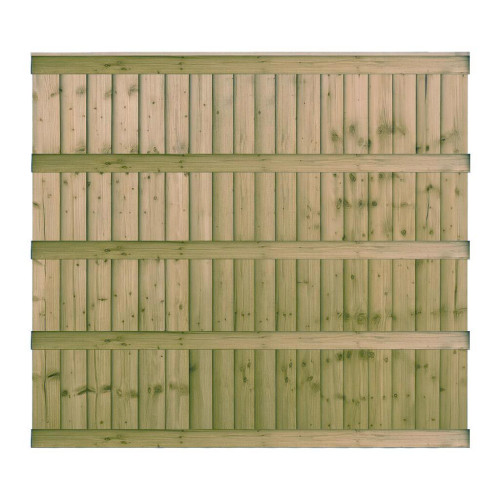
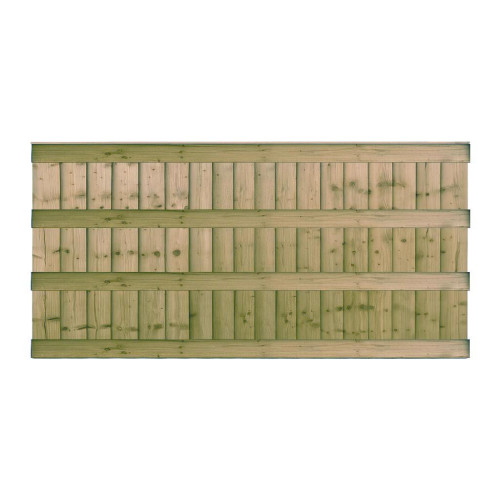
- Horizontal backing rails
- Exterior fixings holding the boards to those rails
- A top capping strip on suitable products
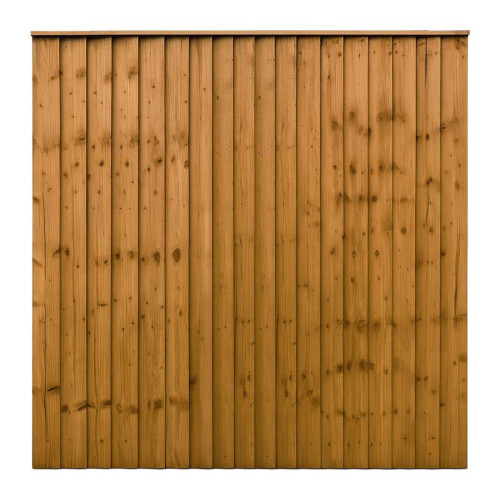
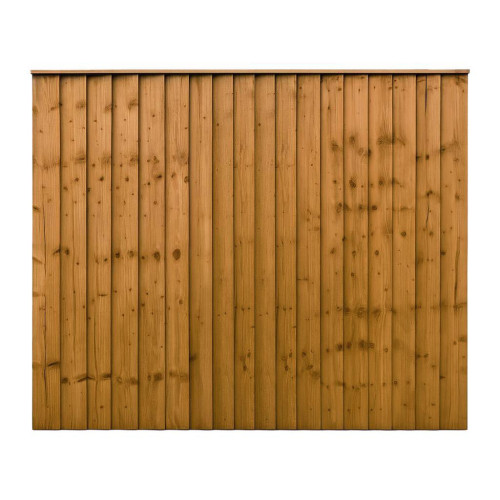
The boards overlap one another to form the familiar solid-looking face.
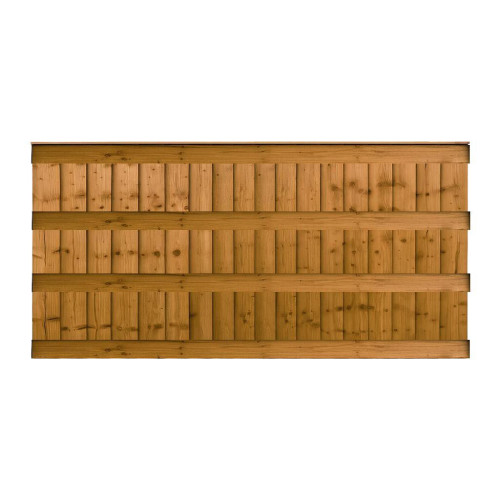
The horizontal rails on the rear provide support across the width of the panel and give the vertical boards repeated fixing points.
Although the front face tends to receive most of the attention, those rear rails have a major influence on how stiff and substantial the completed panel feels.
Why Feather Edge Boards Are Used
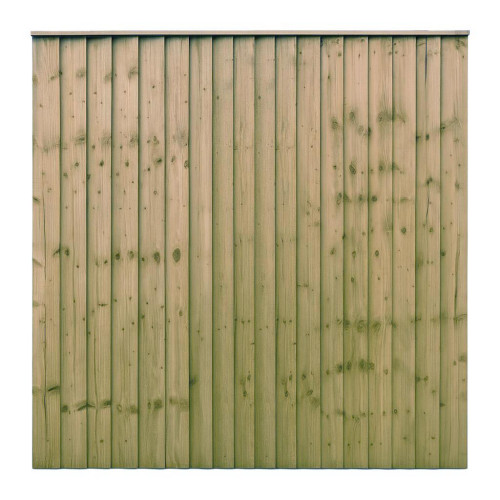
Feather edge boards are tapered rather than being the same thickness from one edge to the other.
They are installed vertically with one board overlapping the next.
This construction provides several useful characteristics:
- Strong visual screening
- A traditional Closeboard appearance
- Rainwater can run vertically down the face
- Individual boards receive support from several horizontal rails
The overlap is important.
A Closeboard panel does not rely on simply placing square-edged boards tightly beside one another. The feather edge arrangement intentionally places one board over part of the next.
Why Board Overlap Matters
Correct overlap performs more than one job.
It helps:
- Reduce direct sightlines through the panel
- Maintain a continuous-looking timber face
- Accommodate normal small changes in natural timber
Timber expands and contracts as moisture conditions change.
Using overlapping boards gives the construction more tolerance than attempting to create privacy from boards installed edge-to-edge with no overlap.
Insufficient overlap can make gaps more likely to become noticeable as the timber seasons.
How Many Boards Are in a Closeboard Fence Panel?
The exact construction should always be checked against the individual product rather than assumed across every size and specification.
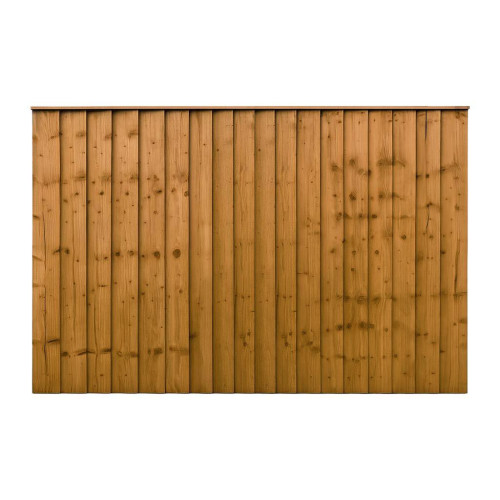
As a current manufacturing example, East Coast Fencing's 1830mm-wide by 1800mm-high Standard Closeboard panel uses 18 feather edge boards, each nominally 125mm wide, arranged with the required overlap across the panel face.
That is a useful illustration of why simply adding together the nominal width of the individual boards does not tell you the finished panel width. A proportion of every board is deliberately covered by its neighbour.
What Do the Backing Rails Actually Do?
The backing rails are among the most important structural parts of the panel.
They run horizontally behind the vertical feather edge boards.
Each rail:
- Provides a fixing line for the boards
- Supports them across the width
- Reduces the unsupported distance between fixing points
- Helps the assembled panel resist flex
When you pick up a substantial Closeboard panel, much of the stiffness you feel comes from the relationship between the vertical boards and these horizontal rails.
Why More Backing Rails Can Make a Panel Stiffer
Imagine one long feather edge board fixed only near the top and bottom.
A large portion of that board is unsupported between those two fixing points.
Add more rails through the height and the distance between support points becomes shorter.
That can help reduce:
- Board flex
- Movement through the panel face
- The amount of unsupported timber between fixing lines
This is one of the main principles behind the Ultra Heavy Duty construction.
A Real Manufacturing Example: Standard vs Ultra Heavy Duty
The difference can be seen clearly by comparing current full-height East Coast Fencing products.
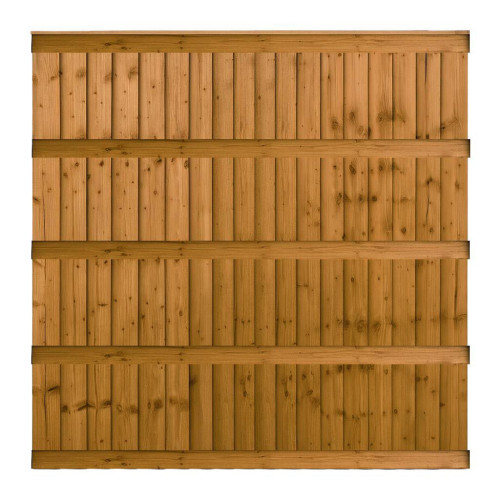
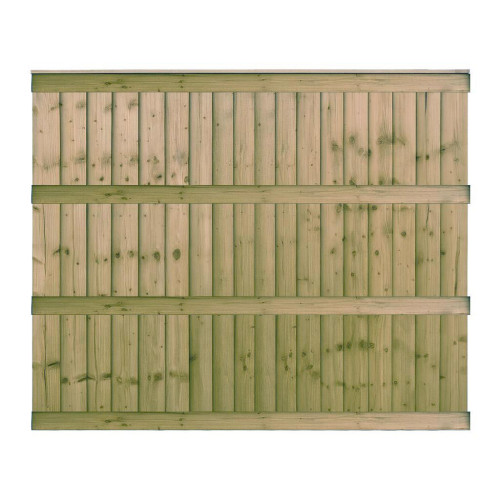
The current 1830mm x 1800mm Standard Closeboard Fence Panel uses:
- 18 overlapping feather edge boards
- 75 x 32mm backing rails
- Four backing rails through the panel height
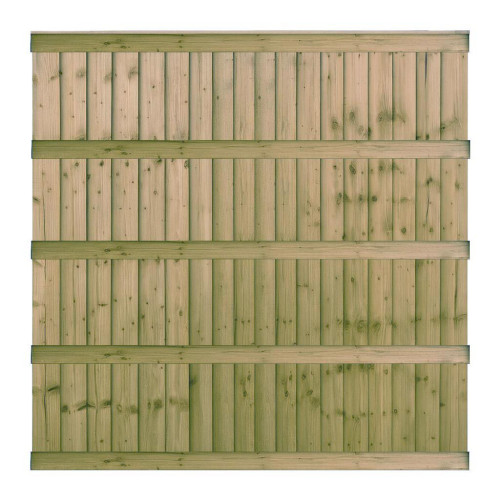
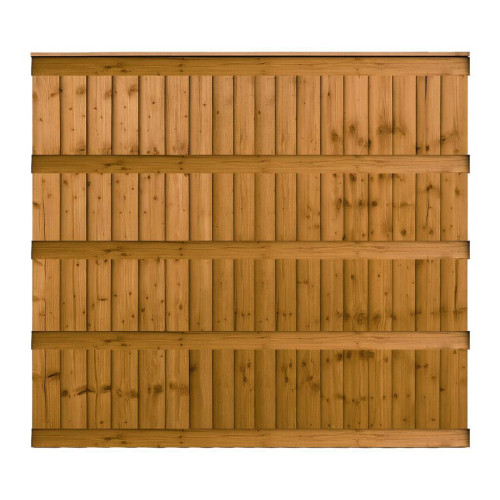
The equivalent current 1830mm x 1800mm Ultra Heavy Duty Closeboard Fence Panel uses:
- The same traditional overlapping closeboard principle
- 75 x 32mm backing rails
- Five backing rails through the panel height
That fifth rail gives the vertical boards another fixing and support line.
The result is a more heavily supported panel rather than simply the same panel carrying an arbitrary "heavy duty" label.
Does More Rails Always Mean You Need the Ultra Heavy Duty Panel?
No.
A well-made Standard panel can be entirely appropriate for an ordinary domestic garden.
The Ultra Heavy Duty option becomes more relevant where the customer specifically wants:
- A stiffer panel construction
- More support through the height
- A more substantial panel
- An upgrade for a more demanding boundary
The previous Standard vs Ultra Heavy Duty decision still needs to consider the complete fence, especially posts and exposure.
A stronger panel cannot compensate for weak or moving posts.
Why Rail Position Matters as Well as Rail Count
It is easy to focus purely on the total number of rails.
The real engineering principle is support distribution.
The boards need to be supported through their height so one large area is not left with excessive unsupported span.
A well-arranged rail layout spreads fixing points through the panel rather than concentrating them all in one area.
This becomes increasingly important on taller fencing because the vertical boards themselves are longer.
Why Taller Closeboard Fence Panels Need More Thought
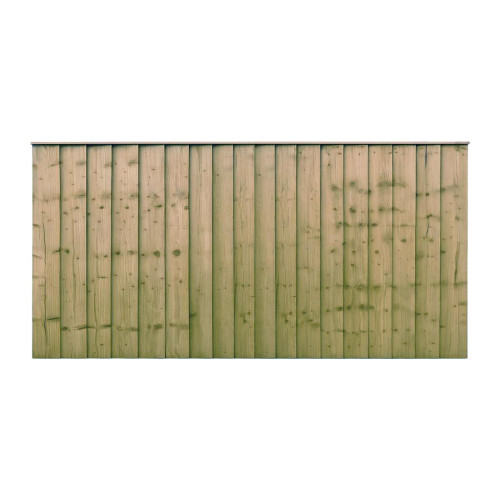
A 3ft Closeboard Fence Panel and a 6ft version perform the same broad job, but they do not experience identical demands.
A taller panel has:
- Longer feather edge boards
- A larger face area
- Greater leverage at the top of the fence
- Greater potential wind loading
That is why comparing a low panel with a full-height panel purely by the number of boards or rails is not particularly meaningful.
The construction needs to suit the height.
Does a Heavier Closeboard Panel Mean a Better Panel?
Weight can indicate that more timber has been used, but weight by itself is not a complete quality test.
A panel can be heavy because of:
- More timber
- Moist timber
- Additional rails
- Different construction
Instead of asking only whether one panel weighs more, inspect why it weighs more.
A useful comparison asks:
- How many rails support the boards?
- What size are those rails?
- How are the boards arranged?
- Is the timber pressure treated?
- How is the top edge finished?
What Does an Unframed Closeboard Panel Mean?
The current East Coast Fencing Standard and Ultra Heavy Duty examples use an unframed Closeboard construction.
That means the panel does not depend on bulky vertical side framing around the complete perimeter.
Instead, the overlapping vertical boards are supported by the horizontal rails behind them.
This creates the traditional Closeboard form while allowing the panel to fit neatly between the chosen posts.
Is an Unframed Panel Weaker?
Not automatically.
Different fencing designs gain their stiffness in different ways.
With these Closeboard Fence Panels, support comes primarily from:
- The backing rail arrangement
- The feather edge boards
- The fixing pattern
- The installed post system
Adding a decorative outer frame is not the only way to manufacture a substantial panel.
The important question is how the complete panel is designed to carry and distribute loads.
Why the Fixings Matter
Good timber does not create a good panel if the components are poorly connected.
The fixings need to hold the feather edge boards securely against the backing rails throughout normal outdoor movement.
Weak or poorly positioned fixings can lead to:
- Loose boards
- Rattling
- Local movement
- Boards pulling away from the rails
Construction quality therefore involves both the timber components and how those components are assembled.
What Does the Top Capping Strip Do?
Current East Coast Fencing Closeboard panel examples include a capping strip along the exposed upper edge.
It performs two practical roles.
First, it provides a cleaner finished line across the top of the panel.
Second, it helps protect the exposed upper edge and encourages rainwater to shed rather than sit directly on the tops of the boards.
Capping is not a substitute for pressure treatment, but it is a sensible construction detail on an exposed timber edge.
Why Pressure Treatment Is Part of Panel Quality
A strong panel also needs to survive outdoor exposure.
The current East Coast Fencing Closeboard Fence Panels are pressure treated.
Pressure treatment introduces preservative into the timber rather than relying solely on a decorative surface coating.
This helps improve resistance to biological deterioration during outdoor use.
It does not make the fence waterproof or immune to poor installation.
Pressure Treatment Does Not Fix Bad Installation
A pressure-treated panel can still perform badly if it is:
- Buried in wet soil
- Supported by leaning posts
- Left rattling in an oversized bay
- Overloaded by heavy vegetation
- Repeatedly sitting in trapped water
Manufacturing quality and installation quality need to work together.
Why the Bottom Edge Deserves Special Attention
The lower part of the fence is usually exposed to the wettest conditions.
It may encounter:
- Soil
- Wet grass
- Mulch
- Rain splash
- Fallen leaves
Keeping the timber panel separated from persistent ground moisture can help it dry more effectively after rain.
This is one reason gravel boards are commonly considered beneath Closeboard Fence Panels.
Does a Gravel Board Make the Panel Stronger?
Not in the sense of adding another backing rail to the panel.
Its job is different.
A properly supported gravel board provides a defined base beneath the fence and helps keep the main timber panel away from the dampest part of the boundary.
It can also reduce accidental contact from:
- Strimmers
- Soil
- Garden tools
Think of the gravel board as protection for the lower part of the system rather than reinforcement inside the panel itself.
Why Strong Panels Still Need Strong Posts
The panel does not stand independently.
Wind and other forces acting on the panel are ultimately transferred into the posts and their foundations.
This means a strong Closeboard Fence Panel installed between weak posts can still produce a poor fence.
A complete strong fence needs:
- An appropriate panel
- Suitable posts
- Correct post spacing
- Adequate foundations
- Secure panel support
Why Closeboard Fence Panels Catch More Wind
The feature that makes Closeboard so useful for privacy also creates its main structural challenge.
There are no deliberate large openings through the panel face.
Wind therefore acts against a relatively solid surface.
Compared with Hit & Miss or Picket Fence Panels, less air can pass directly through.
This makes post and foundation specification increasingly important as:
- Panel height increases
- Fence exposure increases
- The length of the fence run increases
Does Ultra Heavy Duty Mean Windproof?
No.
Ultra Heavy Duty refers to the panel construction.
It does not make the entire fence system immune to wind.
The extra backing support can create a stiffer assembled panel, but the wind load still needs to pass into the posts and ground.
A poorly founded post remains a weak point regardless of which Closeboard panel is installed between it.
How Can You Compare Closeboard Panels in Person?
Do not only look at the front.
Inspect the rear of the panel.
Check:
- How many rails are present
- How evenly the rails are distributed
- How securely the boards are fixed
- Whether the panel feels excessively flexible when carefully handled
- Whether the top edge is properly finished
- Whether boards have adequate overlap
The rear construction often tells you more about the panel than the decorative face.
Do Not Judge Natural Timber by Perfect Uniformity
Timber is not a moulded synthetic material.
Variation in:
- Grain
- Knots
- Colour
- Surface character
is normal.
A visually uniform board is not automatically structurally superior to one showing normal timber character.
The more useful assessment is whether the component is suitable for its role within the assembled panel.
Does Green or Brown Treatment Change Panel Strength?
The treatment colour should not be used as a strength rating.
The current Closeboard Fence Panels are available in brown and green/natural pressure-treated finishes across suitable products.
Choose the colour according to:
- Existing fencing
- Other garden timber
- Personal preference
The panel specification and construction are what should drive a strength comparison.
Why Manufacturing Consistency Matters Across a Long Fence Run
One panel rarely forms a complete garden boundary.
A long run might contain ten, fifteen or more panels.
Small differences can therefore become visually noticeable when multiplied across the fence.
Consistent manufacture helps maintain:
- Panel width
- Board arrangement
- Rail position
- Overall height
- Top-line appearance
This becomes especially useful where panels are being installed between accurately spaced posts.
Why In-House Manufacturing Is Relevant
East Coast Fencing manufactures its Closeboard Fence Panels in-house rather than treating them purely as an externally sourced generic product.
That matters from a product-knowledge perspective because the construction can be specified around real panel components.
For example, rather than simply describing one version as heavier, the current full-height products can be compared using their actual support arrangement:
- Standard 6ft panel with four 75 x 32mm backing rails
- Ultra Heavy Duty 6ft panel with five 75 x 32mm backing rails
That is a much more useful distinction for a customer deciding what the extra construction actually achieves.
Why More Timber Is Not Always the Only Quality Indicator
Quality is not simply a competition to use the greatest possible quantity of wood.
The timber has to be used intelligently.
A good panel balances:
- Board support
- Panel stiffness
- Handling
- Compatibility
- Outdoor durability
Adding unnecessary material can make a panel harder to handle without addressing weaknesses elsewhere in the fence system.
The objective is appropriate construction for the intended use.
Why Handling Can Damage an Otherwise Good Panel
A substantial Closeboard panel can be heavy.
Large panels should be moved with enough people to support them properly.
Avoid:
- Dragging the panel by one corner
- Dropping one edge
- Lifting the complete panel from one feather edge board
- Twisting the panel between posts
Support it evenly through its structural rails and overall body.
Can a Strong Panel Be Damaged During Installation?
Yes.
Problems can occur if installers:
- Force the panel into a bay that is too narrow
- Drop it onto a concrete gravel board
- Lever against individual boards
- Leave the panel hanging temporarily from one fixing
Measure the bay first and support the panel evenly while it is positioned.
Can Closeboard Fence Panels Fit Between Concrete Posts?
They can be used with compatible slotted concrete posts.
Check the actual panel dimensions and the existing bay before ordering replacements.
Measure between the posts:
- Near the bottom
- Through the middle
- Near the top
If the dimension changes significantly, one or both posts may have moved.
Do not force a substantial Closeboard panel into a narrowing slot.
Can Closeboard Panels Be Used With Timber Posts?
Yes.
Suitable timber posts provide straightforward fixing points using compatible exterior hardware.
The important detail is that the panel should be supported through its structural parts.
Do not assume that adding more screws into individual feather edge boards will compensate for unsuitable posts or poor panel positioning.
Should You Replace a Panel if One Feather Edge Board Is Damaged?
Not necessarily.
First inspect the rest of the panel.
If:
- The backing rails remain sound
- The surrounding boards remain secure
- The panel still sits correctly between the posts
a local repair may be possible.
One damaged board does not automatically mean the whole structural assembly has failed.
When Is the Whole Panel Structurally Compromised?
Replacement becomes more appropriate where there is widespread damage such as:
- Broken backing rails
- Numerous loose feather edge boards
- Severe distortion
- Extensive deterioration through the lower section
- Damage that prevents the panel being supported correctly
The backing rails deserve particular attention because they support multiple boards at once.
Why a Broken Rail Matters More Than One Cosmetic Board Defect
A single feather edge board affects a relatively small part of the panel.
One backing rail supports many boards across the complete width.
If that rail breaks or becomes badly compromised, a much larger part of the panel loses support.
This is another reason to inspect the rear construction when assessing an older Closeboard fence.
Do More Rails Make Repairs Easier?
The main benefit of additional rails is increased board support rather than repair convenience.
However, a panel with more fixing lines means each individual board is attached at more points through its height.
That can help maintain the relationship between the boards and rails if one local area experiences movement.
How Does Closeboard Compare With Waney Lap Construction?
Both provide solid-looking privacy fencing, but the construction is different.
Closeboard uses overlapping vertical feather edge boards supported by horizontal rails.
Waney Lap uses a lighter horizontal overlap construction.
This is why Closeboard is normally viewed as the more substantial panel type where customers prioritise:
- Strength
- Stiffness
- Robust traditional construction
Waney Lap remains useful where a lighter and generally more economical solid boundary is appropriate.
How Does Closeboard Compare With Decorative Panels?
Decorative Fence Panels solve a different problem.
Double Slatted and Hit & Miss designs intentionally introduce openings through the panel.
Omega Lattice panels include an open decorative lattice top.
Closeboard prioritises:
- Solid screening
- Traditional appearance
- Substantial board-and-rail construction
The best-built panel is not automatically the best panel for every garden. Construction needs to match the required job.
What Should You Look for When Buying Closeboard Fence Panels?
Use a practical checklist rather than judging from the front photograph alone.
| Check | Why It Matters |
|---|---|
| Feather edge construction | Creates the overlapping privacy face |
| Backing rail count | Determines how frequently boards are supported |
| Rail dimensions | Part of the structural panel specification |
| Fixing quality | Keeps boards securely attached to rails |
| Pressure treatment | Improves durability outdoors |
| Capping | Finishes and protects the exposed top edge |
| Panel height | Changes both screening and structural demands |
| Post system | Transfers loads from the panel into the ground |
Common Mistakes When Comparing Closeboard Panel Quality
- Looking only at the visible front face
- Assuming the heaviest panel must automatically be the best
- Ignoring the number and position of backing rails
- Assuming all panels described as Closeboard use identical construction
- Comparing rail counts without considering panel height
- Assuming green or brown treatment indicates different strength
- Ignoring pressure treatment when comparing outdoor durability
- Buying an Ultra Heavy Duty panel but installing it between weak posts
- Allowing the bottom of a good-quality panel to sit permanently in wet soil
- Forcing a replacement panel between leaning posts
- Using panel weight as the only quality measurement
FAQs
What Makes Closeboard Fence Panels Strong?
The strength comes from the combined construction of overlapping feather edge boards, horizontal backing rails, secure fixings and the supporting fence-post system. More backing rails can provide more frequent support through the height of the boards.
How Many Rails Should a Closeboard Fence Panel Have?
There is no universal number because the correct rail layout depends on the panel height and specification. For example, the current East Coast Fencing 6ft Standard Closeboard panel uses four 75 x 32mm rails, while the current 6ft Ultra Heavy Duty version uses five.
Why Does the Ultra Heavy Duty Closeboard Panel Have More Rails?
The additional rail shortens the unsupported distance between fixing points on the vertical feather edge boards. This creates a more heavily supported and stiffer assembled panel.
Are More Rails Always Better?
More support can increase stiffness, but the panel should be judged as a complete design. Rail size, placement, fixings, panel height, posts and foundations also matter.
Are Closeboard Fence Panels Framed?
The current East Coast Fencing Standard and Ultra Heavy Duty examples use an unframed traditional Closeboard construction, with vertical feather edge boards supported by horizontal backing rails.
What Are Closeboard Fence Panels Made From?
They use overlapping vertical feather edge timber boards supported by horizontal backing rails, with suitable exterior fixings and a capping strip on current East Coast Fencing examples.
Are Closeboard Fence Panels Pressure Treated?
Yes. The current East Coast Fencing range is pressure treated for outdoor use.
Does Pressure Treatment Make a Closeboard Panel Stronger?
Pressure treatment primarily improves durability against biological deterioration rather than acting as structural reinforcement. Structural stiffness comes mainly from the timber components, rail arrangement and fixings.
Does a Gravel Board Make Closeboard Fencing Stronger?
A gravel board is mainly used to separate the timber panel from damp ground and create a defined lower boundary. Structural fence strength still depends heavily on the posts, panel and foundations.
Are Ultra Heavy Duty Closeboard Panels Windproof?
No. Their more heavily supported construction can provide additional panel stiffness, but full-height solid fencing still transfers significant wind loads into the posts and foundations.
Why Are Closeboard Fence Panels Good for Privacy?
The feather edge boards overlap vertically, creating a substantially solid timber face that reduces direct sightlines through the boundary.
Can One Broken Feather Edge Board Be Repaired?
Potentially. If the backing rails and the rest of the panel remain sound, isolated board damage does not automatically require replacing the whole panel.
When Should a Closeboard Fence Panel Be Replaced?
Replacement becomes more appropriate where backing rails are broken, numerous boards are loose, the panel is extensively deteriorated or it can no longer be supported securely between the posts.
Are Brown Closeboard Panels Stronger Than Green Ones?
No. The treatment colour should be treated primarily as an appearance choice. Compare the actual construction specification when assessing strength.
Can Strong Closeboard Panels Be Used With Old Posts?
Only if the existing posts remain structurally suitable, vertical and correctly spaced. Installing a stronger panel does not repair weak or moving posts.
What Really Separates a Good Closeboard Fence Panel From a Poor One?
Start at the back of the panel rather than the front.
The overlapping feather edge boards create the privacy and traditional appearance, but the backing rails tell you a great deal about how those boards are supported.
Look at the rail count, rail size, fixing pattern and how the support is distributed through the panel height.
The current full-height East Coast Fencing Standard panel provides a useful real-world example, using 18 overlapping 125mm feather edge boards fixed to four 75 x 32mm backing rails. The equivalent Ultra Heavy Duty panel increases that support to five 75 x 32mm rails.
That is a tangible construction difference. The extra rail provides another fixing line and reduces the unsupported distance between the rails.
Then consider durability. Pressure treatment, a properly finished top edge, ground clearance and sensible moisture management all help protect the timber once it leaves the manufacturing environment.
Finally, remember that the strongest panel is only one part of the fence.
Posts, foundations, gravel boards where appropriate and accurate installation determine whether the panel can perform as intended. A substantial Closeboard Fence Panel between unstable posts is still an unstable fence.
When comparing Closeboard Fence Panels, the most useful question is therefore not simply "which one is strongest?" It is "how is this panel built, how frequently are the boards supported, and does that construction suit the boundary I am installing?"