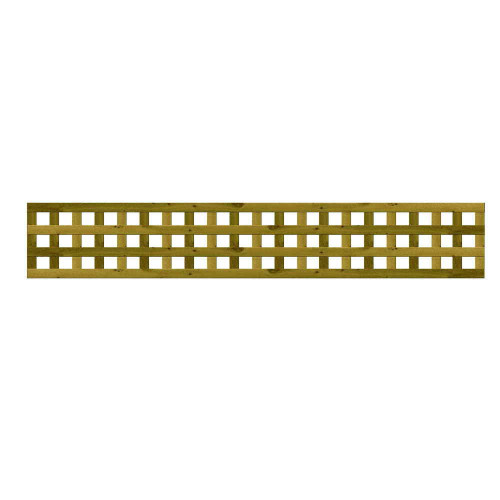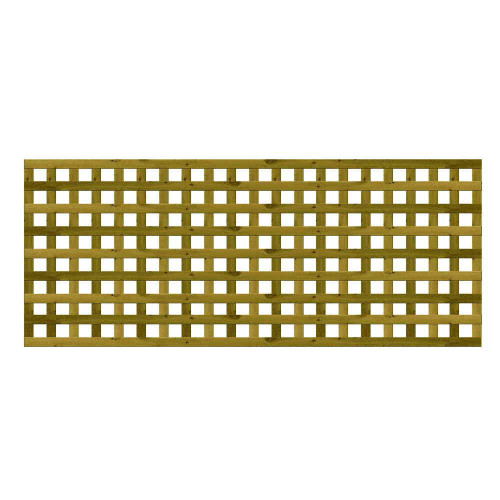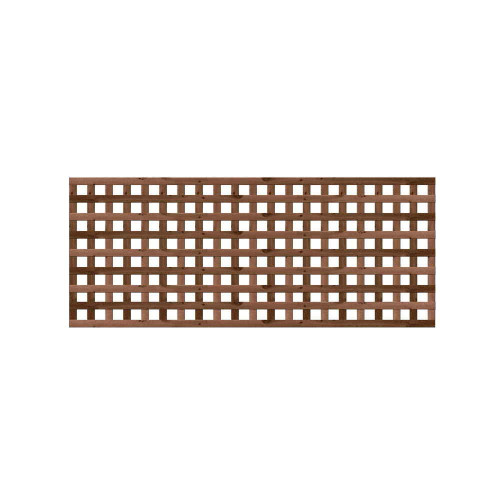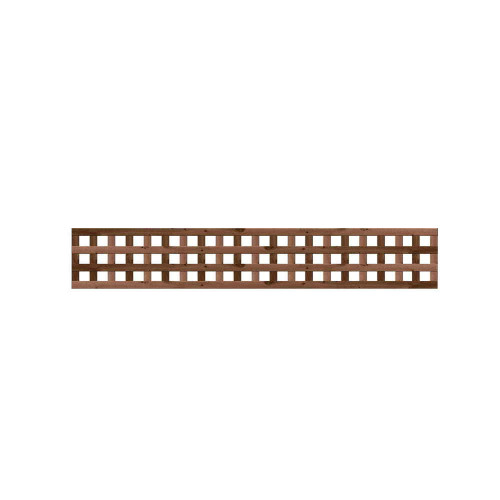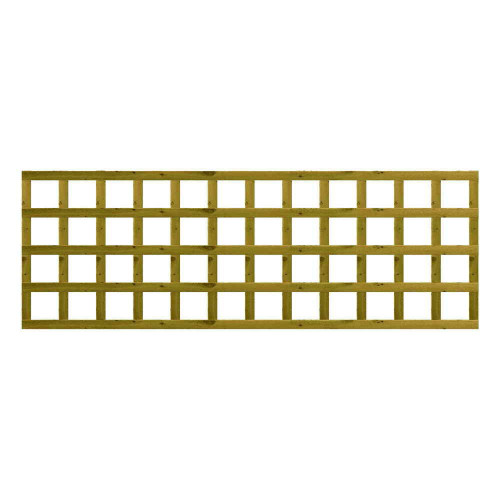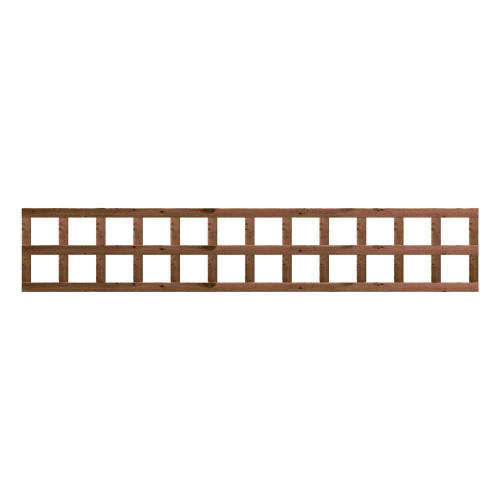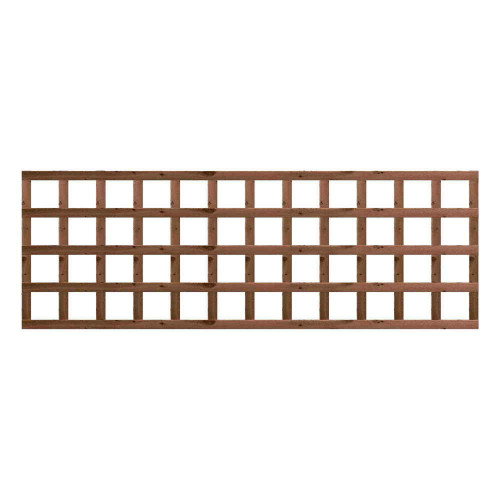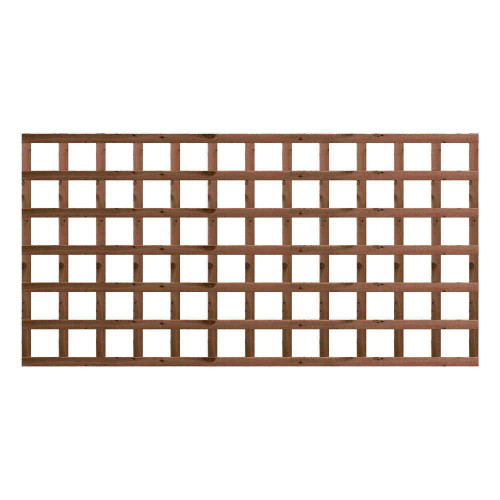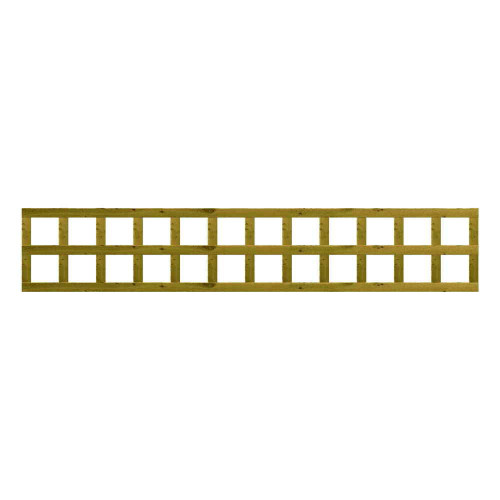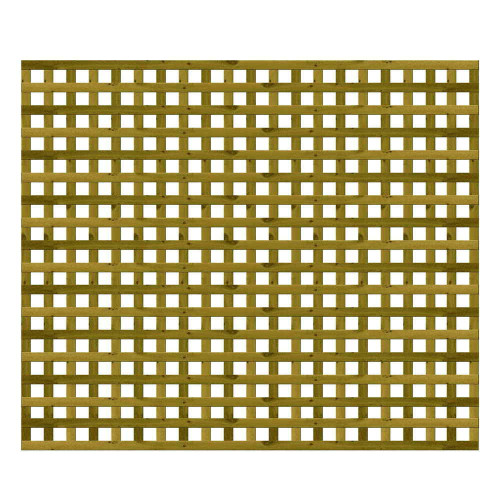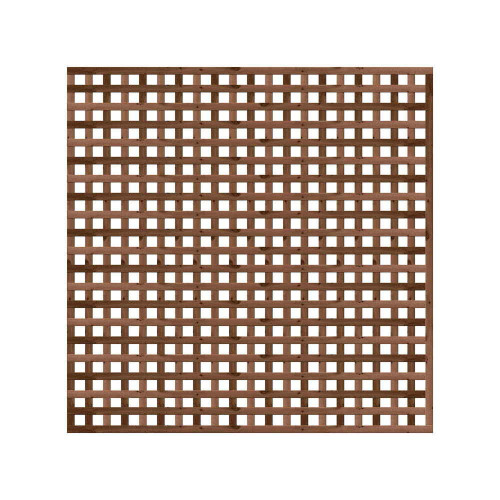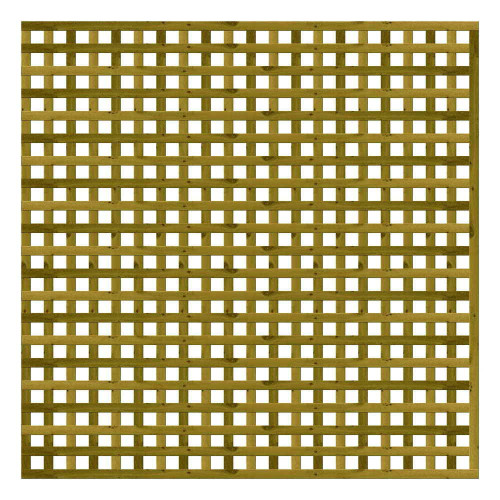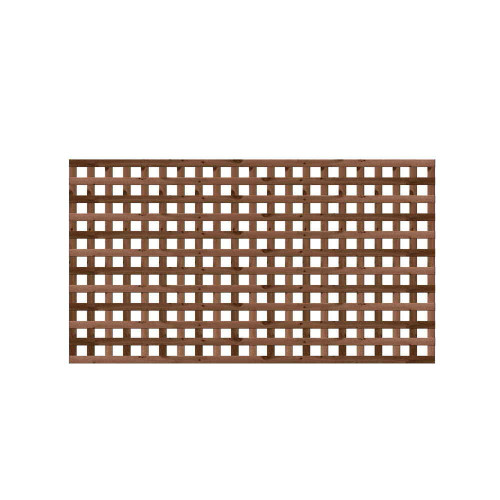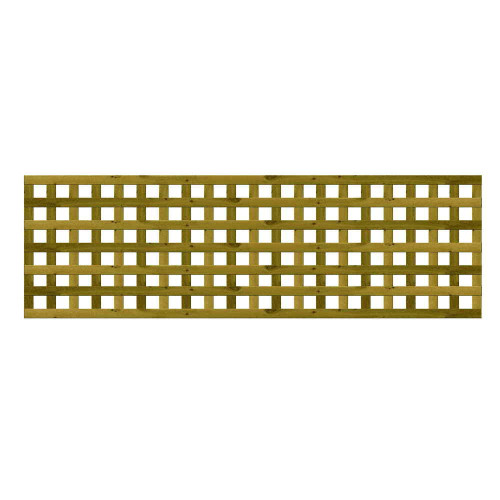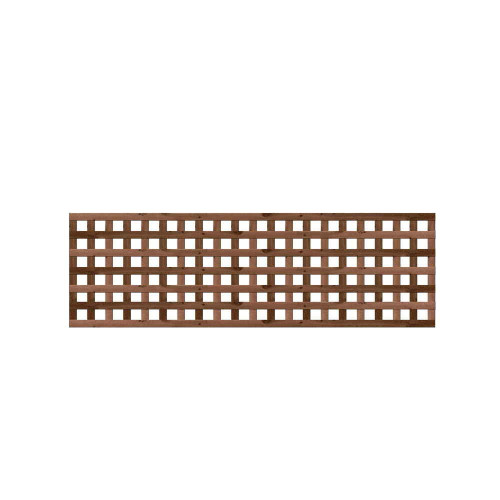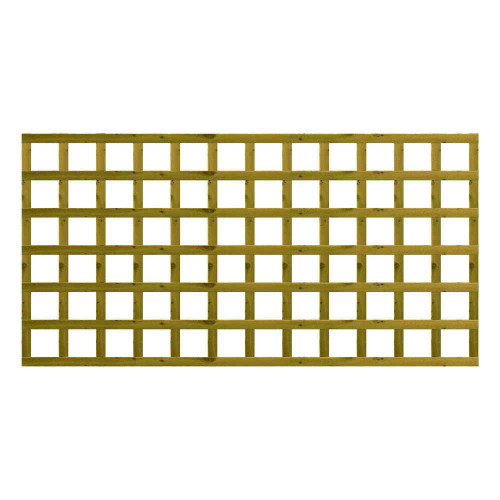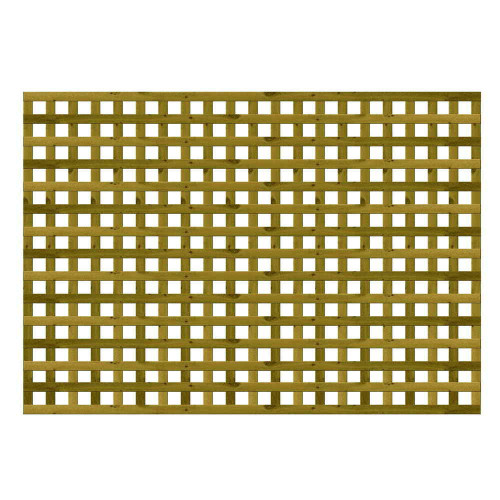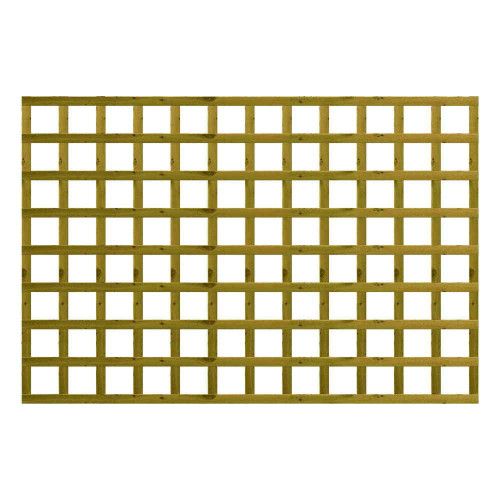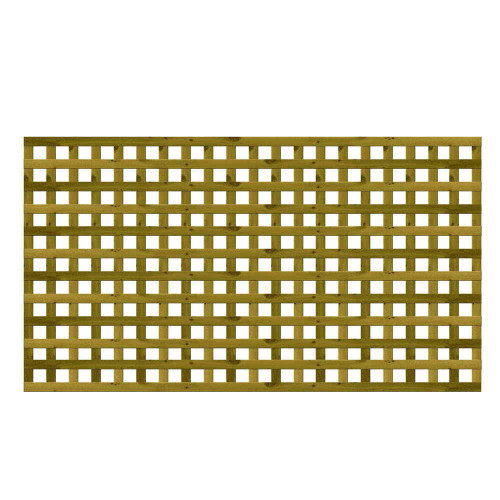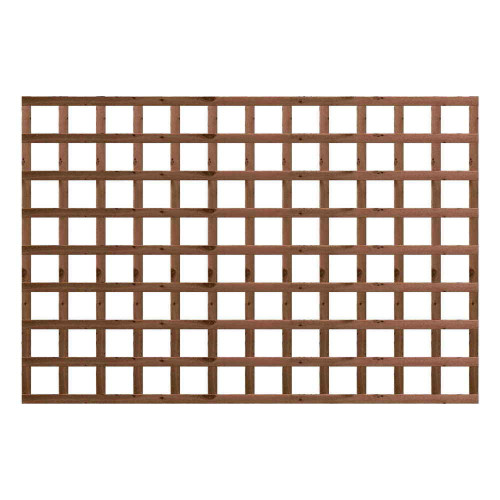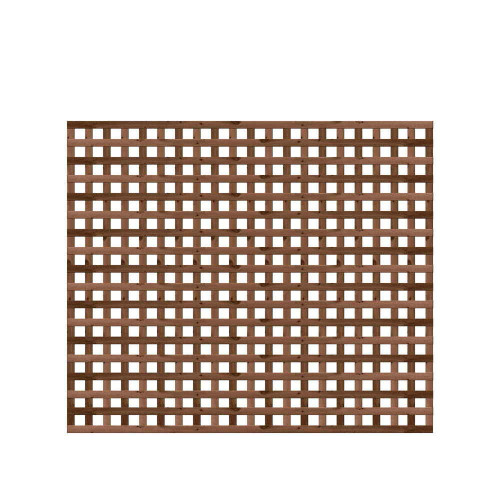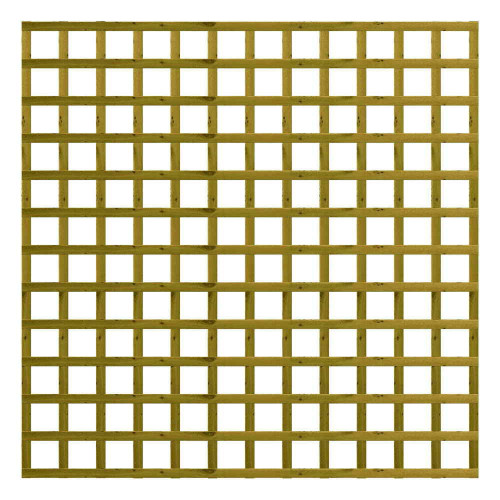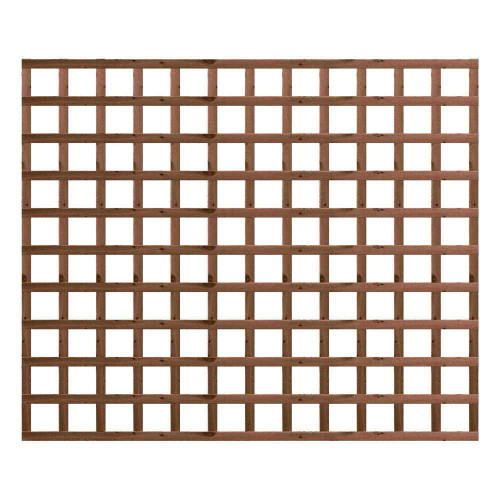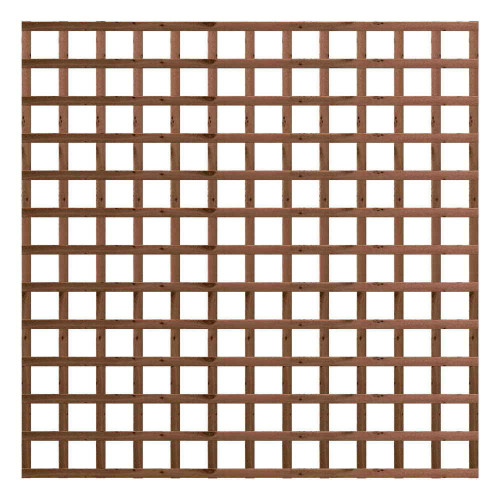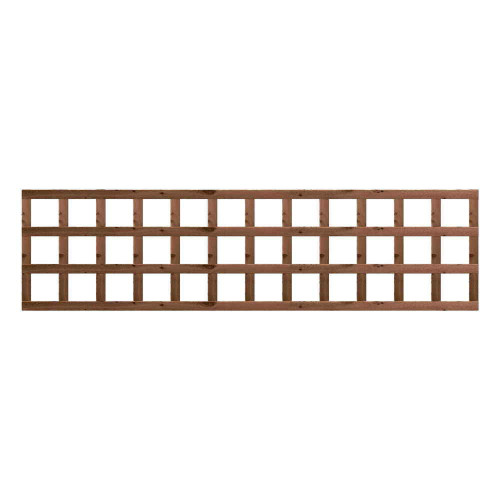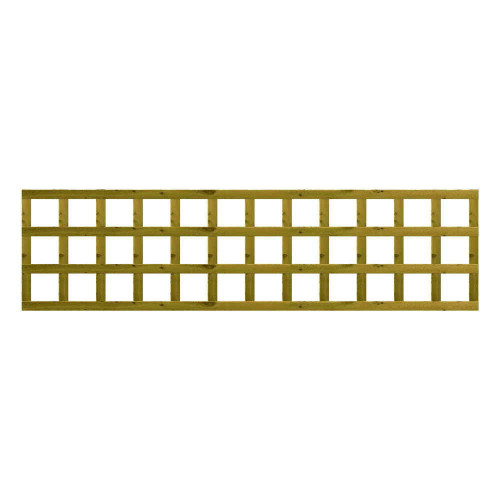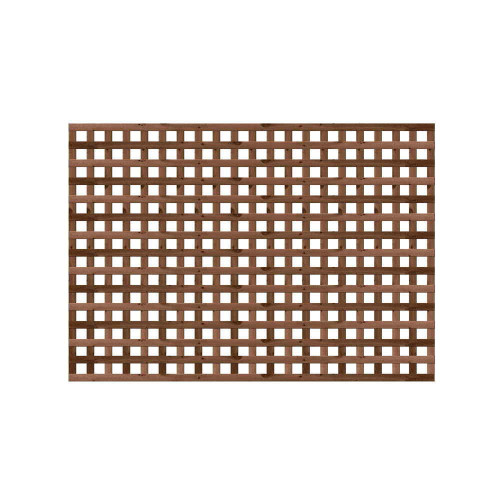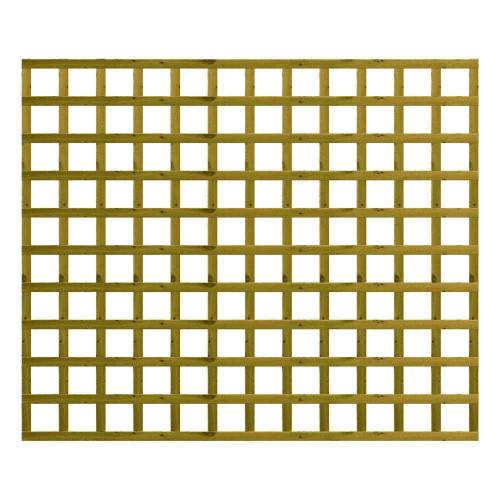


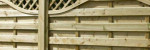

Quick answer: Choose Traditional Trellis when climbing plants, light, airflow and an open garden feel are the priorities. Its current approximately 100mm square openings leave considerably more visibility through the panel. Choose Privacy Square Trellis when you want closer filtered screening while still retaining an open timber lattice. Its openings are approximately 50mm. East Coast Fencing manufactures both styles from pressure-treated 16 x 38mm rough-sawn trellis batten, so the main practical difference is the spacing rather than the basic timber construction.
Traditional Trellis and Privacy Square Trellis look closely related.
Both use a regular square lattice. Both can support climbing plants. Both can be installed above fencing, between posts or as part of a planted garden screen.
The important difference is the size of the openings.
Traditional Trellis uses a much more open approximately 100mm square pattern. Privacy Square Trellis reduces that to approximately 50mm.
That relatively simple change affects privacy, light, airflow, planting, appearance and how enclosed a garden feels.
What Is Traditional Trellis?
Traditional Trellis is an open square-lattice timber panel designed primarily for climbing plants, decorative screening and garden areas where maintaining light and visibility matters.
Current East Coast Fencing Traditional Square Trellis uses approximately 100mm openings.
It is manufactured in-house from pressure-treated 16 x 38mm rough-sawn trellis batten.
The larger openings make it useful where you want:
- A framework for climbing plants
- Light garden division
- A decorative fence top
- Good airflow
- Plenty of daylight
- Visual connection between different garden areas
It should not be chosen primarily for immediate privacy.
What Is Privacy Square Trellis?
Privacy Square Trellis follows the same basic square-grid idea but uses a much closer pattern.
Current East Coast Fencing Privacy Square Trellis uses approximately 50mm openings.
It is also manufactured in-house from pressure-treated 16 x 38mm rough-sawn trellis batten.
The smaller squares increase the amount of timber across the panel and interrupt direct views more effectively.
It is useful for:
- Closer garden screening
- Fence toppers where overlooking matters
- Patio and seating-area screens
- Climbing plants
- Garden zoning
- Open boundaries where a solid panel would feel too enclosed
Despite the name, Privacy Square Trellis remains an open panel rather than a completely private Fence Panel.
Traditional vs Privacy Square Trellis At A Glance
| Feature | Traditional Trellis | Privacy Square Trellis |
|---|---|---|
| Approximate opening | 100mm square | 50mm square |
| Immediate screening | Light | Closer filtered screening |
| Visibility through panel | High | Reduced |
| Light transmission | Very good | Good |
| Airflow | Very open | Open |
| Climbing plants | Excellent | Excellent |
| Visual character | Open and traditional | Closer and more structured |
| Best use | Planting and openness | Planting plus screening |
How Much Difference Does A 50mm Opening Make?
Quite a lot visually.
An approximately 100mm square creates an obviously open lattice. You can see through the panel easily before planting becomes established.
Reducing the opening to approximately 50mm means the timber interrupts the view much more frequently in both directions.
This makes Privacy Square Trellis better where the purpose is to soften overlooking without installing another solid timber section.
The smaller opening does not make the panel opaque.
Someone standing close to it can still see through the squares.
Which Trellis Gives More Privacy?
Privacy Square Trellis.
Its approximately 50mm openings provide greater immediate visual interruption than the approximately 100mm Traditional Trellis pattern.
This is particularly noticeable:
- Around seating areas
- Above existing Fence Panels
- Beside patios
- Along overlooked boundaries
- Where the trellis will remain relatively free of plants
If privacy is the main requirement, however, decide how private the space actually needs to be.
For complete visual screening, a solid Fence Panel is usually a more appropriate starting point than either lattice.
Can You Still See Through Privacy Square Trellis?
Yes.
The word privacy describes its closer screening compared with open trellis. It does not mean the panel creates a solid visual barrier.
The amount you can see through it depends on:
- Viewing distance
- Viewing angle
- Lighting
- Panel height
- Plant coverage
From further away, the 50mm grid can break up a view effectively.
From immediately beside the panel, the openings remain clearly visible.
Which Trellis Lets More Light Through?
Traditional Trellis is the more open option.
The larger approximately 100mm squares leave more clear space between the battens.
This can be useful where you want screening without making a garden feel darker.
It is particularly worth considering for:
- Small gardens
- Shaded gardens
- Narrow side areas
- Vegetable plots
- Planting areas that need good light
Privacy Square Trellis still allows substantial daylight through, but the closer lattice naturally contains more timber across the same area.
Which Allows Better Airflow?
Traditional Trellis provides the more open airflow path when both products are bare.
Its large openings make it useful where the screen is intended to define an area without creating the enclosed feeling of solid fencing.
Privacy Square Trellis also allows air through and remains much more open than a solid Fence Panel.
Do not assume either design creates no wind load.
The surrounding frame and lattice still catch wind, particularly across taller panels.
Which Is Better For Climbing Plants?
Both are very good plant-support panels.
The better choice depends partly on the plant and partly on the appearance you want before it becomes established.
Traditional Trellis
The approximately 100mm squares give stems plenty of room to pass through the lattice.
The larger gaps can make:
- Training stems easier
- Plant ties easier to position
- Pruning through the panel easier
- Access to the wall or fence behind easier
Privacy Square Trellis
The approximately 50mm pattern provides more frequent timber intersections and support points.
This can be useful for:
- Finer stems
- Repeated plant ties
- Creating dense planted screening
- Spreading growth evenly across a panel
For heavy mature plants, the strength of the posts and fixings matters more than simply choosing the tighter lattice.
Which Is Better For Clematis?
Both can work well.
Clematis benefits from a framework that allows growth to be trained across the available area.
Traditional Trellis provides larger openings through which stems can be guided.
Privacy Square Trellis gives more closely spaced points across the surface.
If the panel itself will remain visible for much of the year, choose according to the screening effect you prefer as well as the plant.
Which Is Better For Climbing Roses?
Either can form part of a suitable support system, but climbing roses normally need active tying and training.
The larger openings of Traditional Trellis can make managing substantial rose stems easier.
Privacy Square Trellis provides more frequent fixing and tying points but has less open space through which thicker mature stems can pass.
Do not allow a heavy rose to rely on relatively light lattice without considering the complete support structure.
The posts or wall fixings ultimately need to carry the planted panel.
Which Is Better For Honeysuckle And Jasmine?
Both patterns are suitable starting points for suitable climbing varieties.
Traditional Trellis works particularly well where you want vigorous planting to become the main visual feature.
The open squares leave plenty of room for stems and foliage.
Privacy Square Trellis makes more sense where useful screening is wanted before the plant has fully established.
Which Trellis Looks Better Without Plants?
This is subjective, but the two create noticeably different effects.
Traditional Trellis looks lighter.
The larger square pattern leaves more background visible and can make a long screen feel less dominant.
Privacy Square Trellis creates a denser timber grid.
It has a stronger visual presence, particularly in tall sizes.
If planting may take several seasons to cover the structure, consider whether you would be happy looking at the bare trellis during that time.
Which Is Better For A Fence Topper?
Both can work well.
Traditional Trellis is a good topper where the objective is primarily:
- Decoration
- Plant support
- A softer fence line
- Additional height without much extra screening
Privacy Square Trellis is better where the topper is also intended to reduce overlooking.
Useful current low-height options include approximately:
- 300mm
- 450mm
- 600mm
As topper depth increases, the condition and height of the supporting Fence Posts become increasingly important.
Is 300mm Traditional Trellis Worth Using?
Yes, where the purpose is mainly decorative.
A 300mm Traditional Trellis panel creates a relatively narrow open band above the fence.
It suits:
- Light climbing growth
- Breaking up a solid Fence Panel top
- Adding modest height
- Keeping the overall result very open
Do not expect a shallow 300mm section with approximately 100mm openings to make a major difference to privacy.
When Is 450mm Traditional Trellis Better?
A 450mm panel gives more usable growing area while remaining relatively compact.
It sits between a narrow decorative topper and a deeper 600mm panel.
This can work well where plants need a meaningful upper framework but you do not want the trellis to dominate the solid fence beneath it.
When Should You Use 600mm Trellis?
At 600mm high, either lattice becomes a substantial part of the complete fence design.
A 600mm Traditional Trellis remains visually open because of its approximately 100mm squares.
A 600mm Privacy Square Trellis provides considerably closer screening across the same height.
This makes the difference between the two products particularly obvious.
For plants plus openness, choose Traditional.
For plants plus additional screening, Privacy Square is usually more appropriate.
Can Traditional Trellis Be Used As A Freestanding Screen?
Yes, when properly supported between suitable posts.
Taller current Traditional Trellis sizes can create an open garden division without using a solid Fence Panel.
This can work particularly well:
- Between a lawn and patio
- Around planting beds
- Beside vegetable gardens
- Behind mixed borders
- Where climbing plants will eventually cover the structure
The trellis itself should not be treated as the structural support.
Its framed edges need suitable posts or another dependable framework.
Which Is Better For A Freestanding Privacy Screen?
Privacy Square Trellis is usually the better of the two.
A tall panel with approximately 50mm openings creates more immediate screening while still allowing light and air through.
A full-height Traditional Trellis remains deliberately open.
That may be exactly what you want for garden zoning, but it is unlikely to satisfy someone expecting strong immediate privacy.
Which Is Better For A Small Garden?
Traditional Trellis can help a compact garden remain visually connected.
Because you can see through the approximately 100mm openings, a screen can divide areas without making the space feel abruptly smaller.
Privacy Square Trellis creates more enclosure.
This can work well immediately around an overlooked seating area, but using dense trellis around every side of a small garden may make the space feel more contained.
A combination can sometimes work better than choosing one pattern throughout.
Which Is Better Around A Patio?
Choose according to what the patio lacks.
If it simply needs structure or a planting backdrop, Traditional Trellis is often enough.
If people sitting on the patio are directly overlooked, Privacy Square Trellis provides a stronger starting screen.
You can then add climbing plants to either.
Consider seated sightlines rather than only standing beside the panel and deciding whether it looks private enough.
Which Is Better For Garden Zoning?
Traditional Trellis is particularly useful for light zoning.
It can mark the edge of one area without visually disconnecting it from the rest of the garden.
This suits:
- Vegetable plots
- Play areas
- Patios
- Paths
- Planted sections
Privacy Square Trellis creates a stronger division.
Choose it where one zone should feel more separate from another.
Which Is Better Against A Wall?
Both work well as plant supports on a suitable wall.
Traditional Trellis gives more room to reach through the openings for plant training and maintenance.
Privacy Square Trellis provides more support points but a closer grid.
It is normally helpful to create some space between the trellis and wall rather than pressing the lattice completely flat against the surface.
This gives stems room behind the panel and makes tying and pruning easier.
Can Traditional Trellis Be Fixed Directly To A Fence?
Potentially, but consider how the load will be supported.
A light wall-style decorative panel and a large planted trellis screen are very different installations.
Where trellis is added above a fence, support it from sound Fence Posts or appropriate structural framing rather than relying only on the thin upper edge of a Fence Panel.
This becomes increasingly important as the trellis height and plant weight increase.
Which Trellis Is Better In A Windy Garden?
A bare Traditional Trellis is the more open pattern, so it allows more air through than the closer Privacy Square grid.
That does not mean it can be fitted to inadequate posts.
A large open trellis still creates exposed area.
Plants can change the situation significantly.
A Traditional Trellis completely covered by dense evergreen growth may eventually allow much less wind through than it did when newly installed.
Plan the support around the finished planted structure.
Does Privacy Square Trellis Need Stronger Posts?
Post selection should be based on the complete installation rather than one lattice measurement.
Consider:
- Trellis height
- Panel width
- Number of panels
- Exposure
- Post spacing
- Plant weight
- Plant density
A low 300mm Privacy Square topper and a full-height 1.83m screen are not comparable structural jobs.
Are Traditional And Privacy Square Trellis Made From Different Timber?
The current East Coast Fencing ranges share the same basic trellis-batten specification.
Both are manufactured in-house from pressure-treated 16 x 38mm rough-sawn timber.
This is useful because it isolates the main buying decision.
You are not primarily choosing between a heavy-duty and lightweight timber construction.
You are choosing between different lattice densities.
What Does Rough-Sawn Trellis Look Like?
Rough-sawn fencing timber should not be expected to resemble smooth indoor joinery.
Normal characteristics include:
- Visible grain
- Knots
- Saw texture
- Treatment marks
- Natural colour variation
- Small timber variations
The texture is part of the intended fencing-grade finish.
Are Both Pressure Treated?
Yes, across the current products discussed here.
Pressure treatment improves the timber's durability for outdoor use.
It does not mean the surface will remain visually unchanged.
Timber can still:
- Weather
- Change colour
- Develop small checks
- Move slightly as moisture levels change
- Develop algae in persistently shaded and damp conditions
Should Trellis Touch The Ground?
Keep ordinary timber trellis away from unnecessary soil and standing water where practical.
Pressure treatment does not make prolonged wet ground contact desirable.
Raising the lattice slightly also makes it easier to:
- Remove leaves
- Control grass
- Inspect the lower frame
- Maintain the panel
Can Traditional And Privacy Trellis Be Used Together?
Yes.
There is no need to use the same lattice density in every part of the garden.
For example:
- Use Privacy Square Trellis around an overlooked patio.
- Use Traditional Trellis around a vegetable plot.
- Use Privacy Square above the most exposed part of a fence.
- Use Traditional Trellis where climbing plants are the main feature.
The shared square-grid appearance means the transition can remain visually consistent even though the openings are different sizes.
Where Should You Change From One Pattern To Another?
Use a natural break in the garden.
Good transition points include:
- A corner
- A Garden Gate
- A path
- The end of a patio
- A change in level
- A change in planting
Changing lattice spacing halfway through an uninterrupted straight run is more likely to look accidental.
Can Both Trellis Types Be Cut To Width?
Timber trellis can be adapted where a non-standard bay requires it, but a finished framed panel should not simply be sawn through and left with loose lattice ends.
A proper modification needs to preserve or recreate a supported outer edge.
With Traditional Trellis, the approximately 100mm pattern means there are fewer lattice sections across a given width.
Privacy Square Trellis has more intersections because of its approximately 50mm pattern.
In both cases, use a standard panel width where practical and modify only where the installation genuinely requires it.
What Sizes Should You Consider?
Current Traditional Trellis includes approximately 1.83m-wide panels across several useful heights, including options around:
- 300mm
- 450mm
- 600mm
- 900mm
- 1.2m
- 1.5m
- 1.83m
Privacy Square Trellis is also available across low topper sizes and taller screening formats.
Choose the height from the job rather than assuming taller is automatically better.
A shallow topper, medium garden divider and full-height climbing screen solve different problems.
Common Mistakes When Choosing Between Them
- Assuming Privacy Square Trellis is completely private
- Choosing Traditional Trellis where immediate screening is the main requirement
- Choosing the closer lattice where maximum light is more important than privacy
- Focusing only on the pattern and ignoring panel height
- Forgetting that mature plants can eventually provide most of the screening
- Installing tall trellis on inadequate posts
- Allowing heavy climbing plants to overload the support structure
- Relying only on the Fence Panel beneath a topper for support
- Allowing ordinary trellis to remain unnecessarily in wet soil
- Expecting rough-sawn timber to have a smooth joinery finish
- Using a full-height lattice where a small targeted screen would solve the problem
- Assuming pressure treatment stops natural timber movement
FAQs
What Is The Difference Between Traditional And Privacy Square Trellis?
The main difference is lattice spacing. Current Traditional Trellis uses approximately 100mm square openings, while Privacy Square Trellis uses approximately 50mm openings for closer filtered screening.
Which Trellis Gives More Privacy?
Privacy Square Trellis gives more immediate screening because the squares are smaller. It remains an open panel, so it does not provide the same complete visual barrier as solid fencing.
Which Trellis Is Better For Climbing Plants?
Both are suitable. Traditional Trellis gives stems more room through its larger openings, while Privacy Square Trellis provides more frequent support and tying points.
Which Trellis Lets More Light Through?
Traditional Trellis is the more open pattern and therefore the better choice where retaining maximum light and visual openness is important.
What Size Are The Openings In Traditional Trellis?
Current East Coast Fencing Traditional Square Trellis uses approximately 100mm square openings.
What Size Are Privacy Square Trellis Openings?
Current Privacy Square Trellis uses approximately 50mm square openings, making the grid noticeably closer than Traditional Trellis.
Are Traditional And Privacy Square Trellis Pressure Treated?
Yes. Current East Coast Fencing products in these ranges are manufactured from pressure-treated rough-sawn timber for exterior use.
Can Traditional Trellis Be Used For Privacy?
It provides light visual screening, particularly once plants become established, but the approximately 100mm openings make it unsuitable where close immediate privacy is the primary requirement.
Choose 100mm Squares For Openness And 50mm Squares For Screening
The difference between Traditional Trellis and Privacy Square Trellis is easy to understand once you focus on the openings.
Traditional Trellis uses an approximately 100mm square grid. That gives plants plenty of room, lets substantial light and air through and keeps the garden visually open.
Privacy Square Trellis reduces the openings to approximately 50mm. That closer lattice interrupts views more effectively while still providing airflow, daylight and a useful climbing framework.
The underlying current construction is closely related. East Coast Fencing manufactures both ranges in-house from pressure-treated 16 x 38mm rough-sawn trellis batten.
Choose Traditional Trellis where planting and openness are the main priorities.
Choose Privacy Square Trellis where the panel needs to provide useful screening before the plants have filled it.
If complete immediate privacy is required, neither lattice should be expected to behave like a solid Fence Panel. Start with the level of visibility you can accept, then choose the trellis pattern and height around that requirement.