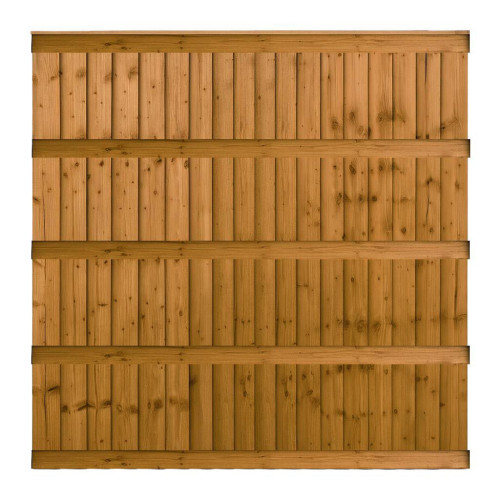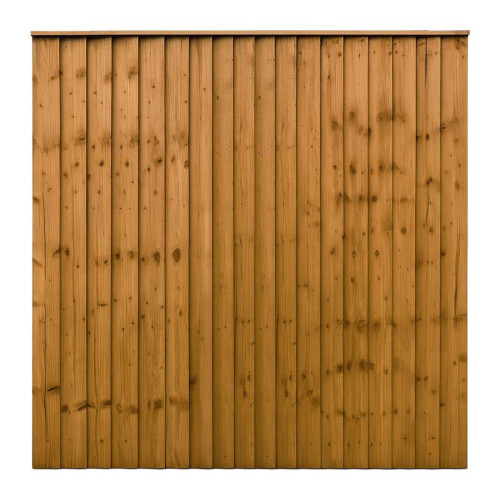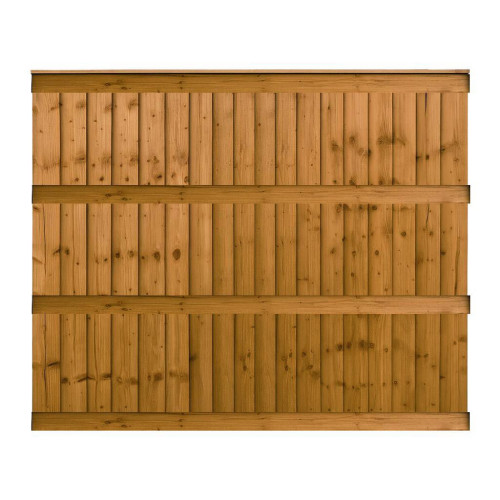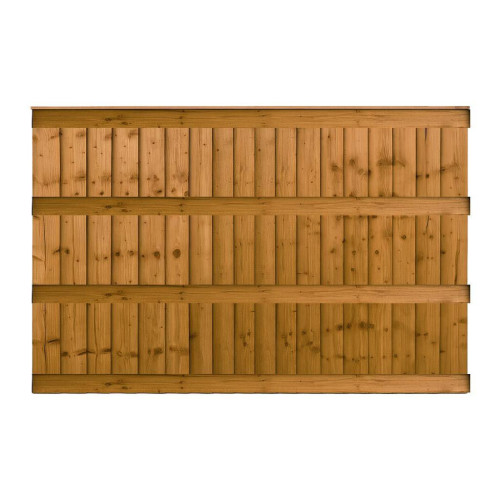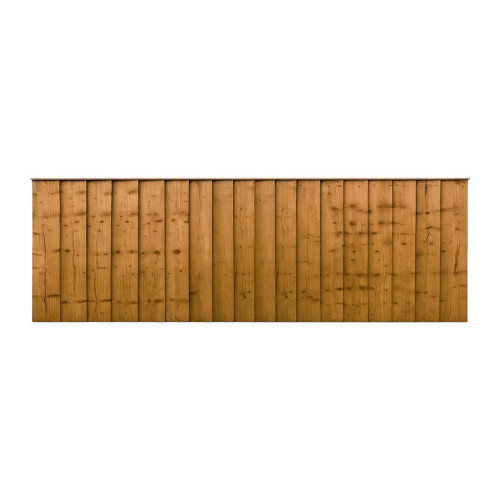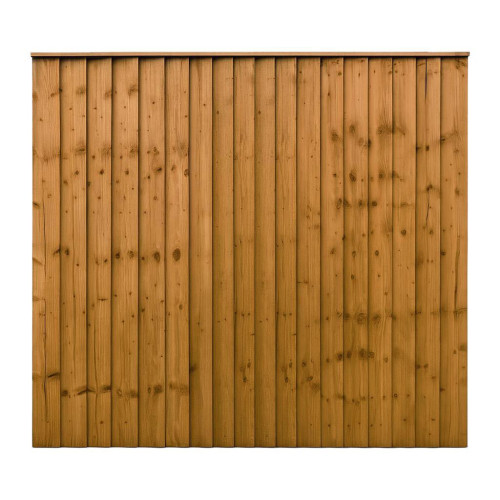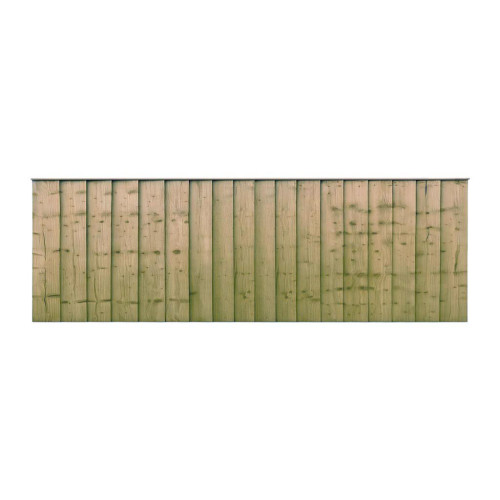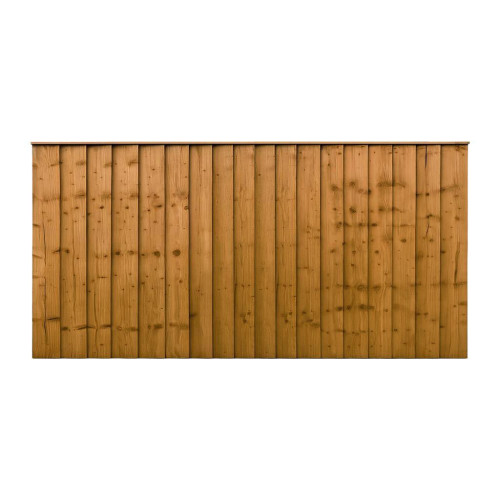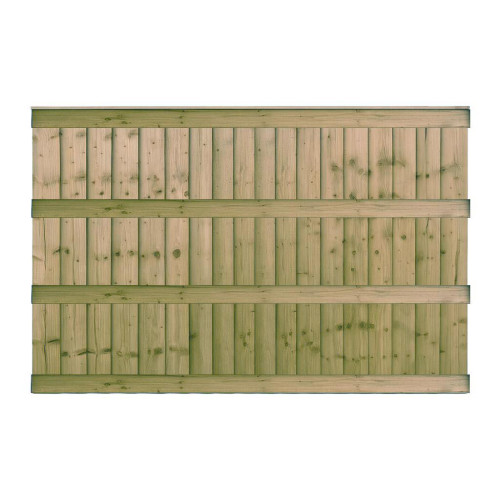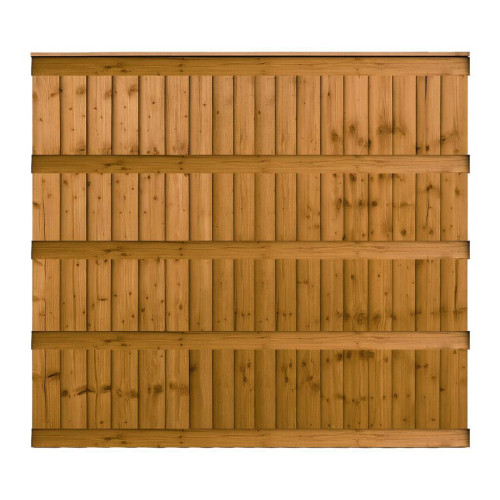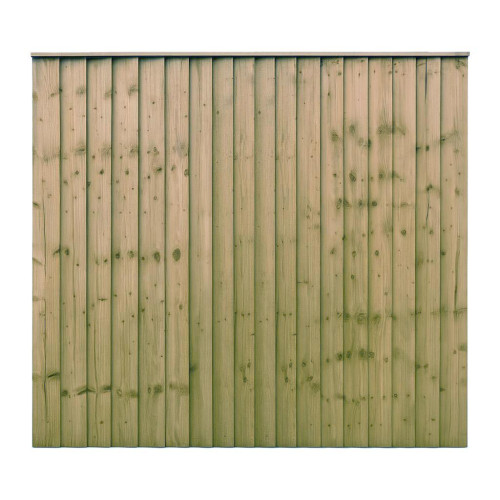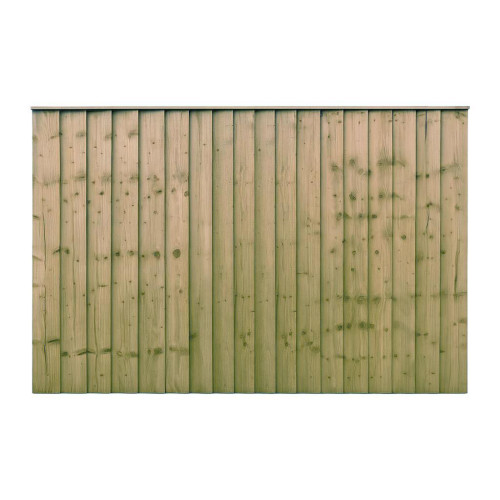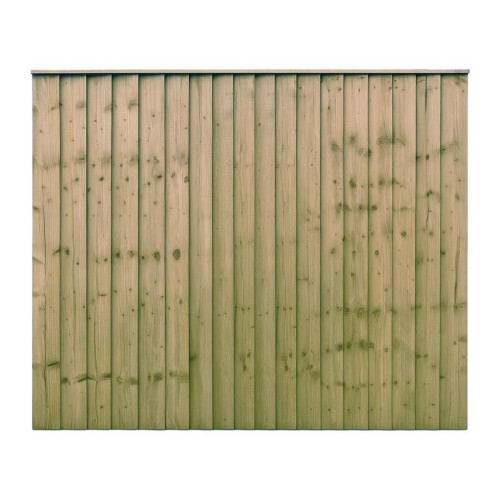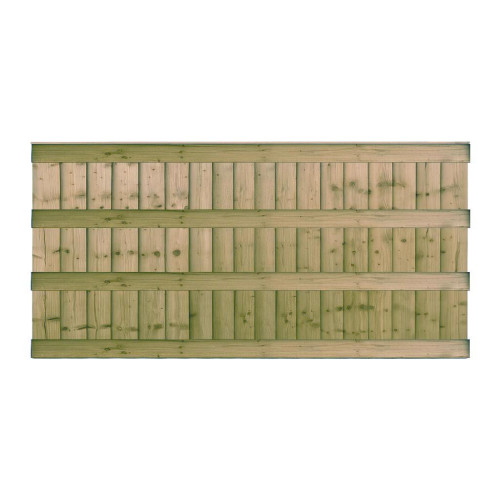



Quick answer: Standard Closeboard fence panels are a strong general-purpose choice for most garden boundaries, while Ultra Heavy Duty Closeboard panels are better suited where you want a more substantial panel or are replacing fencing in a demanding location. Both provide the familiar solid Closeboard appearance and are available in several heights and pressure-treated colours. Your decision should also consider posts, gravel boards, wind exposure, handling and the condition of the existing fencing system.
If you have decided that Closeboard fencing is right for your garden, the next question is often whether to choose Standard Closeboard or Ultra Heavy Duty Closeboard fence panels.
Both give you the traditional solid-board appearance associated with Closeboard fencing. Both are designed for privacy and boundary screening. Both are available in a useful range of heights.
The difference is really about how substantial you want the panel itself to be and what sort of fencing system it will form part of.
For an ordinary sheltered garden, Standard Closeboard can be more than adequate. For a boundary where you want a particularly robust panel, Ultra Heavy Duty Closeboard may be the more appropriate choice.
The panel is only one part of the fence, however. A heavy-duty panel fitted between inadequate posts is not automatically a heavy-duty fence. Posts, gravel boards, foundations, fixings, exposure and installation quality all matter.
What Is A Closeboard Fence Panel?
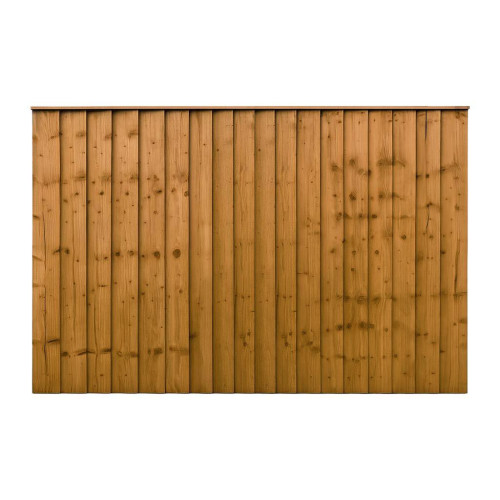
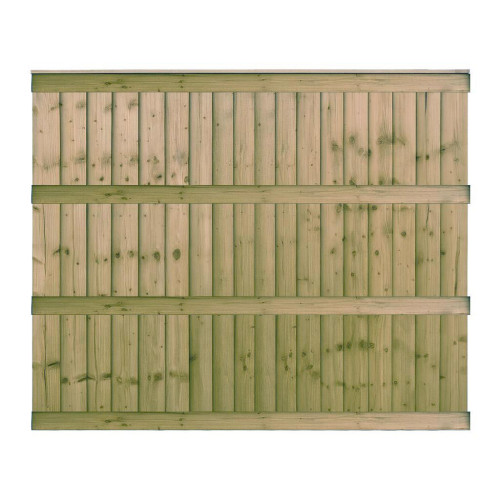
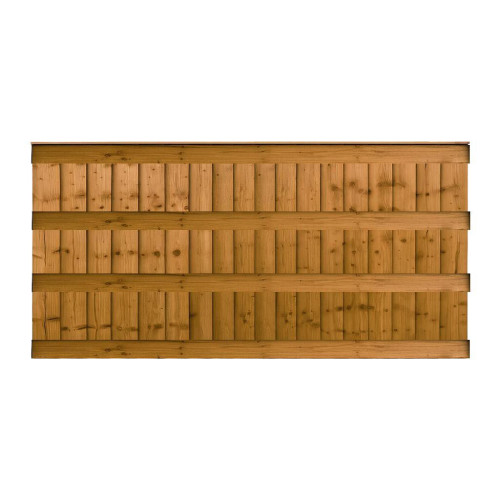
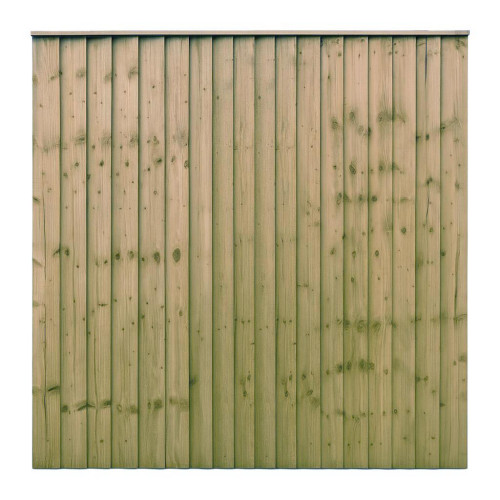
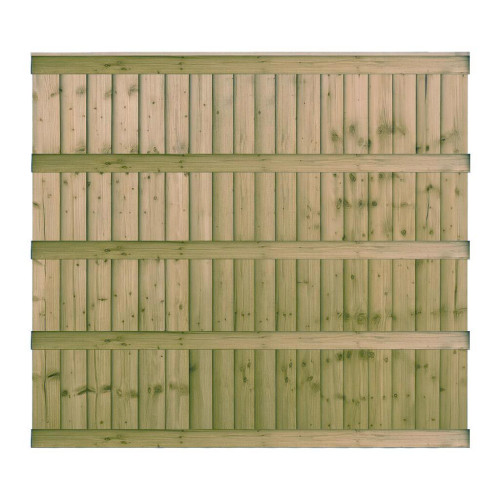
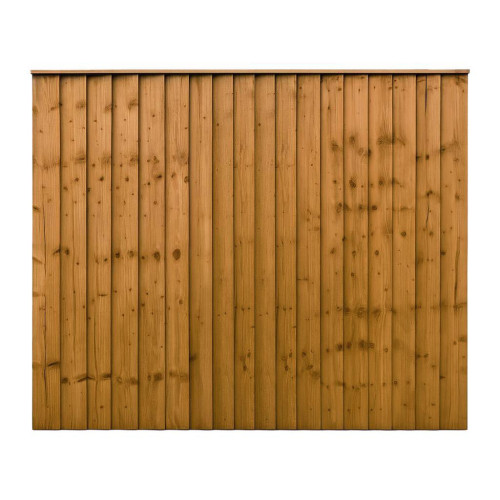
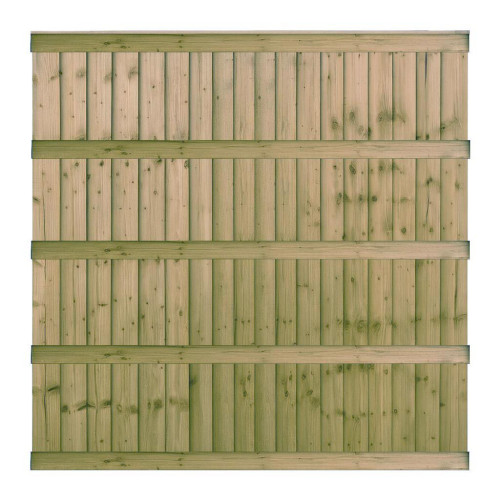
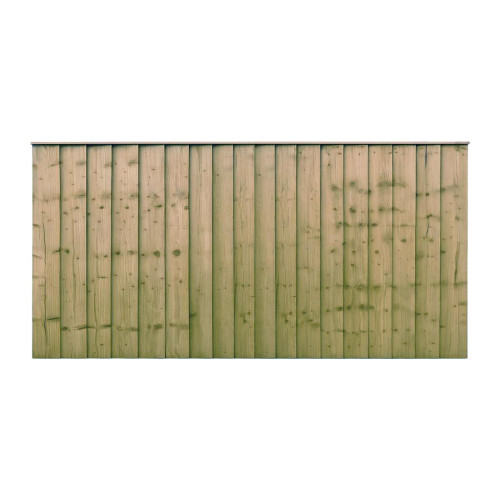
A Closeboard fence panel is a prefabricated panel designed to reproduce the solid appearance of traditional Closeboard fencing.
The overlapping vertical boards provide strong screening, making Closeboard one of the most popular choices for:
- Rear garden boundaries
- Privacy fencing
- Side boundaries
- Replacing old solid fence panels
- Gardens where a substantial traditional appearance is wanted
Because the panel arrives as a complete section, installation differs from constructing traditional Closeboard fencing on site from individual posts, rails and feather edge boards.
For many domestic projects, panel fencing offers a straightforward way to achieve the Closeboard look while retaining a conventional panel-and-post installation.
What Is The Difference Between Standard And Ultra Heavy Duty Closeboard?
The simplest distinction is that they are two different Closeboard panel ranges intended for customers wanting different levels of panel construction.
Standard Closeboard is the general-purpose option.
Ultra Heavy Duty Closeboard is the more substantial option within the range.
Both should still be treated as part of a complete fencing system rather than judged in isolation.
| Feature | Standard Closeboard | Ultra Heavy Duty Closeboard |
|---|---|---|
| Overall role | General-purpose Closeboard panel | More substantial Closeboard option |
| Privacy | High | High |
| Appearance | Traditional Closeboard | Traditional Closeboard |
| Nominal width | 6ft | 6ft |
| Available heights | 2ft to 6ft depending on option | 3ft to 6ft depending on option |
| Pressure-treated colours | Brown and green | Brown and green |
| Best suited to | Typical domestic boundaries | Projects wanting a particularly substantial panel |
Which Is Better For Most Gardens?
For a typical domestic garden, Standard Closeboard is often the logical starting point.
It provides:
- Solid screening
- A traditional appearance
- A broad choice of heights
- Compatibility with common panel fencing layouts
If the fence is in a reasonably sheltered location and the main objectives are privacy, boundary definition and replacing ordinary garden panels, there may be no need to automatically move to the most substantial option.
That does not make Standard Closeboard the inferior choice.
The correct fencing system is the one appropriate to the site.
When Does Ultra Heavy Duty Closeboard Make More Sense?
Ultra Heavy Duty Closeboard becomes more attractive where the customer specifically wants a more substantial panel.
Examples might include:
- A prominent rear boundary
- A long run of privacy fencing
- A garden where the existing panels have repeatedly felt too lightweight
- A replacement project where a more substantial panel is preferred
- A fence where durability and solidity are particularly important to the owner
It is still important not to assume that selecting an Ultra Heavy Duty panel automatically solves every structural issue.
The posts, foundations and supporting components need to suit the fence as well.
Is Ultra Heavy Duty Closeboard Better In Windy Gardens?
Potentially, but panel strength is only one part of wind resistance.
A solid Closeboard panel presents a substantial surface to the wind.
As panel height increases, so does the area exposed to wind pressure.
For an exposed garden, consider the complete system:
- Fence height
- Post material
- Post dimensions
- Post length
- Foundation depth
- Ground conditions
- Gravel boards
- Fixings
A stronger panel installed between inadequate or poorly founded posts can still fail because the weakest part of the system has simply moved elsewhere.
Does A Heavier-Duty Panel Need Stronger Posts?
You should assess the posts according to the complete fence rather than assuming the same support is suitable in every situation.
This is particularly important with tall solid fencing.
Wooden posts are commonly available in 75 x 75mm and 100 x 100mm sections, with different lengths available according to the required fence height and installation.
Concrete posts provide another option and are commonly paired with concrete gravel boards for a system that removes timber from the two components most exposed to ground-level moisture.
The correct post choice depends on height, exposure, soil and the rest of the installation.
Can Standard Closeboard Be Used With Concrete Posts?
Yes, where the panel dimensions and post system are compatible.
Slotted concrete posts are commonly used with fence panels because the panels fit into the slots rather than being fixed directly through the post.
This arrangement is often combined with concrete gravel boards.
It can provide a practical system where the homeowner wants timber panels above ground while using concrete for the supporting posts and lower boards.
Can Ultra Heavy Duty Closeboard Be Used With Concrete Posts?
Again, the important point is compatibility.
The panel needs to fit correctly within the chosen concrete post system, and the posts need to be appropriate for the overall fence height and site conditions.
Do not order components simply because they are all described as fencing products.
Check the complete bay dimensions before installation.
Can Closeboard Panels Be Used With Wooden Posts?
Yes.
Wooden posts produce a traditional all-timber appearance and can work well with both Standard and Ultra Heavy Duty Closeboard panels.
Pressure-treated timber posts are available in common dimensions including:
- 75 x 75mm
- 100 x 100mm
Available lengths include 1.8m, 2.4m and 3.0m.
Choose according to the finished fence height and the amount of post required below ground.
What Heights Are Standard Closeboard Panels Available In?
Standard Closeboard fence panels are available in nominal 6ft widths and a broad choice of heights:
- 2ft
- 3ft
- 4ft
- 5ft
- 5ft 6in
- 6ft
This wide range makes Standard Closeboard useful for more than full-height privacy fencing.
Lower panels can be used where greater openness is wanted while retaining the appearance of Closeboard construction.
What Heights Are Ultra Heavy Duty Closeboard Panels Available In?
Ultra Heavy Duty Closeboard panels are also nominally 6ft wide and are available in:
- 3ft
- 4ft
- 5ft
- 5ft 6in
- 6ft
The absence of a 2ft option is one practical difference between the ranges.
If you need a particularly low Closeboard panel, Standard Closeboard provides the broader height choice.
Should I Choose A 5ft Or 6ft Closeboard Panel?
This depends on the amount of privacy required and the complete finished height of the fence.
A nominal 6ft panel provides more screening than a 5ft panel.
However, the panel is not necessarily the entire height of the finished fence.
A gravel board fitted beneath it can increase the visible height.
For example, a nominal 6ft panel above a visible 150mm gravel board can take the overall enclosure close to 2m.
Measure and plan the whole system before choosing the panel.
Is 5ft Closeboard High Enough For Privacy?
For many gardens, yes.
Five-foot fencing can provide substantial screening while feeling slightly less enclosed than a full nominal 6ft panel.
Whether it is sufficient depends on:
- Ground levels
- Neighbouring garden levels
- Patio location
- Seating positions
- The use of gravel boards
There is no advantage in automatically choosing the tallest panel if a lower fence already provides the privacy you require.
Should I Choose 5ft 6in Closeboard?
Five-foot 6-inch panels provide a useful intermediate choice.
They can suit customers who want more screening than a 5ft panel without moving straight to a nominal 6ft panel.
They are available in both Standard and Ultra Heavy Duty Closeboard ranges.
As with every panel height, include any visible gravel board when calculating the finished fence.
Which Closeboard Panel Is Best For A Rear Garden?
Both ranges can suit rear garden boundaries.
Choose Standard Closeboard where:
- You want conventional solid garden fencing
- The site is reasonably straightforward
- You want the broadest choice of panel heights
- A standard Closeboard panel meets the requirements of the project
Consider Ultra Heavy Duty Closeboard where:
- You specifically want a more substantial panel
- The fence is a major feature of the garden
- You prefer the heavier-duty option for the replacement
- The rest of the supporting system is being designed accordingly
Which Closeboard Panel Is Best For A Side Boundary?
Side boundaries vary considerably.
A side passage beside the house might need a tall privacy fence, while another boundary might need only moderate screening.
Standard Closeboard is a practical choice for many side fences.
Ultra Heavy Duty may be preferable where the boundary is particularly prominent or a more substantial construction is desired.
Pay attention to wind funnels between buildings. A narrow passage can sometimes experience strong gusts even if the wider garden appears sheltered.
Which Is Better For A Front Garden?
Standard Closeboard may have the advantage simply because it is available down to a nominal 2ft height.
Lower fencing can be more appropriate for front gardens where the purpose is to:
- Mark the boundary
- Frame planting
- Define the lawn
- Retain an open appearance
Picket fencing is another common option where an open front boundary is preferred.
Before installing taller fencing near a highway, check the applicable planning requirements.
Which Is Better For Privacy?
Both Standard and Ultra Heavy Duty Closeboard provide strong visual screening because Closeboard is fundamentally a solid fencing style.
The height of the panel usually has a greater effect on privacy than whether you choose the Standard or Ultra Heavy Duty range.
For example, a 6ft Standard Closeboard panel will normally provide more screening than a 4ft Ultra Heavy Duty panel simply because it is taller.
Choose construction and height as two separate decisions.
Does Ultra Heavy Duty Mean More Privacy?
Not necessarily.
Privacy is primarily determined by:
- Panel height
- Whether the design is solid
- Ground levels
- Gaps beneath the fence
- Sightlines
Ultra Heavy Duty describes the panel range rather than creating additional height automatically.
A Standard and Ultra Heavy Duty panel of the same nominal height can both provide substantial screening.
Which Is Better For Security?
A solid Closeboard boundary can contribute to a more enclosed and secure garden, but security again depends on the complete installation.
Look at:
- Panel height
- Post strength
- Gate construction
- Gate latches
- Gaps underneath panels
- Weak or damaged sections
An Ultra Heavy Duty panel does not compensate for a gate that does not latch or a rotten post that allows the fence to be pushed aside.
Which Is Better For Dogs?
For dog containment, height and gaps are usually more important than choosing between the two Closeboard ranges.
Check:
- Whether the dog can jump the chosen height
- Whether it can dig underneath
- Gaps beside the gate
- Spaces beneath panels
A suitable gravel board can help create a more consistent lower edge.
Large or particularly active dogs may require a more substantial overall fencing system, but this should be planned around the animal rather than the panel name alone.
Which Is Better For A Sloping Garden?
Either panel can be used as part of a stepped fence where the installation and dimensions allow it.
Rigid panels are generally installed level, with each bay stepped higher or lower as the ground changes.
On a steep or irregular slope, traditional Closeboard fencing constructed on site from individual feather edge boards can provide greater flexibility because the fence can follow changes in level more gradually.
This is one situation where panel fencing itself may not always be the best answer.
Should I Use Gravel Boards With Closeboard Panels?
Gravel boards are strongly worth considering with timber fence panels.
They sit beneath the main panel and help separate it from:
- Soil
- Wet grass
- Mulch
- Rain splash
Both wooden and concrete gravel boards are available.
The choice affects appearance, weight, handling and the complete fencing system.
Wooden Or Concrete Gravel Boards For Closeboard?
Wooden gravel boards create an all-timber appearance.
Pressure-treated wooden boards are available in lengths including 1.83m, 2.4m and 3.0m, with a common 150mm depth.
Concrete gravel boards provide a durable non-timber lower section and are particularly common when concrete posts are used.
Concrete options include smooth and recessed designs in different depths.
Neither material is automatically correct for every fence.
Choose according to the posts, panel system, appearance and installation requirements.
Does The Gravel Board Change The Fence Height?
Yes.
If the gravel board raises the panel above ground, it contributes to the visible height of the completed fence.
This matters when choosing between:
- 5ft panels
- 5ft 6in panels
- 6ft panels
Measure the intended height of the complete enclosure rather than ordering panels first and thinking about gravel boards afterwards.
Brown Or Green Closeboard Fence Panels?
Both Standard and Ultra Heavy Duty Closeboard panels are available pressure treated in brown and green.
The colour is primarily a matter of appearance.
Do not assume that brown automatically means better treatment or that green automatically means stronger preservative protection.
Colour alone does not tell you the treatment specification or structural quality of the timber.
Choose the finish that works best with:
- The garden
- Existing fencing
- Timber posts
- Gates
- Other garden structures
Does Brown Pressure-Treated Timber Last Longer Than Green?
You should not judge durability from colour alone.
Green and brown pressure-treated timber can look different because of treatment colouring, but the visible shade itself is not a durability grade.
Actual performance depends on factors such as:
- The treatment appropriate to the intended use
- Installation
- Moisture exposure
- Drainage
- Maintenance
Choose brown or green primarily according to the appearance you prefer unless a specific product specification gives you another reason.
Can You Paint Standard And Ultra Heavy Duty Closeboard Panels?
Pressure-treated timber can generally be given a suitable decorative exterior finish once the timber is dry enough for the coating being used.
Follow the coating manufacturer's instructions.
Freshly pressure-treated timber can contain significant moisture and should not automatically be painted immediately after installation.
Painting is optional rather than necessary simply because the timber has been pressure treated.
Do Closeboard Panels Need Regular Maintenance?
They should be inspected periodically like any exterior timber fencing.
Check for:
- Loose fixings
- Movement in posts
- Damage after strong winds
- Vegetation pressing against panels
- Wet leaves or soil accumulating at the base
- Failed decorative coatings
Cleaning algae or repainting a fence will not correct structural problems, so deal with failed posts or damaged framing first.
Is Ultra Heavy Duty Closeboard Harder To Install?
A more substantial panel needs to be considered carefully from a handling perspective.
Regardless of the panel range, full-size timber fence panels can be awkward because of their dimensions.
Plan:
- How panels will be carried through the property
- Whether access is restricted
- How many people are needed for safe handling
- Whether concrete components are also being installed
Do not base a DIY project solely on whether you can physically lift one end of a panel.
Controlling a large panel accurately between posts is a different task from briefly lifting it.
Can I Put Ultra Heavy Duty Panels Into Existing Posts?
Potentially, but inspect and measure the existing fence first.
Check:
- Clear distance between posts
- Post condition
- Whether posts are upright
- Available slot or fixing dimensions
- Gravel-board arrangement
- Finished height
Do not assume an old fence was installed at perfectly standard centres.
Measure several bays because spacing can vary along the same boundary.
Can I Replace A Standard Closeboard Panel With Ultra Heavy Duty?
Possibly, provided the dimensions and supporting system are compatible.
Before ordering, verify that:
- The replacement panel fits the opening
- The posts are sound
- The posts can support the chosen panel
- The gravel board arrangement still works
- The finished fence height remains appropriate
If the existing posts are already moving or deteriorating, changing the panel without addressing the support can be false economy.
Can I Mix Standard And Ultra Heavy Duty Panels?
It is physically possible in some installations where dimensions are compatible, but think carefully about the finished appearance.
Differences in construction can be more obvious when two panel types sit directly beside one another.
For a long visible boundary, using a consistent panel range generally produces the cleaner result.
Mixing can make more sense where one section is visually separated by:
- A gate
- A corner
- A building
- A change in garden level
Which Panel Is Better For Replacing One Broken Fence Panel?
Match the existing fence where practical.
If the surrounding panels are Standard Closeboard, replacing one with the same range will normally produce the most consistent appearance.
Likewise, match Ultra Heavy Duty with Ultra Heavy Duty where possible.
Also check treatment colour and height.
Even a technically compatible panel can look noticeably different if its construction or finish does not match the rest of the run.
Should I Upgrade The Whole Fence To Ultra Heavy Duty?
Only if the upgrade makes sense for your project.
Do not replace sound Standard Closeboard panels purely because a more substantial range exists.
An upgrade is easier to justify when:
- The existing fence already needs complete replacement
- You specifically want a more substantial panel
- The posts and supporting system are also being renewed
- You prefer the Ultra Heavy Duty construction for the new boundary
If only one panel is damaged, matching the existing fence can be the more sensible repair.
Is Ultra Heavy Duty Closeboard Worth It?
It is worth considering if you value the more substantial panel construction and are already planning the rest of the fence accordingly.
It may be unnecessary where:
- The fence is low
- The site is sheltered
- Standard Closeboard already meets the requirement
- You are simply matching an existing Standard Closeboard run
Rather than asking which panel is universally better, ask which one is appropriate for the particular boundary.
Which Is More Cost Effective?
Compare the complete fencing system rather than only the individual panel.
Costs can be affected by:
- Panel type
- Panel height
- Number of bays
- Wooden or concrete posts
- Wooden or concrete gravel boards
- Required fixings
- Installation difficulty
- Removal of an existing fence
A lower initial panel cost does not necessarily create the lowest complete project cost, and choosing the most substantial component available is not automatically the best value either.
Specify the fence according to the site.
Standard vs Ultra Heavy Duty Closeboard By Use Case
| Situation | Useful Starting Point |
|---|---|
| Typical sheltered rear garden | Standard Closeboard |
| Customer wants a more substantial panel | Ultra Heavy Duty Closeboard |
| 2ft Closeboard required | Standard Closeboard |
| Replacing one Standard panel | Match Standard where possible |
| Replacing one Ultra Heavy Duty panel | Match Ultra Heavy Duty where possible |
| Very exposed boundary | Assess complete fence system, not panel alone |
| Maximum ground-level privacy | Choose suitable height in either range |
| Existing weak posts | Repair or replace supports first |
What Should You Measure Before Ordering?
Do not order replacement panels based solely on what the old fence is described as.
Measure:
- Clear width between posts
- Panel height
- Visible gravel-board height
- Overall completed fence height
- Changes in ground level
- Gate openings
Take measurements at several points along an older fence.
Posts can move over time and installation spacing may vary from bay to bay.
What Else Do You Need With Closeboard Fence Panels?
Depending on the installation, a complete panel fence may require:
- Fence posts
- Gravel boards
- Post mix
- Suitable panel fixings
- A garden gate
- Suitable gate posts
- Exterior gate ironmongery
Plan all of these components before ordering rather than treating the panel as the complete fence.
Common Mistakes When Choosing Between Standard And Ultra Heavy Duty
- Assuming Ultra Heavy Duty automatically makes the complete fence storm-proof
- Ignoring the condition of existing posts
- Choosing panel height without including the gravel board
- Buying a different range for one replacement panel without considering appearance
- Choosing 6ft automatically when a lower panel would provide enough privacy
- Assuming brown treatment lasts longer than green because of colour alone
- Forgetting access and handling requirements
- Ordering nominal sizes without measuring the existing bays
- Using weak foundations with a tall solid fence
Closeboard Fence Panel Buying Checklist
- Decide whether Standard or Ultra Heavy Duty construction is appropriate.
- Choose the required panel height.
- Measure the actual fence bays.
- Check existing posts if they are being retained.
- Choose wooden or concrete posts for a new installation.
- Decide whether wooden or concrete gravel boards are required.
- Calculate the completed fence height.
- Choose brown or green pressure-treated timber.
- Consider wind exposure.
- Plan gate positions.
- Check access for full-size panels.
- Order compatible fixings and installation materials.
FAQs
Is Ultra Heavy Duty Closeboard Better Than Standard Closeboard?
It is the more substantial panel option, but that does not make it automatically better for every garden. Standard Closeboard can be entirely appropriate for an ordinary domestic boundary.
Is Standard Closeboard Strong Enough For A Garden Fence?
It is designed as a general-purpose Closeboard panel. The performance of the finished fence also depends on posts, foundations, height, exposure and installation.
Is Ultra Heavy Duty Closeboard Better In Wind?
A more substantial panel may be desirable, but wind resistance depends on the entire fence. Strong posts, suitable foundations and correct installation are particularly important with tall solid fencing.
Which Closeboard Panel Is Best For Privacy?
Both ranges provide solid screening. Choose the appropriate height according to the privacy required.
Does Ultra Heavy Duty Give More Privacy?
Not automatically. A taller Standard panel can provide more screening than a shorter Ultra Heavy Duty panel.
What Is The Widest Closeboard Fence Panel?
The Standard and Ultra Heavy Duty Closeboard panels discussed here are nominally 6ft wide.
What Heights Do Standard Closeboard Panels Come In?
Standard Closeboard is available in nominal 2ft, 3ft, 4ft, 5ft, 5ft 6in and 6ft heights.
What Heights Do Ultra Heavy Duty Closeboard Panels Come In?
Ultra Heavy Duty Closeboard is available in nominal 3ft, 4ft, 5ft, 5ft 6in and 6ft heights.
Can I Get A 2ft Ultra Heavy Duty Closeboard Panel?
The Ultra Heavy Duty range does not include the 2ft option. Standard Closeboard provides the lower 2ft panel.
Should I Buy 5ft Or 6ft Closeboard?
Choose according to required privacy and the completed fence height. Remember that a gravel board beneath the panel can increase the overall height.
Is 5ft Closeboard High Enough For Privacy?
It can be for many gardens. Ground levels and sightlines determine how much screening is actually provided.
Can I Put A Gravel Board Under A 6ft Closeboard Panel?
Yes where the fencing system is designed for it, but calculate the resulting overall fence height before installation.
Can Closeboard Panels Be Installed Between Concrete Posts?
Yes, provided the dimensions are compatible with the slotted post system.
Can Closeboard Panels Be Fitted To Wooden Posts?
Yes. Wooden posts are widely used with timber fence panels.
Are Concrete Posts Better For Ultra Heavy Duty Panels?
Not automatically. Concrete and timber posts each have advantages. The correct support depends on the complete fence design, height and site.
Should I Use Concrete Gravel Boards With Closeboard?
They are a useful option where a durable non-timber lower board is wanted, particularly in a concrete post system.
Can I Use Wooden Gravel Boards?
Yes. Pressure-treated wooden gravel boards provide a traditional all-timber appearance.
Do Standard And Ultra Heavy Duty Panels Come In Brown?
Yes. Both ranges are available pressure treated in brown.
Do They Come In Green?
Yes. Both are also available pressure treated in green.
Does Brown Pressure Treatment Last Longer Than Green?
Do not use colour alone to judge durability. Brown and green describe appearance rather than providing a treatment grade.
Can I Paint A Pressure-Treated Closeboard Panel?
Yes, once the timber is sufficiently dry and prepared for a compatible exterior coating.
Can I Replace Standard Closeboard With Ultra Heavy Duty?
Potentially, if the dimensions and supporting system are compatible. Check the existing posts and bay width first.
Can I Mix Standard And Ultra Heavy Duty Panels Along One Fence?
It may be possible, but the difference in construction can affect appearance. Keeping one consistent range usually gives a cleaner finish.
Which Should I Choose For A Complete New Fence?
Start with Standard Closeboard if you want conventional solid garden fencing. Consider Ultra Heavy Duty if you specifically want a more substantial panel and are designing the rest of the fencing system accordingly.
Standard Or Ultra Heavy Duty Closeboard: The Final Choice
There is no need to make the Standard versus Ultra Heavy Duty decision more complicated than it is.
Both are solid Closeboard fence panels designed for customers who want a traditional, private garden boundary.
Standard Closeboard is the sensible general-purpose option for many domestic fences. It also offers the widest choice of heights, extending down to a nominal 2ft panel.
Ultra Heavy Duty Closeboard is worth considering when you specifically want a more substantial panel and are prepared to plan the posts, gravel boards and installation around that choice.
For privacy, concentrate on the height you actually need. For exposed gardens, concentrate on the complete structure rather than assuming the panel alone determines strength. For replacement work, measure the existing bays and try to match the surrounding panels where possible.
Most importantly, buy the fence as a system.
A suitable Closeboard panel supported by appropriate posts, gravel boards, foundations and fixings will usually provide a better result than simply selecting the most substantial panel available and treating everything else as secondary.