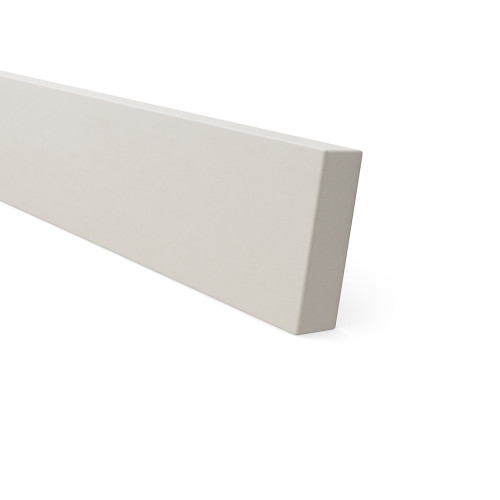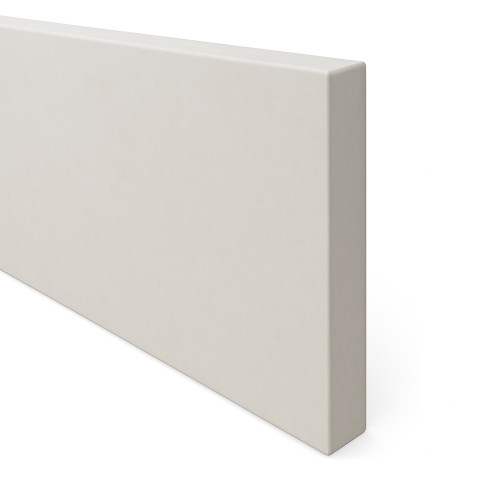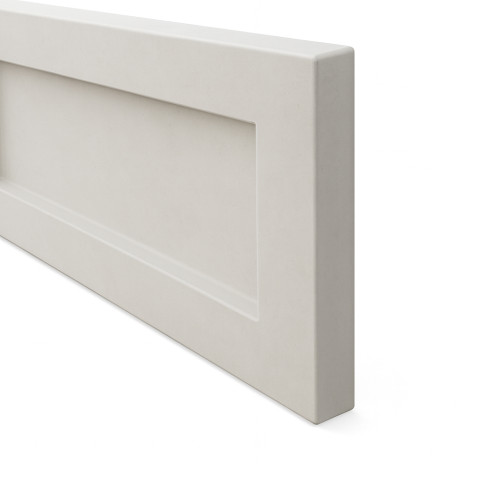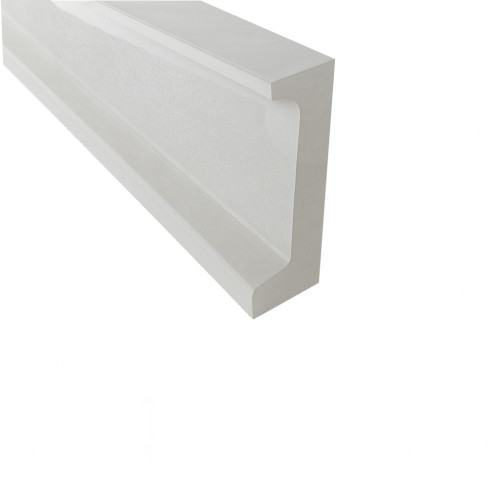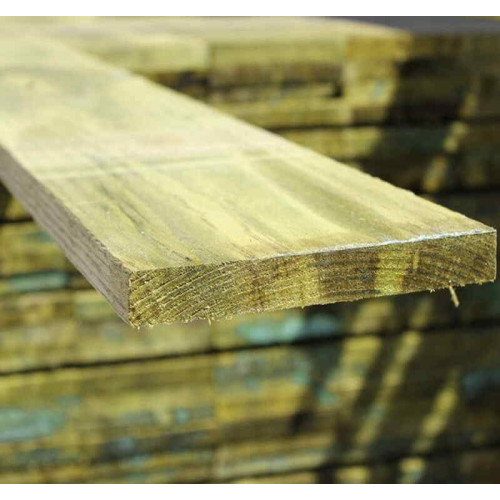



Quick answer: Gravel boards should usually sit at ground level or slightly above it rather than being deeply buried. The bottom edge can be set into the surface enough to close small gaps, particularly with concrete gravel boards, but the board should not be used as a buried foundation or retaining wall. Keep timber gravel boards away from prolonged soil contact where possible, and follow the natural ground level along the fence.
Gravel boards form the lowest part of many garden fence systems. They protect fence panels from damp soil, knocks from garden tools and damage caused by leaves or debris collecting at the base.
The correct position depends on the gravel board material, the shape of the ground and whether the fence needs to contain loose soil. Installing the board too high can leave an unwanted gap, while burying it too deeply can shorten its working life or create pressure it was not designed to withstand.
This guide explains where gravel boards should sit, how to deal with slopes and uneven ground, and the differences between timber and concrete gravel boards.
Should Gravel Boards Sit Above Ground Or Be Buried?
In most fence installations, a gravel board should sit on or just above the finished ground level. It may be set slightly into loose soil to close a small gap, but a large part of the board should not normally be buried.
The main purpose of a gravel board is to separate the fence panel from the ground. It is not intended to act as the main foundation for the fence. The fence posts and their foundations provide the structural support.
A small amount of ground contact is difficult to avoid, particularly where the garden surface is uneven. Concrete gravel boards cope with this better than timber boards, but neither type should automatically be treated as a retaining wall.
Gravel Board Positions At A Glance
| Situation | Recommended Position | What To Watch |
|---|---|---|
| Level lawn or soil | At or slightly above ground level | Avoid leaving a large gap underneath |
| Uneven ground | Follow the average ground level | Fill small gaps rather than burying the board deeply |
| Concrete gravel board | May sit slightly into the surface | Do not rely on it to retain substantial soil |
| Timber gravel board | Preferably just above wet soil | Constant moisture can shorten its life |
| Sloping garden | Step the fence in sections | Check for triangular gaps beneath each board |
| Raised soil on one side | Use a suitable retaining solution | Ordinary gravel boards may not withstand the pressure |
What Is A Gravel Board For?
A gravel board creates a protective barrier between the fence panel and the ground. Without one, the bottom of a timber panel may remain damp after rain or come into direct contact with soil, grass and decaying leaves.
Keeping the panel raised helps reduce moisture exposure and makes routine maintenance easier. A damaged gravel board can also be replaced without having to replace the entire fence panel.
Gravel boards can provide several practical benefits:
- Keeping timber fence panels away from damp soil
- Reducing damage from lawnmowers and strimmers
- Creating a tidy line beneath the fence
- Closing small gaps below fence panels
- Helping to contain light surface materials such as bark or gravel
- Allowing standard fence panels to fit between posts at a consistent height
They should not be confused with foundations, drainage channels or purpose-built retaining structures.
How High Should A Gravel Board Sit Above The Ground?
There is no single height that suits every garden. The board should normally be positioned low enough to close the gap beneath the fence while keeping the main fence panel clear of the ground.
On a level surface, the lower edge may rest close to the soil or finished paving level. Leaving a small clearance can help water drain and reduce constant damp around a timber gravel board, but the gap should not be so large that pets can get underneath or the boundary looks unfinished.
Check the height along the full fence line before fixing the boards. A garden that appears level may rise or fall by several centimetres between posts.
Can Concrete Gravel Boards Be Buried?
Concrete gravel boards can usually tolerate limited contact with soil and may be set slightly into the surface to close minor gaps. This makes them useful in gardens with uneven ground or areas that remain damp.
However, burying a large section of the board is rarely necessary. It wastes usable height and can make future replacement more difficult. It may also place pressure against a board that was installed as part of a standard fence rather than a retaining system.
Concrete gravel boards are durable, but they can still crack if they are poorly supported, forced into misaligned post slots or subjected to excessive sideways pressure. The ground beneath them should be reasonably firm and free from large stones that create isolated pressure points.
Should Timber Gravel Boards Touch The Soil?
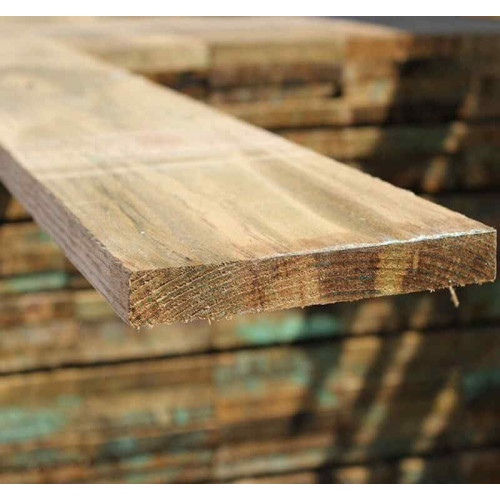
Timber gravel boards are normally pressure treated for outdoor use, but keeping them permanently buried in damp soil can still shorten their lifespan. Treatment improves durability but does not make timber immune to moisture and decay.
Where practical, position a timber gravel board just above the wettest part of the ground. Clear away soil, grass cuttings and leaves that collect against it, and make sure water is not being trapped along the fence line.
Cut ends and drilled areas may need a suitable end-grain treatment because cutting the timber can expose untreated material. Pay particular attention to corners and low points where water tends to collect.
Can A Gravel Board Be Used To Retain Soil?
A standard gravel board may hold back a small amount of loose surface material, but it should not automatically be used to retain a raised garden. Wet soil is heavy and creates continuous sideways pressure.
The greater the difference in ground level, the greater the load placed on the board and fence posts. This can cause timber boards to bow, concrete boards to crack or posts to lean.
Where one side of the boundary is noticeably higher, use a properly designed retaining solution. Depending on the height and site conditions, this might involve railway sleepers, retaining wall materials or another structure with suitable foundations and drainage.
Do not build soil up against a neighbour's fence without considering ownership, drainage and the additional load. The fence may not belong to you, and it may not have been designed to support the changed ground level.
How Should Gravel Boards Be Installed On A Slope?
Fences on sloping ground are often installed in steps. Each panel and gravel board remains level, but the next section starts higher or lower to follow the garden.
This method produces a neat result with standard rectangular fence panels. It can, however, leave a triangular gap beneath the lower end of each gravel board where the ground falls away.
Small gaps can be dealt with by carefully adjusting the soil level or adding a suitable infill. Avoid burying one end of the board deeply simply to close the space, as this can create an uneven appearance and reduce the amount of board protecting the panel.
For a gentle slope, it may be possible to follow the ground more closely with a carefully planned installation. The correct approach depends on the post system, panel type and amount of fall along the boundary.
What Should You Do On Uneven Ground?
Remove obvious high spots such as stones, compacted spoil and old lumps of concrete before installing the gravel boards. This allows the board to sit evenly without rocking or being supported at only one point.
Small low areas can be filled and compacted. Use material that drains reasonably well rather than creating a pocket where water will collect against the board.
Avoid digging a deep trench along the full fence line unless the installation has been designed for it. A trench can hold water, disturb the soil around the posts and leave too much of the gravel board below the finished ground level.
Should A Gravel Board Sit On Concrete?
A gravel board does not normally need a continuous concrete foundation. In a standard fence, the posts are secured in the ground and the gravel board spans between them.
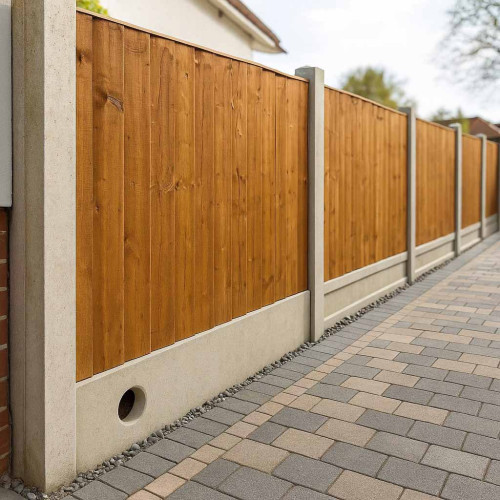
Concrete gravel boards used with slotted concrete fence posts are generally lowered into the slots before the fence panel is installed. Timber gravel boards are usually fixed to timber posts with suitable cleats, brackets or exterior-grade fixings.
A small firm base may be useful where the ground is particularly soft, but it should not prevent drainage or force the board out of line with the post slots. Any support should spread the load evenly rather than creating a hard point beneath the middle of the board.
Do Gravel Boards Need To Be Level?
Gravel boards should normally be level between each pair of fence posts. A level board provides even support and makes it easier to fit the fence panel neatly above it.
Check the position with a spirit level before fixing the board or placing the panel. Also check that both posts are upright and correctly spaced. A level gravel board will not solve problems caused by leaning posts or uneven post centres.
On sloping ground, each individual section can be level even though the complete fence steps up or down across the garden.
How Deep Should Fence Posts Be When Using Gravel Boards?
The position of the gravel board does not determine the post depth on its own. Post depth depends on the overall fence height, the post material, ground conditions and how exposed the site is.
The posts must be long enough to accommodate the gravel board and fence panel above ground while still providing adequate support below ground. Adding a gravel board increases the total installed fence height, so it must be included when choosing post length.
For example, combining a 150mm gravel board with a 1.8 metre fence panel creates a fence section around 1.95 metres high before allowing for installation details. Check the complete height before ordering fence posts or setting out the boundary.
Can Gravel Boards Help Stop Animals Getting Under A Fence?
A correctly positioned gravel board can reduce gaps beneath the fence and make it harder for small pets or wildlife to pass underneath. It can also discourage dogs from pushing directly against the lower edge of a timber fence panel.
The board still needs to follow the ground closely. Large gaps often appear on slopes, around tree roots or where soil has settled after installation.
Do not bury a timber board deeply as a quick solution. A more durable option may be a concrete gravel board, a shaped infill or a separate barrier suited to the animal and ground conditions.
Can You Put A Gravel Board Above Paving?
Yes. Where a fence runs beside a patio, path or driveway, the gravel board can sit slightly above the paving surface. This keeps the fence panel protected and leaves a clear line for drainage and cleaning.
Avoid trapping the board tightly between paving and the fence panel. Small amounts of movement can occur as timber expands or the ground settles.
Check which way rainwater flows. The gravel board should not block drainage or direct water towards a building, neighbouring garden or timber fence post.
Timber Or Concrete Gravel Boards: Which Is Better Near The Ground?
Timber Gravel Boards
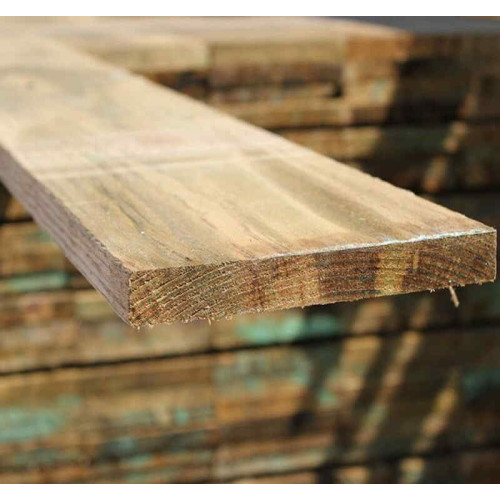
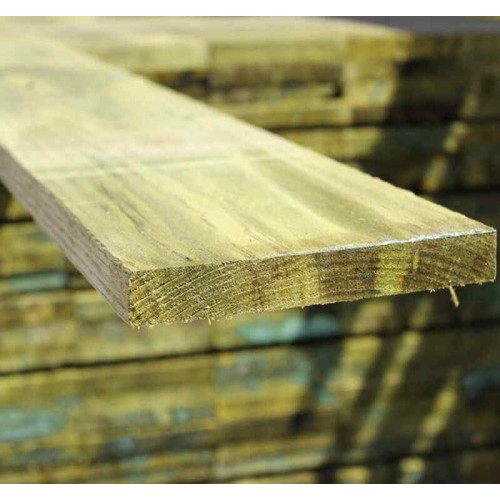
Timber gravel boards suit traditional timber fencing and are easier to cut, lift and fix. They provide a consistent appearance with wooden fence panels and fence posts.
Their main limitation is moisture exposure. Even treated timber may eventually deteriorate where it remains wet or is buried in soil for long periods.
Concrete Gravel Boards
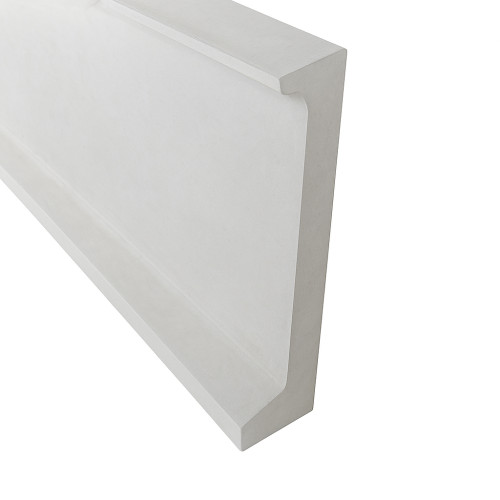
Concrete gravel boards are heavier but generally cope better with damp ground and repeated contact with soil. They are commonly used with concrete fence posts and removable fence panels.
They require careful handling and suitable support. A cracked concrete board is difficult to repair neatly and may need to be replaced.
| Feature | Timber Gravel Board | Concrete Gravel Board |
|---|---|---|
| Weight | Lighter and easier to handle | Heavy and may require two people |
| Ground contact | Best kept away from constant damp | Better suited to damp ground |
| Cutting | Straightforward with suitable tools | More difficult and creates dust |
| Appearance | Matches timber fencing | Practical, solid finish |
| Typical post system | Timber fence posts | Slotted concrete fence posts |
Common Gravel Board Installation Mistakes
- Burying most of the board unnecessarily
- Using a gravel board to retain a large depth of soil
- Allowing timber boards to remain covered by wet leaves and soil
- Forgetting to include the gravel board in the total fence height
- Installing boards on loose or uneven ground without preparation
- Forcing concrete boards into posts that are incorrectly spaced
- Leaving large gaps beneath the board on sloping ground
- Blocking natural drainage along the boundary
- Building up soil against a neighbour's fence without agreement
- Trying to correct badly positioned posts with the gravel board
How To Position A Gravel Board
- Mark the fence line: Confirm the boundary position and clear away vegetation, rubble and old concrete.
- Check the ground level: Identify high points, low areas and changes in slope before setting the posts.
- Choose the board material: Use timber for a matching traditional finish or concrete where greater resistance to damp ground is needed.
- Set the posts correctly: Make sure the posts are upright, properly spaced and supported by suitable cement products.
- Position the gravel board: Place it at or slightly above the finished ground level, allowing limited contact where necessary.
- Check the level: Make sure the board is level between the posts and does not rock on isolated high points.
- Secure the board: Use the correct slots, cleats, brackets or ironmongery for the chosen fence system.
- Fit the fence panel: Check that the panel is supported evenly and remains clear of the ground.
- Finish the ground: Fill small gaps without burying the board more deeply than necessary, and maintain a route for drainage.
FAQs
Should A Gravel Board Touch The Ground?
It can touch the ground, particularly if it is concrete. Timber gravel boards are better kept slightly above persistently wet soil where possible. The aim is to close the gap beneath the fence without leaving the board unnecessarily buried.
Can You Bury A 150mm Gravel Board?
A small part may be set into the surface to follow uneven ground, but burying the full 150mm depth would remove its main benefit. It would no longer provide useful separation between the fence panel and the ground.
How Much Of A Concrete Gravel Board Can Go Underground?
There is no universal depth because ground and fence systems vary. Keep burial to the minimum needed to close small gaps and create a tidy line. Use a proper retaining structure where a significant depth of soil needs to be held back.
Do Gravel Boards Rot?
Timber gravel boards can eventually decay, especially where they remain damp or buried. Pressure treatment helps extend their life. Concrete gravel boards do not rot, although they can crack or suffer impact damage.
Can You Stack Gravel Boards?
Concrete gravel boards are sometimes stacked within suitable slotted posts, but the posts, foundations and boards must be able to withstand the resulting load. Several stacked boards used to retain soil should be treated as a retaining structure rather than an ordinary fence detail.
Do You Need Gravel Boards Under Every Fence Panel?
No, but they are useful beneath most timber fence panels. They are particularly worthwhile where the ground is damp, where grass reaches the fence or where strimmers and lawnmowers are used nearby.
Can A Gravel Board Stop Weeds?
It can reduce growth directly beneath a fence panel, but it will not create a complete weed barrier. Seeds and roots can still spread around the board. Keep the fence line clear and use an appropriate ground treatment where necessary.
Should Soil Be Banked Against A Gravel Board?
A small amount of loose surface soil is unlikely to cause a problem, but deep or heavily compacted soil can create excessive pressure. It can also trap moisture against timber boards and fence posts.
Set Gravel Boards Close To The Ground, Not Deep Below It
Gravel boards should normally sit at ground level or slightly above it. Limited ground contact may be necessary to close small gaps, but deeply burying the board reduces its useful height and can expose it to unnecessary moisture or soil pressure.
Concrete gravel boards are generally the better choice for damp or uneven ground. Timber gravel boards provide a matching finish with wooden fence panels but benefit from good drainage and less direct soil contact.
Plan the fence posts, fence panels, gravel boards, ironmongery and cement products as one complete system. Check the ground level first, keep the board evenly supported and use a separate retaining solution where there is a substantial difference in soil height.