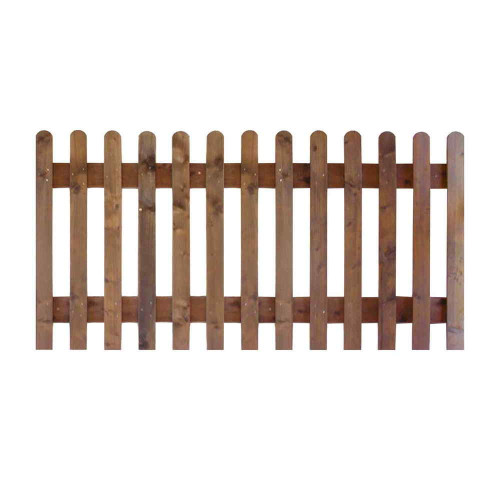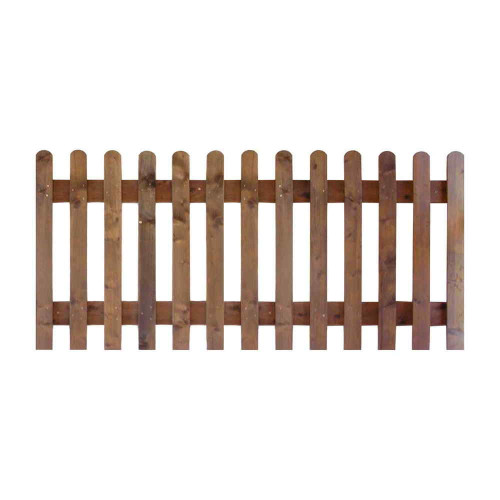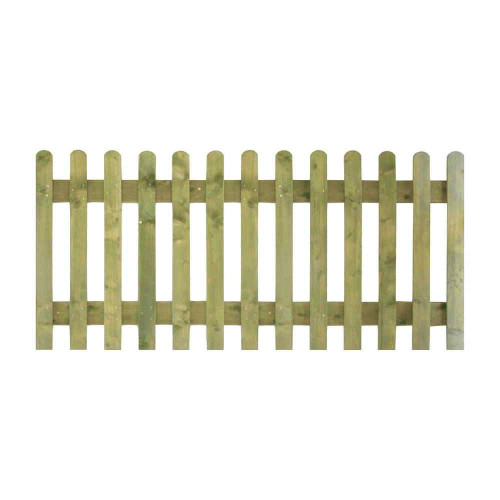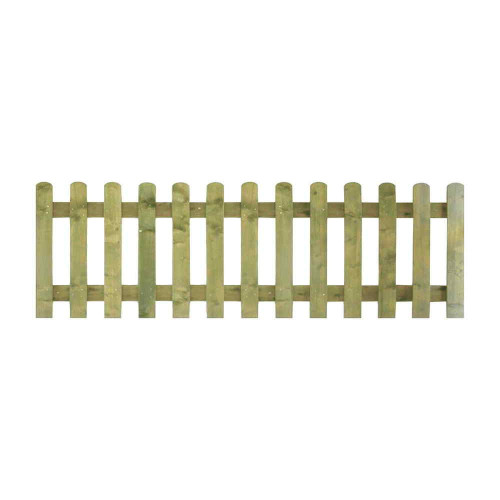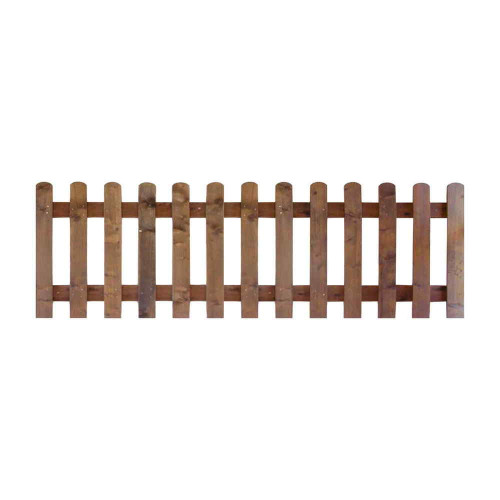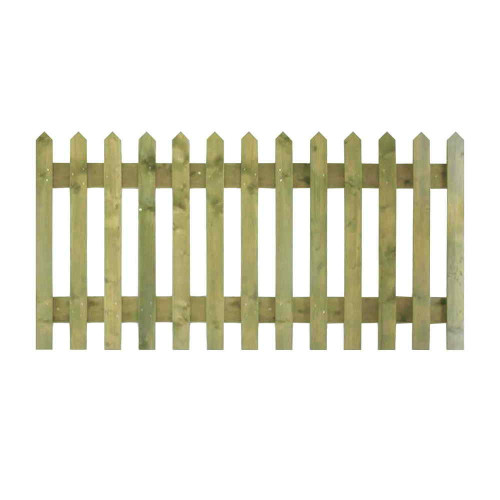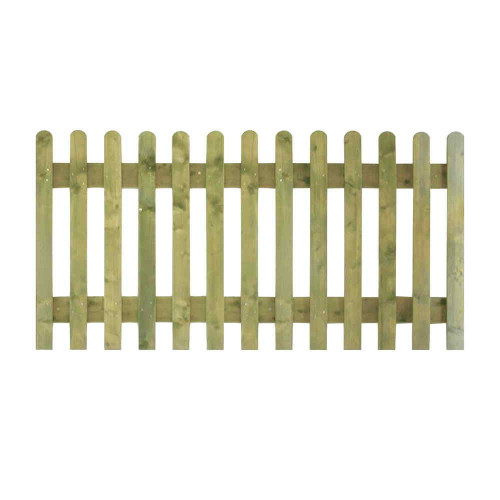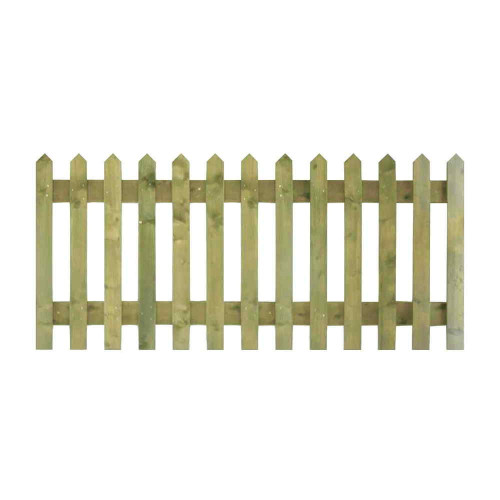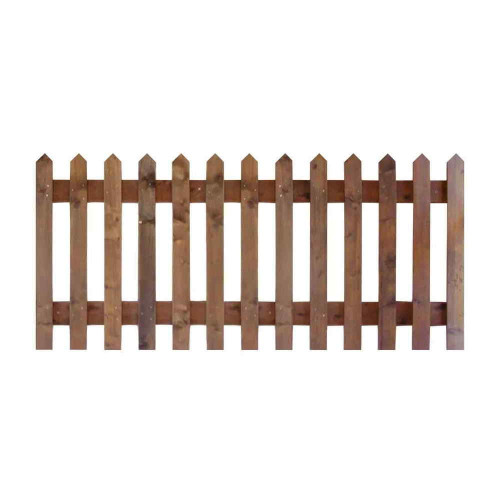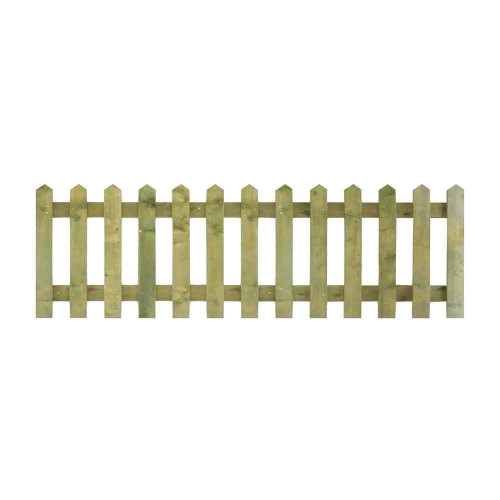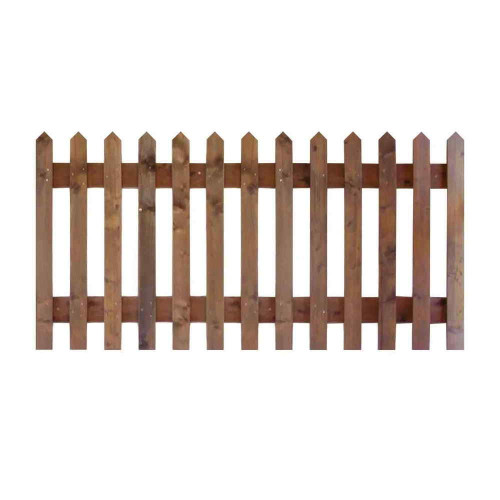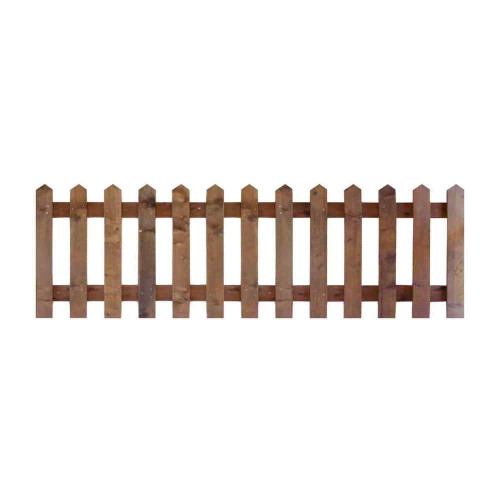




Quick answer: Choose 2ft Picket Fence Panels for low decorative boundaries and garden divisions, 3ft panels for a versatile front garden fence that provides clear separation without feeling enclosed, and 4ft panels where you want a more substantial open boundary. The right height depends on the purpose of the fence, visibility, pets, nearby roads and paths, ground levels and the height of any matching gate. For many front gardens, 3ft is the most balanced starting point.
Choosing the style of your Picket Fence Panels is only half the decision.
The height can have an even bigger effect on how the finished fence looks and functions.
A 2ft Picket fence can act almost like a decorative frame around a garden. Move up to 3ft and the boundary becomes much more noticeable while remaining open. At 4ft, Picket fencing starts to create a more substantial physical division without becoming a solid privacy screen.
East Coast Fencing Picket Fence Panels are available in nominal 2ft, 3ft and 4ft heights, with Round Top and Point Top styles available in pressure-treated brown and green.
This guide compares all three heights and explains which works best for front gardens, paths, pets, driveways, internal garden divisions and other common applications.
What Heights Do Picket Fence Panels Come In?
East Coast Fencing Picket Fence Panels are available in three nominal heights:
- 2ft, approximately 0.6m
- 3ft, approximately 0.9m
- 4ft, approximately 1.2m
The panels are nominally 6ft wide.
Round Top and Point Top versions are available, allowing you to choose the height and top profile separately.
This is useful because a 3ft Round Top fence can have a very different visual character from a 4ft Point Top fence even though both belong to the same broad Picket category.
What Is The Best Height For Picket Fence Panels?
There is no single best height for every garden.
A useful starting point is:
| Picket Panel Height | Best Starting Point For | Overall Feel |
|---|---|---|
| 2ft | Decorative boundaries and garden divisions | Very open and low |
| 3ft | Front gardens and general boundaries | Balanced and versatile |
| 4ft | More substantial open boundaries | Stronger physical separation |
The best choice depends on what you actually need the fence to do.
Do not choose 4ft simply because it is the tallest option, and do not choose 2ft merely because you want the fence to remain visually unobtrusive.
Think about boundary definition, pets, visibility, garden scale and access before deciding.
When Should You Choose 2ft Picket Fence Panels?
Two-foot Picket Fence Panels are the lowest option in the range.
At approximately 0.6m high, they create a clear boundary without significantly blocking views across the garden.
They are particularly useful where the purpose is decorative rather than privacy-focused.
Typical uses include:
- Dividing lawns and planting areas
- Edging front gardens
- Separating paths from flower beds
- Creating a traditional cottage-garden feature
- Defining different parts of a larger garden
- Creating a low visual boundary around landscaping
What Does A 2ft Picket Fence Look Like?
A 2ft fence remains relatively low in the landscape.
Adults can easily see over it and it generally does not dominate the view from the house or pavement.
This makes it useful when the fence is intended to frame the garden rather than screen it.
It can work particularly well alongside:
- Low planting
- Lawns
- Traditional front paths
- Cottage-style borders
If the house itself is small or the front garden is shallow, a low fence can also prevent the boundary from looking disproportionately large.
Is A 2ft Picket Fence High Enough For A Front Garden?
It can be if the main objective is simply to mark the boundary.
A 2ft Picket fence clearly separates private garden space from the pavement or adjoining land while retaining a very open appearance.
It is less appropriate if you need:
- Meaningful physical containment
- Greater separation from pedestrians
- A stronger visual boundary
- More control over pets
For those purposes, a 3ft or 4ft panel may be more suitable.
Are 2ft Picket Fence Panels Good For Cottage Gardens?
Yes.
Low Picket fencing works particularly well where planting is intended to remain the main visual feature.
The fence can run through or in front of informal planting without creating a heavy timber backdrop.
Round Top Picket Fence Panels can reinforce the softer appearance, while Point Top panels create a slightly more defined line.
Are 2ft Picket Fence Panels Good For Dividing A Garden?
This is one of their strongest applications.
You may want to separate:
- A lawn from a vegetable area
- A path from a flower bed
- A seating area from the rest of the garden
- A decorative planting area from a working part of the garden
A solid fence would often be excessive for these purposes.
A low Picket panel creates structure while allowing the garden to remain visually connected.
When Should You Choose 3ft Picket Fence Panels?
Three-foot Picket Fence Panels are the middle option and one of the most versatile heights.
At approximately 0.9m, the fence is high enough to create a clear physical and visual boundary without becoming a tall screen.
It is a strong choice for:
- Front gardens
- Front paths
- Driveway edges
- Internal garden divisions
- Traditional property boundaries
- Areas where 2ft feels too decorative but 4ft feels too dominant
Why Is 3ft Such A Useful Picket Fence Height?
Three-foot Picket fencing sits between decorative and substantial boundary fencing.
It is clearly tall enough to feel like a proper fence, but it remains low enough for most adults to see comfortably across.
That can be especially useful in a front garden where you want:
- A recognisable property boundary
- Good visibility
- Light reaching planting
- A traditional appearance
- A less enclosed feel than solid panels provide
Is 3ft The Best Height For Front Garden Picket Fence Panels?
For many properties, it is a very sensible starting point.
It provides more presence than a 2ft decorative fence without creating the stronger barrier effect of a 4ft panel.
It can suit:
- Terraced houses
- Semi-detached properties
- Cottages
- Detached homes with traditional front gardens
The right height still depends on the individual property, road position and purpose of the fence.
When Should You Choose 4ft Picket Fence Panels?
Four-foot Picket Fence Panels create the most substantial boundary of the three heights.
At approximately 1.2m, they remain open because of the gaps between the pales, but the overall fence feels considerably more significant.
They can work well where you want:
- Greater physical separation
- A taller open boundary
- A more prominent fence
- Better containment for some pets
- A stronger division between two areas of the garden
They can also suit side boundaries where a lower fence feels insufficient but a solid privacy panel would make the area too enclosed.
Does A 4ft Picket Fence Still Feel Open?
Yes.
The spaces between the pales remain important.
A 4ft Picket Fence Panel does not create the same visual enclosure as a 4ft Closeboard or Waney Lap panel.
You can still:
- See through the boundary
- Allow light through
- Maintain airflow
- See planting beyond the fence
The additional height increases physical separation without turning the fence into a privacy screen.
Is A 4ft Picket Fence Too High For A Front Garden?
It depends on where the fence is being installed.
A 4ft panel is approximately 1.2m high, so its position matters from both a visual and planning perspective.
In England, the general permitted development height for a fence, wall or gate next to a highway used by vehicles, including the footpath of such a highway, is no more than 1m from ground level. Elsewhere, the general threshold is 2m.
Because a nominal 4ft Picket panel is higher than 1m, do not assume it can automatically be installed along every roadside front boundary without planning permission.
Other restrictions can also apply, including listed building considerations, planning conditions and Article 4 directions.
Check the specific position of the proposed fence before installation.
Is A 3ft Picket Fence Below The 1m Planning Threshold?
A nominal 3ft panel is approximately 0.9m high, so the panel itself is below 1m.
However, planning relates to the height of the completed enclosure from ground level, not merely the product name printed on the panel.
Consider:
- How the panel is positioned
- Changes in ground level
- Any lower board or support arrangement
- The gate
- Decorative additions
If you are close to a planning threshold, check the actual finished dimensions rather than relying on nominal panel sizes.
Do Picket Fence Panel Planning Rules Differ Around The Garden?
They can.
In England, the general permitted height without planning permission is lower where the fence is next to a highway used by vehicles or the footpath of such a highway.
Elsewhere, the general permitted development threshold is higher.
This is one reason a homeowner might choose a lower Picket fence at the front of the property while using a taller boundary elsewhere.
Planning requirements can vary according to the property and location, so do not treat the general thresholds as the only consideration.
2ft vs 3ft vs 4ft Picket Fence Panels At A Glance
| Feature | 2ft | 3ft | 4ft |
|---|---|---|---|
| Approximate height | 0.6m | 0.9m | 1.2m |
| Visual presence | Low | Moderate | Strong |
| Privacy | Very low | Low | Low |
| Front garden use | Decorative | Highly versatile | More substantial, check position |
| Internal garden division | Excellent | Excellent | Good where more separation is wanted |
| Airflow | High | High | High |
| Overall character | Decorative | Balanced | Substantial |
Which Picket Fence Panel Height Is Best For Privacy?
If privacy is the main objective, Picket Fence Panels are probably not the correct category.
Even a 4ft Picket panel contains spaces between the pales.
Increasing the height gives you more physical separation but does not remove those sightlines.
For a genuinely private boundary, a solid fencing style such as Closeboard or Waney Lap is generally more appropriate.
Choose Picket fencing when openness is part of the desired result.
Which Picket Fence Panel Height Gives The Best Visibility?
Two-foot panels provide the least obstruction simply because they are the lowest.
Three-foot fencing also maintains excellent visibility for most adults.
Four-foot panels remain open, but their greater height means more of the view is interrupted by the vertical pales.
Visibility matters particularly around:
- Driveways
- Paths
- Entrances
- Roadside front gardens
Do not choose a taller fence solely for appearance if it creates an unwanted sightline problem.
Which Picket Fence Panel Height Is Best Beside A Driveway?
Lower fencing is often useful around driveways because maintaining visibility can be important.
Two-foot or 3ft Picket Fence Panels allow a clear boundary while retaining much more openness than a solid panel.
The appropriate arrangement depends on:
- The driveway position
- Road layout
- Pavement
- Neighbouring planting
- Vehicles using the entrance
If there is any concern about visibility when leaving the property, assess the site carefully rather than assuming a particular standard panel height is suitable.
Which Picket Fence Panel Height Is Best Along A Front Path?
Two-foot and 3ft panels both work particularly well.
Choose 2ft if you want the fence to act almost like decorative edging.
Choose 3ft if you want the path to feel more clearly enclosed and separated from the rest of the garden.
Point Top panels can emphasise the repeated line along a straight path, while Round Top panels create a softer appearance.
Which Picket Fence Panel Height Is Best Around Flower Beds?
Two-foot panels are often the natural choice.
They define the planted area while keeping flowers and shrubs visible.
If the planting itself is taller, a 3ft panel can create a stronger frame without completely hiding the border.
Consider how the fence will look once plants are fully grown, not just when they have recently been planted.
Which Picket Fence Panel Height Is Best For A Vegetable Garden?
For simple visual division, 2ft can be sufficient.
For a more obvious enclosure, 3ft or 4ft may work better.
If the objective is to keep specific animals out, do not choose height alone.
You also need to consider:
- Spacing between pales
- Gaps beneath the fence
- The gate
- The behaviour of the animal concerned
Which Picket Fence Panel Height Is Best For Dogs?
There is no universal answer because dogs differ enormously in size and behaviour.
A low 2ft fence may provide little meaningful containment for an active dog.
A 3ft fence provides greater physical separation, while 4ft is more substantial again.
But height is only part of the assessment.
Check:
- Actual gaps between pales
- Clearance beneath the panels
- Gate gaps
- Whether the dog jumps
- Whether the dog digs
- Whether it tries to squeeze through openings
Do not assume that choosing the tallest Picket Fence Panel automatically creates a dog-proof enclosure.
Are 4ft Picket Fence Panels Better For Dogs?
They provide more height than 2ft or 3ft panels and may therefore be a better starting point for some dogs.
However, an athletic dog may still jump a 4ft boundary, while a very small dog may be more affected by pale spacing than fence height.
The complete enclosure needs to suit the particular animal.
Which Picket Fence Panel Height Is Best For Children?
If Picket fencing is being used simply to define different parts of a family garden, 2ft or 3ft may be sufficient.
If the fence is intended as a safety barrier around a specific hazard, ordinary decorative Picket fencing should not automatically be assumed suitable.
Safety applications require consideration of:
- Height
- Climbability
- Gaps
- Gate security
- The hazard being enclosed
Choose fencing according to the actual safety requirement rather than relying on its general garden use.
Which Picket Fence Panel Height Is Best Around A Patio?
A 2ft panel can provide a subtle visual division around a seating area.
A 3ft panel creates a stronger feeling that the patio is a separate outdoor room while retaining openness.
A 4ft fence will feel considerably more enclosed.
If privacy is the objective, however, Picket fencing may not provide enough screening at any of these heights.
Which Picket Fence Panel Height Works Best In A Small Garden?
Two-foot and 3ft fencing are often particularly effective in compact gardens.
They provide structure without visually cutting the garden into small enclosed compartments.
Because you can see through Picket Fence Panels, even a 4ft panel can feel lighter than a solid equivalent, but the extra height still has a visual effect.
In a very small garden, ask whether the extra height solves a genuine problem before choosing it.
Which Picket Fence Panel Height Works Best In A Large Garden?
A larger garden can accommodate any of the three heights.
Choose according to function.
For example:
- 2ft around ornamental beds
- 3ft along paths and garden divisions
- 4ft where stronger separation is required
Different heights can be used in separate areas where there is a clear visual transition.
Can You Mix 2ft, 3ft And 4ft Picket Fence Panels?
Yes, but abrupt changes along one uninterrupted fence line can look accidental.
Changes in height work better where there is a natural break such as:
- A gate
- A corner
- A hedge
- A path
- A change in ground level
- A different section of garden
For a simple front boundary, using one consistent height usually gives the cleanest appearance.
Can You Step Picket Fence Panels On A Slope?
Yes.
Rigid panels are commonly installed level and stepped as the ground rises or falls.
The amount of visible stepping depends on:
- The severity of the slope
- Panel width
- Post positions
Plan the finished appearance before fixing the posts permanently.
Does Sloping Ground Change The Effective Fence Height?
It can.
A panel that appears relatively low on the uphill side of a stepped bay may have a larger gap beneath it on the downhill side.
This matters if the fence is intended to:
- Contain pets
- Prevent casual access
- Create a neat continuous lower edge
Do not choose a panel height without considering the shape of the ground below it.
Should The Gate Match The Picket Fence Panel Height?
Usually, matching or closely coordinating the gate height gives the most consistent appearance.
A 3ft fence with a similarly proportioned gate looks intentional and balanced.
A gate can be taller if you deliberately want it to create a more prominent entrance, but it should still relate visually to the surrounding fence.
Can A Picket Gate Be Taller Than The Panels?
Yes, depending on the design and location.
A slightly taller gate can create a focal point.
However, avoid a dramatic difference unless it is intentional.
Also remember that the height of gates can be relevant when assessing the overall enclosure and any applicable planning requirements.
Should Round Top And Point Top Picket Fence Panels Use Different Heights?
No.
The choice of top profile and panel height can be made separately.
You might choose:
- 2ft Round Top for a soft decorative border
- 3ft Round Top for a traditional front garden
- 4ft Round Top for a substantial but softer boundary
- 2ft Point Top for a defined low edge
- 3ft Point Top for a structured front fence
- 4ft Point Top for a stronger traditional boundary
The appropriate combination depends on the property and garden style.
Does Round Top Look Better At 2ft?
Round Top works particularly well at lower heights because the curved pales reinforce the decorative character of the fence.
A low Round Top Picket fence can suit:
- Cottage gardens
- Small front gardens
- Flower beds
- Curved paths
That does not mean Round Top should be limited to 2ft. The profile also works well at 3ft and 4ft.
Does Point Top Look Better At 4ft?
Point Top can become more visually prominent as the fence gets taller.
The repeated pointed profile gives a 4ft boundary a clearly defined traditional character.
If you want the fence to blend quietly into soft planting, Round Top may be preferable.
If you want the boundary itself to make a stronger visual statement, Point Top may suit the project better.
Which Picket Fence Panel Height Is Best In Windy Gardens?
One advantage of Picket Fence Panels is that air can pass between the pales.
That means they behave differently from solid Closeboard or Waney Lap fencing.
All else being equal, lower panels also present less material to the wind than taller panels.
If you do not need a 4ft boundary, a lower Picket fence may therefore be a sensible option in an exposed location.
The posts and installation still need to be appropriate for the fence.
Do 4ft Picket Fence Panels Catch Much More Wind Than 2ft?
A taller fence presents a larger area to the wind, but Picket fencing remains relatively open compared with solid panel styles.
Do not rely on openness as a reason to use inadequate posts.
The complete fence should still be installed according to:
- Height
- Exposure
- Ground conditions
- Panel dimensions
What Posts Should You Use With Picket Fence Panels?
Timber posts create a natural visual match for traditional Picket Fence Panels.
East Coast Fencing wooden fence posts are available in common dimensions including:
- 75 x 75mm
- 100 x 100mm
Available lengths include 1.8m, 2.4m and 3.0m.
The appropriate post should be selected according to the height of the fence, ground conditions and the installation rather than using the same post automatically for every project.
Does A 4ft Picket Fence Need Bigger Posts Than A 2ft Fence?
A taller fence creates different loads from a very low decorative fence, so the supporting system should reflect the complete installation.
However, there is no need to make a simplistic rule that one specific post size belongs to every particular panel height.
Consider:
- Fence height
- Ground conditions
- Exposure
- Post length
- Gate positions
Do Picket Fence Panels Need Gravel Boards?
Not necessarily.
Picket fencing is often installed without a prominent gravel board, especially where a clean open appearance is wanted.
However, the timber should still be protected from unnecessarily wet conditions.
Avoid:
- Burying the bottom of the panel in soil
- Piling mulch against the pales
- Allowing wet leaves to accumulate permanently around the base
Does Adding A Gravel Board Change The Picket Fence Height?
Yes, if the gravel board raises the panel above ground.
This is particularly important where you are close to a planning or visibility threshold.
Do not describe the finished enclosure as a 3ft fence simply because a nominal 3ft panel was used if another visible component raises the total height.
Measure the completed structure from the relevant ground level.
Should Picket Fence Panels Touch The Ground?
The main timber panel is generally better kept away from persistent direct soil contact.
However, you also need to consider the resulting gap.
A larger gap may be undesirable where:
- Small pets are being contained
- The ground is uneven
- A neat continuous lower boundary is wanted
Plan the finished lower edge rather than simply installing the panel at an arbitrary height.
Does A 2ft Picket Fence Need Less Maintenance?
It contains less timber than a taller equivalent, so cleaning or applying a decorative coating across the same number of bays may require less work.
However, maintenance needs are influenced more broadly by:
- Moisture
- Vegetation
- Ground contact
- Coatings
- Post condition
A poorly positioned 2ft fence can require more attention than a correctly installed 4ft fence.
Can 2ft, 3ft And 4ft Picket Fence Panels Be Painted?
Yes.
Pressure-treated Picket Fence Panels can generally be given a suitable exterior decorative coating once the timber is sufficiently dry and correctly prepared.
Follow the coating manufacturer's instructions.
Taller panels simply contain more surface area, so a 4ft Picket fence will usually require more time and coating than a comparable 2ft run.
Should You Choose Brown Or Green Picket Fence Panels?
Both Round Top and Point Top Picket Fence Panels are available pressure treated in brown and green.
Colour is primarily an appearance choice.
Brown can provide a warmer initial tone.
Green-treated timber can work naturally alongside lawns and planting.
Do not assume brown lasts longer or green is more heavily treated simply because of its visible colour.
Does The Picket Fence Height Affect Treatment Choice?
No.
The same broad colour decision applies whether you choose 2ft, 3ft or 4ft Picket Fence Panels.
Consider matching:
- Fence posts
- The garden gate
- Existing fencing
- Sheds and other timber structures
Can You Replace A 2ft Picket Panel With A 3ft Panel?
Potentially, but do not treat the change as simply swapping one panel for another.
Check:
- Existing post height
- Post condition
- Gate height
- Overall appearance
- Planning position where relevant
A taller replacement may require changes to more than the panel itself.
Can You Replace A 3ft Picket Panel With A 4ft Panel?
Again, potentially, provided the supporting system and location are suitable.
If the fence is next to a highway used by vehicles or its footpath in England, a nominal 4ft fence can also take the completed enclosure above the general 1m permitted development threshold.
Check this before increasing the height.
Can You Reduce A 4ft Picket Fence To 3ft?
If you want a lower fence, using purpose-made 3ft panels is generally preferable to modifying finished 4ft panels.
Cutting completed panels can:
- Change their proportions
- Remove the intended top profile
- Expose freshly cut timber
- Create an inconsistent appearance
Choose the required panel height from the beginning wherever possible.
How Do You Measure For Picket Fence Panels?
For a new fence, start with the total length of the proposed boundary.
Also identify:
- Gate positions
- Corners
- Changes in ground level
- Existing walls or structures
For replacement fencing, measure the actual clear openings between posts rather than relying solely on the nominal dimensions of the old panels.
How Do You Choose Picket Fence Height For An Existing Property?
Look at the property as a whole.
Consider:
- Height of existing neighbouring boundaries
- Depth of the front garden
- Height of nearby hedges
- Scale of the house
- Gate proportions
- Amount of planting
A 4ft fence can look perfectly balanced in a large deep garden but disproportionately tall across a very shallow frontage.
Should Your Picket Fence Match The Neighbour's Height?
It does not necessarily need to match exactly.
However, neighbouring boundaries can help you judge what will look proportionate.
If your fence joins another fence, wall or hedge, think about how the change in height will be handled.
A deliberate step at a post often looks better than an awkward transition.
What Height Should A Picket Fence Be Around A Corner Plot?
Corner properties require particular care because more than one boundary may be close to a road or footpath.
Visibility can also be especially important near junctions and entrances.
Do not assume that because a fence is technically on the side of the house it should be treated like an ordinary enclosed rear boundary.
Check the specific planning position and practical sightlines.
Which Picket Fence Height Is Best For A Traditional Property?
Two-foot and 3ft panels often work particularly well because traditional Picket fencing was generally intended to define rather than completely screen a front garden.
Round Top creates the softer look.
Point Top produces a more formal repeated line.
Four-foot panels can also suit traditional properties where a more substantial boundary is proportionate to the building and garden.
Which Picket Fence Height Is Best For A Modern Property?
Three-foot panels can provide a useful balance.
They define the frontage clearly while maintaining the open character often associated with modern front landscaping.
Two-foot panels work where the fence should be subtle.
Four-foot panels can make a stronger design statement but need to be proportionate to the building and location.
Which Picket Fence Panel Height Is Best For Resale Appeal?
There is no universally best fence height for property value.
A more useful objective is to choose a boundary that looks proportionate, well maintained and appropriate to the property.
A poorly positioned 4ft fence is not automatically more valuable than an attractive 3ft boundary.
Likewise, a 2ft fence may look excellent in a cottage garden but insufficient where a stronger boundary is expected.
Do Taller Picket Fence Panels Cost More Overall?
Purchase prices vary by panel specification and size, so compare the current products rather than relying on a fixed rule.
For the overall project, also consider:
- Posts
- Gate
- Fixings
- Post mix
- Installation
- Decorative coating if required
Choosing the lowest fence solely to reduce initial cost can be false economy if it does not perform the job you need.
Likewise, there is little benefit in paying for additional height that provides no practical advantage.
2ft vs 3ft vs 4ft Picket Fence Panels By Use Case
| Use | Suggested Starting Height |
|---|---|
| Decorative flower bed boundary | 2ft |
| Low cottage garden fence | 2ft |
| Typical front garden | 3ft |
| Front path | 2ft or 3ft |
| Driveway edge | 2ft or 3ft, subject to visibility |
| Internal garden divider | 2ft or 3ft |
| More substantial open boundary | 4ft |
| Potential pet containment | Assess 3ft or 4ft plus gaps and animal behaviour |
Common Mistakes When Choosing Picket Fence Panel Height
- Automatically choosing the tallest panel available
- Choosing 2ft when a stronger physical boundary is actually needed
- Expecting 4ft Picket fencing to provide full privacy
- Ignoring visibility around a driveway
- Choosing height without considering the gate
- Ignoring pets and the gaps between pales
- Forgetting that uneven ground affects the finished fence
- Changing panel height without checking existing post height
- Ignoring the completed enclosure height when considering planning requirements
- Assuming every front garden can use a 4ft fence without further checks
Picket Fence Panels Height Buying Checklist
- Decide what the fence actually needs to do.
- Choose between 2ft, 3ft and 4ft panels.
- Decide between Round Top and Point Top.
- Measure the complete boundary.
- Check ground levels.
- Identify gate positions.
- Consider visibility near roads and driveways.
- Check whether pets need to be contained.
- Assess the gaps beneath and through the fence.
- Choose suitable posts.
- Select brown or green pressure-treated timber.
- Check applicable planning restrictions before increasing front-boundary height.
FAQs
What Height Do Picket Fence Panels Come In?
East Coast Fencing Picket Fence Panels are available in nominal 2ft, 3ft and 4ft heights.
How Wide Are Picket Fence Panels?
The Picket Fence Panels discussed here are nominally 6ft wide.
What Is The Best Height For A Picket Fence?
It depends on its purpose. Two-foot panels suit decorative boundaries, 3ft is a versatile front garden height, and 4ft creates a more substantial open enclosure.
What Is The Best Height For Front Garden Picket Fence Panels?
Three-foot Picket fencing is a useful starting point for many front gardens because it provides clear boundary definition while remaining open and relatively low.
Is A 2ft Picket Fence Too Low?
Not if the purpose is decorative boundary definition. It may be too low if meaningful physical containment is required.
Is A 3ft Picket Fence High Enough?
For many front gardens and internal garden boundaries, yes. It provides a noticeable enclosure while retaining excellent visibility.
Is A 4ft Picket Fence Too High?
Not generally, but the location matters. A nominal 4ft panel is approximately 1.2m high, which can be relevant to planning requirements on boundaries next to highways.
Can I Put A 4ft Picket Fence In My Front Garden?
Possibly, but check the location. In England, a fence next to a highway used by vehicles, or the footpath of such a highway, generally needs planning permission if it exceeds 1m in height unless another provision applies.
Is A 3ft Fence Under 1m?
A nominal 3ft panel is approximately 0.9m. Check the finished enclosure rather than relying on the panel measurement alone.
Are 2ft Picket Fence Panels Good For Front Gardens?
Yes, particularly where you want a low decorative boundary and maximum openness.
Are 3ft Picket Fence Panels Good For Front Gardens?
Yes. They provide a balanced combination of boundary definition, visibility and traditional appearance.
Are 4ft Picket Fence Panels Good For Front Gardens?
They can be, particularly where a more substantial open boundary is wanted, but check the planning position and sightlines for the specific location.
Which Height Is Best For A Cottage Garden?
Two-foot or 3ft Picket Fence Panels often suit cottage gardens particularly well.
Which Height Is Best Along A Garden Path?
Two-foot panels provide decorative edging, while 3ft panels create a stronger sense of enclosure.
Which Height Is Best Around Flower Beds?
Two-foot panels are often ideal because they define the bed without concealing planting.
Which Height Is Best For Dogs?
It depends on the dog. Three-foot or 4ft panels may provide greater containment, but pale spacing, ground gaps, gate gaps and the dog's behaviour also matter.
Will A 4ft Picket Fence Keep A Dog In?
It may be suitable for some dogs but not all. Some dogs can jump that height, while smaller dogs may be able to pass through gaps depending on the panel design.
Are Picket Fence Panels Good For Privacy?
No. They are intentionally open. Choose solid fencing if privacy is the main requirement.
Which Picket Fence Panel Height Is Best In Wind?
Lower panels present less surface to the wind, although Picket fencing already allows considerably more airflow than solid panel designs.
Can I Use 4ft Picket Fence Panels With 3ft Panels?
Yes, particularly where there is a clear visual break. Changing height repeatedly along a straight uninterrupted fence can look inconsistent.
Can I Replace 2ft Picket Fence Panels With 3ft?
Potentially. Check the existing post height, gate, appearance and overall installation first.
Can I Replace 3ft Picket Fence Panels With 4ft?
Potentially, provided the posts and location are suitable and any applicable planning requirements have been considered.
Do Round Top And Point Top Picket Fence Panels Come In The Same Heights?
Yes. Both styles are available in nominal 2ft, 3ft and 4ft heights.
Should A Picket Gate Be The Same Height As The Fence?
It usually produces the most consistent appearance, although a deliberately taller gate can be used as an entrance feature.
Do Picket Fence Panels Need Gravel Boards?
Not necessarily. They are often installed without prominent gravel boards, although the timber should still be kept away from unnecessarily wet ground conditions.
Should Picket Fence Panels Touch The Ground?
It is generally better to avoid burying the timber in persistently wet soil. The resulting gap should still be appropriate for the purpose of the fence.
Can Picket Fence Panels Be Used On Sloping Ground?
Yes. Rigid panels are commonly stepped as the ground level changes.
Can Picket Fence Panels Be Painted?
Yes, once the pressure-treated timber is sufficiently dry and prepared for a suitable exterior coating.
Do Picket Fence Panels Come In Brown And Green?
Yes. East Coast Fencing Round Top and Point Top Picket Fence Panels are available pressure treated in brown and green.
2ft, 3ft Or 4ft Picket Fence Panels: Which Should You Buy?
Start with what you need the fence to achieve.
Choose 2ft Picket Fence Panels when you want a low decorative boundary. They work particularly well around flower beds, paths, cottage gardens and internal garden divisions where visibility and openness are priorities.
Choose 3ft Picket Fence Panels when you want a versatile general-purpose height. For many front gardens, 3ft provides the most balanced combination of clear boundary definition, traditional appearance and good visibility.
Choose 4ft Picket Fence Panels when you need stronger physical separation while retaining the light and airflow advantages of an open fence. They can be useful for more substantial garden divisions and some pet enclosures, although the complete enclosure should always be assessed for the individual animal.
Do not choose height in isolation.
Consider the top profile, gate, posts, ground levels, sightlines and surrounding property. If the fence is close to a road or its footpath, make sure the completed height is appropriate for the location and check whether planning permission is required.
The advantage of Picket fencing is that all three heights retain an open character.
The real choice is how strongly you want the fence to define the space.