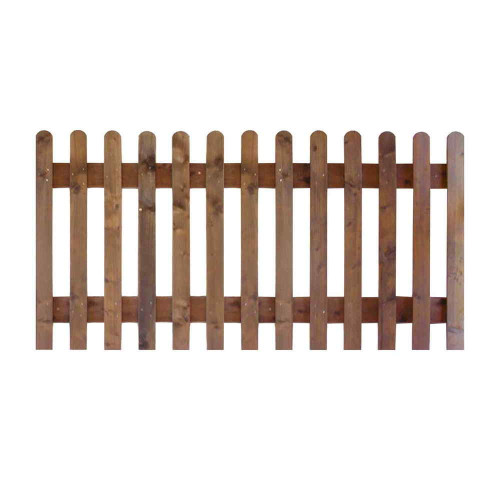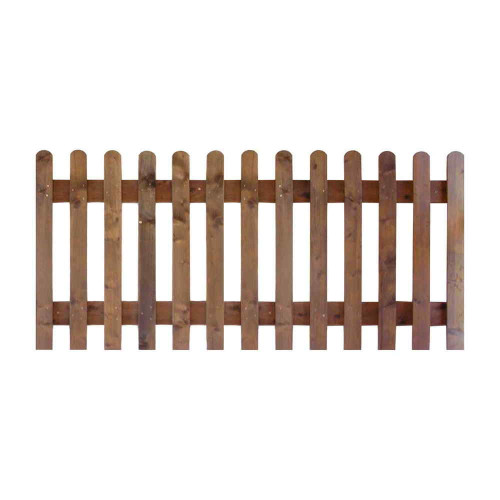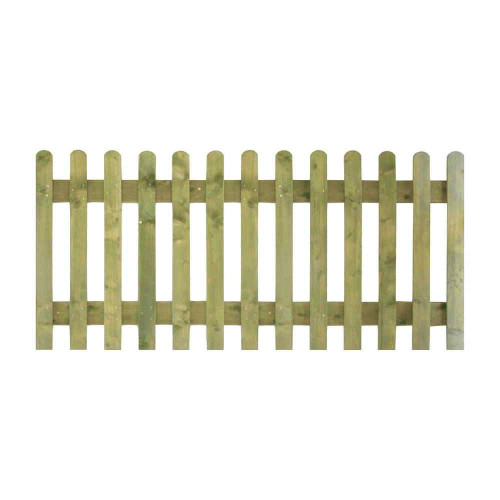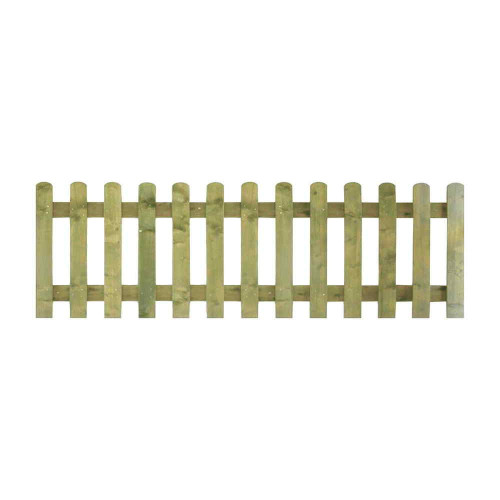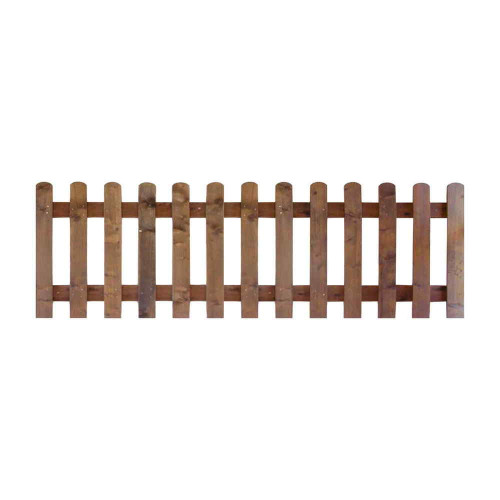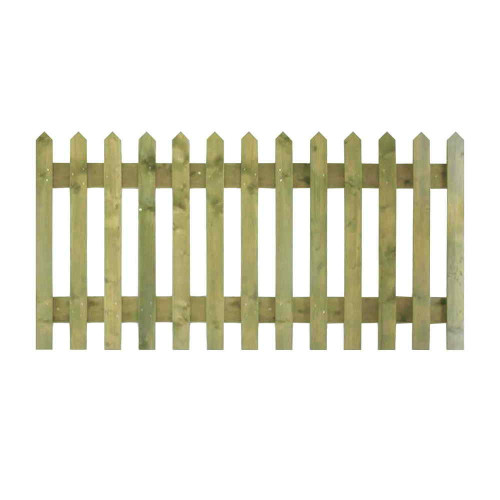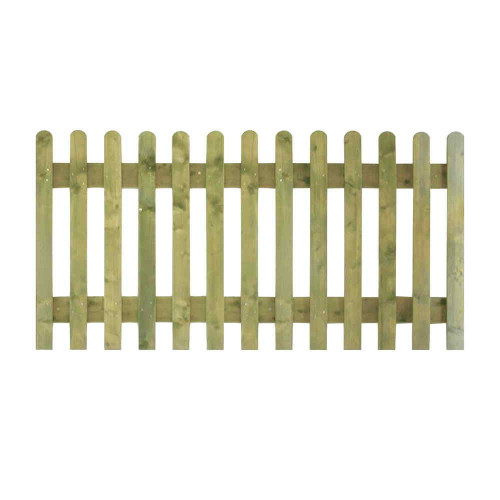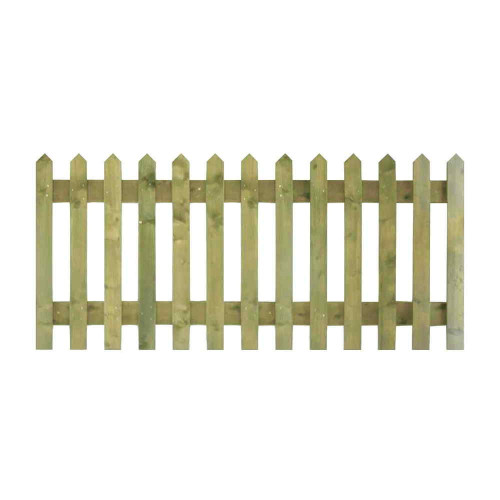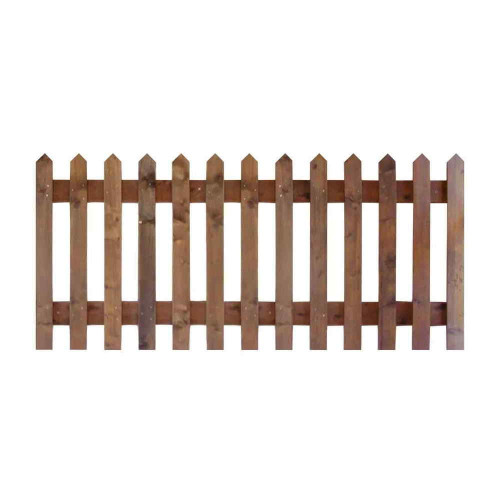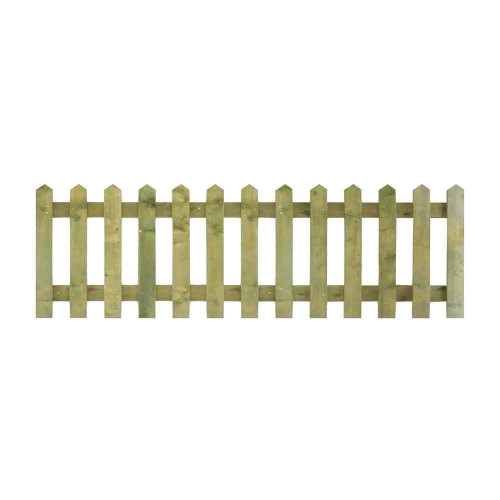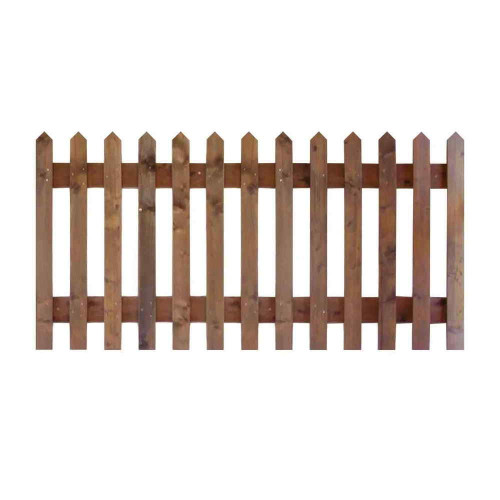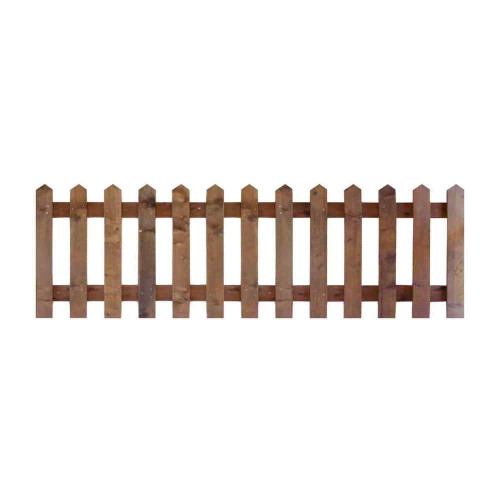




Quick answer: Picket Fence Panels are particularly well suited to front gardens, paths and driveway boundaries because their spaced vertical pales clearly mark the edge of a property without creating a solid visual barrier. They allow light and views through, work naturally with matching picket gates and are available in 2ft, 3ft and 4ft heights. For driveways, keep visibility in mind and choose the lowest height that provides the boundary definition you need.
Front garden fencing has a different job from most rear garden fencing.
At the back of a property, privacy is often the main consideration. At the front, homeowners are more likely to want a clear boundary that still leaves the house, driveway, planting and entrance visible.
This is where Picket Fence Panels make particular sense.
Their open construction creates a recognisable timber boundary without surrounding the front of the property with a continuous solid screen. They can frame lawns, separate paths from planting, define driveways and work with matching gates to create a more finished entrance.
The important decisions are height, top style, position and how the fence interacts with the driveway, paths and landscaping around it.
Why Do Picket Fence Panels Work So Well in Front Gardens?
Picket fencing provides physical definition without full visual enclosure.
The spaced vertical pales allow:
- Views through the fence
- Daylight to pass through
- Air movement
- Planting to remain visible
This makes the boundary noticeable without necessarily making the front garden feel separated from the street.
That combination suits many properties where the aim is to make the frontage look finished rather than private.
What Sizes Are Picket Fence Panels Available In?
The current East Coast Fencing Picket Fence Panels are nominally 1.83m wide.
Current height options are:
- 2ft, approximately 600mm
- 3ft, approximately 900mm
- 4ft, approximately 1200mm
Both Round Top and Point Top profiles are available.
The panels are pressure treated for outdoor use and currently available in brown and green/natural treatment finishes.
Which Picket Fence Panel Height Is Best for a Front Garden?
For many front gardens, 3ft is a useful starting point because it creates an obvious boundary while retaining the open character associated with picket fencing.
However, all three heights have useful applications.
| Panel Height | Typical Use | Overall Effect |
|---|---|---|
| 2ft | Low decorative boundary | Very open |
| 3ft | General front garden fencing | Balanced and traditional |
| 4ft | More substantial open boundary | Greater physical separation |
When Should You Choose 2ft Picket Fence Panels?
Two-foot panels work well where the fence is primarily decorative.
Typical applications include:
- Framing a front lawn
- Separating a path from planting
- Defining flower beds
- Creating a low boundary around a cottage-style garden
At this height, the fence does not provide much physical separation.
That may be exactly what you want where the main purpose is simply to define where the garden ends.
Why 3ft Picket Fence Panels Are So Versatile
A 3ft panel creates a more obvious boundary without dominating the frontage.
It can work well along:
- Front lawns
- Pedestrian paths
- Property edges
- Driveway sides
- Planted borders
It is tall enough to have a meaningful visual presence but still allows people to see comfortably through and over the fence.
When Is a 4ft Picket Fence Better?
Four-foot Picket Fence Panels provide the strongest physical division in the current range.
They can be useful where you want:
- A more substantial front boundary
- Greater separation between paths and garden areas
- A taller open fence without moving to a solid privacy panel
The additional height also makes planning and visibility considerations more important, particularly close to a driveway or highway.
Are Picket Fence Panels Good Beside Driveways?
Yes, particularly because they are open rather than solid.
Driveway boundaries often benefit from maintaining views through the fence.
Picket fencing can define the driveway edge without creating the same continuous visual obstruction as a solid timber panel.
This can be particularly useful near:
- Driveway entrances
- Front paths
- Parking areas
- Low planting
Do not assume that using an open fence automatically guarantees adequate visibility for vehicles. The complete layout still needs to be considered.
Keep Driveway Entrance Visibility in Mind
Where vehicles enter or leave the property, consider what a driver can actually see from the normal driving position.
Potential obstructions include:
- Fence panels
- Fence posts
- Gate posts
- Hedges
- Tall shrubs
- Parked vehicles
Using an open panel helps, but it is only one part of the driveway design.
Where visibility is particularly restricted, appropriate professional or local highways advice may be necessary.
Should You Use Lower Panels Near a Driveway Entrance?
A lower panel can be useful where preserving views is important.
A 2ft or 3ft panel will generally interrupt fewer sightlines than a taller boundary.
You can also vary the height along the fence run where appropriate.
For example, a front boundary could use:
- Lower panels near the driveway entrance
- 3ft panels along the main frontage
- A taller section farther from the entrance where greater separation is needed
Any changes should be planned so the fence still looks deliberate.
Can Picket Fence Panels Be Used Along a Front Path?
Yes.
Picket fencing works particularly well beside pedestrian paths because it creates a defined route while retaining visibility into the surrounding garden.
It can separate:
- A path from the lawn
- A path from flower beds
- A front entrance from a neighbouring garden area
Low picket fencing can guide movement through the garden without creating a corridor-like feel.
Leave Enough Space Around Narrow Paths
Do not position the fence so close to a path that it makes access unnecessarily restrictive.
Think about:
- People passing each other
- Bins
- Pushchairs
- Garden tools
- Deliveries
Also consider whether planting will eventually grow through the pales and reduce the usable path width.
Are Picket Fence Panels Good Around Front Lawns?
Yes.
This is one of the most traditional uses of picket fencing.
The fence frames the lawn while leaving the grass and planting visible from outside the property.
It works particularly well where the front garden already contains:
- Low shrubs
- Flower beds
- Cottage-style planting
- Curved paths
Can Picket Fencing Protect Front Garden Planting?
It can create a clear physical division around planting.
This may help discourage casual foot traffic across:
- Lawns
- Flower beds
- Recently planted areas
It should not be treated as an impenetrable barrier.
The openings between pales remain part of the design.
Can You Use Picket Fence Panels Around a Vegetable Garden?
Yes.
A low picket boundary can separate a vegetable plot from the rest of the garden without blocking large amounts of sunlight.
This can work particularly well around:
- Raised beds
- Kitchen gardens
- Herb gardens
- Small growing areas
However, ordinary picket fencing should not be treated as guaranteed wildlife exclusion.
The spaces between the pales and underneath the panel can still allow access to smaller animals.
Round Top or Point Top for a Front Garden?
Both styles perform the same broad fencing job.
The main difference is appearance.
Round Top Picket Fence Panels create a softer repeated profile.
They work naturally with:
- Cottage gardens
- Informal planting
- Curved paths
- Softer landscaping
Point Top Picket Fence Panels have a sharper profile that can create a more structured appearance.
They can complement:
- Straight paths
- More formal planting
- Symmetrical front gardens
- Traditional property frontages
Does Point Top Picket Fencing Provide More Security?
The top profile should primarily be treated as a design choice.
Do not assume a pointed decorative pale transforms a low open garden fence into a security barrier.
Actual boundary security depends much more on:
- Fence height
- Gate security
- Post stability
- The wider garden layout
Can Picket Fence Panels Improve Kerb Appeal?
They can make a front boundary look more deliberate and finished.
The open design allows the fence to frame the property rather than conceal it.
A coordinated front garden might combine:
- Picket panels
- A matching Picket Gate
- Timber posts
- Low planting
- A defined entrance path
Consistency usually matters more than introducing lots of different decorative details.
Should the Picket Gate Match the Fence Panels?
A matching gate is usually the simplest way to create a coordinated entrance.
Try to keep the following consistent:
- Top profile
- Approximate height
- Treatment colour
- General pale style
A Round Top fence generally looks most cohesive with a corresponding rounded gate, while Point Top panels can be paired with a similarly styled entrance.
Do Not Forget That a Gate Needs Its Own Support
A garden gate behaves differently from a fixed fence panel.
Every time the gate opens, its weight places changing forces on the hinge post.
The gate therefore needs:
- A suitably substantial post
- Appropriate hinges
- A suitable latch
- Enough operating clearance
Do not simply hang a gate from an intermediate panel rail.
Should a Picket Gate Open Inwards or Outwards?
Choose an opening direction that works safely and practically with the property layout.
Consider:
- The public pavement
- The garden path
- Steps
- Planting
- Parked vehicles
A gate should not create an unnecessary obstruction when opened.
Should Picket Fencing Use Wooden Posts?
Wooden posts are a natural choice for most picket fencing.
They maintain the all-timber appearance and provide straightforward fixing points for the panel rails.
The current East Coast Fencing category guidance also positions timber posts as the typical support for these lower decorative boundaries.
How Should Picket Fence Panels Be Fixed to Posts?
The structural horizontal rails should be secured to suitable posts using appropriate exterior-grade fixings or brackets.
Do not rely on one decorative pale to carry the panel.
The rails are the parts designed to keep the vertical pales aligned and support the panel as a complete unit.
Should Picket Fence Panels Touch the Ground?
It is better to keep the timber clear of persistent contact with damp soil.
Direct contact with:
- Wet soil
- Grass
- Mulch
- Leaf litter
can keep the lower timber wet for longer after rain.
Maintain a sensible clearance while avoiding an unnecessarily large gap beneath the fence.
Do Picket Fence Panels Need Gravel Boards?
Not necessarily.
A gravel board can help protect the lower timber, but it also introduces a continuous solid strip beneath what is otherwise an open fence.
For many traditional front garden installations, keeping the panel slightly above the ground may provide the cleaner appearance.
A gravel board becomes more useful where:
- Soil levels are high
- The ground is particularly damp
- A firm lower edge is needed
What Colour Picket Fence Panels Should You Choose?
The current range includes brown and green/natural pressure-treated finishes.
Brown creates a warmer initial timber appearance.
Green/natural treatment can blend naturally with:
- Lawns
- Shrubs
- Hedges
- Planting
Both colours will change as the timber weathers outdoors.
The visible treatment colour should primarily be considered an appearance choice rather than an indication that one version is structurally stronger.
Can Picket Fence Panels Be Painted?
Yes.
A suitable exterior timber coating can be applied once the pressure-treated timber is sufficiently dry and correctly prepared.
Painting can help coordinate the fence with:
- The house exterior
- Doors
- Window frames
- Garden furniture
Remember that picket fencing has considerably more individual edges than a simple flat panel, so coating it thoroughly can take time.
Can Picket Fence Panels Be Left Unpainted?
Yes.
The current panels are pressure treated for outdoor use and can be left in their treated timber finish if that suits the garden.
The appearance will naturally change with exposure to sunlight and weather.
Are Picket Fence Panels Good in Windy Front Gardens?
The gaps between the vertical pales allow much more air through than a solid Closeboard or Waney Lap panel.
This reduces the size of the continuous surface presented to the wind.
Low panel heights also mean picket fencing generally presents less overall area to wind than a full-height privacy fence.
Posts and fixings still need to be installed properly.
Can Picket Fence Panels Be Used on a Slope?
Yes.
Rigid panels are normally stepped from one bay to the next as the ground level changes.
Each individual panel remains level while successive panels begin at different heights.
For a significant slope, constructing the fence from individual Picket Pales and rails can provide more flexibility because the pales can follow a custom layout.
How Do You Deal With Gaps Beneath Panels on a Slope?
Stepped panels may leave a larger gap beneath the downhill end of each bay.
Plan this before installation, particularly if the gap affects:
- The appearance of the frontage
- Pets
- Garden planting
Avoid simply piling wet soil against the panel to hide the difference.
Are Picket Fence Panels Suitable for Keeping Dogs In?
They can be suitable for some dogs, but they are not automatically a secure dog fence.
You need to consider:
- Panel height
- Spacing between pales
- Gap beneath the fence
- Gate gaps
- The size of the dog
- Whether the dog jumps
- Whether the dog attempts to squeeze through gaps
A low open fence that works perfectly as a decorative front boundary may be completely unsuitable for a particular dog.
Are Picket Fence Panels Suitable for Cats?
Standard picket fencing should not be relied upon to contain a cat.
The fence is low, open and relatively easy for many cats to climb or jump.
If animal containment is the primary requirement, choose the fencing system based on the animal rather than the preferred appearance alone.
Are Picket Fence Panels Suitable Around Children?
Picket fencing can define a garden area while allowing clear visibility through the boundary.
However, ordinary domestic garden fencing should not automatically be treated as a specialist safety barrier.
Check the fence regularly for:
- Loose pales
- Splintered timber
- Protruding fixings
- Loose posts
- Gate problems
The condition and complete layout matter more than simply selecting a particular top profile.
Do You Need Planning Permission for Picket Fencing in a Front Garden?
Planning rules depend on where the property is located and the position of the fence.
In England, the standard permitted development guidance for fences, walls and gates states that planning permission is generally not required where the enclosure does not exceed one metre in height when it is next to a highway used by vehicles, including the footpath of such a highway, or two metres elsewhere.
Exceptions can apply, including listed buildings, planning conditions and Article 4 directions.
A 4ft Picket Fence Panel is approximately 1.2m high, so this distinction can matter considerably for a front boundary beside a highway.
Do not assume that every front garden has the same planning position. Check the rules applying to the property before installing or substantially increasing a boundary.
Does the Gate Count Towards the Height Rules?
Fences, walls and gates are considered together within the relevant planning guidance.
Do not assume a taller gate is automatically exempt simply because the adjoining fence is lower.
Gateposts and other boundary features can also require consideration.
Should You Choose 3ft Instead of 4ft Beside a Road?
Planning requirements are one reason to check the exact position before selecting the panel height.
A nominal 3ft panel is approximately 900mm, whereas a 4ft panel is approximately 1200mm.
Where the one-metre England threshold applies, that difference is material.
Also remember that the complete boundary arrangement and ground level matter, not simply the product name.
Can Picket Panels Be Used Behind a Hedge?
Yes.
A picket fence can create a clear physical boundary while a hedge provides softer planting behind or in front of it.
Allow enough space to:
- Trim the hedge
- Inspect the fence
- Reach the posts
- Remove trapped leaves
A hedge allowed to grow directly through the fence can make later maintenance unnecessarily difficult.
Should Planting Be in Front of or Behind the Fence?
Either arrangement can work.
Planting behind the fence lets the repeated picket profile remain clearly visible from the road.
Planting in front can create a softer frontage where flowers and grasses partly overlap the timber.
Keep mature plant size in mind so the fence is not eventually buried within dense vegetation.
Can Picket Fencing Make a Small Front Garden Look Bigger?
The open construction can help a compact frontage feel less enclosed than a solid fence of similar height.
Views continue through the spaces between pales, so the garden does not visually stop at one flat wall of timber.
This can be particularly useful where:
- The house sits close to the pavement
- The garden is shallow
- Natural light around front windows matters
Can You Mix Picket Fence Panels With Other Fence Styles?
Yes.
Picket fencing may be used at the front of the property while taller solid panels are used along more private side or rear boundaries.
This is often more practical than expecting one panel style to perform every job.
A typical arrangement could use:
- Picket Fence Panels across the front
- A matching Picket Gate at the entrance
- Closeboard Fence Panels farther along a private side boundary
Use a logical transition point where the fencing changes.
How Do You Measure a Front Garden for Picket Fence Panels?
Measure the complete proposed fence line and identify:
- Corners
- Driveway openings
- Pedestrian gates
- Changes in direction
- Sloping ground
The current panels are nominally 1.83m wide, but always work from the actual product dimensions and chosen post arrangement when setting out.
Do not assume every opening should be exactly 1.83m between posts.
What If the Final Bay Is Too Narrow?
Plan the complete run before installing all of the posts.
If a custom-width section is unavoidable, picket fencing is relatively adaptable because a narrower section can potentially be constructed using individual rails and Picket Pales.
This can produce a neater result than heavily modifying a completed panel.
How Do You Maintain Front Garden Picket Fencing?
Routine maintenance is straightforward.
Periodically check:
- Posts
- Panel rails
- Individual pales
- Exterior fixings
- The lower edge of the fence
- The gate and gate furniture
Keep soil, wet leaves and dense vegetation from remaining permanently around the lower timber.
Common Mistakes When Choosing Picket Fence Panels for a Front Garden
- Choosing height without checking where the boundary sits
- Using 4ft panels beside a highway without checking whether planning permission is required
- Assuming an open fence guarantees adequate driveway visibility
- Planting tall shrubs beside a driveway entrance and losing the visibility benefit of the open fence
- Choosing Point Top because it is assumed to provide serious security
- Using 2ft fencing where meaningful physical separation is required
- Assuming Picket Fence Panels are suitable for every dog
- Leaving large gaps beneath panels on sloping ground
- Forgetting to plan the matching gate before setting posts
- Allowing the bottom of the timber to remain in wet soil
- Setting posts from nominal panel widths without checking actual dimensions
Front Garden Picket Fence Buying Checklist
- Decide whether the fence is decorative or needs meaningful physical separation.
- Choose 2ft, 3ft or 4ft height.
- Check planning requirements for the actual boundary position.
- Consider visibility around driveway entrances.
- Choose Round Top or Point Top according to the garden style.
- Choose brown or green/natural pressure-treated timber.
- Measure the actual fence run and panel dimensions.
- Plan the Picket Gate before setting the posts.
- Use suitable timber posts and exterior fixings.
- Keep the lower timber away from persistent wet ground.
- Allow for slopes and narrow end bays.
- Consider the mature size of nearby planting.
FAQs
Are Picket Fence Panels Good for Front Gardens?
Yes. They create a clear boundary while allowing light and views through, making them particularly suitable where an open and welcoming frontage is preferred.
Are Picket Fence Panels Good Beside Driveways?
Yes. Their open construction can help preserve views compared with solid fencing, although the complete driveway layout and other obstructions still need to be considered.
What Is the Best Picket Fence Height for a Front Garden?
Three-foot panels are a versatile starting point, while 2ft panels create a lower decorative edge and 4ft panels provide stronger physical separation.
How Wide Are Picket Fence Panels?
The current East Coast Fencing Picket Fence Panels are nominally 1.83m wide.
Are Picket Fence Panels Pressure Treated?
Yes. The current range is pressure treated for outdoor use.
Do Picket Fence Panels Come in Brown and Green?
Yes. The current range includes brown and green/natural pressure-treated finishes.
Should I Choose Round Top or Point Top Picket Fence Panels?
Choose mainly according to appearance. Round Top creates a softer profile, while Point Top creates a sharper and more structured repeated pattern.
Are Picket Fence Panels Private?
No. Their spaced pales deliberately allow views through the boundary. A solid panel is more appropriate where privacy is the main requirement.
Are Picket Fence Panels Good in Wind?
The open spaces between pales allow considerably more airflow than solid fencing, although the posts and fixings still need to be secure.
Can Picket Fence Panels Keep Dogs In?
They can work for some dogs, but suitability depends on height, pale spacing, ground gaps, gate gaps and the behaviour of the particular animal.
Can Picket Fence Panels Contain Cats?
Standard low picket fencing should not be relied upon as a cat-containment system.
Can Picket Fence Panels Be Used on Sloping Ground?
Yes. Complete rigid panels are normally stepped, while individual Picket Pales can provide greater flexibility for custom sloping fencing.
Do Picket Fence Panels Need Gravel Boards?
Not automatically. They can be useful where soil levels or damp conditions make additional separation from the ground desirable.
Can Picket Fence Panels Be Painted?
Yes. A compatible exterior timber coating can be applied once the pressure-treated timber is sufficiently dry and correctly prepared.
Should a Picket Gate Match the Fence?
A matching height, top style and treatment finish generally produces the most coordinated entrance.
Do You Need Planning Permission for a 4ft Picket Fence in a Front Garden?
It depends on the location and circumstances. In England, the standard permitted development limit is generally one metre where a fence is next to a highway used by vehicles, including the footpath of such a highway, and two metres elsewhere. A 4ft panel is approximately 1.2m, so check the specific boundary before installation.
Are Picket Fence Panels the Right Choice for Your Front Garden?
Picket Fence Panels are at their best when you want the boundary to be clearly defined without hiding the property behind a solid wall of timber.
The open pales allow lawns, planting and the house itself to remain visible, while the repeated timber profile gives the frontage a much more finished appearance than having no defined boundary at all.
For a simple decorative edge, 2ft panels may be enough. Three-foot panels provide a versatile traditional front garden fence, while 4ft panels create a more substantial open boundary where additional separation is required.
Round Top and Point Top options allow the character of the fence to be adjusted without changing its fundamental purpose, while brown and green/natural treatment finishes provide different starting appearances.
For driveways, pay particular attention to visibility and avoid choosing unnecessary height close to the entrance. For pedestrian entrances, plan the matching gate and supporting posts before setting out the rest of the fence.
Most importantly, choose the fence according to the job it actually needs to perform. If you need maximum privacy or a highly secure rear boundary, picket fencing is unlikely to be the right tool. If you want an attractive, open and clearly defined front garden, Picket Fence Panels are one of the most natural choices.