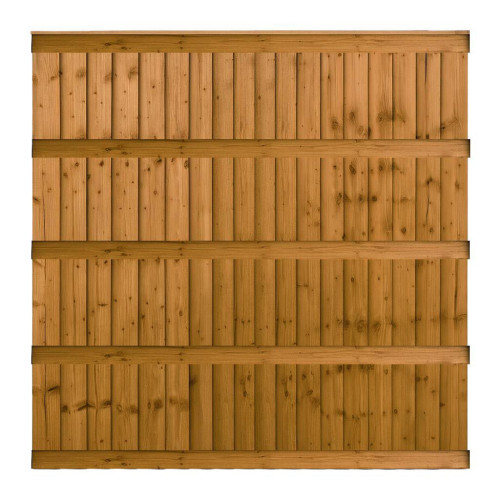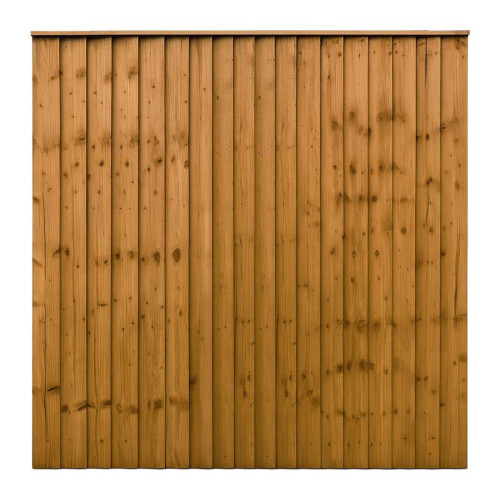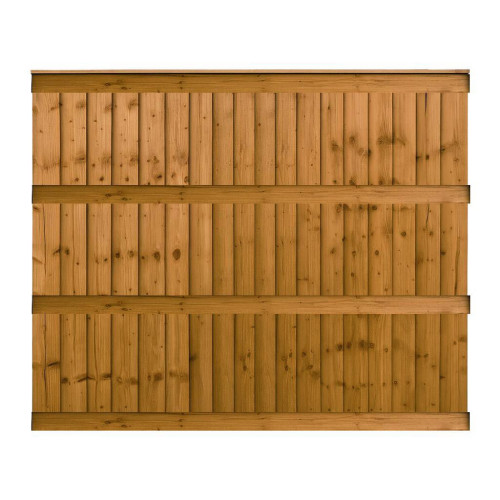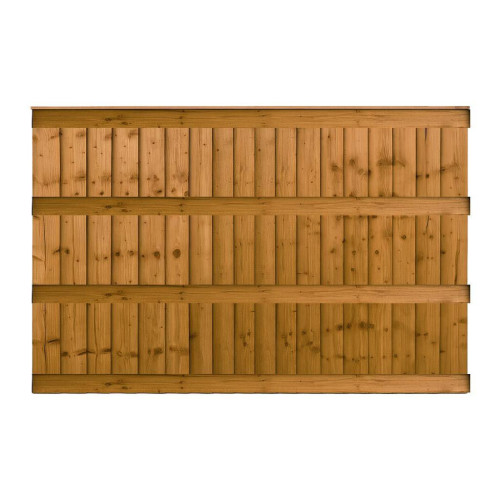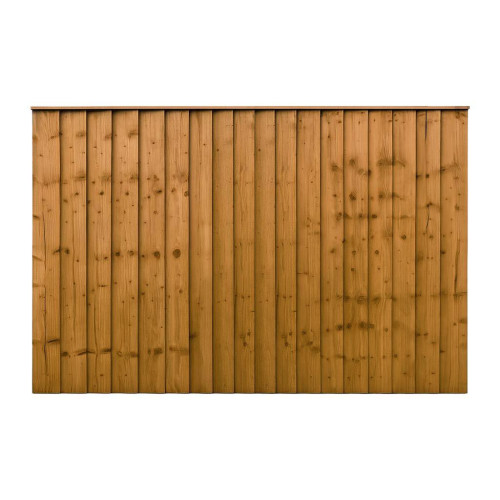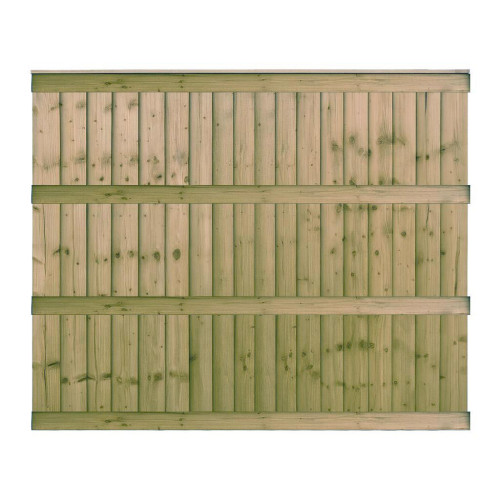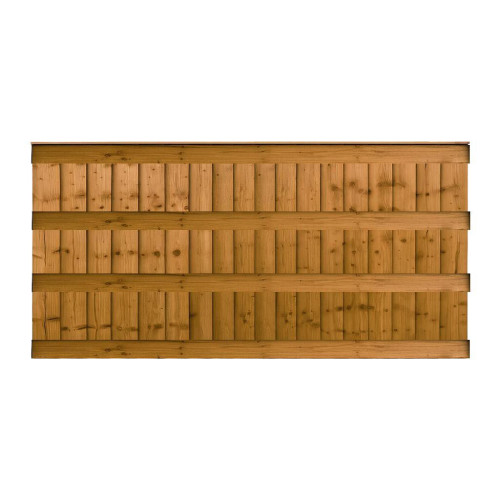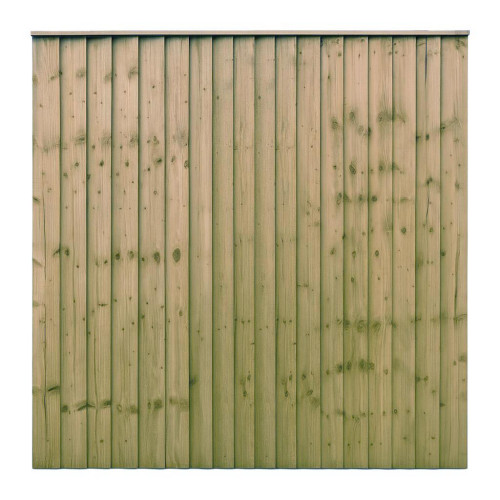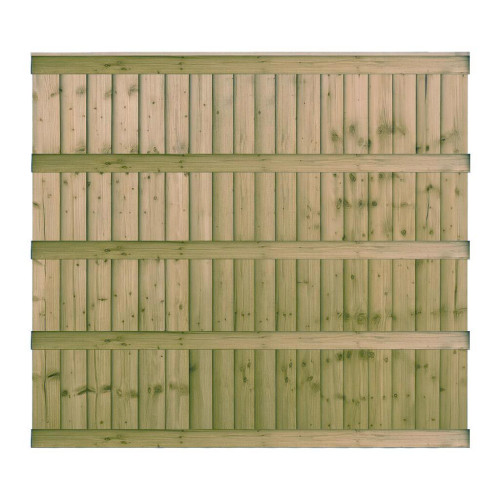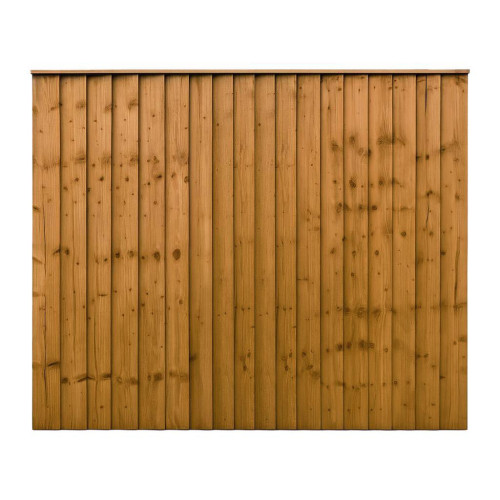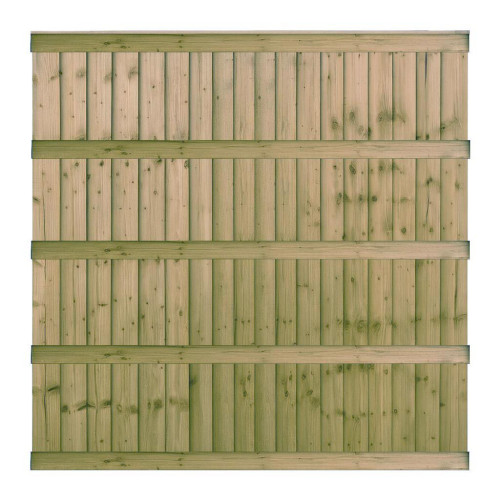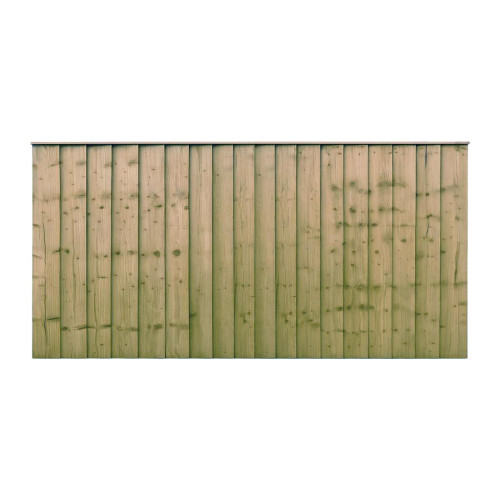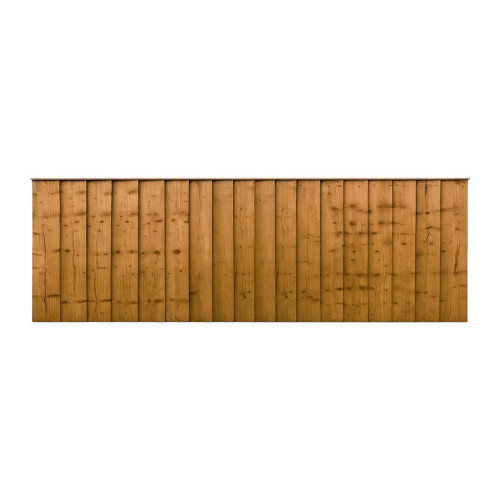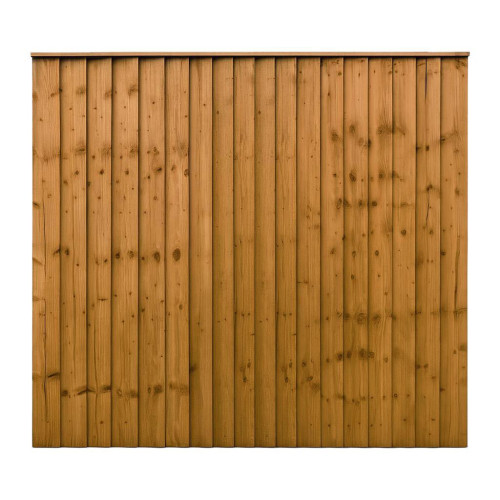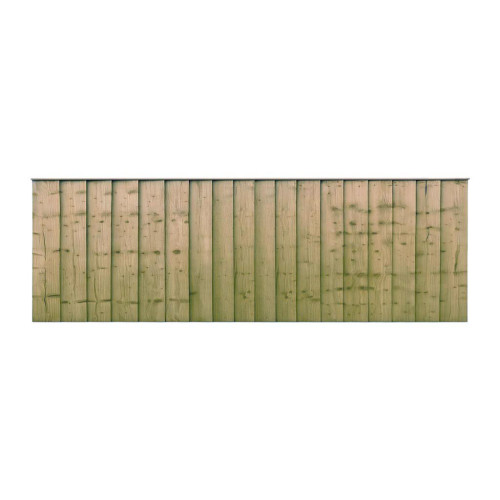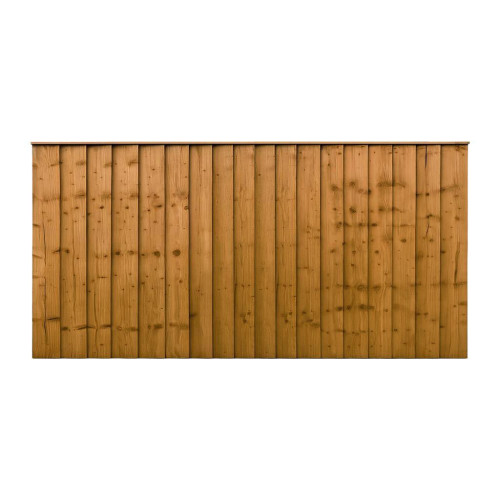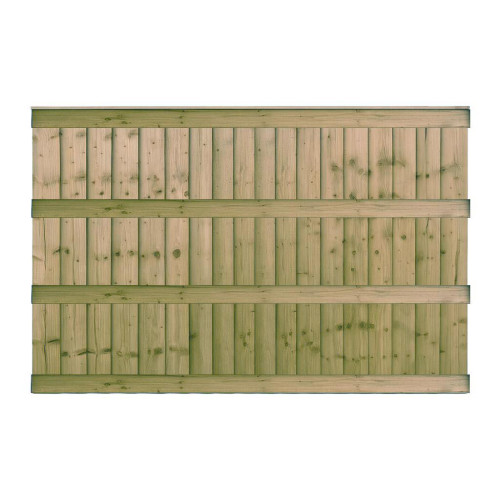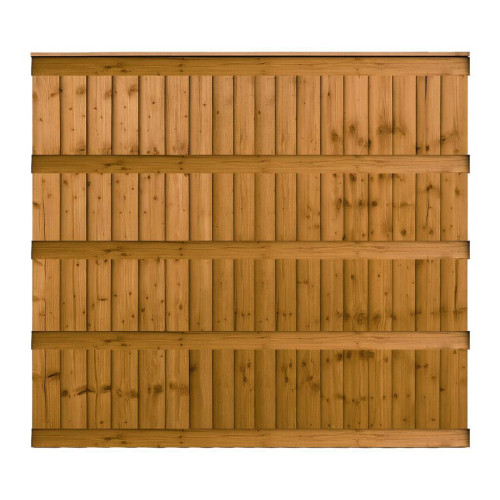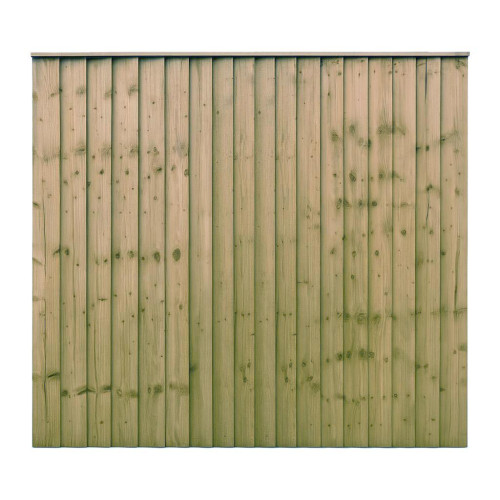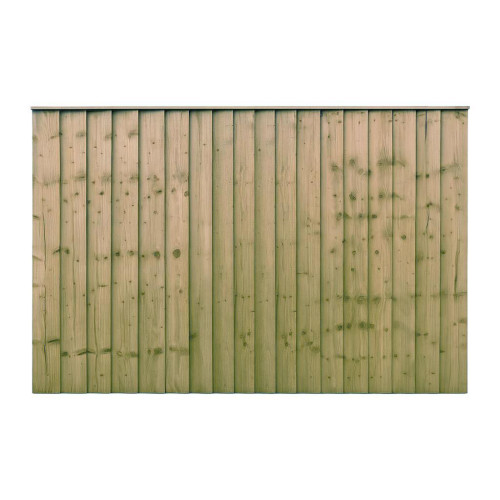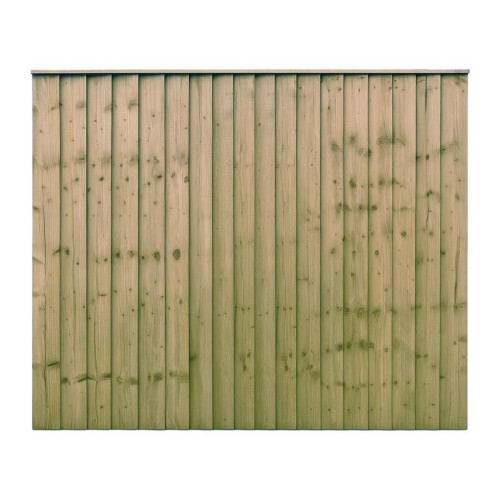



Quick answer: Measure the actual fence bay before ordering replacement Closeboard Fence Panels rather than relying on an assumed 6ft size. Current East Coast Fencing Closeboard panels are approximately 1830mm wide, but the measurement you need depends on whether the panel sits between wooden posts or inside slotted concrete posts. Measure the panel width, panel height, clear opening, post condition and Gravel Board separately. With concrete posts, remember that part of the panel sits inside each slot, so the visible gap between posts is not the complete panel width.
Buying a replacement Fence Panel should be simple. In many gardens, it is.
The problems usually start when someone measures only the visible gap between two posts and assumes that measurement is the size of panel they need.
Closeboard fencing can be installed with Wooden Fence Posts, slotted Concrete Fence Posts, wooden or concrete Gravel Boards and several different panel heights. Each arrangement needs to be measured slightly differently.
Older fences add another complication. Posts may have moved, previous panels may have been cut down and the original installation may not correspond perfectly with today's standard dimensions.
A few careful measurements before ordering can prevent most compatibility problems.
What Size Are Standard Closeboard Fence Panels?
Current East Coast Fencing Closeboard Fence Panels are approximately 1830mm wide, commonly referred to as nominal 6ft panels.
The current Standard range includes several useful heights, approximately:
- 600mm
- 900mm
- 1.2m
- 1.5m
- 1.65m
- 1.8m
Ultra Heavy Duty Closeboard panels are also available across suitable common fence heights.
These nominal sizes are useful for product selection.
They should not replace measurement of the fence already standing in your garden.
Why Should You Measure An Existing Fence Instead Of Assuming It Is 6ft?
A fence installed years ago may not match its original dimensions perfectly today.
Possible reasons include:
- Wooden Fence Posts leaning
- Concrete Fence Posts moving slightly in their foundations
- A previous replacement panel being shortened
- Non-standard original post spacing
- Different panel systems having been mixed over time
A nominal 6ft panel being present elsewhere in the garden does not prove that every bay is identical.
Measure each unusual or replacement bay individually.
What Measurements Do You Need Before Ordering?
Record at least these measurements:
| Measurement | Why It Matters |
|---|---|
| Existing panel width | Best reference for a like-for-like replacement |
| Existing panel height | Identifies the replacement size |
| Bay width | Checks whether posts have moved |
| Gravel Board height | Affects finished boundary height |
| Post type | Changes how panel width is accommodated |
| Post condition | Determines whether replacement alone is sensible |
If the existing panel is still available, measure it before throwing broken sections away.
That old panel can provide the clearest record of what previously fitted the bay.
How Do You Measure The Width Of An Existing Closeboard Panel?
Measure across the complete timber panel from one outer edge to the other.
Do not measure only the visible feather edge face.
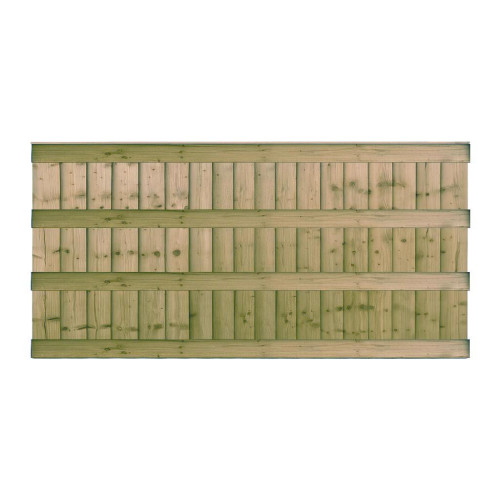
Current Closeboard Fence Panels use overlapping vertical feather edge boards fixed to horizontal backing rails, and the complete manufactured width is the measurement relevant to replacement.
Take the measurement with the panel lying reasonably flat if it has already been removed.
A badly bowed or broken panel can give misleading measurements if measured along a distorted edge.
What If The Existing Panel Is Too Damaged To Measure?
Measure the bay and the surrounding fence instead.
Useful clues include:
- The dimensions of neighbouring panels
- The distance between Wooden Fence Posts
- The depth of Concrete Fence Post slots
- The width of an existing Gravel Board in the same bay
- The dimensions of other original panels in the fence run
Do not use only one of these measurements if several references are available.
Combining them can reveal whether the damaged bay has moved.
How Do You Measure Between Wooden Fence Posts?
With Wooden Fence Posts, measure the clear space between the faces that will support the panel.
Take measurements:
- Near the top
- At approximately mid-height
- Near the bottom of the intended panel
The measurements should be reasonably similar if the posts are plumb and parallel.
If the top opening is significantly narrower than the bottom, one or both posts may be leaning.
Why Measure A Wooden-Post Bay At Three Heights?
Because one measurement can hide a structural problem.
Imagine a bay measuring:
- 1835mm at the bottom
- 1815mm in the middle
- 1790mm at the top
Ordering or cutting a panel around the smallest measurement may technically allow it to enter the gap, but the real problem is that the supports are no longer parallel.
A new panel installed into that opening may:
- Sit visibly crooked
- Have a large gap down one edge
- Be pulled out of shape by its fixings
Correct substantial post movement before treating it as a panel-sizing problem.
Should A Panel Fit Tightly Between Wooden Posts?
No.
A timber Fence Panel should fit without being hammered or heavily forced into the opening.
A very tight installation can place unnecessary pressure on:
- The backing rails
- The feather edge boards
- The post fixings
Timber also changes slightly as moisture conditions change.
Plan the actual fixing arrangement when deciding the required clearance rather than trying to achieve a friction fit.
How Do You Measure For Closeboard Panels Between Concrete Posts?
Slotted Concrete Fence Posts require a different approach.
A compatible timber panel sits partly inside the slot of the post on each side.
This means the visible distance between the inner faces of the posts is smaller than the complete panel width.
If possible, measure an existing panel that fits the same post system.
If that is not available, establish:
- The visible gap between the posts
- The usable depth of the slot on each side
- The width of an existing compatible Gravel Board
- The dimensions of neighbouring panels
Do not order a panel equal only to the visible post-to-post gap.
Why Does Slot Engagement Matter?
The panel needs sufficient engagement within both Concrete Fence Post slots.
If a replacement panel is too narrow, it may:
- Sit only shallowly in one slot
- Move from side to side
- Rattle in wind
- Become difficult to position centrally
A panel that is too wide may be impossible to lower into the bay.
This is why an existing compatible panel or Gravel Board is such a useful measuring reference.
Can You Use The Concrete Gravel Board To Determine The Panel Width?
It can provide very useful information.
If the Concrete Gravel Board already fits correctly between the same slotted posts, its complete width gives a strong indication of the intended bay dimensions.
That does not mean you should automatically assume the timber panel and Gravel Board have identical profiles in every system.
Check the intended products for compatibility.
But an existing properly fitted Gravel Board is much more informative than measuring only the visible opening between post faces.
How Do You Measure Closeboard Fence Panel Height?
Measure the timber Fence Panel itself from its lowest edge to the highest part of its standard top construction.
Do not measure from the garden soil to the top of the fence and assume that is the panel height.
The completed boundary may include:
- A Gravel Board
- The Fence Panel
- Differences in ground level
These need to be separated when identifying the replacement product.
What If The Whole Fence Measures 1.8m High?
That does not necessarily mean you have a 1.8m Fence Panel.
For example, part of the finished height could be provided by a Gravel Board beneath a shorter panel.
Measure the timber section and lower board independently.
This is especially important when replacing a panel in a concrete post system because choosing the wrong height can alter the finished top line across the boundary.
Why Does The Gravel Board Need Measuring Separately?
The Gravel Board forms a separate component beneath the main timber panel.
Its visible height affects:
- Total boundary height
- The height of the timber panel above the ground
- The top line relative to neighbouring bays
If the Gravel Board remains in place, you usually need a replacement panel that recreates the existing arrangement rather than choosing a Fence Panel from the total boundary height.
What If The Existing Gravel Board Is Partly Buried?
Do not assume the amount you can see is its complete height.
Soil levels can change over time.
Grass, mulch and flower beds may also build up around fencing.
Where practical, identify the actual Gravel Board rather than measuring only the exposed section.
Also check that built-up soil is not creating unnecessary persistent moisture around timber components.
How Do You Measure A Fence On Sloping Ground?
Measure each individual bay.
Closeboard Fence Panels are rigid rectangular components and are normally stepped as a boundary rises or falls.
Do not measure diagonally along the slope and use that figure as the panel height.
For each bay, record:
- Panel width
- Panel height
- Gravel Board height
- Ground level at both posts
- Top level relative to the neighbouring panel
This tells you whether the existing fence uses consistent panels stepped at the posts or a mixture of heights.
Should A Sloping Fence Use Different Panel Heights?
Not necessarily.
Many sloping boundaries use the same panel height repeatedly and simply step each panel down at the next post.
Other gardens use different heights because:
- Privacy requirements change
- The slope is substantial
- Existing landscaping dictates the layout
Measure what is actually installed before assuming every bay needs the same replacement.
How Do You Measure If Only One Panel Is Missing?
Use the neighbouring bays as references.
Check:
- The width and height of the panel immediately to the left.
- The width and height of the panel immediately to the right.
- The type and height of the Gravel Board in the empty bay.
- The clear opening between its posts.
- Whether those posts are vertical.
If neighbouring panels are identical and the posts remain correctly positioned, the missing panel is likely to have been the same standard size.
Still measure the empty bay before ordering.
How Do You Measure For Several Replacement Panels?
Do not measure one bay and assume the entire run is identical.
Record every bay where an old panel is being replaced.
A simple measurement schedule might contain:
| Bay | Panel Height | Bay Width | Gravel Board | Post Condition |
|---|---|---|---|---|
| 1 | Measure | Measure top/middle/bottom | Record type and height | Check |
| 2 | Measure | Measure top/middle/bottom | Record type and height | Check |
| 3 | Measure | Measure top/middle/bottom | Record type and height | Check |
This is particularly useful on older fences where one or two posts may have moved while the others remain sound.
What If One Bay Is Narrower Than The Others?
Find out why before ordering.
There are two very different possibilities.
The Bay Was Always Non-Standard
A short bay beside a wall, Gate Post or corner may have been deliberately built narrower.
In this case, a standard approximately 1830mm Closeboard Fence Panel may need to be carefully reduced in width or a custom closeboard section may be required.
The Posts Have Moved
If an ordinary bay has become significantly narrower over time, modifying a new panel around it may hide a structural fault.
Check the posts and foundations first.
How Do You Tell Whether Wooden Fence Posts Have Moved?
Use a spirit level rather than judging from surrounding ground or paving.
Look for:
- A post leaning towards the adjacent bay
- A post leaning along the fence line
- Movement when the fence is gently pushed
- Deterioration around ground level
- A foundation that has visibly shifted
If the post is failing, replace or repair the support before finalising the panel measurement.
How Do You Check Concrete Fence Posts?
Concrete posts can also move.
Check:
- Whether each post is plumb
- Whether the slot remains reasonably vertical
- Whether the foundation has shifted
- Whether significant structural cracking is present
Do not cut a new Closeboard Fence Panel excessively narrow simply to fit between concrete posts that are leaning towards each other.
What If The Old Panel Had To Be Forced Out?
Investigate the bay before installing a replacement.
A panel may become difficult to remove because:
- Posts have moved closer together
- The timber is swollen with moisture
- Vegetation or debris has trapped it
- The panel has distorted
Do not assume the new panel should simply be forced back into the same opening.
Measure the supports after the old panel has been removed.
What If The Old Panel Rattled Between Concrete Posts?
Measure both the old panel and the bay.
Rattling can result from:
- An undersized replacement panel
- Excessive clearance in the slot
- Post movement
- A panel no longer sitting correctly on its Gravel Board
Do not automatically copy an obviously poor previous fit.
Establish the intended dimensions of the post and panel system before buying another panel of the same incorrect size.
Should You Measure Fence Panel Thickness?
Yes, particularly when using existing slotted Concrete Fence Posts.
Width and height are not the only dimensions that affect compatibility.
The complete panel profile also needs to work with the post slot.
Current Closeboard Fence Panels have an overall listed depth around 45mm across suitable products.
Do not assume every older Fence Panel has the same construction or thickness simply because it is approximately 6ft wide.
Why Does Panel Construction Matter With Existing Concrete Posts?
Different panel designs have different edge profiles.
A Closeboard panel uses overlapping vertical boards and horizontal backing rails.
Other products may have:
- Thicker outer frames
- Decorative top sections
- Different overall depths
If you are changing panel style rather than carrying out a like-for-like replacement, confirm that the new panel is physically compatible with the existing slots.
Can You Replace Waney Lap Panels With Closeboard Panels Using The Same Posts?
Potentially, where the existing posts, Gravel Boards, bay dimensions and slots are compatible.
Do not assume compatibility from the nominal width alone.
Check:
- Actual panel width
- Panel depth
- Panel height
- Concrete slot dimensions if applicable
- Existing post condition
- Foundation stability
Closeboard panels are substantial, especially at full height, so also consider whether the complete existing support system remains appropriate.
Can You Replace Standard Closeboard With Ultra Heavy Duty Panels?
Potentially, if the dimensions and support system remain suitable.
The important difference is not nominal width.
Ultra Heavy Duty panels use additional horizontal backing-rail support compared with corresponding Standard versions.
This creates a more substantial panel and also increases its weight.
Check the existing posts and handling requirements before upgrading rather than treating the change as purely cosmetic.
Should You Measure The Fence Panel Or The Post Centres?
Measure the panel and its actual supporting opening.
Post-centre measurements are useful when designing a new fence from scratch, but they can be misleading during replacement work because:
- Post sections differ
- Concrete slots affect panel engagement
- Existing posts may have moved
If you have the old panel available, its complete dimensions provide a more direct replacement reference.
How Do You Measure A Bay Beside A Garden Gate?
Do not include the moving gate opening as part of the panel bay.
Measure between the fixed structural supports carrying the Fence Panel.
Also inspect the Gate Post carefully.
Gate Posts experience different loads because the gate repeatedly hangs and moves from them.
A leaning Gate Post can reduce the adjoining panel opening and create the impression that the Fence Panel needs cutting.
Repair the post if that is the actual problem.
How Do You Measure A Bay Against A Wall?
Measure the clear panel opening at several heights.
Do not assume an old wall is perfectly vertical.
Check whether the timber panel is supported by:
- A Wooden Fence Post positioned beside the wall
- A separate wall-mounted timber support
- Another suitable structural arrangement
Measure between the actual panel supports rather than between arbitrary visible masonry points.
How Do You Measure Around A Corner?
Treat each direction as a separate fence run.
Measure the final bay approaching the corner and the first bay leaving it.
Check the Corner Post provides suitable support for both directions.
A corner is also a common place for deliberately shortened panels, so do not assume an unusual measurement means something has moved.
Should You Measure In Millimetres Or Feet?
Use millimetres for installation measurements.
Terms such as 3ft, 4ft, 5ft and 6ft are useful product descriptions, but millimetres are more useful when determining whether an actual panel will fit an existing opening.
For example, approximately 1830mm is a much more useful working dimension than simply writing "6ft" on your measurements.
Record the exact measurement you took rather than rounding it immediately to the nearest familiar imperial size.
How Accurate Do Your Measurements Need To Be?
Accurate enough to distinguish a standard bay from one that has genuinely changed or needs modification.
You do not need complicated surveying equipment for an ordinary replacement Fence Panel.
A suitable tape measure, spirit level and careful written notes are normally enough.
The more important mistake to avoid is measuring casually at one point and assuming the rest of the opening is identical.
Should You Measure Before Removing The Old Panel?
Yes, where possible.
Record the existing arrangement before dismantling it.
Photographs can also be useful for remembering:
- Panel orientation
- Gravel Board position
- Post type
- Any packing or fixing arrangement
- How neighbouring bays align
Then measure the empty bay again after the panel is removed.
This gives you both the old component size and the actual current support dimensions.
What Should You Write Down Before Ordering?
For each replacement bay, note:
- Required panel style
- Existing panel width
- Existing panel height
- Bay width at top, middle and bottom
- Wooden or Concrete Fence Posts
- Post condition
- Gravel Board material
- Gravel Board height
- Whether the garden slopes
- Any Gate Post, corner or wall beside the bay
This takes a few minutes and creates a much clearer specification than simply ordering "one 6ft panel".
Common Measuring Mistakes With Replacement Closeboard Panels
- Assuming every old panel is exactly 6ft wide
- Measuring only the visible gap between Concrete Fence Posts
- Forgetting that the panel enters the post slots
- Measuring the total fence height instead of the timber panel
- Forgetting to measure the Gravel Board separately
- Taking only one width measurement between Wooden Fence Posts
- Cutting a new panel around posts that are actually leaning
- Assuming every bay in a long fence is identical
- Ignoring panel thickness when changing from another style
- Measuring nominal post centres instead of the actual replacement opening
- Throwing away the old panel before measuring it
- Rounding measurements to feet before determining the actual dimensions
FAQs
What Width Is A Closeboard Fence Panel?
Current East Coast Fencing Closeboard Fence Panels are approximately 1830mm wide, commonly described as nominal 6ft panels.
Should I Measure Between Fence Posts Before Buying A Panel?
Yes. Measure the existing panel where possible and check the current post opening. With Wooden Fence Posts, measure the clear bay at several heights. With slotted Concrete Fence Posts, also account for the panel entering the slots.
How Do I Measure A Fence Panel Between Concrete Posts?
Do not use only the visible gap between the posts. A compatible panel sits partly within each post slot. Measure an existing panel or Gravel Board where possible and check slot engagement as part of the overall width.
Does A 6ft Fence Need A 6ft Closeboard Panel?
Not necessarily. A Gravel Board may contribute to the overall boundary height, so a fence approximately 1.8m high could use a shorter timber panel above the lower board. Measure the components separately.
What If My Fence Posts Are Less Than 1830mm Apart?
First establish whether the measurement is intentional. A deliberately short end bay may require a shortened panel, while an ordinary bay that has become narrower may indicate leaning or moving posts.
Can I Use The Existing Gravel Board To Measure The Bay?
Yes, particularly with slotted Concrete Fence Posts. A correctly fitted existing Gravel Board provides useful information about the intended bay dimensions, although panel compatibility should still be checked.
Should I Measure Every Fence Bay?
For several replacement panels, yes. Older fence runs can vary because individual posts may have moved or some panels may previously have been altered.
Can I Replace Another Fence Panel Style With Closeboard Using The Same Posts?
Potentially, but check width, height, panel depth, post slots, Gravel Boards and the condition of the supports. Matching nominal width alone does not guarantee compatibility.
Measure The Existing System, Not Just The Empty Gap
The safest way to order a replacement Closeboard Fence Panel is to treat the fence as a complete system.
Start with the old panel if it is still available. Measure its actual width and height before disposal.
Then check the supports.
With Wooden Fence Posts, measure the clear opening at the top, middle and bottom so a leaning post does not go unnoticed.
With slotted Concrete Fence Posts, remember that the approximately 1830mm-wide panel extends into the slots. The visible distance between the post faces is therefore not the full panel measurement.
Measure the Gravel Board separately as well. Its height contributes to the completed boundary, and an existing compatible Concrete Gravel Board can provide useful information about the intended bay width.
Finally, check whether you are carrying out a true like-for-like replacement or changing panel construction. Moving from another panel style or from Standard to Ultra Heavy Duty Closeboard may introduce different depth, weight or support considerations even when the nominal width appears similar.
Good replacement measurements answer four separate questions: what size was the old panel, what size is the opening now, are the posts still where they should be, and what other components form the bay?
Once those are known, choosing the correct Closeboard Fence Panel becomes much more straightforward.