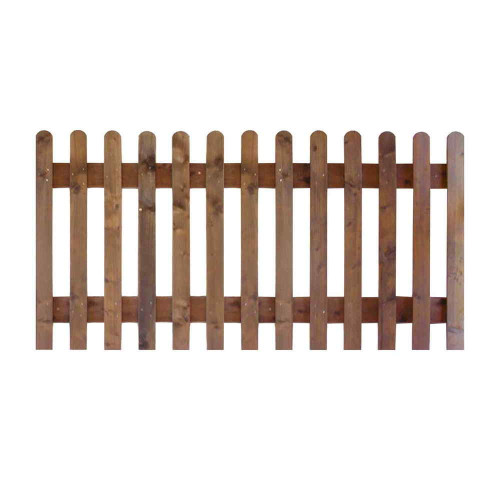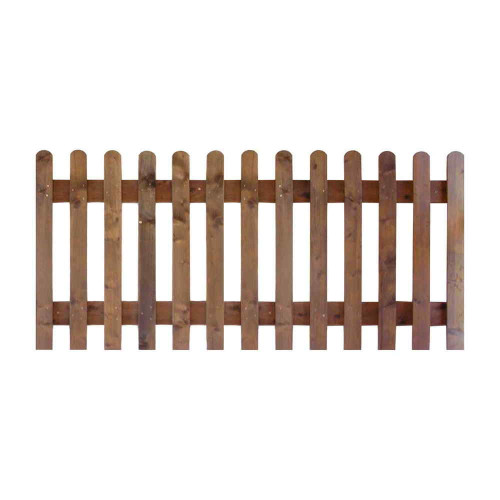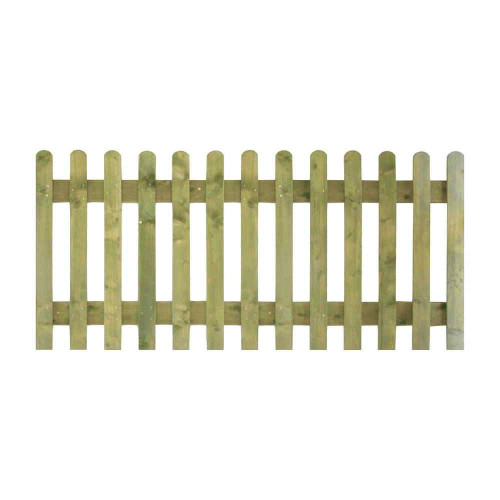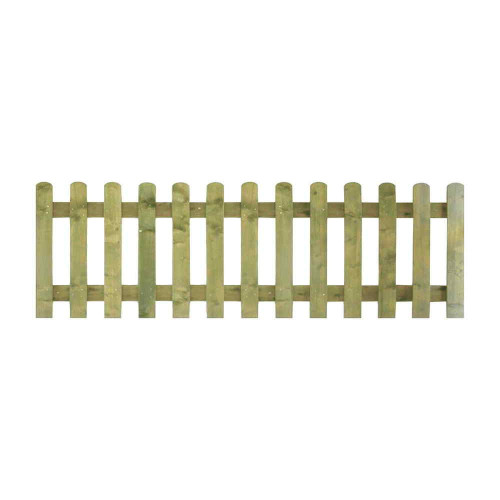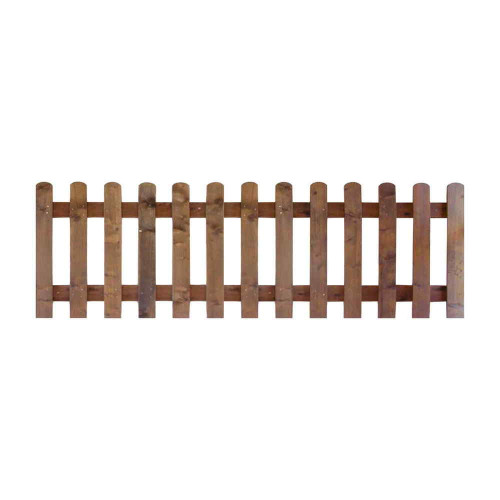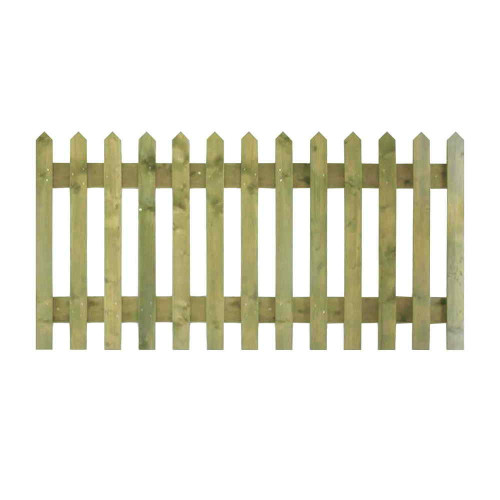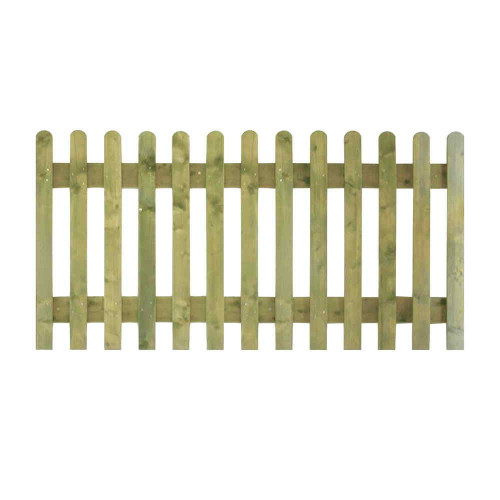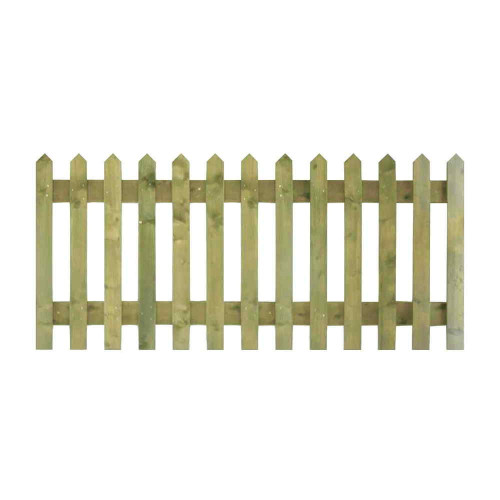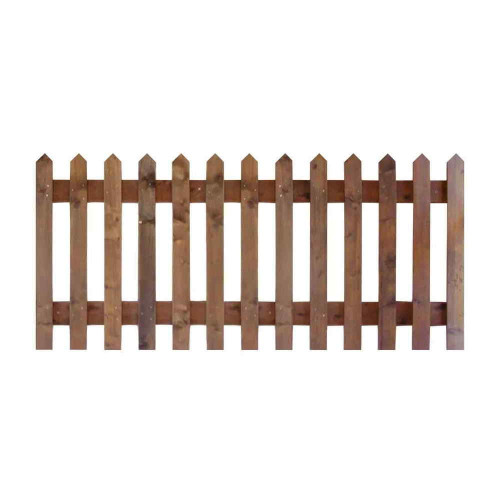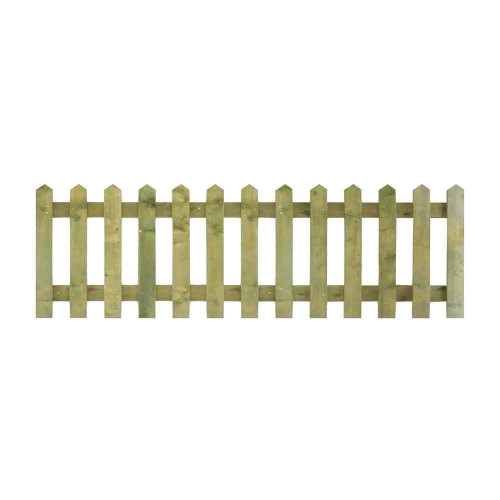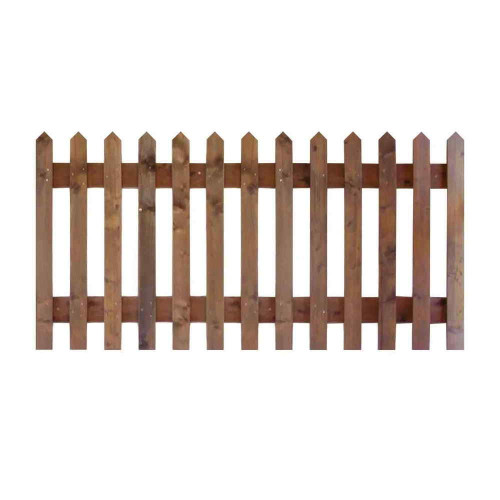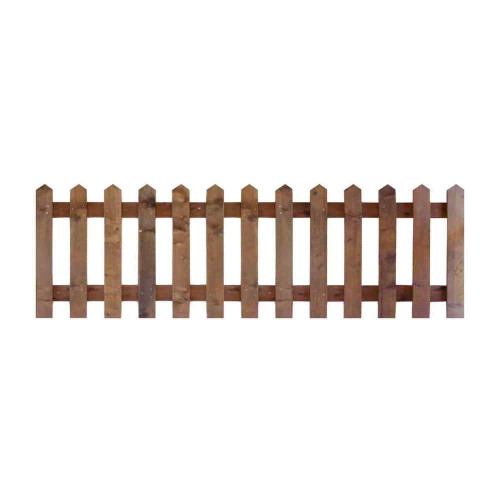




Quick answer: East Coast Fencing manufactures its Picket Fence Panels in-house using 13 timber pales, each 75mm wide, fixed across two 75 x 32mm horizontal backrails. The pales are spaced approximately 70mm apart, creating the deliberately open construction that defines picket fencing. Current panels are 1830mm wide, pressure treated and available with Round Top or Point Top pales. Good build quality depends on consistent spacing, secure rail connections, accurate alignment and a panel that remains square and stable.
Picket fencing looks simple because most of its structure remains visible.
There are no overlapping boards hiding the rails, no double layer of slats and no decorative lattice concealing how the panel has been assembled. You can see the individual pales, the spaces between them and the horizontal backrails carrying them.
That simplicity makes Picket Fence Panels a useful product for explaining what good fence-panel construction actually involves.
East Coast Fencing manufactures its current Picket Fence Panels in-house. Each standard 1830mm-wide panel uses 13 timber pales fixed across two substantial horizontal backrails, with approximately 70mm between neighbouring pales. Those dimensions are deliberate. They determine how open the fence looks, how the load of the individual pales is carried and how consistently several panels appear when installed together.
What Is a Picket Fence Panel Made From?
The construction is straightforward.
A current East Coast Fencing Picket Fence Panel consists primarily of:
- 13 vertical timber picket pales
- Two horizontal timber backrails
- Exterior fixings securing the pales to those rails
The panels are pressure treated for outdoor use and manufactured as complete sections ready to be installed between suitable fence posts.
Unlike Closeboard or Waney Lap fencing, the pales deliberately do not overlap.
The spaces are part of the product.
Why Do We Use 13 Pales Across a 1830mm Panel?
The number of pales, pale width and spacing have to work together.
Our current panels use:
- 13 pales
- 75mm-wide pales
- Approximately 70mm gaps
- An overall panel width of 1830mm
This produces the regular open pattern customers associate with traditional picket fencing.
The aim is not to cover as much of the 1830mm width with timber as possible.
If that were the objective, a solid fence panel would be more appropriate.
The aim is to create a visible physical boundary while retaining light and views through it.
Why Pale Spacing Is a Manufacturing Detail, Not Just a Design Choice
Spacing determines the visual character of the complete panel.
If gaps varied significantly from one pale to another, even a structurally sound panel would look poorly assembled.
A consistent pattern helps create:
- An even visual rhythm
- A predictable degree of openness
- Consistent appearance between adjoining panels
- A cleaner top profile along a complete fence run
This becomes especially noticeable when several panels are installed side by side.
Why Approximately 70mm Is Deliberately Open
Approximately 70mm between the current pales leaves substantial visibility through the fence.
That is intentional.
Picket Fence Panels are generally selected when the customer wants to:
- Define a front garden
- Separate a path
- Mark a driveway edge
- Divide areas within a garden
- Retain views towards planting
- Allow plenty of daylight through the boundary
They should not be bought as privacy panels.
Increasing the panel height does not remove the spaces between the pales.
How Much of a Picket Panel Is Actually Open?
A useful way to understand the design is to look at the repeated pale-and-gap pattern.
A 75mm pale followed by an approximately 70mm opening means the solid and open portions of the repeating pattern are relatively similar in width.
That is why the panel feels visually light even when you choose a taller version.
The fence is clearly present, but much of what lies beyond it remains visible.
What Do the Horizontal Backrails Do?
The backrails are the main horizontal structural members of the panel.
Each pale crosses both rails and is fixed to them.
The rails therefore:
- Hold the individual pales together
- Maintain the spacing between them
- Carry the panel across its width
- Provide substantial fixing areas when the panel is installed
Without the rails, you would simply have 13 individual pales rather than a transportable fence panel.
What Size Backrails Are Used?
The current East Coast Fencing Picket Fence Panels use two horizontal backrails measuring 75 x 32mm.
This is worth knowing because the visible pales receive most of the attention, while the rails do much of the structural work.
When assessing a picket panel, inspect the back as well as the front.
Why Two Backrails Are Used
Each pale needs to be held at more than one point if it is to remain aligned as part of a complete panel.
Two rails create two separate fixing lines through the height of the pale.
This helps control:
- Vertical alignment
- Rotation of individual pales
- Movement between neighbouring pales
It also gives the assembled panel a clear upper and lower structural connection across its width.
Do 2ft, 3ft and 4ft Panels Use the Same Basic Construction?
Yes. The current panel range follows the same broad construction principle across the available heights.
The current sizes are:
- 2ft, approximately 600mm high
- 3ft, approximately 900mm high
- 4ft, approximately 1200mm high
All remain approximately 1830mm wide and use the characteristic open arrangement of 13 pales across two 75 x 32mm backrails.
The change in height alters the visual presence of the fence without turning it into a solid boundary.
How Panel Height Changes the Fence
| Panel Height | Construction Character | Typical Effect |
|---|---|---|
| 2ft / 600mm | Low open panel | Light boundary definition |
| 3ft / 900mm | Medium open panel | Clearer garden separation |
| 4ft / 1200mm | Tallest current picket panel | Stronger boundary presence while remaining open |
Why a 4ft Picket Panel Is Still Not a Privacy Panel
This is an important distinction.
A taller panel provides more physical height, but the approximately 70mm spaces remain part of the design.
A 4ft Picket Fence Panel therefore gives a stronger sense of boundary than the 2ft version, but people can still see through it.
If screening is the primary requirement, consider a more solid panel construction instead.
What Is the Overall Panel Depth?
The current assembled Picket Fence Panels have an overall depth of approximately 50mm.
That measurement reflects the completed panel rather than simply the thickness of an individual pale.
It is useful when considering:
- Post positioning
- Brackets or clips
- Existing fence replacement
- Clearances around walls and gates
As with width, check actual site dimensions before assuming an existing installation will accept a replacement automatically.
How Are Point Top Picket Fence Panels Made?
Point Top panels use the same basic panel structure but finish each pale with a pointed upper profile.
The result is a repeated series of peaks across the fence line.
The current Point Top range uses:
- 13 timber pales
- 75mm-wide pales
- Approximately 70mm spacing
- Two 75 x 32mm backrails
- An overall width of 1830mm
The top shape changes the appearance rather than fundamentally changing how the panel works.
How Are Round Top Picket Fence Panels Made?
Round Top panels use the same general arrangement but finish each pale with a curved head.
This creates a softer repeated top line.
Again, the structural principle remains:
- Individual vertical pales
- Regular spaces
- Two horizontal backrails
This is why Round Top versus Point Top is mainly an aesthetic choice rather than a decision between two completely different fencing systems.
Does Point Top Make the Panel Stronger?
No meaningful structural decision should be made from the pale top alone.
The pointed and rounded profiles concern the shape of the exposed upper section of each pale.
For practical panel quality, pay more attention to:
- Backrail condition
- Pale alignment
- Fixings
- Post support
- Overall panel stability
Why Accurate Pale Alignment Matters
One leaning pale is surprisingly obvious in a picket fence.
The design is based on repetition.
Your eye sees:
- 13 repeated vertical boards
- 12 main spaces between them
- A repeated Round Top or Point Top profile
A pale that sits noticeably out of vertical interrupts all three patterns.
Manufacturing accuracy therefore contributes directly to how high-quality the completed panel looks.
Why the Top Profile Magnifies Alignment Errors
Point Top panels produce a line of repeated peaks.
Round Top panels produce a line of repeated curves.
If one pale sits higher or lower than the others, its top immediately stands out.
This is different from a solid rough-sawn boundary where small dimensional variation can disappear within overlapping boards.
What Should a Good Picket Panel Look Like?
You should expect a regular overall pattern.
Look for:
- Consistent pale spacing
- Pales that are broadly parallel
- A coherent repeated top profile
- Secure attachment to both backrails
- Backrails that remain intact
- A panel that holds its overall shape
You should not expect natural timber to look completely identical from one pale to the next.
What Natural Timber Variation Should You Expect?
Picket fencing is made from real timber.
Normal variation can include:
- Knots
- Different grain patterns
- Shade differences
- Minor surface variation
- Small changes as timber dries and wets outdoors
These characteristics are different from a loose pale or broken rail.
When assessing quality, distinguish between natural wood and structural damage.
Why a Knot Is Not Automatically a Defect
Knots are a natural feature of timber growth.
The relevant question is whether a particular piece remains suitable for its role in the panel.
A visible sound knot does not automatically mean the fence has been manufactured incorrectly.
More significant concerns include:
- A pale splitting badly through its fixing points
- A backrail breaking
- Several pales coming loose
- Severe panel distortion
Why Pressure Treatment Matters
The current East Coast Fencing Picket Fence Panels are pressure treated for exterior use.
Pressure treatment helps protect the timber against biological deterioration outdoors.
That is important because the panel will be exposed throughout the year to:
- Rain
- Sunlight
- Changing humidity
- Cold weather
Pressure treatment should be viewed as one part of long-term performance, not as permission to install the panel badly.
Why the Bottom of the Pales Should Stay Clear of Soil
The bottom ends are closest to wet ground.
Allowing soil, mulch or damp vegetation to build around them can keep the timber wet for longer after rain.
Where practical, maintain clearance between the pales and:
- Soil
- Mulch
- Dense grass
- Accumulated leaves
This also makes the lower part of the fence easier to inspect.
Do Picket Fence Panels Need Gravel Boards?
Not automatically.
A solid gravel board changes the appearance of an intentionally open fence and may be visually unnecessary on many front-garden installations.
The important objective is sensible clearance from persistent damp.
A gravel board can still be considered where site conditions justify one, but it should be part of the overall design rather than added simply because every other type of fence uses one.
Why In-House Manufacturing Matters
East Coast Fencing manufactures its Picket Fence Panels rather than treating them simply as generic externally sourced stock.
That gives us direct product knowledge about details such as:
- The number of pales in a panel
- The width of those pales
- The approximate spacing
- The backrail section
- The finished panel width
Those details are more useful to a customer than broad statements such as "strong timber construction".
They explain what the panel actually is.
Why Product Specifications Are More Useful Than Marketing Labels
Terms such as "premium" or "quality" are difficult to assess without context.
A more useful description is:
- 1830mm overall width
- 13 pales
- 75mm pale width
- Approximately 70mm pale gaps
- Two 75 x 32mm backrails
- Pressure-treated timber
You can use those details to decide whether the product actually suits the project.
How Does the Open Construction Affect Wind?
Picket fencing presents far less continuous timber surface than a solid Closeboard or Waney Lap panel.
Air can pass through the substantial openings between the pales.
That generally means less continuous surface is presented to the wind.
It does not mean post installation can be ignored.
Even a relatively open fence still needs secure support.
Why Open Fencing Still Needs Proper Posts
The panel still experiences:
- Wind loading
- Handling loads
- Occasional impacts
- Movement from the surrounding fence run
The posts transfer those loads into the ground.
A good-quality Picket Fence Panel fixed to a loose post will still move.
Why the Backrails Should Be Fixed to the Posts
The backrails are the substantial horizontal structural members of the panel.
They are therefore the logical parts of the panel to support appropriately during installation.
Avoid relying on one individual pale to carry the relationship between the entire panel and the post.
The panel is designed to work as a complete assembly.
Can Picket Fence Panels Be Installed Between Wooden Posts?
Yes.
Suitable pressure-treated Wooden Fence Posts create a straightforward all-timber boundary.
They provide practical fixing points for the panel backrails and work naturally with:
- Front gardens
- Picket gates
- Path boundaries
- Internal garden divisions
Why You Should Measure the Actual Panel Width Before Setting Posts
The current panel width is 1830mm.
Do not simply measure six feet between arbitrary points and install every post before checking how the chosen fixing method works.
The final post setting needs to account for:
- The actual panel width
- The post width
- The chosen brackets or fixings
- Any gate opening
Planning those components together is easier than correcting a row of incorrectly spaced posts.
Why Gate Position Should Be Planned First
A common mistake is to divide the entire frontage into panel bays and then decide where the gate should go.
This can leave an awkward narrow section at one end.
Instead:
- Measure the whole run.
- Choose the gate position.
- Allow for the gate posts and operating clearance.
- Plan the remaining 1830mm panel bays.
- Decide how any final non-standard section will be handled.
Why Picket Panels Are Convenient for Standard Fence Runs
A pre-assembled panel has already established:
- Pale spacing
- Pale alignment
- Rail positions
- Panel width
This saves considerable repetitive work compared with constructing the same boundary from individual Picket Pales.
The installer can concentrate on setting the posts and aligning complete panels rather than setting every individual pale.
When Are Individual Picket Pales Still Better?
Individual pales are useful where a ready-made panel does not fit the geometry of the site.
Examples include:
- Unusual final bay widths
- Custom pale spacing
- Repairs
- Irregular layouts
- More complicated sloping ground
That does not make one system inherently better.
Panels prioritise consistency and installation speed. Individual pales prioritise flexibility.
Can You Shorten a Picket Fence Panel?
Potentially, but remember what you are modifying.
You are not simply cutting a decorative sheet.
The panel contains:
- Two structural backrails
- A repeated 13-pale layout
- Established approximately 70mm spacing
Reducing the width may require:
- Cutting both rails
- Removing one or more pales
- Re-establishing balanced end spacing
For very narrow infill sections, constructing the area from individual pales may be cleaner.
Why End Spacing Matters After Cutting a Panel
A modified panel can look obviously altered if the final pale is positioned almost against one post while the opposite end has a large gap.
Before cutting, work out how the remaining pales can be distributed so that the finished section looks intentional.
The repeated spacing is one of the defining visual qualities of picket fencing.
How Do Picket Panels Behave on a Slope?
Complete Picket Fence Panels are rigid rectangular sections.
On sloping ground, they are normally installed in steps.
Each panel remains level while the next starts higher or lower.
This preserves:
- Vertical pales
- Level backrails
- The manufactured panel shape
Why You Should Not Twist the Panel to Follow the Ground
The panel was manufactured square.
Trying to distort it to follow a gradient can:
- Pull the rails out of alignment
- Make the pales lean
- Disturb the regular spacing
- Place unnecessary stress on the fixings
Plan steps instead.
Why a String Line Matters on Longer Picket Fence Runs
The repeated top profile makes changes in level easy to see.
A long row of rounded or pointed pales creates a strong visual line.
A string line can help maintain:
- Consistent post positions
- A controlled panel top level
- A straighter overall run
Check each panel as installation progresses rather than discovering a gradual rise or fall at the final post.
How Can You Inspect an Existing Picket Fence Panel?
Start with the rails.
Then check the pales.
Look for:
- Broken backrails
- Loose pale fixings
- Split pales
- Damage around the lower ends
- Panel movement at the posts
- Posts leaning out of line
Do not assume every problem originates in the panel.
Why Backrail Damage Can Be More Serious Than One Broken Pale
One pale forms only one part of the open fence face.
A backrail connects all 13 pales.
If one pale is damaged while both rails remain sound, the problem may be highly localised.
If a backrail breaks, several pales can lose support simultaneously.
This is why inspecting the rear structure matters.
Can One Broken Picket Pale Be Replaced?
Potentially.
If:
- The two backrails remain sound
- The surrounding pales remain secure
- A suitable matching pale is available
local replacement can make more sense than discarding an otherwise serviceable panel.
Check the pale dimensions and top profile carefully.
Why Matching the Top Profile Matters in a Repair
A Point Top pale installed into a Round Top panel will be immediately obvious.
Even within the correct profile, compare:
- Width
- Height
- Position
- Treatment colour
A new pale may initially look different from surrounding weathered timber, but its shape and position should still match the panel.
When Should the Complete Panel Be Replaced?
Complete replacement is more appropriate where:
- One or both backrails are badly damaged
- Numerous pales have failed
- The panel is severely distorted
- The complete assembly has become loose
- Widespread deterioration makes local repairs uneconomical
Inspect the posts before fitting the replacement.
Why Replacing a Panel Will Not Fix a Leaning Post
If the post has moved, the new panel will simply inherit the same poor support.
Possible signs include:
- Changing bay width from bottom to top
- An uneven top line
- Panels pulling away from fixings
- A gate that no longer closes correctly
Resolve the structural support problem rather than repeatedly replacing panels.
Does Brown or Green/Natural Treatment Change the Construction?
No.
The current Picket Fence Panels are available in brown and green/natural pressure-treated finishes across suitable products.
The treatment colour primarily affects the initial appearance.
It does not change the fundamental arrangement of:
- 13 pales
- Two backrails
- Approximately 70mm gaps
Will the Treatment Colour Stay the Same?
No.
Pressure-treated timber changes appearance through outdoor exposure.
You should expect the initial colour to gradually weather.
Normal differences between individual pales can also be visible because timber naturally varies in:
- Grain
- Knots
- Shade
Can Picket Fence Panels Be Painted?
Yes, once the treated timber is sufficiently dry and a compatible exterior timber coating is used.
Painting changes the appearance.
It does not compensate for:
- Broken rails
- Loose pales
- Weak posts
- Poor installation
Deal with structural defects first.
What Makes Picket Fence Panels Good in Front Gardens?
The construction is deliberately appropriate to places where visibility is useful.
The approximately 70mm spaces allow:
- Views towards the street
- Light into front planting
- A less enclosed appearance
while the timber pales still create a clearly defined physical boundary.
This is fundamentally different from a full privacy fence.
Why More Timber Would Not Automatically Make a Better Picket Panel
Imagine filling every approximately 70mm opening with another board.
You would certainly add timber.
You would also destroy one of the main reasons the customer chose picket fencing.
Quality is therefore not simply about using the greatest possible quantity of material.
A good product uses the right amount and arrangement of material for its intended purpose.
How Picket Construction Compares With Other Fence Panels
| Panel Type | Main Construction | Primary Character |
|---|---|---|
| Picket Fence Panels | Spaced vertical pales on two rails | Open boundary |
| Closeboard Fence Panels | Overlapping feather edge boards on backing rails | Solid substantial screening |
| Waney Lap Fence Panels | Overlapping horizontal waney-edge boards | Economical traditional screening |
| Hit & Miss Fence Panels | Alternating horizontal boards | Partial screening with airflow |
What Should You Check When Buying Picket Fence Panels?
Look beyond whether you prefer the rounded or pointed top.
Check:
- Overall width
- Panel height
- Backrail dimensions
- Pale count
- Pale spacing
- Pressure treatment
- Overall alignment
- Compatibility with your posts and gate
These determine whether the panel suits the project.
Common Picket Fence Panel Quality Mistakes
- Judging quality only from the pale top shape
- Expecting an open picket panel to provide privacy
- Ignoring the backrails because they are less visible
- Assuming every nominal 6ft panel has exactly the same actual width
- Setting all posts before checking the actual 1830mm panel dimension
- Failing to plan the gate before calculating panel bays
- Confusing normal timber knots with structural failure
- Allowing pale ends to remain in wet soil
- Trying to twist a rigid panel along a slope
- Replacing a panel without checking leaning posts
- Painting over structural problems instead of repairing them
- Assuming more timber would automatically create a better picket fence
Picket Fence Panel Quality Checklist
- Confirm the required 2ft, 3ft or 4ft height.
- Choose Round Top or Point Top according to appearance.
- Check the actual 1830mm panel width.
- Expect 13 75mm-wide pales in the current East Coast Fencing construction.
- Understand that approximately 70mm gaps are intentionally part of the design.
- Inspect both 75 x 32mm backrails.
- Check pale alignment and spacing.
- Confirm pressure treatment.
- Plan post positions and any gate before installation.
- Keep pale ends away from accumulated wet soil.
- Step complete panels on sloping ground rather than distorting them.
- Inspect posts whenever replacing older panels.
FAQs
How Are East Coast Fencing Picket Fence Panels Made?
East Coast Fencing manufactures its current Picket Fence Panels in-house from 13 timber pales, each 75mm wide, fixed across two 75 x 32mm horizontal backrails. The pales are spaced approximately 70mm apart and the completed panel is 1830mm wide.
How Many Pales Are in a Picket Fence Panel?
The current East Coast Fencing panel construction uses 13 individual pales.
How Wide Are the Pales?
The current manufactured panels use 75mm-wide timber pales.
How Big Are the Gaps Between Picket Pales?
The current pre-assembled East Coast Fencing panels use gaps of approximately 70mm between pales.
Why Are the Gaps So Large?
Picket fencing is deliberately open. The gaps allow light and views through while the pales still establish a clearly defined physical boundary.
What Size Rails Are Used?
The current panels use two 75 x 32mm horizontal backrails.
Why Are Backrails Important?
They connect the individual pales into a complete panel, maintain alignment and provide the main horizontal structural members across the panel width.
How Wide Are Picket Fence Panels?
The current East Coast Fencing panels are 1830mm wide, corresponding to the traditional nominal 6ft panel format.
How Deep Are Picket Fence Panels?
Current product specifications list an assembled overall depth of approximately 50mm.
Are Picket Fence Panels Made In-House?
Yes. East Coast Fencing manufactures its current Picket Fence Panels in-house.
Are Picket Fence Panels Pressure Treated?
Yes. The current panels are pressure treated for outdoor use.
Are Round Top and Point Top Panels Constructed Differently?
The main structural principle is the same. The significant difference is the shape of the exposed top of each pale.
Are 4ft Picket Fence Panels Private?
No. The taller height creates a stronger boundary, but the approximately 70mm openings remain clearly visible.
Can a Broken Picket Pale Be Replaced?
Potentially. Where the backrails remain sound and a compatible replacement pale is available, local repair may be preferable to replacing the complete panel.
When Should the Whole Panel Be Replaced?
Replacement is more appropriate where backrails are badly damaged, numerous pales have failed, the complete panel is distorted or widespread deterioration makes individual repairs impractical.
Do Picket Fence Panels Need Gravel Boards?
Not automatically. The important principle is keeping the lower ends of the timber away from persistent damp soil and debris where practical.
Can Picket Fence Panels Be Used on Slopes?
Yes. Complete rigid panels are normally installed level and stepped between posts as ground levels change.
Do Brown and Green/Natural Picket Panels Have Different Construction?
No. Treatment colour primarily changes the initial appearance rather than the basic panel construction.
What Does Good Picket Fence Panel Construction Actually Look Like?
The most useful answer is measurable.
In the current East Coast Fencing construction, an 1830mm-wide Picket Fence Panel uses 13 individual 75mm-wide timber pales fixed across two substantial 75 x 32mm horizontal backrails. Approximately 70mm between neighbouring pales creates the intentionally open character of the fence.
Those details explain almost everything important about the product.
The gaps explain why picket fencing allows light and views through and why even a 4ft panel should not be treated as privacy fencing.
The two backrails explain how 13 separate pieces of timber become one manageable panel and why rail condition matters so much when assessing an older fence.
The repeated spacing explains why accurate manufacture is important. A picket panel is visually unforgiving: one obviously leaning pale or irregular gap immediately interrupts the pattern.
Pressure treatment then prepares the timber for exterior use, while correct post installation and sensible ground clearance allow the manufactured panel to perform as intended.
This is also why the best Picket Fence Panel is not simply the one containing the greatest quantity of timber. Picket fencing is supposed to be open. Filling the gaps would remove the light, visibility and low-boundary character that make the product useful.
When comparing Picket Fence Panels, inspect the pales, but pay equal attention to the backrails, spacing, alignment and overall assembly. Those are the construction details that separate a neatly manufactured open boundary from a row of timber boards that merely happens to look like a picket fence.