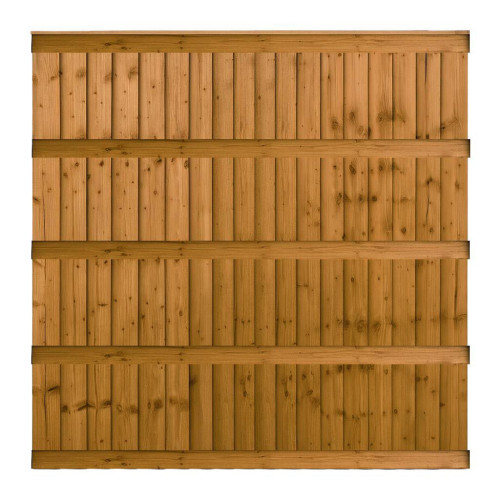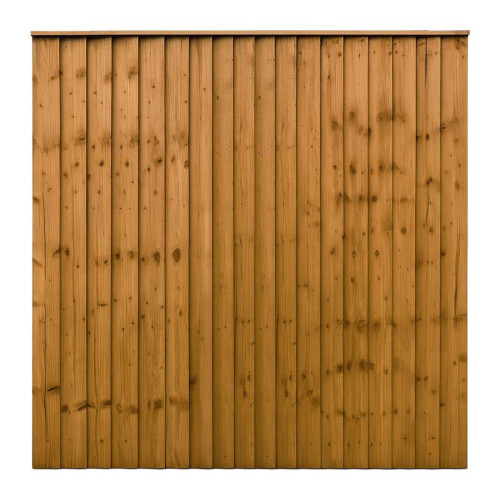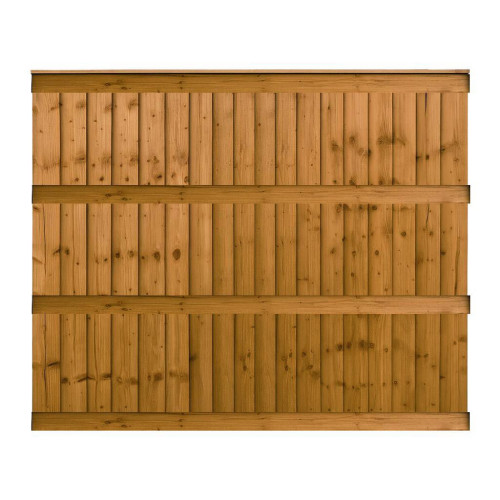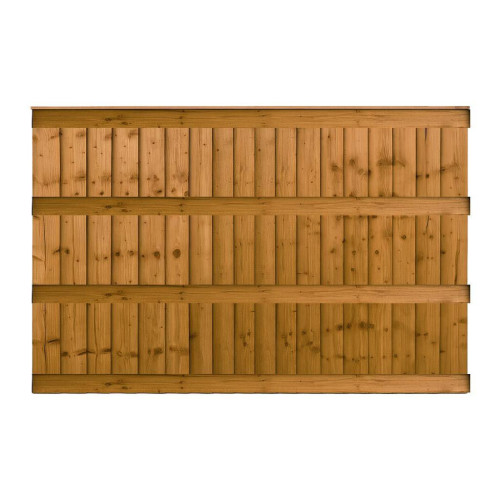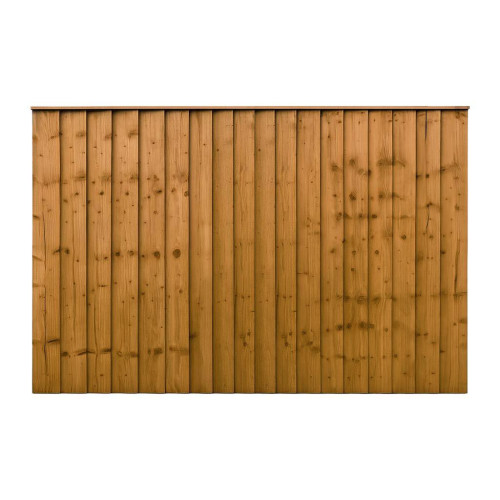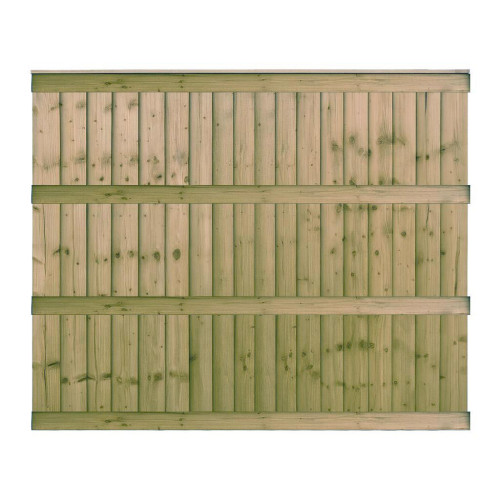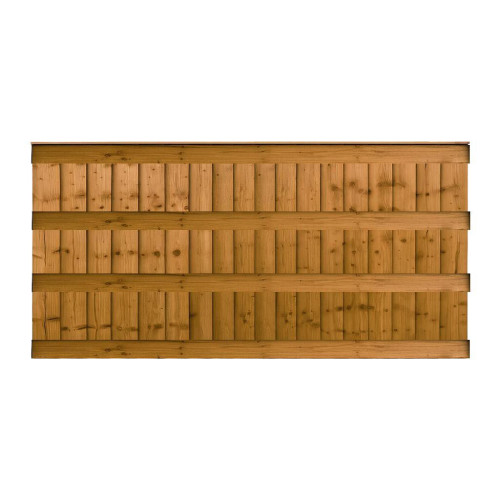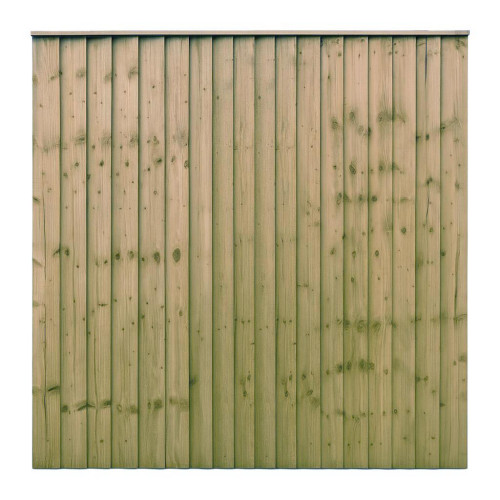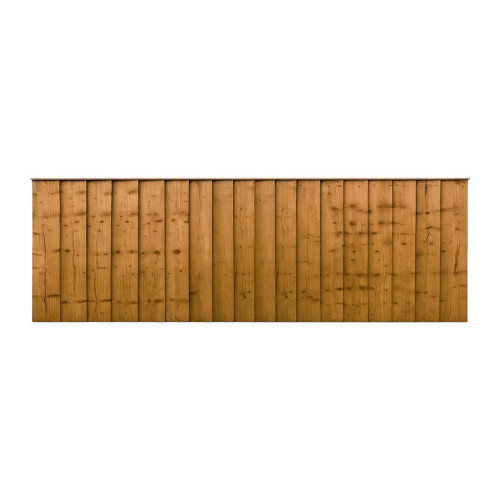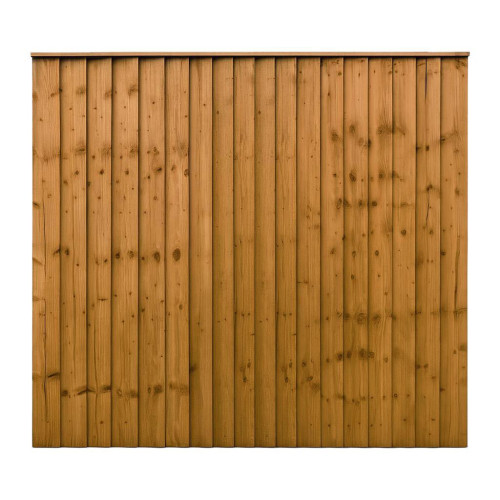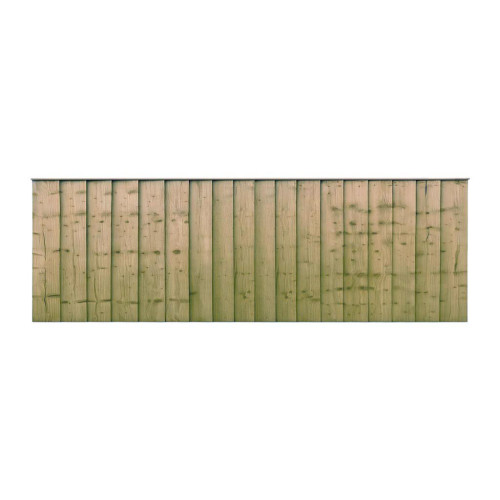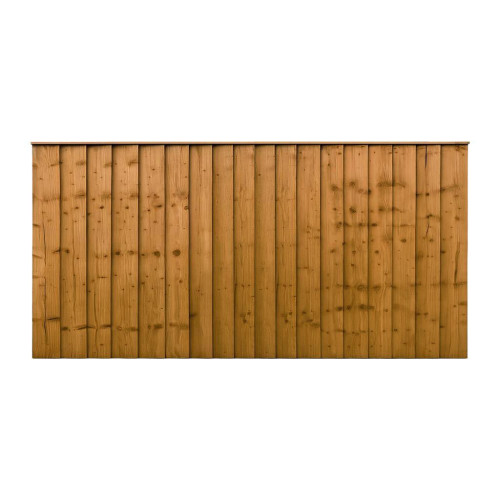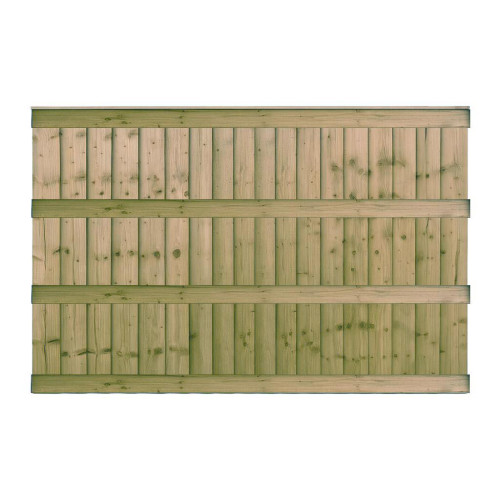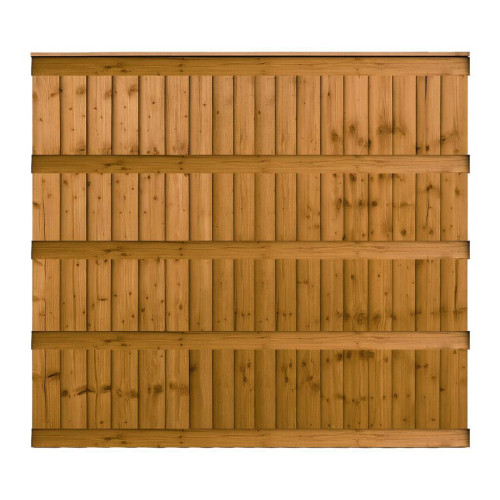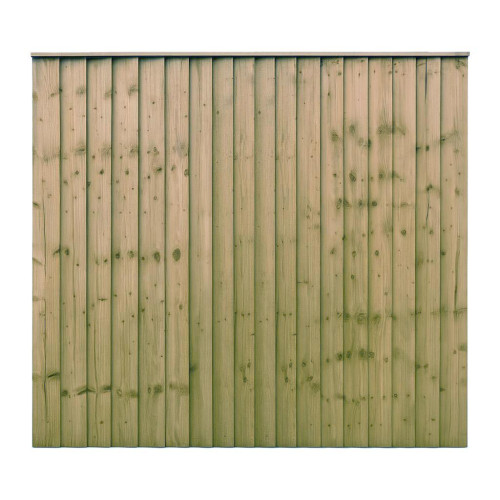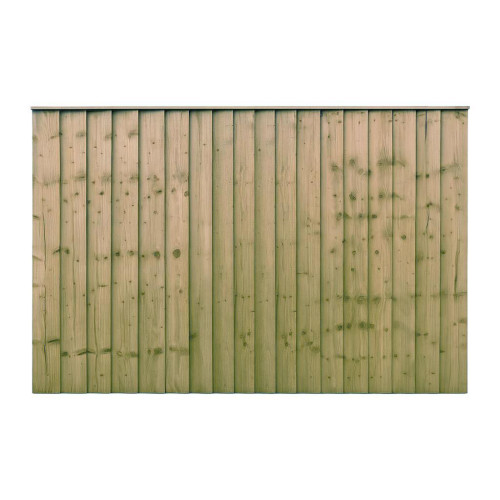




Quick answer: Closeboard Fence Panels become substantially heavier as height and rail support increase. Current East Coast Fencing listed weights range from about 15kg for a 6ft x 2ft Standard panel to 40kg for the 6ft x 6ft Standard panel, while the 6ft x 6ft Ultra Heavy Duty version is listed at 45kg. Weight is useful for planning handling and understanding construction, but a heavier panel is not automatically better for every garden. Height, backing rails, posts, wind exposure and installation all matter.
Fence panel weight is rarely the first specification customers look at, but it tells you quite a lot about what you are actually buying.
With Closeboard Fence Panels, increasing the height means using longer feather edge boards and more timber overall. Choosing an Ultra Heavy Duty version adds further backing-rail support, increasing the listed weight again.
Because East Coast Fencing manufactures its Closeboard Fence Panels in-house, we can compare those differences using the actual construction and product data rather than treating "heavy duty" as a vague marketing description.
The result is useful not just when choosing a panel, but when planning access, lifting, post installation and replacement work.
How Much Do Closeboard Fence Panels Weigh?
The current East Coast Fencing product data lists the following weights.
| Panel Height | Standard Listed Weight | Ultra Heavy Duty Listed Weight |
|---|---|---|
| 2ft / 600mm | 15kg | Not currently offered in the same Ultra range |
| 3ft / 900mm | 20kg | 22.5kg |
| 4ft / 1200mm | 27kg | 30kg |
| 5ft / 1500mm | 33kg | 37.5kg |
| 5ft 6in / 1650mm | 37kg | 42kg |
| 6ft / 1800mm | 40kg | 45kg |
These are listed product weights and should be treated as practical specifications rather than a promise that every individual timber panel will weigh precisely the same on every day of its life.
Natural timber contains moisture, and moisture content changes with storage and weather conditions.
Why Does Panel Weight Increase So Quickly With Height?
The width remains approximately 1830mm, but the vertical feather edge boards become longer as panel height increases.
A 6ft panel therefore contains considerably more board material than a 3ft panel.
The difference is easy to see in the listed Standard weights:
- 3ft panel: 20kg
- 4ft panel: 27kg
- 5ft panel: 33kg
- 5ft 6in panel: 37kg
- 6ft panel: 40kg
The full-height Standard panel is listed at twice the weight of the 3ft Standard version.
This is one reason panel height affects much more than privacy.
Why Are Ultra Heavy Duty Panels Heavier?
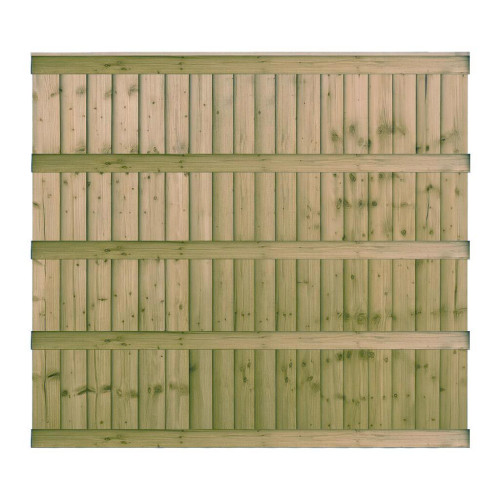
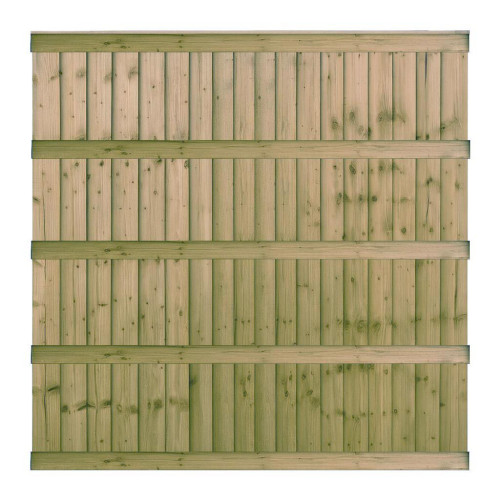
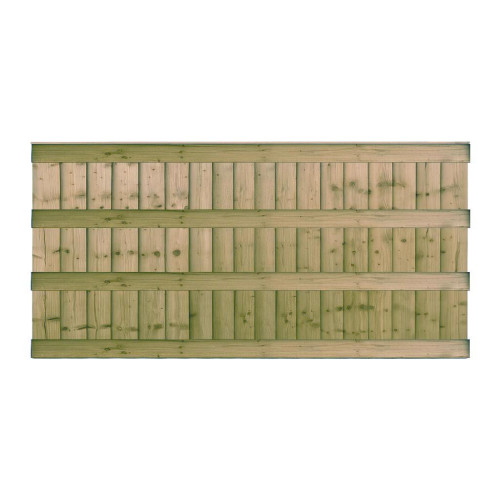
The Ultra Heavy Duty range increases the amount of backing-rail support.
The difference is not simply a heavier name attached to the same construction.
At comparable heights, the Ultra panel adds another 75 x 32mm backing rail.
| Height | Standard Rails | Ultra Rails | Weight Increase |
|---|---|---|---|
| 3ft | 3 | 4 | 2.5kg |
| 4ft | 3 | 4 | 3kg |
| 5ft | 3 | 4 | 4.5kg |
| 5ft 6in | 4 | 5 | 5kg |
| 6ft | 4 | 5 | 5kg |
Across these sizes, the Ultra versions are roughly 11% to 14% heavier than the Standard panel at the same height.
That additional mass is accompanied by another support rail through the feather edge boards.
Does Heavier Mean Stronger?
Sometimes additional weight reflects additional structural material, but weight alone is not a reliable definition of strength.
With the current Closeboard range, we know why the Ultra panel weighs more: it uses an additional backing rail.
That extra rail creates another fixing line for the feather edge boards and reduces the distance between support points.
This makes the comparison meaningful.
Simply comparing two unrelated fence panels and deciding that the heavier one must be stronger would be much less useful.
What Actually Makes a Closeboard Panel Stiff?
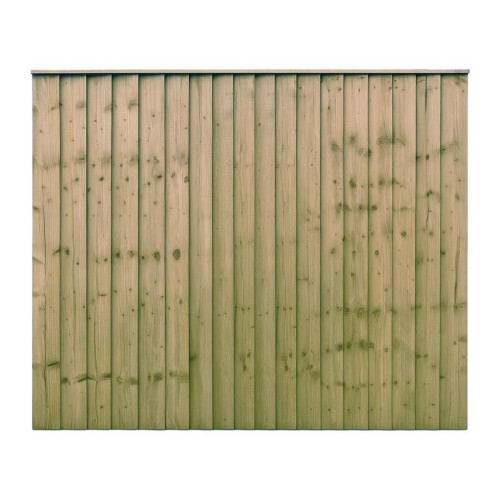
The main construction consists of overlapping vertical feather edge boards supported by horizontal rails.
The current panels use 75 x 32mm backing rails.
Those rails provide repeated fixing lines through the height of the boards.
More frequent support can reduce the unsupported distance between those fixing points.
That helps create a stiffer assembled panel.
The important relationship is therefore:
feather edge boards + rail size + rail count + fixings + correct installation
rather than weight considered in isolation.
Why a 45kg Panel Is Not Automatically the Best Choice
The 6ft Ultra Heavy Duty panel is currently listed at 45kg.
That does not mean everyone should automatically choose it.
A lower Standard panel may be the more appropriate product where:
- Full privacy is unnecessary
- The boundary is sheltered
- A lighter visual enclosure is preferred
- The extra rail support provides little practical benefit
Choosing fencing should start with what the boundary needs to do.
Weight is a consequence of the specification, not the objective by itself.
Why Panel Weight Matters During Installation
A 40kg or 45kg timber panel is a substantial object.
Its overall dimensions make handling more awkward than lifting a compact object of similar mass.
A full-height panel is approximately:
- 1830mm wide
- 1800mm high
so the person handling it has to control both the weight and a large surface area.
Wind can make that considerably more difficult.
Why Two People Make Sense for Larger Closeboard Panels
Full-height Closeboard Fence Panels are normally much easier to handle when two people can support them.
This allows one person at each side to:
- Keep the panel upright
- Control the lower edge
- Guide it between posts
- Avoid dragging the feather edge boards
- React if wind catches the panel
The correct handling method also depends on the route into the garden and the installation itself.
Do not plan a fencing job around the assumption that one person will comfortably manoeuvre every panel simply because the listed weight sounds manageable on paper.
Why Wind Makes Carrying a Closeboard Panel Harder
Closeboard Fence Panels provide strong privacy because their feather edge boards overlap into a substantially solid face.
That same solid face can catch wind while the panel is being carried.
A sudden gust against an unsecured 6ft panel can create much more difficulty than the panel's static weight suggests.
Avoid handling large panels in strong winds where practical.
Where Should You Hold a Closeboard Panel?
Support the panel through its substantial construction.
Avoid lifting the entire panel by:
- One feather edge board
- The capping alone
- One corner
Individual feather edge boards form the face of the panel, but the horizontal backing rails tie that face together.
Support the panel evenly and keep unnecessary twisting to a minimum.
Why Dragging a Heavy Panel Can Damage It
Dragging one end along the ground can concentrate the weight onto a small part of the panel.
It can also:
- Damage the bottom of boards
- Knock the capping or edges
- Introduce soil and moisture before installation
- Place twisting forces through the panel
Carry the panel with enough help rather than using the garden surface as a support.
Panel Weight Matters When Replacing Between Concrete Posts
Slotted concrete posts allow compatible panels to be lowered into the bay.
With a large Closeboard panel, this requires controlled handling.
The installers need to:
- Lift the panel high enough to enter the slots.
- Keep both sides aligned.
- Lower the panel evenly.
- Avoid catching individual feather edge boards on the concrete.
- Seat the panel correctly above any gravel board.
A 40kg or 45kg panel becomes considerably less manageable if one side jams while the other continues down.
Measure Concrete-Post Bays Before Lifting the Panel
Do not discover that the posts have moved while holding a full-height panel above a gravel board.
Measure the clear bay:
- Near the bottom
- Through the middle
- Near the top
The current Closeboard Fence Panels are 1830mm wide.
If an old concrete-post bay narrows significantly towards the top, forcing the replacement into it can damage the panel and make installation unnecessarily difficult.
Does a Heavier Panel Need Stronger Posts?
Panel weight is one factor, but it is not the only important load acting on the posts.
For a full-height Closeboard fence, wind loading can be extremely important because the panel presents a substantially solid face.
The post system therefore needs to be chosen around:
- Fence height
- Panel construction
- Site exposure
- Ground conditions
- Foundation quality
A heavier panel specification cannot compensate for weak or badly installed posts.
Static Weight and Wind Load Are Different
This distinction is worth understanding.
A 45kg panel exerts weight vertically.
Wind acts largely across the face of the panel and transfers sideways loading into the supporting posts.
The fact that an Ultra Heavy Duty panel is more heavily supported internally does not make wind exposure disappear.
The panel and the supporting fence structure solve different parts of the problem.
Why Full-Height Closeboard Fencing Needs Proper Foundations
The current 6ft Closeboard panels have the greatest face area within the range.
They therefore combine:
- The highest listed panel weights
- The greatest vertical board length
- The largest area presented to wind
This makes post installation particularly important.
The exact foundation should be designed around the site rather than choosing it from panel weight alone.
Do Ultra Heavy Duty Panels Put More Load on Posts?
The additional rail does increase the panel's own listed weight.
For example:
- A 6ft Standard panel is listed at 40kg.
- A 6ft Ultra panel is listed at 45kg.
That is an additional 5kg of panel mass.
However, the main reason for choosing the Ultra version is the increased board support and stiffness created by the additional rail.
It should still be installed on a support system appropriate to a full-height solid fence.
How Much Difference Does One Extra Rail Make to Weight?
We can see this clearly by comparing identical heights.
At 3ft:
- Standard: 20kg
- Ultra: 22.5kg
- Difference: 2.5kg
At 6ft:
- Standard: 40kg
- Ultra: 45kg
- Difference: 5kg
The longer Ultra rail used across a taller panel adds more timber than the additional rail on a lower panel.
This is reflected in the growing absolute weight difference as height increases.
Why the Weight Difference Is Useful Evidence of Construction
If Standard and Ultra panels at the same height had identical construction, you would expect their basic material quantities to be much closer.
Instead, the current data shows a consistent weight increase of roughly 11% to 14% across comparable sizes.
That aligns with the physical specification: Ultra panels contain another substantial 75 x 32mm backing rail.
This provides a measurable explanation for the difference between the two products.
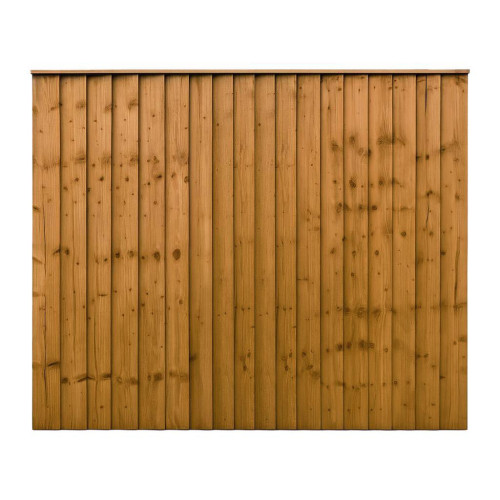
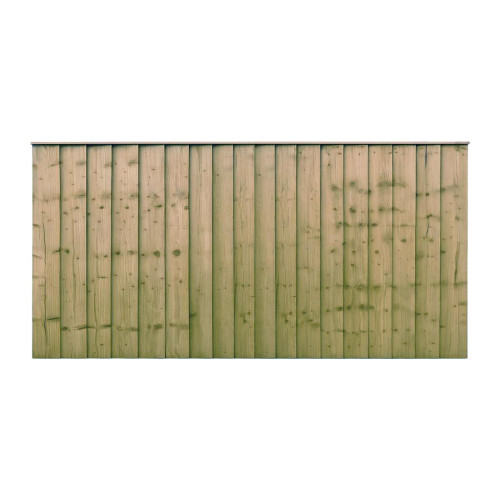
Does the Brown Panel Weigh More Than the Green/Natural Panel?
The current corresponding brown and green/natural versions use the same listed weights for the same panel specification.
For example, the current 6ft Standard brown and green/natural versions are both listed at 40kg.
The equivalent Ultra versions are both listed at 45kg.
Treatment colour should therefore be chosen mainly around appearance and compatibility with surrounding timber, not as a structural or weight grade.
Why Real Timber Panels May Not Feel Identical in Weight
Timber is a natural material.
Its moisture content can vary.
A panel that has recently experienced damp conditions can feel heavier than one that has been stored and allowed to dry under different conditions.
Natural density also varies between individual pieces of timber.
That is why listed product weight is best used for:
- Comparing specifications
- Planning handling
- Understanding the general scale of the product
rather than expecting every individual panel to behave like a calibrated metal weight.
Does More Weight Mean More Privacy?
Not directly.
Privacy is determined primarily by:
- Panel height
- The overlapping closeboard face
- Position within the garden
A 3ft Ultra panel may be heavier and more heavily supported than the 3ft Standard version, but neither provides the standing-height screening of a 6ft panel.
Choose height for privacy first.
Then decide whether Standard or Ultra construction is appropriate at that height.
Height and Specification Solve Different Problems
This is one of the most useful ways to buy Closeboard fencing.
Think of the decision in two stages.
- Choose the height according to privacy, appearance and the required boundary.
- Choose Standard or Ultra according to how much backing-rail support you want.
This prevents the common mistake of buying the heaviest panel simply because it sounds strongest.
How Heavy Is a Full Fence Run?
Looking at one panel can hide the scale of a complete job.
For example, ten current 6ft Standard Closeboard panels have a combined listed panel weight of about:
400kg
Ten equivalent Ultra panels total about:
450kg
That is before accounting for:
- Fence posts
- Gravel boards
- Post mix
- Tools
This is relevant when planning delivery access and moving materials through the property.
Why Access Should Be Planned Before Installation Day
Consider the route from the delivery point to the fence line.
Check for:
- Narrow side passages
- Sharp corners
- Steps
- Low branches
- Sheds or bins restricting movement
- Soft or slippery ground
A 1830mm-wide full-height panel can be awkward in a restricted passage even before its weight is considered.
Should You Choose a Lighter Panel Just Because Access Is Difficult?
Not necessarily.
The fencing specification should still suit the boundary.
Difficult access is primarily a handling and installation-planning issue.
However, it is worth understanding the practical difference between carrying:
- A 20kg 3ft Closeboard panel
- A 40kg 6ft Standard panel
- A 45kg 6ft Ultra panel
through the same narrow route.
How Does Closeboard Weight Compare With Waney Lap?
Waney Lap Fence Panels use much thinner horizontal overlapping boards and a lighter support arrangement.
They are intentionally positioned as a lighter and more economical fencing construction.
Closeboard uses:
- Overlapping feather edge boards
- Substantial horizontal backing rails
- A heavier overall assembly
That is one reason the products feel very different when handled, even though both can provide a substantially screened timber boundary.
Does a Heavy Panel Need a Gravel Board?
Panel weight is not the reason to use a gravel board.
The gravel board's main job is to create a separate lower barrier between the timber panel and damp ground.
It can help protect the bottom of the feather edge boards from:
- Soil contact
- Rain splash
- Wet vegetation
- Garden debris
It also establishes a consistent base line beneath the panel.
Remember That a Gravel Board Adds to the Installation Work
Concrete gravel boards are substantial products in their own right.
When planning the job, do not focus solely on panel handling.
A concrete-post and concrete-gravel-board fence may involve moving several different heavy components before the first panel is installed.
Plan labour and access around the complete system.
Can You Install Closeboard Panels Alone?
The answer depends on the panel size, installer, access and installation method.
However, large full-height panels are substantially easier to control with help.
The 40kg and 45kg listed weights are only part of the difficulty.
The large physical dimensions and solid wind-catching face also need to be controlled.
There is little advantage in attempting an awkward lift alone if doing so risks damaging the panel or losing control of it.
Why Weight Matters More When Working at Height
Replacing a panel between slotted posts often requires raising it above the final installed level before lowering it into place.
That is more demanding than simply lifting the same weight a short distance from the ground.
Plan the movement before starting.
Make sure:
- The bay has already been measured
- The gravel board is correctly positioned
- The route is clear
- Enough people are available
Do Not Use Panel Weight to Correct Poor Fence Design
A heavier panel does not cure:
- Shallow post foundations
- Loose posts
- Incorrect spacing
- Waterlogged ground
- A badly leaning fence line
In fact, adding a heavier replacement panel to an already weak support system may simply increase the demands on it.
Inspect the posts before upgrading panels.
What Should You Check Before Replacing a Lighter Panel With Closeboard?
If an existing fence currently contains Waney Lap or another lighter construction, do not assume the original supporting structure is automatically ideal for a heavier Closeboard replacement.
Check:
- Post condition
- Post size
- Post alignment
- Foundation stability
- Actual bay width
- Panel compatibility
- Site exposure
This matters particularly when changing to full-height Closeboard fencing.
Why Replacement Posts Need Checking Even if They Look Straight
A post can appear reasonably vertical while still moving at ground level.
Apply sensible inspection rather than assuming that because it has held an older lightweight panel, it will automatically support a heavier replacement indefinitely.
Look for:
- Movement at the base
- Timber deterioration
- Cracked foundations
- Concrete posts that have shifted
Is Ultra Heavy Duty Worth the Extra Weight?
It can be where the additional rail support is genuinely useful.
The best way to think about it is not:
"Is 45kg better than 40kg?"
Instead ask:
"Would another backing rail and the resulting additional board support be useful on this boundary?"
That turns the decision into a construction question rather than a weight competition.
When Standard Closeboard May Be the More Proportionate Choice
Standard construction can make sense where:
- The garden is relatively sheltered
- The fence is not subject to unusual physical knocks
- The standard rail arrangement already suits the chosen height
- Extra stiffness is not a significant priority
A good Standard Closeboard panel on correctly installed posts remains a substantial fencing product.
When Ultra Heavy Duty Becomes More Relevant
Consider the Ultra specification where:
- Extra panel stiffness is specifically wanted
- The boundary is more exposed
- The fence may experience regular physical contact
- You want more frequent support through the feather edge boards
The extra rail is the meaningful construction difference.
Closeboard Fence Panel Weight Checklist
- Choose the required height before focusing on panel weight.
- Use listed weights to plan handling and access.
- Remember that natural timber moisture can affect actual weight.
- Compare Standard and Ultra panels at the same height.
- Look at backing-rail count rather than assuming heavier always means better.
- Expect Ultra versions to be roughly 11% to 14% heavier across comparable current sizes.
- Use enough people to control larger panels safely.
- Support panels through their substantial construction rather than one feather edge board.
- Measure existing post bays before lifting replacement panels into position.
- Check posts and foundations before upgrading from a lighter panel.
- Consider wind exposure separately from static panel weight.
- Keep the lower timber away from persistent ground moisture.
FAQs
How Heavy Is a 6ft Closeboard Fence Panel?
The current East Coast Fencing 6ft x 6ft Standard Closeboard Fence Panel has a listed weight of 40kg.
How Heavy Is a 6ft Ultra Heavy Duty Closeboard Panel?
The current 6ft x 6ft Ultra Heavy Duty panel has a listed weight of 45kg.
How Heavy Is a 5ft Closeboard Fence Panel?
The current 6ft x 5ft Standard panel is listed at 33kg, while the equivalent Ultra Heavy Duty panel is listed at 37.5kg.
How Heavy Is a 4ft Closeboard Fence Panel?
The current Standard 4ft panel is listed at 27kg. The Ultra Heavy Duty version is listed at 30kg.
How Heavy Is a 3ft Closeboard Fence Panel?
The current Standard 3ft panel is listed at 20kg, compared with 22.5kg for the Ultra Heavy Duty version.
Why Are Ultra Heavy Duty Closeboard Panels Heavier?
They contain an additional 75 x 32mm backing rail at comparable heights. This provides another support and fixing line for the feather edge boards.
Does a Heavier Fence Panel Mean It Is Stronger?
Not automatically. Weight only becomes useful when you understand why the panel is heavier. In the current Standard versus Ultra Closeboard comparison, the increased weight accompanies additional backing-rail support.
Are Brown Closeboard Panels Heavier Than Green/Natural Ones?
No meaningful weight distinction is listed between corresponding brown and green/natural versions. Treatment colour is primarily an appearance choice.
Can One Person Lift a 6ft Closeboard Fence Panel?
A full-height Closeboard panel is large as well as heavy, with current Standard and Ultra versions listed at 40kg and 45kg. Using adequate help normally makes handling and positioning considerably easier, particularly in wind or when lowering panels between concrete posts.
Does a Heavier Fence Panel Need Concrete Posts?
Not automatically. Closeboard panels can be used with suitable timber or compatible concrete post systems. The supporting structure should be selected around height, panel construction, exposure and ground conditions rather than weight alone.
Does an Ultra Heavy Duty Panel Need Stronger Foundations?
The complete fence needs foundations appropriate to its height, exposure, posts and site conditions. The extra panel weight should be considered, but wind loading on a solid full-height fence is also an important structural factor.
Why Does Timber Panel Weight Vary?
Natural timber gains and loses moisture, so individual panels may vary somewhat from their listed product weight depending on the timber and environmental conditions.
What Does Closeboard Fence Panel Weight Really Tell You?
Used properly, weight is a useful specification.
It shows how much the physical scale of Closeboard fencing changes as you move through the height range. A current 3ft Standard panel is listed at 20kg, while the equivalent full-height 6ft version reaches 40kg.
It also gives us another measurable way to understand the Ultra Heavy Duty specification.
At 6ft high, Standard construction uses four 75 x 32mm backing rails and is listed at 40kg. The Ultra Heavy Duty version adds a fifth rail and is listed at 45kg.
The same pattern appears throughout the comparable range, with Ultra versions currently around 11% to 14% heavier than Standard panels at the same height.
That does not mean customers should simply choose the greatest weight available.
Height determines how much screening the fence provides. Backing-rail specification determines how frequently the feather edge boards are supported. Posts and foundations determine how the complete fence transfers loads into the ground.
Weight then tells you something about the amount of material involved and, just as importantly, how the panel needs to be handled.
For a new fence, choose the Closeboard Fence Panels that suit the boundary rather than treating kilograms as a quality score. For installation, however, take those kilograms seriously. A 40kg or 45kg full-height timber panel with a large solid face deserves proper access planning, enough people to control it and a support system designed for the fence you are actually building.