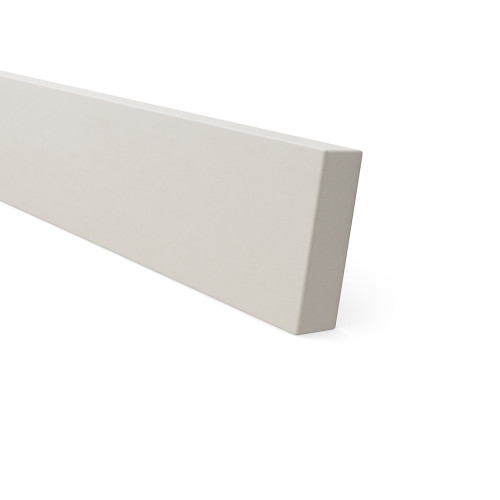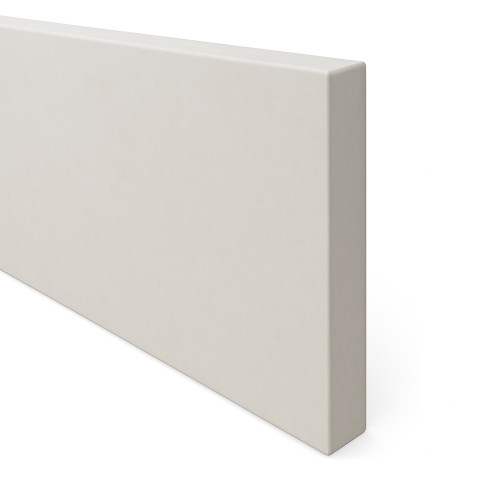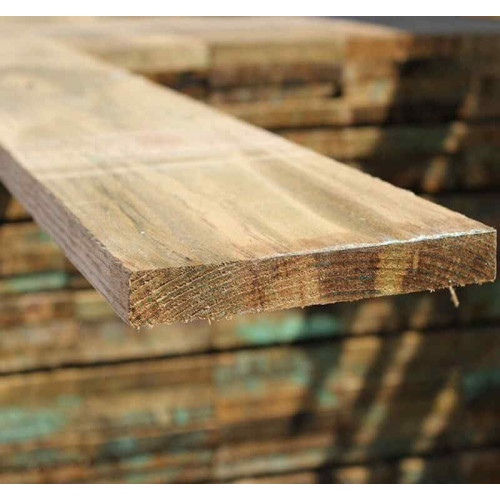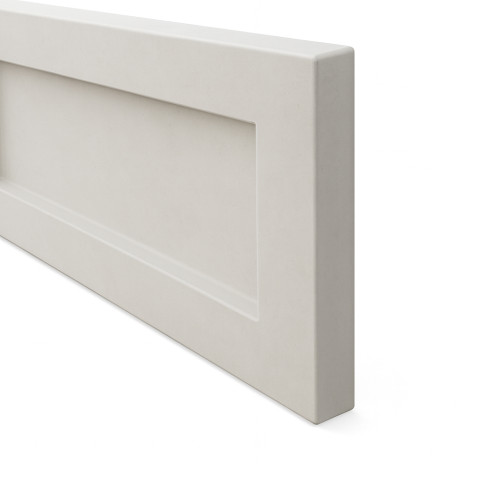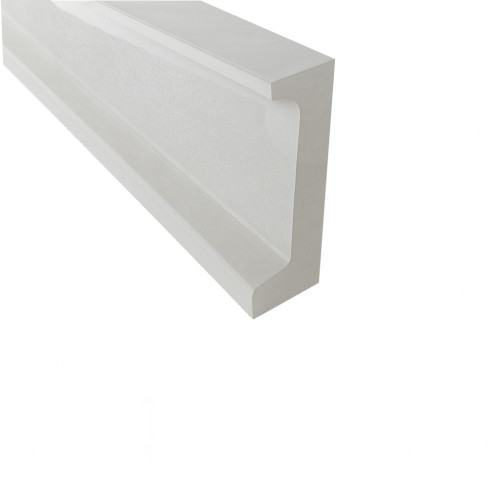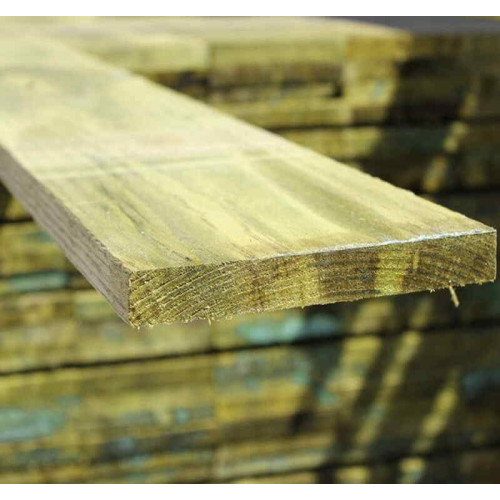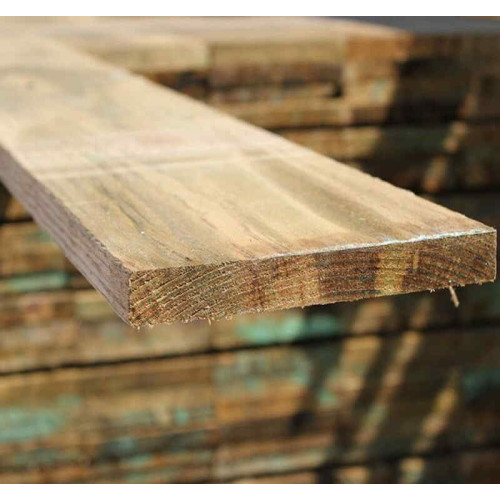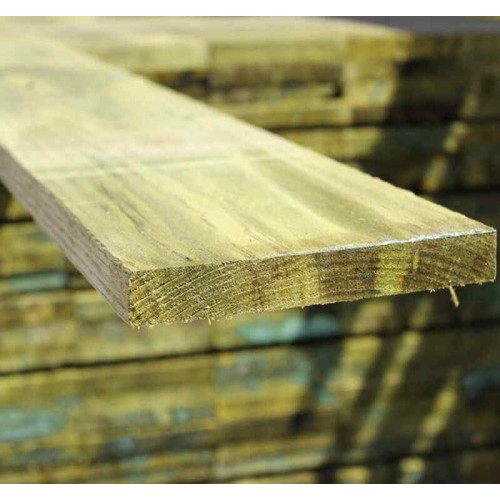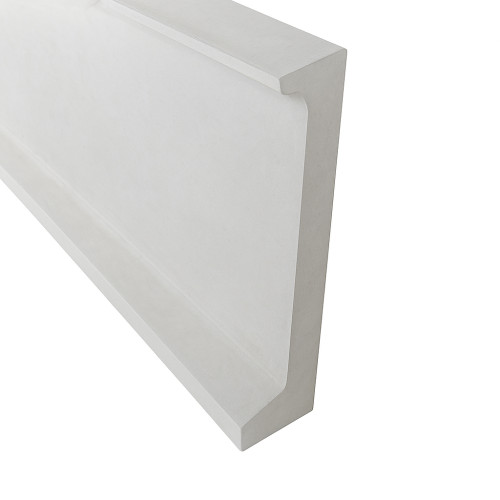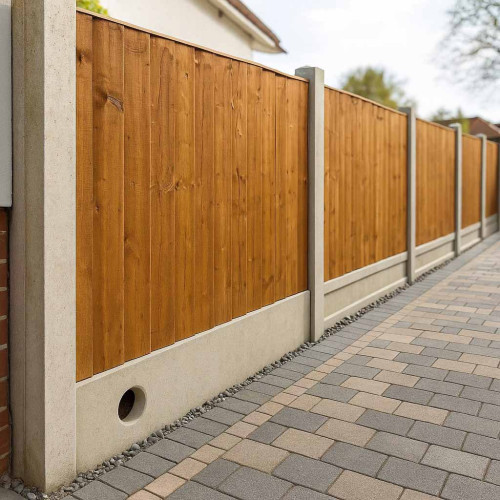


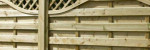

Quick answer: Choose wooden gravel boards when you want a matching timber finish, easier handling and straightforward cutting. Choose concrete gravel boards when resistance to rot and long-term ground contact are the main priorities. Check the board length, height, thickness, post compatibility and total finished fence height before ordering. The available range includes pressure-treated wooden boards, smooth and recessed concrete boards, lightweight rebated boards and a concrete board with a hedgehog opening.
Gravel boards sit beneath fence panels and form a protective barrier between the timber and the ground. Although they are a relatively simple part of a fence, choosing the wrong size, material or fitting method can cause problems with panel height, post spacing and long-term durability.
A gravel board can protect the bottom of a fence panel from wet soil, grass, leaves, rain splash and damage from garden equipment. It can also close gaps beneath a fence, create a level base across uneven ground and make future panel replacement easier.
This gravel boards buying guide explains the differences between wooden and concrete boards, available heights and finishes, smooth, recessed and rebated designs, wildlife openings, post compatibility, measuring, installation and maintenance.
What Is A Gravel Board?
A gravel board is a horizontal board installed along the bottom of a fence. The fence panel sits above it rather than resting directly on soil or grass.
Gravel boards are commonly made from:
- Pressure-treated timber
- Precast concrete
They can be fitted between wooden fence posts, slotted concrete fence posts or a compatible mixed system.
What Does A Gravel Board Do?
The main purpose of a gravel board is to protect timber fence panels from prolonged contact with damp ground.
It can also:
- Provide a firm base beneath fence panels
- Reduce rot in the bottom panel rail
- Protect panels from strimmers and lawnmowers
- Close gaps beneath the fence
- Help step a fence across sloping ground
- Raise panels above planting and garden debris
- Increase the total height of the fence
- Allow a damaged lower component to be replaced separately
A gravel board should be treated as part of the complete fencing system rather than an optional decorative strip.
Gravel Board Types At A Glance
| Gravel Board Type | Main Benefit | Typical Post System | Main Consideration |
|---|---|---|---|
| Wooden Gravel Board | Natural matching finish | Wooden posts | Can eventually decay in damp ground |
| Smooth Concrete Board | Rot-resistant practical finish | Slotted concrete posts | Heavy to handle |
| Recessed Concrete Board | Decorative framed appearance | Compatible concrete posts | Face orientation affects appearance |
| Lightweight Rebated Board | Reduced handling weight | Compatible slotted system | Dimensions must be checked carefully |
| Board With Hedgehog Hole | Allows wildlife movement | Compatible concrete posts | Opening location must suit the garden |
Should You Choose Wooden Or Concrete Gravel Boards?
Wooden and concrete gravel boards perform the same basic role, but they differ in appearance, handling, durability and installation.
Wooden Gravel Boards
Wooden gravel boards provide a consistent appearance when used with timber fence posts and timber panels. They are relatively light, easy to drill and can be cut to fit shortened fence bays.
They are suitable where:
- A complete timber appearance is preferred
- The fence uses wooden posts
- Boards need to be cut on site
- Handling access is restricted
- Future replacement needs to be straightforward
The main limitation is that timber can eventually deteriorate when it remains in prolonged contact with wet soil.
Concrete Gravel Boards
Concrete gravel boards do not rot and are well suited to damp ground. They normally sit inside the slots of compatible concrete fence posts.
They are suitable where:
- Long-term resistance to ground moisture is important
- Concrete posts are being used
- The garden is frequently damp
- Timber panels need maximum separation from soil
- A robust lower barrier is required
The main disadvantages are weight and the difficulty of cutting or altering the board.
Wooden And Concrete Gravel Boards Compared
| Feature | Wooden Gravel Board | Concrete Gravel Board |
|---|---|---|
| Appearance | Natural timber | Practical concrete finish |
| Weight | Relatively light | Heavy |
| Cutting | Straightforward with suitable tools | Should not normally be cut |
| Rot resistance | Improved by pressure treatment | Does not rot |
| Post compatibility | Usually wooden posts or suitable slots | Usually slotted concrete posts |
| Handling | Easier for DIY installation | Often requires two people |
| Maintenance | Needs inspection and moisture control | Relatively low maintenance |
What Wooden Gravel Boards Are Available?
The available wooden gravel-board range includes pressure-treated boards approximately 150mm high in several lengths.
Available lengths include:
- 1.83m
- 2.4m
- 3.0m
Pressure-treated brown and pressure-treated green finishes are available.
The correct length depends on whether the board is being fitted between standard fence posts, used with traditional closeboard fencing or cut for a shorter bay.
Which Wooden Gravel Board Length Do You Need?
1.83m Wooden Gravel Boards
A 1.83m board is intended for fence bays based around the common nominal six-foot panel width.
It may be suitable for:
- Standard framed fence panels
- Compatible wooden post spacing
- Some slotted concrete-post installations
- Replacement beneath existing panels
Check the actual opening and board length before ordering. Older posts may have moved or been installed at inconsistent centres.
2.4m Wooden Gravel Boards
A 2.4m board is useful for longer bays and some traditional fencing systems built from individual rails and feather edge boards.
It may also be cut to create shorter sections where the construction and treatment requirements permit.
3.0m Wooden Gravel Boards
A 3.0m board suits longer custom fence bays and traditional fencing layouts.
Longer timber requires adequate support. Do not assume that increasing the span between posts is appropriate simply because a longer gravel board is available.
Brown Or Green Wooden Gravel Boards?
Brown and green refer to the initial appearance of the pressure treatment.
Pressure-treated brown timber provides a warmer colour that works naturally with brown fence panels, wooden posts and garden gates.
Pressure-treated green timber has a lighter, more natural appearance and can be matched with green-treated panels, posts and timber components.
Both finishes will change as the timber weathers. Exact shades vary because wood is a natural material.
What Does Pressure Treatment Do?
Pressure treatment introduces preservative into the timber to improve its resistance to fungal decay and insect attack.
It does not make a wooden gravel board waterproof or maintenance free.
Pressure-treated boards still benefit from:
- Good drainage
- Protection of fresh cuts
- Removal of trapped leaves and soil
- Correct fixing
- Routine inspection
Timber that remains permanently saturated can still deteriorate over time.
What Smooth Concrete Gravel Boards Are Available?
The available range includes smooth concrete gravel boards in approximately 6-inch and 12-inch heights.
Smooth boards have a plain face and provide a simple, practical finish beneath fence panels.
They work well where:
- A clean concrete appearance is preferred
- The board will sit between slotted concrete posts
- Timber panels need protection from wet soil
- The lower fence line is likely to receive regular moisture
What Is A Recessed Concrete Gravel Board?
A recessed concrete gravel board has a shaped face that creates a framed or inset appearance rather than a completely plain surface.
The available range includes a 12-inch recessed concrete gravel board.
The recessed face can provide a more decorative finish beneath traditional fence panels. Check which side of the board will face the garden before installation.
Recessed boards should be fitted consistently so the pattern runs in the same direction along the fence.
What Is A Lightweight Rebated Concrete Gravel Board?
The available range includes lightweight rebated concrete gravel boards in approximately 6-inch and 12-inch heights.
A rebated board has a reduced section or shaped edge intended to work with a compatible fencing arrangement. The exact profile should be checked against the posts and panels before buying.
The lightweight design can make handling easier than a traditional solid concrete board, but it remains a precast concrete product and still needs careful lifting.
Do not assume a lightweight rebated board is interchangeable with every smooth or recessed board. Check:
- Overall length
- Height
- Thickness
- Rebate position
- Concrete-post slot compatibility
- How the fence panel will sit above it
What Is A Gravel Board With A Hedgehog Hole?
The available range includes a 12-inch smooth concrete gravel board with a hedgehog opening.
The opening allows hedgehogs and some other small wildlife to move between neighbouring gardens rather than being blocked by a continuous concrete fence base.
It may be useful where:
- Wildlife access is being retained
- A new concrete fence system would otherwise close an existing route
- Neighbouring gardens form part of a wider habitat
- A durable board is still required
Plan the location of the opening before installation. Avoid placing it where it will be obstructed by paving, raised beds, dense wire or stored items.
Concrete Gravel Board Options Compared
| Concrete Board | Available Height | Appearance Or Purpose |
|---|---|---|
| Smooth Concrete | 6in and 12in | Plain practical finish |
| Recessed Concrete | 12in | Decorative inset face |
| Lightweight Rebated Concrete | 6in and 12in | Reduced handling weight and shaped profile |
| Smooth Concrete With Hedgehog Hole | 12in | Wildlife access through the boundary |
Should You Choose A 6-Inch Or 12-Inch Gravel Board?
The correct height depends on the fence-panel height, ground level, required protection and total permitted fence height.
6-Inch Gravel Boards
A board approximately 150mm or 6 inches high is a common choice beneath fence panels.
It provides useful separation from the ground without raising the panel excessively.
A 6-inch board is suitable where:
- The ground is relatively level
- Only modest protection is required
- A 5ft 6in panel is being used to create an overall section close to 6ft
- The existing fence already uses the same board height
12-Inch Gravel Boards
A 12-inch board provides more ground clearance and can help where the garden level varies.
It may be useful where:
- The fence line crosses uneven ground
- More timber protection is required
- A deeper lower barrier is preferred
- Shorter panels will be fitted above
- There is a modest difference in surface level
A 12-inch board adds substantially to the total fence height. Select the fence panel and post length accordingly.
How Does A Gravel Board Affect Fence Height?
The gravel board forms part of the total finished fence height.
For example:
- A 5ft 6in panel above a 6in board creates a section approximately 6ft high
- A 5ft panel above a 12in board creates a section approximately 6ft high
- A 6ft panel above a 6in board creates a section approximately 6ft 6in high
These examples do not include changes in ground level, post caps or trellis.
Check the height from the relevant ground level before ordering. Where neighbouring land is higher or lower, the apparent fence height can differ from each side.
Do Gravel Boards Fit All Fence Panels?
Many framed timber panels can sit above a compatible gravel board, but the dimensions and support system must match.
Check:
- The board length
- The panel width
- The board thickness
- The panel-frame thickness
- The post spacing
- The concrete-post slot width
- The available post height
Decorative and unusually thick panels may not sit correctly above every board.
Will Gravel Boards Fit Existing Concrete Posts?
They may, but measure every bay before ordering.
Check the clear opening between the post slots at:
- The bottom
- The middle
- The top of the proposed board
Old concrete posts may lean or move, causing the opening to narrow. Debris, old cement and damaged slot edges can also obstruct the board.
Do not force a concrete board into a tight opening. This can damage the board or post.
Can Wooden Gravel Boards Be Used With Concrete Posts?
Yes, where the wooden board fits the concrete-post slots and is adequately supported.
Check the:
- Board thickness
- Board length
- Slot width
- Ground clearance
- Condition of the concrete posts
Wooden gravel boards are lighter than concrete and can be easier to replace, but they are less resistant to persistent moisture.
Can Concrete Gravel Boards Be Used With Wooden Posts?
Yes, but they need a suitable bracket or support system designed to carry their weight.
Concrete gravel boards should not be supported by lightweight panel clips or improvised fixings.
The wooden posts must be:
- Large enough for the fence
- Firmly installed
- Correctly spaced
- Sound enough to hold the board supports
Allow for the extra weight when handling and installing the complete fence.
How Do Gravel Boards Work With Closeboard Panels?
Framed closeboard fence panels can sit directly above compatible wooden or concrete gravel boards.
A 5ft 6in panel and a 6in gravel board are commonly combined where an overall section close to 6ft is required.
For traditional closeboard fencing built from individual feather edge boards, the gravel board forms the bottom edge of the boarded fence. Longer wooden boards may be used between posts depending on the chosen construction.
How Do Gravel Boards Work With Waney Lap Panels?
Waney lap panels benefit from a gravel board because the lower horizontal frame is vulnerable to moisture when placed directly on soil.
The board provides:
- A level base
- Protection from damp ground
- Separation from grass and leaves
- A replaceable lower component
Check that the panel and board fit the same post spacing.
Can Gravel Boards Be Used Under Decorative Panels?
Yes, provided the dimensions are compatible.
Remember that a decorative panel may already have a curved or lattice top. Adding a gravel board raises the highest point of the panel and increases the total fence height.
Choose a board whose appearance suits the decorative panel. A recessed concrete board may provide a more detailed lower finish than a smooth board.
Can Gravel Boards Be Used Under Picket Fencing?
They can be used, but they change the appearance of the open boundary.
A solid board below picket fencing can:
- Close the gap beneath the pales
- Prevent small pets passing underneath
- Protect the bottom of the panel
- Reduce the open appearance at ground level
Check the overall height and make sure the visual effect suits the garden.
How Do You Measure For Gravel Boards?
Measure the clear distance between the posts rather than the complete fence bay from centre to centre.
For concrete posts, measure inside the slots. For wooden posts, measure between the inner faces or between the chosen brackets.
Measure each bay individually because post spacing may vary.
Also record:
- The required board height
- The slot or bracket width
- The available panel height above the board
- Changes in ground level
- Corner and gate positions
How Many Gravel Boards Do You Need?
A standard fence-panel system normally requires one gravel board for each panel bay.
For example, six fence panels normally require six gravel boards.
The quantity may change where:
- Two shorter boards are stacked
- A 12-inch board replaces two 6-inch boards
- A bay is shortened
- A gate interrupts the fence
- Traditional closeboard fencing uses longer bays
- Ground levels require different board arrangements
Prepare a simple fence layout showing every bay before ordering.
Can Gravel Boards Be Stacked?
Compatible concrete boards are sometimes stacked to create a deeper lower section. The concrete posts must be long enough and their slots must accommodate the complete arrangement.
Before stacking boards, consider:
- The total weight
- The post length
- The remaining panel height
- The overall fence height
- The load placed on the post foundations
- The difference in ground levels
Do not stack wooden boards without proper fixing and support.
Can Gravel Boards Hold Back Soil?
A gravel board can contain a small amount of loose surface material, but it should not automatically be treated as a retaining wall.
Wet soil can create considerable sideways pressure. Standard fence posts and gravel boards may not be designed to support a raised garden or substantial bank.
A separate retaining structure may be required where:
- One garden is significantly higher than the other
- A raised bed is built against the fence
- Soil is being added along the boundary
- The ground is waterlogged
- The board is bowing or moving
Keep the retaining structure independent from the fence where appropriate.
Which Gravel Boards Are Best For Damp Ground?
Concrete gravel boards are normally the most durable choice for persistently damp ground because they do not rot.
A smooth, recessed or compatible rebated concrete board can separate the timber panel from:
- Wet soil
- Standing grass moisture
- Leaf litter
- Rain splash
- Waterlogged surface material
The board will not solve poor drainage or unstable soil. Fence-post foundations still need firm support.
Which Gravel Boards Are Best For A Sloping Garden?
Rigid gravel boards normally remain level and are stepped between posts.
Concrete boards provide a clean stepped finish but cannot easily be cut for irregular openings. Wooden boards offer greater flexibility because they can be shortened where necessary.
Before ordering for a slope:
- Measure the total change in ground level.
- Decide where each step will occur.
- Choose the board height for each bay.
- Confirm the post lengths.
- Check the remaining height for the panels.
- Plan any gaps beneath the boards.
Can A Gravel Board Be Partly Buried?
Concrete gravel boards can tolerate ordinary ground contact and may sit partly below the surrounding surface where required.
Do not bury them so deeply that:
- The fence height changes unexpectedly
- Drainage is obstructed
- The board is subjected to excessive soil pressure
- The post foundations are undermined
Wooden gravel boards should not be buried more than necessary because prolonged soil contact increases the risk of decay.
Should A Gravel Board Sit Above The Ground?
The correct position depends on the site. The board should protect the panel and provide a consistent lower boundary without creating unsupported gaps.
On level ground, it may sit close to the surface. On uneven ground, some parts may be slightly raised while others sit against the soil.
The fence panel above should remain clear of the ground.
Can Gravel Boards Stop Dogs Digging Under A Fence?
A correctly installed board can reduce access beneath the panels and provide a harder barrier at ground level.
Concrete boards are more resistant to chewing and scratching than timber, but a determined dog may dig beneath the board if it is not deep enough or if soil is loose.
Check:
- Gaps beneath the board
- Spaces beside posts
- Gate clearances
- Loose soil
- Changes in ground level
A separate buried barrier may be required for persistent digging.
Can Gravel Boards Help Stop Weeds?
A gravel board creates a physical edge, but it will not stop every weed.
Plants can grow:
- Under raised sections
- Through gaps beside posts
- From soil piled against the board
- Across the top from neighbouring ground
Keep the fence line clear and avoid allowing soil and compost to build up against timber components.
Can Gravel Boards Improve Wildlife Access?
A continuous solid fence base can restrict the movement of hedgehogs and other small animals.
A purpose-made concrete gravel board with a hedgehog opening allows a defined route while retaining a durable lower fence barrier.
The route should remain:
- Unblocked
- Free from sharp fixings
- Clear of netting
- Accessible from both gardens
- Away from obvious hazards where possible
Can Wooden Gravel Boards Be Cut?
Yes. Wooden boards can be shortened with a suitable saw.
After cutting:
- Remove splinters
- Check the board still fits its supports
- Apply a suitable cut-end treatment where required
- Allow the treatment to dry
- Use exterior-grade fixings
Measure carefully before cutting because a short board cannot be extended.
Can Concrete Gravel Boards Be Cut?
Concrete gravel boards should not normally be cut as a routine DIY adjustment.
They may contain steel reinforcement, and cutting can:
- Expose reinforcement
- Weaken the board
- Create cracks
- Produce hazardous dust
- Leave a poor edge
Plan the post spacing around the actual board dimensions instead.
How Are Wooden Gravel Boards Fixed?
Wooden gravel boards can be fixed directly to compatible wooden posts or supported with suitable gravel-board brackets.
The fixing arrangement should:
- Support both ends securely
- Prevent the board twisting
- Use exterior-grade fixings
- Keep the fence panel properly seated
- Allow replacement without dismantling unnecessary sections
Do not rely on the fence panel alone to hold the board in position.
How Are Concrete Gravel Boards Installed?
Concrete boards are normally lowered between slotted concrete posts before the fence panel is installed.
A typical sequence is:
- Set the first post.
- Position and support the gravel board.
- Use the board and panel dimensions to locate the next post.
- Check the board is level.
- Set and brace the next post.
- Allow the foundations to become ready.
- Install the fence panel above the board.
Concrete products are heavy. Use enough people or suitable lifting equipment.
Do Gravel Boards Need Foundations?
The gravel board itself does not usually require a separate continuous concrete foundation, but it needs firm support between correctly installed fence posts.
A board should not be left spanning soft ground with no support where its weight may cause it to sink or crack.
On weak ground, provide a suitable firm bearing without undermining the post foundations.
What Should You Check Before Installation?
Before fitting gravel boards, confirm:
- The board type and height
- The actual board length
- The post spacing
- The slot or bracket compatibility
- The panel height
- The total finished fence height
- The ground levels
- The position of gates
- The location of wildlife openings
- Safe handling access
How Should Gravel Boards Be Stored?
Wooden Gravel Boards
Store wooden boards flat on level bearers above wet ground. Keep them supported along their length and allow ventilation.
Avoid leaving them leaning at an angle for long periods because this may encourage movement.
Concrete Gravel Boards
Store concrete boards on firm, level ground with suitable support. Prevent them from falling, rolling or being climbed on.
Do not stack heavy concrete products on unstable soil.
How Should Concrete Gravel Boards Be Handled?
Concrete gravel boards are heavy and awkward. Plan the route from the delivery point to the fence before lifting them.
Use:
- Enough people for the weight
- Suitable gloves
- Protective footwear
- Appropriate lifting equipment where needed
Avoid dropping boards onto hard ground because concrete edges and corners can chip.
What Should You Check When Gravel Boards Arrive?
Inspect the delivery before installation.
Check for:
- Correct material
- Correct height
- Correct wooden treatment colour
- Correct concrete face or profile
- Correct quantities
- Cracks
- Broken corners
- Exposed reinforcement
- Severe timber twisting
- Deep timber splits
Minor variation in timber grain and concrete surface appearance is expected.
How Long Do Wooden Gravel Boards Last?
There is no fixed lifespan because durability depends on:
- Pressure treatment
- Soil contact
- Drainage
- Exposure
- Maintenance
- Damage from garden equipment
- Leaves and debris collecting around the board
A pressure-treated board installed in free-draining conditions should generally perform better than one buried in wet soil.
How Long Do Concrete Gravel Boards Last?
Concrete boards do not rot and require relatively little routine maintenance.
Their service life can still be affected by:
- Impact damage
- Movement in the fence posts
- Poor support
- Excessive soil pressure
- Cracks exposing reinforcement
Inspect damaged concrete rather than assuming every crack is harmless.
How Do You Maintain Wooden Gravel Boards?
Routine maintenance includes:
- Removing leaves and soil
- Checking for softness
- Treating fresh cuts
- Maintaining decorative coatings where used
- Replacing loose fixings
- Improving drainage where water collects
Do not allow mulch, compost or raised soil to remain against the board.
How Do You Maintain Concrete Gravel Boards?
Concrete gravel boards normally need little maintenance beyond inspection and cleaning.
Check for:
- Cracks
- Exposed reinforcement
- Movement in the slots
- Leaning posts
- Soil pressure
- Blocked wildlife openings
Use a gentle cleaning method rather than striking the surface or damaging the edges.
Can Concrete Gravel Boards Be Painted?
They can be coated with a suitable exterior masonry or concrete product where a different appearance is required.
Before painting:
- Clean the surface
- Allow it to dry
- Remove loose material
- Use a compatible primer where required
- Follow the coating instructions
Painting is decorative and does not repair structural cracks.
Can Wooden Gravel Boards Be Painted Or Stained?
Yes. Pressure-treated timber can be painted or stained once it is sufficiently dry.
Use a product intended for exterior timber and follow its preparation instructions.
Do not coat wet timber or paint over rot.
When Should A Gravel Board Be Replaced?
Replace a wooden gravel board where:
- It is soft or rotten
- Fixings no longer hold
- It has split extensively
- The panel is dropping
- It has bowed away from its supports
Replace or professionally assess a concrete board where:
- It has broken into separate sections
- Reinforcement is exposed
- A large crack affects its support
- It no longer sits safely in the post slots
- The panel above is unstable
Common Gravel Board Buying Mistakes
- Ordering by nominal length without measuring the opening
- Forgetting that the board increases the fence height
- Choosing a 12-inch board with a panel that is already too tall
- Assuming every concrete board has the same thickness
- Mixing incompatible rebated, smooth and recessed products
- Forcing a board into narrow concrete-post slots
- Using lightweight clips to support a concrete board
- Buying concrete boards without planning safe handling
- Burying wooden boards deeply in wet soil
- Using gravel boards as retaining walls
- Setting posts before confirming the actual board dimensions
- Forgetting gate openings and shortened bays
- Blocking a wildlife opening after installation
- Cutting reinforced concrete boards without appropriate planning
Gravel Board Buying Checklist
Before ordering, confirm:
- Wooden or concrete construction
- Board length
- Board height
- Board thickness
- Smooth, recessed or rebated profile
- Brown or green timber treatment
- Whether a wildlife opening is required
- The fence-panel width and height
- The concrete-post slot dimensions
- The wooden-post spacing
- The required brackets or fixings
- The total finished fence height
- The ground levels
- The number of fence bays
- Any shortened sections
- Delivery access
- Safe storage and handling
FAQs
Are Gravel Boards Necessary?
They are not required for every type of fence, but they are strongly recommended beneath timber fence panels where the panels would otherwise sit close to wet soil.
Are Wooden Or Concrete Gravel Boards Better?
Wooden boards are lighter, easier to cut and provide a matching timber finish. Concrete boards do not rot and are generally better for persistently damp ground.
What Height Gravel Board Should You Buy?
A 6-inch board suits many standard fences. A 12-inch board provides greater clearance or helps accommodate uneven ground. Include the board in the total fence height.
Can You Put A 6ft Panel On A 6-Inch Gravel Board?
Yes, where the posts and installation permit it, but the total section will be approximately 6ft 6in high. Check any applicable restrictions before ordering.
Why Are 5ft 6in Fence Panels Available?
They can be combined with an approximately 6-inch gravel board to create a section close to 6ft high.
Can You Put A 5ft Panel On A 12-Inch Gravel Board?
Yes, where the components are compatible. The combined section will be approximately 6ft high.
Can Wooden Gravel Boards Fit Concrete Posts?
Yes, provided the board length and thickness fit the post slots.
Can Concrete Gravel Boards Fit Wooden Posts?
Yes, with suitable supports designed for their weight. The wooden posts must be strong and correctly installed.
Are Concrete Gravel Boards Reinforced?
Many concrete fencing products contain reinforcement, but product construction can vary. Do not cut or drill a board without confirming its design.
Can You Cut A Concrete Gravel Board?
It should not normally be cut as a routine adjustment. Cutting can expose reinforcement, weaken the board and create hazardous dust.
Can You Cut A Wooden Gravel Board?
Yes. Protect the fresh cut with a suitable timber treatment where required.
Can Gravel Boards Be Buried?
Concrete boards can tolerate ordinary ground contact. Wooden boards should not be deeply buried because prolonged moisture increases the risk of decay.
Can A Gravel Board Retain Soil?
It may contain a small amount of loose surface material, but it should not automatically be used as a retaining wall for raised or saturated ground.
Do Gravel Boards Stop Fence Panels Rotting?
They substantially reduce direct ground contact, which is one of the main causes of rot at the bottom of timber panels.
Can Gravel Boards Stop Dogs Digging Out?
They can reduce gaps and create a harder barrier, but a determined dog may still dig beneath them. Additional ground-level protection may be needed.
What Is A Recessed Gravel Board?
It is a concrete board with a decorative inset face rather than a completely plain surface.
What Is A Rebated Gravel Board?
It has a shaped or reduced section designed for a compatible fencing arrangement. Check its profile against the posts and panels.
What Is A Lightweight Concrete Gravel Board?
It is designed to reduce handling weight compared with a traditional solid board. It remains heavy and must still be lifted carefully.
Why Buy A Gravel Board With A Hedgehog Hole?
It maintains a route for hedgehogs and other small wildlife through an otherwise continuous concrete fence base.
Can Two 6-Inch Gravel Boards Be Stacked?
Compatible boards may sometimes be stacked, but the posts must accommodate the height and weight. A single 12-inch board may provide a simpler arrangement.
Should Gravel Boards Be Level?
Each rigid board is normally installed level. On sloping ground, boards are usually stepped between posts.
Can You Replace A Gravel Board Without Replacing The Panels?
Often, yes. The panel normally needs to be removed or supported while the damaged board is taken out and replaced.
Choose Gravel Boards As Part Of The Complete Fence
The best gravel board depends on the post system, fence-panel size, ground conditions and preferred appearance.
Pressure-treated wooden gravel boards provide a natural finish, easier cutting and straightforward handling. Smooth, recessed and lightweight rebated concrete boards provide rot-resistant alternatives for concrete-post fencing, while a board with a hedgehog opening can preserve wildlife movement.
Measure every fence bay, check the board thickness and include its height when choosing fence panels and posts. Do not use gravel boards as unsupported retaining walls or force incompatible products into existing slots.
A properly selected gravel board protects the panel above, creates a cleaner lower fence line and makes future maintenance and replacement more manageable.