

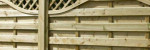

Quick answer: Diamond Trellis and Traditional Trellis are both open timber lattice panels suited to climbing plants, decorative screening and garden zoning. Choose Diamond Trellis when the diagonal pattern itself is an important design feature. Choose Traditional Trellis when you prefer a simpler square grid that is easy to integrate with fencing and planting. Neither provides strong immediate privacy. East Coast Fencing's current Diamond Trellis range runs from nominal 6ft x 1ft to 6ft x 6ft, while Traditional Trellis uses approximately 100mm square openings.
Diamond Trellis and Traditional Trellis perform many of the same practical jobs.
Both can support climbing plants, divide areas within a garden, decorate walls and create an open section above solid fencing.
The biggest difference is the lattice pattern.
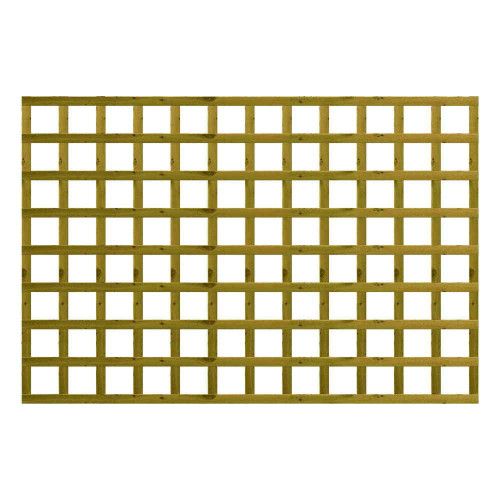
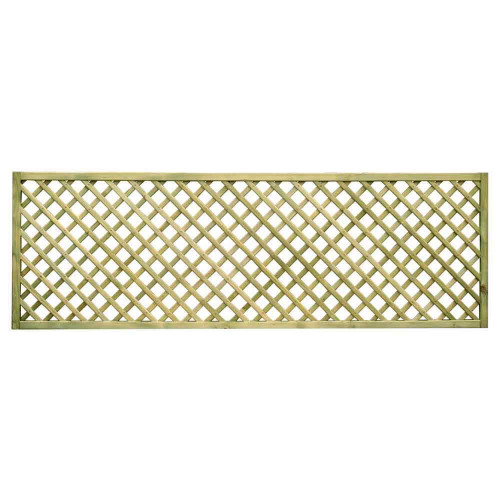
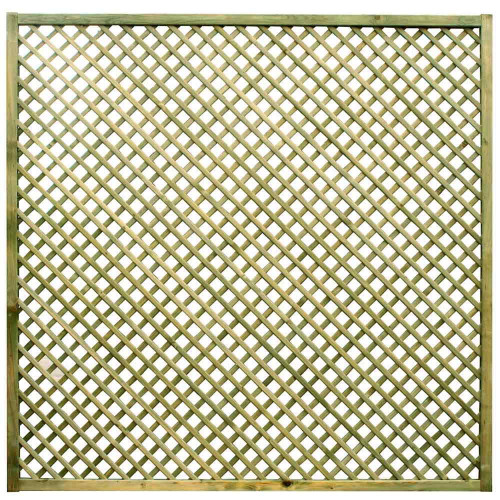
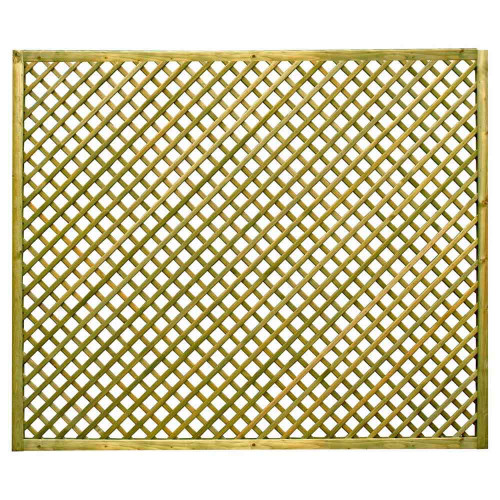
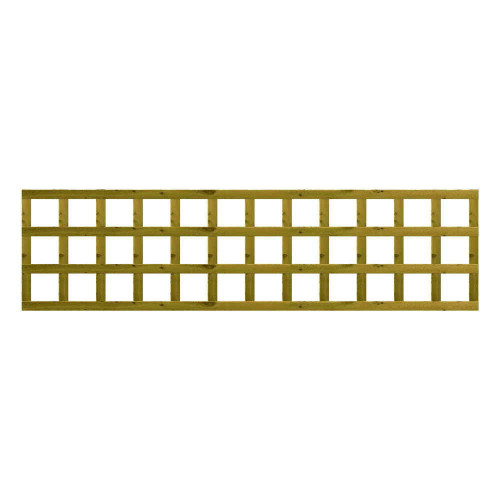
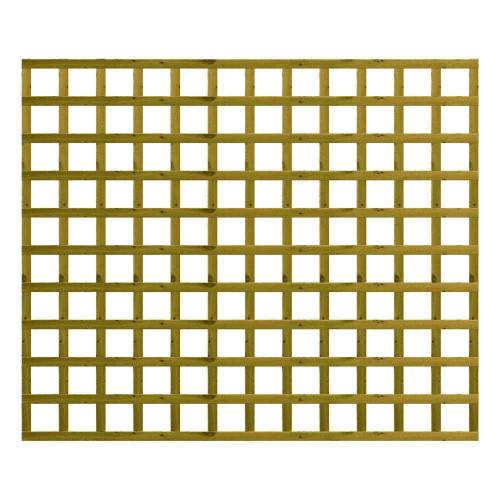
Traditional Trellis uses horizontal and vertical battens to create square openings. Diamond Trellis turns the lattice diagonally, creating a more ornamental pattern.
That may sound like a purely visual difference, but it also affects how easily panels can be adapted, how planting looks across them and how the trellis fits into the wider garden design.
What Is Diamond Trellis?
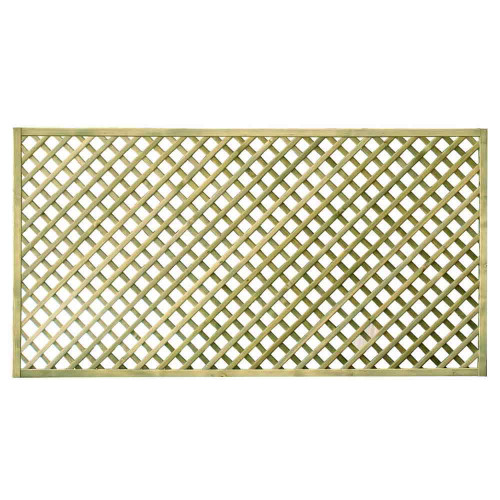
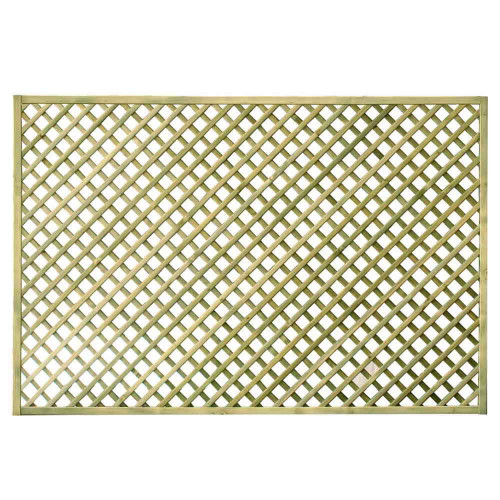
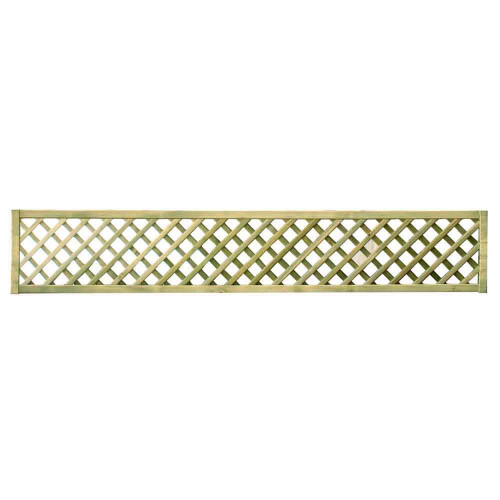
Diamond Trellis uses intersecting diagonal timber strips to create repeating diamond-shaped openings.
The current East Coast Fencing range is pressure treated in a green or natural-looking finish and includes nominal 6ft-wide panels in several heights.
Current options include approximately:
- 6ft x 1ft
- 6ft x 2ft
- 6ft x 3ft
- 6ft x 4ft
- 6ft x 5ft
- 6ft x 6ft
The approximately 1.83m-wide format means the same diagonal pattern can be used for anything from a shallow decorative feature to a full-height planted screen.
This Diamond Trellis range is supplied by East Coast Fencing but is not one of the trellis ranges manufactured in-house.
What Is Traditional Trellis?
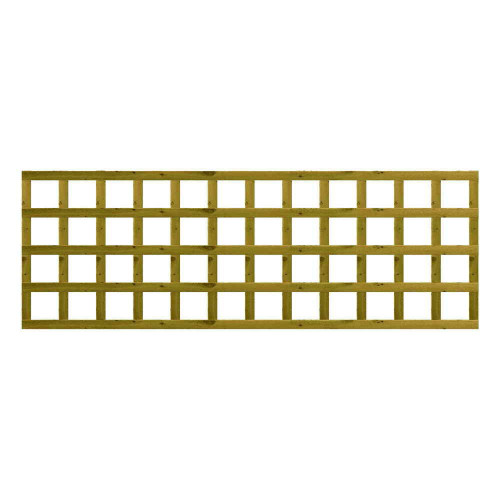
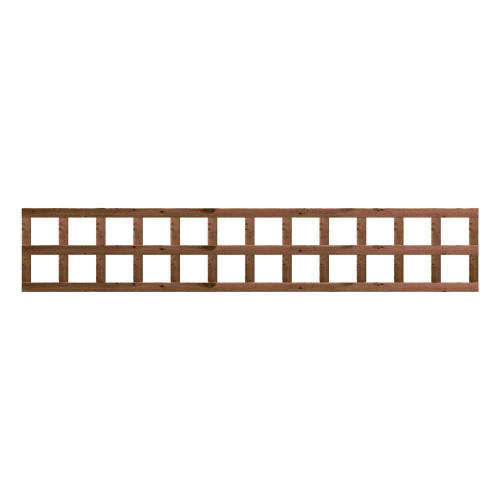
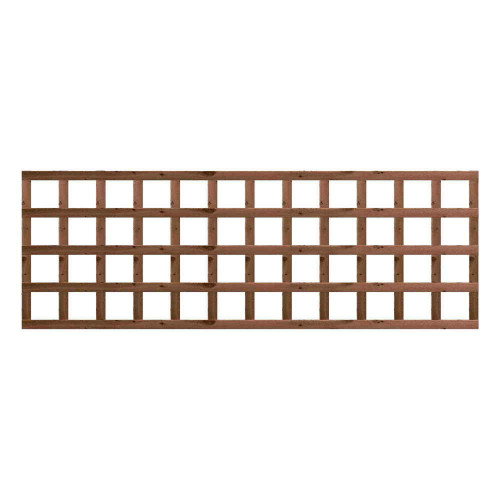
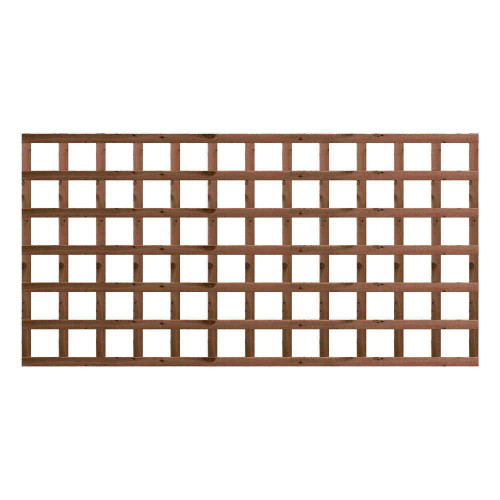
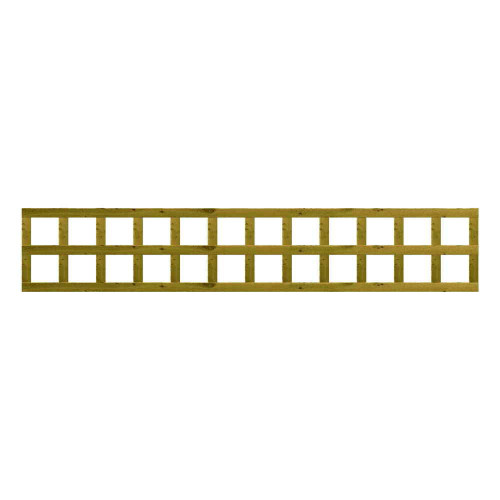
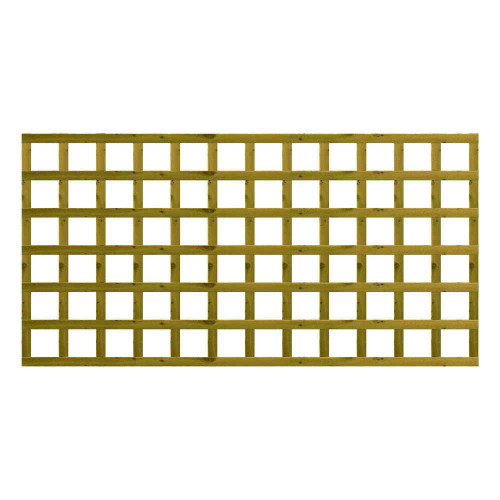
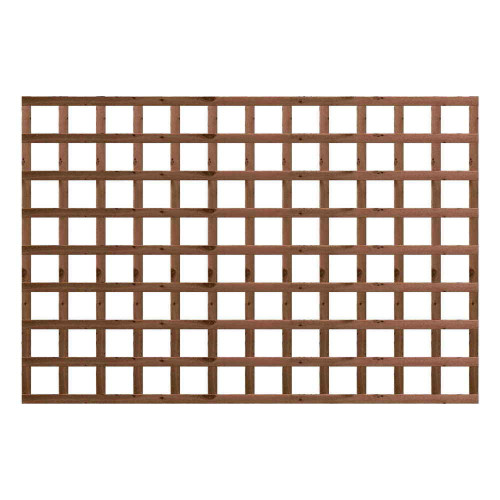
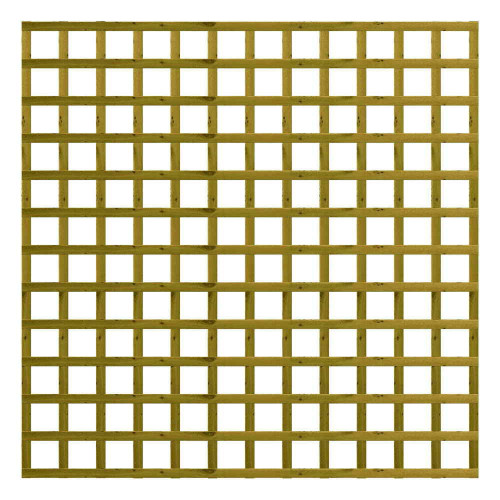
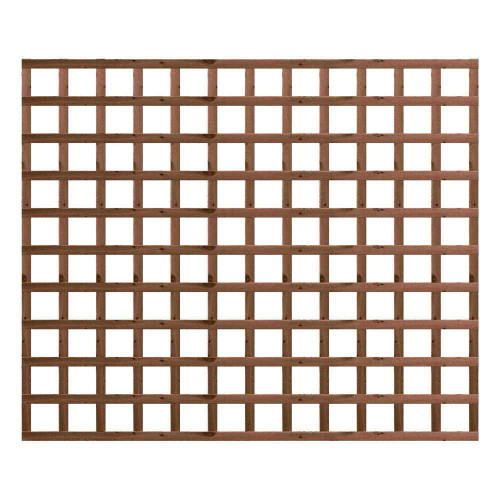
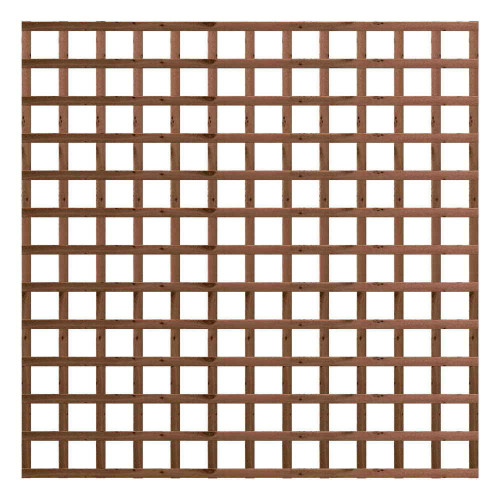
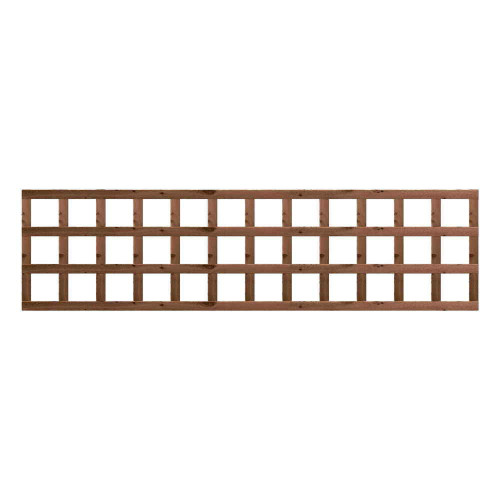
Traditional Trellis uses horizontal and vertical timber battens to form a regular square lattice.
Current East Coast Fencing Traditional Square Trellis is manufactured in-house using pressure-treated 16 x 38mm rough-sawn trellis batten.
The openings are approximately 100mm square.
The open design makes it particularly useful for:
- Climbing plants
- Garden zoning
- Fence toppers
- Wall-mounted planting
- Decorative screening
Current sizes include approximately 1.83m-wide panels in heights from low topper sections through to full-height screens.
Diamond Trellis vs Traditional Trellis At A Glance
| Feature | Diamond Trellis | Traditional Trellis |
|---|---|---|
| Pattern | Diagonal diamond lattice | Square lattice |
| Visual style | More ornamental | Simple and traditional |
| Climbing plants | Excellent | Excellent |
| Immediate privacy | Low | Low |
| Light and airflow | High | High |
| Cutting to width | More awkward | Generally easier to plan |
| Fence-top use | Good in lower heights | Good in lower heights |
| Garden style | Decorative and cottage-style | Versatile traditional grid |
Which Trellis Is Better For Climbing Plants?
Both are strong choices.
Climbing plants are one of the main reasons to use open lattice instead of a solid Fence Panel.
Diamond Trellis gives stems numerous diagonal routes across the panel.
Traditional Trellis provides regular horizontal and vertical support points.
Both can work with suitable climbers including:
- Clematis
- Honeysuckle
- Jasmine
- Managed climbing roses
The more important question is how large the plant will eventually become.
Is Traditional Trellis Easier For Training Plants?
The regular square grid can be particularly convenient where plants are being deliberately trained.
The approximately 100mm openings provide clear spaces through which stems can be guided, while the horizontal and vertical battens provide straightforward positions for plant ties.
This can make it easy to spread growth:
- Upwards
- Sideways
- Across several panels
The open grid also provides reasonable access for pruning through the panel.
Is Diamond Trellis Good For Clematis?
Yes.
The diagonal lattice gives clematis plenty of points across which growth can be trained.
Flowers and foliage can gradually fill the openings while parts of the diamond pattern remain visible underneath.
This makes Diamond Trellis particularly attractive where both the planting and the timber are intended to contribute to the final appearance.
Which Is Better For Climbing Roses?
Either can work when the rose is properly tied and supported.
Climbing roses normally require deliberate training rather than simply attaching themselves to the trellis.
Traditional Trellis provides a straightforward grid for positioning ties.
Diamond Trellis can create a particularly decorative background behind rose stems and flowers.
In both cases, mature woody growth can become substantial.
Do not allow a heavy established rose to rely on individual lightweight lattice strips as its complete structural support.
Can Heavy Climbers Be Used On Either Trellis?
Potentially, but the supporting structure becomes increasingly important as plant weight increases.
A young climber may weigh very little when installed.
Several years later it may include:
- Woody stems
- Dense foliage
- Dead accumulated growth
- Water held after rainfall
Dense planting also fills the open lattice and increases wind resistance.
For particularly heavy mature climbers, an independent or more substantial plant-support system may be preferable, with the trellis acting mainly as the decorative background.
Which Trellis Gives More Privacy?
Neither should be selected primarily for strong immediate privacy.
Both are deliberately open lattice designs.
A bare panel allows substantial visibility through the openings.
They are better for:
- Visual separation
- Planting
- Light screening
- Garden zoning
Where privacy is the priority, Privacy Square Trellis provides closer filtered screening, while a solid Fence Panel provides a stronger visual barrier.
Does Planting Make Diamond Or Traditional Trellis More Private?
Yes.
As foliage fills the openings, direct views become increasingly interrupted.
This can turn either lattice into a much greener screen over time.
The result depends on the plant.
A deciduous climber may provide:
- Dense summer screening
- Much less winter screening
An evergreen plant can provide more consistent coverage but keeps more weight and foliage on the panel throughout winter.
Which Trellis Lets More Light Through?
Both are relatively open products and are intended to retain substantial daylight.
This makes them useful where a solid internal garden screen would create too much visual weight or shade.
Suitable applications include:
- Small gardens
- Vegetable areas
- Patios
- Planting beds
- Garden divisions
The eventual planting may have a greater effect on light than the bare trellis itself.
Which Trellis Allows Better Airflow?
Both allow substantial air to pass through their open lattice when unplanted.
That can make them useful alternatives to solid internal screens.
Do not confuse an open appearance with an absence of wind loading.
Even bare trellis transfers wind force into:
- The panel frame
- Fixings
- Fence Posts
- Foundations
Once plants cover the openings, the completed screen can catch considerably more wind.
Which Is Better For A Cottage Garden?
Diamond Trellis has a particularly decorative character that works naturally with cottage-style planting.
It suits combinations involving:
- Climbing roses
- Clematis
- Mixed flower borders
- Traditional timber fencing
- Established shrubs
The diagonal lattice remains visually interesting even before plants cover it.
If the trellis itself is intended to be a garden feature, Diamond Trellis has a strong advantage.
Does Traditional Trellis Suit Traditional Gardens?
Yes.
Its straightforward square grid is one of the most familiar timber trellis patterns.
It works comfortably alongside:
- Closeboard fencing
- Waney Lap Fence Panels
- Timber Garden Gates
- Brick walls
- Mixed planting
The simpler pattern can also make it easier to repeat across a long run without making the lattice itself too visually dominant.
Can Diamond Trellis Work In A Modern Garden?
Yes.
Although the diagonal pattern has a more traditional decorative character than Horizontal Slatted Trellis, it can create an effective contrast with modern materials.
It can sit well beside:
- Simple paving
- Rendered walls
- Contemporary Garden Rooms
- Structured planting
The result is softer than a strongly linear slatted screen.
Can Traditional Trellis Work In A Modern Garden?
Yes.
The square grid is simple enough to work in many different settings.
The final appearance depends heavily on:
- Panel colour
- Surrounding Fence Posts
- Planting style
- Nearby landscaping
If a distinctly contemporary timber feature is the priority, Horizontal Slatted Trellis will normally create a stronger modern look than either square or diamond lattice.
Which Is Better As Fence Topper Trellis?
Both can work well where the existing fence and supporting posts are suitable.
Diamond Trellis is currently available in low nominal sizes including:
- 6ft x 1ft, approximately 1.83m x 300mm
- 6ft x 2ft, approximately 1.83m x 600mm
The 1ft option is particularly useful where the aim is simply to add decorative lattice above a solid fence.
Traditional Trellis offers useful low-height choices around:
- 300mm
- 450mm
- 600mm
The 450mm option provides an extra intermediate size that can be useful where 300mm looks too shallow but 600mm would add more height than wanted.
Which Looks Better Above Closeboard Fence Panels?
Both can provide an attractive contrast with the solid face of Closeboard Fence Panels.
Choose Diamond Trellis where you want the upper section to look more decorative.
Choose Traditional Trellis where you prefer a simpler square upper grid.
In either case, the combination provides:
- Solid screening below
- Open planting support above
- A lighter top edge
Make sure the trellis is supported by sound posts or suitable framing rather than relying only on thin panel capping.
Which Has The Better Range Of Heights?
Both ranges provide substantial choice, although their size increments differ.
| Approximate Height | Diamond Trellis | Traditional Trellis |
|---|---|---|
| 300mm | Yes, nominal 1ft | Yes |
| 450mm | No direct nominal equivalent | Yes |
| 600mm | Yes, nominal 2ft | Yes |
| 900mm | Yes, nominal 3ft | Yes |
| 1.2m | Yes, nominal 4ft | Yes |
| 1.5m | Yes, nominal 5ft | Yes |
| 1.83m | Yes, nominal 6ft | Yes |
Traditional Trellis therefore has a useful 450mm option between the common 300mm and 600mm topper depths.
Which Is Better For A Freestanding Garden Screen?
Either can form an open freestanding screen when installed between suitable posts.
Choose Diamond Trellis where the decorative pattern is a major part of the design.
Choose Traditional Trellis where you want a simpler lattice framework that will increasingly disappear behind plants.
For full-height screens, supporting posts need to be selected according to:
- Panel height
- Screen length
- Wind exposure
- Ground conditions
- Future plant loading
A full-height planted panel should not be treated like a lightweight decorative topper.
Which Is Better For Garden Zoning?
Both are effective because they divide space without completely blocking views.
Diamond Trellis works particularly well where the division itself should look decorative.
Traditional Trellis works well where the screen is mainly intended to:
- Support planting
- Define a path
- Separate a vegetable plot
- Divide a patio from the lawn
Either keeps a garden feeling more connected than a solid internal Fence Panel.
Which Is Better For A Small Garden?
Both can work well because their open patterns preserve sightlines through the screen.
A solid panel used as an internal divider can visually shorten a compact garden.
Open trellis allows the eye to continue through to planting and landscaping beyond.
Diamond Trellis creates more obvious decoration.
Traditional Trellis creates a simpler grid that may visually recede more easily once planted.
Can Both Be Fixed To A Wall?
Yes, using an appropriate fixing arrangement for the particular wall.
A small space behind the trellis can make it easier to:
- Pass stems behind the lattice
- Position plant ties
- Maintain airflow
- Inspect the wall
- Remove or maintain the trellis later
Do not assume a large planted panel can be held by a few lightweight fixings simply because the bare trellis is easy to lift.
Which Is Easier To Cut To Width?
Traditional square lattice is generally easier to plan around when a framed panel genuinely needs shortening.
Its horizontal and vertical pattern gives straightforward reference lines.
Diamond Trellis is more awkward.
A vertical cut passes across diagonal strips at different points, potentially leaving:
- Partial diamonds
- Several short lattice ends
- An uneven-looking final pattern
Whichever product is altered, the cut edge needs proper support or reframing.
Do not simply saw away the outer frame and leave loose lattice ends.
Should You Choose A Standard Size Instead Of Cutting?
Where possible, yes.
Both current ranges provide multiple heights and an approximately 1.83m-class width, so standard panels will suit many ordinary garden layouts.
Cutting is most useful for:
- A shortened final bay
- A space beside a Garden Gate
- A fixed wall-to-post opening
For new freestanding screens, setting the posts around the actual panel dimensions is normally better than modifying every trellis panel afterwards.
Which Pattern Is Easier To Keep Looking Aligned?
Traditional Trellis gives very obvious horizontal and vertical reference lines.
This makes checking level and plumb straightforward, but it also makes an installation error easy to see.
Diamond lattice distributes its visual lines diagonally, so the overall pattern is different, but the outer frame should still be installed square and level.
For multiple panels, keep:
- Panel tops aligned
- Posts vertical
- Panel edges properly supported
Can Either Trellis Be Installed On A Slope?
Yes.
Rigid rectangular panels are normally kept square and level within each bay and stepped as the ground rises or falls.
This preserves the intended lattice pattern.
Trying to tilt Traditional Trellis makes its squares visibly lean.
Trying to cut Diamond Trellis diagonally to match the ground can create an awkward combination of partial diamond openings and unsupported lattice ends.
Stepping complete panels is normally the cleaner arrangement.
Which Is Easier To Repair?
The answer depends on the particular damage and panel construction.
Traditional Trellis has an advantage where a compatible 16 x 38mm square-lattice component needs attention because its construction is straightforward and East Coast Fencing currently supplies loose trellis batten in the same nominal section for compatible projects.
Diamond Trellis can potentially be repaired where damage is local, but its diagonal arrangement may make matching and reconstructing the pattern more involved.
For either panel, complete replacement may be more sensible if:
- The outer frame is badly damaged
- Several lattice sections have failed
- The complete panel is badly distorted
Do Diamond And Traditional Trellis Need Maintenance?
Yes.
Both are exterior timber products.
Inspect periodically for:
- Loose frame fixings
- Damaged lattice sections
- Post movement
- Heavy climbing growth
- Leaves and soil around the bottom
- Persistent damp conditions
Pressure treatment improves timber durability, but it does not stop ordinary outdoor weathering.
Can Diamond And Traditional Trellis Turn Green?
Outdoor timber can develop surface algae in damp and shaded conditions.
This is particularly likely where dense plants reduce airflow around the lattice.
Start cleaning gently.
Remove loose plant material and dirt, then use a suitable timber-safe cleaning method where necessary.
Take care with narrow lattice components rather than immediately using aggressive pressure washing.
Can Both Trellis Types Be Painted?
Yes, where a suitable exterior timber coating is compatible with the product and the timber is sufficiently dry and prepared.
Trellis takes more time to coat than a solid Fence Panel because there are many:
- Edges
- Intersections
- Internal faces
If climbing plants are planned, applying the decorative finish before dense growth establishes is normally much easier.
Which Trellis Should You Choose?
Choose Diamond Trellis when:
- You particularly like the diagonal lattice pattern
- The trellis itself should remain a decorative feature
- You are creating a cottage-style or planted garden screen
- You want nominal heights from 1ft through to 6ft
- You want climbing plants combined with an ornamental timber pattern
Choose Traditional Trellis when:
- You prefer a straightforward square grid
- Plant training is the main priority
- You want approximately 100mm square openings
- You need the useful 450mm intermediate topper height
- You expect to adapt or repair the lattice more easily
If immediate privacy is the main requirement, consider a closer trellis or solid Fence Panel instead of either.
Common Mistakes When Choosing Between Diamond And Traditional Trellis
- Assuming one provides significantly more privacy than the other
- Buying open lattice when complete immediate screening is required
- Choosing only from the appearance of a bare panel without considering future plants
- Underestimating the mature weight of climbing roses and other vigorous climbers
- Fixing tall trellis to inadequate posts
- Relying on individual lattice strips as the primary structural fixing points
- Forcing panels into openings that are too narrow
- Cutting Diamond Trellis without considering the diagonal pattern
- Cutting either panel without rebuilding the outer edge
- Allowing soil and mulch to build up around the lower timber
- Assuming pressure treatment prevents all natural timber movement
- Ignoring the effect of dense planting on wind loading
FAQs
What Is The Main Difference Between Diamond And Traditional Trellis?
Diamond Trellis uses diagonal timber to create diamond-shaped openings. Traditional Trellis uses horizontal and vertical battens to form an approximately 100mm square grid.
Which Is Better For Climbing Plants?
Both are very suitable. Traditional Trellis provides a simple regular grid for training and tying, while Diamond Trellis provides numerous diagonal support points and a more decorative background.
Which Gives More Privacy?
Neither is designed for strong immediate privacy. Both remain open lattice products. Privacy Square Trellis or solid fencing is more appropriate where screening is the main objective.
What Sizes Does Diamond Trellis Come In?
The current East Coast Fencing Diamond Trellis range includes nominal 6ft-wide panels in approximately 1ft, 2ft, 3ft, 4ft, 5ft and 6ft heights.
What Size Are Traditional Trellis Openings?
Current East Coast Fencing Traditional Square Trellis uses approximately 100mm square openings and pressure-treated 16 x 38mm rough-sawn trellis batten.
Which Is Better For A Fence Topper?
Both can work. Diamond Trellis includes a nominal 1ft, approximately 300mm, option, while Traditional Trellis has useful topper heights around 300mm, 450mm and 600mm.
Which Is Easier To Cut?
Traditional square lattice is generally easier to plan around. Cutting Diamond Trellis can create several partial diamond shapes and lattice ends, so standard sizes are preferable where possible.
Can Both Be Used As Freestanding Screens?
Yes, when installed between suitable posts. Taller panels and heavily planted screens need appropriately substantial supports and foundations.
Choose The Pattern You Want To See Before The Plants Take Over
Diamond Trellis and Traditional Trellis are closer in function than they are in appearance.
Both provide open timber frameworks for plants. Both retain substantial light and airflow. Both can work above fencing, between posts or against a suitable wall.
Diamond Trellis is the more ornamental choice. Its diagonal pattern gives the timber itself a stronger decorative role and works particularly well with cottage planting, roses and visible garden screens.
Traditional Trellis is the simpler grid. Its approximately 100mm square openings create a practical framework for training plants, and the current range includes useful intermediate heights such as 450mm.
Neither should be bought expecting solid privacy.
If the panel will eventually disappear almost completely behind planting, practical considerations such as height, support and maintenance may matter more than the lattice direction.
If the timber will remain visible, choose the pattern you would be happy to see before the plants establish and during periods when seasonal growth is sparse.
That is the real difference between the two: Diamond Trellis makes the lattice more of a decorative feature, while Traditional Trellis provides a simple, familiar framework that lets the planting take centre stage.