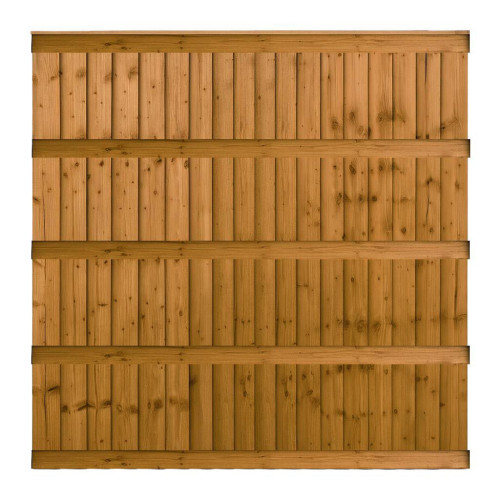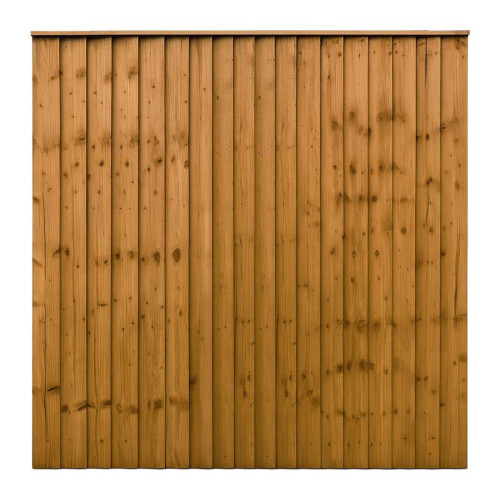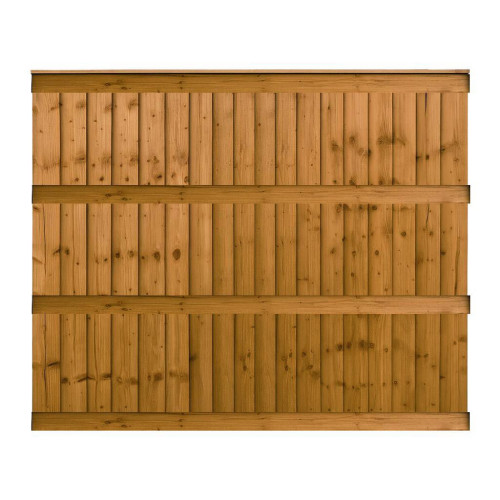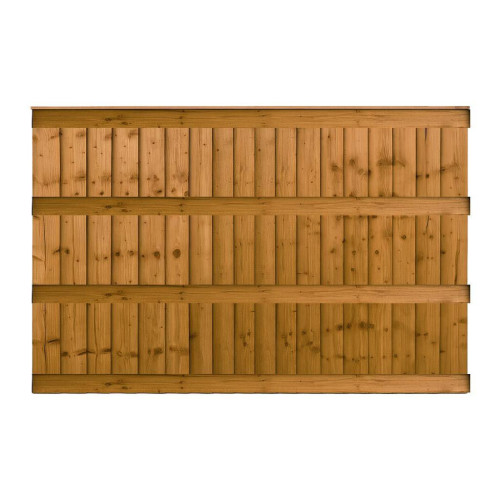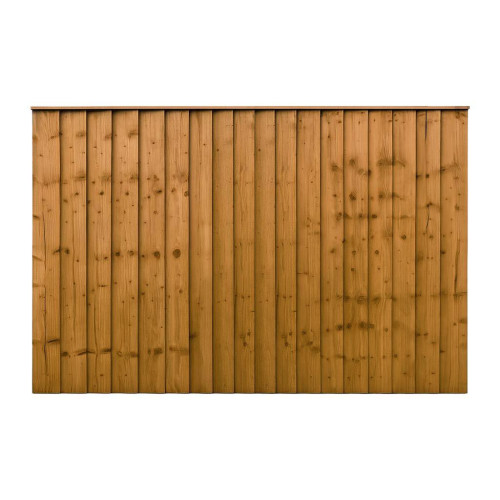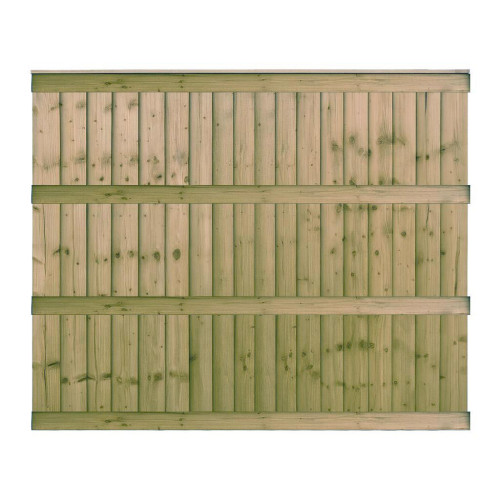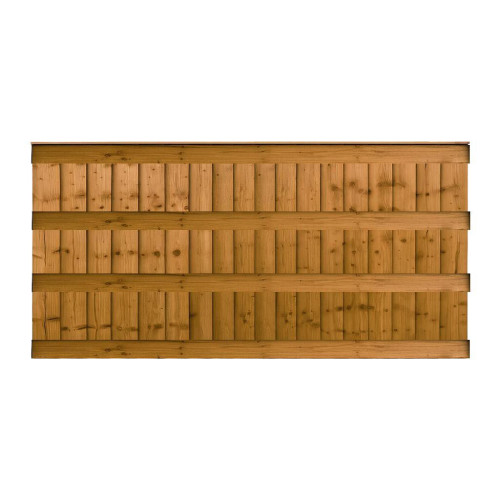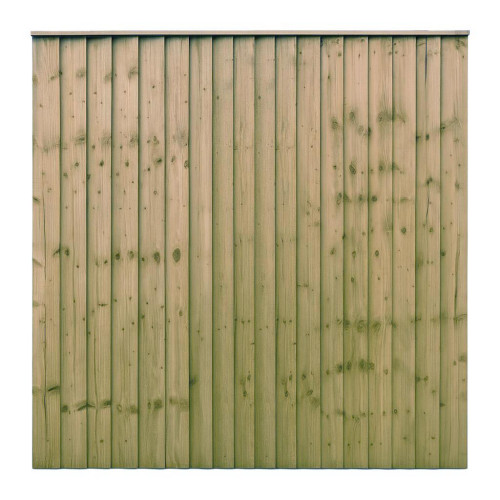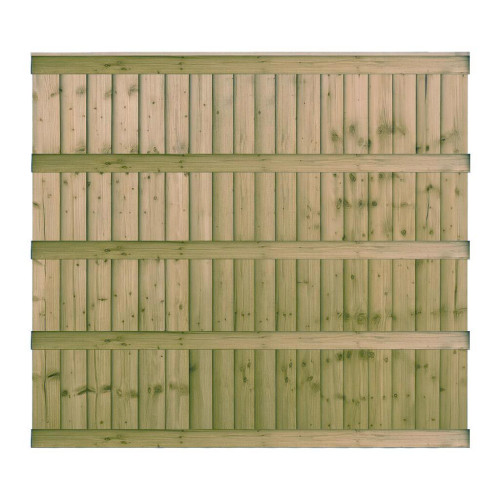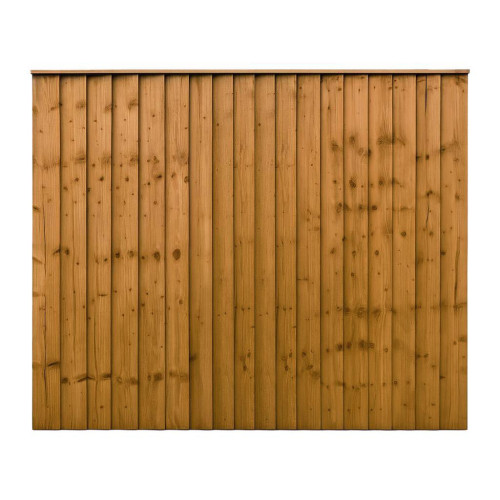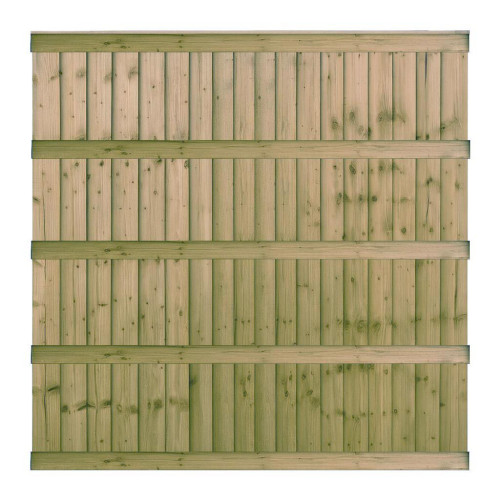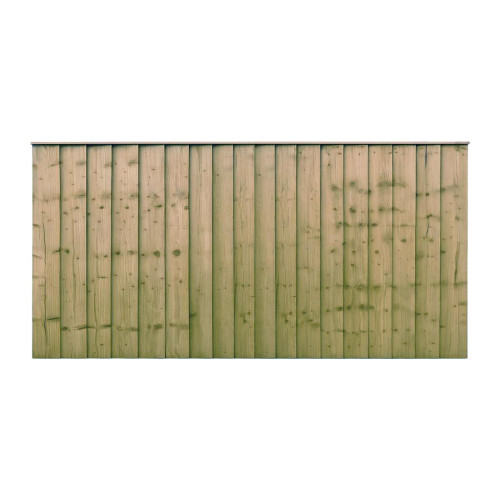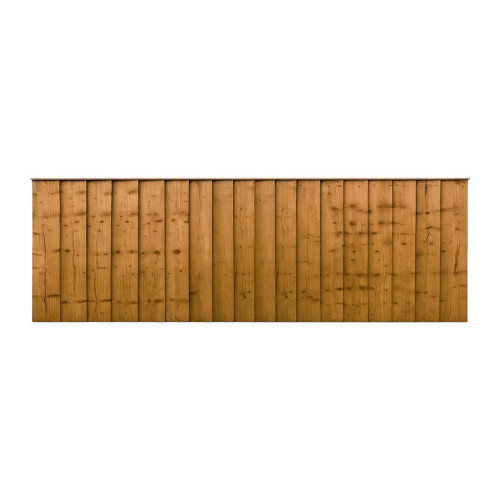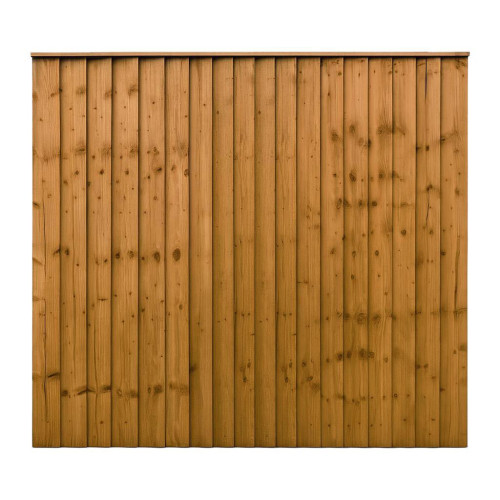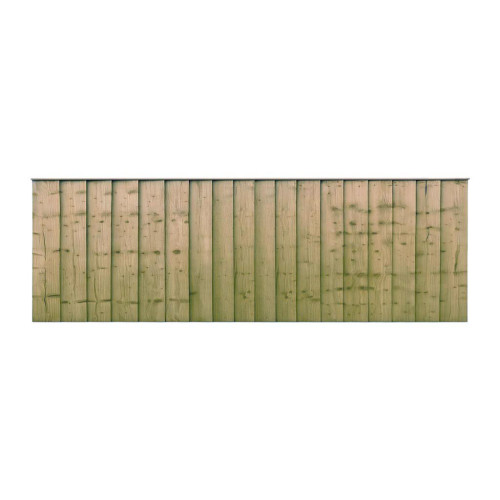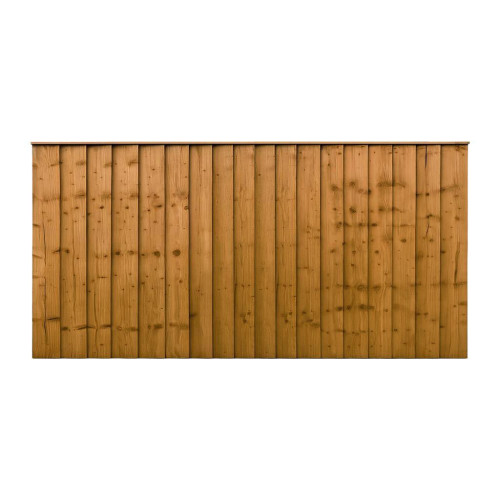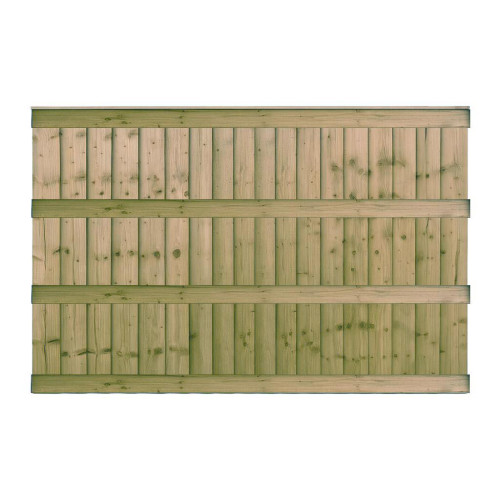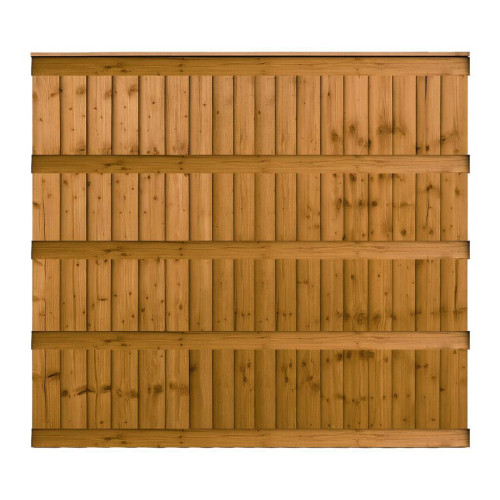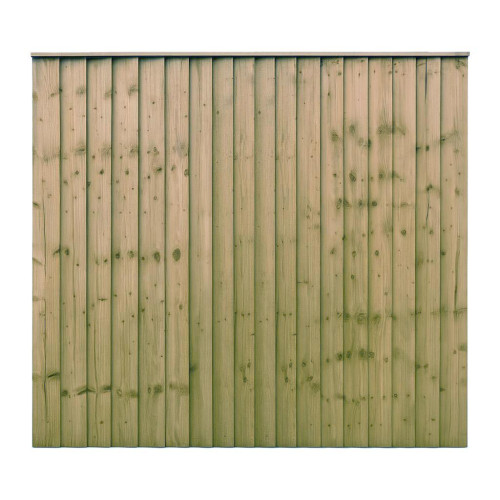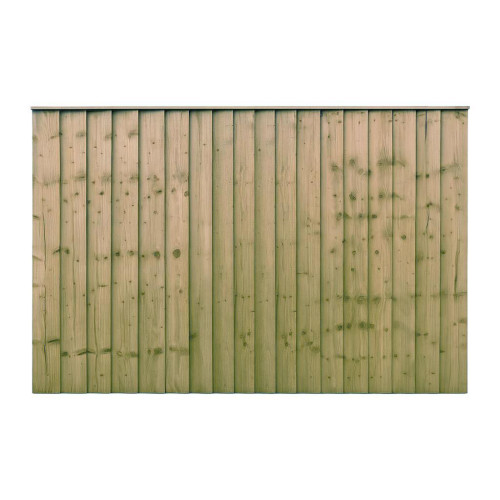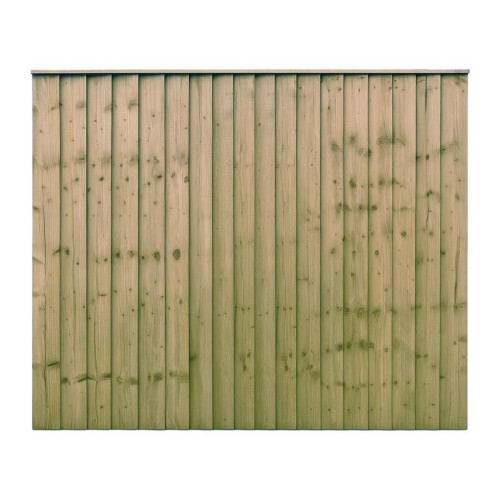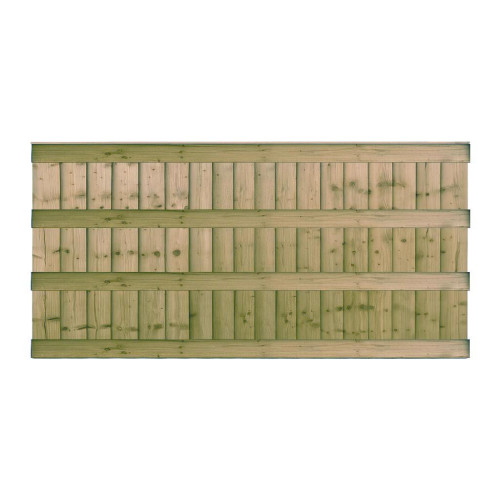



Quick answer: Closeboard Fence Panels can work well in windy gardens because they are substantial, framed timber panels, but their solid construction also catches more wind than Hit & Miss or slatted fencing. In an ordinary exposed garden, strong posts, suitable foundations, secure panel support and sensible fence height are usually more important than simply choosing the heaviest panel. For very exposed boundaries where wind repeatedly damages solid fencing, a more open panel style may be the better choice.
Closeboard fencing is usually chosen for two reasons: privacy and strength.
The overlapping vertical boards create a dense timber screen that feels considerably more substantial than lightweight overlap fencing. That makes Closeboard Fence Panels a natural option for rear boundaries, side gardens and exposed locations.
There is an important trade-off, however.
The same solid construction that provides excellent privacy also gives the wind a large surface to push against.
So the question is not simply whether closeboard panels are strong. It is whether the complete fence, including the panels, posts, foundations and gravel boards, is suitable for the amount of wind the site receives.
Are Closeboard Fence Panels Suitable for Windy Gardens?
Yes, in many gardens.
A properly installed closeboard fence can perform well in exposed domestic locations, particularly when the panels are supported by suitable posts and secure foundations.
However, solid fencing always needs to deal with more wind pressure than a similarly sized open panel.
That means Closeboard Fence Panels are best thought of as:
- Strong panels that require strong support
- Excellent for privacy
- Suitable for many exposed gardens
- Less wind-permeable than Hit & Miss or slatted fencing
They are not automatically the best panel for every extremely exposed location.
Why Do Closeboard Fence Panels Catch So Much Wind?
Closeboard panels use overlapping vertical boards to create an almost continuous timber face.
This provides very few direct gaps for air to pass through.
When wind hits the fence, much of that pressure is transferred through the panel into:
- The panel frame
- The supporting posts
- The post foundations
- Any clips, brackets or restraints
A fence is therefore only as reliable as the system supporting it.
A strong panel installed between weak or moving posts can still fail.
Does A Heavier Fence Panel Resist Wind Better?
Not automatically.
A more substantial panel can offer greater strength within the panel itself, but increasing panel weight does not remove the force acting on the posts.
Wind resistance depends on the combination of:
- Panel construction
- Panel height
- Post strength
- Post spacing
- Foundation
- Ground conditions
- Exposure
This distinction matters when comparing Standard and Ultra Heavy Duty Closeboard Fence Panels.
Standard or Ultra Heavy Duty Closeboard Fence Panels for Wind?
East Coast Fencing currently manufactures both Standard and Ultra Heavy Duty Closeboard Fence Panels.
The Ultra Heavy Duty versions use a more substantial construction, with additional supporting rails on suitable sizes.
That can make them attractive where you want a heavier and more robust panel.
However, an Ultra Heavy Duty panel still needs an appropriate support system.
Do not install the heaviest available panel between inadequate posts and assume the panel alone will solve an exposure problem.
| Consideration | Standard Closeboard | Ultra Heavy Duty Closeboard |
|---|---|---|
| Privacy | Excellent | Excellent |
| Panel construction | Substantial domestic panel | More substantial construction |
| Handling | More manageable | Heavier |
| Post importance | High | High |
| Airflow through panel | Very limited | Very limited |
Choose the panel specification together with the posts and site conditions rather than treating panel weight as the only measure of wind performance.
Why Fence Height Matters in Windy Gardens
Height has a major effect on how much wind a fence encounters.
A taller solid panel presents more surface area to the wind than a lower panel.
It also creates greater leverage on the supporting posts.
East Coast Fencing's current Closeboard Fence Panel range includes several heights from low boundary panels through to full-height privacy panels.
The standard range includes heights around:
- 600mm
- 900mm
- 1200mm
- 1500mm
- 1650mm
- 1800mm
Most are approximately 1830mm wide.
Are 6ft Closeboard Fence Panels Good in Wind?
They can be, but a full-height solid panel needs a suitable support system.
A 6ft closeboard panel offers excellent privacy, which is why it is so commonly chosen for rear gardens.
It also presents the largest surface area to the wind within the common closeboard height range.
For a 6ft fence in an exposed garden, pay close attention to:
- Post type
- Post dimensions
- Foundation
- Ground stability
- Panel security
If the location is extremely exposed, reducing the height or choosing a more open style can sometimes be more effective than simply making every component heavier.
Can A 5ft Closeboard Fence Be Better in Wind?
A lower panel presents less surface area to the wind than a 6ft panel of the same construction.
That can reduce the forces acting on the fence.
A 5ft or 5ft 6in panel may therefore be worth considering where you want substantial screening without necessarily requiring the maximum available panel height.
The correct choice still depends on:
- Privacy requirements
- Neighbouring ground levels
- Garden layout
- Exposure
Are Lower Closeboard Fence Panels Better in Strong Wind?
Generally, lowering the fence reduces the area exposed to the wind.
That does not mean a 3ft fence is automatically stronger than every 6ft installation, because construction quality still matters.
But unnecessary height should be avoided in an exposed location.
If a 4ft panel provides all the screening a particular boundary needs, there may be little benefit in installing a 6ft solid panel simply because it is available.
Concrete or Wooden Posts for Closeboard Fence Panels in Wind?
Both can be used successfully when correctly specified and installed.
Concrete posts are commonly paired with closeboard panels in exposed gardens because they:
- Provide a rigid support
- Do not rot at ground level
- Allow compatible panels to sit within slotted sides
- Make future panel replacement relatively straightforward
Wooden posts can also work well where you want an all-timber appearance or a fixing arrangement that is easier to customise.
The important issue is not simply the material. Post dimensions, treatment, foundations and installation all matter.
Are Concrete Fence Posts Better for Windy Gardens?
They are often a practical choice for exposed panel fencing.
Concrete posts remove one common timber weakness because the post itself cannot rot at the soil line.
However, a concrete post can still:
- Move if its foundation fails
- Lean if the ground shifts
- Crack if damaged
- Perform poorly if installed inaccurately
Concrete should therefore be viewed as a durable post material rather than a guarantee against storm damage.
Can Wooden Posts Hold Closeboard Panels in Strong Wind?
Yes, provided the posts are correctly specified for the fence and ground conditions.
Wooden posts are easier to:
- Drill
- Fix into
- Adapt on site
They also blend naturally with Closeboard Fence Panels.
For exposed fencing, the posts need to be substantial enough for the panel height and properly treated for their installation environment.
A lightweight post should not be expected to support a tall solid privacy fence simply because the panels themselves are strong.
Why The Foundation Matters More Than Many Homeowners Realise
Wind loads ultimately have to go somewhere.
The panel transfers them to the post, and the post transfers them into the ground.
If the post foundation cannot resist that movement, the fence may:
- Lean
- Rock
- Rattle
- Allow panels to move
- Eventually fail during storms
This is why replacing a damaged panel without inspecting the posts can lead to repeated problems.
What Ground Conditions Make Wind Problems Worse?
The same fence can behave differently depending on the soil beneath it.
Potentially challenging conditions include:
- Waterlogged ground
- Very soft soil
- Made-up ground
- Ground affected by roots
- Areas with significant seasonal movement
If a fence repeatedly leans after strong winds, the problem may be below ground rather than in the panels.
Do Gravel Boards Help Closeboard Fence Panels in Wind?
Gravel boards are primarily used to separate fence panels from damp ground and create a defined lower edge.
They are not a substitute for strong posts or foundations.
However, they can improve the complete fence system by helping protect the lower timber frame from:
- Wet soil
- Leaves
- Grass
- Rain splash
A panel that remains structurally sound is naturally better able to cope with repeated weather exposure than one whose lower frame has deteriorated.
Concrete or Wooden Gravel Boards for Exposed Fencing?
Both can be used with suitable systems.
Concrete gravel boards work particularly naturally with slotted concrete posts and provide a non-timber base beneath the panel.
Wooden gravel boards provide a coordinated timber appearance and are easier to handle.
Choose according to the complete fence system rather than expecting the gravel board alone to determine wind resistance.
Can Closeboard Panels Blow Out of Concrete Posts?
Panels can sometimes lift or move within slotted posts during strong winds if the installation leaves enough vertical movement.
This is different from the post itself failing.
If panels repeatedly lift or rattle, inspect:
- Panel fit
- Post alignment
- Available vertical clearance
- Condition of the panel frame
- Whether an appropriate restraint system is required
Do not wedge random pieces of material into the post slots without understanding how the panel needs to move and drain.
Why Do Closeboard Fence Panels Rattle in Wind?
Rattling usually indicates movement somewhere in the fence system.
Possible causes include:
- Clearance between panels and slotted posts
- Loose panel brackets
- Loose screws
- Moving posts
- A damaged panel frame
A slight amount of movement in some panel systems is different from a fence that repeatedly knocks or shifts during ordinary winds.
Should You Make Closeboard Panels Fit Tightly Between Posts?
The panels should be properly supported, but forcing a rigid timber panel into an opening that is too narrow is not good practice.
Timber naturally changes dimension as moisture conditions vary.
An excessively tight panel may become difficult to remove and can place unwanted pressure on the frame or posts.
Measure existing bays carefully before ordering replacement panels.
How Do You Measure Existing Posts Before Replacing Wind-Damaged Panels?
Measure the clear opening at several positions:
- Near the bottom
- Around the middle
- Near the top
If these measurements differ significantly, one or both posts may be leaning.
Do not assume the old panel size proves the current bay is correct.
Should You Replace A Panel If The Posts Are Leaning?
Fix the structural problem first.
A new Closeboard Fence Panel installed between unstable posts may:
- Become jammed
- Lean with the posts
- Move excessively in wind
- Suffer frame damage
Inspect the support system before spending money on replacement panels.
Is Closeboard Better Than Waney Lap in Wind?
Closeboard panels are generally more substantial than traditional lightweight Waney Lap Fence Panels.
That can make them a stronger panel option.
However, both styles are largely solid and therefore catch wind.
The condition and strength of the posts remain crucial.
If comparing the two for an exposed boundary, think about the complete installation rather than simply choosing whichever panel feels heavier.
Closeboard vs Hit & Miss Fence Panels for Wind
This is a more significant difference.
Closeboard creates a dense solid screen.
Hit & Miss Fence Panels deliberately contain gaps and alternating boards that allow more air through.
| Feature | Closeboard | Hit & Miss |
|---|---|---|
| Privacy | Excellent | Partial to strong screening |
| Airflow | Very limited | Good |
| Wind pressure on panel | Higher | Reduced by openings |
| Appearance | Traditional solid | Contemporary horizontal |
If privacy is the priority, Closeboard Fence Panels have the advantage.
If the site is extremely exposed and airflow is more important, Hit & Miss Fence Panels deserve consideration.
Closeboard vs Double Slatted Fence Panels for Wind
Double Slatted Fence Panels also allow some airflow through their construction.
They offer a more contemporary appearance and a different balance between privacy and permeability.
Closeboard remains the more traditional option where you want a solid screen.
For a highly exposed garden, the ability of a slatted design to pass some air may be useful.
Does Adding Trellis Make A Closeboard Fence More Vulnerable to Wind?
It can increase the total area exposed to the wind.
Open trellis allows more air through than a solid panel, but it still adds height and load to the supporting posts.
The effect can become greater once climbing plants cover the trellis.
Before adding a topper to an exposed fence, check:
- Post condition
- Post length
- Foundation stability
- Total finished height
- Plant weight
Do not use a trellis extension to solve a privacy problem without considering its effect on the complete fence.
Can Climbing Plants Make Wind Problems Worse?
Yes.
A bare fence and trellis may allow some air around or through its upper section.
A mature climber can fill those openings with leaves and stems.
Dense vegetation adds:
- Weight
- Wind resistance
- Moisture around the timber
Keep vigorous climbers controlled, particularly on exposed boundaries.
Can Hedges Protect Closeboard Panels From Wind?
Planting can change local wind conditions, but it should not be relied upon as the structural support for a fence.
A hedge or group of shrubs may reduce direct exposure in some positions.
Dense vegetation can also:
- Press against panels
- Keep timber damp
- Hide loose fixings
Leave enough access to inspect the fence.
What Usually Fails First in A Wind-Damaged Fence?
There is no universal first point of failure.
Possible weak points include:
- Post foundations
- Timber posts at ground level
- Panel frames
- Brackets and fixings
- Individual boards
This is why replacing the visible broken component without inspecting the rest of the fence can lead to repeated repairs.
What Should You Check After A Storm?
Walk along the fence and look for:
- Leaning posts
- Posts that move when gently checked
- Cracked concrete posts
- Panels no longer sitting square
- Loose brackets
- Broken boards
- Panels lifted above gravel boards
Correct small problems before the next spell of strong wind where practical.
Can One Damaged Closeboard Panel Be Replaced?
Yes, if the support system remains sound.
With slotted concrete posts, individual panel replacement can be relatively straightforward where there is enough access to lift the damaged panel out.
With timber posts, remove the existing brackets or fixings carefully and attach the replacement panel securely.
Measure the bay first.
Should You Upgrade to Ultra Heavy Duty After Storm Damage?
Only after identifying why the old fence failed.
An Ultra Heavy Duty Closeboard Fence Panel can provide a more substantial panel construction, but it will not repair:
- Loose posts
- Insufficient foundations
- Leaning concrete posts
- Unsuitable ground conditions
If the panel itself was the weak point and the posts remain strong, upgrading may make sense.
If the posts failed, address the support system first.
Can You Strengthen An Existing Closeboard Fence?
Sometimes.
The right improvement depends on the weakness.
Possible work may include:
- Replacing failed posts
- Repairing suitable timber posts with an appropriate support system
- Renewing loose panel brackets
- Replacing damaged panels
- Improving the lower panel detail
A fence should not be reinforced blindly without understanding where movement originates.
Do Pressure-Treated Panels Resist Wind Better?
Pressure treatment protects timber against biological deterioration. It does not make the fence resistant to wind pressure.
East Coast Fencing's current Closeboard Fence Panels are pressure treated for outdoor use.
This helps protect the timber against decay, which is important for maintaining the panel over time.
Wind resistance still depends primarily on:
- Construction
- Posts
- Foundations
- Fixings
Does Green or Brown Treatment Affect Wind Strength?
No useful judgement about wind strength should be made from treatment colour.
The current closeboard range includes green/natural and brown pressure-treated finishes.
The colour is primarily an appearance choice.
Choose the fence specification and support system according to the site rather than assuming one treatment colour is structurally stronger.
Should You Paint Closeboard Panels in A Windy Garden?
A compatible exterior coating can help maintain appearance and provide additional surface weather protection once the timber is sufficiently dry.
Painting does not materially change the fundamental wind behaviour of a solid panel.
Do not treat paint as a substitute for:
- Strong posts
- Good foundations
- Secure fixings
Are Closeboard Fence Panels Good for Coastal Gardens?
They can be used, but coastal locations may combine strong wind, driving rain and salt exposure.
The complete system deserves careful consideration.
Pay particular attention to:
- Post support
- Exterior fixings
- Metal corrosion
- Panel maintenance
- Whether a solid panel is appropriate for the degree of exposure
For a very exposed coastal boundary, a more permeable panel style may sometimes be more suitable.
Are Closeboard Fence Panels Good on Hilltop Gardens?
Potentially, but hilltop and open rural gardens can receive substantially greater wind exposure than sheltered urban plots.
A fence that performs perfectly between houses may experience very different loads on an open hill.
Look at the actual site rather than assuming ordinary domestic fencing conditions.
How Can You Tell If Your Garden Is Highly Exposed?
Indicators include:
- Few buildings or hedges sheltering the boundary
- An open field immediately beyond the fence
- A hilltop or elevated position
- Regular storm damage to previous fencing
- Strong prevailing winds hitting the fence directly
Repeated failure of different fences in the same location is a strong reason to reconsider the design rather than simply replacing like for like again.
Should You Use Closeboard Fence Panels If Your Old Fence Keeps Blowing Down?
First determine what keeps failing.
If lightweight panels break while strong posts remain secure, Closeboard Fence Panels may provide a useful upgrade.
If the posts themselves repeatedly lean or pull out of the ground, heavier panels may increase the demands on an already inadequate support system.
If solid fences repeatedly suffer because of extreme exposure, consider whether a more open design would suit the location better.
When Are Closeboard Fence Panels The Right Choice?
Closeboard remains a strong option where you want:
- High privacy
- A traditional appearance
- A substantial timber panel
- A choice of standard or Ultra Heavy Duty construction
- Compatibility with suitable timber or concrete post systems
They are particularly attractive where privacy is more important than maximum airflow.
When Is An Open Fence Panel Better?
Consider Hit & Miss Fence Panels, Double Slatted Fence Panels or another suitably open design where:
- The site is extremely exposed
- Previous solid fences repeatedly fail
- Airflow is important
- Partial rather than complete privacy is acceptable
The trade-off is that greater airflow usually means less complete screening.
Common Mistakes With Closeboard Fence Panels in Windy Gardens
- Assuming a heavy panel automatically creates a windproof fence
- Installing 6ft panels where the extra height is not required
- Reusing loose or leaning posts
- Upgrading panels without checking why the previous fence failed
- Using undersized wooden posts
- Assuming concrete posts cannot move
- Ignoring poor ground conditions
- Allowing damaged brackets to remain loose
- Letting panels sit against wet soil
- Adding trellis without checking the posts
- Allowing heavy climbers to overload the fence
- Choosing maximum privacy when the site really needs greater airflow
Closeboard Fence Panels Windy Garden Checklist
- Assess how exposed the boundary actually is.
- Decide whether full privacy is necessary.
- Choose only as much panel height as the garden needs.
- Compare Standard and Ultra Heavy Duty construction.
- Select posts suitable for the panel and location.
- Make sure foundations suit the ground conditions.
- Inspect existing posts before replacing panels.
- Measure existing bays at several heights.
- Use suitable exterior fixings or a compatible slotted post system.
- Consider gravel boards to protect the lower panel.
- Keep climbing plants controlled.
- Inspect the fence after severe weather.
- Consider a more open panel if solid fencing repeatedly fails at the location.
FAQs
Are Closeboard Fence Panels Good in Strong Wind?
They can perform well with suitable posts and foundations, but their solid construction catches more wind than open panel styles.
Are Closeboard Fence Panels Windproof?
No ordinary garden fence panel should be described as windproof. Performance depends on the complete installation and the severity of exposure.
Are Ultra Heavy Duty Closeboard Fence Panels Better for Wind?
They provide a more substantial panel construction, but strong posts and foundations remain essential. A heavier panel does not compensate for a weak support system.
Do Closeboard Fence Panels Let Wind Through?
Very little compared with open styles because the overlapping vertical boards create a largely solid timber face.
Are Closeboard Panels Better Than Hit & Miss Panels for Wind?
Hit & Miss Fence Panels allow more airflow, while Closeboard Fence Panels provide stronger privacy. The better choice depends on which requirement matters most.
Are Closeboard Panels Better Than Waney Lap in Wind?
Closeboard panels are generally more substantial, but both are mostly solid. Posts and foundations remain critical for either style.
Are Concrete Posts Best With Closeboard Fence Panels?
Concrete posts are a popular durable option, particularly for exposed boundaries, but they still need appropriate foundations and accurate installation.
Can Wooden Posts Be Used in Windy Gardens?
Yes, where they are suitably substantial, correctly treated and securely installed for the height and exposure of the fence.
Do Gravel Boards Make A Fence Stronger in Wind?
Their main role is to create a lower boundary detail and help protect panels from damp ground. They do not replace the need for suitable posts and foundations.
Can Closeboard Panels Blow Out of Concrete Posts?
They can move or lift in some circumstances. If this happens repeatedly, inspect panel fit, post alignment and the overall installation.
Why Does My Closeboard Fence Rattle in Wind?
Possible causes include clearance in slotted posts, loose fixings, damaged frames or moving posts.
Should I Replace Storm-Damaged Panels With Ultra Heavy Duty Panels?
Only after checking why the fence failed. If the posts or foundations were the problem, upgrading the panel alone may not help.
Is A 5ft Closeboard Panel Better Than A 6ft Panel in Wind?
A lower panel presents less surface area to the wind, although privacy and the overall installation also need to be considered.
Can Trellis Be Added Above Closeboard Panels in A Windy Garden?
Potentially, but extra height increases demands on the posts. Dense climbing plants can increase those demands further.
Should I Choose An Open Panel for A Very Exposed Garden?
It is worth considering if solid fences repeatedly suffer storm damage and partial privacy is acceptable. Hit & Miss and slatted designs allow more airflow.
Should You Choose Closeboard Fence Panels for A Windy Garden?
Closeboard Fence Panels are a strong choice when privacy is important and the fence can be supported properly.
Their overlapping vertical boards create a substantial screen, and East Coast Fencing currently offers both Standard and Ultra Heavy Duty constructions in a range of heights and pressure-treated finishes.
But strength within the panel is only part of the equation.
A closeboard fence is solid, so wind pressure is transferred into the posts and foundations rather than passing freely through the boundary. In an exposed garden, those supporting components matter at least as much as the panel itself.
Avoid assuming that the tallest and heaviest option is automatically the strongest solution. If a lower panel provides enough privacy, reducing unnecessary height can reduce wind exposure. If the garden is extremely exposed, a more open panel may sometimes be the more appropriate design.
For most domestic gardens where privacy and robustness are priorities, properly supported Closeboard Fence Panels remain a practical choice. Choose the panel, posts, foundations and height as one complete fencing system rather than expecting any single component to deal with the wind on its own.