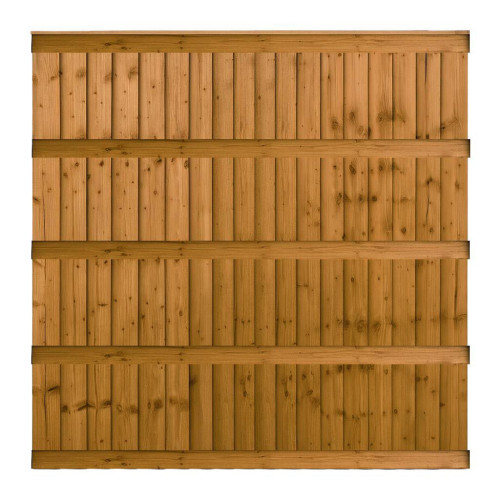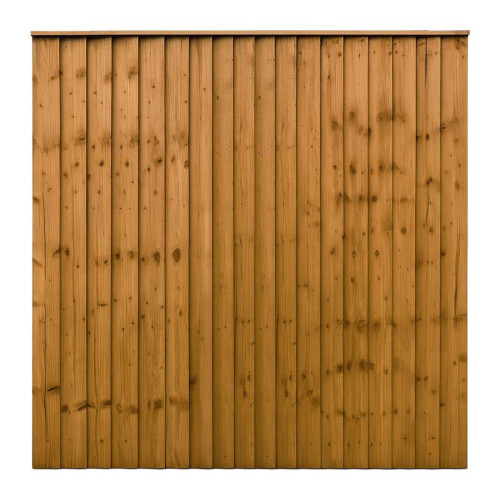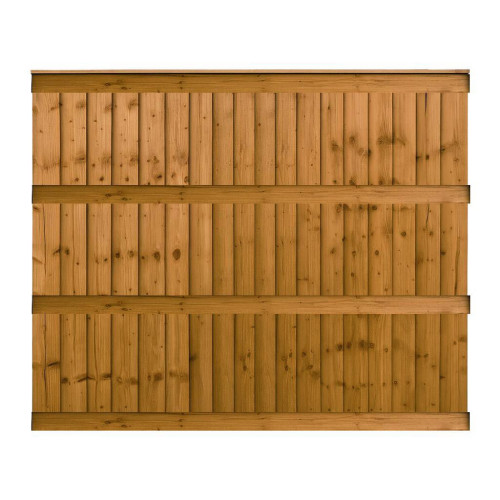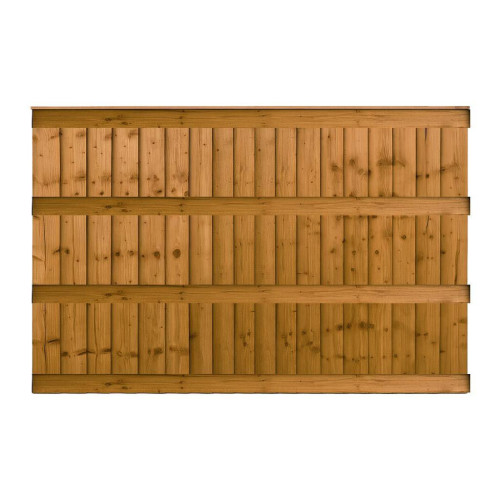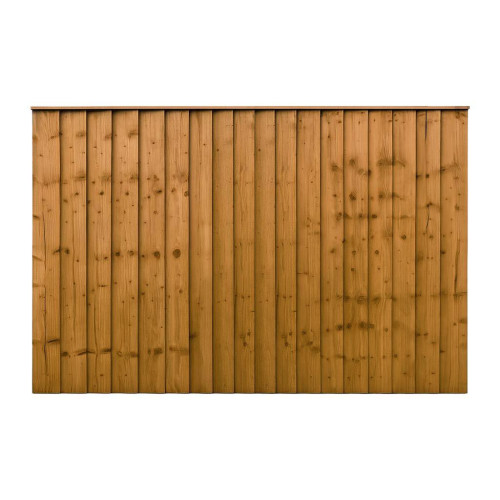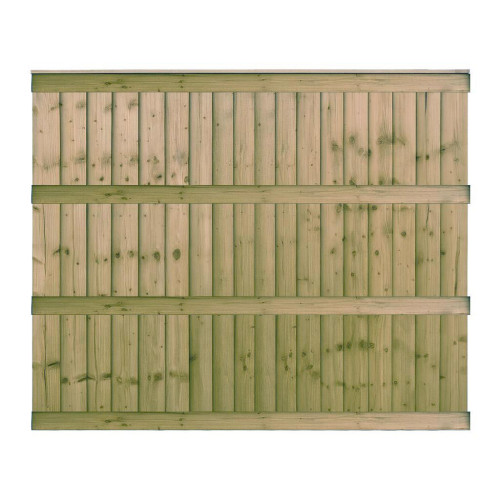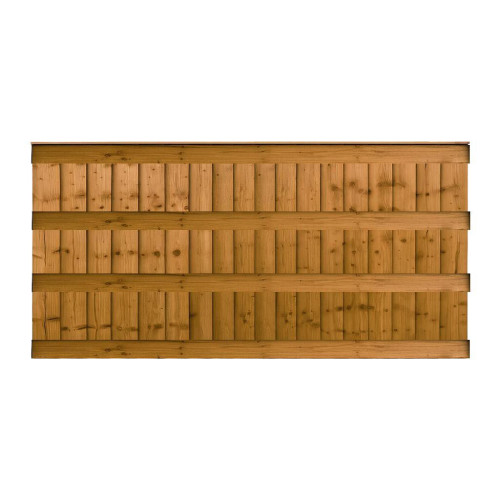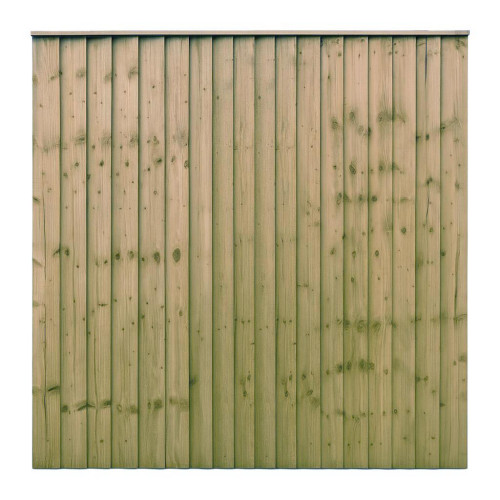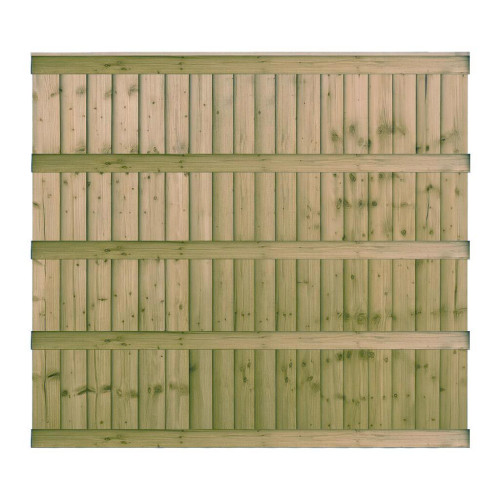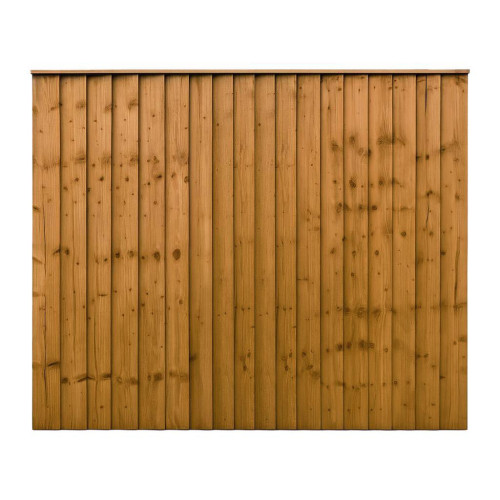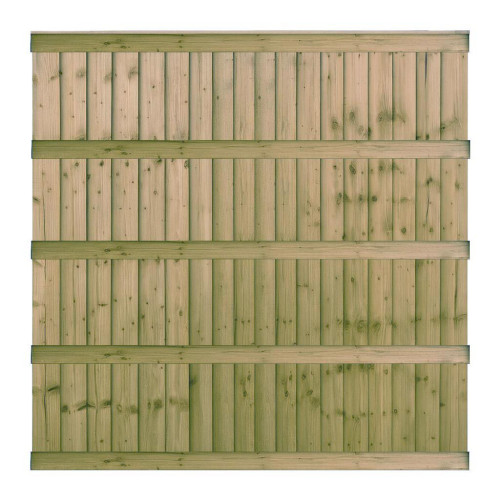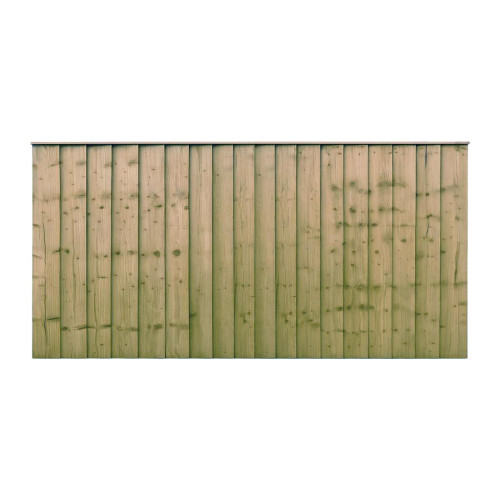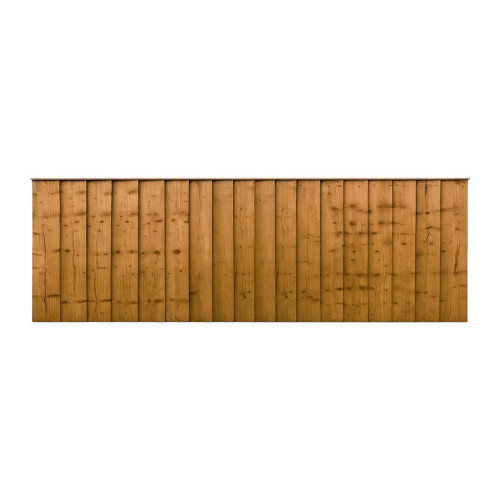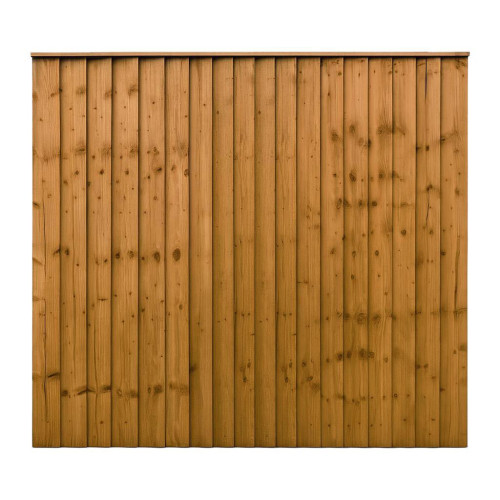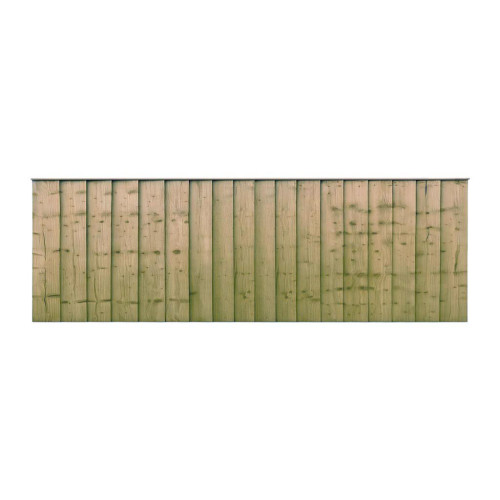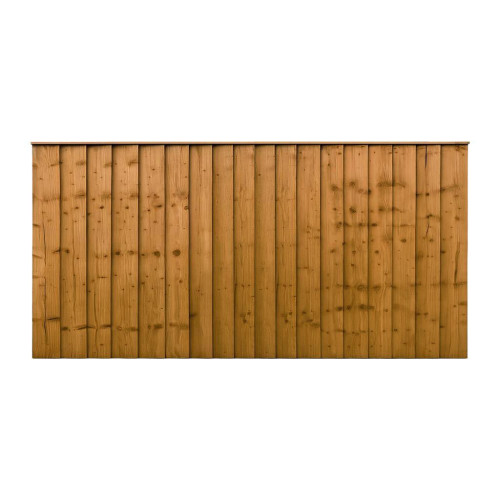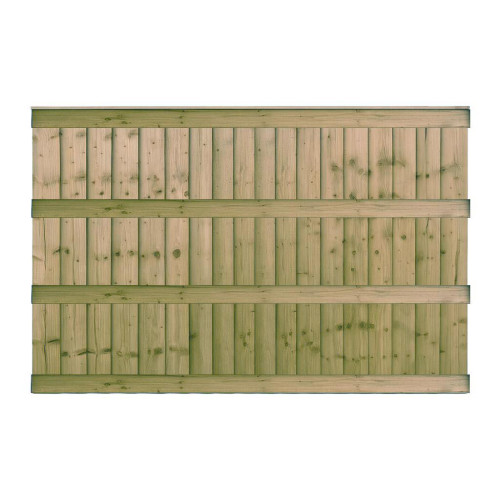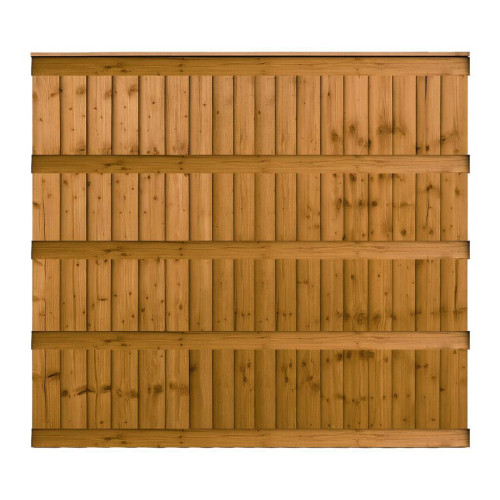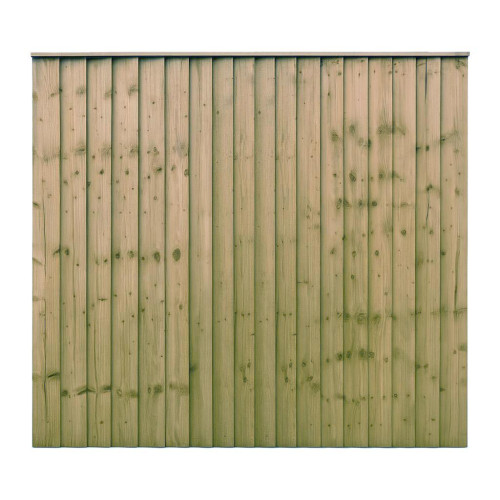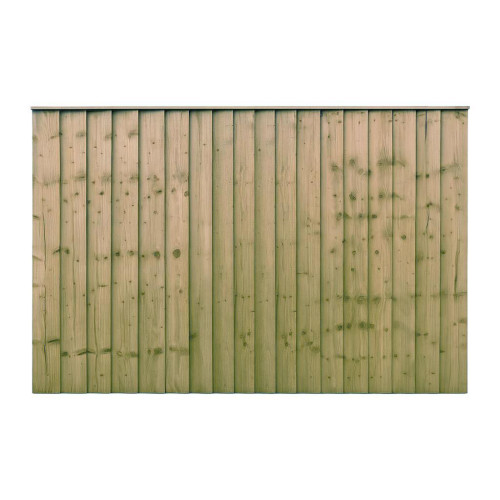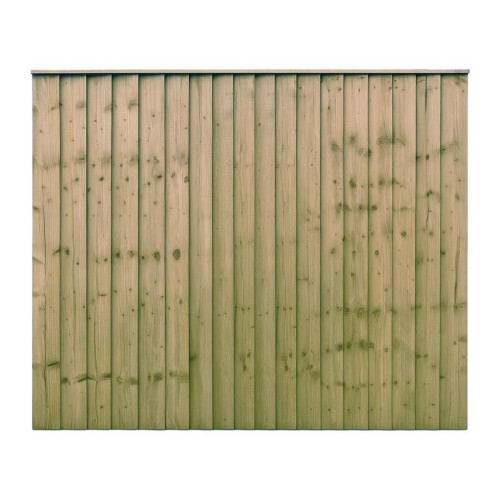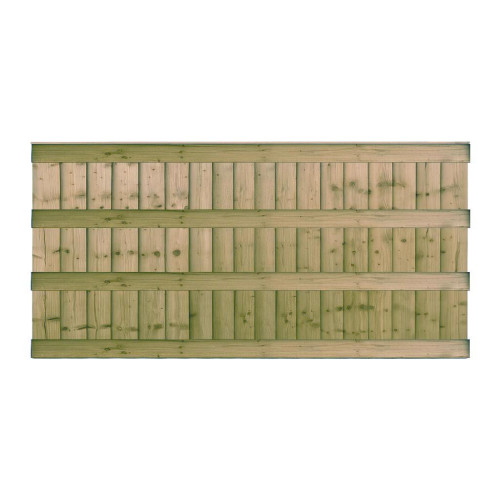




Quick answer: Yes, Closeboard Fence Panels can be installed on sloping ground, but rigid panels should normally remain square and level rather than being twisted to follow the gradient. The usual solution is to step each panel higher or lower between the posts. This works well on gentle and moderate slopes. On steep, irregular or constantly changing ground, traditional closeboard fencing built on site from individual feather edge boards and rails can provide a neater and more adaptable result.
A sloping garden does not rule out Closeboard Fence Panels.
What changes is the way the fence needs to be planned.
Ready-made closeboard panels are rigid rectangular sections. They are designed to remain square, so they cannot simply be bent or tilted to copy every rise and fall in the ground beneath them.
Instead, the normal approach is to install each panel level and step successive bays up or down the slope.
For many gardens this works extremely well. On steeper or more irregular ground, however, there comes a point where individual panels create large steps or awkward gaps underneath. In those situations, site-built closeboard fencing using separate Feather Edge Boards and rails can offer much greater flexibility.
Can Closeboard Fence Panels Be Installed on Sloping Ground?
Yes.
The important principle is that each rigid panel normally remains:
- Square
- Level
- Properly supported between its posts
The fence follows the gradient by changing the height of each complete bay rather than distorting the individual panel.
This is usually called stepped fencing.
What Does Stepped Closeboard Fencing Look Like?
Imagine a staircase following the garden.
Each fence panel sits horizontally, but the next panel begins slightly higher or lower than the previous one.
The result looks something like this in principle:
- Panel one at the lowest level
- Panel two slightly higher
- Panel three higher again
- Each individual panel remaining level
The size of each step depends on how quickly the ground rises or falls.
Why Should Closeboard Fence Panels Stay Level?
A manufactured closeboard panel is built as a rectangular framed unit.
The vertical boards, horizontal rails and surrounding structure work together to keep the panel square.
Trying to force one corner higher than another can:
- Distort the frame
- Stress the joints
- Move the Feather Edge Boards out of their intended positions
- Make the panel difficult to fit between posts
Keeping the panel square preserves the construction it was manufactured with.
Should You Tilt Closeboard Fence Panels to Follow the Ground?
Generally, no.
A rigid framed panel should not normally be installed diagonally simply because the ground slopes underneath it.
Tilting the whole rectangular panel creates several problems.
The vertical boards stop being vertical, the top line slopes noticeably and the panel may no longer sit correctly against gravel boards or within slotted concrete posts.
A stepped installation normally produces a cleaner and more structurally sensible result.
How Steep Can the Garden Be Before Panels Become Awkward?
There is no single gradient at which Closeboard Fence Panels suddenly become unsuitable.
What matters is the change in ground level across each approximately 1.83m-wide panel bay.
If the ground rises only slightly across each bay, the steps can be small and visually unobtrusive.
If the ground rises sharply, every bay may need a substantial height change.
That can create:
- Large steps along the top of the fence
- Increasing gaps underneath panels
- Long exposed sections of post
- Awkward gravel board arrangements
At that point, a site-built fence may become the cleaner solution.
Measure the Total Rise Before Choosing the Fence
Do not judge the slope from one small section of garden.
Measure the complete proposed fence run and determine approximately how much the ground level changes from one end to the other.
Then consider:
- Total boundary length
- Number of panel bays
- Total rise or fall
- Any particularly steep sections
- Changes in gradient
A garden can have a gentle overall slope but contain one difficult dip or bank that needs separate treatment.
How Do You Calculate the Step Between Panels?
There are several ways to set out a sloping fence, but the objective is to understand the height difference between successive post positions.
For example, suppose the ground rises approximately 600mm across six panel bays.
If the rise were reasonably even, the average change would be around 100mm per bay.
You could then plan a series of roughly consistent steps rather than allowing the fence height to change randomly.
Real gardens are rarely perfectly uniform, so actual levels should always be checked on site.
Should Every Step Be the Same Height?
Not necessarily.
A consistent sequence often looks attractive on an even gradient, but the ground may not rise evenly.
The priority is to keep each panel properly positioned while maintaining sensible ground clearance.
Sometimes this means:
- Several small equal steps
- One larger step at a natural change in level
- A combination of different step heights
Plan the complete run before deciding.
Should You Start at the Top or Bottom of the Slope?
Either direction can work.
A more useful starting point is often a fixed feature such as:
- A garden gate
- A wall
- A patio
- A driveway
- A boundary corner
These features may determine the required height more strongly than whether the garden rises or falls.
Establish the finished levels before installing the first post.
How Do You Set Out the Fence Line?
Mark the entire boundary before digging.
Use a taut string line to establish:
- The position of the fence
- The direction of the run
- Post locations
- Changes in direction
A string line controls horizontal alignment, but you will also need to measure vertical levels separately.
Do not simply follow every bump in the ground with the top of the fence.
What Sizes of Closeboard Fence Panels Are Available?
The current East Coast Fencing Closeboard Fence Panels are approximately 1830mm wide.
The current range includes several nominal heights:
- 600mm
- 900mm
- 1200mm
- 1500mm
- 1650mm
- 1800mm
Pressure-treated brown and green/natural finishes are available, with Standard and Ultra Heavy Duty constructions across suitable sizes.
The range of heights can be useful when planning complicated changes in level.
Can You Mix Different Closeboard Panel Heights on a Slope?
Yes, where there is a practical reason.
For example, you might need:
- A lower panel close to a patio
- A taller panel farther down the boundary
- A 1650mm panel above a gravel board where the intended overall height suits that combination
However, avoid changing both panel height and step height unnecessarily.
Using one main panel height normally creates the easiest fence line to understand visually.
Why the 1650mm Panel Can Be Useful With Gravel Boards
A nominal 1650mm panel is approximately 5ft 6in high.
When combined with a gravel board of an appropriate depth, it can create a completed fence section close to the height commonly associated with a full privacy boundary.
This can be useful where the gravel board needs to remain visible rather than being treated as an afterthought underneath a full 1800mm panel.
Always measure the complete finished arrangement.
Do Closeboard Fence Panels Need Gravel Boards on a Slope?
Gravel boards are strongly worth considering.
They help keep the bottom of the timber panel away from:
- Wet soil
- Grass
- Mulch
- Leaves
- Rain splash
On sloping gardens they also provide a defined lower edge beneath each panel.
The challenge is that the gravel boards need to follow the stepped layout too.
Can Gravel Boards Be Stepped Down a Slope?
Yes.
Each gravel board can remain level within its own bay and step relative to the neighbouring board.
The Closeboard Fence Panel then sits above it.
This produces a repeated structure of:
- Post
- Level gravel board
- Level fence panel
- Next post
- Next stepped gravel board and panel
Should Gravel Boards Follow the Ground Exactly?
Not necessarily.
A rigid gravel board also needs suitable support.
Trying to force a straight board to follow an uneven soil line can create poor support or awkward gaps.
Keep the board correctly seated within the chosen fence system and deal with irregular ground separately.
What Causes Gaps Under Stepped Fence Panels?
When a level panel crosses sloping ground, the ground naturally becomes farther away from the panel at one end.
The steeper the slope, the larger this difference becomes.
For example, if the garden falls substantially from one post to the next, a level gravel board may sit close to the ground at the uphill end but noticeably higher above it at the downhill end.
Are Gaps Under a Stepped Fence a Problem?
Sometimes they are purely visual.
In other gardens they can create practical problems involving:
- Dogs
- Other pets
- Wildlife movement
- Soil retention
- Privacy at ground level
Decide whether those issues matter before choosing the panel layout.
Do Not Fill the Gap by Piling Soil Against the Panel
This is an important mistake to avoid.
If a stepped fence creates a gap, do not simply heap damp soil against the timber until it disappears.
Doing so exposes the lower frame to persistent moisture and may also place lateral pressure against the panel.
A Closeboard Fence Panel is a boundary screen, not a retaining wall.
Can Closeboard Fence Panels Retain a Raised Garden?
No ordinary timber fence panel should be relied upon to retain substantial ground.
If one side of the garden is significantly higher than the other, use a suitable retaining solution for the soil.
The fencing can then sit independently above or behind it.
This separation is particularly important where the retaining structure has to resist:
- Soil pressure
- Water pressure
- Changes in ground loading
What Can You Do About a Small Gap Beneath a Panel?
The best solution depends on why the gap exists.
Options may include adjusting:
- The gravel board arrangement
- The height of the individual step
- The landscaping immediately below the fence
The important principle is to avoid burying the main timber panel in damp soil.
What If You Need to Keep a Dog in the Garden?
Ground gaps become much more important where pets are involved.
A neat-looking stepped fence can still be unsuitable if a dog can crawl or dig beneath the downhill corner.
When planning the boundary, consider:
- Size of the dog
- Ability to dig
- Largest gap under each bay
- Gate clearances
Plan the lower boundary before the fence is installed rather than trying to block gaps afterwards with loose objects.
Are Wooden Posts Good for Closeboard Panels on a Slope?
Yes.
Wooden posts provide useful flexibility because panels, gravel boards and other components can be mechanically fixed to them.
They also create a consistent all-timber appearance.
On a slope, timber posts can be particularly convenient where individual bays require slightly different fixing positions.
Are Concrete Posts Good on Sloping Ground?
Yes, provided they are positioned accurately.
Slotted concrete posts can create a durable panel system where compatible Closeboard Fence Panels and gravel boards are lowered into the slots.
Accuracy matters because the posts need to accommodate:
- Panel width
- Panel frame thickness
- Gravel board position
- Different finished levels from one bay to the next
Which Posts Are Easier for a Stepped Fence?
Timber posts generally offer more flexibility for custom fixing positions.
Concrete posts create a durable slotted system but require careful planning because the panel and gravel board levels need to work with the post slots.
| Feature | Wooden Posts | Concrete Posts |
|---|---|---|
| Adjustment on site | More flexible | More dependent on slot layout |
| Panel fixing | Exterior fixings or brackets | Panel lowered into compatible slots |
| Ground-level decay | Timber specification and installation matter | Concrete itself does not rot |
| Stepped installation | Flexible | Effective when carefully planned |
How Long Should the Fence Posts Be?
Post length depends on:
- Panel height
- Gravel board height
- Required foundation depth
- Ground conditions
- Exposure
- The amount of post left visible by the stepped design
On a slope, do not assume every post automatically needs exactly the same finished position.
Work out the complete level plan first.
Why Can Posts Look Uneven on a Stepped Fence?
If every post is cut to the same top height while the panels step underneath them, some sections may show more post above the panel than others.
You can avoid an untidy result by deciding whether the intended design is:
- Posts finishing consistently above each local panel
- A separate continuous post-top line
For most domestic panel fences, consistent post projection above each adjoining panel usually looks more deliberate.
Can You Cut Concrete Posts to Make the Top Line Neater?
Concrete posts should be selected and installed for their structural job rather than routinely cut simply for appearance.
Choose suitable post lengths and plan the stepped levels before installation.
With timber posts there is generally more flexibility for final trimming where appropriate.
How Do You Deal With a Slope That Changes Direction?
Some gardens do not rise consistently from one end to the other.
You might have:
- A downhill section
- A flat patio
- A second uphill section
Treat these as separate sections.
Trying to force one continuous stepping pattern across several different gradients usually creates unnecessary complications.
Use Natural Breaks in the Garden
Good places to reset the fence level include:
- A gate
- A retaining wall
- A patio
- A set of garden steps
- A corner
- A garden building
These features provide a visual reason for the fence arrangement to change.
What If Only One Fence Bay Is on a Steep Slope?
You do not necessarily need to change the entire fencing method.
Most of the run could still use standard Closeboard Fence Panels while one difficult section receives a custom-built solution.
This can be particularly useful beside:
- Garden steps
- A retaining wall
- A sudden bank
When Is Traditional Site-Built Closeboard Fencing Better?
Traditional closeboard fencing is built on site using separate structural components rather than complete factory-made panels.
A typical system uses:
- Fence posts
- Cant Rails or suitable rails
- Feather Edge Boards
- Gravel boards
- Capping where required
Because the individual boards are fitted on site, the fence can respond to changing ground levels more gradually.
Why Is Site-Built Closeboard More Flexible on a Slope?
The individual vertical Feather Edge Boards are not locked into one rigid rectangular panel.
This gives the installer more control over:
- Top-line changes
- Bottom clearance
- Irregular gradients
- Custom bay widths
That can produce a smoother result on difficult ground.
Closeboard Fence Panels vs Site-Built Closeboard on a Slope
| Consideration | Closeboard Fence Panels | Site-Built Closeboard |
|---|---|---|
| Gentle slope | Very suitable | Suitable |
| Moderate slope | Usually stepped successfully | Highly adaptable |
| Steep irregular slope | Can create large steps | Often more flexible |
| Installation speed | Faster once posts are ready | More site assembly required |
| Future panel replacement | Individual panel can often be replaced | Repairs made to individual components |
| Custom widths | Less flexible | Much more flexible |
Which Option Is Better for a Gentle Slope?
Ready-made Closeboard Fence Panels are usually the straightforward choice.
Small regular steps are easy to understand visually and retain the speed and convenience of panel fencing.
You also retain the advantage of being able to replace one damaged panel independently where the surrounding posts remain sound.
Which Option Is Better for a Very Steep Garden?
Site-built closeboard increasingly makes sense as the gradient becomes more difficult.
Large panel steps can produce:
- High exposed posts
- Large lower gaps
- An aggressive staircase effect along the top
Individual boards allow the installer to adapt more closely to the site.
What About an Uneven Garden Rather Than a Constant Slope?
This is another situation where site-built fencing can have an advantage.
Rigid panels work best where the slope is reasonably predictable.
If the ground:
- Dips
- Rises sharply
- Flattens
- Changes direction repeatedly
using individual boards provides greater control over the finished boundary.
Can You Use Standard and Ultra Heavy Duty Panels on a Slope?
Yes.
Both Standard and Ultra Heavy Duty Closeboard Fence Panels remain rigid framed panels, so the same stepping principle applies.
The Ultra Heavy Duty versions use more substantial construction and are heavier to handle.
That affects:
- Lifting
- Post specification
- Installation planning
but it does not allow the panel to be bent to follow the ground.
Does an Ultra Heavy Duty Panel Solve Slope Problems?
No.
Ultra Heavy Duty refers to the more substantial panel construction, not increased flexibility.
A heavier panel still needs to remain correctly supported and square.
If the problem is that the ground is too irregular for rigid panels, increasing panel strength does not change the geometry.
Should You Choose Lower Closeboard Panels on a Slope?
Sometimes.
A lower panel can make individual steps appear less visually dominant.
However, privacy requirements still matter.
If the boundary needs full screening, reducing the panel height simply to make the slope easier may defeat the purpose of the fence.
Choose height based on:
- Privacy
- Ground levels
- Gravel board arrangement
- Overall fence design
Can You Add Trellis Above Stepped Closeboard Panels?
Potentially.
A topper can soften the stepped upper line and add decorative screening.
However, trellis does not remove the underlying height changes.
It also adds:
- Height
- Wind load
- Potential plant weight
The posts need to be suitable for the complete arrangement.
Can Planting Hide the Steps Between Panels?
Planting can soften them visually.
Shrubs and controlled climbers can break up the repeated changes in height, particularly along longer boundaries.
Do not use planting to conceal poor structural details.
Keep enough access to inspect:
- Posts
- Panel frames
- Fixings
- Gravel boards
Can Closeboard Panels Be Installed Beside Garden Steps?
Yes.
Garden steps can actually provide a useful reference for the fence.
Where possible, coordinate changes in fence level with changes in the landscaping.
A panel step that corresponds with a set of garden steps often looks more deliberate than a fence changing level at unrelated positions.
How Should a Gate Be Handled on a Sloping Fence?
A garden gate requires separate planning.
The gate leaf needs enough clearance to open without striking rising ground.
Check:
- Which direction the gate opens
- How quickly the ground rises beneath its swing
- Gate-post positions
- Required lower clearance
Do not set the surrounding Closeboard Fence Panels first and leave the gate geometry until the end.
Why Can Gates Be Difficult on Sloping Ground?
A rectangular gate swings through an arc.
If the ground rises in the direction of travel, the lower corner can catch the surface.
Possible solutions depend on the site and may include:
- Changing opening direction
- Adjusting gate position
- Planning appropriate clearance
- Changing the surrounding landscaping
The gate still needs suitable Gate Posts and appropriately chosen Garden Gate Furniture.
Can You Replace Existing Panels on a Sloping Fence?
Yes, provided the posts and gravel boards remain sound.
Measure every bay individually.
Do not assume that because the previous fence used nominal 6ft-wide panels, every existing opening is still exactly the same.
Measure:
- Width near the top
- Width near the bottom
- Available panel height
- Gravel board height
Why Are Measurements Especially Important on Old Sloping Fences?
Posts on a sloping site may have experienced different ground conditions along the run.
One post may remain completely stable while another begins to lean.
This can create:
- Narrow bays
- Wide bays
- Panels that jam between posts
- Uneven steps
Correct structural problems before installing new panels.
Can Closeboard Fence Panels Be Cut to Fit an Awkward Sloping Bay?
Modifying a complete framed panel is possible only with careful reconstruction.
Closeboard Fence Panels contain:
- Vertical Feather Edge Boards
- Supporting rails
- Panel framing
Cutting one edge may affect several of these components.
A custom site-built section is often neater for an unusually narrow or irregular final bay.
What Should You Do With Cut Pressure-Treated Timber?
Where pressure-treated timber must be cut, freshly exposed areas should receive an appropriate end-grain preservative treatment in accordance with relevant treated-timber guidance.
Avoid unnecessary cutting where the fence can be planned around standard components.
Does the Fence Need to Follow the Ground Exactly?
No.
The objective is not to reproduce every small bump in the garden.
A well-planned fence often simplifies the landscape into a series of clean levels.
Trying to follow every small rise and hollow can create:
- Too many steps
- Uneven panel heights
- A visually restless top line
Plan around meaningful changes in level instead.
Can Landscaping Be Adjusted Before the Fence Is Installed?
Sometimes small local adjustments can simplify the fence line.
For example, reshaping a minor soil mound may avoid an unnecessary step.
Do not significantly alter ground levels without considering:
- Drainage
- Neighbouring land
- Existing retaining structures
- Roots
The fence should work with the site rather than creating new landscaping problems.
How Does Wind Affect a Stepped Closeboard Fence?
Closeboard panels are solid and therefore catch substantial wind.
A slope does not remove this issue.
In exposed gardens, make sure:
- The posts are appropriate for the fence
- The foundations suit the ground
- The panels are correctly supported
- The installation accounts for full panel height
Ultra Heavy Duty panels provide a more substantial panel construction, but the supporting structure remains critical.
Do Stepped Panels Need More Maintenance?
Not necessarily.
The main maintenance considerations remain similar to any Closeboard Fence Panel installation.
Periodically check:
- Post movement
- Panel alignment
- Fixings
- Gravel boards
- Soil levels against the timber
On a slope, pay particular attention to areas where water or leaves naturally collect at the downhill side of posts and gravel boards.
Common Mistakes When Installing Closeboard Fence Panels on a Slope
- Trying to tilt rigid panels to match the gradient
- Setting posts before measuring the complete rise or fall
- Allowing every panel step to be improvised independently
- Following every small bump in the ground
- Creating large gaps beneath panels without planning for them
- Piling soil against the timber to hide gaps
- Using panels to retain raised ground
- Forgetting to step gravel boards with the panels
- Ignoring the finished height added by gravel boards
- Using posts that are too short for the planned stepped arrangement
- Changing panel height unnecessarily from one bay to the next
- Trying to solve an extremely irregular slope with rigid panels when site-built fencing would be easier
- Failing to plan a garden gate before setting the neighbouring posts
- Installing replacement panels between leaning old posts
Closeboard Fence Panels Slope Planning Checklist
- Measure the total fence run.
- Measure the total rise or fall.
- Identify steep or irregular sections.
- Check the actual panel dimensions.
- Choose the required panel height.
- Decide between Standard and Ultra Heavy Duty construction.
- Choose wooden or compatible concrete posts.
- Plan gravel boards with the panels.
- Calculate the likely step between bays.
- Identify gates, walls and other fixed reference points.
- Keep rigid panels level and square.
- Plan solutions for downhill ground gaps.
- Keep soil away from the main timber panels.
- Use a separate retaining structure where required.
- Consider site-built closeboard if the slope is too irregular for neat panel steps.
FAQs
Can You Put Closeboard Fence Panels on a Slope?
Yes. Complete rigid panels are normally installed level and stepped higher or lower between successive posts.
Should Closeboard Fence Panels Follow the Gradient?
Standard rigid panels should not normally be twisted or raked to match the ground. Stepping them preserves the square panel construction.
Can Closeboard Fence Panels Be Installed on a Steep Hill?
Potentially, but large steps and ground gaps can make ready-made panels awkward. Site-built closeboard fencing may provide a neater result on very steep or irregular slopes.
Should Gravel Boards Be Stepped on a Slope?
Yes. Rigid gravel boards can remain level within individual bays and step with the fence panels.
Can You Bury the Bottom of a Closeboard Panel on a Slope?
It is better to keep the timber panel away from persistent soil contact. Use an appropriate gravel board or landscaping detail instead.
Can Closeboard Fence Panels Hold Back Soil?
No. Ordinary fence panels should not be used as retaining walls. Significant differences in ground level require an appropriate independent retaining solution.
Are Wooden Posts Good for Sloping Closeboard Fencing?
Yes. Wooden posts provide flexible fixing positions and work well where individual bays need to be stepped.
Can Concrete Posts Be Used on a Sloping Garden?
Yes. Compatible slotted concrete posts can support stepped Closeboard Fence Panels and gravel boards when accurately installed.
Can Standard and Ultra Heavy Duty Closeboard Panels Both Be Stepped?
Yes. Both are rigid framed panels and should normally remain square and level within each bay.
Can You Cut Closeboard Fence Panels to Fit a Slope?
A finished panel can be modified only with careful reconstruction because cutting can affect the boards, rails and framing. A custom site-built closeboard section may be more practical for difficult bays.
Is Site-Built Closeboard Better Than Panels on a Slope?
It can be. Ready-made panels work very well on gentle and moderate gradients, while fencing built from individual Feather Edge Boards provides greater flexibility on steep or irregular ground.
Should Every Fence Panel Step Be the Same Height?
Not necessarily. Equal steps can look neat on a consistent gradient, but real ground levels may require different changes between individual bays.
Do You Start Fencing at the Top or Bottom of a Slope?
Either can work. It is often better to start planning from a fixed feature such as a gate, wall, patio or boundary corner and establish the complete levels before installation.
Can Closeboard Fence Panels Be Replaced on an Existing Sloping Fence?
Yes, provided the posts and gravel boards remain sound. Measure every bay individually because older posts may have moved.
When Should You Choose Closeboard Fence Panels for a Sloping Garden?
Closeboard Fence Panels are an excellent option where the slope can be divided into a sensible series of level bays.
They provide immediate privacy, arrive as completed framed sections and can be installed with suitable wooden or compatible slotted concrete posts.
On a gentle gradient, the steps may be barely noticeable. On a moderate slope, a properly planned sequence can create a clean staircase effect along the boundary.
The limitations become clearer as the terrain gets steeper or more irregular.
If every 1.83m bay requires a large change in level, the fence can develop substantial gaps underneath and a very pronounced stepped top. At that point, traditional closeboard fencing built on site from individual Feather Edge Boards and rails may provide a better result.
The deciding factor is therefore not simply whether the garden slopes. It is how much the ground changes within each panel bay.
Measure the whole run first, plan the post and gravel board levels, and keep each rigid Closeboard Fence Panel level and square. Where the landscape becomes too complicated for neat panel steps, switch to a construction method that gives the installer more control rather than forcing manufactured panels to do a job they were not designed to do.