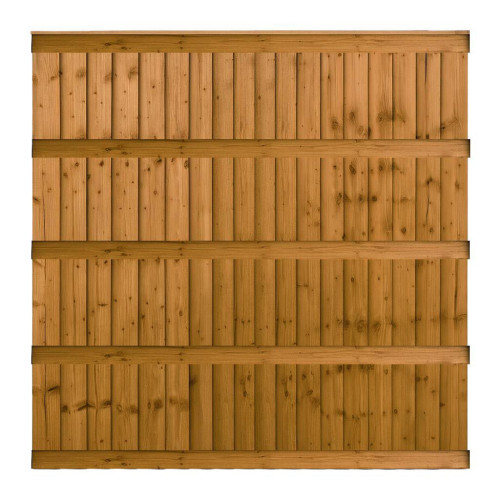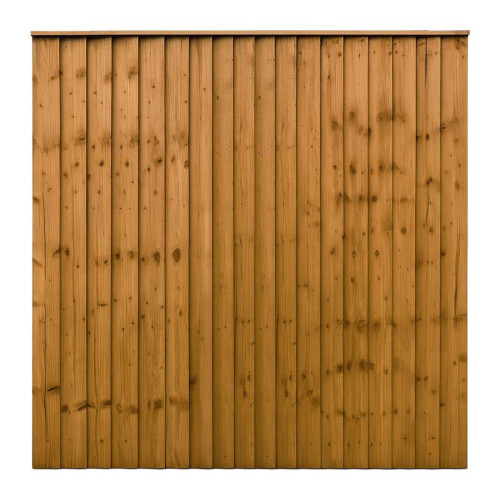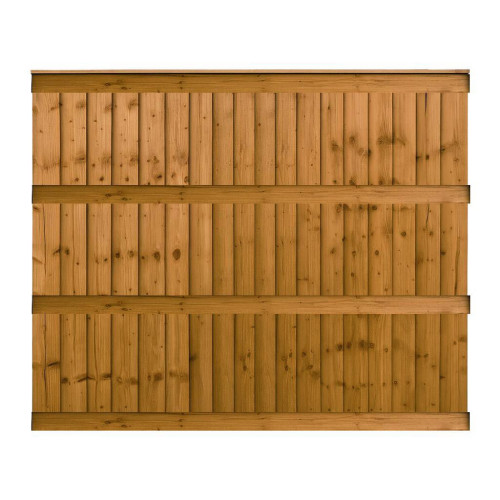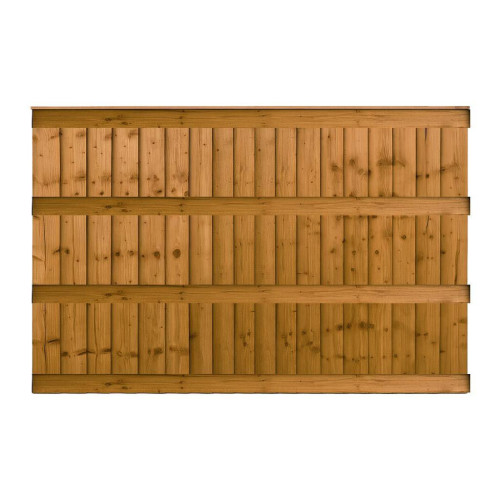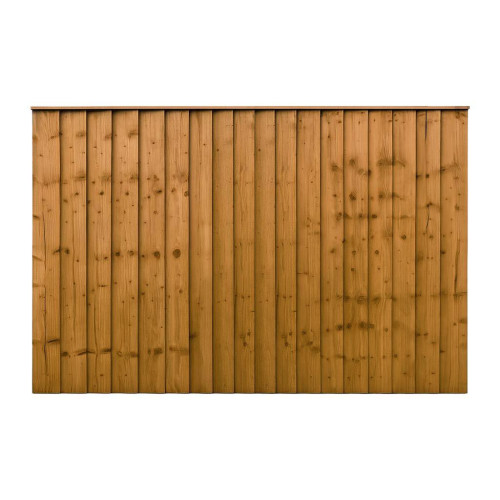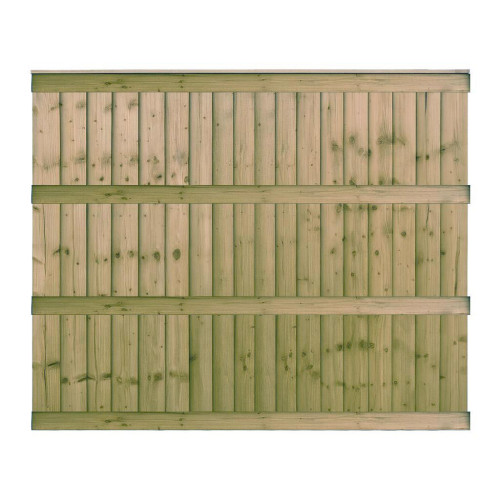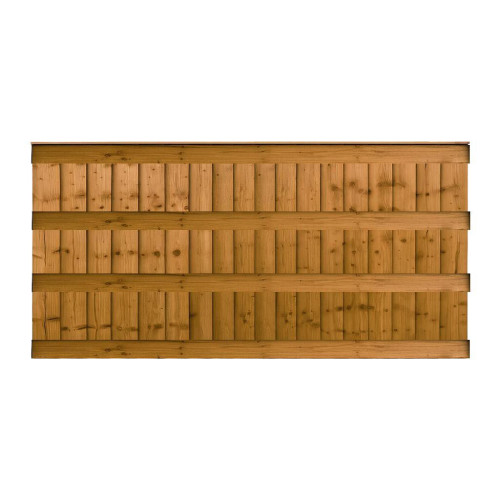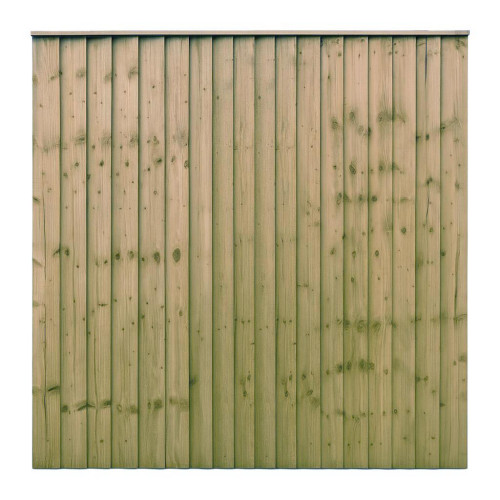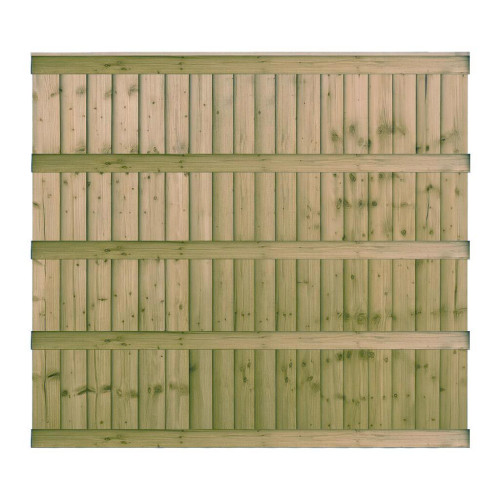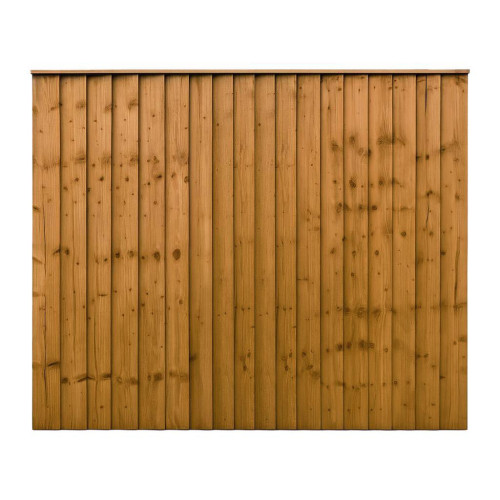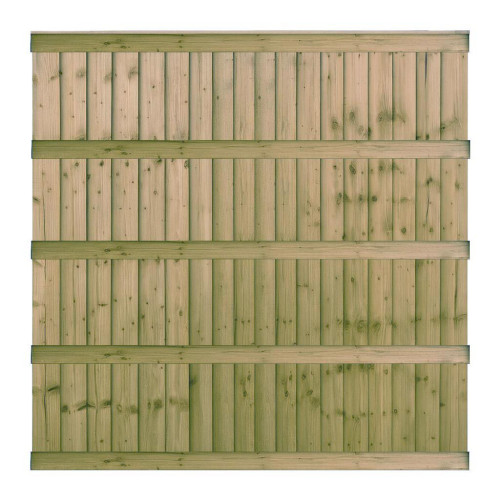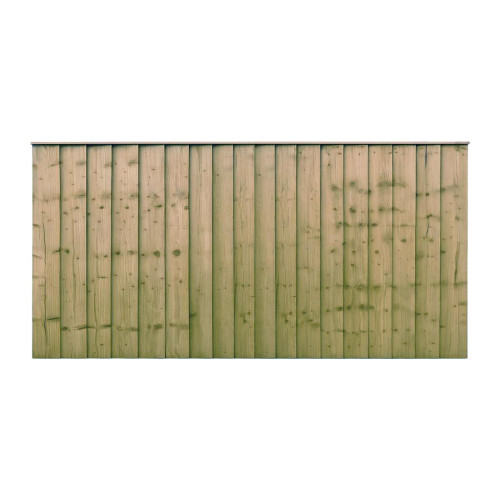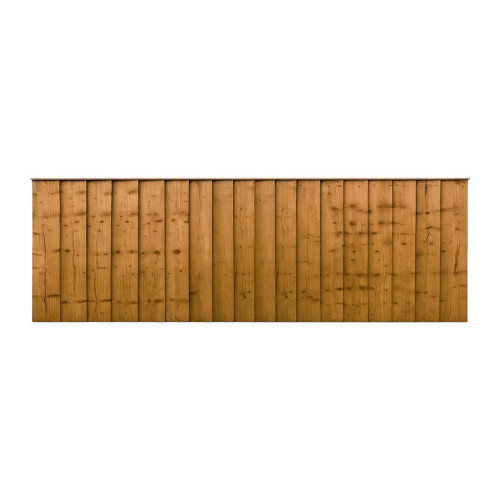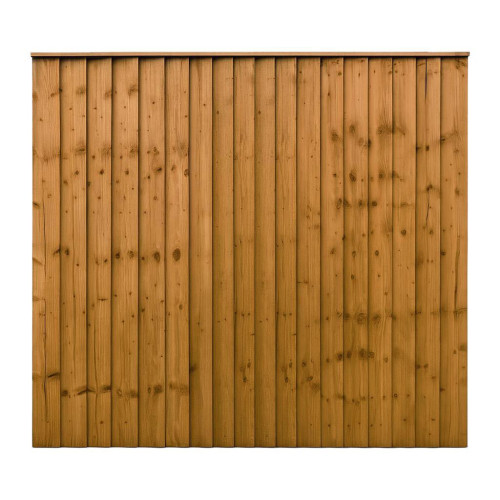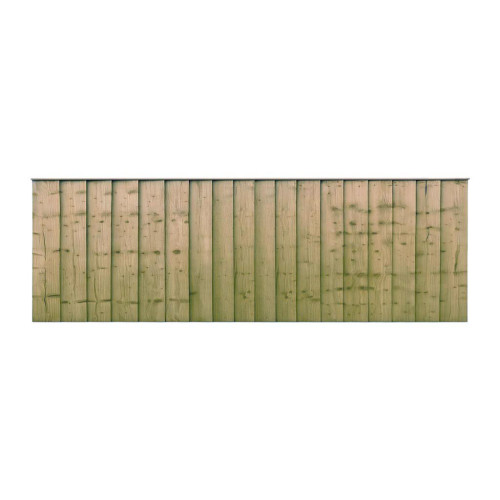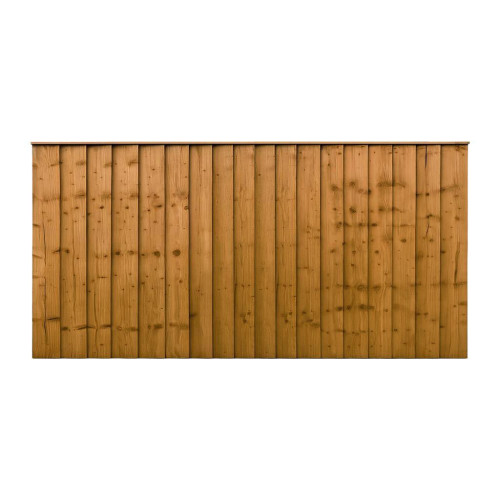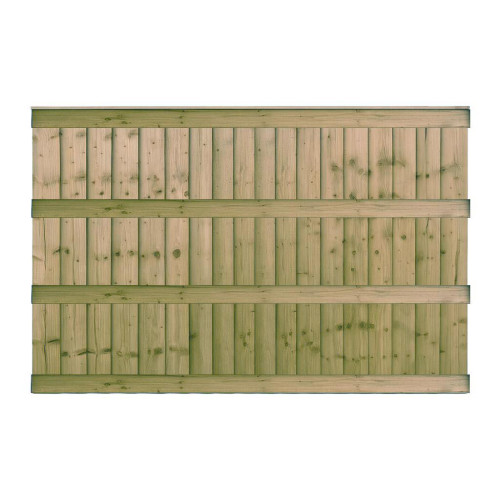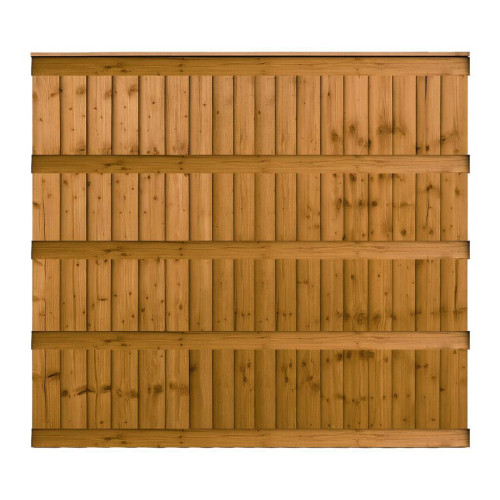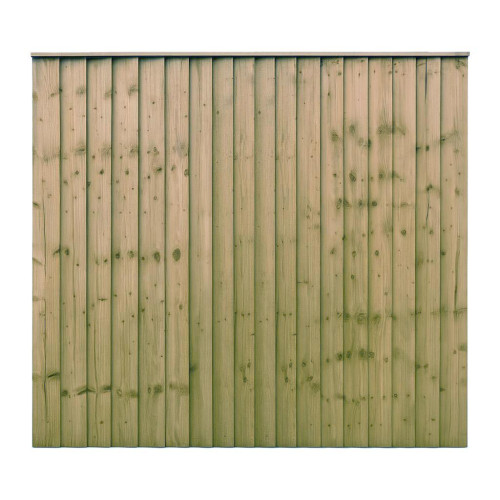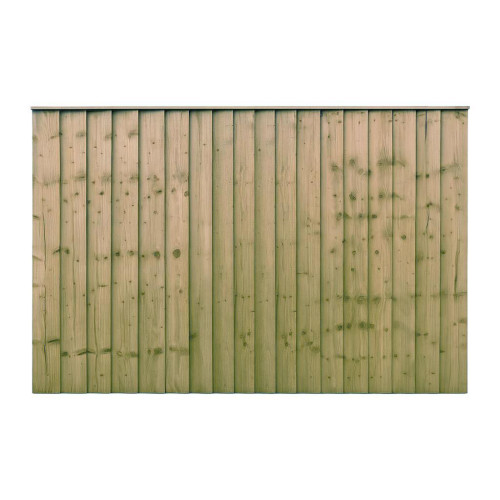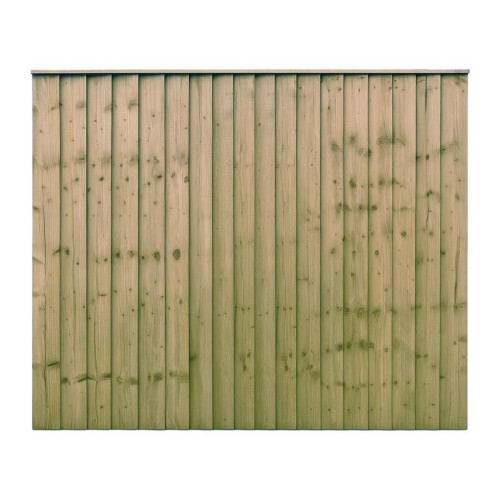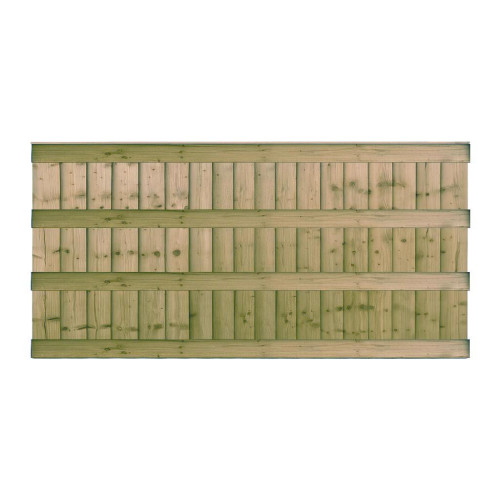



Quick answer: Yes, Closeboard Fence Panels can be reduced in width for a non-standard fence bay. East Coast Fencing's current panels are approximately 1830mm wide and use overlapping vertical feather edge boards fixed to horizontal backing rails, with no bulky side frame. That makes width adjustment more practical than on many framed decorative panels. Measure the finished opening first, remove or reposition feather edge boards as needed, shorten the backing rails and capping carefully, then protect freshly exposed pressure-treated timber where required.
Standard fence panels make installation quicker, but garden boundaries do not always divide neatly into 1830mm bays.
A shortened Closeboard Fence Panel can be useful beside a Garden Gate, against a wall or at the end of a fence run where one full-width panel will not fit.
Closeboard construction is particularly relevant here.
East Coast Fencing's current panels are manufactured in-house using overlapping feather edge boards fixed across horizontal backing rails. They are unframed at the sides, rather than being enclosed within a substantial rectangular outer frame.
That means reducing the width is possible without reconstructing the complicated frame found on many Decorative Fence Panels. It still needs to be done properly so the remaining boards stay supported and the panel fits its posts correctly.
What Width Are Closeboard Fence Panels?
Current East Coast Fencing Closeboard Fence Panels measure approximately 1830mm wide.
This is commonly described as a nominal 6ft panel.
Available heights vary, but the width remains approximately 1830mm across the current standard and Ultra Heavy Duty ranges.
Measure the actual panel before cutting or positioning new Fence Posts.
For replacement work, also measure the existing opening rather than assuming it is exactly 1830mm because an old panel was described as 6ft wide.
Why Might You Need To Shorten A Closeboard Fence Panel?
Common situations include:
- A short final bay at the end of a fence run
- A section beside a Garden Gate
- A gap between a wall and Fence Post
- Existing posts positioned closer together than a standard panel width
- An obstruction that prevents a complete 1830mm bay
One carefully shortened panel is often a practical solution.
If every panel in a new fence needs cutting, however, the fence probably needs to be set out differently.
Why Are Closeboard Panels Easier To Shorten Than Some Decorative Panels?
The reason is their construction.
Current standard Closeboard Fence Panels use overlapping feather edge boards attached to horizontal 75 x 32mm backing rails.
The panel is unframed at the sides.
A timber capping strip finishes the top.
A typical framed decorative panel can contain:
- Vertical side frames
- Horizontal framing
- Decorative slats or lattice
- Joints designed around the original rectangular dimensions
Shortening one side may therefore require part of that frame to be rebuilt.
With an unframed Closeboard Fence Panel, the main width-controlling components are the horizontal rails, capping and overlapping boards.
How Are Current Closeboard Fence Panels Constructed?
Construction varies according to panel height and whether Standard or Ultra Heavy Duty is selected.
Across suitable current standard products, the basic construction includes:
- 18 overlapping feather edge boards
- 125mm-wide feather edge boards
- 75 x 32mm horizontal backing rails
- Pressure-treated timber
- Weather capping along the top
- An unframed side construction
The number of backing rails increases on taller panels and on Ultra Heavy Duty versions.
That rail layout matters when cutting because every horizontal rail needs to finish correctly at the new panel width.
Standard vs Ultra Heavy Duty: Does Cutting Differ?
The basic width-adjustment principle is the same.
Ultra Heavy Duty panels have additional backing rail support compared with the corresponding Standard panel.
For example, current full-height approximately 1.8m panels use:
- 4 backing rails on the Standard version
- 5 backing rails on the Ultra Heavy Duty version
That means an Ultra panel simply has more horizontal rail ends to shorten and check.
The extra rails do not prevent the width being altered.
Should You Measure The Fence Bay Before Cutting?
Always.
Measure the opening where the panel will actually sit.
Check the width at:
- The top
- The middle
- The bottom
If those measurements differ significantly, investigate why.
Possible causes include:
- A leaning Wooden Fence Post
- A leaning Concrete Fence Post
- Incorrect original post spacing
- Movement in the foundations
Do not immediately cut a new panel into a tapered shape simply because the existing posts are no longer parallel.
Should A Closeboard Fence Panel Be Cut Exactly To The Opening Width?
No panel should need to be hammered or heavily forced into position.
The correct finished width depends partly on the support system.
A panel being fixed between Wooden Fence Posts has different installation details from one being lowered into slotted Concrete Fence Posts.
Allow enough practical fitting clearance for the chosen system while still ensuring the panel remains properly supported.
What Is The Best Side Of The Panel To Cut?
For a straightforward shortened bay, modifying one side is normally simpler than altering both sides.
This allows you to retain as much of the original construction as possible.
Before choosing the side, inspect:
- The feather edge overlap direction
- The backing rail ends
- The capping
- Where the final panel edge will be visible
The objective is to create a neat new edge while preserving consistent feather edge coverage.
Should You Simply Saw Straight Down Through The Complete Panel?
Usually, a more controlled method is preferable.
A single straight cut through the assembled face can leave:
- A very narrow final feather edge section
- Rough exposed board edges
- Backing rails needing further finishing
- An untidy end to the capping
Because Closeboard panels are made from individual overlapping boards, you can work with that construction rather than treating the complete panel like one solid sheet.
How Do You Shorten A Closeboard Fence Panel?
A practical approach is:
- Measure the opening: Establish the required finished panel width.
- Measure the actual panel: Confirm how much width needs removing.
- Inspect the feather edge layout: Identify which boards can be removed or repositioned.
- Mark the backing rails: Establish the new finished rail length.
- Remove unnecessary feather edge boards: Work carefully so boards intended to remain are not damaged.
- Shorten the backing rails: Cut them consistently to create the new panel width.
- Shorten the capping: Bring the top finish back to the new panel edge.
- Re-establish the final board: Make sure the closeboard overlap and edge look deliberate.
- Check every fixing: The final feather edge board must remain securely attached to the backing rails.
- Protect fresh cuts: Use suitable cut-end treatment where required.
- Test the fit: Check the panel fits the bay before completing installation.
Why Is Removing Whole Feather Edge Boards Useful?
The face of a Closeboard Fence Panel is constructed from repeated individual boards.
If the amount being removed corresponds reasonably with one or more boards, removing complete boards can preserve the original appearance better than cutting a narrow strip from every board.
You can then shorten the exposed rail and capping ends.
The resulting panel still looks like closeboard fencing because the remaining vertical boards retain their normal tapered overlapping form.
What If The Required Width Does Not Match A Whole Number Of Boards?
This is where more careful adjustment is required.
Feather edge boards overlap one another.
Their effective contribution to panel width is therefore less than their full 125mm nominal board width.
You cannot calculate the final panel width simply by saying that removing one 125mm board will always make the panel exactly 125mm narrower.
The overlap needs to be considered.
Where the required panel width falls between convenient board positions, the final edge may need:
- A repositioned feather edge board
- A carefully reduced final board
- Adjustment of the overlap near the end
The finished face should remain properly covered and securely fixed.
Can You Reduce The Feather Edge Overlap To Make The Panel Wider?
Do not significantly alter the overlap across the complete panel simply to gain a small amount of width.
Consistent overlap is part of closeboard construction.
Changing it across multiple boards can make the face look uneven and may create unwanted sight lines.
If the panel is too narrow for the bay, address the installation width properly rather than attempting to stretch the panel by spreading the feather edge boards apart.
What Happens To The Backing Rails When You Shorten The Panel?
Every backing rail needs to finish at the new panel edge.
These rails are important structural components.
The vertical feather edge boards rely on them for support.
After cutting, check that:
- The rails end consistently
- The final feather edge board remains securely fixed to each rail
- No badly split rail ends have been created
- The new rail ends do not prevent the panel fitting the post system
Do not accidentally cut a rail so far back that the outermost board has little or no structural support.
What Happens To The Capping?
The capping also needs shortening.
Current Closeboard Fence Panels use timber weather capping along the top edge.
It provides a neat finish and covers the exposed upper ends of the feather edge boards.
After reducing the panel width, trim the capping to match the new finished edge.
Do not leave it projecting beyond the shortened panel.
Does The Final Feather Edge Board Need Support?
Yes.
This is one of the most important details.
The new outermost board should remain attached securely to every backing rail it crosses.
A loose end board can:
- Rattle in wind
- Warp away from the panel
- Create an opening in the privacy screen
- Split around inadequate fixings
Check its support before installing the modified panel.
Can You Cut A Standard Closeboard Panel With A Hand Saw?
Yes, suitable timber hand tools can be used for careful modification.
Power tools may make repeated rail and capping cuts faster, but control matters more than speed.
Whichever method is used:
- Support the panel securely
- Wear appropriate eye protection
- Keep hands clear of cutting paths
- Avoid damaging feather edge boards that will remain
Should You Cut The Panel While It Is Installed?
Removing or modifying the panel on a stable working surface is generally easier than attempting substantial cutting while it is already positioned between posts.
Working on the ground or on suitable supports gives better access to:
- The rear rails
- Individual board fixings
- The capping
- Freshly cut surfaces
It also reduces the risk of accidentally cutting into a Fence Post or other installed component.
Do Freshly Cut Closeboard Panels Need Re-Treating?
Fresh cuts through pressure-treated timber should receive suitable cut-end protection where required.
This applies particularly to:
- Backing rail ends
- Capping cuts
- Any altered feather edge board
It is easiest to treat these surfaces before the panel is installed, when the new ends remain accessible.
Can You Cut Brown And Green Closeboard Panels?
Yes.
Brown and green or natural-looking pressure treatment changes the initial appearance rather than the basic cutting principle.
The construction specification is what matters.
Freshly exposed timber may initially appear lighter than the treated external surfaces.
That colour difference does not mean the cut is structurally unsuitable.
Can You Shorten An Ultra Heavy Duty Closeboard Fence Panel?
Yes.
The main difference is the greater number of horizontal backing rails.
Each rail needs shortening correctly and every remaining feather edge board needs to remain secured across the revised panel.
The process should preserve the feature that makes the Ultra panel different in the first place: more frequent horizontal support through its height.
Can You Cut Closeboard Fence Panels To Fit Wooden Posts?
Yes.
Wooden posts provide flexible fixing options for a shortened timber panel.
Before cutting, check that both posts are:
- Sound
- Plumb
- Secure
- Reasonably parallel
If one old post has moved substantially, repairing the post may be better than permanently modifying a new panel around the resulting irregular gap.
Can You Cut Closeboard Panels For Concrete Fence Posts?
Potentially, but accuracy is more important.
A compatible Closeboard Fence Panel installed between slotted Concrete Fence Posts needs to engage correctly with the slots.
The finished panel must not become so narrow that it sits inadequately within them.
Measure the clear bay and understand how much of the panel needs to enter each post slot before cutting.
Do not shorten the panel based only on the visible distance between the inner faces of the posts.
Why Is Cutting For Concrete Posts Different?
With timber posts, the panel can be mechanically fixed to the post face using an appropriate installation method.
With slotted concrete posts, the panel normally relies on engagement within the post slots.
If too much width is removed:
- The panel may not sit deeply enough in both slots
- It may rattle
- It may be more likely to move
Measure twice before making an irreversible cut.
Can You Shorten A Closeboard Panel Beside A Garden Gate?
Yes.
This is one of the most useful applications for a cut panel.
A fence run rarely divides perfectly once the Gate Posts and gate opening are included.
A shortened Closeboard Fence Panel can fill the remaining bay cleanly.
Plan the gate first.
The gate opening needs to account for:
- Gate width
- Hinge arrangement
- Latch clearance
- Suitable Gate Posts
Then measure the remaining fixed fence bay and adjust the Closeboard Fence Panel to suit it.
Can You Cut A Closeboard Panel To Fit Against A Wall?
Yes.
Measure the wall-to-post opening at the actual panel height.
Older walls and fences may not be perfectly vertical, so check more than one point.
A small planned fitting clearance is preferable to cutting the panel exactly to one measurement and discovering that it jams halfway into position.
What If The Existing Bay Is Wider Than The Panel?
Cutting obviously cannot solve an oversized opening.
Do not try to make a standard Closeboard Fence Panel wider by reducing the feather edge overlap.
Possible solutions depend on the support system and may include:
- Correcting the Fence Post position
- Using suitable structural packing with timber posts
- Creating a custom site-built closeboard section
Long unsupported fixings spanning a large empty gap are not a proper substitute for correctly spaced posts.
What If The Required Bay Is Much Narrower Than 1830mm?
A standard Closeboard Fence Panel can potentially be shortened substantially, but there is a point where adapting a complete panel becomes inefficient.
If you only need a very narrow section, traditional closeboard built from:
- Individual Feather Edge Boards
- Suitable rails
- Capping
may be more sensible.
Site-built closeboard is naturally suited to unusual bay widths because it is assembled specifically for the opening.
When Is Site-Built Closeboard Better Than Cutting A Panel?
Consider building the section from individual components where:
- The bay is very narrow
- The width is highly irregular
- The ground changes significantly
- Several custom-width bays are required
- The boundary contains numerous obstacles
Ready-made panels are particularly efficient for standard modular runs.
Traditional closeboard is more flexible when the garden refuses to conform to standard panel dimensions.
Can You Cut A Closeboard Fence Panel Diagonally For A Slope?
A rigid panel is normally better kept rectangular and stepped between posts.
Cutting the bottom diagonally affects:
- Every vertical feather edge board along the slope
- The relationship between the boards and lower rail
- The finished bottom line
For complicated sloping boundaries, site-built closeboard can be more appropriate because the boards can be arranged around the actual ground levels.
Do not assume that because a panel is easy to shorten in width it is equally suitable for every non-rectangular modification.
Can You Reduce The Height Of A Closeboard Fence Panel?
It is technically possible to modify timber construction, but reducing height is a different job from shortening width.
Current panel heights already provide several choices, so selecting the closest appropriate standard height is normally better.
A height reduction can interfere with:
- Backing rail positions
- Feather edge board ends
- Top capping
If the required height already exists in the product range, use that panel instead of rebuilding a taller one.
Should You Cut All Your Fence Panels To The Same Smaller Width?
Generally not on a new installation.
If you have a new straight fence run, set the posts around full-width panels wherever practical.
Then place the shortened bay deliberately at:
- The end of the run
- Beside a gate
- Beside a wall
This reduces cutting, waste and installation time.
Where Should A Shortened Panel Go In A Fence Run?
A shortened section normally looks most deliberate at a fixed feature.
For example:
- Beside the Garden Gate
- Against the house
- At a boundary corner
- At the far end of the fence
A narrow panel placed randomly in the middle of several full-width bays can draw more attention to itself.
Plan the complete run before setting the posts.
Can You Cut A Replacement Panel To Fit Old Fence Posts?
Yes, and this is one of the strongest reasons for modifying a Closeboard Fence Panel.
Older post spacing may differ slightly from the dimensions you would choose for a new installation.
Before cutting:
- Check both posts remain structurally sound.
- Measure the opening at several heights.
- Check whether a Gravel Board affects the usable width.
- Determine how the panel will be fixed or slotted into place.
- Only then calculate the required panel reduction.
Should You Replace The Posts Instead Of Cutting The Panel?
Not merely because an existing sound bay is slightly narrower than a standard panel.
Carefully trimming one Closeboard Fence Panel may be far easier than removing otherwise serviceable posts.
Post replacement becomes more relevant when the bay is narrow because the posts have:
- Leant significantly
- Moved in their foundations
- Rotten at ground level
- Cracked or failed
Do not adapt a new panel around a support system that is already failing.
Does Cutting A Closeboard Panel Make It Weaker?
A properly shortened panel can remain a substantial fencing component.
The critical point is preserving the structural relationship between the remaining feather edge boards and backing rails.
A poor alteration can weaken the edge if:
- The final board is insufficiently fixed
- Backing rails are split
- Important fixings are removed and not reinstated
The fact that the panel becomes narrower does not itself make it defective.
Does A Narrower Panel Catch Less Wind?
A smaller panel has less overall face area than the original full-width panel, but this should not be used as an excuse for poor support.
Closeboard fencing has a largely solid face because its boards overlap.
Wind loading still transfers through the panel into:
- Fixings
- Fence Posts
- Foundations
Install the shortened section as a proper structural fence bay.
Does The Gravel Board Need Shortening Too?
Possibly.
If the custom-width panel is being installed above a Gravel Board, that board also needs to suit the finished bay.
Wooden Gravel Boards can be cut using suitable timber-working methods.
Concrete Gravel Boards are very different products and should not automatically be treated as something that can simply be shortened on site.
Plan the entire bay, not just the timber panel.
Should You Measure The Gravel Board Before Cutting The Panel?
Yes, particularly with existing Concrete Fence Posts.
If an existing Gravel Board already fits correctly within the post slots, it provides useful information about the actual bay width and slot engagement.
Do not assume the visible panel opening tells the whole story.
Common Mistakes When Cutting Closeboard Fence Panels
- Cutting before measuring the actual bay
- Trusting the nominal 6ft description instead of measuring the panel
- Modifying a new panel around a leaning Fence Post
- Ignoring the feather edge overlap
- Assuming removing one 125mm board always removes exactly 125mm of finished panel width
- Leaving the final feather edge board poorly supported
- Forgetting to shorten the capping
- Splitting backing rail ends while cutting
- Leaving freshly exposed treated timber unprotected where cut-end treatment is required
- Removing too much width for a slotted Concrete Fence Post installation
- Trying to stretch a narrow panel by reducing board overlap
- Cutting every panel in a new run instead of setting the posts out properly
- Using a ready-made panel where a very narrow custom closeboard section would be simpler
FAQs
Can Closeboard Fence Panels Be Cut To Width?
Yes. Current Closeboard Fence Panels have an unframed construction using overlapping feather edge boards fixed to horizontal backing rails, so the width can be reduced when a non-standard bay requires it.
What Width Are Closeboard Fence Panels?
Current East Coast Fencing Closeboard Fence Panels are approximately 1830mm wide, commonly described as a nominal 6ft width.
Should You Cut Through The Whole Closeboard Panel In One Line?
Working with the individual feather edge boards and horizontal rails usually provides more control. Removing or repositioning boards before shortening the rails can create a cleaner new edge than simply sawing through the complete assembled face.
Do Cut Closeboard Panels Need Re-Treating?
Freshly exposed pressure-treated timber should receive suitable cut-end protection where required, including rail, capping and altered feather edge surfaces.
Can Ultra Heavy Duty Closeboard Panels Be Cut?
Yes. The width-adjustment principle is similar, although Ultra panels contain additional horizontal backing rails that also need shortening correctly.
Can You Cut Closeboard Panels For Concrete Posts?
Potentially. The finished panel still needs adequate engagement within both post slots, so measure the complete slotted opening carefully before removing any width.
Can You Cut A Closeboard Panel Beside A Garden Gate?
Yes. A shortened panel is particularly useful for the remaining bay beside a properly planned Gate Post and gate opening.
Is It Better To Cut A Panel Or Build Closeboard Fencing From Individual Boards?
Cutting one panel is practical for a slightly shortened standard bay. For very narrow, irregular or numerous custom sections, site-built closeboard using individual Feather Edge Boards and rails can provide greater flexibility.
Shorten The Construction, Not Just The Visible Face
Closeboard Fence Panels are relatively adaptable because of the way they are built.
The current approximately 1830mm-wide panels use overlapping feather edge boards supported by horizontal rails rather than a bulky side frame.
That makes a shortened final bay beside a gate, wall or existing Fence Post entirely practical.
The important point is to treat the panel as a timber assembly.
Measure the opening first. Work out which feather edge boards need removing or repositioning. Shorten every backing rail and the top capping to the new dimension, then make sure the final board remains properly fixed and the closeboard overlap still looks consistent.
With Concrete Fence Posts, also preserve enough width for the panel to engage correctly with both slots.
Finally, protect freshly cut pressure-treated timber where required.
If only one end bay needs adjusting, shortening a panel is often an efficient solution. If the complete boundary contains unusual widths, steep changes in level or numerous bespoke sections, traditional closeboard fencing built from individual boards and rails may be the better construction method from the outset.