Choosing The Right Fence Posts
Fence posts provide the structural support for a garden fence. They hold panels in position, keep the boundary aligned and take much of the pressure created by wind and movement. Choosing posts that suit the fence height, panel type and site conditions is essential if the completed run is to remain straight and secure.
For most customers, the main choice is between concrete fence posts and wooden fence posts. Concrete posts provide a rigid, durable structure with low maintenance requirements. Wooden posts create a natural all-timber finish and are easier to cut, drill and work with during installation.
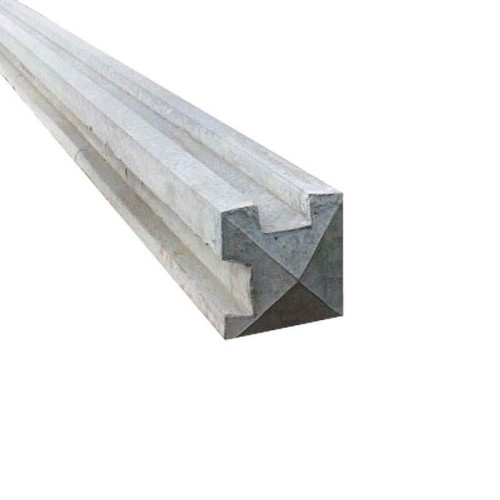
Our fence post range also includes different lengths and sections for low boundaries, standard garden fencing, taller panels, gates and more substantial timber projects. Concrete intermediate, end, corner and three-way posts are available for different positions within a fence run.
The right post will depend on the finished fence height, the weight and style of the panels, ground conditions and how exposed the boundary is. It is also important to allow enough post length below ground for a secure installation.
Fence Posts For Strong And Secure Garden Boundaries
Fence posts perform most of the structural work in a fencing system. While the panels create privacy and define the boundary, the posts carry their weight and resist the movement created by changing weather conditions.
A post that is too short, too light or poorly installed can allow panels to lean, rattle or move out of alignment. This can place additional strain on fixings and neighbouring sections of the fence.
Taller and more solid fencing normally places greater pressure on the posts than lower or more open designs. A full-height closeboard panel, for example, presents a larger surface to the wind than a low picket panel or an open trellis screen.
Choosing the correct fence post is therefore not only about appearance. The post needs to match the height, weight and construction of the fencing it will support.
Concrete Fence Posts
Concrete fence posts are a strong and durable option for garden boundaries, replacement fence runs and exposed locations. They do not rot and require less ongoing maintenance than timber posts.
Concrete posts provide a rigid framework that helps keep fence panels straight and stable. They are commonly used for rear garden boundaries, long side runs and full-height fencing where strength and durability are priorities.
Slotted concrete posts are designed to hold fence panels and gravel boards between the posts. Panels can normally be lowered into the slots, creating a secure installation without fixing directly through the face of the panel.
This system also makes future panel replacement more straightforward. If a timber panel becomes damaged, it can often be lifted out and replaced without dismantling the neighbouring fence bays.
Concrete posts are heavier to handle than wooden posts and need to be positioned carefully during installation. Once properly set, however, they provide a strong, low-maintenance foundation for many common garden fencing systems.
Concrete Intermediate Fence Posts
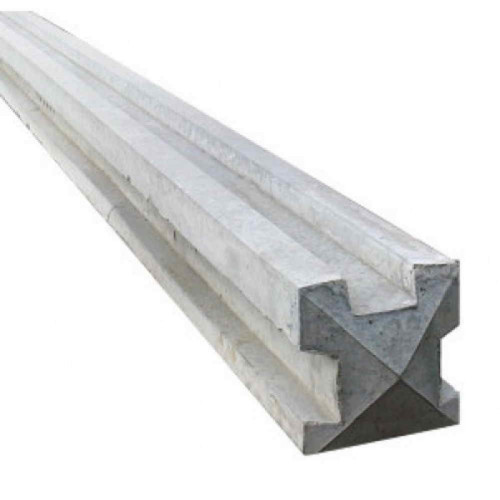
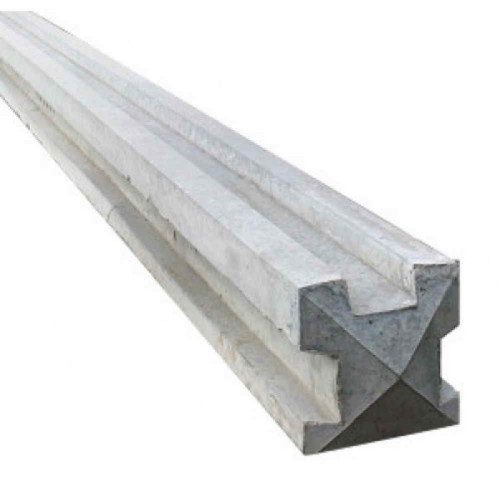
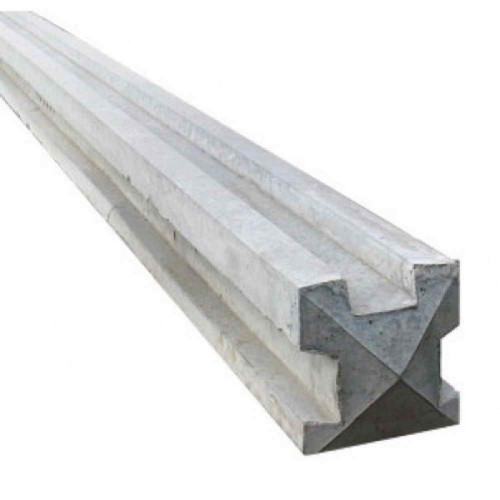
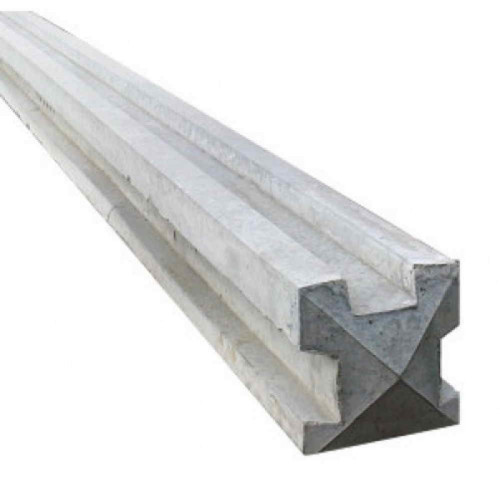
Concrete intermediate posts are used between panels along a straight fence run. They have slots on opposite sides, allowing one fence panel or gravel board to sit on each side of the post.
These are the most frequently used concrete posts in a standard boundary. A straight run with several panels will normally use intermediate posts between each bay, with a different post type used at the ends or corners.
The slots help maintain consistent panel positioning and create a neat line along the boundary. They are designed to work with common fence panel and gravel board sizes.
Before ordering, check the required overall post length as well as the dimensions of the panels and gravel boards. The post must be long enough to accommodate the finished fence height and the section installed below ground.
Concrete End Fence Posts
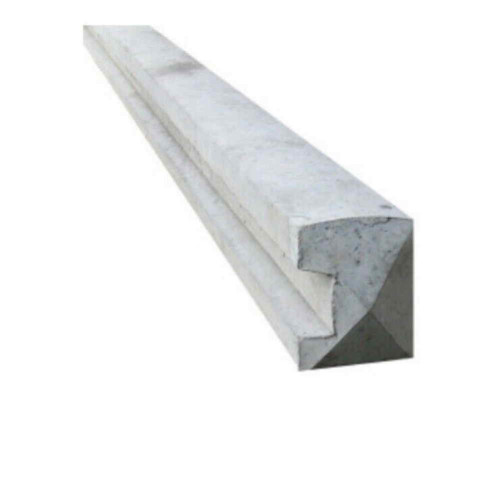
Concrete end posts are used where a fence run finishes. This may be beside a wall, at the edge of a property, next to a gate opening or at another point where no additional panel continues beyond the post.
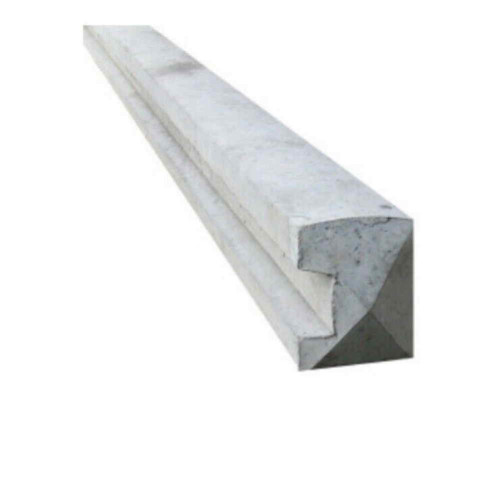
An end post has a slot positioned to accept the final panel while creating a more finished outer face on the opposite side.
Using the correct end post gives the fence a cleaner finish than using an intermediate post where the run stops. It also avoids leaving an unused slot visible at the end of the boundary.
End posts should be positioned and aligned carefully because they help establish the starting or finishing point for the entire fence run.
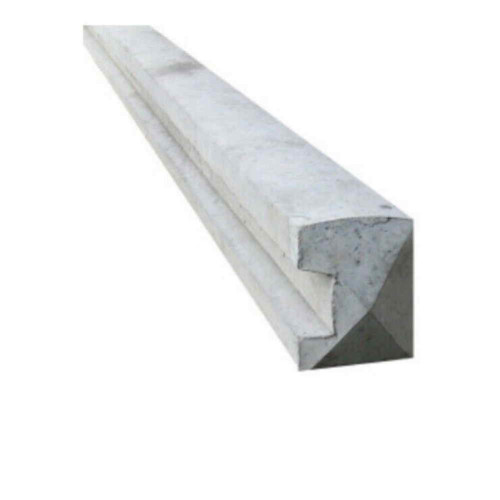
Concrete Corner Fence Posts
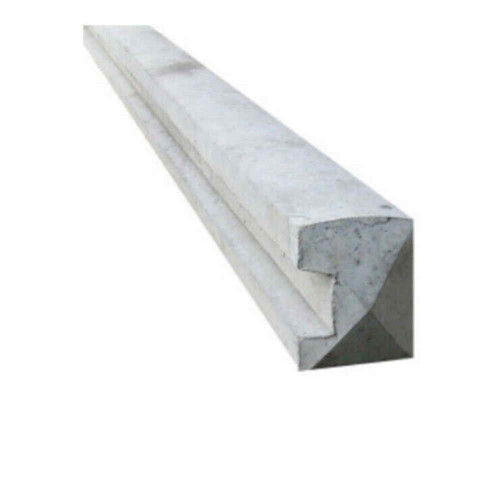
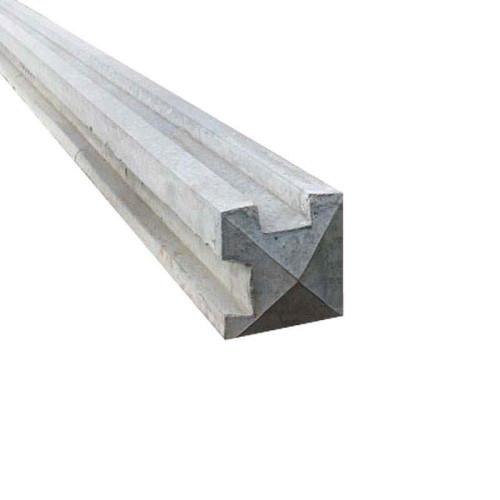
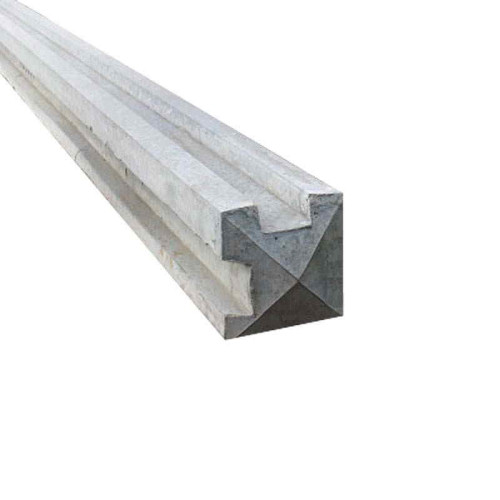
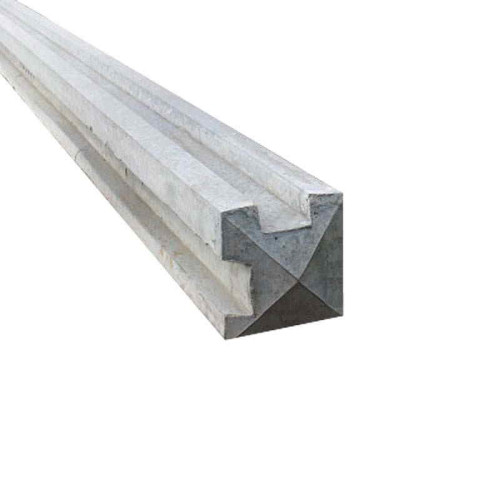
Concrete corner posts are designed for positions where the fence changes direction through a right angle. Their slot arrangement allows panels to meet neatly at the corner without improvised brackets or awkward fixing arrangements.
Corners can experience greater pressure than intermediate sections because wind forces are transferred through fence runs approaching from two directions.
A properly installed corner post helps hold both sections in alignment and creates a clean change in direction.
When planning a boundary, identify every corner before ordering so that the correct number and type of posts can be included.
Concrete Three-Way Fence Posts
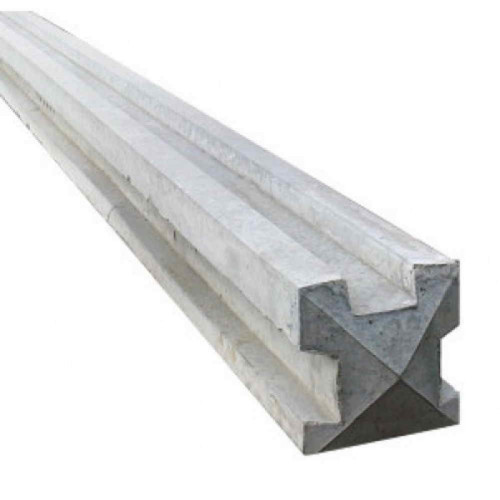
Three-way concrete posts are used where three separate fence runs meet. This type of junction may occur between neighbouring garden boundaries or where an internal division connects with the main perimeter fence.
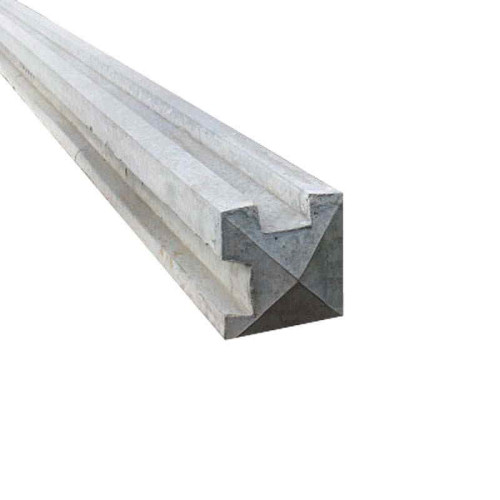
The post has slots arranged to support panels in three directions, allowing the fence lines to meet at one properly supported point.
Using a purpose-designed three-way post produces a stronger and neater junction than attempting to attach an additional fence run to the side of a standard post.
These posts are required less frequently than intermediate or end posts, but they are important where a boundary layout includes a three-direction junction.
Wooden Fence Posts
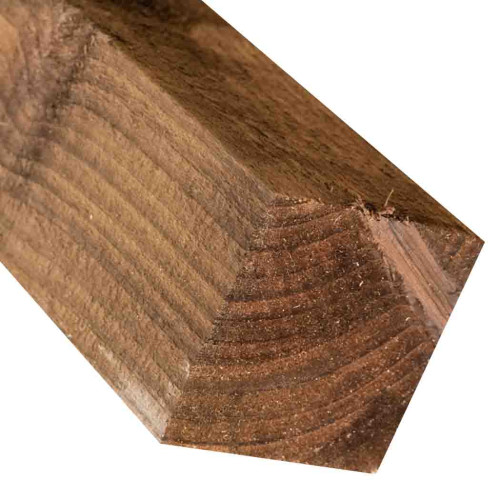
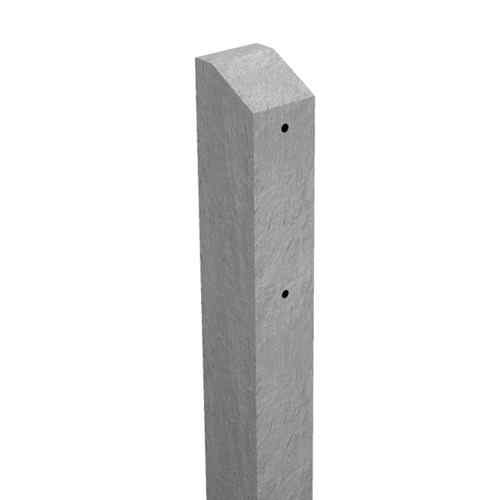
Wooden fence posts are a popular choice where customers want a natural timber finish across the entire fence run. They work well with timber fence panels, trellis, picket fencing and wooden gravel boards.
Timber posts are easier to cut, drill and fix into than concrete posts. This gives installers more flexibility when working around changes in ground level, non-standard bay sizes and decorative garden projects.
Our wooden fence posts are pressure treated for outdoor use. The pressure treatment helps protect the timber against rot and fungal decay, although secure installation and suitable ground preparation remain important.
Wooden posts are available in different lengths and section sizes. The correct option will depend on the finished fence height, the weight of the fencing and the level of strength required.
They are commonly used for domestic garden boundaries, front gardens, picket fencing, trellis screens and areas where the appearance of concrete would not suit the wider garden design.
75mm x 75mm Wooden Fence Posts
75mm x 75mm wooden fence posts are a practical option for lighter garden fencing, lower boundaries, trellis panels and general landscaping projects.
The smaller section creates a neat appearance and makes the posts easier to handle during installation. They can be suitable where the fence is relatively low, open or sheltered from strong wind.
These posts are often used with picket panels, garden screens and lighter decorative fencing. They may also be used for trellis fixed between posts or for creating divisions within the garden.
Before choosing a 75mm post, consider the height and weight of the full fence. A larger section may be more appropriate for tall solid panels, exposed boundaries or heavier structures.
100mm x 100mm Wooden Fence Posts
100mm x 100mm wooden fence posts provide a more substantial timber support for taller panels, heavier fencing and projects where additional strength is required.
The larger section makes these posts suitable for full-height garden boundaries, more demanding locations and areas that experience greater wind exposure.
They are also commonly considered for gate openings because a gate places repeated sideways strain on its supporting post whenever it is opened and closed.
A 100mm timber post creates a heavier visual profile than a 75mm post, but this can suit substantial closeboard fencing and larger landscaping structures.
When comparing the two sizes, base the decision on the demands of the fence rather than price alone. A stronger post can provide a better long-term foundation for a taller or heavier run.
Pressure Treated Wooden Fence Posts
Our wooden fence posts are pressure treated for outdoor use. During pressure treatment, preservative is forced into the timber to help protect it against rot and fungal decay.
This pressuretreatment makes the posts better suited to typical UK garden conditions, where timber may be exposed to rain, damp soil and seasonal changes in temperature.
Pressure treatment improves durability but does not make installation quality less important. Posts should be set securely and positioned so that water is not encouraged to collect around the base.
The original pressure treatment colour will gradually weather after installation. This is a normal characteristic of outdoor timber and does not mean that the preservative has stopped working.
Where a decorative finish is required, a compatible exterior timber treatment can be applied once the timber is ready, following the coating manufacturer’s instructions.
Fence Posts For Fence Panels
Fence posts used with fence panels need to suit the panel height, weight and construction. A low picket panel places less demand on its supports than a tall solid privacy panel.
Closeboard panels are substantial and create a solid face that catches wind. They need a suitable post system, particularly when used at full height or across an exposed boundary.
Waney lap panels have a lighter construction but still require secure posts to prevent movement and maintain an even fence line.
Decorative and slatted panels may vary in weight and openness. Although gaps can allow more airflow, the panel dimensions and overall fence height still affect the post requirements.
When replacing an existing panel, check the condition of the posts before assuming they can be reused. New panels fitted between weak or leaning posts will only be as stable as the existing structure.
Fence Posts For Closeboard Fencing
Closeboard fence panels create a strong and private boundary, but their solid construction means the fence posts need to cope with significant wind pressure.
Concrete posts are often chosen for long or exposed closeboard runs because they provide a rigid structure and do not rot at ground level.
Wooden posts can also be used, particularly where an all-timber appearance is preferred. A larger timber section may be more suitable for full-height or heavier closeboard fencing.
The correct choice will depend on the panel height, total run length, site exposure and ground conditions. The post foundation is as important as the post material.
Fence Posts For Picket Fencing
Picket fencing is lower and more open than most privacy fencing, which generally places less pressure on the posts.
Wooden fence posts are commonly used with picket panels because they create a consistent timber appearance and are easy to fix into.
A smaller post section may be suitable for many low picket boundaries, depending on the panel height and site conditions.
Posts should still be aligned carefully because picket fencing is often installed in highly visible front gardens. Even small changes in height or angle can be noticeable along an open fence line.
Fence Posts For Trellis Panels
Fence posts can be used to support trellis panels installed as garden screens, planting supports or divisions between different outdoor areas.
Trellis is generally lighter than a solid fence panel, but it still needs secure support. Taller trellis screens can catch wind, and climbing plants can add considerable weight as they mature.
Wooden posts are a natural match for timber trellis and provide a straightforward surface for exterior screws and brackets.
The post strength should account for future plant growth as well as the weight of the bare panel. Evergreen climbers can become particularly heavy, especially after rain.
If trellis is being added above an existing fence, check whether the current posts are tall and strong enough to support the increased height.
Fence Posts For Garden Gates
Gate posts need to withstand different forces from ordinary fence posts. A garden gate hangs from one side of the opening and repeatedly places sideways pressure on the post as it moves.
The supporting post must be strong enough for the size and weight of the gate. A small picket gate will not require the same support as a tall, solid timber gate.
Wooden gate posts are often selected in a larger section than standard intermediate fence posts. This gives the hinges a more substantial fixing point and helps resist movement.
Gate posts must be set securely and kept upright. If the hanging post moves, the gate may drop, scrape against the ground or fail to meet the latch correctly.
Plan the gate opening before setting the surrounding fence posts. The gate width, hinge arrangement and clearance all affect the required post positions.
Fence Posts For Windy Gardens
In exposed gardens, fence posts must resist the repeated force transferred through the panels during windy weather. The pressure is often greatest on solid fencing, corners and posts at the ends of a run.
Concrete fence posts are frequently chosen for exposed boundaries because they create a rigid structure and are not vulnerable to timber decay at ground level.
Wooden fence posts can still be suitable where the correct section and length are chosen. Larger posts may be appropriate for tall fencing and more demanding locations.
The post material is only one part of the decision. Installation depth, ground conditions, panel style and total fence height all affect the finished structure.
A strong post that has not been set securely can still move. Posts and foundations should therefore be considered as one structural system.
Choosing Fence Post Length
Fence post length needs to account for the visible fence height and the section installed below ground. The post should not be chosen solely according to the height of the panel.
A taller fence normally requires a longer post so that enough material remains below ground to provide secure support.
The height of any gravel board must also be included. A 6ft panel installed above a gravel board creates a taller finished boundary than a 6ft panel fitted closer to ground level.
Concrete posts are commonly described by their total length in feet. Wooden posts may be listed in metric lengths such as 1.8m, 2.4m or 3.0m.
Ground conditions and wind exposure may affect the installation depth required. Loose, soft or disturbed ground may need greater consideration than firm and stable soil.
Check the individual product size and plan the complete fence height before ordering.
Measuring For Fence Posts
Accurate measurement helps determine the number, type and length of fence posts needed for a project. Begin by measuring the total boundary and identifying all corners, ends, junctions and gate openings.
For a straight run using standard panels, a post will normally be required at each side of every panel. This generally means one more post than the number of panels, although corners and gates can change the calculation.
If you are replacing an existing post, measure the panel height, gravel board height and distance between neighbouring posts. Also identify whether the post is intermediate, end, corner or three-way.
Do not assume every existing bay is exactly the same width. Older fence runs can move, and posts may no longer be positioned at their original centres.
When using concrete posts, check that the slot positions and overall length suit the existing panels and gravel boards.
Setting Fence Posts Securely
Fence posts need a firm foundation to support the completed boundary. The post hole should be prepared for the post length, ground conditions and expected fence height.
Posts should be aligned vertically and positioned at the correct spacing before the setting material is allowed to harden. Small errors at the beginning of a run can become more noticeable as additional panels are installed.
Suitable products from our cement products range can be used to secure fence posts in the ground.
The setting material should hold the post firmly and prevent movement at ground level. Posts that move can cause panels to rattle, joints to loosen and the entire run to lean.
Take additional care around corners, ends and gate openings. These positions often experience greater pressure than intermediate sections.
Using Fence Posts With Gravel Boards
Fence posts are commonly used with gravel boards to support the bottom of a panel and raise the timber away from wet ground.
Concrete gravel boards are frequently installed between slotted concrete posts. Together they create a durable lower section that is resistant to rot and general garden wear.
Wooden gravel boards can be used with timber posts where an all-wood appearance is preferred.
The gravel board height must be considered when choosing the post length. It contributes to the total height of the completed fence and affects the amount of post remaining below ground.
Check that the chosen posts, panels and gravel boards are designed to work together before installation begins.
Fence Post Spikes And Supports
Fence post spikes and supports provide alternative fixing methods for certain timber post projects.
Drive-in post spikes may be suitable for some lighter garden structures and locations where excavating a conventional post hole is not practical.
Bolt-down post supports can provide a fixing point on an appropriate hard surface, depending on the structure and loading involved.
These products are not automatically suitable for every fence. Tall, solid or exposed boundaries generally place greater demands on the post and may require a more substantial foundation.
Before using a spike or support, consider the fence height, panel weight, ground or surface condition and wind exposure.
Replacing A Damaged Fence Post
A failed fence post can cause several adjoining panels to lean or move. Common signs include movement at ground level, a visibly leaning post, cracked concrete or timber that has become soft near the base.
If the surrounding panels and posts remain sound, replacing one damaged post may restore the stability of the run without rebuilding the entire boundary.
Before ordering, identify the post material, length and type. For concrete systems, determine whether the damaged post is intermediate, end, corner or three-way.
Check the dimensions and positions of the adjoining panels and gravel boards. The new post needs to suit the existing system and restore the original alignment.
For some timber post failures, a concrete repair spur may provide a suitable repair method. The condition of the remaining timber and the demands of the fence should be considered before deciding between repair and full replacement.
Planning A Complete Fence Post Run
When planning a complete boundary, mark the position of every post before ordering. Identify straight sections, corners, ends, junctions and gate openings.
A simple straight run will normally require intermediate posts between the panels and suitable posts at each end. Corners and three-way junctions require posts with different slot arrangements.
Choose the fence panel and gravel board combination before confirming the post length. Their combined height determines the visible section of post required above ground.
Consider whether the fence will use timber or concrete components throughout, or whether different materials need to be connected.
Planning the full layout before installation makes it easier to maintain consistent panel spacing, avoid missing specialist post types and create a straighter finished boundary.
Buy Fence Posts From East Coast Fencing
East Coast Fencing supplies fence posts for replacement fencing, complete garden boundaries, trellis screens, gate installations and landscaping projects.
Our range includes concrete fence posts for strong, low-maintenance fence systems and pressure treated wooden fence posts for customers who prefer a natural timber finish.
Concrete intermediate, end, corner and three-way posts are available for different positions within a boundary. Wooden posts are offered in popular lengths and sections for lighter fencing, full-height panels and more substantial garden projects.
Whether you are replacing one failed post or ordering materials for a complete new fence line, the products above allow you to compare post materials, lengths, sections and types.
East Coast Fencing is backed by more than 20,000 customer reviews across Trustpilot and Google, giving customers confidence when choosing and ordering fence posts online.