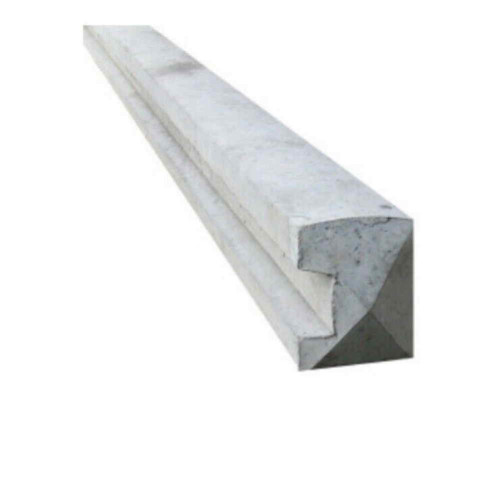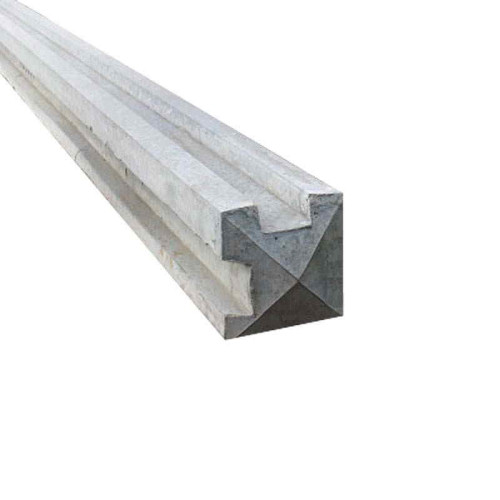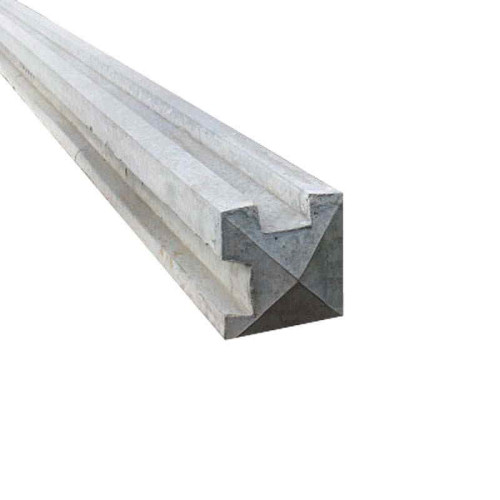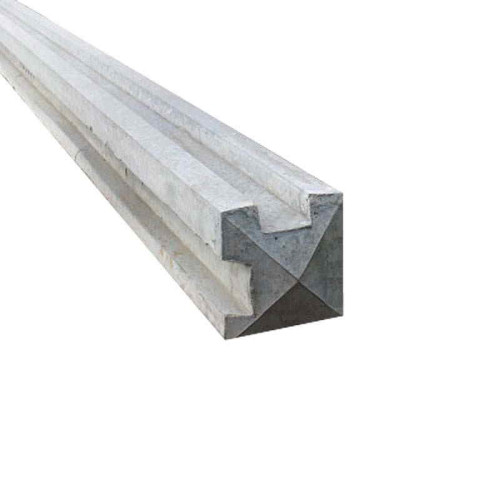



Quick answer: Concrete fence posts can crack because of impact, ground or foundation movement, excessive loading, poor handling or damage around the panel slots. A fine surface line does not automatically mean the post has failed. Wider cracks, loose concrete, movement when the post is pushed or exposed steel reinforcement are more serious. If a crack affects the post's stability or its ability to support the fence panel safely, replacement is normally more sensible than simply covering the damage.
Concrete fence posts are chosen largely because they do not suffer from the ground-level rot associated with timber posts.
That does not make them indestructible.
A concrete post can crack, chip, lean or become loose in its foundation. Damage is particularly important around the slots that support the Fence Panels and Gravel Boards.
The difficulty is deciding whether a visible mark is superficial or evidence that the post is beginning to fail.
Before replacing an otherwise useful fence post, inspect the crack itself, the concrete around it, the internal reinforcement where visible and the stability of the complete post.
Why Do Concrete Fence Posts Crack?
There is no single cause.
Concrete fence posts can be damaged by:
- Impact during transport or installation
- A heavy blow after installation
- Ground movement
- Foundation movement
- A post being forced out of alignment
- Excessive pressure around the panel slots
- Forcing an oversized panel or Gravel Board into the slots
- Drilling too close to an edge
- Drilling into internal reinforcement
- Excessive loads placed on the fence
The location of the crack often gives an important clue.
A chip around the top may have a very different cause and consequence from a crack running through the post close to ground level.
Are Concrete Fence Posts Reinforced?
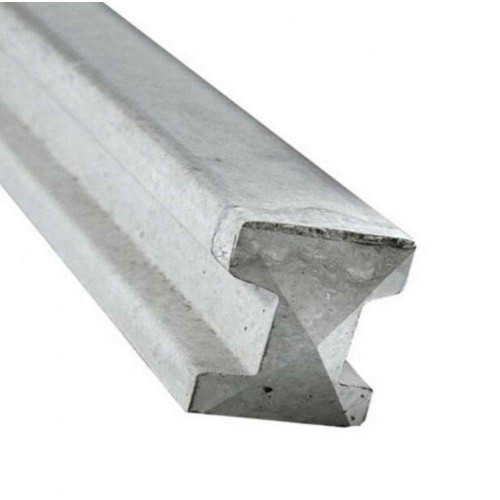
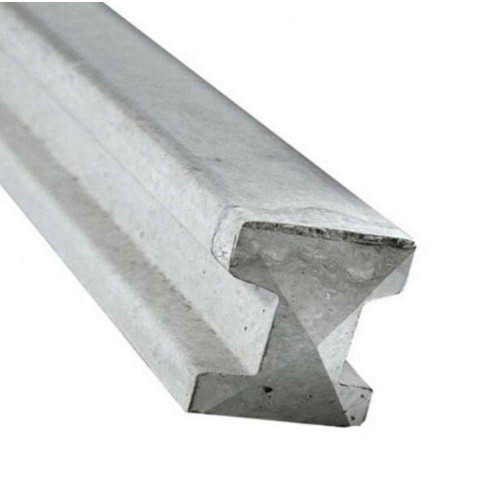
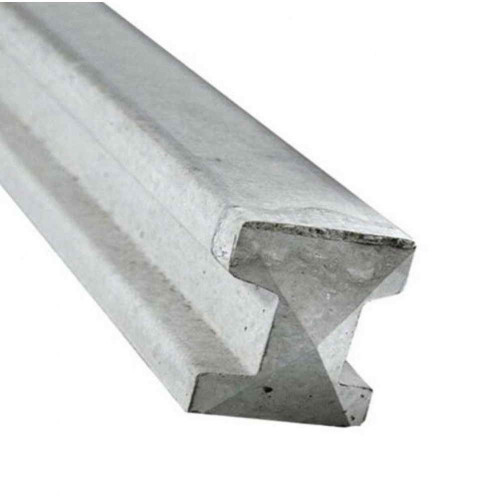
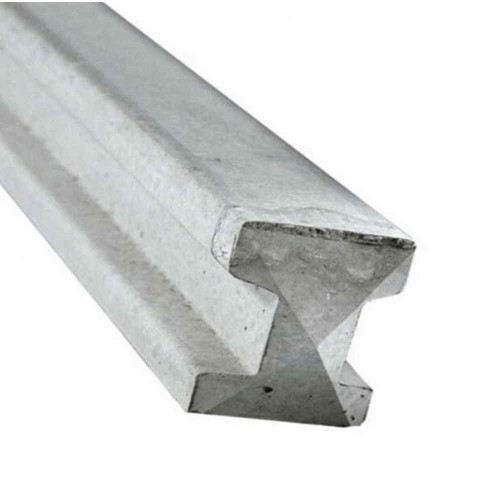
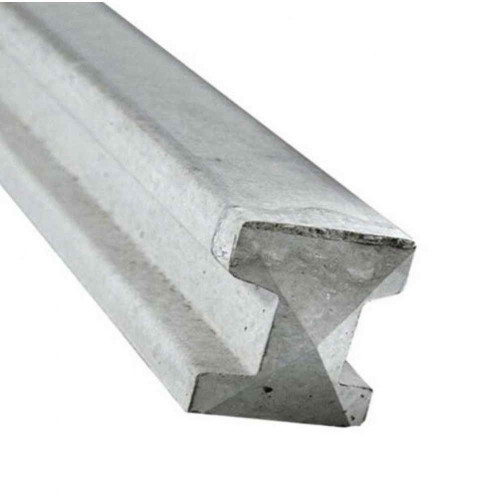
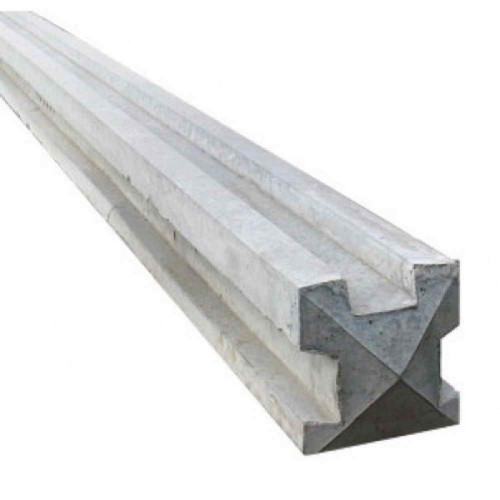
Current East Coast Fencing concrete fence posts are manufactured from wet-cast concrete with internal steel reinforcement.
They are vibration finished to create the finished concrete surfaces.
The reinforcement helps the relatively long, narrow concrete component cope with the loads involved in fencing.
This also explains why concrete fence posts should not be treated like an ordinary piece of unreinforced masonry.
Cutting or drilling can interfere with the reinforced structure if it is done without understanding what is inside the post.
Does A Small Crack Mean A Concrete Post Has Failed?
Not necessarily.
Minor surface marks and fine lines can exist without preventing a post from performing its job.
The important questions are:
- Is the crack wide?
- Does it run deeply through the post?
- Does it open when the fence moves?
- Is any concrete loose?
- Can you see steel reinforcement?
- Is the post leaning?
- Does the post rock at ground level?
- Has the panel slot broken?
A fine surface line on a firm, upright post is different from a crack that divides the structural section.
What Are The Warning Signs Of A Serious Concrete Post Crack?
| What You Find | Likely Concern | What To Do |
|---|---|---|
| Fine surface line | May be superficial | Monitor and check post stability |
| Small surface chip | May be mainly cosmetic | Check that the slot and reinforcement are unaffected |
| Wide crack | Possible structural damage | Inspect carefully and consider replacement |
| Crack opens when post moves | Significant structural separation | Replace the damaged post |
| Loose pieces of concrete | Section is breaking down | Do not rely on the damaged area for panel support |
| Exposed reinforcement | Concrete cover has failed | Replacement is normally appropriate |
| Broken panel slot | Panel may not remain safely supported | Assess support and replace if necessary |
| Post rocks at ground level | Possible foundation or ground failure | Investigate before fitting new panels |
Why Is Exposed Steel Reinforcement A Serious Warning Sign?
The steel inside a reinforced concrete post forms part of its structural construction.
You should not normally be able to see it.
Visible reinforcement means part of the protective concrete covering has broken away or a crack has opened far enough to expose the steel.
This is more significant than a minor surface mark.
Typical examples include:
- A corner breaking away and exposing steel
- A deep crack opening around reinforcement
- Damage caused by drilling or cutting
- Impact removing a substantial piece of concrete
Do not simply cover visible reinforcement with filler and assume the original structural condition has been restored.
Can A Concrete Fence Post Crack During Installation?
Yes.
Concrete posts are strong when installed correctly, but they are also heavy precast components that require careful handling.
Damage can occur if a post is:
- Dropped
- Allowed to fall against a hard surface
- Struck heavily with installation equipment
- Levered aggressively into position
- Supported badly during handling
A long concrete post should be moved and positioned as a substantial component rather than handled like a lightweight timber post.
Check each post before setting it into the ground.
It is much easier to identify and reject serious damage before the post has been concreted into position.
Can A Concrete Fence Post Crack If The Ground Moves?
Ground movement can affect the foundation supporting the post.
If the foundation moves, the post may begin leaning or experience stresses it was not originally installed to carry.
Possible signs include:
- The post leaning with the foundation
- Cracking in the surrounding ground
- Concrete around the foundation becoming exposed
- Fence panels becoming loose
- The distance between neighbouring posts changing
Replacing a cracked panel or Gravel Board will not solve movement in the post foundation.
Investigate the structural support first.
Can Nearby Excavation Damage Concrete Fence Posts?
Yes.
Digging close to an existing fence can remove soil that helps support the post foundation.
This can happen during:
- Extension work
- New wall foundations
- Patio construction
- Drainage work
- Landscaping
- Changes in garden levels
A concrete post may appear rigid above ground while relying on a substantial buried foundation below.
Removing supporting soil beside that foundation can allow the complete post to move.
Can A Fence Panel Crack A Concrete Post?
A correctly sized compatible panel should sit within the post slots without needing excessive force.
Problems can arise when a panel is too large for the actual opening.
This is particularly relevant when replacing panels between old concrete posts.
Posts can move slightly over time, leaving the distance between slots narrower than it was when the fence was originally installed.
Do not force an oversized timber panel into a tight bay.
Excessive pressure can damage:
- The panel
- The edges of the post slot
- The post itself
Why Should You Measure Between Existing Concrete Posts?
Because nominal panel width does not guarantee the existing bay is still exactly that size.
Measure the clear opening between the inner faces of the slots.
Take measurements:
- Near the bottom
- Through the middle
- Near the top
If the dimensions change significantly, one or both posts may be leaning or no longer parallel.
Trying to solve that problem by forcing a new panel between them can place unnecessary pressure on the fencing system.
Can A Concrete Gravel Board Damage A Post?
It can if the board is incompatible or forced into a slot that is too narrow.
Concrete Gravel Boards are rigid components.
Unlike timber, they cannot simply compress or flex substantially to compensate for inaccurate spacing.
Current standard concrete gravel boards are approximately 1.83m long, so correct post positioning is important.
If an existing bay has narrowed:
- Measure it
- Check whether either post has moved
- Inspect both slots for old debris
- Confirm the replacement board profile
Do not repeatedly strike a concrete board to force it into place.
Why Do Concrete Fence Post Slots Chip?
The slot edges are narrower than the main body of the post and can be vulnerable to impact.
Chipping may occur during:
- Panel installation
- Panel removal
- Gravel-board replacement
- Transport
- Accidental impact
A small chip is not necessarily structural failure.
The important question is whether enough of the slot remains to support the panel or Gravel Board safely.
A broken slot edge that allows the panel to move out of position is much more significant than a superficial corner chip.
Can You Use A Concrete Post With A Chipped Slot?
Possibly.
Assess how much material has been lost.
A small cosmetic chip may have little effect.
Replacement becomes more appropriate if:
- A large part of the slot has broken away
- The panel can move out of the slot
- The Gravel Board is no longer properly supported
- Steel reinforcement is exposed
- Cracks continue from the damaged area into the main post
The post needs to hold the fencing securely, not simply remain standing.
Can Drilling Crack A Concrete Fence Post?
It can.
Concrete fence posts contain reinforcement and relatively thin sections around their slots and edges.
Drilling carelessly can cause:
- Chipping around the hole
- Cracking towards an edge
- Damage to the reinforcement
- Weakening where several holes are positioned close together
Avoid drilling into a post simply because timber cannot easily be attached another way.
Where the slot can support the required Fence Panel or suitable fencing component without drilling, use the fencing system as designed.
Can You Drill Through The Steel Inside A Concrete Post?
You should avoid it.
The reinforcement forms part of the post structure.
If drilling is necessary for an appropriate light fixing, keep holes away from vulnerable edges and do not deliberately drill through reinforcing steel.
Do not drill into a post that is already cracked or structurally damaged.
Can Cutting A Concrete Fence Post Make It Crack?
Concrete fence posts should not normally be cut to length on site.
The posts contain internal reinforcement and are manufactured as complete precast components.
Cutting can:
- Expose reinforcement
- Damage the surrounding concrete
- Create cracking
- Alter the finished end
Choose the appropriate post length before installation instead.
Current East Coast Fencing concrete post lengths include approximately:
- 1.5m or 5ft
- 1.8m or 6ft
- 2.1m or 7ft
- 2.4m or 8ft
- 2.7m or 9ft
Select the length according to the fence height, Gravel Board, ground level and required below-ground installation.
Does Using The Wrong Concrete Post Type Cause Problems?
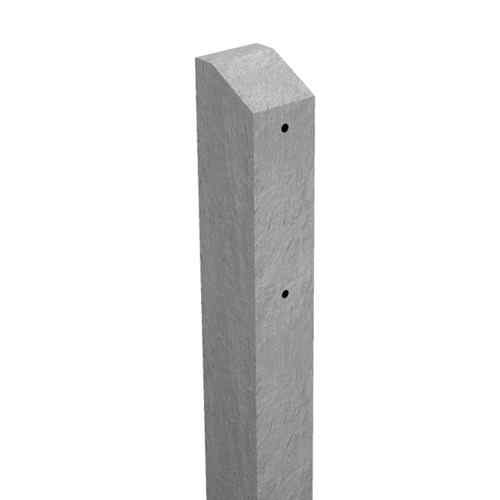
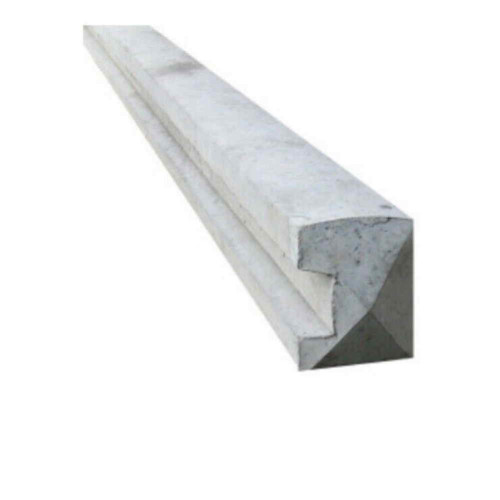
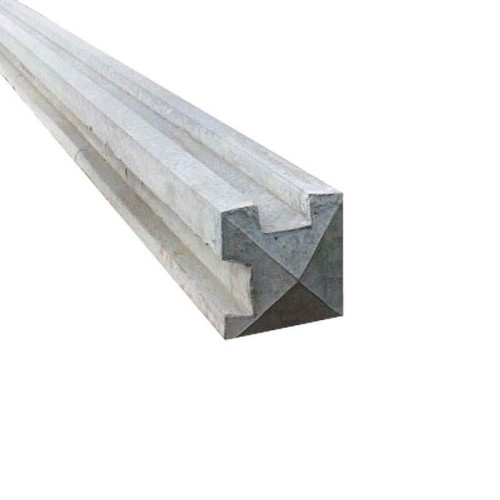
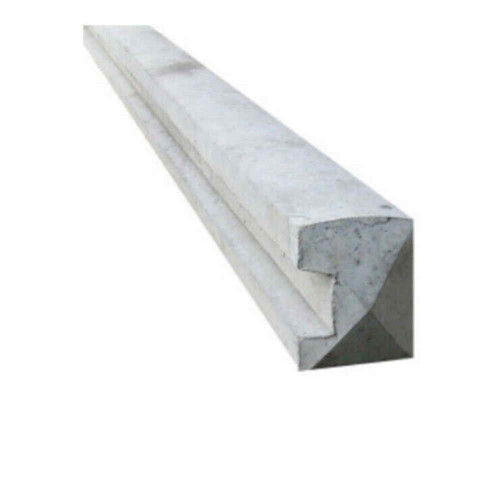
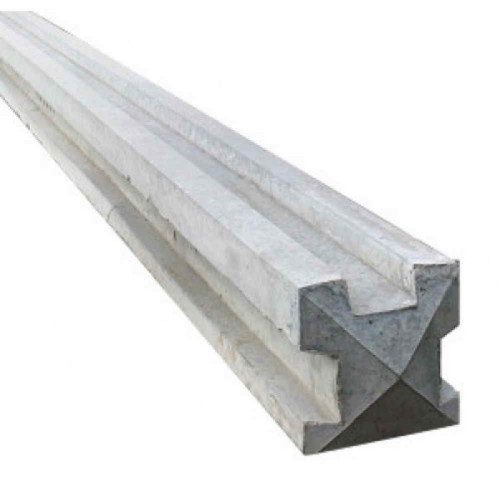
Concrete posts are available in different slot configurations for specific positions in the fence.
The current East Coast Fencing range includes:
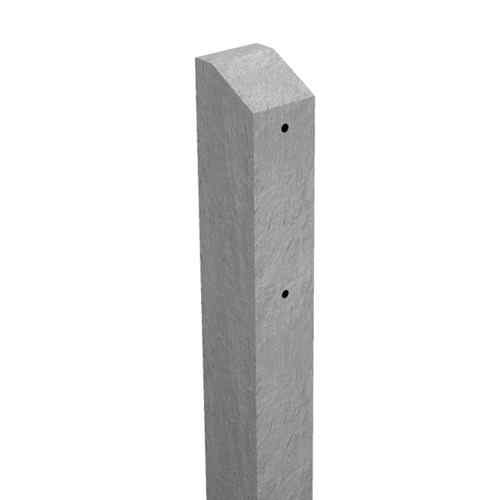
- Intermediate posts
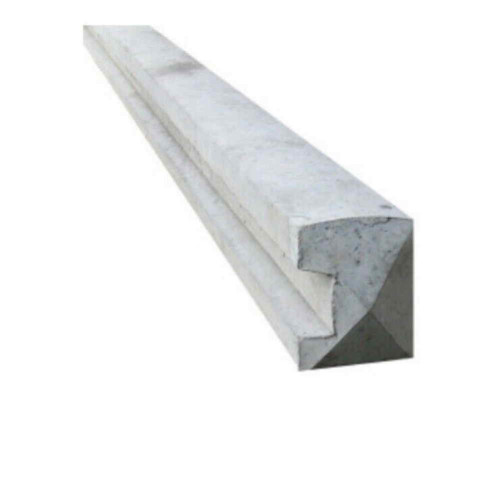
- End posts
- Corner posts
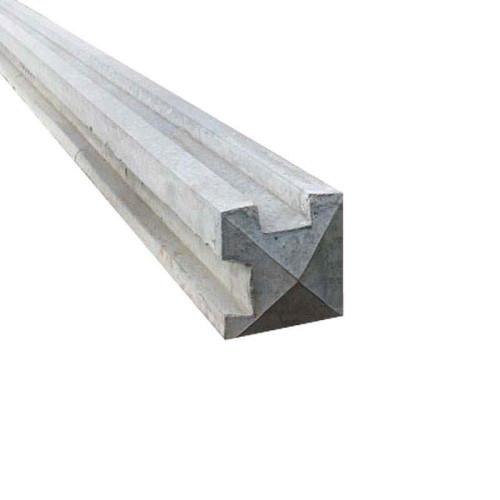
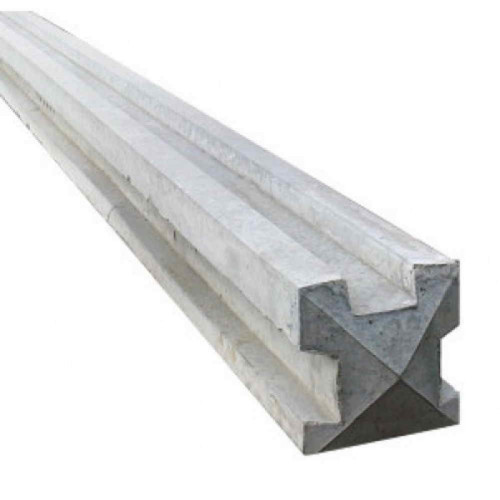
- Three-way posts
An intermediate post is used along a straight run.
An end post finishes a run.
A corner post handles a right-angled change in direction.
A three-way post creates a junction where three fence runs meet.
Using the correct profile matters because the slots need to face the direction of the panels they support.
Do not improvise a corner by cutting, drilling or heavily modifying a post designed for a different position.
Why Are Corner And Three-Way Posts Particularly Important?
A straight intermediate post affects two neighbouring bays.
A three-way post can affect three separate fence runs.
A corner post controls the relationship between two directions.
If one of these junction posts is:
- Cracked
- Out of plumb
- Rotated incorrectly
- Moving in its foundation
the problem can affect several parts of the fence at once.
Take particular care when assessing damaged junction posts.
Why Is Steel Reinforcement Used In Concrete Fence Posts?
Concrete performs well under compression but long, relatively slender fence posts also experience bending forces.
Internal steel reinforcement forms part of the reinforced post construction.
Current East Coast Fencing concrete posts are wet cast around this reinforcement and vibration finished.
That is why a visible steel bar should not simply be treated as something that can be cut away because it is inconvenient.
Can Wind Cause Concrete Posts To Crack?
Wind load is transferred from the Fence Panels into the posts and foundations.
A tall solid fence presents more continuous surface area to the wind than a lower or more open boundary.
A properly specified and correctly installed concrete post system is designed to support fencing, but excessive movement can reveal weaknesses elsewhere.
Check:
- Post foundations
- Panel height
- Post length
- Ground conditions
- Whether panels are securely seated
If one concrete post repeatedly rocks during ordinary windy conditions, investigate the foundation rather than assuming the weight of the post alone will keep it secure.
Can Heavy Climbing Plants Damage A Concrete Post?
The concrete itself does not rot when covered by vegetation, but heavy planting can increase the load on the overall fence.
A mature climbing plant can add:
- Weight
- Wet foliage
- Additional wind resistance
The plant may also hide cracking, slot damage or movement.
If Trellis Panels or planting are being added to an existing concrete-post fence, check the condition of the posts first.
Can A Concrete Fence Post Crack At Ground Level?
Yes.
Ground level is important because it is close to the point where the visible post meets its buried support.
A crack in this area deserves careful inspection, particularly if the post also:
- Leans
- Moves when pushed
- Has a damaged foundation
- Shows exposed reinforcement
Concrete does not suffer timber-style rot at this point, but structural movement can still cause failure.
Why Is My Concrete Fence Post Leaning But Not Cracked?
A leaning post does not always mean the precast concrete itself has failed.
The problem may be the foundation or surrounding ground.
Possible causes include:
- An inadequate original foundation
- Softening ground
- Movement after excavation
- Tree-root activity
- Impact
- High fence loads
If the actual post remains undamaged, it may sometimes be possible to reset it by removing the panels, excavating the foundation area and installing the post correctly again.
This should only be done if the post itself remains structurally sound.
Can A Leaning Concrete Fence Post Be Straightened?
Potentially.
If the concrete post is undamaged and the movement is limited to the foundation, resetting it may be possible.
The surrounding Fence Panels and Gravel Boards should normally be removed or safely supported first.
The foundation can then be investigated.
If the post has cracked during the movement, replacement is generally more reliable than trying to reset a structurally damaged component.
Can A Cracked Concrete Fence Post Be Repaired?
Minor cosmetic surface damage may sometimes be patched for appearance.
That is different from structural repair.
Filling a crack does not necessarily restore the original reinforced concrete section.
If a crack is:
- Wide
- Moving
- Deep
- Associated with loose concrete
- Exposing reinforcement
- Affecting the panel slot
replacement is normally the more dependable solution.
Can You Fill A Crack In A Concrete Fence Post?
You can fill some superficial concrete damage for appearance, but first decide whether the post is structurally sound.
Do not use filler as a way of hiding a fault that should result in post replacement.
A useful rule is:
Cosmetic material can repair appearance. It cannot automatically restore lost structural strength.
If the crack changes when the post is pushed, do not treat it as a cosmetic issue.
Should You Paint Over A Cracked Concrete Post?
Not before assessing the damage.
Concrete fence posts can be painted with a suitable exterior masonry coating when the post is sound and properly prepared.
Paint can improve appearance.
It cannot:
- Reinforce a broken post
- Repair exposed steel
- Stop a foundation moving
- Rebuild a broken panel slot
Deal with structural problems before decorative finishing.
When Should A Concrete Fence Post Be Replaced?
Replacement becomes the sensible choice where the post can no longer be relied on as a secure structural support.
Typical reasons include:
- A wide structural crack
- A crack that opens when the post moves
- Exposed steel reinforcement
- Large loose pieces of concrete
- Severe damage to the panel slot
- A post that has snapped
- A post that is both cracked and leaning
- Damage that prevents panels or Gravel Boards sitting securely
Do not wait for the complete fence bay to collapse if the post has clearly stopped providing safe support.
Do You Need To Replace The Fence Panels With A Cracked Post?
Not necessarily.
One of the advantages of a slotted concrete-post system is that the components can often be dealt with separately.
A sound Fence Panel may be removed temporarily while the post is replaced and then reinstalled.
Before reuse, inspect the panel for:
- Frame damage
- Rot
- Loose boards
- Damage caused by the moving post
The same applies to a sound Gravel Board.
Do not replace usable timber simply because the concrete support has failed.
Can You Replace One Concrete Post Without Replacing The Whole Fence?
Yes, in many installations.
The adjoining panels and Gravel Boards can be removed or supported while the damaged post and its foundation are excavated.
The replacement post then needs to be:
- The correct type
- The correct length
- Aligned with the fence run
- Set at the correct height
- Positioned at the correct spacing
Careful measurement is particularly important because the neighbouring posts are already fixed.
Should You Replace Several Old Concrete Posts At Once?
Not automatically.
Inspect each post individually.
If one post has been damaged by a specific impact while every neighbouring post remains upright and sound, there may be little reason to replace the others.
A wider problem may exist if several posts are:
- Leaning in the same direction
- Moving in their foundations
- Cracked around the ground line
- Showing damaged slots
In that situation, investigate the ground, foundation design or history of the fence rather than viewing each damaged post in isolation.
How Do You Inspect An Existing Concrete Fence Post?
- Stand back from the fence: Look along the complete run for leaning or uneven posts.
- Check the visible concrete: Look for cracks, chips and loose sections.
- Inspect the slots: Make sure the panel and Gravel Board are properly retained.
- Look for reinforcement: Visible steel is a significant warning sign.
- Check ground level: Look for movement, exposed foundations or disturbed soil.
- Push the post carefully: A correctly installed post should not rock noticeably in ordinary use.
- Check neighbouring bays: One moving post can affect more than one panel.
- Measure the openings: Unequal measurements can reveal leaning posts.
Should You Reuse Old Concrete Posts With New Fence Panels?
Yes, if the posts remain structurally sound and correctly positioned.
Concrete posts can outlast timber Fence Panels, so reusing them can make replacement work much simpler.
Before ordering new panels, make sure each post is:
- Upright
- Firm in the ground
- Free from significant structural cracking
- Free from exposed reinforcement
- Sound around the panel slots
Then measure every bay rather than assuming all openings remain identical.
Common Causes Of Avoidable Concrete Fence Post Damage
- Dropping posts during handling
- Striking posts heavily during installation
- Forcing panels into narrow bays
- Forcing incompatible Gravel Boards into slots
- Drilling close to post edges
- Drilling into reinforcement
- Cutting reinforced concrete posts on site
- Ignoring a moving foundation
- Allowing excavation to undermine existing post foundations
- Trying to straighten a cracked post rather than replacing it
- Covering structural cracks with paint or filler
- Using the wrong post configuration at corners or junctions
How Can You Reduce The Risk Of Concrete Post Cracking?
Good installation and careful handling prevent many avoidable problems.
- Choose the correct post type for each position.
- Select the correct overall post length before installation.
- Handle long concrete posts carefully.
- Do not drop or heavily strike them.
- Set posts accurately so panels fit without force.
- Measure actual panel and Gravel Board dimensions.
- Use an appropriate foundation for the ground conditions and fence.
- Keep posts plumb while the setting material cures.
- Avoid unnecessary drilling.
- Do not cut reinforced concrete posts simply to alter their height.
- Check existing posts before installing replacement panels.
FAQs
Is A Hairline Crack In A Concrete Fence Post Dangerous?
Not automatically. A fine surface line may not affect the structural performance of the post. Check whether the post remains stable, whether the crack is deep or widening and whether any reinforcement is exposed.
Can A Cracked Concrete Fence Post Be Reused?
Minor surface damage may still allow reuse. A post with a wide structural crack, loose concrete, exposed reinforcement or movement through the crack should normally be replaced.
Can You Repair A Concrete Fence Post With Cement?
Minor surface damage can sometimes be patched for appearance, but applying cement or filler does not necessarily restore the structural strength of a seriously cracked reinforced post.
Why Is Metal Showing Inside My Concrete Fence Post?
Concrete fence posts contain internal steel reinforcement. If the steel becomes visible, surrounding concrete has been lost or cracked. This is more serious than ordinary superficial surface damage.
Can You Drill Into A Concrete Fence Post?
It may be possible for appropriate light fixings, but drilling needs care. Keep holes away from vulnerable edges, avoid internal reinforcement and do not drill an already cracked post.
Can Concrete Fence Posts Be Cut Shorter?
They should not normally be cut. Current concrete posts contain internal steel reinforcement, so cutting can expose the steel and damage the concrete. Choose an appropriate standard post length instead.
Why Is My Concrete Fence Post Leaning?
A leaning post may have a failed or moving foundation even when the post itself is not cracked. Soft ground, excavation, impact and inadequate original installation can all contribute.
Can I Replace One Concrete Fence Post?
Yes. If the surrounding Fence Panels, Gravel Boards and neighbouring posts remain sound, a single damaged post can often be replaced without rebuilding the entire boundary.
Look Beyond The Visible Crack
A crack in a concrete fence post is a reason to inspect the fence, not automatically a reason to replace every damaged-looking post.
Fine surface lines and small chips can be relatively minor where the post remains upright, firm and capable of securely supporting its Fence Panels and Gravel Boards.
More serious warning signs are harder to ignore.
A wide crack, loose concrete, damaged slot, visible reinforcement or movement at ground level indicates that the post may no longer be performing as intended.
Also consider why the crack appeared. If the real cause is moving ground, a failed foundation or a fence bay that has become too narrow, simply installing another post or panel without correcting that issue may lead to another failure.
Concrete Fence Posts provide a durable, rot-resistant support system, but they still need accurate installation, compatible components and careful handling.
Inspect the structure rather than just the surface. If the post remains sound, keep using it. If the crack has compromised the reinforced concrete or the panel support, replacement is usually the more dependable option.