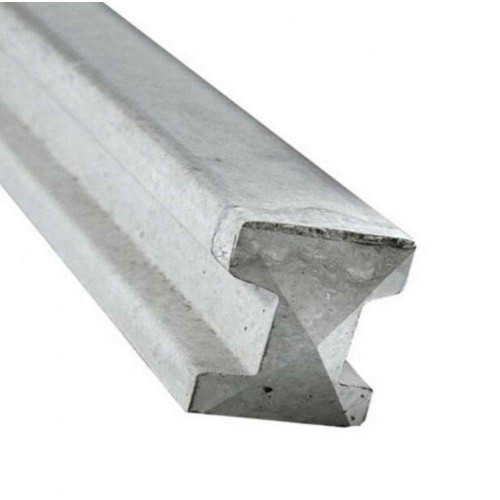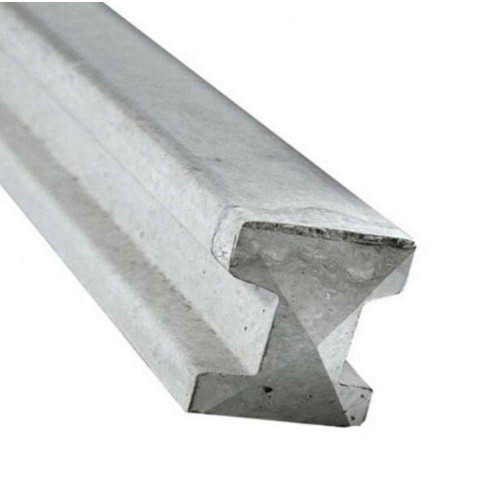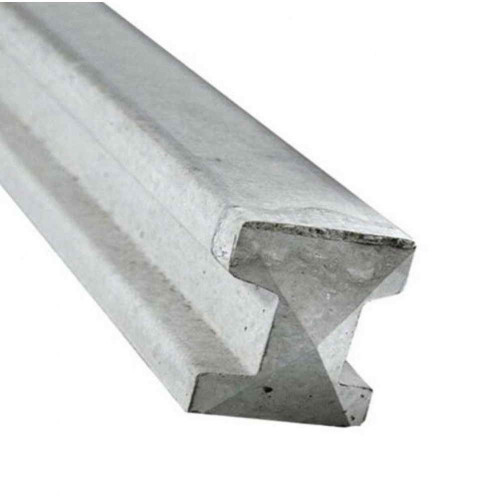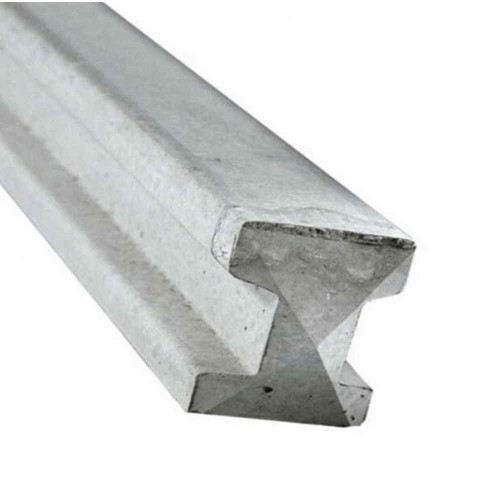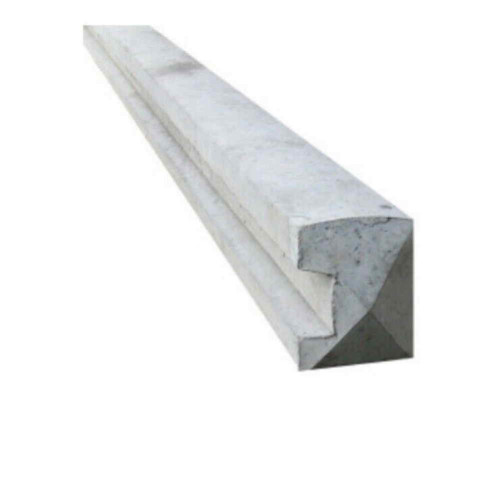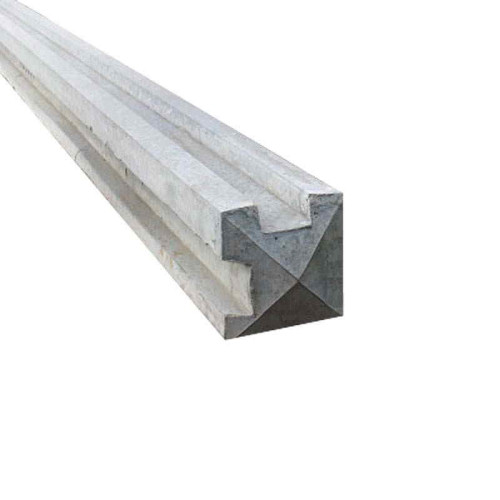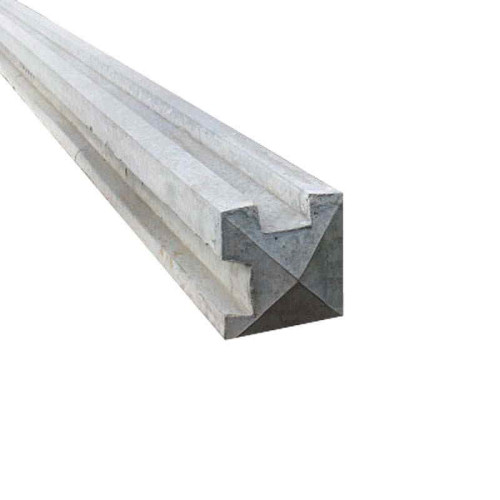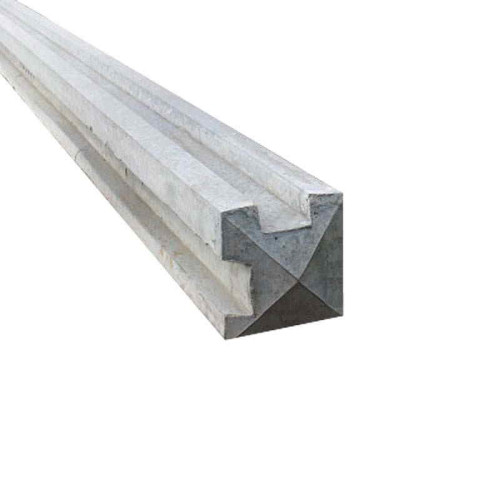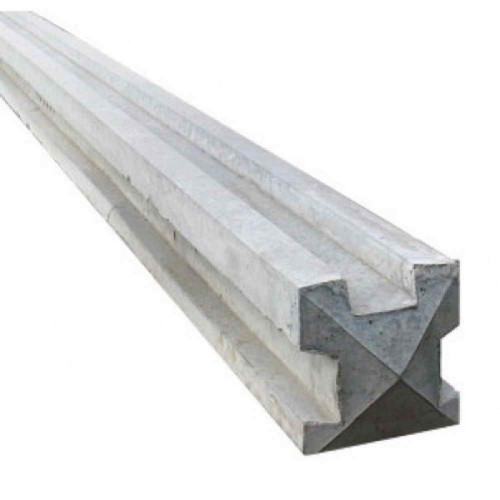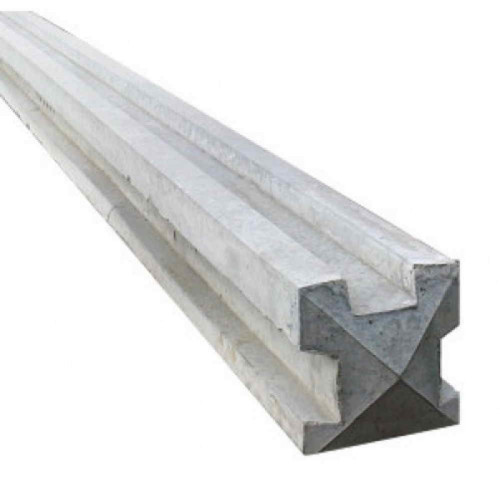




Quick answer: Concrete fence posts can physically be cut with specialist equipment, but reinforced concrete fence posts should not normally be shortened on site. Current East Coast Fencing concrete posts contain internal steel reinforcement, so cutting can expose or damage the steel, crack the surrounding concrete and remove the finished end of the post. It is usually better to choose the correct standard post length before installation rather than trying to modify a longer post afterwards.
Cutting a wooden fence post to height is straightforward.
Cutting a concrete fence post is a very different job.
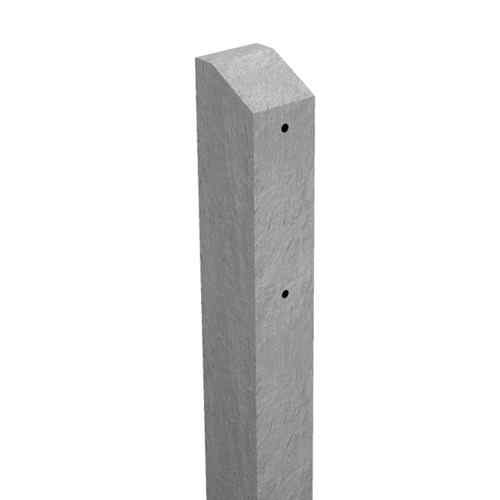
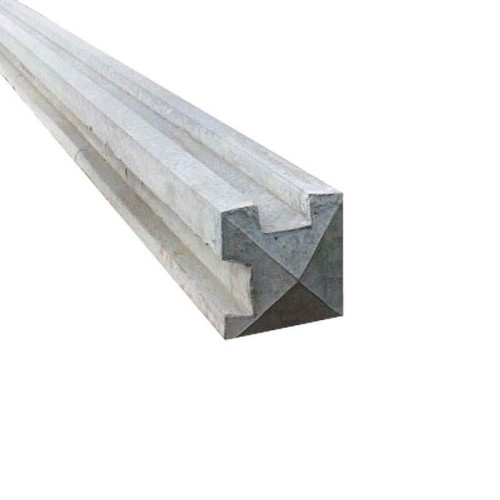
Concrete Fence Posts are manufactured as complete reinforced components. The concrete surrounds internal steel reinforcement, and the finished post is designed to be installed at its supplied length.
If the post appears too long, the first question should therefore be whether the wrong size has been selected rather than how to cut the excess off.
East Coast Fencing's current concrete post range includes several lengths from approximately 1.5m to 2.7m, giving considerably more choice than simply buying one long post and shortening it on site.
Can A Concrete Fence Post Physically Be Cut?
Concrete can be cut using appropriate specialist equipment.
That does not mean cutting a reinforced Concrete Fence Post is good fencing practice.
The post contains more than concrete.
Inside the section is steel reinforcement. A cut can therefore pass through:
- The outer concrete
- The internal reinforcement
- The manufactured end detail
The result is no longer the same component that left the manufacturer.
For normal domestic fencing, selecting the correct post length is generally the better solution.
Why Are Concrete Fence Posts Reinforced With Steel?
Concrete is well suited to compression, but fence posts are relatively long and narrow components that also experience bending forces.
Wind acting on Fence Panels transfers force into the posts.
Current East Coast Fencing Concrete Fence Posts are manufactured from wet-cast concrete with internal steel reinforcement and are vibration finished.
The reinforcement forms part of the structural post.
It should not be treated as unwanted metal that can simply be cut away when adjusting the height.
What Can Happen If You Cut A Reinforced Concrete Fence Post?
Several problems can be introduced.
| Potential Problem | Why It Matters |
|---|---|
| Exposed reinforcement | The protective concrete covering around the steel is removed |
| Damaged reinforcement | Part of the reinforced construction may be altered |
| Concrete cracking | Vibration or poor cutting can damage the remaining post |
| Chipped edges | The new end may break away unevenly |
| Loss of finished top | The manufactured end detail is removed |
| Incorrect final length | Too much material cannot be added back afterwards |
| Hazardous cutting dust | Concrete cutting requires appropriate safety controls |
Most of these problems are avoidable simply by choosing the appropriate post length at the planning stage.
What Lengths Do Concrete Fence Posts Come In?
The current East Coast Fencing range includes nominal lengths such as:
- 1.5m or approximately 5ft
- 1.8m or approximately 6ft
- 2.1m or approximately 7ft
- 2.4m or approximately 8ft
- 2.7m or approximately 9ft
Not every post configuration is necessarily required at every length for every project, so check the actual range before planning the fence.
The useful point is that several standard lengths exist.
This allows the post to be matched more closely to the Fence Panel, Gravel Board and required below-ground installation.
How Do You Choose The Correct Concrete Post Length?
Work from the complete fence rather than the Fence Panel alone.
The post needs enough length for:
- The Fence Panel
- The Gravel Board
- Any intended post projection
- The section installed below ground
If Trellis is involved, that may also affect the required post arrangement.
East Coast Fencing's current installation guidance uses approximately 600mm below finished ground level as the baseline for normal domestic fence posts.
That means a quick starting calculation is:
visible fence height + approximately 600mm below ground.
The actual installation still needs to account for ground conditions, exposure and the complete fence design.
What Post Length Do You Need For A 6ft Fence?
A nominal 6ft Fence Panel is approximately 1.8m high.
If you require approximately 600mm of post below ground, a simple panel-only calculation gives:
1.8m + 0.6m = 2.4m.
That makes an 8ft or approximately 2.4m concrete post a logical starting point for many full-height panel installations.
However, this calculation changes immediately if a Gravel Board is placed beneath the full-height panel.
What Happens When A Gravel Board Is Added?
A Gravel Board sits beneath the Fence Panel, so its height contributes to the visible fence.
Current common concrete Gravel Board heights include approximately:
- 150mm or 6 inches
- 305mm or 12 inches
A 1.8m panel above a 150mm board creates a combined visible section of approximately:
1.95m.
Add approximately 600mm below ground and the theoretical overall post requirement becomes approximately:
2.55m.
This is one reason it can be better to use a shorter Fence Panel above a Gravel Board rather than automatically combining a full 1.8m panel with another 150mm or 305mm underneath.
Can You Use A Shorter Fence Panel Instead Of Cutting The Post?
Yes, and in many cases this creates the more sensible fence.
Suppose the desired visible fence height is approximately 1.8m.
You could use:
- A 1.65m panel above a 150mm Gravel Board
- A 1.5m panel above a 305mm Gravel Board
Both arrangements produce a visible height close to 1.8m.
A suitable standard post can then be selected around that complete layout.
This is generally preferable to buying a panel, Gravel Board and concrete post independently and discovering afterwards that one component needs cutting.
Can You Simply Bury More Of A Concrete Post?
A little additional installation depth may be unavoidable where ground levels vary, but unnecessarily burying a large amount of extra post is not the ideal solution to incorrect product selection.
Using a much longer post than necessary means:
- More excavation
- Heavier handling
- Potentially more setting material
- More difficulty around underground services
Choose the closest suitable standard length rather than automatically buying the longest option available.
Can You Cut A Concrete Post After It Has Been Installed?
Again, it is physically possible with specialist concrete-cutting equipment, but it is not normally the preferred solution.
Cutting an installed post introduces additional complications.
You now need to protect:
- The Fence Panels
- The Gravel Boards
- Paving
- Plants
- Nearby property
The cut can also be difficult to make cleanly around the complete reinforced section.
If an installed post is significantly too tall, first establish why.
The real issue may be:
- The wrong post length
- The wrong Fence Panel height
- A missing Gravel Board
- An incorrectly calculated finished fence height
- The post being installed too shallowly
Cutting the visible top may hide the measurement mistake without correcting the installation beneath it.
What If Only 50mm Or 100mm Of Concrete Post Is Showing Above The Fence?
A small amount of post showing above the panel may simply be accepted as part of the fence design.
Concrete posts do not need to finish perfectly flush with the top of every Fence Panel.
Before considering cutting, look along the complete fence run.
A consistent small projection can look perfectly deliberate.
Trying to remove a small amount from several reinforced posts may create more problems than the visual difference justifies.
What If The Post Is Much Too Tall?
A substantial amount of excess height usually indicates that the wrong post length or fence layout has been chosen.
If the post has not yet been installed, exchange or replace it with the appropriate length rather than modifying it where practical.
If the post is already installed, check:
- How much post is actually below ground: The visible excess may indicate shallow installation.
- The intended Fence Panel height: Make sure the correct panels have been supplied.
- Whether a Gravel Board was planned: A missing board changes the visible height considerably.
- Whether the fence is stepped: A post may deliberately need additional height for the neighbouring bay.
Do not cut first and investigate afterwards.
Why Should You Not Cut A Concrete Post To Match A Sloping Garden?
Rigid panel fencing is normally stepped as ground levels change.
The Fence Panels and Gravel Boards remain level within each individual bay, while successive bays move up or down the slope.
The posts therefore need to accommodate the relationship between two neighbouring fence sections.
Cutting every post to follow the angle of the ground can produce:
- Inconsistent post tops
- Insufficient height for the higher bay
- Difficulty supporting Trellis
- A fence that looks uneven
Plan the steps before the posts are set.
Why Do Different Concrete Post Lengths Help On A Slope?
A sloping boundary is one situation where having 1.5m, 1.8m, 2.1m, 2.4m and 2.7m options is particularly useful.
Different positions may genuinely require different overall post lengths.
For example, a post at a change in level may need more visible height while still retaining adequate support below ground.
Using the appropriate length is cleaner than cutting every post from a single oversized size.
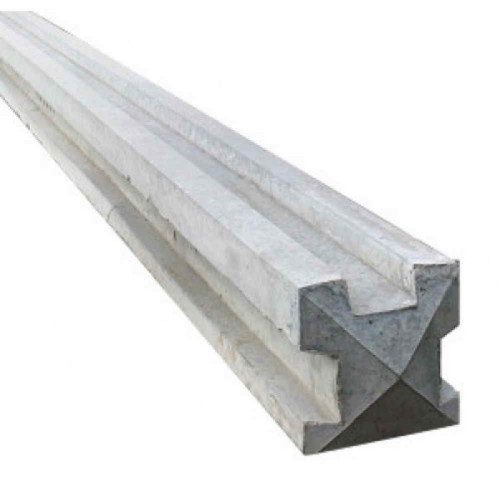
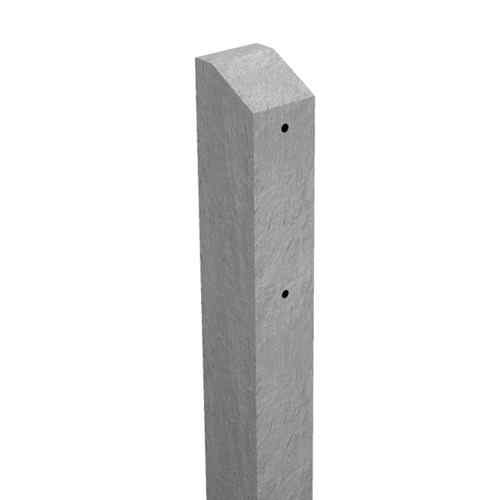
Can You Cut A Concrete Intermediate Post?
It should not normally be shortened.
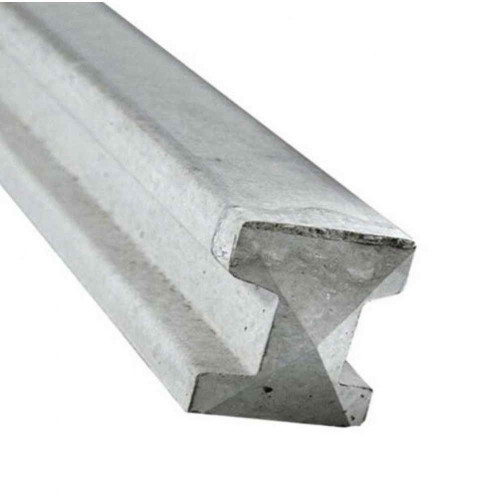
An intermediate concrete post is designed for straight fence runs and has slots arranged to accept Fence Panels and Gravel Boards from opposite directions.
The current East Coast Fencing intermediate profile is approximately 100 x 100mm across suitable products.
The post is wet cast around internal reinforcement.
If its supplied length does not suit the fence, select a different available length rather than altering the reinforced section.
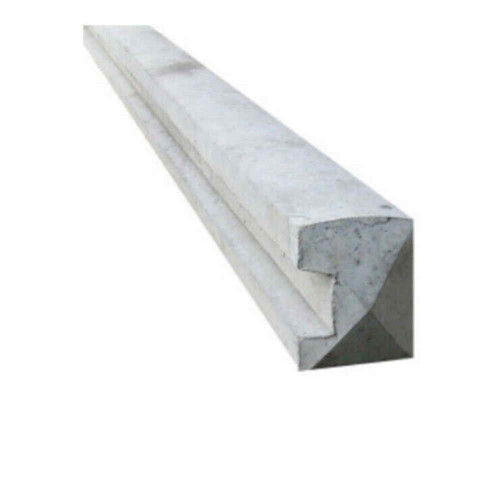
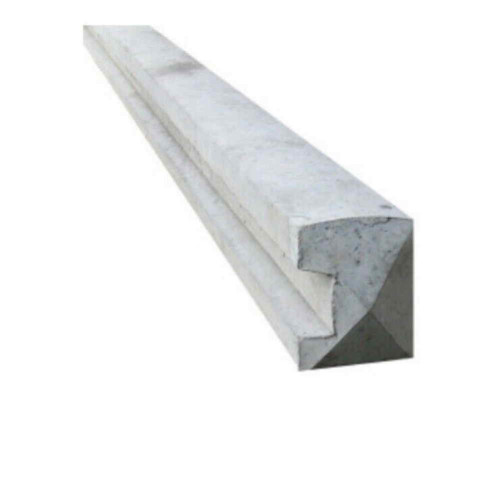
Can You Cut A Concrete End Post?
The same principle applies.
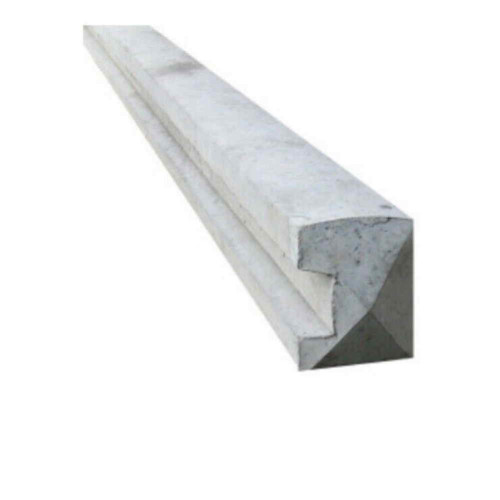
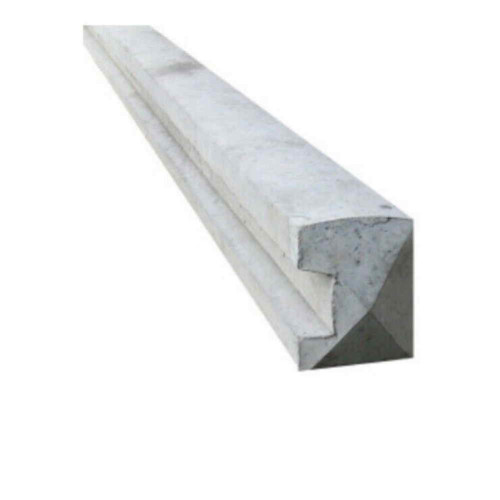
Current concrete end posts are designed with a single slot so a fence run can finish cleanly rather than displaying an unnecessary second panel slot.
Suitable current end-post products use an approximately 100 x 125mm profile.
The end post should be ordered at the correct length for the finished fence rather than shortened casually on site.
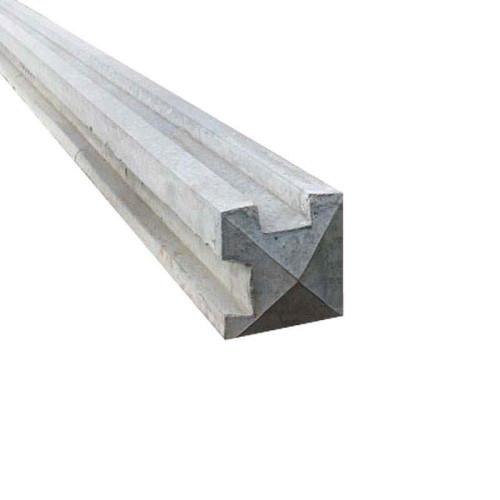
Can You Cut A Concrete Corner Post?
Cutting is particularly undesirable where a post forms an important junction.
Current East Coast Fencing corner posts use an approximately 125 x 125mm section across suitable products, with slots on adjacent faces for a right-angled change in direction.
Both fence runs depend on that one post.
Instead of modifying it, establish:
- Both finished fence heights
- The ground level at the corner
- The Gravel Board arrangement
- The required below-ground section
before selecting the post length.
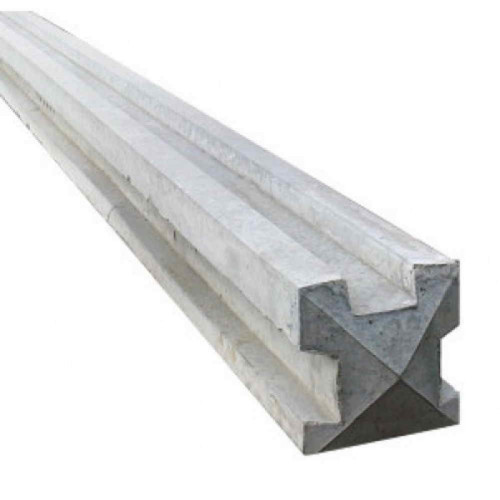
Can You Cut A Three-Way Concrete Post?
A three-way post should also be treated as a complete manufactured component.
It creates a junction for three fence runs.
Current suitable three-way products use a substantial approximately 125 x 125mm section and internal reinforcement.
An error in this post affects three directions simultaneously.
Set out all three fence runs and determine the required height before the post is installed.
Can You Cut The Slots In A Concrete Fence Post?
A slotted concrete post is manufactured with its channels already formed.
You should not normally try to enlarge, deepen or create additional slots by cutting the post.
If the available slots do not suit the layout, the likely problem is that you have the wrong post configuration.
Use:
- An intermediate post for a straight run
- An end post where the fence stops
- A corner post where two runs turn through approximately 90 degrees
- A three-way post at a T-shaped junction
Selecting the correct post is considerably better than trying to manufacture a different slot arrangement on site.
What If The Fence Panel Does Not Fit The Concrete Post Slots?
Do not immediately start cutting the posts.
Check the measurements first.
Measure:
- The clear width between post slots
- The panel width
- The panel-frame thickness
- The Gravel Board length and profile
- The bay width near the bottom
- The bay width through the middle
- The bay width near the top
If an old fence bay has become narrower, one of the posts may be leaning.
Cutting the concrete slot to accommodate a misaligned fence does not correct the underlying problem.
Can You Make A Concrete Fence Post Shorter By Setting It Deeper?
Sometimes a slightly longer post can accommodate modest site variation through the installation depth, provided the complete foundation remains appropriate.
However, this should not become an excuse to bury hundreds of millimetres of unnecessary post simply because the wrong product was ordered.
More depth means more excavation and potentially more difficulty with:
- Tree roots
- Hard ground
- Existing foundations
- Underground cables
- Underground pipes
Choose a post length that suits the planned finished fence as closely as practical.
Can You Cut Concrete Posts To Add Fence Topper Trellis?
Cutting a post shorter is normally the opposite of what is needed when adding Trellis.
A Fence Topper Trellis requires sufficient support above the main Fence Panel.
If the concrete posts finish at approximately the same height as the panels, attaching additional timber above them may require a separate support arrangement.
Do not shorten tall posts until you are certain that Trellis or another upper section will never be required as part of the planned fence.
Can You Drill A Concrete Post Instead Of Cutting It?
Drilling and cutting solve different problems.
Drilling may be possible for appropriate light fixings, but current concrete posts contain reinforcement and should be drilled cautiously.
Avoid:
- Drilling near thin slot edges
- Drilling an already cracked post
- Deliberately drilling through reinforcement
- Making numerous large holes close together
If the post needs significant modification to make the fencing work, reconsider the fence design rather than continuing to remove material.
What If The Top Of A Concrete Post Is Damaged?
A chipped top does not necessarily mean the entire post needs cutting shorter.
Inspect:
- How much concrete has been lost
- Whether reinforcement is visible
- Whether a crack continues down the post
- Whether the slot remains intact
A small cosmetic chip may have little structural significance.
Cutting the complete top off to remove a minor imperfection can turn a small cosmetic issue into a much larger alteration.
What If Reinforcement Is Already Exposed?
Visible reinforcement means the protective concrete surrounding the steel has already been lost.
This can result from:
- Impact damage
- Cracking
- Chipping
- Previous cutting or drilling
Do not cut more concrete away simply to make the damaged section look neater.
Assess whether the post should be replaced.
Exposed steel is a more serious warning sign than an ordinary superficial surface mark.
Can A Previously Cut Concrete Post Be Reused?
It should be inspected carefully before being relied upon as a structural fence support.
Check:
- Whether reinforcement was cut
- Whether steel is exposed
- Whether cracks extend from the cut
- Whether the post remains long enough
- Whether the slots are intact
- Whether the post suits the new fence layout
A second-hand concrete post is only useful if it remains structurally sound and is the correct length and configuration.
Reusing an unsuitable post merely because it is available can create considerably more work during installation.
Is It Better To Cut A Post Or Exchange It For The Correct Size?
Before installation, exchanging or replacing the post with the appropriate standard length is normally the cleaner approach.
It avoids:
- Concrete cutting
- Reinforcement damage
- Dust
- Chipped edges
- Uncertain finished dimensions
This is exactly why planning post lengths before ordering is worthwhile.
How Should You Plan Concrete Fence Posts Before Ordering?
- Measure the complete boundary: Establish where the fence begins, ends and changes direction.
- Choose the Fence Panels: Confirm their actual height, width and thickness.
- Choose the Gravel Boards: Include their height in the finished fence calculation.
- Decide the finished height: Calculate the complete visible structure rather than the panel alone.
- Allow for below-ground post length: Current East Coast Fencing guidance uses approximately 600mm as the normal domestic baseline.
- Select the closest suitable standard length: Compare 1.5m, 1.8m, 2.1m, 2.4m and 2.7m options where available.
- Count each post configuration: Separate intermediate, end, corner and three-way positions.
- Plan slopes: Decide where each fence bay will step before installation.
- Check access: Concrete posts are heavy, particularly at longer lengths.
Common Mistakes That Lead To Concrete Posts Needing Cutting
- Buying the longest posts automatically
- Ordering before deciding the Fence Panel height
- Forgetting Gravel Board height
- Changing from 6-inch to 12-inch Gravel Boards after ordering
- Failing to plan stepped fencing on a slope
- Buying only one post length for a complicated changing boundary
- Installing posts too shallowly and then assuming the excess top needs removing
- Forgetting planned Trellis
- Using an intermediate post where an end or corner post is required
- Trying to alter the slots rather than ordering the correct configuration
- Assuming reinforced concrete posts can be adjusted as easily as timber
FAQs
Can You Shorten A Concrete Fence Post?
It is physically possible to cut reinforced concrete with specialist equipment, but concrete Fence Posts should not normally be shortened. Cutting can expose reinforcement, crack the concrete and remove the manufactured finish.
Do Concrete Fence Posts Have Metal Inside?
Yes. Current East Coast Fencing Concrete Fence Posts contain internal steel reinforcement within wet-cast concrete.
What Happens If You Cut Through The Steel In A Concrete Fence Post?
You alter part of the reinforced construction and leave reinforcement exposed at the new end. This is one of the main reasons on-site shortening is discouraged.
Can You Cut An 8ft Concrete Post To 7ft?
Although it can physically be done, selecting a purpose-made approximately 2.1m or 7ft post is normally preferable where that length is available and suitable.
Can You Cut A 9ft Concrete Fence Post?
The same principle applies. A 2.7m or 9ft post should be chosen where the additional length is required. If it is substantially longer than necessary, select a shorter post rather than treating the 9ft version as something intended to be cut down.
Can You Cut The Slot Wider On A Concrete Fence Post?
You should not normally modify the slot. If a panel or Gravel Board does not fit, check its dimensions, the post spacing and the post type first.
Can You Grind The Top Of A Concrete Post?
Removing minor surface material is still an alteration to reinforced concrete and can damage the finish. A small cosmetic variation at the top is usually preferable to unnecessary cutting or grinding.
What Should I Do If My Concrete Fence Posts Are Too Tall?
Before installation, choose a shorter suitable post. If they are already installed, check the actual below-ground depth, Fence Panel height, Gravel Board arrangement and planned fence levels before deciding that the visible post is genuinely excessive.
Choose The Right Concrete Post Before It Goes In The Ground
One of the main advantages of timber Fence Posts is that they are easy to cut and modify.
Concrete Fence Posts should be approached differently.
They are manufactured as reinforced components, with steel inside the wet-cast concrete. Cutting can expose that reinforcement, damage the surrounding concrete and remove the original finished end.
Fortunately, there is usually no need to treat concrete posts as one-size-fits-all products. Current lengths range from approximately 1.5m through to 2.7m, with intermediate, end, corner and three-way configurations available for different parts of the fence.
Calculate the visible Fence Panel and Gravel Board height first. Allow for the required below-ground section. Account for slopes and junctions. Then select the closest appropriate post length.
If a supplied concrete post needs a major cut before it will work, that is usually a sign to revisit the specification.
Getting the right post into the correct hole is simpler, safer and more dependable than trying to turn the wrong reinforced concrete post into the right one with a cutting tool.