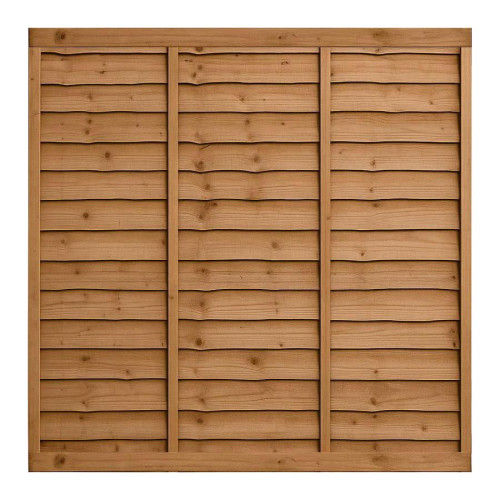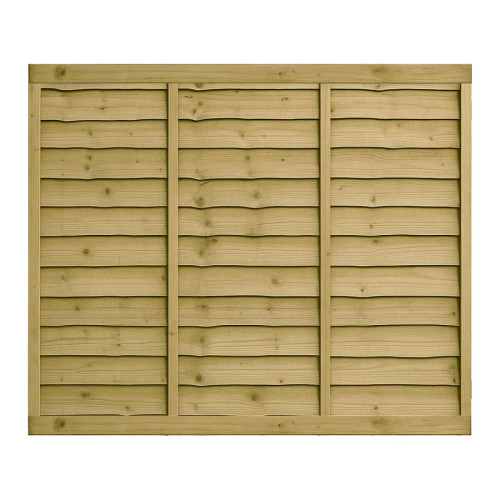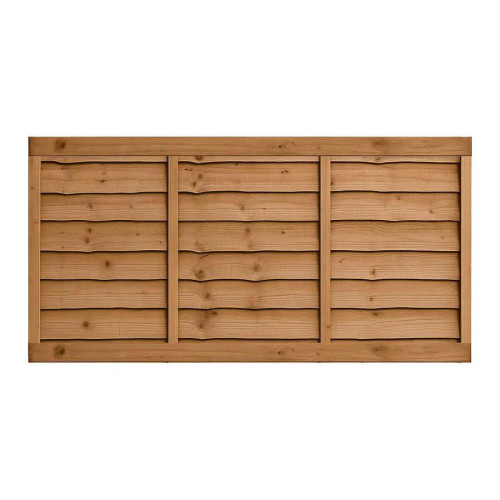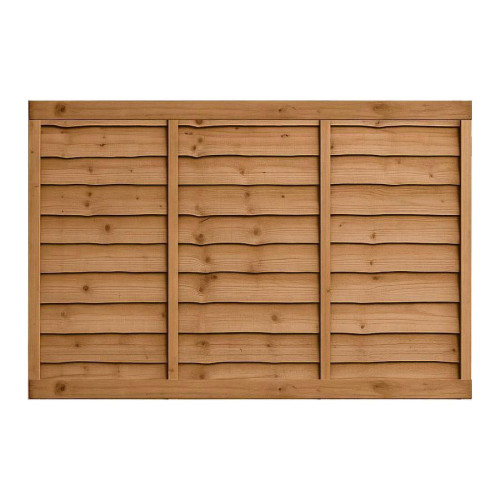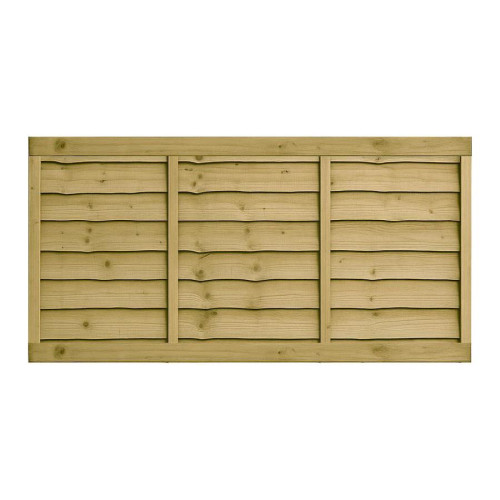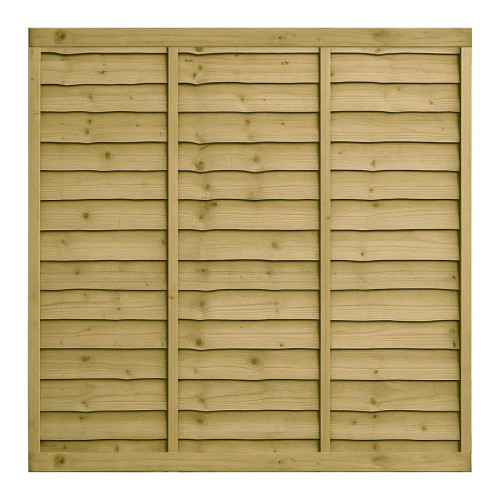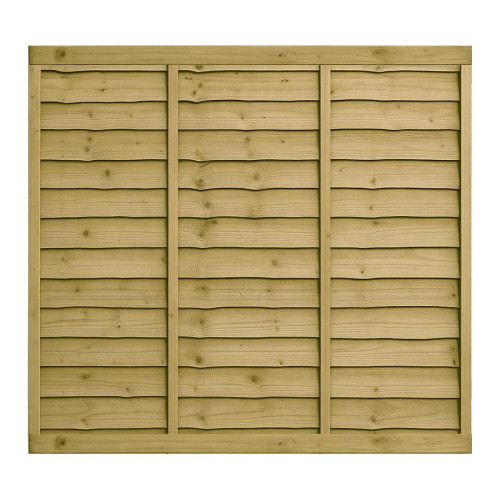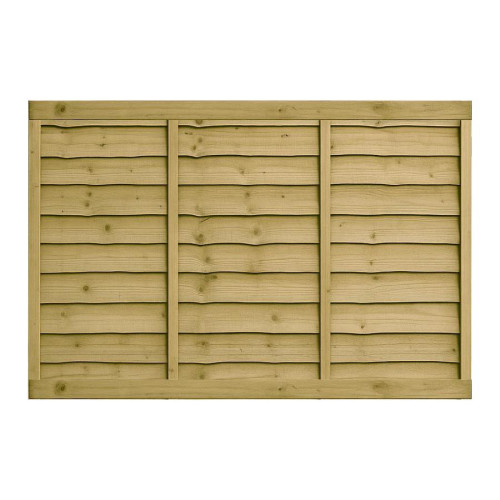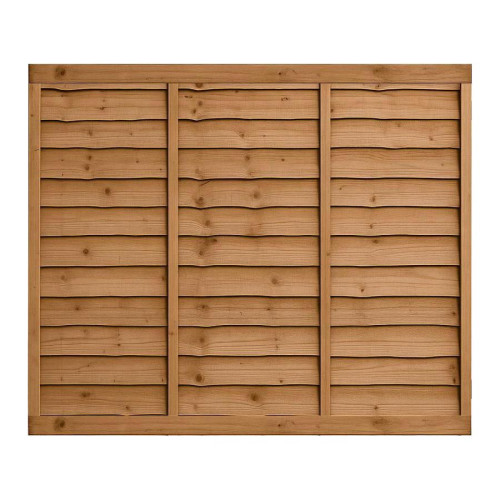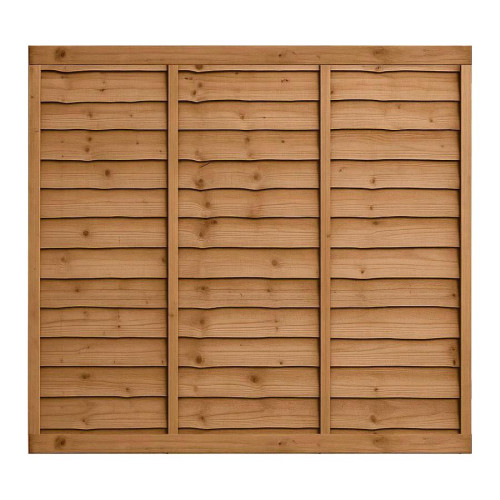



Quick answer: There is no single lifespan that applies to every Waney Lap Fence Panel. How long a panel lasts depends on its timber treatment, installation, exposure, drainage, contact with soil, post condition and maintenance. Pressure-treated Waney Lap panels can provide a durable garden boundary when correctly installed, particularly when the main timber panel is kept clear of wet ground with a suitable gravel board. Good installation and moisture management usually matter more than repeatedly painting the fence.
One of the most common questions customers ask about Waney Lap Fence Panels is how long they should expect them to last.
It sounds like a question that should have a simple answer, but timber fencing does not work that way.
Two apparently identical Waney Lap panels can have very different service lives if one is installed above a gravel board in a well-drained garden while the other sits against wet soil, dense vegetation and failing fence posts.
The panel itself matters, but so does everything around it.
This guide explains what determines the lifespan of Waney Lap Fence Panels, how pressure treatment helps, why ground clearance and gravel boards matter, what maintenance is genuinely useful and how to recognise when a panel should be repaired or replaced.
How Long Do Waney Lap Fence Panels Last?
There is no responsible universal number of years that can be given for every Waney Lap fence.
Service life varies according to:
- Timber treatment
- Quality of installation
- Whether the panel touches soil
- Drainage around the fence
- Wind exposure
- Condition of the supporting posts
- Use of gravel boards
- Vegetation around the boundary
- Maintenance
A correctly installed pressure-treated panel in a relatively sheltered garden can perform very differently from the same type of panel installed in persistently wet or exposed conditions.
For that reason, it is more useful to understand what shortens fence life and what can be done to avoid those problems.
What Are Waney Lap Fence Panels?
Waney Lap Fence Panels are traditional timber panels made using overlapping horizontal boards.
The boards create a largely solid screen while retaining the familiar layered appearance associated with lap fencing.
They are widely used for:
- Rear garden boundaries
- Side fences
- Privacy screening
- Replacing older lap fencing
- General residential boundaries
East Coast Fencing Waney Lap Fence Panels are nominally 6ft wide and available in common heights including:
- 3ft
- 4ft
- 5ft
- 5ft 6in
- 6ft
They are available pressure treated in brown and green.
What Does Pressure Treatment Do?
Pressure treatment is used to introduce preservative into timber rather than relying only on a coating applied to the surface.
Its purpose is to improve the timber's resistance to biological deterioration when the treatment specification is appropriate for the intended use.
That makes pressure-treated fencing a very different proposition from simply brushing preservative onto completely untreated timber.
However, pressure treatment does not make fencing indestructible.
A pressure-treated panel can still suffer from:
- Prolonged moisture exposure
- Mechanical damage
- Storm damage
- Failed posts
- Distortion as timber naturally moves
- Surface algae
- Weathering and colour change
Correct installation remains important.
Does Pressure-Treated Waney Lap Need Painting?
Not simply to make the pressure treatment work.
Pressure-treated Waney Lap Fence Panels can be left to weather naturally.
A decorative coating may still be applied if you want:
- A different colour
- A more uniform appearance
- Additional surface finishing
Freshly treated timber may contain significant moisture, so it should not automatically be painted as soon as it is installed.
Follow the coating manufacturer's instructions regarding drying, preparation and application.
What Shortens The Life Of Waney Lap Fence Panels?
The biggest problems are usually associated with moisture, weak support and exposure.
Common causes include:
- Panels sitting directly on soil
- Wet leaves collecting at the bottom
- Heavy vegetation preventing the timber from drying
- Poor drainage
- Rotten or moving fence posts
- Incorrectly spaced posts
- Strong wind loading
- Physical impact
- Repeated neglect of damaged sections
Many apparent panel failures begin somewhere else in the fencing system.
Why Is Ground Contact Bad For A Timber Fence Panel?
The lower edge of a fence is naturally exposed to some of the wettest conditions in the garden.
Direct contact with soil can keep timber damp for prolonged periods.
It can also expose the panel to:
- Mud
- Rain splash
- Wet grass
- Mulch
- Fallen leaves
A panel that remains damp for long periods has much less opportunity to dry between spells of wet weather.
Keeping the main panel away from these ground-level conditions is therefore one of the most useful ways to support its long-term performance.
Do Waney Lap Fence Panels Need Gravel Boards?
They are not compulsory in every installation, but gravel boards are highly useful beneath Waney Lap Fence Panels.
A gravel board forms the lower section of the fence and helps separate the main timber panel from soil and other wet material.
This can reduce:
- Direct ground contact
- Rain splash onto the panel
- Contact with long grass
- Soil accumulating against the lower boards
It also means the gravel board takes much of the exposure at ground level rather than the principal fence panel.
Wooden Or Concrete Gravel Boards For Waney Lap Fence Panels?
Both can be appropriate.
| Feature | Wooden Gravel Board | Concrete Gravel Board |
|---|---|---|
| Appearance | All-timber finish | Timber panel above concrete base |
| Weight | Lighter | Heavier |
| Ground-level moisture | Still timber | No timber rot in concrete board |
| Typical pairing | Often timber posts | Often concrete posts |
Wooden gravel boards create a consistent timber appearance.
East Coast Fencing wooden gravel boards are available in lengths including 1.83m, 2.4m and 3.0m, with a common depth of 150mm.
Concrete gravel boards provide a non-timber component at the bottom of the fence and are commonly used with slotted concrete posts.
Do Concrete Posts Make Waney Lap Fence Panels Last Longer?
Concrete posts can remove one common timber failure point from the fencing system.
Fence posts work hard because they:
- Support the panels
- Resist wind loading
- Transfer forces into the ground
- Spend part of their life in or close to damp soil
A concrete post does not suffer from timber rot.
This can be useful where the objective is to create a system with replaceable timber panels between durable concrete supports.
It does not mean the Waney Lap panels themselves become maintenance free.
Can Waney Lap Fence Panels Be Used With Timber Posts?
Yes.
Timber posts produce a traditional all-timber fence and are commonly used with panel fencing.
East Coast Fencing timber fence posts are available in dimensions including:
- 75 x 75mm
- 100 x 100mm
Lengths include 1.8m, 2.4m and 3.0m.
The correct post depends on the fence height, site and installation.
Do not choose posts solely because they happen to fit the panel width.
Why Do Fence Posts Often Fail Before Panels?
The base of a timber fence post operates in demanding conditions.
It must support the fence while being exposed to moisture around ground level.
If a post begins to deteriorate or loosen, the whole fence can start moving.
This movement can then place additional stress on:
- Panel frames
- Fixings
- Adjacent posts
- Gates
A panel can appear to be failing when the real problem is the support beneath it.
How Can You Tell If A Fence Post Is Failing?
Look for:
- The post moving when the fence is pushed gently
- The whole bay leaning
- Soft timber around ground level
- Splitting
- Cracking around fixings
- Panels becoming loose despite apparently sound frames
Do not repeatedly screw a moving panel back to a post that is itself failing.
Repair the structural cause.
Does Wind Affect How Long Waney Lap Fence Panels Last?
Yes.
Waney Lap Fence Panels are relatively solid, which means they present a large surface to the wind.
The effect becomes greater as fence height increases.
A 6ft solid panel creates substantially more wind loading than a low decorative panel.
For exposed gardens, consider:
- Fence height
- Post dimensions
- Post length
- Foundation depth
- Ground conditions
- Panel condition
A fence exposed to repeated high winds needs a suitable structural system, not simply a different coating.
Are Waney Lap Fence Panels Suitable For Windy Gardens?
They can be used where the fence system is designed appropriately, but their solid construction means airflow is limited.
In a highly exposed location, it may be worth comparing Waney Lap with a panel designed to allow more air movement, such as Horizontal Hit & Miss.
If privacy remains the priority, you may still prefer Waney Lap, but make sure the supporting structure suits the site.
Does Panel Height Affect Lifespan?
Indirectly, yes.
Taller panels catch more wind and create greater leverage on posts.
That does not mean a 6ft panel is inherently short-lived.
It means a 6ft panel requires a fencing system appropriate to the load it creates.
If you only need a 4ft or 5ft boundary, using unnecessary additional height can expose the fence to forces that provide no practical benefit.
Should You Choose 5ft Or 6ft Waney Lap Fence Panels?
Choose according to required privacy and overall fence height.
A 5ft panel can provide useful screening while remaining slightly lower and less visually dominant.
A 6ft panel provides stronger ground-level privacy.
Remember that a gravel board underneath increases the visible overall height.
Does A Gravel Board Make A 6ft Fence Taller?
Yes.
If the board is visible above ground level, it contributes to the finished height of the enclosure.
A nominal 6ft panel installed above a 150mm gravel board creates a substantially taller overall fence than the panel measurement alone.
This should be considered when planning both posts and overall fence height.
Can Plants Shorten The Life Of Waney Lap Fence Panels?
Dense vegetation can create unfavourable conditions around timber fencing.
Plants can:
- Reduce airflow
- Trap wet leaves
- Keep boards damp
- Make maintenance difficult
- Add physical weight where climbers attach to the fence
A planted boundary does not automatically damage fencing, but giving the timber some room to dry can be beneficial.
Should Shrubs Be Cut Back From Waney Lap Fencing?
A small amount of clearance can make maintenance much easier.
There is no need to remove all planting near a fence.
However, shrubs that permanently press wet foliage against the panels can slow drying and make it difficult to inspect the timber.
Trim enough growth to allow:
- Air movement
- Visual inspection
- Access for repairs
Can Climbing Plants Damage Waney Lap Fence Panels?
Heavy climbers can create problems if the fence becomes their primary support.
As plants mature, they can add considerable:
- Weight
- Wind resistance
- Moisture retention
Use independent trellis or other suitable plant supports where substantial climbing plants are planned.
This also allows panels to be replaced without dismantling an established plant from the fence.
Does Green Algae Mean A Waney Lap Panel Is Rotting?
No.
Green algae is usually surface growth associated with damp and shaded conditions.
It does not automatically mean the wood underneath is rotten.
However, heavy algae can be a useful clue that the area dries slowly.
Inspect the timber underneath for:
- Softness
- Movement
- Broken boards
- Structural deterioration
How Should You Clean Waney Lap Fence Panels?
Start gently.
- Remove loose leaves and vegetation.
- Brush away loose dirt and surface growth.
- Wash with a mild cleaner suitable for exterior timber where needed.
- Use a timber-safe algae cleaner for heavier growth if appropriate.
- Follow the product instructions.
- Allow the panel to dry properly.
Aggressive cleaning can cause more damage than the algae itself.
Can You Pressure Wash Waney Lap Fence Panels?
You can, but considerable care is required.
Waney Lap panels contain overlapping horizontal boards, and weathered boards can become more vulnerable to damage.
An excessively powerful pressure washer can:
- Lift timber fibres
- Damage board edges
- Drive water between the overlaps
- Strip existing coatings unevenly
Gentle hand cleaning is often the safer option for older fencing.
Does Painting Waney Lap Fence Panels Make Them Last Longer?
A suitable coating can provide a decorative surface finish and may add some additional surface protection.
However, paint should not be treated as a substitute for:
- Pressure treatment
- Correct installation
- Ground clearance
- Sound posts
- Drainage
A beautifully painted fence sitting in wet soil can still develop structural problems.
Can You Paint Brown Waney Lap Fence Panels?
Yes, once the timber is dry enough and properly prepared for the coating.
The existing brown pressure-treated appearance does not prevent later painting or staining.
A strong colour change may require more than one coat depending on the product being used.
Can You Paint Green Waney Lap Fence Panels?
Yes.
Again, allow the timber to dry appropriately and follow the coating manufacturer's instructions.
Do not confuse the green tint associated with pressure treatment with algae that has developed later on the surface.
Is Brown Pressure Treatment Better Than Green?
No conclusion about durability should be drawn from treatment colour alone.
Brown and green refer primarily to appearance.
The visible shade does not tell you:
- Treatment penetration
- Treatment loading
- Use Class
- Structural grade
Choose the colour according to the appearance you want unless the verified product specification gives you another reason.
Do Brown Waney Lap Fence Panels Last Longer Than Green?
Not simply because they are brown.
Colour alone is not a durability grade.
Installation, moisture exposure, treatment specification and maintenance have much greater significance.
Does Timber Weathering Mean The Fence Is Failing?
No.
Exterior timber naturally changes appearance over time.
Colour can fade and become more muted as the surface is exposed to:
- Sunlight
- Rain
- Wind
- Seasonal weather
This visual weathering should be distinguished from structural deterioration.
A fence does not need replacing simply because its colour has changed.
Are Small Cracks In Waney Lap Timber Normal?
Timber naturally expands and contracts as moisture conditions change.
Some surface checking, movement and variation can occur as exterior softwood weathers.
The important question is whether the change affects the structural integrity of the panel.
A small surface check is different from:
- A broken frame
- A board that has split completely away
- Extensive soft rotten timber
Can Warped Boards Be Repaired?
Minor natural movement may not require any repair.
If a board has moved enough to become loose or expose a significant gap, inspect:
- The fixings
- The condition of the board
- The surrounding panel frame
A small local repair may be possible if the rest of the panel remains sound.
Where many boards and frame components are failing, replacement is usually more practical.
How Often Should Waney Lap Fence Panels Be Checked?
An annual inspection is a useful habit, with additional checks after severe weather.
You do not need to dismantle the fence.
Walk the boundary and look for:
- Leaning posts
- Loose panels
- Broken boards
- Vegetation pressing against the timber
- Wet leaves accumulated at the base
- Failed coatings
- Storm damage
Early repairs are usually easier than waiting for several parts of the fence to fail together.
What Fence Maintenance Should Be Done In Spring?
Spring is a good time to check what winter weather has done to the boundary.
Look for:
- Loose posts
- Green algae
- Storm damage
- Wet debris
- New vegetation growing against the panels
Clean and repair as necessary once suitable weather arrives.
What Fence Maintenance Should Be Done In Summer?
Summer provides an opportunity to:
- Trim vegetation away from the fence
- Clean the timber
- Carry out decorative coating where conditions are suitable
- Inspect posts and fixings
Follow any temperature and weather restrictions stated by the coating manufacturer.
What Fence Maintenance Should Be Done In Autumn?
Keep fallen leaves away from the base of the panels.
Wet leaf material can hold moisture around:
- Gravel boards
- Panel frames
- Fence posts
Autumn is also a sensible time to check the fence before stronger winter winds arrive.
What Fence Maintenance Should Be Done In Winter?
Concentrate on structural condition rather than decorative work.
Check after storms for:
- Leaning posts
- Panels that have moved
- Broken boards
- Fallen branches
A loose panel should be dealt with before repeated wind movement causes additional damage.
Can A Loose Waney Lap Fence Panel Be Repaired?
Often, provided the panel and supporting posts remain structurally sound.
First establish why it is loose.
Possible causes include:
- Failed fixings
- A moving post
- A broken panel frame
- Incorrect fit between posts
Replacing a fixing is useful only when the material it fixes into is still sound.
Can You Repair A Rotten Waney Lap Panel?
Small isolated damage may sometimes be repairable.
Extensive rot is different.
If the panel contains several soft or crumbling structural members, patching individual areas can become inefficient and leave a weak boundary.
At that stage, replacing the panel usually makes more sense.
How Do You Know When A Waney Lap Panel Needs Replacing?
Replacement should be considered when:
- The panel frame is extensively rotten
- Several overlapping boards have failed
- The panel can no longer remain secure between sound posts
- The timber crumbles during attempted repair
- Repeated repairs continue failing
Do not confuse cosmetic weathering with structural failure.
A grey or faded panel may still be perfectly serviceable.
Can You Replace Just One Waney Lap Fence Panel?
Yes.
One of the advantages of panel fencing is that individual sections can often be replaced while sound neighbouring components remain in place.
Before ordering, measure:
- Clear distance between posts
- Existing panel height
- Gravel board
- Post condition
Do not assume every old bay is exactly the same width.
Why Might A Replacement Panel Not Fit?
Possible reasons include:
- Posts have moved
- The original fence used different panel dimensions
- The bay was installed inaccurately
- One post is leaning
- The gravel board is incorrectly positioned
Measure several points before deciding that the replacement panel is incorrectly sized.
Should You Replace The Posts When Replacing Waney Lap Fence Panels?
Not if the existing posts are sound and suitable.
However, replacing panels while ignoring deteriorating posts can create false economy.
Inspect every retained post for:
- Movement
- Rot
- Cracking
- Leaning
If several posts are already failing, a more complete fence replacement may be sensible.
Can A Concrete Repair Spur Extend The Life Of A Fence?
A repair spur can be useful in suitable situations where a timber post has failed around ground level but the remainder of the fence is worth retaining.
It should not automatically be used to rescue every badly deteriorated fence.
If:
- Multiple posts are rotten
- Panels are also failing
- The fence is significantly leaning
a wider replacement may provide a better long-term result.
Is Waney Lap Suitable For A Complete New Fence?
Yes.
It remains a practical choice where you want:
- Traditional timber fencing
- Solid screening
- A familiar horizontal appearance
- A choice of common garden heights
For a new installation, you also have the opportunity to choose the complete system rather than working around existing posts.
What Posts Should You Use With New Waney Lap Fence Panels?
The post should be chosen according to:
- Fence height
- Ground conditions
- Wind exposure
- Post material
- Gravel board arrangement
Do not apply one universal post size and depth to every fence.
A low sheltered fence creates very different loads from a tall solid boundary in an exposed garden.
Should You Use Concrete Posts With New Waney Lap Fencing?
Concrete posts are worth considering if you want a non-timber supporting structure and intend to use compatible panels.
A common arrangement is:
- Slotted concrete posts
- Concrete gravel boards
- Timber Waney Lap panels
The timber panels can then be replaced individually if required while the concrete supporting components remain.
Should You Use Timber Posts With New Waney Lap Fencing?
Timber posts are a good option where you prefer an all-timber appearance.
They can also be easier to cut and work with during installation.
Choose an appropriate post specification for the intended application and install it correctly.
Should Waney Lap Fence Panels Touch The Ground?
It is better to keep the main panel clear of direct soil contact.
A gravel board can provide that separation while maintaining a continuous boundary beneath the panel.
If the garden slopes, do not simply bury part of a timber panel to eliminate a gap.
Plan the stepping or lower components properly.
What If Soil Is Piled Against The Fence?
Move excessive soil away where practical.
Ordinary fence panels and gravel boards should not automatically be treated as retaining structures for significant changes in ground level.
Retained soil creates:
- Constant moisture
- Lateral pressure
- Drainage complications
If the boundary needs to retain a substantial depth of ground, that is a different structural requirement from ordinary fencing.
Does Poor Drainage Affect Waney Lap Fence Panels?
Yes.
Standing water and persistently wet ground can keep the lower parts of the fencing system damp.
Look for:
- Puddles that remain after ordinary rainfall
- Soil permanently saturated around posts
- Water running towards the fence
- Blocked drainage routes
Solving the drainage problem may protect more than the fence. It can also improve conditions for nearby lawns and planting.
Can Sprinklers Damage A Fence?
Regularly spraying the same fence section can keep it damp unnecessarily.
Adjust irrigation systems so they water plants and soil rather than repeatedly soaking timber fencing.
This is particularly relevant where a sprinkler operates frequently through summer.
Can A Shed Make A Fence Stay Damp?
Potentially.
A very narrow gap between a shed and fence can:
- Block sunlight
- Restrict airflow
- Make maintenance difficult
- Collect leaves and debris
Consider access and drainage when positioning structures close to a timber boundary.
Does Fence Colour Affect Lifespan?
Not in the simple sense that brown lasts longer than green or vice versa.
The pressure-treated colour is primarily an appearance choice.
Do not judge treatment quality or expected lifespan based solely on visible colour.
Does Painting A Fence Darker Protect It Better?
Colour itself should not be treated as a durability specification.
The performance of a coating depends on:
- Product type
- Surface preparation
- Application conditions
- Maintenance
Choose a coating suitable for exterior timber and apply it according to its instructions.
Can You Stain Waney Lap Fence Panels?
Yes, once the timber is suitably dry and prepared.
A stain can change the appearance while allowing the timber texture to remain more visible than with an opaque paint.
Existing treatment colour and weathering can affect the final appearance, so a test area is sensible.
How Can You Make Waney Lap Fence Panels Last Longer?
The most useful steps are practical rather than complicated.
- Use pressure-treated panels appropriate for exterior fencing.
- Install them with suitable posts and foundations.
- Use gravel boards where appropriate.
- Keep the main panel away from soil.
- Prevent wet leaves and debris building up at the base.
- Allow airflow around the timber.
- Control heavy climbing plants.
- Deal with loose posts early.
- Repair small damage before it spreads.
- Use compatible decorative coatings where desired.
What Matters More: Treatment Or Maintenance?
They perform different roles.
Preservative treatment is part of protecting the timber for its intended application.
Maintenance then helps keep the installed fence in favourable conditions.
A good maintenance routine cannot turn unsuitable timber into correctly treated timber.
Likewise, pressure-treated timber should not be installed badly and expected to overcome every environmental problem indefinitely.
Waney Lap Fence Panel Lifespan Checklist
- Are the panels pressure treated?
- Are the posts suitable for the fence height?
- Do the posts remain firm?
- Are the panels clear of soil?
- Are gravel boards being used?
- Is soil piled against the fence?
- Does water collect at the boundary?
- Are shrubs preventing the panels from drying?
- Are heavy climbers loading the fence?
- Are wet leaves collecting at the base?
- Are any boards or frames broken?
- Has storm damage been repaired?
- Are decorative coatings still sound?
Common Mistakes That Can Shorten The Life Of Waney Lap Fence Panels
- Allowing the panels to sit directly in soil
- Burying the bottom boards to compensate for uneven ground
- Ignoring moving fence posts
- Allowing leaves and mulch to pile against the fence
- Covering the panels completely with dense vegetation
- Using a tall solid fence on inadequate posts
- Assuming pressure-treated timber is maintenance free
- Painting timber before it is ready for the chosen coating
- Using aggressive pressure washing
- Assuming cosmetic weathering means the fence needs replacing
FAQs
How Long Should Waney Lap Fence Panels Last?
There is no single lifespan that applies to every panel. Treatment, installation, drainage, exposure, posts, gravel boards and maintenance all influence how long a fence remains serviceable.
Are Waney Lap Fence Panels Pressure Treated?
East Coast Fencing Waney Lap Fence Panels are available pressure treated in brown and green.
Do Pressure-Treated Waney Lap Fence Panels Need Painting?
No. Painting or staining can be used for decorative purposes, but it is not required simply to activate or maintain the original pressure treatment.
Can I Paint Waney Lap Fence Panels?
Yes, once the timber is sufficiently dry and prepared for a suitable exterior coating.
Can I Stain Waney Lap Fence Panels?
Yes. Follow the stain manufacturer's preparation and moisture requirements.
Is Brown Waney Lap Better Than Green?
Not simply because of colour. Treatment colour should not be used as a durability grade.
Does Green Waney Lap Last As Long As Brown?
Colour alone does not determine expected service life. Installation, treatment specification, exposure and maintenance are more important.
Do Waney Lap Fence Panels Need Gravel Boards?
They are not mandatory in every installation, but they can help keep the main timber panel away from wet ground and soil splash.
Are Concrete Gravel Boards Better For Waney Lap?
Concrete gravel boards provide a durable non-timber lower section. Wooden boards provide a more consistent all-timber appearance. Choose according to the complete fencing system.
Can Waney Lap Fence Panels Touch Soil?
It is better to keep the main timber panel clear of direct soil contact where practical.
Can Waney Lap Fence Panels Be Used With Concrete Posts?
Yes, provided the panels are compatible with the slotted concrete post system.
Can Waney Lap Fence Panels Be Used With Wooden Posts?
Yes. Suitable pressure-treated timber posts are commonly used with panel fencing.
Why Has My Waney Lap Fence Gone Green?
Green surface growth is commonly algae, particularly in damp and shaded areas. It does not automatically mean the timber is rotten.
Can I Pressure Wash Waney Lap Fence Panels?
It is possible, but excessive pressure can damage the horizontal boards and timber fibres. Gentle hand cleaning is often safer.
Why Is The Bottom Of My Waney Lap Fence Rotting?
Persistent moisture, soil contact, wet debris and poor drainage are common factors to investigate.
Will Gravel Boards Stop The Bottom Rotting?
They can reduce direct exposure of the main panel to soil and ground-level moisture, although they do not eliminate every source of damp.
Why Is My Waney Lap Fence Leaning?
Check the posts first. Moving or deteriorated posts are a common reason an entire fence bay begins leaning.
Can A Leaning Waney Lap Fence Be Repaired?
Often, depending on the cause and the condition of the remaining components. A failed post may be repairable or replaceable while sound panels are retained.
Can I Replace One Waney Lap Fence Panel?
Yes, where the surrounding posts and gravel board remain serviceable. Measure the actual bay before ordering.
Can A Rotten Waney Lap Panel Be Repaired?
Small isolated damage may be repairable. Extensive deterioration to frames and boards normally makes panel replacement more practical.
How Do I Know When A Waney Lap Panel Needs Replacing?
Look for extensive soft timber, failed frames, multiple broken boards or a panel that can no longer be securely supported.
Does Fading Mean The Fence Is Worn Out?
No. Exterior timber naturally changes colour as it weathers. Appearance and structural condition should be assessed separately.
Can Climbers Damage Waney Lap Fence Panels?
Heavy climbing plants can add weight, increase wind loading and keep timber damp. Independent plant supports can reduce those problems.
Can Hedges Make Waney Lap Fencing Rot Faster?
Dense planting can reduce airflow and keep the fence wetter for longer. Leaving enough clearance for drying and inspection is useful.
Is Waney Lap Suitable For Windy Gardens?
It can be used with an appropriately designed support system, but it is a relatively solid panel and therefore catches wind. Highly exposed gardens may also benefit from considering more open fencing styles.
Is 6ft Waney Lap More Vulnerable To Wind Than 3ft?
A taller solid panel presents a larger surface to the wind, so post and foundation requirements become increasingly important as fence height increases.
Should I Replace Old Timber Posts With Concrete Posts?
Concrete posts are worth considering if the fence is being substantially renewed and you want non-timber supports. Sound timber posts do not automatically need replacing simply because concrete alternatives exist.
How Often Should Waney Lap Fencing Be Maintained?
Inspect the boundary at least periodically and after severe weather. Clean, repair or refinish according to its actual condition rather than following an arbitrary replacement schedule.
Good Installation Is The Best Way To Protect Waney Lap Fence Panels
The lifespan of Waney Lap Fence Panels is not determined by one magic number printed on a product description.
It is the result of the complete fencing system and the environment in which it has been installed.
Pressure treatment is important, but so is keeping the main panel away from wet soil. Gravel boards can help with this. Suitable posts and foundations matter because a panel cannot remain secure if its supports begin moving. Good drainage and some airflow around the timber help the fence dry after wet weather.
Maintenance does not need to become a constant job.
Keep wet debris away from the bottom of the fence, trim back vegetation where it prevents drying, inspect the posts periodically and deal with small structural problems before they become large ones.
Do not replace a fence simply because the timber has faded or developed a little surface algae. At the same time, do not try to rescue badly rotten framing with paint.
If the panels remain structurally sound, continue maintaining them. If individual sections fail, panel fencing often allows those sections to be replaced while serviceable posts and neighbouring panels remain.
When planning a completely new Waney Lap fence, think beyond the panel itself. Choose suitable posts, compatible gravel boards, the right height for the garden and an installation method appropriate to the site.
That combination is far more important to long-term performance than repeatedly applying decorative treatments to compensate for a fence that was poorly specified or installed from the beginning.