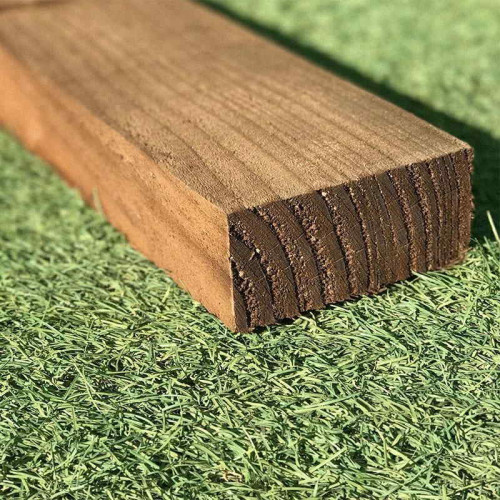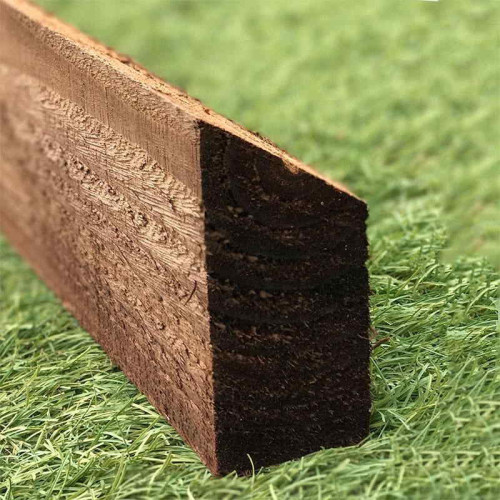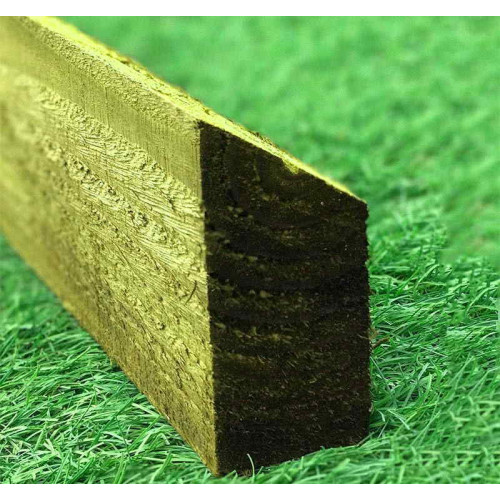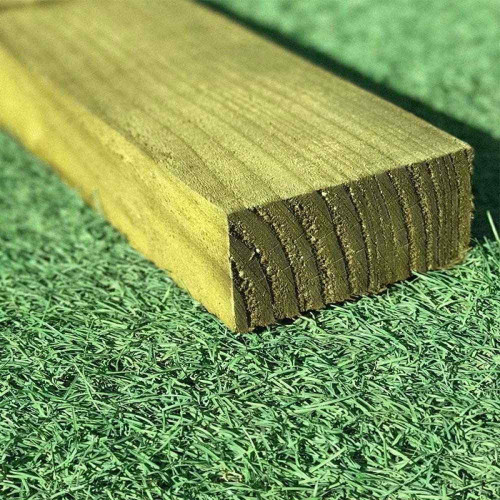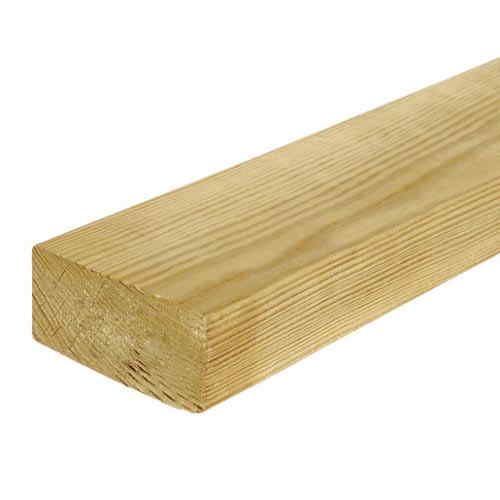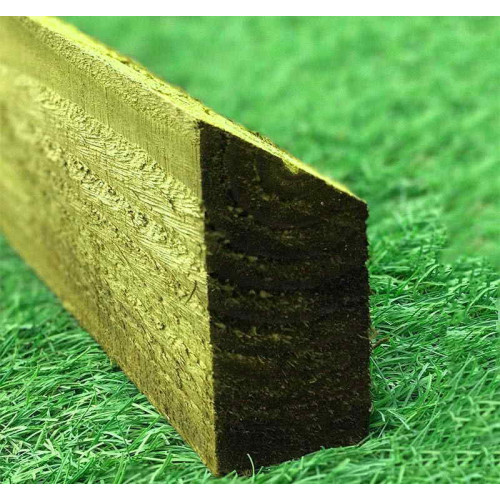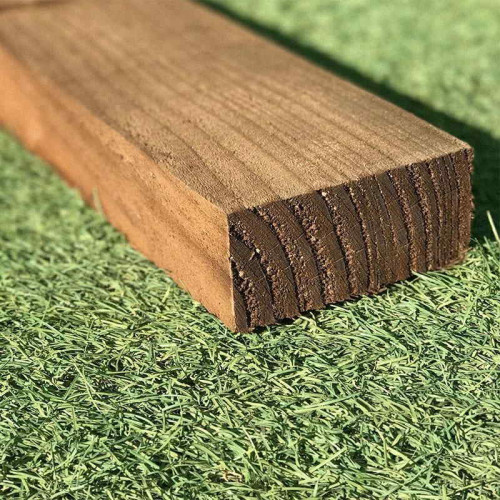



Quick answer: Square Rails are horizontal timber components used to support fence boards, picket pales, panel framing and other outdoor timberwork. The correct rail depends on the span, fence height, weight of the material being supported and the type of fence being built. Lighter backrails suit panel construction and repairs, while larger rails provide more substantial support for site-built fencing and garden structures. Rails should be fixed securely between or across suitable posts and should not be confused with fence posts or decorative battens.
Rails are some of the least visible components in a finished fence, but they are also some of the most important.
Fence boards, picket pales and other timber components need something substantial to connect them to the posts. That job is often performed by horizontal rails.
Choose a rail that is too light for the job and the fence may flex, twist or sag. Use unnecessarily substantial timber and the project becomes heavier and more expensive without necessarily improving the finished result.
The term Square Rails covers a range of rectangular sawn timber sections used for fencing, repairs, frames and other outdoor construction.
This guide explains what Square Rails are, how they differ from Cant Rails and battens, where different rail sizes are useful, how to calculate quantities and what to consider before cutting and fixing pressure-treated timber.
What Are Square Rails?
Square Rails are horizontal lengths of timber used as supporting members within fences and other outdoor timber structures.
Despite the category name, the timber does not necessarily have an exactly square cross-section. Rectangular sections are common.
The important distinction is their role.
A rail provides horizontal support between or across posts so that other components can be attached securely.
These components may include:
- Fence boards
- Picket pales
- Panel framing
- Slats
- Light screening components
What Are Square Rails Used For?
Common applications include:
- Building site-made fencing
- Constructing or repairing fence panels
- Supporting picket pales
- Replacing damaged backrails
- Building timber screens
- Creating simple outdoor frameworks
The same rail is not necessarily appropriate for every one of these uses.
Section size, span and loading all matter.
What Square Rails Does East Coast Fencing Supply?
The current Square Rails category includes several pressure-treated timber profiles for fencing and outdoor work.
Examples include:
- 1.83m x 75 x 32mm fence panel backrails
- 87 x 38mm MOT rails in longer lengths
- 100 x 47mm wallplate sections
- 125 x 47mm timber sawn to produce Cant Rail profiles
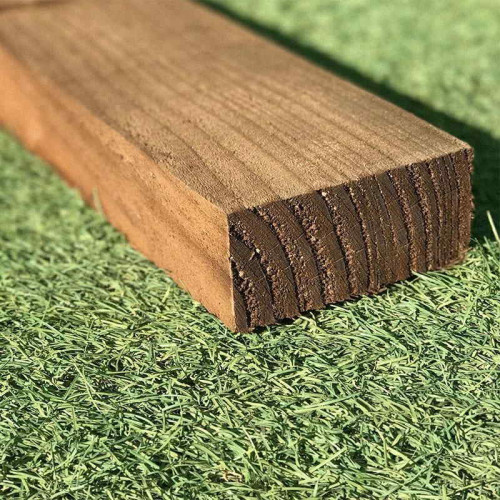
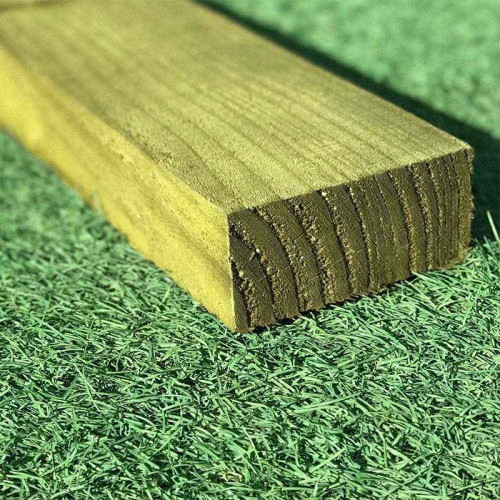
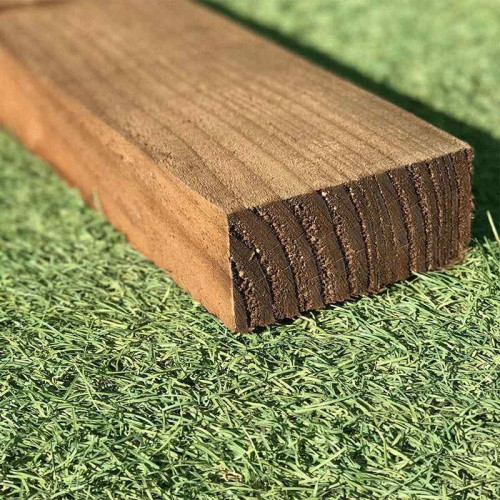
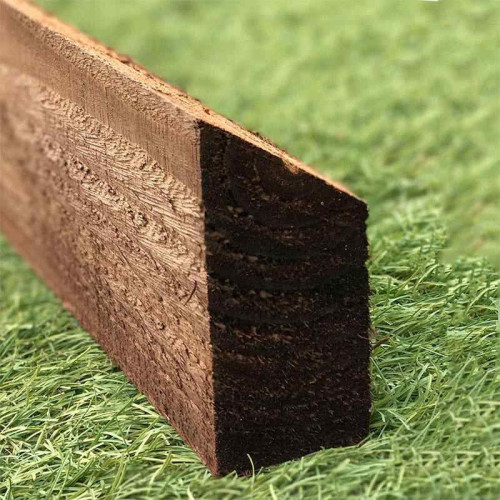
Products are available in green/natural and brown pressure-treated finishes across different parts of the range.
Always check the individual rail specification rather than assuming every item within the category has the same dimensions or intended use.
What Is A Fence Panel Backrail?
A fence panel backrail forms part of the framework behind the visible boards of a timber fence panel.
The boards are fixed to the backrails so that the panel acts as one complete unit.
The current range includes 1.83m x 75 x 32mm pressure-treated fence panel backrails.
The 1.83m length corresponds conveniently with the common nominal 6ft width used by many garden fence panels.
What Are Fence Panel Backrails Used For?
They can be useful for:
- Constructing suitable timber panels
- Repairing compatible damaged panels
- Replacing a failed rail where the surrounding panel remains sound
- Custom fencing projects based around a standard panel width
A backrail should be treated as part of the panel structure rather than as a decorative finishing strip.
Can You Repair A Fence Panel With A New Backrail?
Sometimes.
If one backrail has failed but the remaining boards and framing are still in good condition, replacing the damaged rail can be worthwhile.
Before repairing the panel, inspect:
- Other backrails
- Vertical boards
- Panel framing
- Existing fixings
- Any signs of widespread decay
Replacing one rail makes little sense if the rest of the panel is already structurally deteriorated.
What Is An MOT Rail?
MOT Rail is a larger rectangular timber section within the Square Rails range.
Current products include pressure-treated 87 x 38mm sections in lengths including 2.4m and 3.6m.
The larger section and longer available lengths make this type of rail useful for fencing and other outdoor timber projects where more substantial horizontal support is required.
What Can MOT Rails Be Used For?
Depending on the construction, they can be considered for:
- Fence frameworks
- Custom timber screens
- Outdoor framing
- Repair projects
- Landscaping structures
The suitability of the rail still depends on how far it spans and what it needs to support.
What Is A Wallplate?
Wallplate timber is a more substantial rectangular section that can be used in appropriate structural and outdoor framing applications.
The current Square Rails range includes pressure-treated 100 x 47mm wallplate sections.
Because this is a considerably larger section than a lightweight panel backrail, it should be selected where the project genuinely requires that additional timber rather than simply because bigger appears stronger.
What Is The Difference Between A Backrail And A Larger Rail?
The main differences are section size and intended loading.
| Rail Type | Typical Section | Typical Role |
|---|---|---|
| Fence Panel Backrail | 75 x 32mm | Panel construction and suitable repairs |
| MOT Rail | 87 x 38mm | More substantial fencing and outdoor framing |
| Wallplate | 100 x 47mm | Larger timber framing applications |
These are different components rather than interchangeable sizes of the same universal rail.
What Is The Difference Between Square Rails And Cant Rails?
Square or rectangular rails have a conventional rectangular cross-section.
Cant Rails have an angled profile.
That angled surface is particularly useful in traditional closeboard fencing because it provides a suitable fixing face for Feather Edge Boards while helping the rail shed water.
Choose according to the fence system rather than appearance alone.
Are Cant Rails Better For Closeboard Fencing?
Cant Rails are specifically associated with traditional site-built closeboard fencing.
Feather Edge Boards can be fixed to the angled rail to create a conventional closeboard structure.
A rectangular rail may be appropriate in other fencing arrangements, but it should not automatically be substituted for a Cant Rail when following a traditional closeboard design.
What Is The Difference Between Square Rails And Timber Battens?
Timber battens are much slimmer components.
They are suited to uses such as:
- Trellis
- Slatted screening
- Light decorative work
Rails provide more substantial structural support.
| Component | Main Function |
|---|---|
| Square Rail | Horizontal structural support |
| Timber Batten | Trellis, slats and lighter work |
| Fence Post | Primary vertical support |
| Panel Capping | Finishes the upper panel edge |
Can Square Rails Be Used Instead Of Fence Posts?
No.
Fence posts are the main vertical supports transferring loads from the fence into the ground or another suitable support.
Rails span horizontally between those posts.
A rail section should not be buried and treated as an improvised fence post merely because it is a substantial piece of timber.
Can Square Rails Be Used For Picket Fencing?
Yes, suitable rails can form the horizontal framework to which Picket Pales are fixed.
A basic site-built picket fence commonly consists of:
- Posts
- Horizontal rails
- Vertical Picket Pales
The pales create the visible boundary while the rails keep them aligned and transfer their load into the posts.
How Many Rails Does A Picket Fence Need?
The correct number depends on:
- Fence height
- Pale length
- Pale section
- Rail dimensions
- Post spacing
Low fencing may require a simpler framework than a taller picket boundary.
Do not add rails according to a generic rule without considering the actual construction.
Can Square Rails Be Used With Feather Edge Boards?
They can be used in some custom fencing designs, but traditional closeboard construction commonly uses Cant Rails.
If you are building conventional closeboard fencing, start with the components intended for that system:
- Suitable posts
- Cant Rails
- Feather Edge Boards
- A gravel board where appropriate
- Capping where required
A different rail profile should be chosen deliberately rather than substituted simply because it is available.
Can Square Rails Be Used For Horizontal Slatted Fencing?
They can form part of the supporting framework behind a custom slatted screen.
The visible slats may be made from smaller timber sections, with larger rails and posts providing the structural support behind them.
This division of roles is important.
The decorative slats create the appearance, while the framework keeps the screen stable.
Can Square Rails Be Used For Garden Screens?
Yes.
A simple screen can use rails between posts with:
- Vertical battens
- Horizontal battens
- Pales
- Other suitable timber components
The rail size should reflect the screen's height, span and wind exposure.
Can Square Rails Be Used For Trellis?
They may be useful as substantial framing around a custom trellis structure, but the lattice itself would usually be constructed from much smaller battens.
Using full rails for every part of a trellis would normally make the structure unnecessarily heavy.
Can Square Rails Be Used For Fence Repairs?
Yes, provided the replacement rail matches the structural role of the failed component.
Possible repairs include:
- Fence panel backrails
- Site-built fence rails
- Picket fence framing
- Custom timber screens
Before repairing one rail, check whether the surrounding timber remains sound.
How Do You Know If A Fence Rail Needs Replacing?
Signs can include:
- Complete breakage
- Severe decay
- Loose boards because the rail no longer holds fixings
- Significant splitting around multiple fixing points
- A rail pulling away from the post
Surface weathering alone does not necessarily mean a rail has failed structurally.
Why Do Fence Rails Fail?
Common causes include:
- Persistent moisture
- Inappropriate timber for the application
- Poor fixings
- Excessive unsupported span
- Heavy loading
- Wind movement
- Damage during installation
- Natural timber deterioration over time
A replacement rail will perform best when the cause of the original failure is also addressed.
Can You Replace One Rail Without Rebuilding The Fence?
Often, yes.
If the posts, boards and other rails remain sound, local repair can be practical.
The amount of dismantling required depends on how the fence was originally constructed.
For example, replacing a backrail behind a finished panel may require more work than replacing an exposed rail in site-built fencing.
Should A Replacement Rail Match The Existing Size?
Usually, matching the existing section is the simplest starting point where the original construction was appropriate.
This helps maintain:
- Alignment
- Board position
- Fixing depth
- Overall appearance
If the original rail failed because it was clearly undersized, simply copying it may repeat the problem.
How Do You Choose The Right Rail Size?
Consider four things first:
- The distance the rail needs to span.
- The weight attached to it.
- The height and design of the fence.
- The level of exposure.
A short rail supporting lightweight picket pales does a different job from a long rail carrying a dense timber screen.
Does A Bigger Rail Always Mean A Stronger Fence?
Not necessarily.
Increasing the timber section can increase capacity, but the fence remains dependent on:
- Posts
- Joints
- Fixings
- Foundation
- Overall design
A very substantial rail badly attached to a weak post is still a poor fence.
Why Does Rail Span Matter?
The longer a rail spans between supports, the more opportunity it has to deflect under load.
Reducing the span can make a significant difference to stiffness.
This is why post spacing and rail size should be considered together rather than separately.
Can You Join Two Rails Between Posts?
A joint should ideally occur where it can be properly supported.
A simple unsupported end-to-end joint halfway across a fence bay creates a potential weak point.
Where longer runs require multiple pieces, plan joints around:
- Posts
- Intermediate framing
- Another suitable structural support
Should Rail Joints Meet On Fence Posts?
That is generally a logical arrangement because the post provides a substantial support at the joint.
Both rail ends need sufficient bearing and suitable fixing.
Avoid creating several joints in the same unsupported area simply to use short offcuts.
Can Square Rails Be Fixed Between Wooden Posts?
Yes.
This is one of their common applications.
Depending on the fence design, rails may be fixed:
- Between the faces of the posts
- Across one face of the posts
- Within a purpose-made framing arrangement
The fixing method needs to suit the rail section and expected loading.
Can Square Rails Run Across The Face Of Fence Posts?
Yes, in suitable site-built fencing designs.
Running rails across the post faces can simplify fixing because the rail does not need to be cut precisely between every pair of posts.
However, it changes the position of the fence boards and the overall thickness of the finished boundary.
Plan the complete cross-section before installing the posts.
Can Square Rails Be Fixed Between Concrete Posts?
Concrete posts require a compatible support or fixing method.
Do not assume timber rails can simply be screwed into any concrete fence post.
Many concrete posts contain reinforcement, and inappropriate drilling can damage the post.
Timber rail systems are normally most straightforward with suitable timber posts.
What Fixings Should Be Used For Square Rails?
Use exterior-grade fixings suitable for:
- The rail dimensions
- The post or support
- The load
- The fixing arrangement
The fixing needs adequate penetration into sound supporting timber.
Short screws that barely enter the post will not provide strong support simply because there are several of them.
Should Square Rails Be Screwed Or Nailed?
Both mechanical fixing methods may be appropriate depending on the fence construction.
Screws can provide convenient controlled fixing and can make later dismantling easier.
Suitable fencing nails can also be appropriate for some construction methods.
Whatever method you choose, use fixings intended for outdoor timberwork.
Should You Pre-Drill Square Rails?
Pre-drilling can reduce the risk of splitting, particularly when:
- Fixings are near the rail end
- Large screws are being installed
- The timber section is relatively narrow
The pilot hole should suit the fixing being used.
How Close To The End Can You Fix A Rail?
Avoid driving substantial fixings unnecessarily close to the end grain.
Doing so increases the risk of splitting.
If the design forces a fixing very close to an end, reconsider the joint arrangement or pre-drill appropriately.
Can You Cut Square Rails?
Yes.
Individual rails can be cut to suit:
- Short fence bays
- End sections
- Corners
- Repairs
- Garden screens
- Non-standard post spacing
Measure the actual opening rather than cutting every rail from an assumed nominal dimension.
What Should You Do After Cutting Pressure-Treated Rails?
Cutting treated timber exposes material from inside the section.
A suitable end-grain preservative treatment should be applied to freshly exposed surfaces where required by the relevant treatment guidance.
Minimise unnecessary cutting, drilling and notching where practical.
Can You Notch A Square Rail Into A Post?
It is physically possible to create timber joints involving notches, but removing material changes the strength of both components.
Do not cut deep notches simply to create a flush appearance without considering how much timber remains.
For ordinary domestic fencing, straightforward mechanical fixing methods are often easier to repair and replace later.
Can Square Rails Be Used Outdoors Without Treatment?
For exposed garden fencing, treated timber is a practical choice.
The current East Coast Fencing Square Rails range is pressure treated.
Treatment helps protect suitable timber against biological deterioration, but it does not make installation quality irrelevant.
Are Pressure-Treated Rails Waterproof?
No.
Pressure treatment is not a waterproof coating.
Outdoor timber still:
- Absorbs and releases moisture
- Expands and contracts
- Changes colour
- Develops natural surface checks
Good detailing should allow the timber to dry rather than trapping water around it.
Is Green Pressure-Treated Timber Better Than Brown?
Not simply because of the visible colour.
Green/natural and brown treatments provide different initial appearances.
The colour itself should not be used as proof of a particular treatment Use Class or service life.
Select timber from the actual product specification and intended application.
Can Square Rails Be Painted?
Pressure-treated rails can generally be given a suitable exterior decorative coating once the timber is sufficiently dry and properly prepared.
Follow the coating manufacturer's instructions.
If rails will eventually be hidden behind boards, consider whether decorative coating is actually necessary.
Will Square Rails Change Colour Outdoors?
Yes.
Weathering gradually changes the appearance of external timber.
Green/natural and brown treated timber will not retain exactly the same freshly treated colour indefinitely.
Can Square Rails Twist Or Split?
Yes.
Timber is a natural material and responds to moisture changes.
Some:
- Shrinkage
- Checking
- Movement
- Variation
is normal.
Correct storage and adequate fixing help control movement once the rail is installed.
How Should Square Rails Be Stored Before Installation?
Keep them:
- Supported along their length
- Off wet soil
- Stacked neatly
- Protected from unnecessary distortion
Do not leave long rails leaning against a wall for an extended period if straightness is important to the finished fence.
Should Rails Be Installed Crown Up?
Some sawn timber has a slight natural bow.
Where practical, orienting repeated rails consistently can help the finished framework look neater.
Severely distorted timber should not simply be forced into a critical structural position.
How Do You Keep Fence Rails Level?
Use:
- A spirit level
- String line
- Consistent measurements from a reference point
Do not measure every rail from uneven ground if the finished fence requires a consistent level.
Ground levels can change while the rail framework needs to remain visually controlled.
Should Fence Rails Always Be Level?
On level or stepped fencing, rails will commonly be installed level within each bay.
Site-built fencing on a continuous slope may require a different arrangement.
The rail orientation should be part of the planned fence design rather than decided one bay at a time.
Can Square Rails Be Used On Sloping Ground?
Yes.
Site-built fencing is particularly useful on slopes because the individual rails and boards can be adjusted more easily than rigid prefabricated panels.
You might:
- Step the rails between posts
- Run the fencing with a controlled gradient where appropriate
- Adjust individual board lengths
Plan the complete run before cutting the rails.
Can Rails Help Build A Fence Around An Awkward Corner?
Yes.
Individual timber components offer much more flexibility than complete panels.
Rails can be cut to suit shorter corner bays and fixed into suitably positioned posts.
Accurate post placement remains essential.
Can Square Rails Be Used For A Custom-Width Fence Bay?
Yes.
This is one of the advantages of site-built fencing.
If the final gap is too narrow for a standard fence panel, rails can be cut to the required bay width and finished with compatible boards or pales.
Can Square Rails Be Used Around A Garden Gate?
Potentially, as part of adjacent fence framing.
The gate itself requires suitable structural framing and properly selected gate hardware.
Do not assume an ordinary fence rail can automatically perform the role of every ledge, brace or structural gate component.
Can Square Rails Be Used To Build A Gate?
Some substantial rectangular timber may be suitable within a properly designed gate frame, but a gate is subject to very different loading from a fixed fence bay.
Its frame must resist:
- Sagging
- Twisting
- Repeated opening
- Wind
Use a gate design intended for the size and weight required rather than simply assembling spare fencing rails into a rectangle.
Can Square Rails Be Used For Raised Beds?
They may be suitable for light framing or ancillary timberwork, but not every rail is designed to retain a substantial mass of wet soil.
If constructing a raised bed, size the structural timber according to the:
- Bed height
- Length
- Soil load
- Internal supports
A fencing rail and a retaining timber do not necessarily perform the same job.
Can Square Rails Be Used For Pergolas?
Do not automatically treat fencing rails as structural pergola beams or rafters.
Pergolas have their own structural requirements based on span, section and loading.
A rail that performs well in fencing may be inappropriate for a considerably larger overhead structure.
Can Square Rails Be Used For Shed Framing?
Again, use timber designed and specified for the structure being built.
The Square Rails category includes useful general outdoor timber sections, but a fencing product category should not be interpreted as engineering approval for every structural building application.
How Do You Calculate How Many Fence Rails You Need?
First establish:
- Total fence length
- Number of bays
- Number of rails required per bay
- Rail lengths available
- Where joints will occur
For example, if each bay requires multiple rails, calculate the rail requirement per bay and multiply that across the full run.
Then allow for:
- Cuts
- End bays
- Corners
- Repairs
- Reasonable waste
Should You Order Rails Based Only On Total Metres?
No.
Total linear metres are useful, but available product lengths and joint positions matter too.
Two projects requiring the same total rail length can need different quantities if one contains:
- Many short bays
- Several corners
- Numerous gates
- Awkward end sections
Create a cutting plan before ordering.
Can Rail Offcuts Be Reused?
Yes, where the remaining section is long enough and appropriate for the intended use.
Useful offcuts may suit:
- Short end bays
- Repairs
- Small garden projects
- Temporary spacing or setting-out aids
Do not create unsupported structural joints solely to use every offcut.
How Do You Reduce Waste When Cutting Rails?
List the required finished lengths before making the first cut.
Cut the longest components first, then identify where the remaining pieces can be used.
This is particularly worthwhile when the project contains several non-standard bays.
Should You Measure Every Fence Bay?
For a new accurately set-out fence, the bays should be consistent.
For repairs and older fences, measure each relevant opening.
Existing posts can:
- Lean
- Move
- Have inconsistent spacing
Cutting ten rails to one assumed dimension before checking the actual fence can create avoidable waste.
Can Square Rails Be Used With Concrete Gravel Boards?
Potentially, depending on the complete fence construction.
The gravel board and rails perform different jobs.
The gravel board protects or forms the lower part of the boundary.
The rails provide horizontal support for the timber fence above.
Can Square Rails Be Used With Wooden Gravel Boards?
Yes, within suitable timber fencing systems.
Again, the components have different roles.
A wooden gravel board runs along the bottom of the fence, while rails sit higher in the framework and support boards or pales.
Should The Bottom Rail Touch The Ground?
For normal above-ground fencing, it is sensible to avoid unnecessary contact between rails and wet soil.
Persistent soil contact can keep the timber damp and makes inspection difficult.
Use the fence system's gravel board or other suitable lower detail rather than lowering a conventional rail into the soil.
Are Square Rails Ground-Contact Timber?
Do not assume so simply because they are pressure treated.
Pressure-treated timber can be produced for different exposure conditions.
The visible colour does not prove that a particular rail is suitable for permanent ground contact.
Use rails as intended and check the product specification before placing treated timber in a different exposure situation.
Can Square Rails Be Used In Windy Gardens?
Yes, but rail selection is only one part of designing fencing for an exposed location.
Also consider:
- Fence height
- Board type
- Post dimensions
- Post spacing
- Foundations
- Overall fence permeability
More substantial rails do not compensate for weak posts.
Do Taller Fences Need More Rails?
They often require more support than low fencing, but the correct arrangement depends on the fence design and components.
Increasing rail quantity can help distribute load and provide more fixing positions for the boards.
Use a complete fence design rather than adding rails without considering where they are needed.
What Happens If Fence Rails Are Too Far Apart?
The boards between them may have less support.
Potential consequences include:
- Movement
- Bow
- Loose fixings
- More stress at individual fixing points
This is especially relevant with tall vertical boards exposed to wind.
Can You Add Another Rail To An Existing Fence?
Potentially.
Adding support may be useful where the existing structure permits suitable fixing into sound posts.
However, determine why the additional rail is needed.
If the fence is moving because the posts are loose, another rail will not solve the main problem.
How Do You Check Existing Fence Rails?
During routine fence maintenance, inspect:
- Ends where rails meet posts
- Areas around fixings
- Sections hidden behind vegetation
- Any point where boards have become loose
Use gentle pressure to check whether a suspicious rail remains structurally sound.
Do Climbing Plants Affect Fence Rails?
They can.
A mature climber adds weight to the complete fence and can:
- Increase wind resistance
- Keep timber damp
- Hide deterioration
- Make repairs more difficult
Keep vigorous planting under reasonable control.
Can Square Rails Develop Green Algae?
Yes.
Outdoor timber can develop green surface growth in damp and shaded conditions.
Rails hidden behind boards or planting may remain damp for longer than exposed components.
Algae itself does not automatically mean the rail has structurally decayed, but persistent moisture deserves attention.
How Should Square Rails Be Cleaned?
Structural rails generally need less cosmetic cleaning than visible fence faces.
If access is required:
- Remove leaves and trapped vegetation.
- Brush away loose dirt.
- Use a suitable timber-safe cleaner where necessary.
- Allow the timber to dry.
Avoid damaging the timber through unnecessarily aggressive cleaning.
Can You Pressure Wash Fence Rails?
Use caution.
Excessive pressure can raise timber fibres and damage weathered surfaces.
Mechanical cleaning also becomes awkward around joints and fixings.
Gentle maintenance is normally sufficient.
How Long Do Square Rails Last?
There is no single lifespan for every fencing rail.
Performance depends on:
- Treatment
- Timber quality
- Moisture exposure
- Fence design
- Fixings
- Loading
- Maintenance
A rail installed correctly above ground in a sound fence can perform very differently from one constantly trapped against wet vegetation or incorrectly used in ground contact.
Are Square Rails Better Value Than Complete Fence Panels?
They are different ways of constructing fencing.
Ready-made fence panels provide convenience because much of the assembly has already been completed.
Individual rails are useful where you want:
- Custom dimensions
- Site-built fencing
- Individual repairs
- Greater flexibility on awkward ground
Compare the complete system rather than the purchase price of one rail against one finished panel.
When Should You Build A Fence From Rails Instead Of Using Panels?
Site-built fencing can be particularly useful where:
- The boundary has unusual bay widths
- The ground slopes
- You want a custom board arrangement
- Individual components need to be replaceable
- Standard panels do not fit the design
Panels may be preferable where standard dimensions suit the site and installation speed is more important.
Are Square Rails Good For DIY Fencing?
They can be.
Working from individual rails gives a capable DIY installer control over the fence dimensions.
It also creates more work.
You need to measure and fix:
- Posts
- Each rail
- Individual boards or pales
This requires more setting out than simply installing finished panels.
What Tools Do You Need For Square Rails?
Depending on the project, useful tools may include:
- Tape measure
- Pencil
- Spirit level
- String line
- Suitable saw
- Drill or driver
- Appropriate drill bits
- Exterior fixings
- Suitable personal protective equipment
Post installation requires additional equipment.
What Are The Most Common Square Rail Mistakes?
- Choosing a rail based only on price
- Using a lightweight backrail for a much heavier structural job
- Assuming bigger timber automatically fixes a weak fence design
- Creating unsupported rail joints
- Using rails as improvised fence posts
- Putting ordinary rails directly into soil without checking suitability
- Fixing too close to the end and splitting the timber
- Using short or unsuitable screws
- Cutting every rail before checking actual bay dimensions
- Ignoring treatment of freshly cut ends
- Using rails where Cant Rails are intended for traditional closeboard construction
- Confusing rails with decorative Timber Battens
- Ignoring rail span
- Adding rails to loose posts instead of repairing the posts
Square Rails Buying Checklist
- Identify what the rail needs to support.
- Measure the span between supports.
- Choose a rail section appropriate to the project.
- Check the required rail length.
- Calculate how many rails are required per bay.
- Plan joints over suitable supports.
- Allow sensible material for cuts and unusual end bays.
- Choose the required pressure-treated finish.
- Select suitable exterior fixings.
- Plan treatment for freshly cut surfaces.
- Keep rails away from unnecessary ground contact.
- Check post strength before building the framework.
FAQs
What Are Square Rails Used For?
They are horizontal timber supports used for fence boards, Picket Pales, panel framing, repairs and suitable outdoor timber structures.
Are Square Rails Actually Square?
Not necessarily. Rectangular sections are common within the Square Rails category.
What Size Square Rails Does East Coast Fencing Sell?
The current range includes several profiles, including 75 x 32mm fence panel backrails, 87 x 38mm MOT rails and 100 x 47mm wallplate sections.
How Long Are Fence Panel Backrails?
The current fence panel backrail range includes 1.83m lengths.
What Is A Fence Panel Backrail?
It is a horizontal structural component forming part of the framework behind the visible boards of a timber fence panel.
Can A Broken Fence Panel Backrail Be Replaced?
Potentially, if the rest of the panel remains structurally sound and a compatible replacement rail can be fitted.
What Is An MOT Rail?
It is a larger rectangular pressure-treated timber rail. The current range includes 87 x 38mm sections in lengths including 2.4m and 3.6m.
What Is The Difference Between Square Rails And Cant Rails?
Square Rails have rectangular sections, while Cant Rails use an angled profile particularly associated with traditional closeboard fencing.
What Is The Difference Between Rails And Timber Battens?
Rails provide more substantial horizontal support. Battens are slimmer and better suited to trellis, slatted screens and lighter decorative work.
Can Square Rails Be Used As Fence Posts?
No. Fence posts perform a different structural role and should be selected for vertical support and the relevant installation conditions.
Can Square Rails Be Used For Picket Fencing?
Yes. Suitable rails can support Picket Pales between posts.
Can Square Rails Be Used With Feather Edge Boards?
They can be used in some custom arrangements, although traditional closeboard fencing commonly uses Cant Rails.
Can Square Rails Be Used For Garden Screens?
Yes. They can form the supporting framework behind battens, pales or other suitable screening components.
Can Square Rails Be Used For Trellis?
They can form substantial framing, but the lattice itself is normally made from smaller Timber Battens.
Can Square Rails Be Used On Sloping Ground?
Yes. Individual rails are particularly useful for site-built fencing where the framework needs to accommodate changing ground levels.
Can Square Rails Be Cut?
Yes. They can be cut for custom bays, repairs, corners and other non-standard sections.
Should Cut Ends Of Pressure-Treated Rails Be Treated?
Freshly exposed surfaces should receive a suitable end-grain treatment where required by the relevant timber treatment guidance.
Can Square Rails Be Screwed To Wooden Posts?
Yes. Use suitable exterior fixings with adequate penetration into sound post timber.
Can Square Rails Be Fixed To Concrete Posts?
A compatible fixing system is required. Do not casually drill reinforced concrete fence posts.
Should Fence Rail Joints Be Supported?
Yes. Joints should be positioned over a suitable post or other structural support where practical.
Can Two Rails Be Joined In The Middle Of A Fence Bay?
An unsupported end-to-end joint in the middle of a span creates a weak point and should generally be avoided.
Do Bigger Rails Make A Fence Stronger?
They may increase rail capacity, but the overall fence also depends on posts, fixings, foundations, span and design.
How Many Rails Does A Fence Need?
The correct number depends on fence height, board type, span and the construction being used.
Can You Add An Extra Rail To An Existing Fence?
Potentially, provided the posts and surrounding structure are sound and there is a suitable fixing position.
Are Square Rails Pressure Treated?
The current East Coast Fencing Square Rails range includes pressure-treated timber products.
Are Green Rails Better Than Brown Rails?
Not simply because of colour. Green/natural and brown provide different initial appearances, and colour alone should not be used to judge treatment specification.
Can Pressure-Treated Rails Be Painted?
Yes, where the timber is sufficiently dry, appropriately prepared and the chosen exterior coating is suitable.
Can Square Rails Touch The Ground?
Do not assume ordinary pressure-treated rails are intended for permanent ground contact. Use them in accordance with their product specification.
Can Square Rails Twist?
Some natural timber movement is possible. Correct storage, appropriate selection and secure fixing help control movement.
How Should Rails Be Stored?
Support them properly, keep them off wet ground and avoid storing long pieces in a position that encourages bending.
Can Square Rails Be Used For Fence Repairs?
Yes, where the replacement rail matches the structural role and dimensions required by the existing fence.
Are Square Rails Suitable For Windy Gardens?
They can be, but exposed fencing also requires suitable posts, foundations, fixings and an appropriate fence design.
Are Square Rails Better Than Fence Panels?
Neither is universally better. Rails offer flexibility for site-built fencing, while complete panels provide faster installation where standard dimensions suit the site.
Which Square Rails Should You Choose?
Start with the job the rail needs to perform.
If you are repairing or constructing a compatible fence panel, a 1.83m fence panel backrail may provide the section and length required for that particular framework.
If you are building a more substantial site-made fence or outdoor timber frame, a larger rectangular rail may be more appropriate.
Traditional closeboard fencing is a separate consideration. Where the design calls for Cant Rails and overlapping Feather Edge Boards, use components suited to that system rather than replacing them with a rectangular rail simply because the dimensions appear similar.
Then consider the span.
A rail needs to carry its attached boards between supports without excessive movement. Longer spans and heavier fencing increase the demands on both the rail and its fixings.
Finally, look at the complete fence rather than the rail in isolation.
Good rails cannot compensate for weak posts, poor foundations or unsuitable fixings. Equally, substantial posts do not help if lightweight rails are asked to carry more than they were intended to support.
Square Rails are most useful when treated as part of a complete timber framework. Choose the section according to its role, support joints properly, protect freshly cut treated timber and fix each rail securely into sound posts. That produces a fence that is easier to build, easier to repair and better able to keep its boards straight over time.