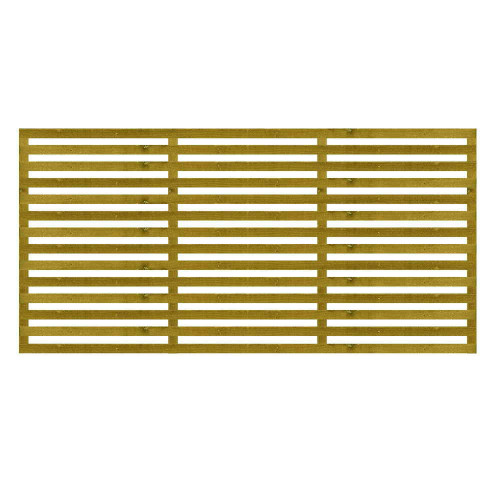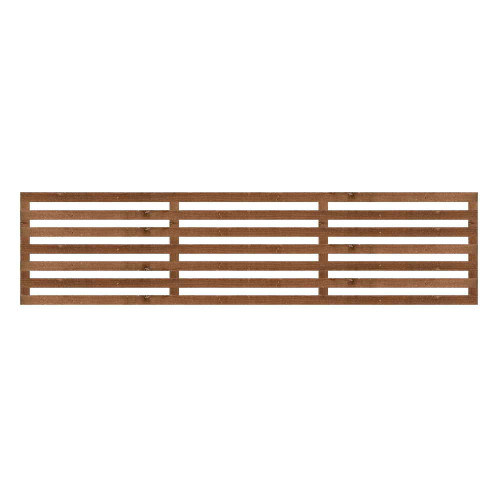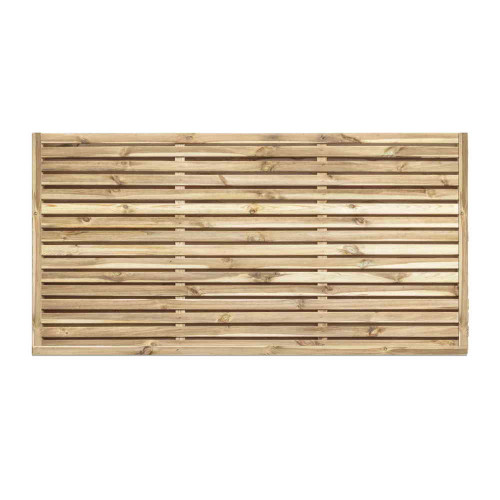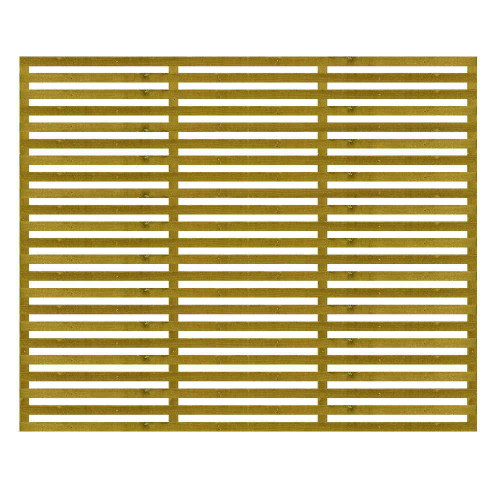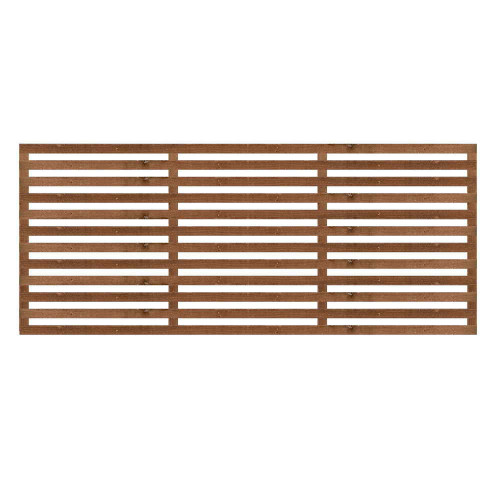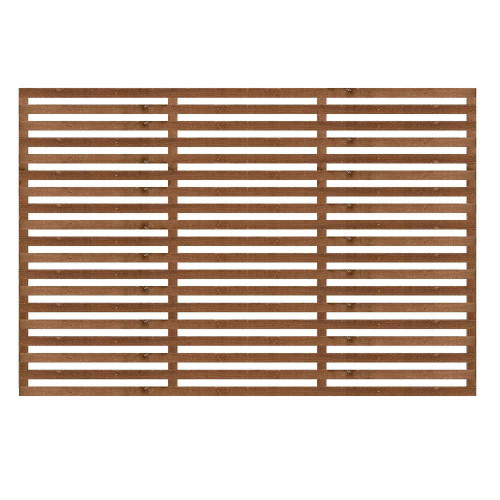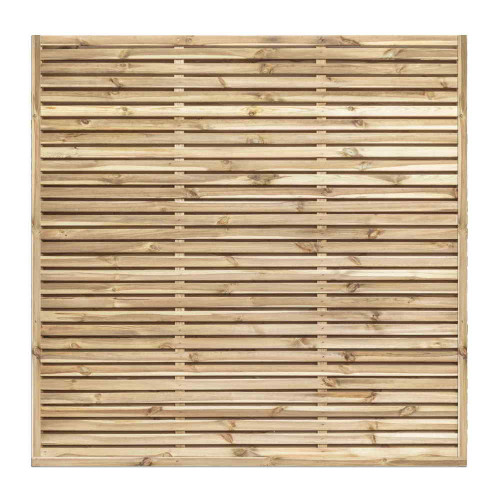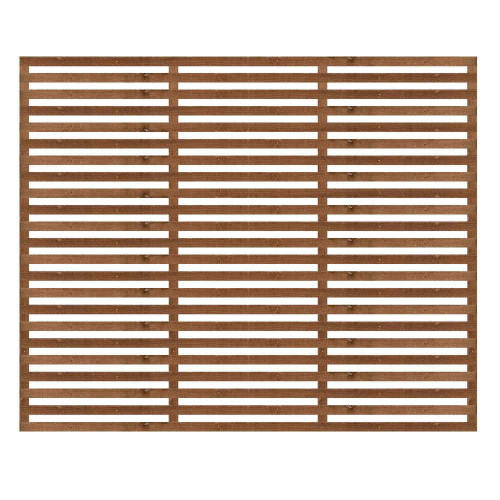


Quick answer: Horizontal Slatted Trellis and Double Slatted Fence Panels may look similar because both use horizontal timber lines, but they serve different purposes. Horizontal Slatted Trellis is a more open, rough-sawn screen suited to garden zoning, climbing plants and fence toppers. Double Slatted Fence Panels use approximately 8 x 45mm battens on both faces within a 45 x 45mm frame, giving substantially more immediate screening. Choose trellis for openness and versatility, or Double Slatted panels where the product needs to function primarily as a fence.
Horizontal timber has become a popular choice for contemporary gardens, but not every horizontal screen is the same product.
Horizontal Slatted Trellis and Double Slatted Fence Panels can look similar at first glance. Both create strong horizontal lines. Both allow some light and airflow through. Both can work particularly well around patios, modern extensions and structured planting.
The construction is very different.
One is an open trellis product designed for light screening, planting and garden division. The other is a substantial framed Fence Panel designed to form the main boundary.
Understanding that distinction makes it much easier to choose the right product.
What Is Horizontal Slatted Trellis?
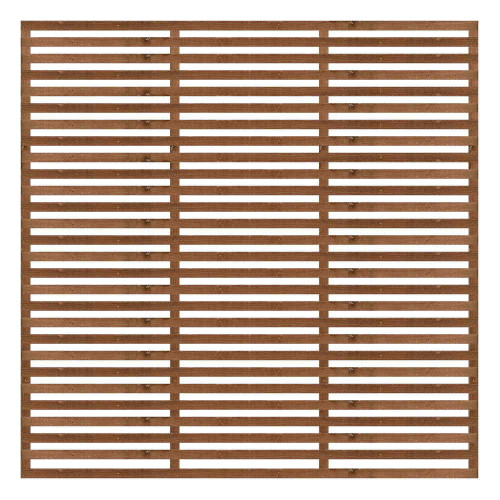
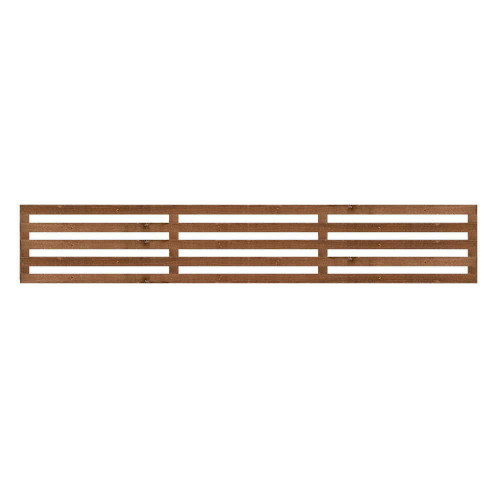
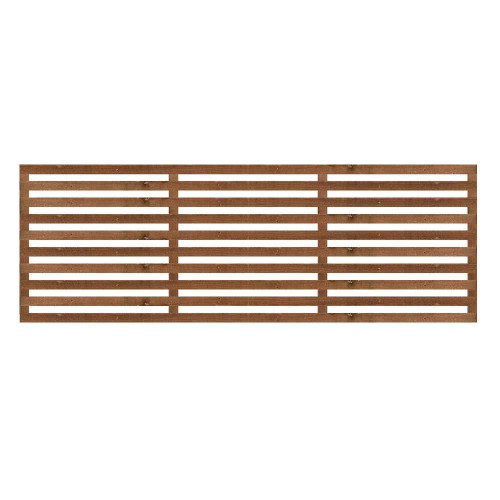
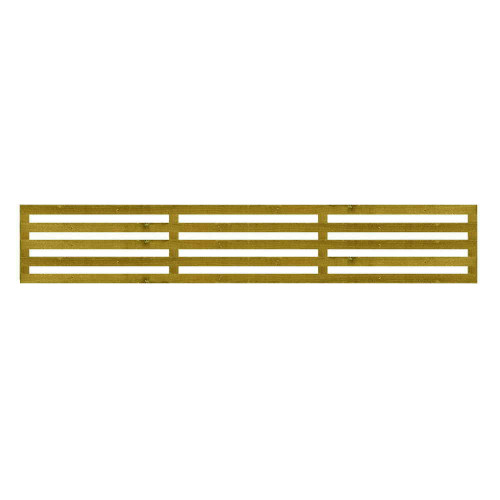
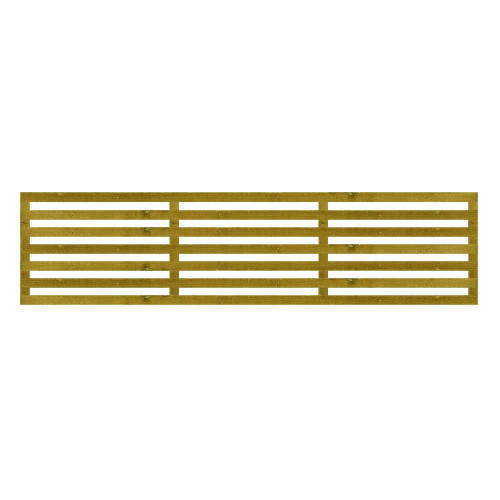
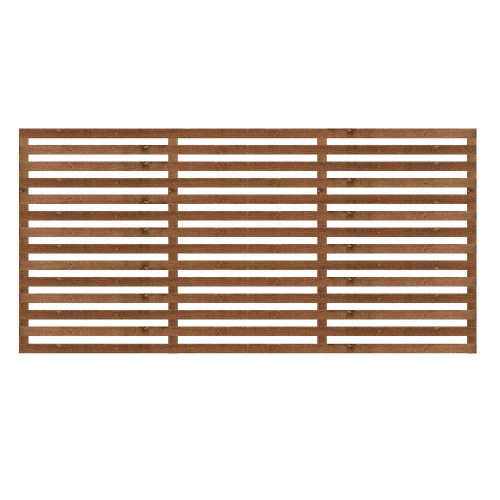
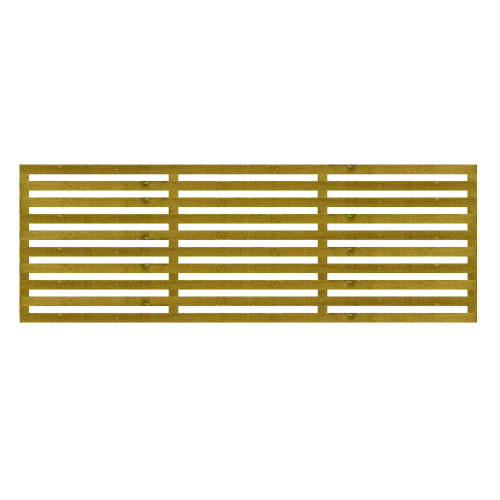
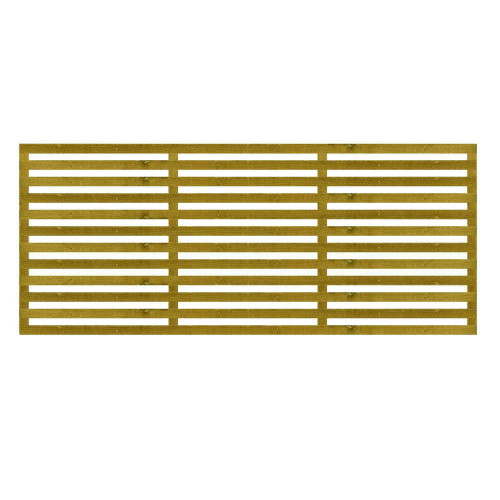
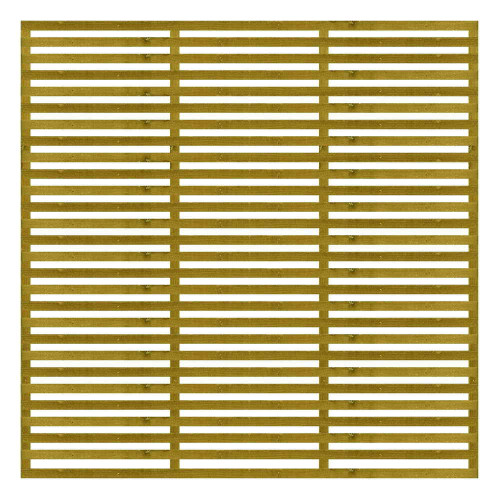
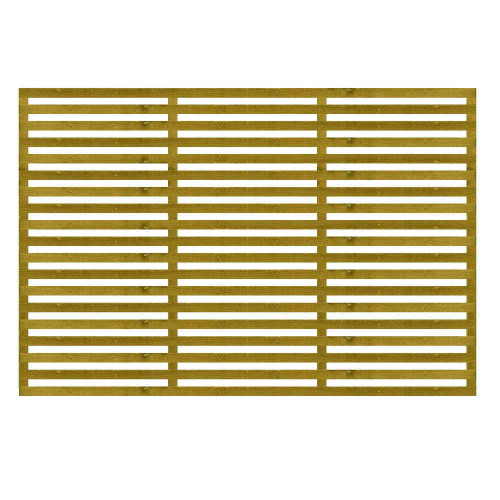
Horizontal Slatted Trellis is an open framed timber screen with battens running horizontally across the panel.
East Coast Fencing manufactures its current Horizontal Slatted Trellis range in-house from pressure-treated rough-sawn timber.
It is designed to provide:
- Filtered screening
- Good light transmission
- Airflow
- Climbing-plant support
- Contemporary garden division
- Fence-top decoration
Current panels are approximately 1.83m wide across suitable products and are available in a wide range of heights.
These include approximately:
- 300mm
- 450mm
- 600mm
- 750mm
- 900mm
- 1.2m
- 1.5m
- 1.83m
That makes the range unusually flexible.
The same basic slatted appearance can be used as a shallow Fence Topper Trellis, a mid-height patio screen or a full-height open garden divider.
What Is A Double Slatted Fence Panel?
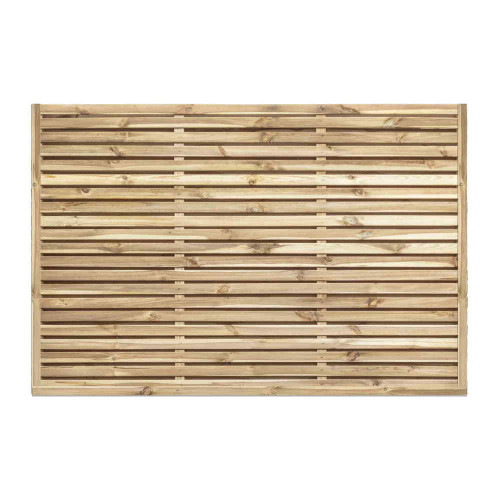
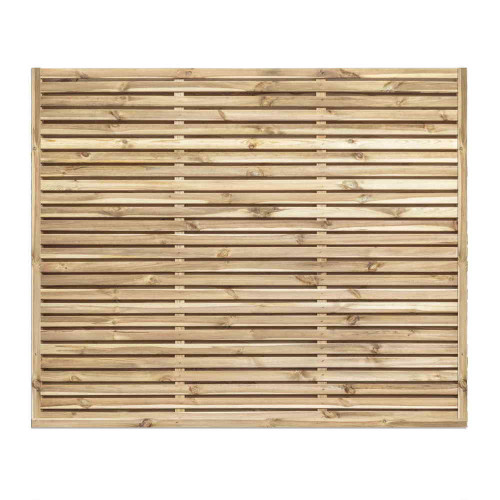
A Double Slatted Fence Panel is a complete framed decorative Fence Panel.
The current East Coast Fencing range uses horizontal battens on both faces of the panel.
Suitable current products use:
- An approximately 45 x 45mm outer frame
- Approximately 8 x 45mm horizontal battens
- Battens arranged on both faces
- Gaps of roughly 40mm within the slatted arrangement
- An overall depth of approximately 45mm
The double-sided arrangement means a direct view through one set of openings is interrupted by timber on the opposite face.
This creates much stronger filtered screening than a more open single-plane trellis design.
Double Slatted Fence Panels are therefore intended to behave primarily as fencing rather than plant-support trellis.
Horizontal Slatted Trellis vs Double Slatted Fence Panels At A Glance
| Feature | Horizontal Slatted Trellis | Double Slatted Fence Panel |
|---|---|---|
| Primary purpose | Open screening and garden division | Main garden fencing |
| Construction | Open horizontal trellis | Slats on both faces |
| Privacy | Moderate filtered screening | Stronger filtered screening |
| Light | Good | More restricted |
| Airflow | Good | Moderate |
| Plant support | Well suited | Secondary use |
| Fence topper use | Well suited in lower heights | Normally used as the main panel |
| Timber finish | Rough-sawn | Semi-planed |
| Manufacture | Manufactured by East Coast Fencing | Manufactured in Poland and imported |
Which Gives More Privacy?
Double Slatted Fence Panels provide more immediate screening.
The reason is their two-sided construction.
The approximately 8 x 45mm battens are arranged across both faces of the panel, so openings through one layer are partially interrupted by timber on the other side.
This makes direct sightlines more difficult than through a more open Horizontal Slatted Trellis.
Neither product should be described as completely solid.
With Double Slatted fencing, visibility can still vary according to:
- Viewing angle
- Distance from the panel
- Viewer height
- Lighting
- Different ground levels
If the requirement is maximum immediate privacy with no deliberate openings, a predominantly solid Fence Panel such as Closeboard will normally be more appropriate.
Why Does Horizontal Slatted Trellis Look More Open?
Its purpose is different.
Horizontal Slatted Trellis is intended to create a filtered screen rather than mimic a solid fence.
The open layout helps retain:
- Views through parts of the garden
- Daylight
- Air movement
- Visual depth
This makes it particularly useful inside a garden, where completely blocking one area from another is often unnecessary.
A patio can feel separated from a lawn without appearing boxed in.
A Garden Room can gain a timber backdrop without being surrounded by another solid fence.
Are Double Slatted Fence Panels Fully Private?
No.
The double arrangement provides substantially more screening than ordinary open trellis, but intentional openings remain part of the design.
This can be an advantage where you want privacy without creating the visual weight of traditional solid fencing.
It also means the actual view through the panel should be considered before installation.
If a patio chair sits directly beside the boundary, test the likely eye-level sightline rather than judging privacy only from a photograph taken straight in front of the panel.
Which Is Better As A Main Garden Boundary?
Double Slatted Fence Panels are normally the stronger starting point.
They are designed as complete Fence Panels and create a more substantial boundary from the moment they are installed.
Choose Double Slatted where you want:
- Greater immediate screening
- A defined perimeter fence
- A contemporary alternative to solid traditional panels
- A matching contemporary gate arrangement
Horizontal Slatted Trellis can form a full-height screen when correctly supported, but it remains a more open product.
Use it as the main boundary only if that level of openness is genuinely wanted.
Which Is Better For Dividing A Garden?
Horizontal Slatted Trellis is particularly well suited to internal garden zoning.
Internal divisions often need to define a space rather than secure it.
Useful applications include:
- Separating a patio from a lawn
- Creating an outdoor dining zone
- Screening the side of a Garden Room
- Dividing planting areas
- Softening a utility section
- Creating a backdrop behind raised beds
Double Slatted panels create a stronger division.
Use them where one part of the garden needs to feel considerably more enclosed.
Which Is Better Around A Patio?
The answer depends on what the patio needs.
Choose Horizontal Slatted Trellis where you want to:
- Define the seating area
- Keep the garden feeling open
- Allow plenty of light through
- Grow plants over the screen
Choose Double Slatted Fence Panels where you want:
- Stronger screening from neighbours
- A more substantial enclosed feel
- A finished contemporary fence rather than a plant-support screen
You can also use both products in the same garden.
For example, Double Slatted panels can form the external boundary while Horizontal Slatted Trellis divides the patio from other areas inside the garden.
Which Is Better Beside A Garden Room?
Both horizontal designs work naturally beside modern garden buildings.
Double Slatted panels usually make more sense if the screen needs to hide neighbouring views, a service area or the less attractive side of the building.
Horizontal Slatted Trellis works well where you mainly want:
- A timber backdrop
- Plant support
- Partial screening
- A division between the building and lawn
Leave enough space around the Garden Room for maintenance, drainage and airflow.
Which Is Better For Climbing Plants?
Horizontal Slatted Trellis is generally the more appropriate product where planting is one of the main purposes of the screen.
The horizontal timber provides repeated positions for:
- Plant ties
- Training stems
- Spreading climbing growth sideways
Some plants will still require active training because not every climber attaches naturally to horizontal timber.
Double Slatted panels can sit behind planting, but they should not automatically become the structural support for heavy mature climbers simply because horizontal timber is available.
Can Climbing Plants Improve The Privacy Of Slatted Trellis?
Yes.
This is one of the useful features of an open trellis screen.
Plants can gradually fill the gaps and increase seasonal or evergreen coverage.
However, planting changes the structural demands on the screen.
Mature climbers can add:
- Weight
- Wet foliage
- Additional wind resistance
Plan the posts and fixing arrangement for the eventual planted screen rather than only the bare trellis.
Which Allows More Light Through?
Horizontal Slatted Trellis generally provides the more open arrangement.
This can be useful in gardens where reducing light is a concern.
Examples include:
- Narrow gardens
- Small patios
- North-facing areas
- Planting beds close to the screen
- Side passages
Double Slatted panels still allow light through their intentional gaps, but the two layers of timber create greater visual coverage.
Which Allows More Airflow?
Horizontal Slatted Trellis is the more open of the two designs and is particularly useful where maintaining airflow is important.
Double Slatted panels also permit air movement because they are not solid.
Neither should be treated as immune to wind loading.
A tall framed screen still requires:
- Suitable posts
- Appropriate foundations
- Secure fixings
- Correct installation
Dense climbing plants can also make a previously open trellis behave more like a closed screen.
Which Is Better In A Windy Garden?
It is not sensible to choose solely from the slat pattern.
Horizontal Slatted Trellis provides greater openness when bare, which can allow more air through.
Double Slatted fencing presents more timber across the same general area but is designed as a substantial Fence Panel.
The complete installation matters more than selecting whichever panel appears to have the larger gaps.
Check:
- Screen height
- Post size
- Post length
- Foundation
- Garden exposure
- Future plant coverage
How Do The Panel Sizes Compare?
Current Horizontal Slatted Trellis is approximately 1.83m wide across suitable products.
The wide range of heights is one of its main advantages.
It can be selected at approximately 300mm or 450mm for a shallow section, or considerably taller for standalone screening.
Current Double Slatted Fence Panels use the more conventional Fence Panel height range of approximately:
- 900mm or 3ft
- 1.2m or 4ft
- 1.5m or 5ft
- 1.8m or 6ft
Suitable Double Slatted panels are supplied at a true nominal 6ft width of approximately 1.828m.
Do not use these nominal dimensions instead of measuring existing Fence Posts.
Does The Small Width Difference Matter?
It can when replacing components within an existing rigid layout.
Horizontal Slatted Trellis is described at approximately 1.83m wide, while suitable Double Slatted Fence Panels are manufactured at approximately 1.828m.
These are both effectively standard 6ft-class products, but an existing fence bay should still be measured rather than selected from nominal terminology alone.
Older posts may also have:
- Moved
- Leaned
- Twisted
Actual available space is more important than the product being described as 6ft.
Which Has The More Finished Timber Surface?
The surface finish is noticeably different.
Horizontal Slatted Trellis is manufactured from rough-sawn pressure-treated timber.
This means you should expect natural fencing-grade characteristics such as:
- Saw texture
- Visible grain
- Knots
- Natural dimensional variation
Double Slatted Fence Panels use semi-planed timber components.
This creates a cleaner decorative-panel appearance, which can matter when the fence is installed immediately beside a patio, seating area or contemporary building.
Are Both Pressure Treated?
Yes, across the current products discussed here.
Pressure treatment improves the timber's resistance to fungal decay and rot for outdoor use.
It does not mean the timber will remain visually unchanged.
Both products can still:
- Weather
- Change shade
- Develop minor natural timber movement
- Grow surface algae in persistently damp locations
Keep the panels away from unnecessary soil contact and allow them to dry after rainfall where practical.
Are They Manufactured In The Same Place?
No.
East Coast Fencing manufactures its current Horizontal Slatted Trellis range in-house.
Current Double Slatted Fence Panels are manufactured in Poland and imported by East Coast Fencing.
This also helps explain why the two ranges have different construction details and surface finishes despite sharing a similar horizontal visual style.
Which Is Better As A Fence Topper?
Horizontal Slatted Trellis.
Lower heights such as approximately 300mm, 450mm and 600mm are particularly useful for this role.
A topper can add:
- Extra visual height
- Filtered screening
- Plant support
- A contemporary finish
A complete Double Slatted Fence Panel is designed to form the main panel rather than to be placed on top of another Fence Panel.
If extra height is the requirement, use a product designed around that lighter upper-screen function.
Which Is Better For A Full-Height Screen?
Both can be used at substantial heights, but the result is different.
A full-height Horizontal Slatted Trellis creates an open architectural screen.
A full-height Double Slatted panel creates a much stronger sense of boundary and privacy.
Choose Horizontal Slatted Trellis where the full-height feature is intended to:
- Divide areas inside the garden
- Support planting
- Retain openness
Choose Double Slatted where it needs to function more like conventional perimeter fencing.
Can Horizontal Slatted Trellis Replace A Double Slatted Fence Panel?
Potentially, if the post system and dimensions are suitable, but expect a substantial change in screening.
The new boundary will generally become:
- More open
- Brighter
- Less private
Do not make the change simply because both products contain horizontal timber.
They are not equivalent panel constructions.
Can Double Slatted Panels Replace Horizontal Slatted Trellis?
Again, potentially within a suitably designed installation, but the change goes in the opposite direction.
The area will usually feel:
- More enclosed
- More private
- More like a conventional boundary fence
The heavier visual and structural arrangement also needs suitable Fence Posts and foundations.
Can You Mix The Two In One Garden?
Yes.
In many gardens, using each product for the job it performs best gives a better result than repeating one panel everywhere.
For example:
- Use Double Slatted panels along an overlooked external boundary.
- Use Horizontal Slatted Trellis around a patio where more openness is wanted.
- Use low slatted trellis beside raised beds.
- Use Double Slatted panels beside a Garden Gate where stronger screening is needed.
The repeated horizontal lines can help the two ranges look related even though their construction differs.
Where Should The Two Styles Meet?
Use a deliberate transition point.
Good positions include:
- A corner
- A Garden Gate
- A path
- The edge of a patio
- A Garden Room
- A change in ground level
Changing panel construction halfway along one uninterrupted straight run is more difficult to make look intentional.
Which Is Easier To Adapt To An Unusual Width?
Timber trellis can be modified where necessary, but a framed panel still needs to remain properly supported after cutting.
Horizontal Slatted Trellis can therefore be useful in custom screening projects, provided the cut slats are secured to a new frame edge.
Double Slatted Fence Panels are better treated as complete manufactured Fence Panels.
If a standard panel does not fit an existing opening, first check whether:
- The posts are correctly spaced
- The posts have moved
- A custom final bay would be more appropriate
Which Is Easier To Maintain?
Both are pressure-treated exterior timber and need occasional inspection.
Check:
- Posts
- Frames
- Loose slats
- Fixings
- Heavy plant growth
- Leaves and debris at the base
Horizontal Slatted Trellis is more likely to be used with climbing plants, so vegetation management can become a larger part of its maintenance.
Double Slatted panels contain timber on both faces, creating more surfaces and internal spaces to reach when cleaning or applying a decorative coating.
Can You Paint Both Products?
Both pressure-treated timber products can generally receive a suitable exterior decorative finish once the timber is appropriately prepared and sufficiently dry for the coating being used.
The work involved differs.
Horizontal Slatted Trellis has:
- Slat faces
- Edges
- Open gaps
Double Slatted panels have battens on both sides, which creates considerably more surfaces to coat.
If a decorative colour is important, applying it before dense planting or difficult access develops can make the job easier.
Which Should You Choose For A Small Garden?
Horizontal Slatted Trellis can help a compact garden retain visual depth.
The openings allow the eye to continue through the screen rather than stopping at a solid boundary.
The horizontal lines can also emphasise the width of a space.
Double Slatted Fence Panels are useful where the small garden is heavily overlooked and stronger privacy is more important than maximum openness.
A practical compromise is to use Double Slatted panels only where direct screening is actually required and lighter trellis elsewhere.
Common Mistakes When Choosing Between Them
- Assuming Double Slatted fencing and Horizontal Slatted Trellis are the same product
- Choosing trellis where strong immediate privacy is required
- Choosing Double Slatted panels where only a light internal divider is needed
- Using a full Fence Panel as a fence topper
- Ignoring the difference between rough-sawn and semi-planed timber
- Expecting Double Slatted fencing to be completely solid
- Assuming open trellis creates no wind load
- Allowing mature climbers to overload lightweight screening
- Setting posts from a nominal 6ft measurement without checking the actual panel
- Ignoring soil contact at the bottom of timber panels
- Using inadequate posts for a tall freestanding screen
- Mixing panel styles at random points along a straight fence run
FAQs
Is Double Slatted Fencing The Same As Horizontal Slatted Trellis?
No. Double Slatted Fence Panels use horizontal battens on both faces of a substantial framed panel to provide stronger screening. Horizontal Slatted Trellis is a more open screen intended for filtered screening, garden zoning and planting.
Which Gives More Privacy?
Double Slatted Fence Panels generally give more immediate privacy because their battens are arranged on both faces. Horizontal Slatted Trellis retains more open sightlines.
Which Is Better For Climbing Plants?
Horizontal Slatted Trellis is normally the better starting point where plant support is a primary requirement. Its open structure gives more room for training and tying stems.
Can Horizontal Slatted Trellis Be Used As A Full Fence?
It can form a full-height screen when properly supported, but it remains relatively open. Use a more substantial Fence Panel where privacy and boundary screening are the main requirements.
Can Double Slatted Fence Panels Be Used As Fence Toppers?
They are primarily complete Fence Panels rather than topper products. Lower-height Horizontal Slatted Trellis is the more appropriate choice for creating a separate open section above existing fencing.
Are Both Products Pressure Treated?
Yes, across the current products discussed here. Horizontal Slatted Trellis is manufactured from pressure-treated rough-sawn timber, while current Double Slatted panels use pressure-treated semi-planed timber.
What Size Are Double Slatted Fence Panels?
The current range is approximately 1.828m wide and available in common nominal heights around 900mm, 1.2m, 1.5m and 1.8m. Suitable products use a 45 x 45mm outer frame and an overall depth of approximately 45mm.
Can You Use Both In The Same Garden?
Yes. Double Slatted panels can provide stronger screening along the main boundary, while Horizontal Slatted Trellis can create lighter internal screens, planting structures and fence-top sections.
Choose A Fence Panel For Fencing And Trellis For Openness
The similarity between these two products is mainly visual.
Both use horizontal timber, but their construction and intended roles are different.
Current Double Slatted Fence Panels use approximately 8 x 45mm battens across both faces of a 45 x 45mm frame. That layered construction creates a substantial decorative Fence Panel with much stronger screening.
Horizontal Slatted Trellis is a more open pressure-treated rough-sawn product manufactured by East Coast Fencing for contemporary screening, planting, fence toppers and garden zoning.
Choose Double Slatted where the product needs to function primarily as the fence.
Choose Horizontal Slatted Trellis where light, airflow, planting and a lighter visual division are more important.
If the garden needs both, use both. Stronger screening on an external boundary and lighter slatted trellis within the garden can create a consistent contemporary look without making every part of the space equally enclosed.