


Quick answer: Waney Lap Fence Panels can often be repaired when damage is limited to one or two overlapping boards or a local fixing problem. Replacement becomes more sensible when several boards are loose, the vertical support battens have failed, the panel has lost its shape or deterioration is widespread around the bottom. Before replacing the panel, always inspect the posts and measure the bay, because post movement can make an otherwise serviceable panel appear damaged.
A damaged Waney Lap Fence Panel does not automatically belong in the skip.
The construction is relatively simple, which means some faults can be localised. A cracked lap board, loose fixing or small area of impact damage may be repairable while the rest of the panel remains perfectly useful.
The important part is knowing what actually holds the panel together.
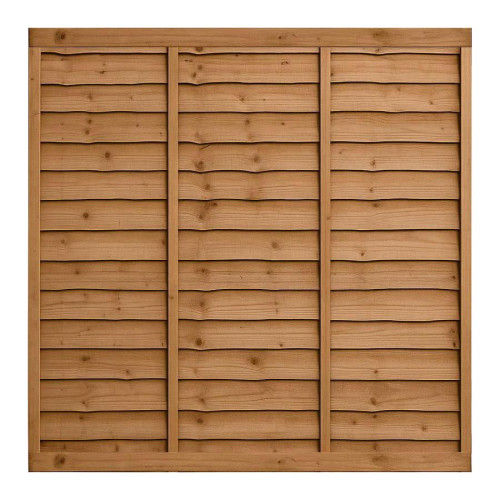
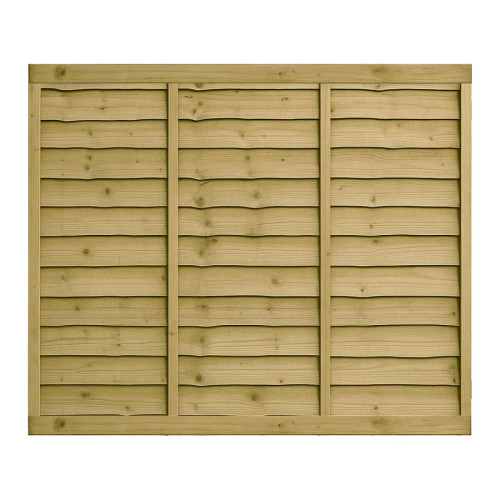
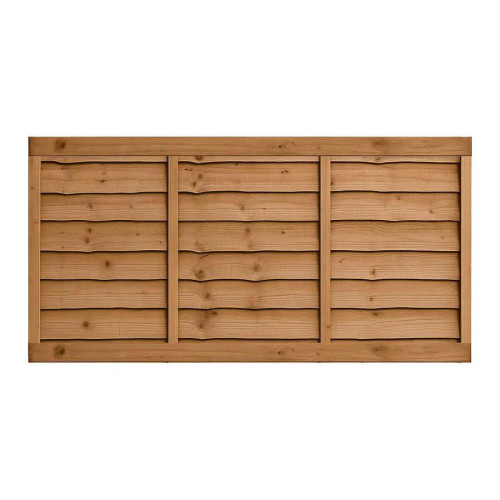
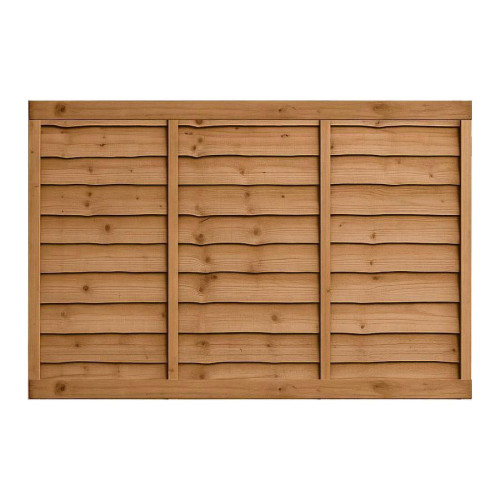
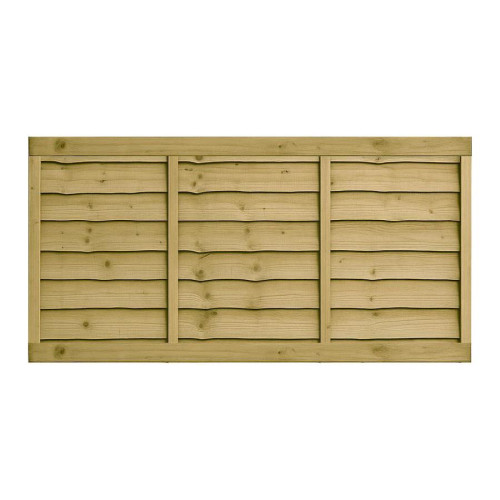
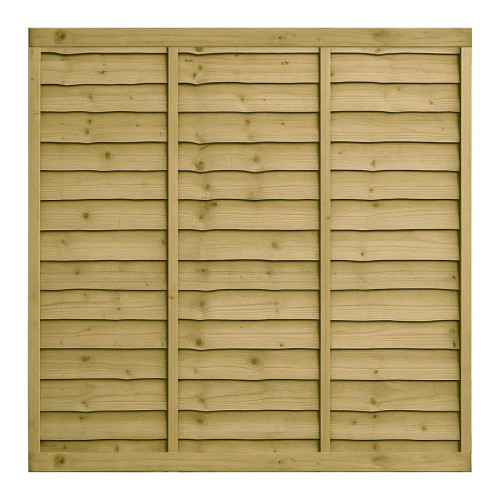
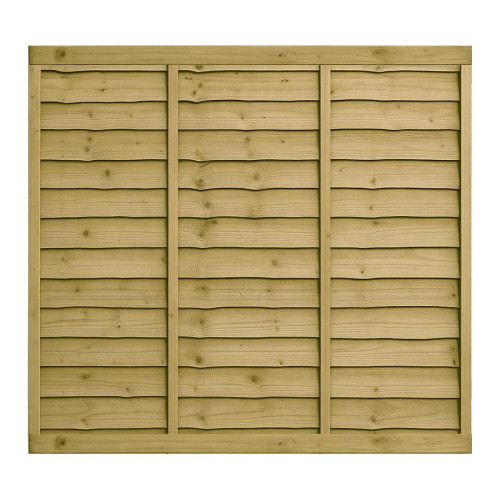
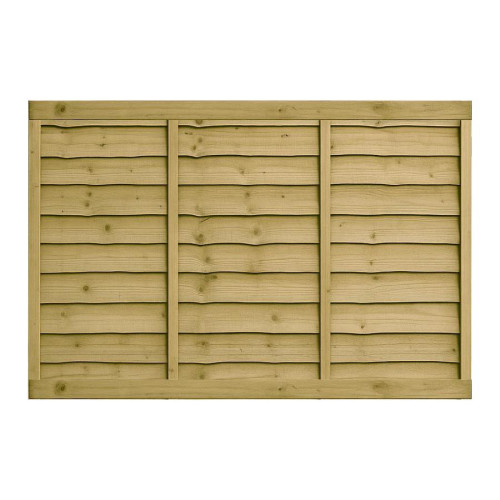
East Coast Fencing manufactures its Waney Lap Fence Panels in-house from overlapping sawn boards supported by timber battens on both faces. That construction makes it possible to distinguish between a damaged surface board and a failure affecting the structure of the whole panel.
How Is a Waney Lap Fence Panel Held Together?
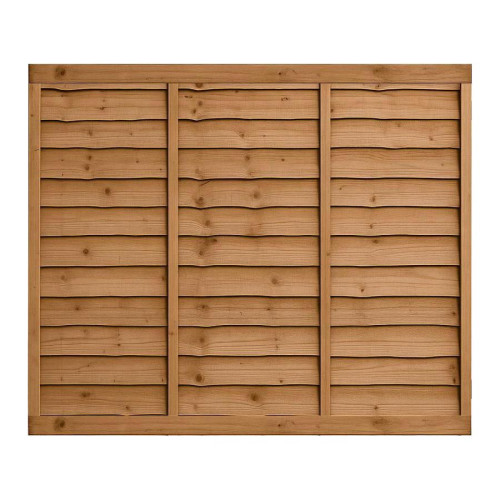
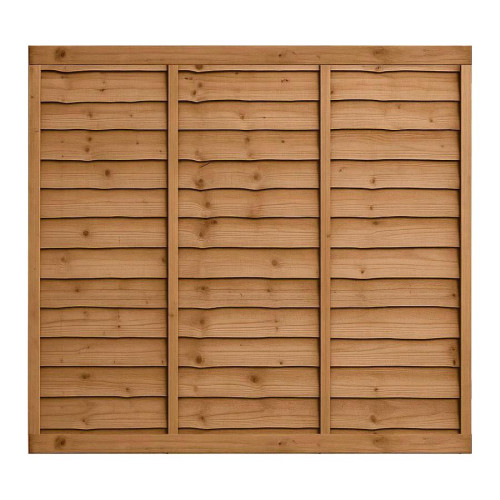
The current East Coast Fencing construction uses horizontal sawn waney-edge boards that are nominally around 125mm wide and 4.7mm thick.
Each board overlaps the next by approximately 25 to 40mm.
The boards are then held together by:
- Four vertical support battens on the front
- Four vertical support battens on the rear
- 75 x 16mm horizontal timbers across the top and bottom of the front face
- A 16 x 45mm capping strip along the upper edge
- Galvanised ring-shank nails joining the components
The timber components are pressure treated before assembly.
The finished panel is approximately 40mm deep, with the overlapping boards sitting at a slight angle between the support layers.
This construction tells us something important about repairs: the thin horizontal boards create the screening, but the vertical supports are what tie large sections of the panel together.
What Damage Can Usually Be Repaired?
A repair is most realistic when the damage is genuinely local.
Examples include:
- One cracked or broken lap board
- A board that has become loose at one fixing point
- Minor impact damage affecting a small area
- A loose section of capping
- A local fixing problem where the surrounding timber remains sound
In these situations, inspect the supports behind the damaged area before deciding what to do.
If the support battens remain intact and the panel still holds its overall shape, replacing the complete panel may be unnecessary.
When Is Replacing the Whole Panel Usually Better?
Repair becomes much less attractive when the problem affects the structure rather than one board.
Replacement should be seriously considered where:
- Several vertical support battens have broken
- Large numbers of horizontal boards are loose
- The panel no longer stays reasonably square
- Extensive deterioration affects the lower section
- Storm damage has torn several components apart
- The panel can no longer be supported securely between the posts
At this point, repairing each individual component can involve enough dismantling and reconstruction that a replacement panel is the cleaner solution.
| Problem | Repair Likely? | What to Check First |
|---|---|---|
| One loose lap board | Often | Board and support batten condition |
| One broken lap board | Potentially | Adjacent overlap and fixing access |
| Loose capping | Often | Condition of timber below it |
| One damaged support batten | Sometimes | How many boards depend on it |
| Several broken supports | Usually poor value | Overall panel stability |
| Rotten lower section | Depends on extent | Structural timber firmness |
| Panel appears crooked | Do not decide yet | Posts and bay dimensions |
Why One Broken Lap Board Does Not Mean the Panel Has Failed
Each horizontal board covers only one strip of the panel.
A local split can therefore affect appearance and screening without necessarily compromising the entire structure.
Inspect:
- The vertical supports crossing that board
- The neighbouring overlapping boards
- The fixing points
- Whether the damaged board is still securely retained
If everything around it remains sound, the damage is relatively contained.
The difficulty is that waney lap boards overlap, so replacing a board is not always as simple as removing one isolated piece of timber.
Why the Overlap Makes Board Repairs More Complicated
The current boards overlap by approximately 25 to 40mm.
This means part of every board sits behind or in front of its neighbour.
If one board needs removing, you may need to loosen surrounding fixings enough to gain access without damaging adjacent boards.
Before starting:
- Identify exactly which board has failed.
- Check which neighbouring board overlaps it.
- Locate the vertical support battens.
- Photograph the board arrangement.
- Work out whether the damaged board can be removed without dismantling a large section.
For a small cosmetic defect, extensive dismantling may cause more disruption than simply leaving the board alone.
Can You Replace a Waney Lap Board With Any Piece of Timber?
A random strip of timber may physically cover the opening, but it may not produce a good repair.
The original panel uses sawn waney-edge boards that are nominally around 125 x 4.7mm.
A suitable replacement should ideally resemble the existing:
- Width
- Thickness
- Sawn surface
- Natural edge character
- Treated appearance
The board also needs enough length to engage correctly with the panel's support arrangement.
A thick planed board fitted into the middle of thin rustic waney lap can remain very obvious.
Why Matching the Exact Edge Is Not Necessary
Waney-edge timber is naturally irregular.
The existing boards are not intended to have perfectly identical lower edges.
You should expect differences in:
- Edge profile
- Knots
- Grain
- Colour
A replacement therefore does not need to be a visual clone of the board it replaces.
It does need to maintain sensible overlap and fit naturally within the existing rustic construction.
Why Support Battens Matter More Than They Look
The vertical battens are not merely decorative strips.
They hold multiple horizontal boards together.
The current panels use four on the front and another four on the rear.
If one support fails, several lap boards can lose part of their restraint at the same time.
This can lead to:
- Several boards moving together
- Rattling
- Uneven overlap
- Sections pulling away from the rest of the panel
This is why support damage deserves more attention than one superficial board defect.
Can a Broken Support Batten Be Repaired?
Potentially.
A local support repair may be practical if:
- Only one support is affected
- The surrounding boards remain sound
- The rest of the panel remains stable
- The damaged section can be accessed properly
The replacement support needs to reconnect the affected boards securely rather than simply covering the visible break.
If several supports have failed, the panel has lost a significant part of the system holding it together and replacement becomes considerably more attractive.
What If the Top Capping Comes Loose?
A loose capping strip is normally less serious than widespread support failure.
The current panels use a 16 x 45mm capping piece along the upper edge.
If it has become loose:
- Check whether the capping itself remains sound.
- Inspect the timber underneath.
- Check whether fixing points have split.
- Refix only into sound timber using suitable exterior fixings.
Do not simply drive repeated fixings into badly split timber until one happens to hold.
How Do You Tell Normal Waney Timber From Damage?
This is particularly important with Waney Lap Fence Panels because the material is deliberately rustic.
Normal characteristics can include:
- Irregular natural edges
- Knots
- Shade differences
- Small dimensional changes
- Minor movement as moisture conditions change
These should not automatically be treated as reasons to repair the panel.
Actual faults are more likely to involve loss of function, such as a board becoming detached or a support breaking.
Is a Small Split a Reason to Replace a Board?
Not necessarily.
Inspect how the split affects the component.
A small surface split is very different from a crack that:
- Runs through a fixing point
- Separates the board completely
- Allows a loose section to move
- Creates a significant opening in the fence
Judge the physical condition rather than expecting every sawn board to remain visually perfect.
Why the Bottom of Waney Lap Panels Often Shows Problems First
The lowest section of any timber fence experiences demanding moisture conditions.
It sits closest to:
- Wet soil
- Grass
- Mulch
- Leaf debris
- Rain splash
If these materials remain against the panel, drying takes longer.
Pressure treatment improves durability, but it does not mean keeping timber continually wet is desirable.
Can a Rotten Bottom Section Be Repaired?
That depends on how far deterioration has progressed.
If only one board has local damage while the supports and surrounding timber remain firm, repair may be possible.
If the lower area contains:
- Several soft boards
- Weakened support battens
- Failed fixings
- Widespread loss of structural integrity
rebuilding the lower section may no longer make economic or practical sense.
Replacement is then usually the more dependable option.
How a Gravel Board Can Help Prevent the Same Problem Returning
If a panel has deteriorated because its bottom edge has been sitting against wet ground, installing another panel in exactly the same conditions is likely to repeat the problem.
A suitable gravel board can separate the main timber panel from:
- Soil
- Grass
- Mulch
- Repeated rain splash
It also creates a clearer lower edge that is easier to inspect and maintain.
Before Replacing the Panel, Check the Posts
This is one of the most important troubleshooting steps.
A panel can look distorted because the posts surrounding it have moved.
Possible symptoms include:
- The top of the panel leaning
- One side sitting higher than the other
- The panel becoming tight in the bay
- Rattling at one side
- A changing gap between panel and post
Replacing the panel does not correct unstable posts.
Measure the Fence Bay at Three Heights
Current East Coast Fencing Waney Lap Fence Panels measure 1830mm wide.
Existing fence bays should still be measured rather than assumed to remain at their original spacing.
Measure between the posts:
- Near the bottom
- Through the middle
- Near the top
If the measurements differ substantially, one or both posts may be leaning.
A new 1830mm panel should not have to be heavily forced into a narrowing opening.
Can Waney Lap Panels Be Replaced Between Existing Concrete Posts?
Yes, where the existing posts remain sound and the panel dimensions are compatible.
The current Waney Lap panels are approximately:
- 1830mm wide
- 40mm deep
Before ordering, check:
- Actual clear bay width
- Concrete-post slot dimensions
- Available height above any gravel board
- Whether both posts remain vertical
A like-for-like replacement is straightforward only when the supporting system remains suitable.
Can Waney Lap Panels Be Repaired While Still Between the Posts?
Small repairs sometimes can.
A loose accessible fixing or capping problem may be easier to address with the panel still installed.
More extensive repairs may require removal because both faces of the panel contain support battens.
Removing the panel can provide better access to:
- The rear supports
- Hidden overlap
- Damaged fixing points
Do not undertake major dismantling from one side while ignoring what is happening on the other face.
Remember That Waney Lap Panels Have a Front and Back
The current construction is not visually symmetrical.
There are four support battens on each face, but the front also contains the 75 x 16mm horizontal timbers at the top and bottom.
If a panel is removed for repair, note its original orientation before taking it away.
If you replace one panel in a longer run, orientate the new panel consistently with the neighbouring panels.
Why One Reversed Replacement Panel Can Look Obvious
The individual waney boards are rustic, but the larger support pattern is still visible.
If every existing panel faces one way and one replacement is reversed, the difference can stand out across the boundary.
Take a photograph before removal so you do not have to rely on memory during refitting.
What If the Panel Has Blown Out in Strong Wind?
Do not assume the panel itself is the only problem.
Inspect:
- The panel supports
- The posts
- The foundations
- Any panel clips or brackets
- The gravel board
Waney Lap Fence Panels provide substantial screening, particularly at full height, so they still present meaningful surface area to the wind.
A panel that has simply lifted or come loose may remain usable if its construction is intact.
A panel that has fractured across several supports is a different matter.
How Do You Check a Wind-Damaged Panel?
Lay or support the panel safely and inspect both faces.
Look for:
- Broken vertical battens
- Loose lap boards
- Split top or bottom timbers
- Loose capping
- Fixings that have torn through the timber
If the panel remains coherent and only the attachment to the fence failed, replacement may not be necessary.
Can You Strengthen a Waney Lap Panel With Extra Timber?
Adding random battens may make one damaged area feel temporarily stiffer, but it does not necessarily create a well-designed repair.
Additional timber can:
- Change the panel thickness
- Interfere with concrete-post slots
- Create uneven loading
- Look conspicuous
A repair should restore a damaged part rather than attempt to turn a lightweight Waney Lap panel into a different type of fencing.
If greater stiffness is the objective for the entire boundary, Closeboard Fence Panels may be a more suitable replacement construction.
When Is Upgrading to Closeboard Worth Considering?
Replacing damaged Waney Lap Fence Panels with the same product makes sense where the original specification still suits the garden.
Consider a heavier alternative if circumstances have changed and you now need:
- More substantial panel construction
- Greater stiffness
- A boundary better suited to a more demanding location
Do not upgrade the panel without checking the existing posts.
A heavier replacement fence can place different demands on the supporting system.
Can You Replace Only One Waney Lap Panel?
Yes.
If the surrounding posts and gravel boards remain suitable, there is no need to replace an entire fence because one panel is damaged.
Match:
- Width
- Height
- Panel type
- Treatment colour where practical
- Orientation
A new panel may initially look different beside older weathered fencing, even when it is the correct product.
What Heights Are Available for Replacement?
The current Waney Lap Fence Panels range includes:
- 3ft / approximately 900mm
- 4ft / approximately 1200mm
- 5ft / approximately 1500mm
- 5ft 6in / approximately 1650mm
- 6ft / approximately 1800mm
All current versions use the traditional 1830mm panel width.
Measure the existing height rather than assuming it from the overall fence height, particularly if a gravel board is present.
Will a New Panel Match an Older Brown or Green/Natural Fence?
Not perfectly at first.
Pressure-treated timber changes appearance outdoors.
Older panels have already experienced sunlight, rainfall and seasonal weathering.
A newly treated panel may therefore look noticeably fresher.
The important immediate match is the:
- Construction
- Dimensions
- Height
- Orientation
The new timber will weather over time as well.
Does Pressure Treatment Mean a Damaged Panel Cannot Rot?
No.
Pressure treatment improves outdoor durability, but it does not make timber immune to every condition.
A panel can still suffer from:
- Persistent moisture
- Physical damage
- Broken fixings
- Structural movement
Pressure treatment also does not repair timber that has already been mechanically broken.
Can You Paint Over a Repaired Area?
A suitable exterior timber coating can be considered once the timber is sufficiently dry and prepared.
This can help make a repaired or replaced board less visually obvious.
Painting should not be used to disguise:
- Soft timber
- Broken supports
- Loose boards
- Failed fixings
Repair the structure before dealing with appearance.
How Can You Reduce Future Waney Lap Repairs?
Most useful maintenance is straightforward.
- Keep soil and mulch away from the lower panel edge.
- Remove wet leaves accumulating around the base.
- Inspect loose boards before several begin moving.
- Check posts after severe winds.
- Keep dense vegetation from permanently trapping moisture against the panel.
- Investigate rattling rather than allowing repeated movement to continue.
- Use gravel boards where they are appropriate to the installation.
Early repair of one loose component is generally easier than rebuilding an area after repeated movement has affected several pieces.
Common Waney Lap Repair Mistakes
- Replacing the whole panel because of one cosmetic crack
- Repairing boards without inspecting the vertical supports
- Assuming knots and irregular waney edges are damage
- Using unsuitable smooth or overly thick timber for a replacement board
- Failing to preserve the original board overlap
- Adding fixings into timber that has already become badly split
- Replacing a panel without checking the posts
- Forcing a 1830mm panel into a bay narrowed by leaning posts
- Reinstalling a repaired panel the opposite way around
- Leaving the replacement panel in the same wet ground conditions that damaged the old one
- Trying to reinforce widespread failure instead of replacing the panel
Waney Lap Fence Panel Repair Checklist
- Identify whether the problem affects boards, supports or the whole panel.
- Inspect both faces of the panel.
- Check all nearby vertical support battens.
- Determine whether damaged boards remain securely fixed.
- Inspect the top, bottom and capping timbers.
- Check for widespread moisture deterioration at the base.
- Inspect the posts and foundations.
- Measure the bay at the bottom, middle and top.
- Record the panel orientation before removal.
- Match replacement boards to the original lightweight waney construction.
- Preserve approximately 25 to 40mm overlap where boards are replaced.
- Replace the complete panel when structural failure is widespread.
FAQs
Can You Repair Waney Lap Fence Panels?
Yes. Localised damage such as a loose or broken lap board may be repairable where the vertical supports and the rest of the panel remain sound.
Can You Replace One Board in a Waney Lap Panel?
Potentially. The overlapping construction can make access more complicated, but one damaged board does not automatically require a complete replacement panel.
What Size Boards Are Used in East Coast Fencing Waney Lap Panels?
The current panels use sawn waney-edge boards nominally around 125mm wide and 4.7mm thick.
How Much Do Waney Lap Boards Overlap?
The current manufacturing specification uses approximately 25 to 40mm of overlap.
How Are the Boards Supported?
The current panels use four vertical support battens on the front and four on the rear, with additional horizontal top and bottom timbers on the front face.
What Fixings Are Used During Manufacture?
East Coast Fencing currently assembles the panels using galvanised ring-shank nails.
How Thick Is a Waney Lap Fence Panel?
The current completed panels are approximately 40mm deep.
How Wide Are Waney Lap Fence Panels?
The current East Coast Fencing range uses a traditional 1830mm nominal 6ft width.
Should I Replace a Panel if One Support Batten Breaks?
Not automatically. Inspect how many boards are affected and whether the remaining panel is stable. Widespread support failure is a stronger reason to replace the complete panel.
Can a Rotten Bottom Board Be Replaced?
Potentially, if deterioration is isolated and the surrounding supports remain sound. Widespread softness or structural deterioration through the lower panel normally makes replacement more practical.
Can Waney Lap Panels Be Reused After Blowing Out?
Possibly. Inspect the support battens, boards, capping and fixing areas. If the panel itself remains structurally sound and the failure occurred at the posts or brackets, it may still be serviceable.
Should a Replacement Waney Lap Panel Use a Gravel Board?
A gravel board is worth considering where it will help keep the timber panel away from wet soil, vegetation and repeated rain splash.
Can Waney Lap Panels Be Installed Between Concrete Posts?
Yes, where the approximately 1830mm width and 40mm panel depth are compatible with the existing slotted-post system.
Why Does My New Waney Lap Panel Look Different From the Old Ones?
Newly pressure-treated timber normally looks fresher than timber that has weathered outdoors for several years. Natural board variation can also make individual panels look slightly different.
Is It Worth Repairing a Waney Lap Fence Panel?
It often is when the damage is small.
The best way to make the decision is to separate the screening components from the structural components.
The horizontal waney boards provide the familiar overlapping face. One broken board affects one relatively small part of that screen.
The vertical support battens are different. Each one helps hold numerous boards together. Damage to several supports therefore has a much greater effect on the complete panel.
Start by inspecting both faces, then check the top, bottom and capping. If the panel still holds its shape and the supports remain sound, a local repair may preserve an otherwise useful panel.
If several supports have failed, the bottom section is extensively deteriorated or the complete panel has become unstable, replacement is usually the cleaner solution.
Before buying that replacement, check the rest of the fence. Current East Coast Fencing Waney Lap Fence Panels are 1830mm wide and approximately 40mm deep, but an old bay may no longer measure correctly if the posts have moved.
Finally, address the cause of the damage. A replacement panel will not last as well if it is installed back into leaning posts, allowed to sit in wet soil or left rattling loosely in the bay.
For Waney Lap Fence Panels, the practical rule is straightforward: repair isolated board or fixing damage when the support structure is still sound, but replace the panel when the components holding the whole assembly together have failed.