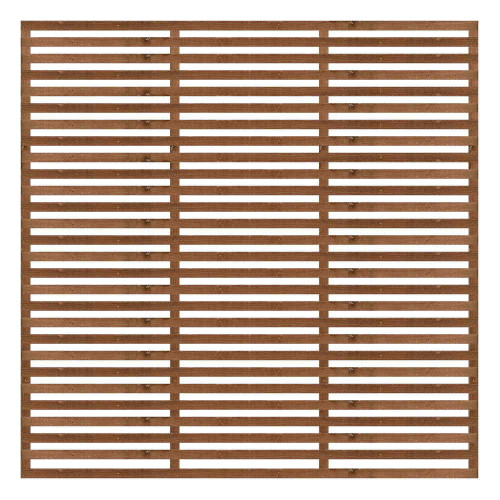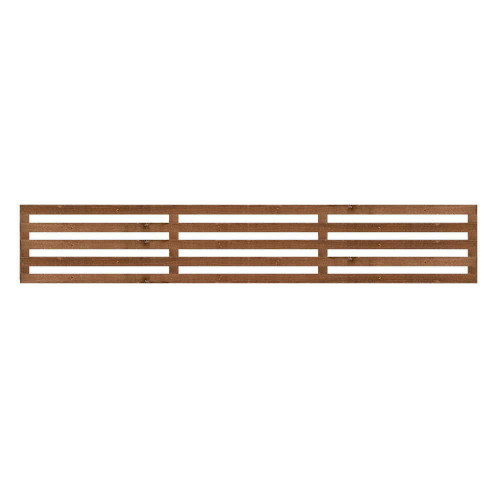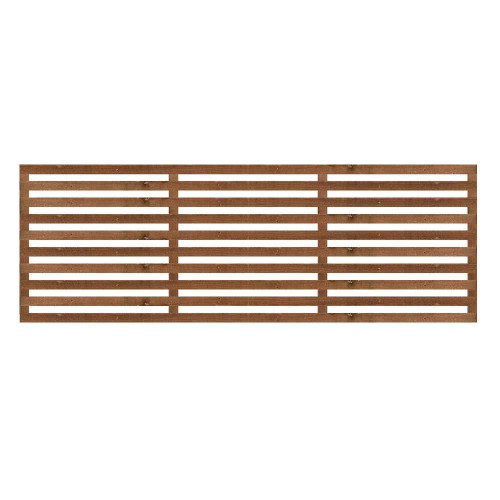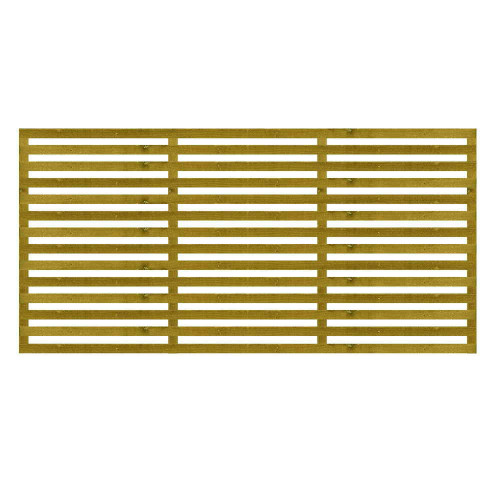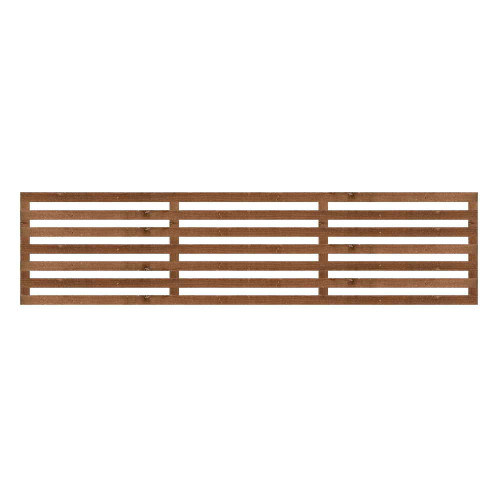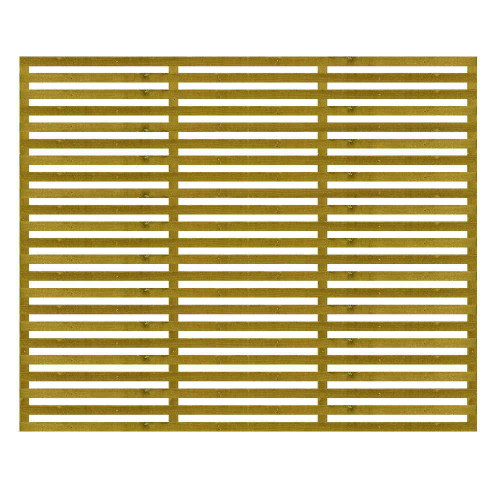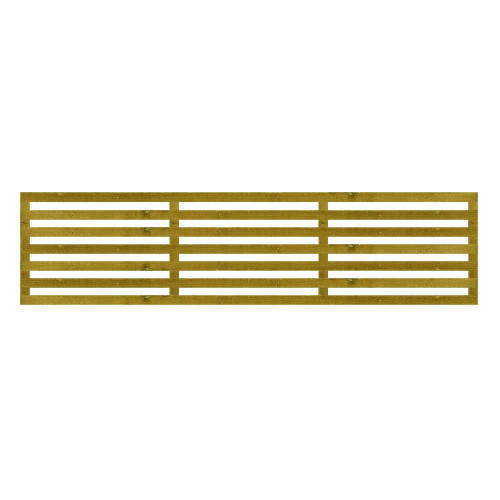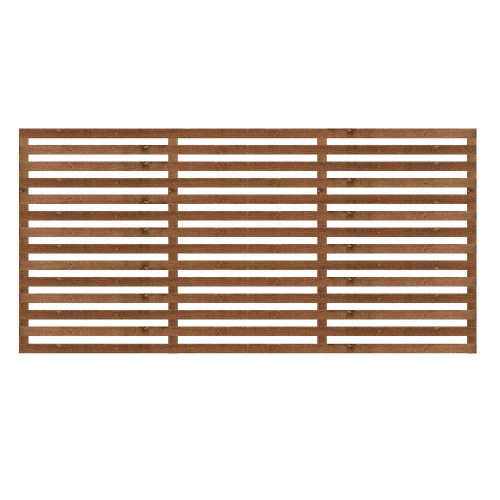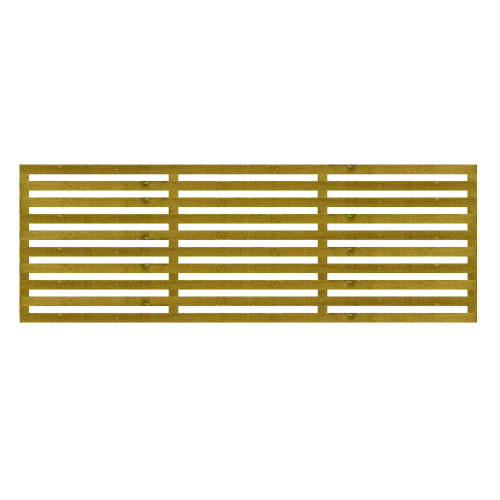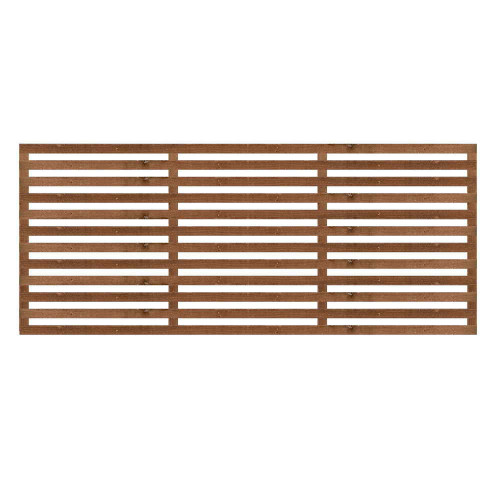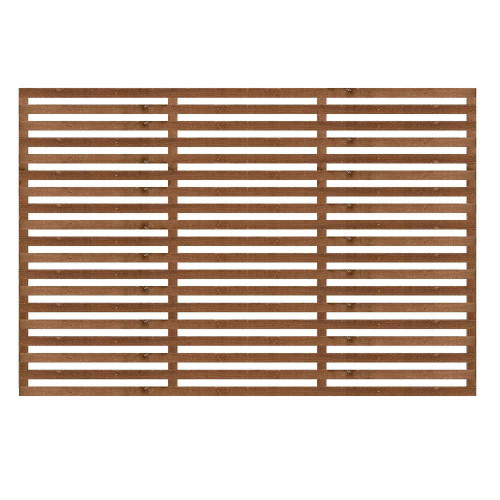


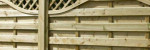

Quick answer: Horizontal Slatted Trellis is made from real timber, so some movement as moisture levels change is normal. Individual slats can shrink, swell or move slightly, while a complete panel can distort if it is stored unevenly, forced into an opening that is too small, fixed under tension or inadequately supported. Uneven gaps are not automatically a fault. Check whether the movement is limited to individual slats or whether the frame, posts or fixings have moved as well.
One of the main visual features of Horizontal Slatted Trellis is its repeated straight lines.
That also means small changes can be easy to notice.
A slightly moved slat, a frame that is no longer square or one end of a panel dropping a few millimetres can interrupt the pattern across the whole screen.
Some movement is simply part of using natural timber outdoors. More significant bowing, loose slats or a complete panel moving out of shape usually deserves closer inspection.
The useful question is not simply whether the gaps are perfectly identical. It is why they have changed and whether the panel remains securely supported.
Does Horizontal Slatted Trellis Naturally Move?
Yes.
Timber absorbs and releases moisture as environmental conditions change.
That can cause small dimensional changes across:
- Slats
- Frames
- Posts
A panel installed during a wet period may look slightly different after a prolonged dry spell.
Likewise, timber that has dried during summer can take on moisture again through autumn and winter.
Small changes are therefore not automatically evidence that the trellis is failing.
What Is Normal Timber Movement And What Is A Problem?
The scale and location of the movement matter.
| What You Notice | Possible Explanation | What To Check |
|---|---|---|
| Small variation in gaps | Normal timber movement | Slats remain secure |
| One slat slightly bowed | Local timber movement | Fixings and surrounding frame |
| Several slats loose at one end | Fixing or frame problem | Connection at that edge |
| Whole panel curves | Frame distortion or installation stress | Posts, opening width and fixings |
| Panel drops at one side | Loose fixing or moving support | Posts and frame fixings |
| Several panels change together | Post or structural movement | Complete screen line |
Why Do The Gaps Between Horizontal Slats Become Uneven?
Uneven gaps can develop for several different reasons.
Possible causes include:
- Individual slats shrinking
- Individual slats swelling
- A slat bowing
- A fixing becoming loose
- The outer frame moving
- The panel being installed out of square
- One supporting post moving
Do not assume the slats themselves are responsible until you have checked the complete panel.
If every horizontal line slopes in the same direction, the problem is much more likely to involve the frame or supports than simultaneous movement in every individual slat.
Why Does Pressure-Treated Timber Still Move?
Pressure treatment and dimensional stability are different things.
Pressure treatment is used to improve the timber's resistance to biological deterioration for its intended outdoor application.
It does not stop the wood responding to moisture.
Pressure-treated timber can still:
- Shrink
- Swell
- Develop small checks
- Move slightly
- Weather in colour
Expecting pressure-treated trellis to behave like an inert plastic or metal screen leads to unrealistic expectations.
How Is Horizontal Slatted Trellis Constructed?
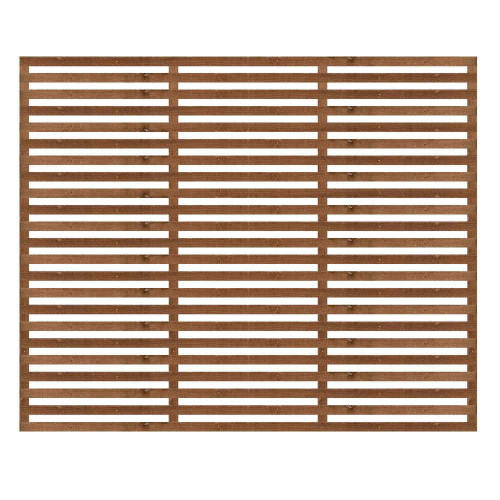
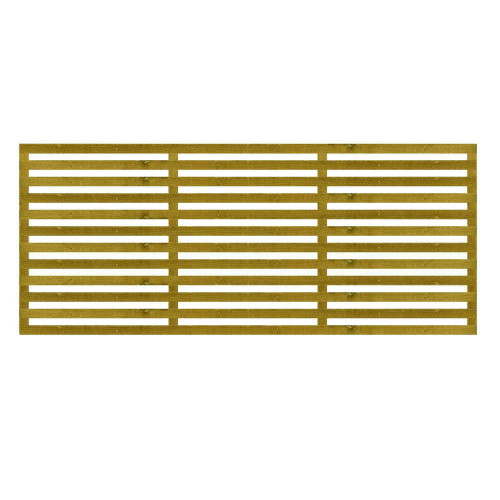
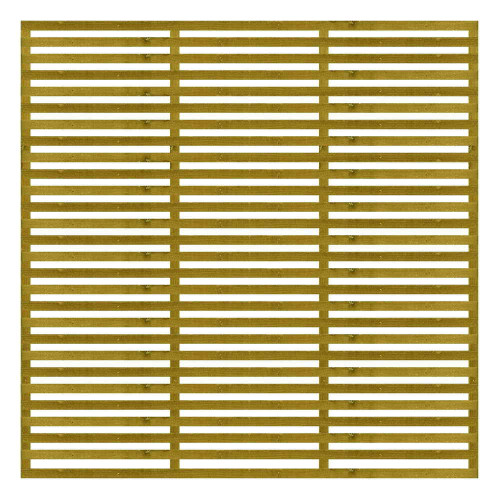
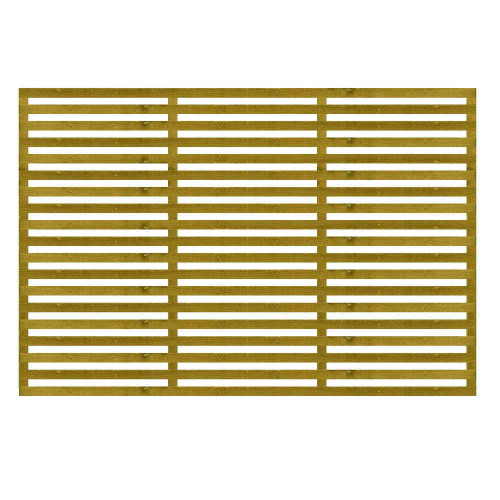
East Coast Fencing manufactures its current Horizontal Slatted Trellis from pressure-treated rough-sawn timber, with straight horizontal battens supported within a surrounding frame.
Accurate spacing is particularly important because the repeated horizontal lines form a major part of the finished appearance.
Current approximately 1.83m-wide panels are available across suitable products in heights including approximately:
- 300mm
- 450mm
- 600mm
- 750mm
- 900mm
- 1.2m
- 1.5m
- 1.83m
The taller the panel, the more important secure frame support and accurate post installation become.
Why Can Rough-Sawn Timber Look Less Uniform?
Rough-sawn timber is deliberately not finished like smooth interior joinery.
You should expect normal timber characteristics such as:
- Visible grain
- Knots
- Saw texture
- Small dimensional variations
- Natural colour differences
Those characteristics do not mean a panel has warped.
Judge distortion by the actual line of the frame and slats rather than by differences in surface texture.
Can Poor Storage Make Slatted Trellis Bow?
Yes.
A framed timber panel should be supported sensibly before installation.
The risk of distortion increases if trellis is:
- Stored unevenly
- Left unsupported for long periods
- Allowed to hang over an edge
- Repeatedly saturated while stored badly
A tall framed panel resting at an angle against an unsuitable support may gradually take on stresses that would not occur if it were evenly supported.
Should Trellis Be Stored Flat Before Installation?
Even support is the important point.
If panels are stored flat, support them so the frame does not sag between isolated contact points.
If they are stored upright, make sure they are properly restrained and not bending under their own weight.
Keep panels clear of standing water and unnecessary ground contact.
Do not stack heavy materials irregularly on top of framed trellis.
Can Forcing Trellis Into A Narrow Opening Make It Bow?
Yes.
A framed panel should not be compressed between two posts simply because the opening is slightly too narrow.
Forcing the panel can put the frame under permanent stress.
This can result in:
- The frame bowing
- Slats moving out of alignment
- Fixings being stressed
- The panel twisting
Measure the actual opening before installation.
If the panel is genuinely too wide, alter the timber panel correctly where appropriate rather than using force to make it fit.
Can Fixing The Panel Under Tension Cause Problems?
Yes.
A panel that needs to be physically pulled into alignment before every fixing is installed may be telling you that something else is wrong.
Check whether:
- The posts are parallel
- The opening is square
- The panel itself is square
- The correct fixing arrangement is being used
Do not use screws to drag a significantly distorted frame into an unsuitable opening.
That can lock stress into the timber rather than solving the cause.
Can Overtightening Screws Distort The Trellis?
Potentially.
Fixings should hold the frame securely against its support.
They should not crush or excessively pull one part of the frame towards the post.
Overtightening can:
- Pull a frame out of square
- Damage timber around the screw head
- Increase the risk of splitting
Tighten the fixing until the frame is secure rather than continuing simply because the screw can still turn.
Why Do Horizontal Slats Make Small Installation Errors Obvious?
The eye is very good at following a straight horizontal line.
If the first panel is slightly out of level, every slat makes that error visible.
If several panels continue along the same run, the difference can become even more noticeable.
A square or diamond lattice can visually disguise very small changes more easily because the pattern runs in several directions.
Horizontal Slatted Trellis does not.
This makes careful levelling particularly important.
How Can You Tell If The Panel Is Actually Bowed?
Look at both the panel face and its outer frame.
A useful inspection includes:
- Stand back: Look along the complete screen rather than directly at one slat.
- Check the frame: See whether its top and bottom edges remain straight.
- Use a straight reference: A long level or straight edge can reveal curvature.
- Check individual slats: Determine whether one piece has moved independently.
- Inspect the posts: Make sure the supports themselves have not moved.
If the outer frame remains straight but one slat curves, you have a local timber issue.
If the complete frame curves with the slats, investigate the panel support and installation.
Could The Wooden Fence Posts Be Causing The Problem?
Yes.
A trellis panel can only remain correctly aligned if the supports around it stay aligned.
If a Wooden Fence Post:
- Twists
- Leans
- Moves in its foundation
- Rots around ground level
the trellis attached to it can move as well.
Do not try to straighten the trellis repeatedly while ignoring a post that is no longer upright.
Can A Loose Post Make The Slat Gaps Look Uneven?
Yes.
If one side of a panel drops or moves, all the horizontal lines can become slightly angled.
The spaces may then look narrower at one end and wider at the other even though the slats themselves have not changed.
Check the panel with a spirit level.
If the whole frame is out of level, investigate the posts and fixings before altering individual slats.
Can Loose Panel Fixings Cause Sagging?
Yes.
A full-width timber trellis panel relies on secure support at its edges.
If a fixing becomes loose, the frame may move slightly relative to the post.
This is particularly noticeable on taller panels.
Look for:
- Screws pulling away from timber
- Split frame sections
- Loose brackets
- Movement when the panel is gently pushed
Do not simply add more screws without checking why the original connection became loose.
What If One Horizontal Slat Has Come Loose?
A single loose slat does not necessarily mean the complete panel needs replacement.
Check whether:
- The slat itself remains sound
- The supporting frame is intact
- The fixing point has split
- Other nearby slats are becoming loose
If the timber remains sound, an appropriate repair may be possible.
Use suitable exterior fixings and avoid placing a new fixing so close to a damaged old hole that it immediately pulls through the same weakened timber.
Can You Straighten A Slightly Bowed Timber Slat?
Sometimes minor movement can be restrained by the existing panel construction or corrected when a loose fixing is repaired.
Do not force a severely distorted timber piece flat with an excessive number of screws.
That may:
- Split the slat
- Damage the frame
- Create high local stresses
If one component is badly distorted but the rest of the panel remains sound, replacement of that part may be more practical where the construction allows it.
Can You Add Extra Screws To Stop Slats Moving?
Only where there is a genuine fixing problem and the additional fixing is appropriate.
More fixings are not automatically better.
Unnecessary screws can:
- Split small timber sections
- Create rows of weak points
- Look untidy
- Restrict natural movement excessively
Fix the cause rather than using screws as a general cure for every visible variation.
Can Heavy Climbing Plants Pull Slatted Trellis Out Of Shape?
Yes.
A bare screen and a mature planted screen can carry very different loads.
Large climbers can add:
- Substantial vegetation weight
- Water held on leaves after rain
- Additional wind resistance
If a plant is concentrated on one side or one part of the panel, the load may also become uneven.
This can contribute to frame movement or place additional stress on panel fixings and posts.
How Do You Stop Plants Overloading The Trellis?
Manage growth before it becomes unreasonably heavy.
Useful steps include:
- Pruning vigorous plants
- Spreading growth across several support points
- Removing dead accumulated material
- Providing separate support for particularly heavy climbers
- Keeping access to fixings and posts
Do not allow the trellis to disappear completely behind vegetation for years without inspecting the structure underneath.
Can Wind Make Horizontal Slatted Trellis Bow?
Wind can contribute to movement, particularly if the supporting structure is inadequate.
The gaps between horizontal slats allow air through, but the panel still presents timber area to the wind.
A taller panel creates more exposed area than a shallow section.
Planting can increase the effect further by filling the gaps.
Check:
- Post stability
- Foundation condition
- Panel fixings
- Frame condition
after strong weather if the screen has visibly moved.
Can A 1.83m-High Slatted Screen Move More Than A 300mm Topper?
The taller screen has substantially more exposed area.
A 300mm topper is a relatively shallow addition.
A 1.83m panel is a full-height screen.
The taller arrangement therefore places greater importance on:
- Post size
- Post length
- Foundations
- Fixing distribution
- Wind exposure
Do not use the same casual support assumptions for every height simply because the timber pattern is identical.
Can Repeated Wetting Cause Timber Movement?
Yes.
Repeated moisture changes can contribute to swelling and shrinkage.
Pay particular attention where the panel is:
- Beside persistent irrigation spray
- Covered by dense vegetation
- Close to standing water
- In deep permanent shade
These conditions can also encourage algae and make the screen slower to dry.
Should Horizontal Slatted Trellis Touch The Ground?
Keep ordinary timber trellis clear of persistent ground moisture where practical.
Pressure treatment improves outdoor durability, but unnecessarily burying the panel or resting the frame directly in wet soil creates poor conditions.
Ground clearance also makes it easier to:
- Remove leaves
- Cut grass
- Inspect the lower frame
- Spot movement early
Can Raised Beds Cause Problems?
Horizontal Slatted Trellis can work very well as a backdrop to raised beds.
Keep the soil inside the bed.
Do not bank soil directly against the trellis frame.
Raised soil can:
- Keep the timber persistently damp
- Hide the lower frame
- Make inspection difficult
- Place unwanted pressure against the screen
The raised-bed structure should contain the soil rather than relying on the trellis to do it.
Can Painting Stop Trellis From Warping?
No decorative coating can guarantee that natural timber will never move.
A suitable exterior finish may change the appearance and surface exposure of the timber, but it does not turn wood into an inert material.
If painting or staining the trellis:
- Allow the timber to reach the condition required by the coating manufacturer
- Prepare the surface appropriately
- Coat difficult-to-reach areas before dense plants establish where practical
Do not use paint as a repair for a loose or structurally distorted panel.
Can You Pressure Wash A Bowed Trellis Panel?
Cleaning will not correct distortion.
Use particular caution with pressure washing because aggressive cleaning can roughen timber fibres, damage edges and force additional water into joints.
If a panel is already loose or distorted, repair the structural issue before concentrating on cleaning.
Can A Warped Trellis Panel Be Repaired?
It depends on what has moved.
A repair may be practical where:
- One or two slats are loose
- A frame fixing has failed
- A bracket has become loose
- The panel has shifted slightly on sound posts
Replacement may be more sensible where:
- The complete frame is badly distorted
- Several frame joints have failed
- Large sections are rotten
- Multiple slats are damaged
- The panel cannot be returned to secure support
Should You Remove The Panel Before Repairing It?
For significant frame repairs, removing the trellis can make it much easier to inspect the complete panel and work without twisting it.
Support the panel while removing fixings.
Do not allow one side to drop while the opposite side remains attached.
Once removed, check it on a reasonably flat reference surface.
This can help distinguish between:
- A distorted panel
- Misaligned posts
- An installation problem
What If The Trellis Is Straight Once You Remove It?
That strongly suggests the supporting installation needs attention.
Check:
- Post alignment
- Clear opening width
- Whether the posts are parallel
- Fixing positions
- Whether the panel was being compressed
Do not modify a straight trellis panel to suit a crooked support system unless that is a deliberate and appropriate part of the project.
What If Several Panels Have Sagged In The Same Direction?
Look beyond the panels.
Several sections moving together can indicate:
- A row of posts leaning
- Ground movement
- Insufficient foundations
- Heavy planting along the entire screen
- Wind exposure affecting the complete run
Replacing individual trellis panels will not solve a structural problem affecting the post line.
How Can You Reduce Distortion During Installation?
- Store the panels properly: Keep frames evenly supported and clear of standing water.
- Measure actual openings: Do not assume every bay is exactly nominal width.
- Set posts accurately: Keep them plumb, aligned and suitable for the screen height.
- Do not force the panel: A framed panel should not be compressed into an undersized opening.
- Support both edges: Avoid leaving framed sections unsupported.
- Keep the slats level: Check each panel before tightening all fixings.
- Fix through suitable framing: Do not rely primarily on the individual horizontal slats.
- Avoid overtightening: Secure the frame without pulling it out of shape.
- Keep soil away: Avoid unnecessary persistent moisture at the bottom of the panel.
- Manage plants: Control mature vegetation before it overloads the screen.
Common Mistakes When Dealing With Uneven Slatted Trellis
- Assuming every uneven gap means the complete panel is faulty
- Ignoring normal moisture-related timber movement
- Adding screws without checking whether the posts have moved
- Forcing a bowed frame flat with excessive fixings
- Installing a full-height screen on weak posts
- Compressing a 1.83m panel into an opening that is too narrow
- Storing panels unsupported before installation
- Allowing heavy climbers to load one part of the screen
- Banking raised-bed soil against the timber
- Assuming pressure treatment prevents natural timber movement
- Trying to solve structural distortion with paint
- Replacing the panel when the actual problem is a leaning post
FAQs
Is It Normal For Horizontal Slatted Trellis To Move Slightly?
Yes. Natural timber responds to changes in moisture, so small dimensional changes and minor movement can occur outdoors. The important distinction is whether the panel remains secure and structurally sound.
Why Are The Gaps Between My Slats Different Sizes?
Individual timber movement can change gaps slightly, but uneven spacing can also result from loose slats, frame distortion or post movement. Inspect the whole panel before adjusting individual pieces.
Why Is My Horizontal Slatted Trellis Bowing?
Possible causes include timber movement, poor storage, forcing the panel into a narrow opening, fixing it under tension, inadequate support or movement in the posts.
Can Pressure-Treated Trellis Warp?
Yes. Pressure treatment improves timber durability but does not prevent the wood from shrinking, swelling or moving as moisture levels change.
Can A Loose Slat Be Repaired?
Often, provided the slat and surrounding frame remain sound. Check why the fixing failed and use an appropriate exterior repair rather than simply adding repeated fixings into damaged timber.
Can Heavy Climbing Plants Bow Trellis?
They can contribute. Mature vegetation adds weight and can increase wind resistance, particularly when foliage becomes dense or wet.
Should Horizontal Slatted Trellis Be Perfectly Level?
The framed panel should be installed level where the design calls for a horizontal screen. The repeated lines make even small installation errors relatively noticeable.
When Should A Warped Trellis Panel Be Replaced?
Replacement is more sensible where the complete frame is badly distorted, several joints or slats have failed, rot is extensive or the panel can no longer be fixed securely to sound supports.
Check The Frame And Posts Before Blaming The Slats
Small changes in Horizontal Slatted Trellis are not unusual because it is made from natural timber.
A little variation between gaps, minor checking or slight movement in an individual slat does not automatically mean a panel has failed.
The more important warning signs are movement through the complete frame, loose fixings, several slats becoming detached, a panel that has been forced into an undersized opening or supporting posts that are no longer upright.
Start with the structure.
Check that the Wooden Fence Posts are stable and parallel. Check that the panel is not being compressed. Inspect the outer frame and its fixings before trying to correct individual horizontal lines.
Then consider the environment around the screen. Persistent moisture, poor storage, heavy climbing plants and repeated wind loading can all contribute to movement.
Horizontal Slatted Trellis looks best because its lines are simple and regular. Keeping those lines straight depends as much on correct storage, support and installation as it does on the individual pieces of timber within the panel.