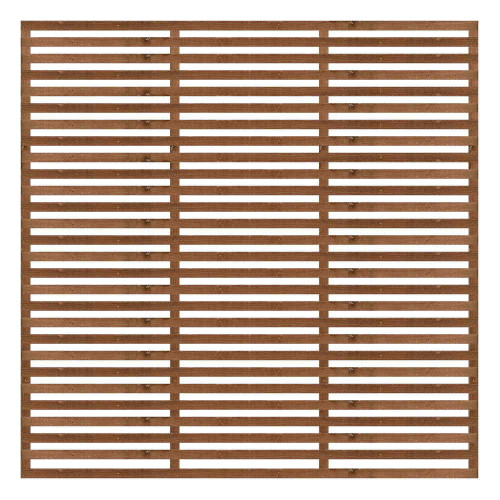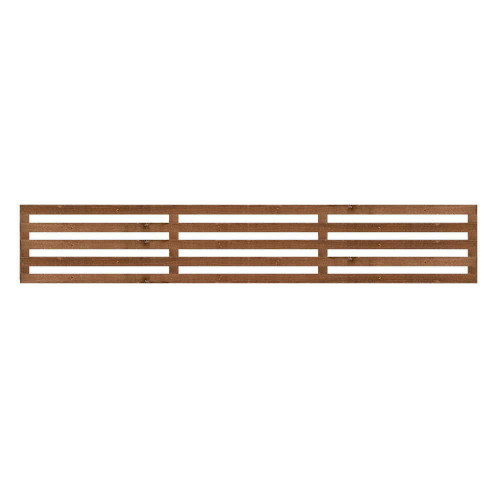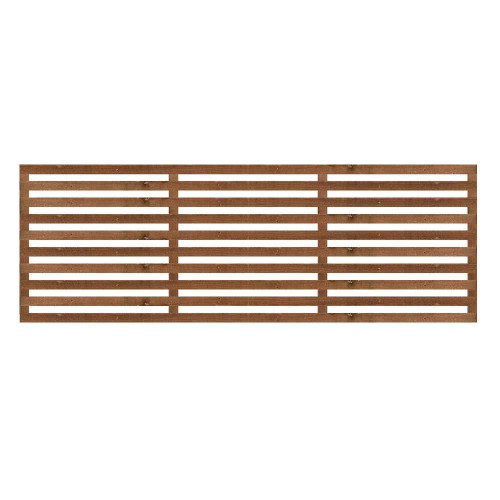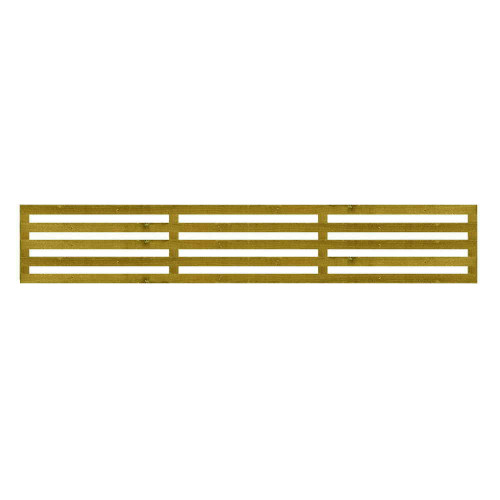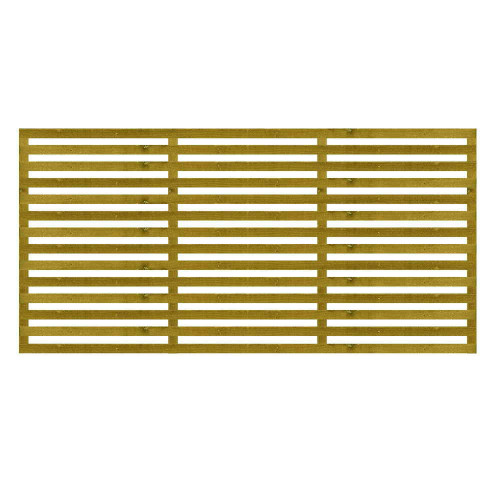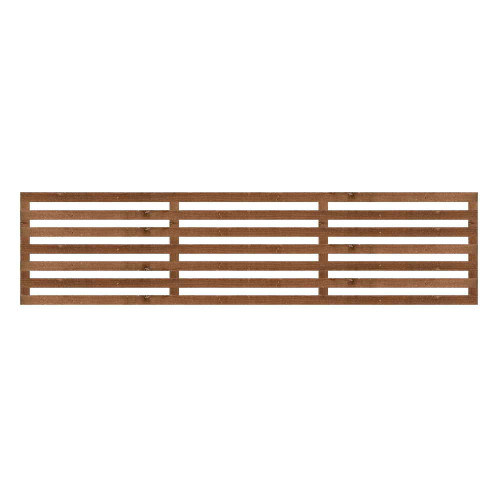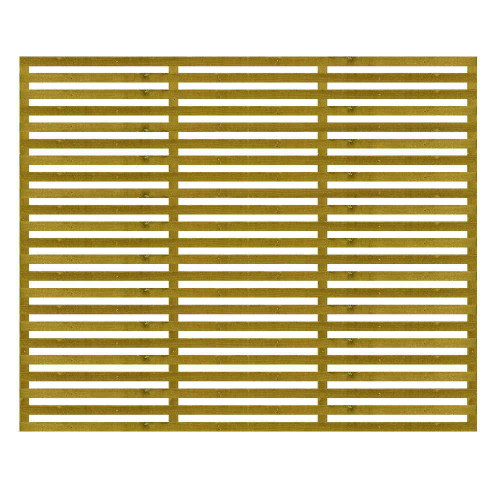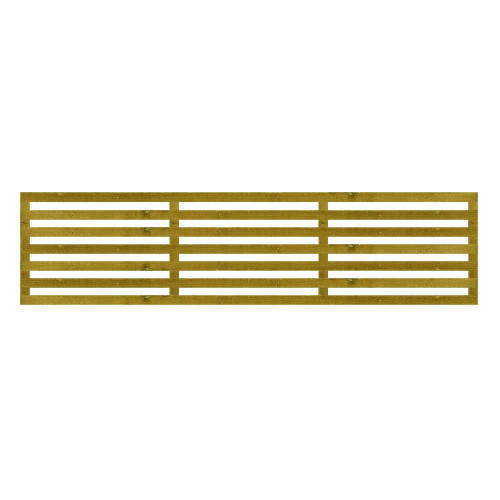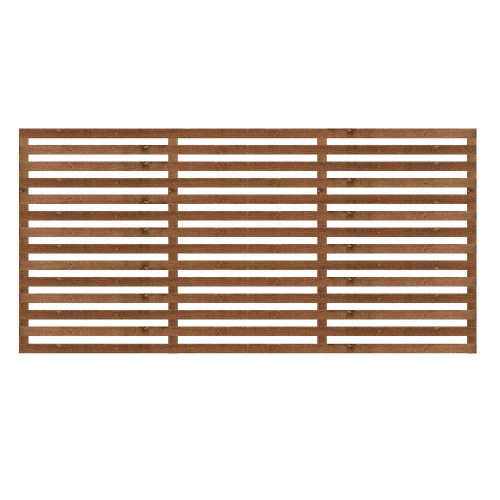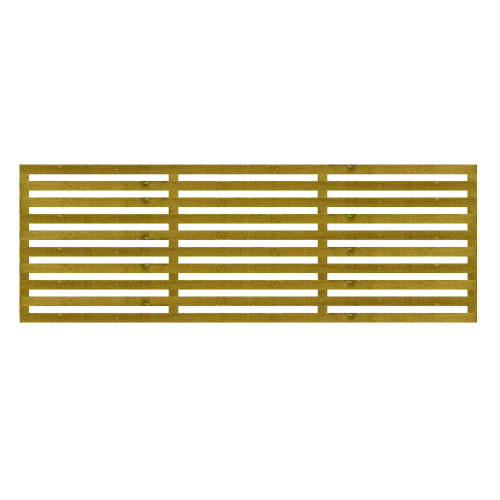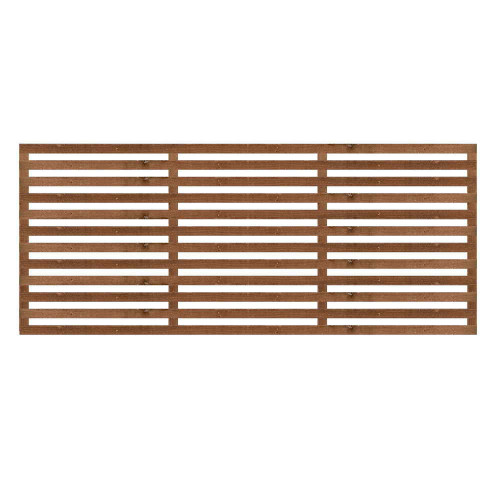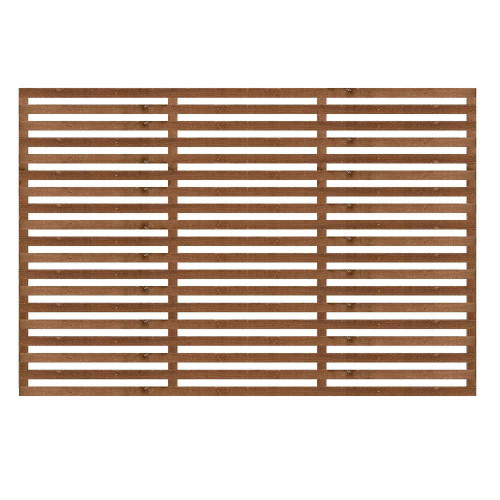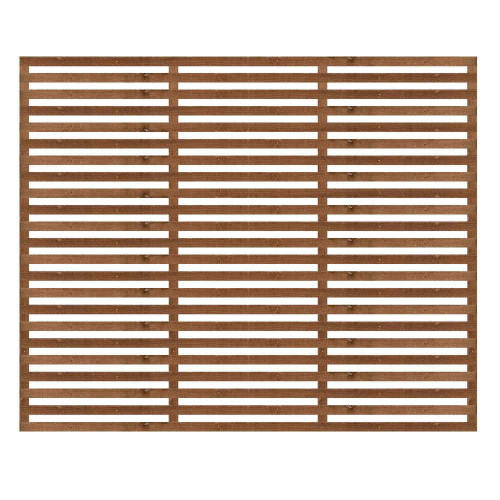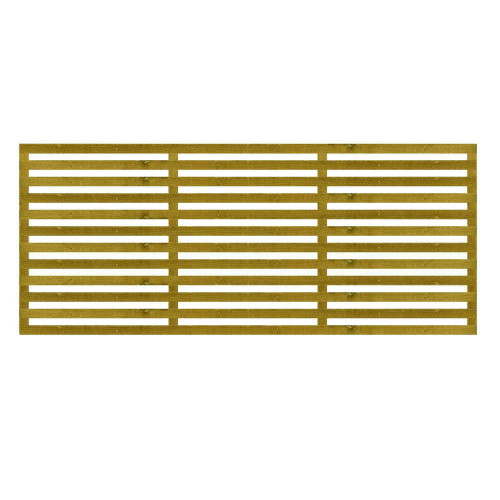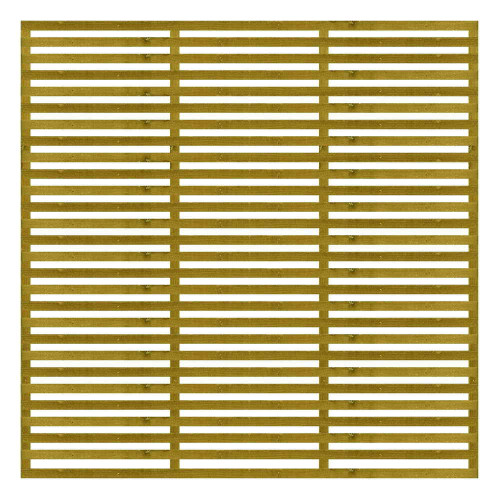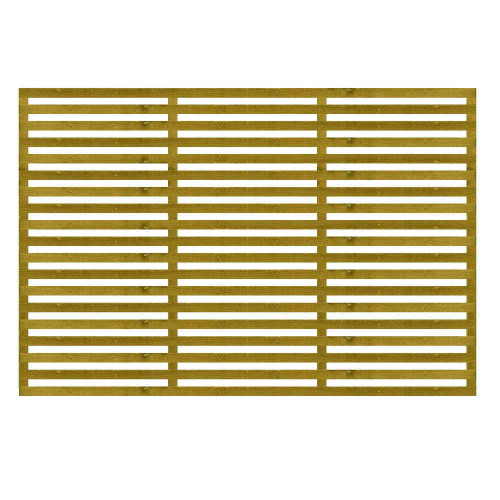


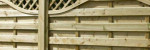

Quick answer: Horizontal Slatted Trellis can be installed between pressure-treated wooden posts to create a freestanding garden screen, patio divider or planted boundary. Set the posts to suit the actual panel width, keep them plumb and level, and fix through the substantial outer frame rather than relying on individual slats. East Coast Fencing's current panels are approximately 1.83m wide and available in heights from low 300mm sections through to full-height 1.83m screens, so post size and length should be chosen around the complete installation.
Horizontal Slatted Trellis is often used as a fence topper, but it can also form a screen in its own right.
Installed between Wooden Fence Posts, it can divide a patio from a lawn, screen a seating area, create a backdrop for planting or break a large garden into more defined spaces.
The installation looks simple because the panels are pre-assembled.
The accuracy comes from the posts.
If the posts are the wrong distance apart, out of level or not substantial enough for the height of the screen, even a well-made slatted panel will be difficult to fit neatly.
Can Horizontal Slatted Trellis Be Installed Between Wooden Posts?
Yes.
Wooden posts are one of the most straightforward ways to support Horizontal Slatted Trellis because they provide substantial timber surfaces for exterior fixings.
The arrangement can be used for:
- Freestanding garden screens
- Patio divisions
- Outdoor dining areas
- Garden zoning
- Planting backdrops
- Screening beside a garden room
- Low decorative boundaries
The posts still need to be appropriate for the panel height, wind exposure and ground conditions.
What Sizes Of Horizontal Slatted Trellis Are Available?
Current East Coast Fencing Horizontal Slatted Trellis is approximately 1.83m wide across suitable products.
Available nominal heights include approximately:
- 300mm
- 450mm
- 600mm
- 750mm
- 900mm
- 1.2m
- 1.5m
- 1.83m
This means the same basic horizontal design can be used for anything from a shallow decorative section to a full-height garden screen.
East Coast Fencing manufactures the current range from pressure-treated rough-sawn timber.
Does Panel Height Change How You Install It?
Yes.
A 300mm or 450mm section is relatively shallow.
A 1.5m or 1.83m panel is a substantial screen that places much greater demands on the posts and foundations.
| Panel Height | Typical Use | Installation Priority |
|---|---|---|
| 300mm to 450mm | Low decorative screen or topper-style section | Accurate alignment and neat fixing |
| 600mm to 900mm | Garden zoning and partial screening | Post stability and level top line |
| 1.2m to 1.5m | Substantial patio or planting screen | Suitable posts, foundations and wind exposure |
| 1.83m | Full-height open screen | Treat as a complete structural screen installation |
Should You Use 75mm Or 100mm Wooden Posts?
Current East Coast Fencing Wooden Fence Posts include 75 x 75mm and 100 x 100mm sections.
Neither size should be selected from trellis width alone.
Consider:
- Screen height
- Number of panels
- Wind exposure
- Ground conditions
- Whether climbing plants will be added
A lower decorative screen may suit 75 x 75mm posts in an appropriate sheltered installation.
For taller screens, 100 x 100mm posts provide a more substantial section and a broader fixing face.
A larger section does not compensate for an inadequate foundation.
What Length Wooden Posts Do You Need?
The overall post needs enough length for both the visible screen and the section installed below ground.
Current Wooden Fence Post lengths include approximately:
- 1.8m
- 2.4m
- 3.0m
Do not buy a post that simply matches the trellis height.
A 1.83m-high screen cannot normally use a 1.8m post installed directly into the ground because the complete post length would already be needed above ground.
Choose the post after calculating the complete installation.
Should Horizontal Slatted Trellis Touch The Ground?
It is better to keep the main timber panel clear of persistent soil contact where practical.
The current trellis is pressure treated for exterior use, but that does not mean it should be unnecessarily buried.
Ground clearance helps reduce exposure to:
- Wet soil
- Grass
- Leaves
- Mulch
- Standing water
- Rain splash
Plan the panel height from the ground before the posts are permanently set.
Do You Need A Gravel Board Under Slatted Trellis?
Not automatically.
A Gravel Board can create a durable lower edge where the screen is being used close to ground level, but it changes the appearance considerably.
A solid Gravel Board beneath an open contemporary trellis creates a different look from a screen that appears to float slightly above the ground.
Choose according to:
- Ground moisture
- Finished appearance
- Panel clearance
- How the lower edge will be maintained
If a Gravel Board is used, include its height when planning the posts.
How Far Apart Should The Wooden Posts Be?
Set the posts around the actual trellis panel and chosen fixing arrangement rather than blindly using a nominal spacing.
Current slatted panels are approximately 1.83m wide.
If the panel is being fixed between the posts, the clear opening needs to accommodate the actual panel width and appropriate fitting allowance.
If it is being face-fixed to the posts, the set-out is different.
Before digging:
- Measure an actual panel
- Decide whether it sits between or against the posts
- Allow for the post section itself
- Plan the complete screen length
Do not set every post first and only then discover how the panels are intended to fit.
Should The Trellis Sit Between The Posts Or On Their Faces?
Both arrangements can be possible depending on the design.
Between The Posts
This creates a clean framed appearance, with each panel occupying the opening between two structural uprights.
It also makes individual bays visually clear.
Face-Fixed To The Posts
This can create a more continuous screen because the panel face passes across the post line.
The post spacing and fixing positions need to be planned around that arrangement from the start.
Whichever method is chosen, use the substantial panel frame for the main fixings.
Why Should You Fix Through The Frame Rather Than The Slats?
The horizontal slats create the screening pattern.
They are not the best primary structural fixing points.
Fixing mainly through individual slats can:
- Split smaller timber sections
- Pull the slats out of alignment
- Concentrate loads in weaker areas
- Leave the outer frame insufficiently restrained
Use the substantial framed sections to secure the panel to suitable posts or supporting timber.
What Fixings Should You Use?
Use suitable exterior-grade fixings compatible with pressure-treated timber and long-term outdoor exposure.
The exact fixing length depends on:
- The panel frame
- The post section
- Whether brackets are used
- The fixing arrangement
A fixing should penetrate sufficiently into the supporting timber without unnecessarily emerging through the opposite side.
Predrilling can be useful near timber ends and edges where there is a risk of splitting.
Can Fence Panel Clips Be Used For Horizontal Slatted Trellis?
Only where the clip is suitable for the actual trellis frame dimensions and intended installation.
East Coast Fencing currently supplies a 46mm pre-galvanised Fence Panel Clip for compatible timber panels and wooden posts.
Do not assume that every trellis frame is exactly the same thickness as every Fence Panel.
Check the actual product dimensions and whether the clip holds the frame securely before using it.
How Do You Set Out A Slatted Trellis Screen?
Begin with the complete run rather than the first panel.
- Mark the start and finish: Decide exactly where the screen will begin and end.
- Measure the overall length: Include all posts and shortened end sections.
- Confirm panel orientation: Horizontal lines make mistakes particularly obvious.
- Plan each post: Mark intermediate, end and corner positions.
- Check gates and paths: Do not create an awkward narrow section beside an access point unnecessarily.
- Use a string line: Keep the posts on one consistent line.
Accurate setting out at this stage reduces nearly every problem later.
How Do You Install The Wooden Posts?
The posts need to be securely installed for the ground conditions and screen height.
Before excavation, check for underground services and other obstructions.
Set each post:
- On the correct fence line
- Plumb in both directions
- At the planned height
- At the correct spacing for the panels
Brace the posts while the foundation material sets where necessary.
Do not use the trellis panel itself as a substitute for properly bracing a loose post.
Should You Install All The Posts Before Fitting The Panels?
You can, but only if the set-out is accurate.
Small spacing errors accumulate across a long run.
One sensible approach is to establish the first post accurately, then use careful measurements from the actual panel dimensions to position the next post.
Continue checking:
- Post spacing
- Plumb
- Top height
- Fence line
Do not assume every manufactured timber panel will act as a precision spacer while foundations are being set.
How Do You Keep The Horizontal Slats Level?
This is one of the most important visual details.
Horizontal lines exaggerate small installation errors.
Use a spirit level on the framed panel itself rather than relying only on the ground beneath it.
Check the first panel particularly carefully.
If it starts out of level, every subsequent panel can continue the error across the garden.
Should All Panel Tops Line Up?
On reasonably level ground, a consistent upper line normally looks best.
Use:
- A string line
- A laser level where available
- Repeated level checks
Do not measure every panel top independently from uneven ground because this can produce a visibly wavering screen.
How Do You Fit The First Slatted Trellis Panel?
Once the posts are secure:
- Position the panel: Bring it into the planned opening or face-fixing position.
- Set the lower clearance: Keep the timber at the intended height above the ground or Gravel Board.
- Check level: Make sure the horizontal battens run level.
- Check the post faces: Confirm the panel sits squarely rather than being twisted.
- Temporarily support it: Use suitable blocks or assistance rather than holding a large panel one-handed.
- Fix through the frame: Secure the framed edges to the structural supports.
- Recheck alignment: Make sure the panel did not move while the fixings were tightened.
How Many Fixings Does A Slatted Panel Need?
There is no useful universal number for every panel size and installation.
A shallow 300mm section and a full-height 1.83m screen should not automatically be treated identically.
Use enough suitable fixing points to hold the framed panel securely without concentrating the entire load at one small part of the frame.
For tall screens, fixing distribution becomes particularly important.
Should You Overtighten The Screws?
No.
The fixing should hold the frame securely against the support without crushing or excessively pulling into the timber.
Overtightening can:
- Damage the frame
- Pull the panel out of square
- Increase the chance of splitting
Bring the frame firmly into position and stop when the fixing is secure.
How Do You Join Several Slatted Trellis Panels?
Each panel should have proper support at its edges.
For a conventional bay arrangement, adjoining panels meet at a Wooden Fence Post.
This gives each frame:
- A solid end support
- A suitable fixing surface
- A clear alignment point
Keep checking the horizontal slats as you progress.
A tiny difference at each post can become visually obvious across a long straight screen.
Can Two Panels Share One Wooden Post?
Yes, where the post section and fixing arrangement are appropriate.
A 100 x 100mm post offers a broader face than a 75 x 75mm post, which can be useful where framed panel edges meet on the same support.
Do not drive several large fixings into almost the same point.
Stagger suitable fixings where necessary while keeping adequate timber around them.
How Do You Finish The End Of The Screen?
The final panel should end at a substantial support rather than leaving its frame unsupported beyond the last post.
Plan the finish around:
- A final Wooden Fence Post
- A wall
- A gate opening
- A corner
If the final bay is narrower than a full panel, adapt the trellis rather than allowing the whole screen layout to drift out of position.
Can Horizontal Slatted Trellis Be Cut To Width?
Yes.
The panel can be shortened where an unusual final bay requires it, but the cut horizontal slats need a new supported edge.
A proper modification normally involves:
- Measuring the required finished width.
- Planning the position of the new frame edge.
- Securing the horizontal slats to suitable framing.
- Cutting away the surplus timber.
- Protecting fresh pressure-treated timber cuts where required.
Do not simply saw through every slat and leave their cut ends unsupported.
How Do You Install Slatted Trellis On Sloping Ground?
Keep each framed panel rectangular and level.
Then step the screen at the Wooden Fence Posts as the ground rises or falls.
This is usually much neater than trying to angle the panels themselves.
The strong horizontal pattern makes raking a rectangular panel particularly awkward visually.
Plan:
- Where each step occurs
- The height difference between bays
- Post lengths
- Finished upper line
before digging the holes.
Can Horizontal Slatted Trellis Turn A Corner?
Yes.
Use a suitable Wooden Fence Post at the change of direction and support the end of each panel independently.
A 100 x 100mm post can be particularly useful at substantial corners because it provides useful fixing faces in both directions.
Set the post square to the intended runs before the foundation is fixed.
An incorrectly rotated corner becomes difficult to disguise once the horizontal panels are installed.
How Do You Install Slatted Trellis Beside A Gate?
Plan the Gate Posts and screen separately.
A Garden Gate creates repeated sideways loading as it opens and closes, so a gate-supporting post may need a different specification from ordinary screen posts.
The trellis should finish neatly against the static Gate Post rather than relying on the moving gate for support.
Measure the complete opening before setting the posts so you do not accidentally create a very narrow trellis bay beside the gate.
Can Slatted Trellis Be Installed In Front Of An Existing Fence?
Yes.
A freestanding screen can be installed inside the garden rather than attached to the existing boundary.
This can make sense where:
- You only want screening around one seating area
- The existing fence belongs to a neighbour
- You want a contemporary timber feature
- You want to support climbing plants independently
Leave enough space between the two structures for maintenance where practical.
A very narrow inaccessible gap can collect leaves and remain damp.
Can You Use Slatted Trellis Around A Garden Room?
Yes.
A freestanding Horizontal Slatted Trellis screen can create useful separation around a Garden Room while retaining light and airflow.
Do not install it so tightly against the building that maintenance becomes difficult.
Allow room for:
- Cleaning
- Painting or treatment
- Drainage
- Air circulation
Can Climbing Plants Be Added After Installation?
Yes.
The horizontal battens create useful points for plant ties and training.
Not every climber will attach itself automatically to horizontal timber, so some plants require guidance.
Keep the future weight in mind.
A mature planted screen can become significantly heavier and catch more wind than the bare trellis.
Should Heavy Climbers Have Separate Support?
Sometimes.
If a plant is expected to become particularly substantial, independent wires, supports or another suitable plant-training system can reduce the amount of load transferred directly into smaller trellis components.
Whatever system is used, the Wooden Fence Posts still need to be suitable for the finished installation.
Does Horizontal Slatted Trellis Need Maintenance?
Yes, although routine maintenance is straightforward.
Periodically check:
- Post stability
- Loose fixings
- Loose slats
- Frame condition
- Heavy climbing growth
- Leaves and debris around the base
- Surface algae in shaded areas
Pressure treatment improves the timber's resistance to fungal decay, but the screen should still be kept in reasonable conditions.
What If The Timber Moves After Installation?
Wood naturally responds to changes in moisture.
Small changes in:
- Colour
- Surface texture
- Minor checking
- Individual timber position
can occur outdoors.
Do not install the panel under excessive force to make it fit an opening that is too small.
A framed panel fixed under tension is more likely to develop problems as the timber moves.
Should You Paint Slatted Trellis Before Installation?
If you intend to apply a decorative exterior coating, doing the work before final installation can make access easier.
A slatted panel has numerous:
- Faces
- Edges
- Internal gaps
These become more difficult to reach once several panels are fixed between posts and surrounded by planting.
Make sure the timber is appropriately dry and prepared for the chosen coating.
Common Installation Mistakes
- Setting posts before measuring the actual trellis panels
- Using a post the same length as a full-height screen
- Choosing 75 x 75mm posts automatically for every height
- Assuming a 100 x 100mm post removes the need for a suitable foundation
- Fixing primarily through thin horizontal slats
- Forcing panels into openings that are too narrow
- Allowing panel bottoms to sit unnecessarily in wet soil
- Failing to keep the horizontal lines level
- Measuring every panel height independently from uneven ground
- Leaving panel edges unsupported
- Cutting a panel without rebuilding its frame
- Ignoring future climbing-plant weight
- Installing full-height screens on loose or inadequate posts
- Failing to plan gate and corner positions before setting out the run
FAQs
Can Horizontal Slatted Trellis Be Used As A Freestanding Screen?
Yes. Full and partial-height panels can be installed between suitable independent Wooden Fence Posts for garden zoning, patio screening and planting structures.
What Width Is Horizontal Slatted Trellis?
Current East Coast Fencing Horizontal Slatted Trellis products are approximately 1.83m wide across suitable sizes. Measure the actual panel and planned fixing arrangement before setting posts.
What Heights Does Horizontal Slatted Trellis Come In?
Current nominal heights include approximately 300mm, 450mm, 600mm, 750mm, 900mm, 1.2m, 1.5m and 1.83m.
Are 75mm Wooden Posts Suitable For Slatted Trellis?
They can be suitable for lower or lighter screens in appropriate conditions. Taller screens, exposed sites or heavily planted panels may justify a more substantial 100 x 100mm post.
Can A 1.83m Slatted Trellis Panel Use A 1.8m Wooden Post?
Not for a normal post installed directly into the ground, because the screen itself would already use almost the complete post length above ground. Allow for the required below-ground section when selecting the post.
Should Slatted Trellis Touch The Soil?
Keep the main pressure-treated timber panel clear of persistent wet soil where practical. This also makes inspection and maintenance easier.
Can You Screw Horizontal Slatted Trellis Directly To Wooden Posts?
Yes, using suitable exterior-grade fixings through substantial framed sections where the particular installation allows. Avoid relying on the individual horizontal slats as the main fixing points.
Can Horizontal Slatted Trellis Be Cut Shorter?
Yes. If a panel needs reducing in width, support the cut horizontal battens with a properly positioned new frame edge and protect freshly exposed treated timber where required.
Get The Posts Right And The Panels Become Much Easier
Horizontal Slatted Trellis is straightforward to install between Wooden Fence Posts once the structure has been planned properly.
Start with the intended use and panel height.
A 300mm decorative screen does not place the same demands on its supports as a full 1.83m-high panel. Select the Wooden Fence Post section and length accordingly, taking account of ground conditions, exposure and future planting.
Measure the actual approximately 1.83m-wide trellis before fixing the posts. Decide whether the panels will sit between the posts or be face-fixed, and set the complete run out before excavation begins.
During installation, keep the posts plumb and the panel frames level. Horizontal timber makes small alignment errors particularly visible.
Fix through substantial framed sections, support every panel edge and keep the main trellis clear of unnecessary ground moisture.
If climbing plants are part of the design, plan for the mature planted screen rather than only the bare timber being installed today.
Accurate posts, a level frame and secure edge fixings are what turn a row of Horizontal Slatted Trellis Panels into a clean, deliberate garden screen.