

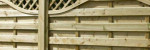

Quick answer: Choose Double Slatted Fence Panels if privacy and a clean contemporary appearance are your main priorities. Choose Hit & Miss Fence Panels if you want a modern horizontal design with greater airflow, particularly for an exposed or windy garden. Both can provide good screening, but double slatted fencing generally feels more private, while Hit & Miss offers a more open balance between screening and air movement.
Double slatted and Hit & Miss fencing are two strong options for homeowners who like modern horizontal fence panels but do not want a conventional Closeboard or Waney Lap boundary.
At first glance, the two styles can appear quite similar. Both use horizontal timber lines, both can create a contemporary garden backdrop and both are available in practical heights for everything from garden zoning to full rear boundaries.
The important difference is how they balance privacy and airflow.
Double slatted panels place greater emphasis on screening. Hit & Miss panels deliberately allow more air to move through the fence.
That difference can affect which one is better for an overlooked patio, an exposed garden, a narrow plot or a boundary where the fence itself is an important part of the landscaping.
What Is Double Slatted Fencing?
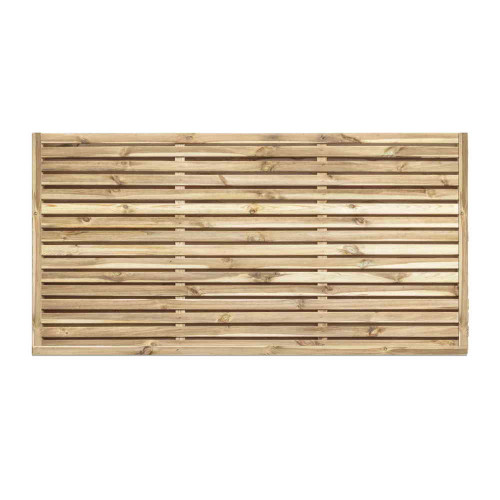
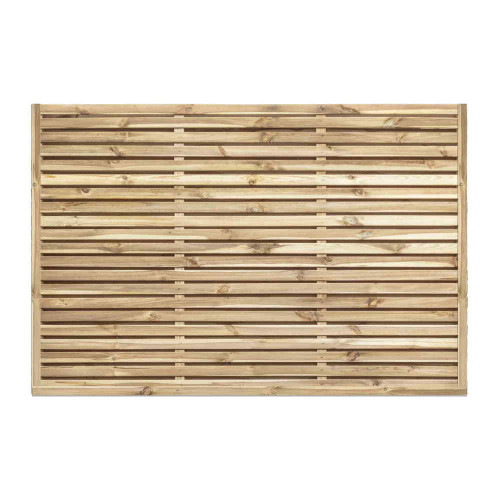
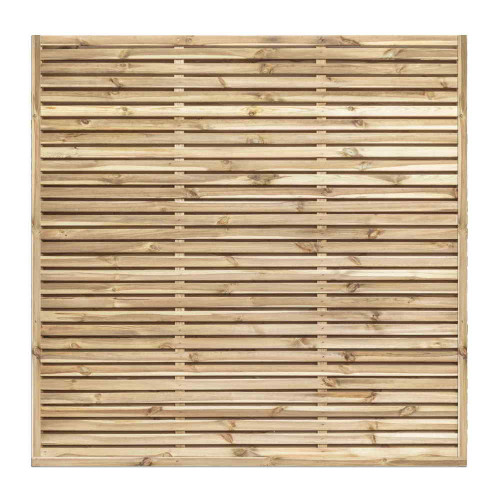
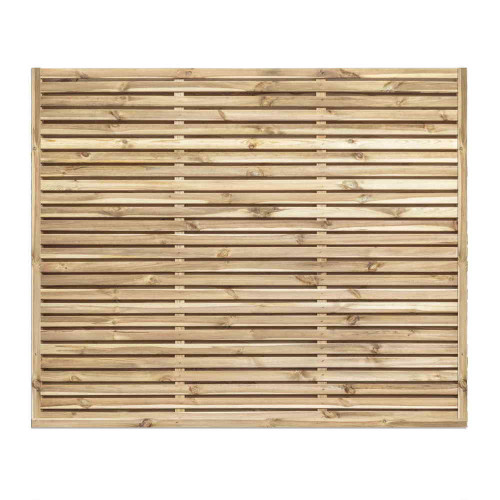
Double slatted fencing uses repeated horizontal timber slats arranged to provide substantial screening while retaining the distinctive appearance of contemporary slatted fencing.
It is particularly popular where homeowners want the boundary to look designed rather than purely functional.
Typical uses include:
- Modern rear garden boundaries
- Patio screening
- Outdoor dining areas
- Garden rooms
- Contemporary landscaping
- Internal garden zones
East Coast Fencing Framed Contemporary Double Slatted panels are nominally 6ft wide and available in 3ft, 4ft, 5ft and 6ft heights.
What Is Hit & Miss Fencing?
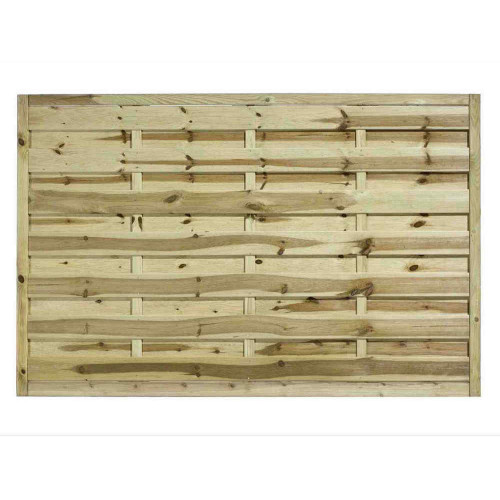
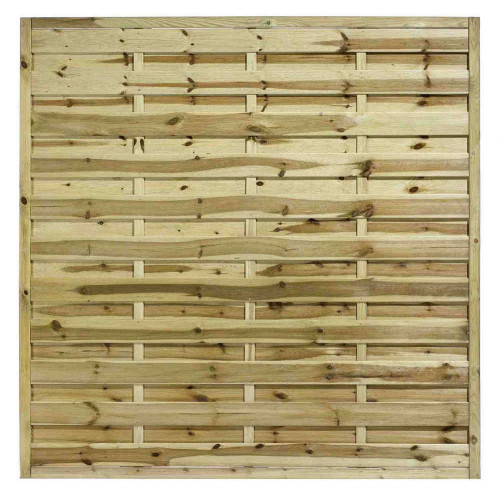
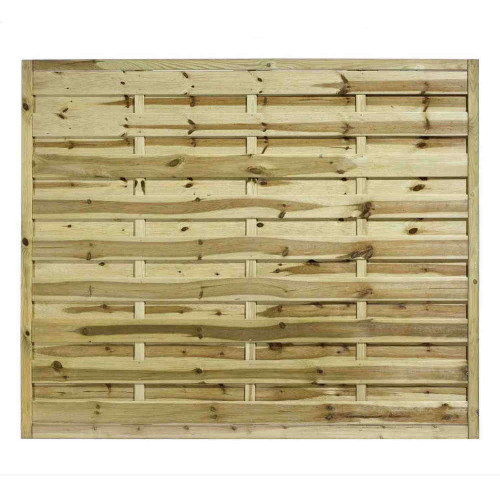
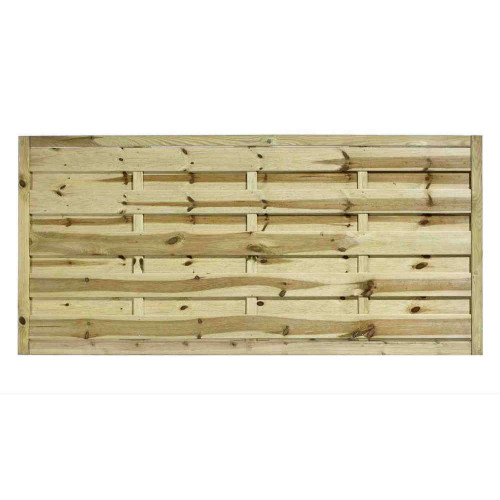
Hit & Miss fencing uses boards arranged alternately across the panel so that the fence provides screening while still allowing air to pass through.
The construction creates a strong horizontal pattern and avoids the completely solid barrier effect of traditional privacy fencing.
It can be particularly useful for:
- Exposed gardens
- Modern rear boundaries
- Garden divisions
- Areas where airflow matters
- Patios where some screening is required
East Coast Fencing Horizontal Hit & Miss panels are nominally 6ft wide and available in 3ft, 4ft, 5ft and 6ft heights.
What Is The Main Difference Between Double Slatted And Hit & Miss?
The key difference is the balance between screening and airflow.
Double slatted fencing generally provides stronger visual screening.
Hit & Miss fencing deliberately creates greater opportunities for air to move through the panel.
| Feature | Double Slatted | Hit & Miss |
|---|---|---|
| Privacy | High | Moderate to high |
| Airflow | Moderate | Good |
| Appearance | Clean contemporary slats | Contemporary overlapping horizontal boards |
| Windy gardens | Assess exposure carefully | Strong option where airflow matters |
| Patio privacy | Excellent | Very good |
| Visual openness | Lower | Higher |
Which Is Better For Privacy?
Double slatted is the stronger starting point when privacy is the main requirement.
The panel is designed to interrupt sightlines while maintaining a contemporary horizontal appearance.
This makes it particularly useful around:
- Patios
- Outdoor seating
- Dining areas
- Rear boundaries
Hit & Miss also provides useful screening, but its construction places greater emphasis on airflow.
That means some sightlines may remain depending on where the viewer is standing.
Can You See Through Double Slatted Fencing?
Some sightlines can remain because it is still a slatted design.
Privacy can change according to:
- Viewing angle
- Distance
- Ground level
- Panel height
Viewed from normal positions across neighbouring gardens, double slatted fencing can provide substantial screening.
Viewed very close to the panel or from a particular angle, small gaps may be more noticeable.
Can You See Through Hit & Miss Fencing?
Potentially.
The alternating board arrangement is intended to restrict direct views while preserving airflow.
The result is therefore not the same as a completely solid timber wall.
From one angle, the fence may appear highly screened. From another, limited views may be possible through the spaces.
Which Is Better If You Want Complete Privacy?
If absolutely no sightlines through the panel are acceptable, neither design should automatically be assumed to behave like a completely solid fence.
Traditional Closeboard may be the simpler option where maximum straightforward opacity is the only priority.
Between these two contemporary styles, double slatted is generally the better privacy choice.
Which Is Better For Airflow?
Hit & Miss has the advantage.
Its alternating construction allows air to pass through the boundary rather than forcing the majority of the wind over and around it.
This can be valuable in:
- Exposed gardens
- Coastal locations
- Gardens beside open land
- Elevated properties
- Areas that regularly experience strong gusts
Double slatted fencing allows some air movement, but stronger screening naturally means more of the boundary is closed.
Which Is Better For Windy Gardens?
Hit & Miss is usually the more obvious starting point where wind exposure is a major concern.
The ability for air to move through the panel can reduce the solid barrier effect associated with more enclosed fencing.
That does not mean Hit & Miss is windproof.
The complete fence still needs:
- Suitable posts
- Appropriate post length
- Sound foundations
- Correct installation
- A sensible panel height
A more open panel installed on failing posts can still blow over.
Is Double Slatted Fencing Suitable For Windy Gardens?
It can be, provided the whole fence is designed for the site.
Do not dismiss double slatted simply because it offers stronger screening.
Instead, assess:
- How exposed the garden actually is
- Whether 6ft of height is really required
- The post system
- Ground conditions
- Previous storm damage
If fences repeatedly fail in the same location, greater airflow may make Hit & Miss particularly worth considering.
Does Fence Height Matter In Wind?
Yes.
A taller panel presents more surface area to the wind than a shorter panel of the same design.
This applies to both styles.
If a 5ft fence provides enough screening, there may be little reason to choose 6ft automatically.
Choosing only as much height as you genuinely need can reduce both visual enclosure and wind loading.
Which Is Better Around A Patio?
Double slatted is particularly strong around patios.
A patio is an area where both appearance and privacy tend to matter.
The repeated horizontal design creates an attractive backdrop while helping to screen neighbouring spaces.
Hit & Miss can be preferable where the patio is exposed and airflow is important.
It can also make the seating area feel less enclosed.
Which Is Better Around An Outdoor Dining Area?
Again, the answer depends on the balance between privacy and openness.
Choose double slatted if:
- Neighbouring sightlines are the main problem
- You want a strongly contemporary backdrop
- The area is reasonably sheltered
Choose Hit & Miss if:
- Airflow matters
- The garden is exposed
- You want the dining area to feel less enclosed
Which Is Better Around A Hot Tub?
Double slatted is usually the stronger starting point because privacy tends to matter more around a hot tub.
However, panel height and viewing angle remain important.
Assess views from:
- Neighbouring patios
- Paths
- Raised decking
- Upper-storey windows
Ordinary garden fencing may not prevent elevated overlooking, regardless of panel style.
Which Is Better For An Overlooked Garden?
Double slatted generally offers stronger screening against ordinary ground-level overlooking.
Hit & Miss is better where some openness is acceptable.
Before deciding, identify exactly where the unwanted view originates.
You may discover that only one section of the boundary needs strong privacy.
In that case, using double slatted selectively can be more effective than enclosing the whole garden unnecessarily.
Which Lets More Light Through?
Hit & Miss generally creates a more open boundary.
This can help where the fence is close to:
- Planting
- A narrow lawn
- A patio
- A side passage
Double slatted fencing can still retain a lighter appearance than completely solid traditional fencing, but it provides stronger screening and can therefore create more shade.
Which Is Better For A Small Garden?
Either can work well.
The horizontal lines of both styles can visually emphasise the width of a garden.
Hit & Miss may have an advantage where the garden is particularly compact because greater airflow and visual openness can prevent the boundary from feeling too heavy.
Double slatted may be preferable where neighbouring properties are close and privacy is more important.
Which Is Better For A Narrow Garden?
Think carefully about how enclosed you want the space to feel.
A tall, high-screening fence on both sides of a narrow plot can create a corridor effect.
Hit & Miss can soften that effect by retaining more airflow and visual openness.
You can also combine styles, using double slatted only around the areas where stronger privacy is necessary.
Which Is Better For A Large Garden?
Large gardens can accommodate either style comfortably.
Double slatted works particularly well where a long boundary forms a visible backdrop to contemporary landscaping.
Hit & Miss works well where you want:
- A less enclosed boundary
- More airflow
- A repeated horizontal design
Across a very long run, remember that the fence pattern will become a significant part of the overall garden.
Which Looks More Modern?
Both are contemporary fencing styles.
Double slatted tends to create the cleaner, more architectural appearance.
The repeated slats can work especially well with:
- Modern paving
- Rendered walls
- Garden rooms
- Large glazed doors
- Contemporary planters
Hit & Miss still looks modern but has a slightly more substantial boarded character.
Which Works Better With A Modern Extension?
Double slatted is a particularly natural fit.
Horizontal timber lines can complement:
- Wide glazing
- Modern brickwork
- Simple rectangular patios
- Contemporary outdoor furniture
Hit & Miss can work just as successfully where you want a less formal or more open version of the same horizontal theme.
Can Either Style Work With A Traditional House?
Yes.
A modern fence does not require a modern house.
Contemporary timber fencing can create an intentional contrast with:
- Older brick properties
- Victorian terraces
- Cottages
- Traditional extensions
The wider garden design usually matters more than the age of the property alone.
Which Makes A Garden Look Wider?
Both use strong horizontal lines, so both can emphasise width.
This effect can be reinforced by:
- Long paving joints
- Raised beds
- Linear planting
- Benches
Double slatted can give the cleanest uninterrupted horizontal effect.
Which Feels Less Enclosed?
Hit & Miss generally feels more open.
The additional airflow and visual breaks reduce the sense of a continuous barrier.
Double slatted provides stronger screening and therefore creates a greater feeling of enclosure.
Whether that is positive or negative depends on the garden.
Which Is Better For A Rear Boundary?
Double slatted is a strong choice when the rear boundary is highly visible and privacy matters.
Hit & Miss makes particular sense where:
- The rear boundary is exposed
- Airflow matters
- The garden already feels enclosed
Both can create a much more contemporary appearance than traditional Closeboard or Waney Lap fencing.
Which Is Better For A Side Boundary?
Side boundaries can experience different conditions from the rear of a garden.
Narrow passages between buildings may channel gusts.
They can also receive less light.
For those reasons, Hit & Miss may be particularly useful along a side boundary where airflow and openness matter.
Double slatted may be better where the side boundary is overlooked and screening is the main concern.
Which Is Better For A Front Garden?
Both can be used at lower heights where the location is appropriate.
Three-foot or 4ft panels can create a contemporary front boundary without the full enclosure of a tall rear garden fence.
Consider:
- Visibility
- Driveways
- Paths
- The scale of the property
A high-screening panel is not necessarily the right solution simply because you like the design.
Which Is Better For Garden Zoning?
Both are excellent.
Lower-height versions can be used to separate:
- Patios from lawns
- Dining areas from play spaces
- Garden rooms from the wider garden
- Utility areas from seating areas
Hit & Miss maintains a stronger visual connection between zones.
Double slatted provides greater separation.
Which Is Better For Screening Bins?
Double slatted generally has the advantage because screening is the main objective.
A relatively short run can hide:
- Wheelie bins
- Recycling containers
- Garden equipment
Hit & Miss can also work if some visibility through the screen is acceptable.
In either case, leave sufficient access and ventilation.
Which Is Better For Screening A Shed?
Double slatted provides stronger immediate visual screening.
Hit & Miss may make sense where complete concealment is not necessary and you want better airflow through the area.
Avoid creating narrow inaccessible spaces where wet leaves and debris accumulate between the fence and shed.
Which Is Better Around A Garden Room?
Both work well.
Double slatted often provides the cleaner architectural match.
Hit & Miss can be useful where the garden room is in an exposed part of the plot and you want to maintain greater air movement.
Which Works Better With Planting?
Both provide attractive timber backdrops for planting.
Double slatted can create a strong contrast behind:
- Ornamental grasses
- Architectural plants
- Raised beds
- Modern planters
Hit & Miss may provide a slightly softer relationship with planting because the boundary feels less visually solid.
Can Climbing Plants Grow On These Panels?
They can grow near or around them, but avoid making the fence the sole structural support for a very heavy mature climber.
Dense growth can:
- Add weight
- Increase wind loading
- Hold moisture against the timber
- Make maintenance harder
Independent plant supports can be preferable for substantial climbers.
Which Is Better For Dogs?
Double slatted may be preferable if restricting the dog's view beyond the garden is desirable.
Some dogs become highly stimulated by seeing:
- People
- Other dogs
- Vehicles
Hit & Miss provides screening but may retain more limited sightlines.
For containment, also check:
- Panel height
- Panel openings
- Gaps beneath the fence
- Gate gaps
Which Is Better If My Dog Barks Through The Fence?
Double slatted may reduce visual triggers more effectively.
However, fencing should not be treated as a guaranteed solution to barking because behaviour can have many causes.
If seeing neighbouring activity is clearly the trigger, increased screening may help.
Which Is Better For Cats?
Neither ordinary panel design should automatically be treated as a cat-proof enclosure.
Cats can climb and jump extremely well.
Choose the fence primarily for the garden rather than assuming either design will contain a cat without additional measures.
Which Is Easier To Maintain?
Both contain more detailed horizontal construction than a simple flat fence surface.
Double slatted fencing contains repeated narrow slats and therefore numerous edges.
Hit & Miss uses overlapping boards and also creates recesses that need attention during cleaning or decorative coating.
Neither is maintenance free.
Which Is Easier To Clean?
There is no dramatic difference.
Both require attention around horizontal timber edges where dirt and algae can become visible.
A sensible cleaning process is:
- Remove loose vegetation and debris.
- Brush away dry surface dirt.
- Use a suitable timber cleaner where required.
- Use a timber-safe algae treatment for persistent growth if appropriate.
- Allow the panels to dry.
Can You Pressure Wash Double Slatted Or Hit & Miss Fencing?
Use caution with either style.
Excessive pressure can:
- Raise timber fibres
- Damage edges
- Strip decorative coatings
- Force water deeply into joints
Gentle hand cleaning is often a safer starting point.
Which Is Easier To Paint?
Both require more detailed coating work than a completely flat surface.
Double slatted panels have numerous individual slat edges.
Hit & Miss has overlapping boards and recessed areas.
If you intend to paint a long fence run, allow enough time to cover:
- Faces
- Edges
- Visible gaps
- Framing
Can Double Slatted And Hit & Miss Be Painted?
Timber fencing can generally be given an appropriate exterior decorative finish where suitable for the particular product and timber condition.
Follow the coating manufacturer's instructions and make sure the timber is sufficiently dry before application.
Which Lasts Longer?
There is no responsible universal lifespan comparison based solely on these two designs.
Long-term performance depends on:
- Panel construction
- Timber treatment
- Installation
- Post condition
- Wind exposure
- Moisture
- Ground clearance
- Maintenance
A well-installed panel in a sheltered, well-drained garden can perform very differently from the same style installed on failing posts in an exposed location.
Which Is Stronger?
A simple strength ranking is not particularly useful.
The finished fence is a complete system.
Even a substantial panel can fail if:
- The posts move
- The foundations are inadequate
- The panel is installed incorrectly
Hit & Miss has the advantage of greater airflow, while double slatted provides stronger screening.
Neither removes the need for suitable support.
Do These Panels Need Gravel Boards?
Suitable gravel boards are worth considering where compatible with the fencing system.
They can help keep the lower part of the timber panel away from:
- Soil
- Mulch
- Wet grass
- Rain splash
This can help maintain the lower framing and improve the appearance of the boundary.
Will Gravel Boards Affect The Appearance?
Yes.
A gravel board becomes part of the visible fence.
Think about whether you prefer:
- An all-timber appearance
- A concrete base beneath timber panels
Choose the panel height with the gravel board in mind rather than adding one after deciding the finished height.
Will A Gravel Board Make The Fence Taller?
Yes, where it raises the panel above ground.
The completed fence height is therefore not necessarily the same as the nominal panel height.
This matters for:
- Privacy
- Appearance
- Post selection
- Wind exposure
Can Double Slatted And Hit & Miss Use Timber Posts?
Yes, where the panel dimensions and fixing arrangements are compatible.
East Coast Fencing timber fence posts are available in common sections including:
- 75 x 75mm
- 100 x 100mm
Available lengths include 1.8m, 2.4m and 3.0m.
Choose the appropriate support according to height, exposure and ground conditions.
Can These Panels Use Concrete Posts?
Compatibility should be checked for the exact panel and concrete post system.
Decorative framed panels can differ in construction and thickness from standard fence panels.
Do not assume a nominal 6ft width guarantees compatibility with existing slotted concrete posts.
What Heights Are Available?
Both East Coast Fencing Framed Contemporary Double Slatted panels and Horizontal Hit & Miss panels are available in nominal:
- 3ft
- 4ft
- 5ft
- 6ft
Both are nominally 6ft wide.
Should You Choose 3ft Panels?
Three-foot panels are useful for:
- Garden zoning
- Patio edges
- Lower boundaries
- Decorative internal screens
At this height, the design has more to do with dividing the garden than providing full privacy.
Should You Choose 4ft Panels?
Four-foot panels create a more substantial division without becoming a full-height rear boundary.
They are useful where you want:
- Greater separation
- Some screening
- A contemporary internal boundary
Should You Choose 5ft Panels?
Five-foot fencing provides significant screening.
It can be a particularly useful height around:
- Patios
- Outdoor seating
- Rear garden boundaries
Choose double slatted for stronger privacy or Hit & Miss for greater airflow.
Should You Choose 6ft Panels?
Six-foot panels provide the strongest boundary presence and screening.
They are useful for full-height rear garden fencing.
However, greater height also means:
- More wind exposure
- More shade
- A stronger sense of enclosure
Do not choose the tallest option automatically.
Which Is Better On Sloping Ground?
Both are rigid horizontal panel designs and are generally stepped as ground level changes.
The horizontal construction makes differences in level particularly noticeable.
Plan:
- Post positions
- Panel steps
- Gate height
- The lower edge
before beginning installation.
Can Sloping Ground Create Gaps Under The Fence?
Yes.
When panels are stepped, the downhill end can leave a larger opening beneath the panel.
This matters where the fence is intended to:
- Contain dogs
- Screen neighbouring gardens
- Create a neat finished boundary
Consider the lower edge as carefully as the top of the fence.
Can You Mix Double Slatted And Hit & Miss?
Yes.
They share enough horizontal character that the change can work particularly well when planned deliberately.
For example:
- Double slatted around the patio
- Hit & Miss along an exposed rear boundary
- Double slatted beside a garden room
- Hit & Miss where planting needs more airflow
Where Should You Change Between The Two Styles?
Use natural transition points such as:
- Corners
- Gates
- Garden rooms
- Patio edges
- Changes in ground level
- Different garden zones
Changing randomly halfway along a straight uninterrupted boundary is more difficult to make look intentional.
Can You Replace Hit & Miss With Double Slatted?
Potentially, provided the dimensions and supporting system are compatible.
Before ordering, check:
- Actual bay width
- Panel thickness
- Post condition
- Fixing method
- Gravel board arrangement
The result will provide stronger screening but may also change wind behaviour and light levels.
Can You Replace Double Slatted With Hit & Miss?
Potentially.
This can make sense if the existing garden feels too enclosed or the boundary is particularly exposed.
The visual style remains horizontal and contemporary, but the finished fence may feel more open.
Which Is Easier To Replace One Panel At A Time?
Either may be replaceable individually where the fence is built as compatible panel bays.
The main issue is matching the surrounding design.
For a single damaged section, use the same panel type where possible.
Which Is Better Value?
Value depends on what you need from the fence.
Double slatted can represent better value where high screening and appearance are important.
Hit & Miss can represent better value where airflow is a key part of the requirement.
Compare the whole project, including:
- Panels
- Posts
- Gravel boards
- Fixings
- Gates
- Installation
There is little value in buying the wrong panel and replacing it later because the garden is too exposed or not private enough.
Which Is Better If The Fence Is Highly Visible?
Double slatted usually has the stronger architectural impact.
If the boundary is seen directly from:
- Bi-fold doors
- Large windows
- A patio
- A garden room
its clean repeated lines can become an important part of the garden design.
Hit & Miss remains attractive but often feels slightly more functional and open.
Which Is Better If The Fence Will Be Hidden By Plants?
Hit & Miss may be sufficient where mature planting will eventually obscure much of the panel.
There is less benefit in choosing a highly design-led screen if it will disappear almost completely behind a hedge.
That said, consider how the fence will look during the years before planting fully matures.
Double Slatted vs Hit & Miss By Use Case
| Situation | Useful Starting Point |
|---|---|
| Maximum privacy | Double Slatted |
| Windy garden | Hit & Miss |
| Modern patio | Double Slatted |
| Privacy plus airflow | Hit & Miss |
| Garden room backdrop | Double Slatted |
| Exposed side boundary | Hit & Miss |
| Small garden needing privacy | Double Slatted |
| Small garden needing openness | Hit & Miss |
| Bin screening | Double Slatted |
| Internal garden division | Either |
Common Mistakes When Choosing Between Double Slatted And Hit & Miss
- Assuming both provide identical privacy
- Ignoring airflow in an exposed garden
- Choosing double slatted where the garden already feels too enclosed
- Choosing Hit & Miss where complete screening is essential
- Using 6ft panels automatically when 5ft would be sufficient
- Ignoring relative ground levels
- Focusing on the panel while retaining weak posts
- Assuming all nominal 6ft panels fit the same existing bays
- Forgetting gravel boards when calculating finished height
- Ignoring the maintenance involved in detailed horizontal timber panels
Double Slatted vs Hit & Miss Buying Checklist
- Decide whether privacy or airflow matters more.
- Assess how exposed the garden is.
- Check where neighbouring sightlines originate.
- Choose the appropriate panel height.
- Measure the actual boundary.
- Measure existing bays if replacing panels.
- Inspect existing posts.
- Confirm compatibility with the intended support system.
- Plan gravel boards where appropriate.
- Consider how much shade the completed fence will create.
- Think about mature planting.
- Check access for full-size panels.
FAQs
Which Is More Private, Double Slatted Or Hit & Miss?
Double slatted is generally the stronger privacy option.
Which Allows More Airflow?
Hit & Miss generally allows more air to pass through the boundary.
Which Is Better For Windy Gardens?
Hit & Miss is a strong starting point because airflow is built into the design, although posts and foundations remain essential.
Is Double Slatted Good In Wind?
It can be used in windy locations with a suitable supporting system, but stronger screening means wind exposure should be considered carefully.
Can You See Through Double Slatted Fencing?
Some sightlines can remain depending on viewing angle and distance, although it provides substantial screening.
Can You See Through Hit & Miss Fencing?
Some views may be possible from particular angles because the design deliberately permits airflow.
Which Is Better Around A Patio?
Double slatted is usually the stronger option where privacy and appearance are priorities.
Which Is Better For Outdoor Dining?
Choose double slatted for greater privacy and Hit & Miss for a more open, airy setting.
Which Is Better Around A Hot Tub?
Double slatted is generally preferable because stronger screening is usually desirable.
Which Is Better For An Overlooked Garden?
Double slatted provides stronger ground-level screening, although ordinary fence height may not prevent elevated overlooking.
Which Is Better For A Small Garden?
Either. Double slatted suits compact gardens where privacy is important, while Hit & Miss can make a small space feel more open.
Which Makes A Garden Look Wider?
Both use horizontal lines that can visually emphasise width.
Which Looks More Modern?
Both are contemporary styles, although double slatted generally creates the cleaner architectural appearance.
Which Is Better With A Garden Room?
Double slatted is particularly effective as a modern garden room backdrop.
Which Is Better For Dogs?
Double slatted may provide stronger visual screening, but panel height, gaps and the behaviour of the individual dog also need consideration.
Which Is Easier To Maintain?
Neither has a major advantage. Both have horizontal boards, edges and recessed areas that need periodic inspection and cleaning.
Can Both Be Painted?
Timber panels can generally be decoratively coated where appropriate for the particular product and once the timber is sufficiently dry and prepared.
Can Both Use Gravel Boards?
Suitable gravel boards can be used where compatible with the chosen fencing system.
Can Both Use Timber Posts?
Yes, where the posts and fixing arrangements are suitable for the panel and complete fence.
Can Both Use Concrete Posts?
Compatibility needs to be checked for the particular framed panel and post system.
What Heights Are Available?
Both ranges are available in nominal 3ft, 4ft, 5ft and 6ft panel heights.
How Wide Are The Panels?
The panels discussed here are nominally 6ft wide.
Is 5ft High Enough For Privacy?
It can be. Actual privacy depends on viewing positions and relative ground levels rather than height alone.
Is 6ft Always Better?
No. Six-foot fencing provides more screening but also increases shade, wind loading and visual enclosure.
Can Double Slatted And Hit & Miss Be Mixed?
Yes. Their shared horizontal character can make them work well together when the transition is planned deliberately.
Can One Replace The Other?
Potentially, provided the dimensions, thickness and supporting system are compatible.
Which Is Better Value?
Double slatted can provide better value where screening is the priority. Hit & Miss can provide better value where airflow and exposure are more important. The right choice depends on the garden rather than the panel price alone.
Double Slatted Or Hit & Miss: Which Should You Choose?
Choose double slatted if you want a modern fence with privacy at the centre of the decision.
It is particularly strong around patios, outdoor dining areas, garden rooms and overlooked rear boundaries where the fence is highly visible and substantial screening is important.
Choose Hit & Miss if you want the same broad horizontal contemporary character but need greater airflow.
It is particularly worth considering on exposed boundaries, in gardens that already feel enclosed or anywhere you want useful screening without creating such a strong barrier to moving air.
The decision does not have to apply to the whole garden.
You can use double slatted around the private seating area and Hit & Miss along the more exposed boundary, using corners, gates or changes in garden use as natural transition points.
Whichever you choose, do not consider the panel in isolation.
Panel height, posts, foundations, gravel boards, ground levels and installation all affect the finished fence.
The best choice comes down to one simple question: do you need more privacy or more airflow?
If privacy wins, start with double slatted. If airflow wins, start with Hit & Miss.