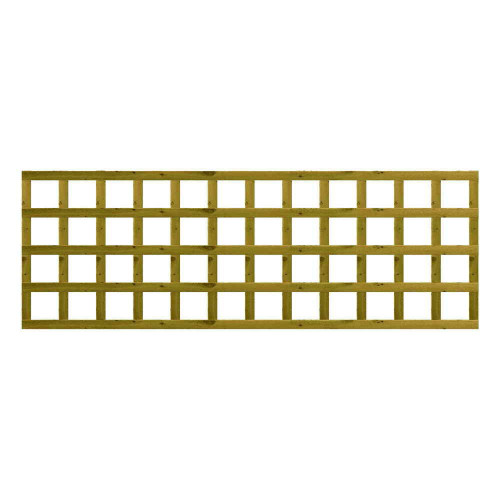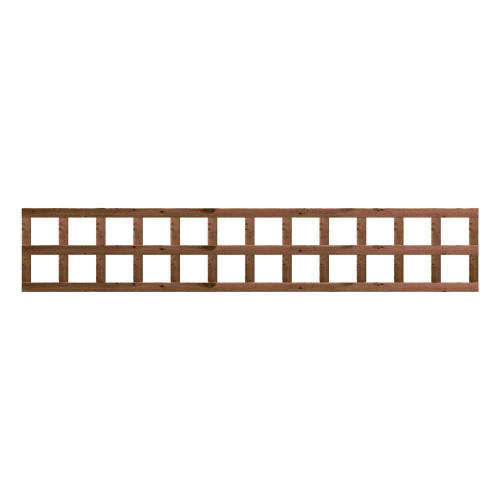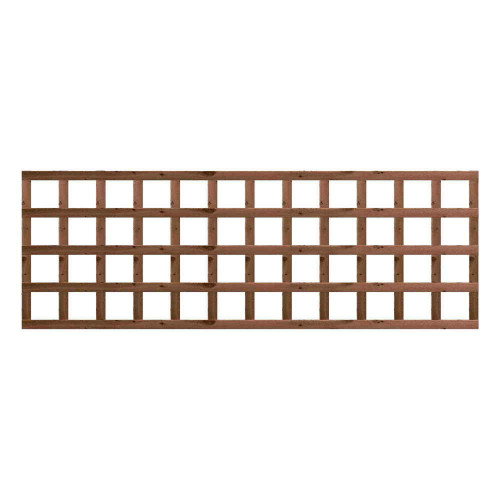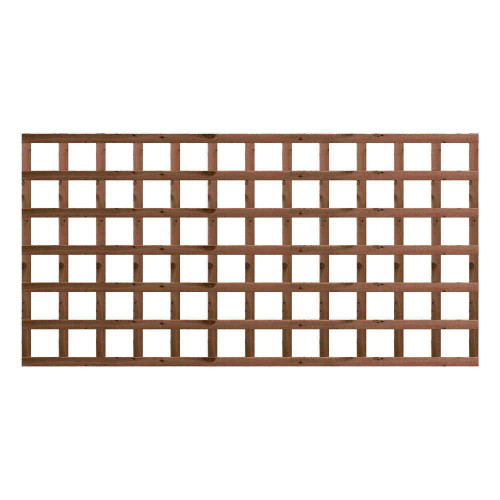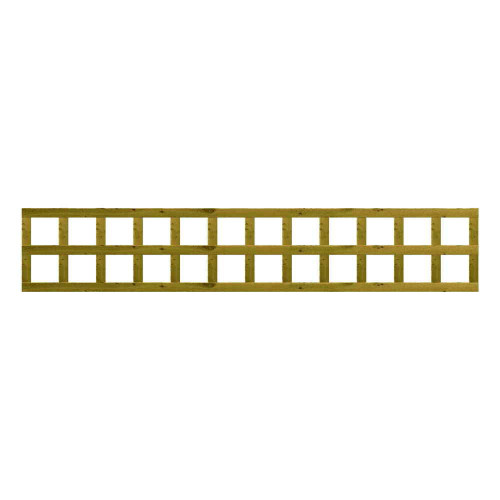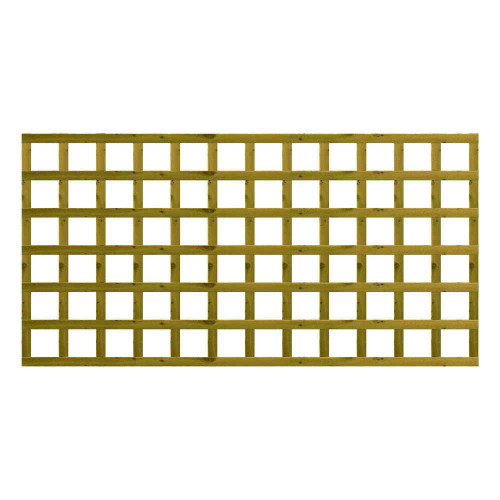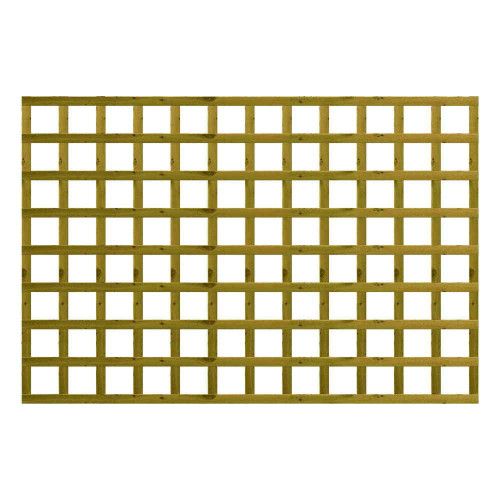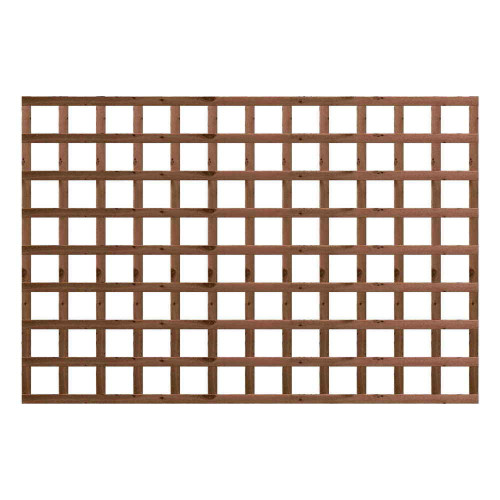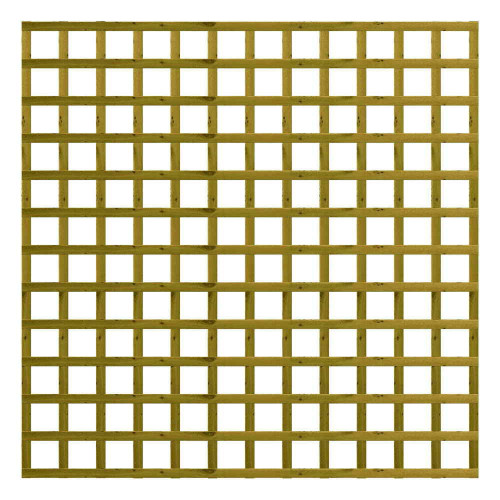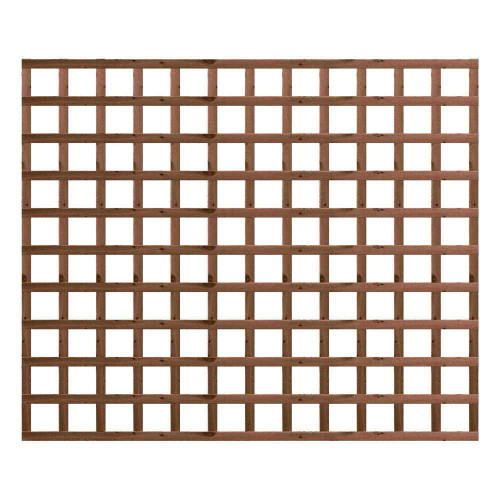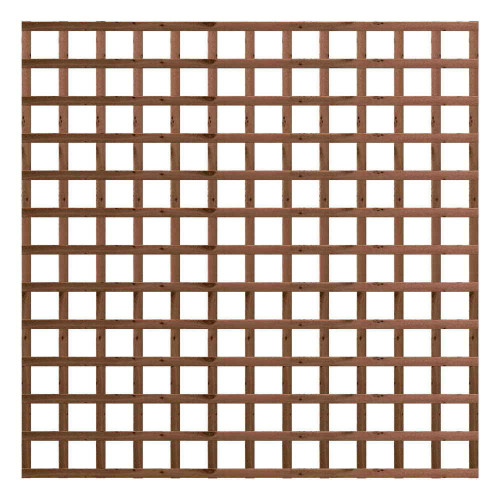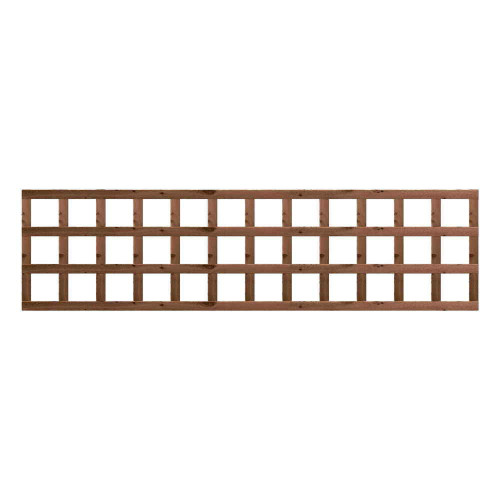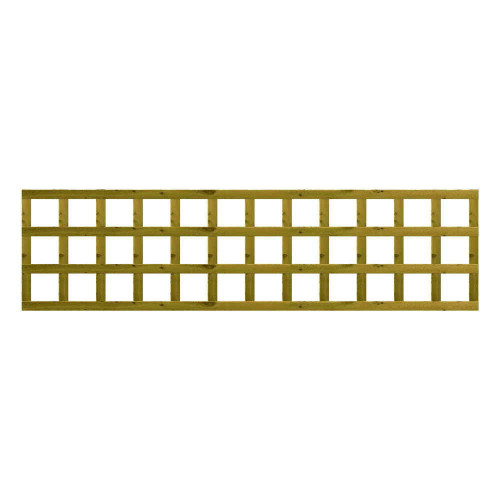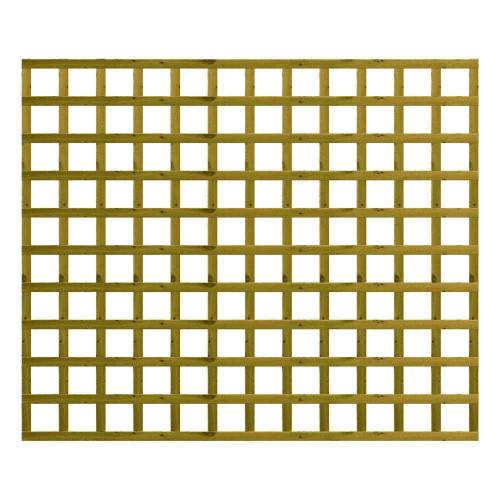



Quick answer: Traditional Trellis is made from real timber, so small changes in shape and square spacing can occur as the wood gains and loses moisture. East Coast Fencing's current Traditional Square Trellis uses pressure-treated 16 x 38mm rough-sawn battens with approximately 100mm openings. More substantial distortion can result from poor storage, forcing a panel into an undersized opening, loose fixings, moving posts or heavy climbing plants. Check the frame and supports before assuming the lattice itself has failed.
Traditional Trellis has a simple repeating pattern.
That simplicity makes movement easy to spot.
If one batten moves, the square beside it may no longer look perfectly square. If the outer frame twists, several rows can appear uneven at once. If a post moves, the complete trellis panel can look distorted even though the panel itself is still sound.
Some variation is a normal characteristic of outdoor timber. Other changes indicate a fixing, support or installation problem that should be dealt with.
The useful first step is working out whether the movement is within the lattice, the frame or the structure supporting the panel.
Does Traditional Trellis Naturally Move?
Yes.
Timber is a natural material that responds to moisture.
As conditions change throughout the year, individual pieces can:
- Shrink slightly
- Swell slightly
- Develop small checks
- Move from their original position
- Change visually as they weather
A trellis installed during a relatively damp period may look slightly different after several weeks of warm dry weather.
The reverse can happen when dry timber takes on more moisture during prolonged wet conditions.
Small movement does not automatically mean the panel is defective or structurally unsound.
Why Does Pressure-Treated Trellis Still Move?
Pressure treatment and dimensional stability are separate things.
The preservative treatment improves the timber's durability for exterior use.
It does not stop the wood reacting to changes in moisture.
Pressure-treated trellis can still:
- Shrink
- Swell
- Weather
- Develop natural surface checks
- Show small variations between individual battens
Pressure treatment should therefore not be interpreted as meaning the finished panel will behave like a rigid plastic grid.
How Is Traditional Square Trellis Made?
East Coast Fencing currently manufactures Traditional Square Trellis in-house using pressure-treated 16 x 38mm rough-sawn trellis batten.
The lattice creates openings of approximately 100mm square.
The relatively open pattern is designed for:
- Climbing plants
- Light garden screening
- Fence toppers
- Garden zoning
- Decorative boundaries
Because the squares repeat across the panel, small alignment differences can be visually obvious even where the timber remains perfectly usable.
What Does Rough-Sawn Timber Mean?
Rough-sawn timber has a deliberately more textured finish than planed joinery.
Normal characteristics can include:
- Visible grain
- Knots
- Saw texture
- Small dimensional variation
- Natural colour variation
These characteristics should not automatically be confused with warping.
A slightly rough edge or variation in surface texture is different from a batten that has moved significantly out of line.
Why Do The Trellis Squares Become Uneven?
There are several possible causes.
| What You See | Possible Cause | What To Check |
|---|---|---|
| One square slightly wider | Normal timber movement | Nearby battens remain secure |
| Several squares distorted locally | Loose lattice joint or moved batten | Local fixings and timber condition |
| Whole grid appears diagonal | Frame out of square | Panel frame and supports |
| Panel drops at one side | Post or fixing movement | Supporting structure |
| Centre bows forwards | Panel stress or inadequate support | Opening width and frame |
| Damage concentrated behind plants | Plant weight or persistent moisture | Growth, ties and timber condition |
Can One Trellis Batten Warp On Its Own?
Yes.
Individual timber pieces do not always move identically.
One batten may respond differently because of:
- Its grain
- Knots
- Moisture exposure
- How it is restrained within the panel
If one piece bows slightly while the remainder of the frame and lattice stay straight, the problem is local rather than structural.
Check whether the batten remains securely attached at its intersections and edges.
How Can You Tell If The Whole Panel Has Warped?
Stand back and look at the outer frame rather than concentrating on individual squares.
Check:
- The top edge: Does it remain straight?
- The side edges: Do they remain parallel?
- The corners: Does the panel still look square?
- The lattice: Are several rows distorted in the same direction?
- The posts: Are the supports still upright?
If the complete frame has twisted, the internal lattice will normally follow it.
If the frame remains straight while only one or two squares change shape, inspect those local battens first.
Could The Posts Make A Straight Trellis Look Warped?
Yes.
This is one of the most important checks.
A perfectly usable trellis panel can appear distorted if one supporting Wooden Fence Post:
- Leans
- Twists
- Moves in the ground
- Begins to fail around ground level
If the tops of two posts move relative to one another, the rectangular opening between them changes shape.
A trellis fixed into that opening may then be pulled out of square.
Repair the structural support rather than attempting to straighten every individual lattice square.
Can Concrete Fence Posts Cause The Same Problem?
Yes.
Concrete posts do not suffer from timber twisting, but they can still lean or move if their foundations or surrounding ground move.
If Traditional Trellis has been incorporated into a suitable concrete-post arrangement or supporting frame, check that both sides remain:
- Upright
- Parallel
- Stable
Do not force timber trellis to compensate for concrete posts that are no longer correctly aligned.
Can Forcing Trellis Into A Narrow Opening Make It Bow?
Yes.
A framed trellis panel should not need significant force to fit between its supports.
If the available opening is narrower than the actual panel, compressing the trellis can place stress through:
- The outer frame
- Lattice intersections
- Fixings
The panel may bow forwards or backwards as it tries to relieve that compression.
Measure the actual opening before installation rather than relying only on a nominal 1.83m panel width.
Can Timber Trellis Be Cut If The Opening Is Too Small?
It can be adapted where necessary, but it needs to remain properly framed.
Do not simply saw through the outer frame and several lattice battens and install the loose cut edge.
A shortened panel normally needs a suitable new supported edge so the lattice ends remain controlled.
The better solution in a new fence is to set the posts correctly from the start.
Cutting is most useful for genuine non-standard end bays or existing openings that cannot reasonably be altered.
Can Poor Storage Warp Traditional Trellis?
Yes.
A framed trellis panel should be supported sensibly before installation.
Problems can develop if it is:
- Left hanging over an unsupported edge
- Stored at an awkward angle
- Allowed to bend under other materials
- Left repeatedly sitting in standing water
The risk becomes more noticeable with larger panels because the complete frame spans a greater distance.
How Should Traditional Trellis Be Stored?
Keep it evenly supported and clear of persistent wet ground.
If stored flat, avoid supporting only the extreme ends while leaving the centre to sag.
If stored upright, restrain the panels securely so they do not bend or fall.
Do not place uneven heavy loads over the lattice.
Good storage is particularly worthwhile if the panels will remain on site for some time before installation.
Does Panel Size Affect The Risk Of Visible Movement?
Larger panels require more careful support.
Current Traditional Square Trellis is available in approximately 1.83m widths and multiple heights, including:
- 300mm
- 450mm
- 600mm
- 900mm
- 1.2m
- 1.5m
- 1.83m
A 300mm fence topper and a full 1.83m x 1.83m panel are very different structures.
The full-height panel contains much more lattice and needs proper support around its frame.
It also becomes capable of carrying considerably more plant growth.
Can Heavy Climbing Plants Distort Traditional Trellis?
They can contribute.
Traditional Trellis is designed as a useful climbing framework, but the eventual plant can weigh much more than it did when first planted.
Heavy growth can add:
- Stems
- Branches
- Leaves
- Rainwater held on foliage
- Additional wind resistance
If most of that weight is concentrated on one section, the loading becomes uneven.
A large plant should ultimately be supported by a suitable complete structure, including sound posts and fixings.
Can Climbing Roses Pull Trellis Out Of Shape?
Potentially.
Mature climbing roses can develop substantial woody stems.
They normally require tying and training rather than being allowed to hang freely from light lattice components.
Spread the plant across the available support and keep vigorous growth managed.
If the rose becomes extremely substantial, consider whether additional plant support is appropriate rather than transferring everything through the trellis battens.
Can Dense Climbers Hide Trellis Damage?
Yes.
A fully planted screen can make it difficult to inspect:
- Lattice intersections
- Frame fixings
- Panel edges
- Fence Posts
Damage may not become obvious until a section begins moving.
Periodic pruning and inspection help identify small problems before the panel is completely buried behind vegetation.
Can Wet Planting Encourage Timber Problems?
Dense vegetation can keep trellis shaded and slow down drying after rain.
This can also encourage surface algae.
Allow some airflow around the screen where practical and remove accumulated dead vegetation.
Pressure treatment improves timber durability, but good installation and sensible surrounding conditions still matter.
Can Soil Against The Trellis Cause Problems?
Ordinary trellis should not be used as a retaining structure.
Keep raised-bed soil, compost and mulch contained rather than banking them directly against the lattice.
Soil can:
- Keep the lower timber persistently damp
- Hide damage
- Apply pressure to the panel
- Make maintenance difficult
A raised bed should support its own soil independently.
Can A Trellis Fence Topper Become Uneven?
Yes.
Low Traditional Trellis panels are often used above existing Fence Panels.
If one section begins to slope, check the supporting structure underneath it.
Possible causes include:
- The existing Fence Post moving
- The topper support coming loose
- The main Fence Panel shifting
- One trellis fixing failing
Do not assume the lightweight appearance of a 300mm or 450mm trellis means it can be supported only by the thin upper edge of the Fence Panel.
Where practical, transfer support back to sound posts or suitable framing.
Can Wind Twist Traditional Trellis?
Wind can contribute to movement where the supporting structure is inadequate.
A bare approximately 100mm lattice is much more open than solid fencing, so air can pass through it relatively freely.
That does not make it unaffected by wind.
A large framed panel still has:
- An outer frame
- Horizontal battens
- Vertical battens
Once climbing plants fill the squares, considerably less air may pass through the screen.
The posts should therefore be suitable for the eventual planted structure.
Can Loose Lattice Battens Be Repaired?
Often, if the timber remains sound.
First determine why the batten has become loose.
Check for:
- A failed fixing
- Split timber
- Movement at an intersection
- Frame distortion
If the batten itself remains in good condition, a suitable exterior timber repair may be practical.
If the surrounding wood has split badly or deteriorated, simply adding another fixing beside the damaged point may not provide a durable repair.
Should You Add Extra Screws To Every Trellis Intersection?
No.
Adding large numbers of extra fixings is not automatically an improvement.
Too many unnecessary fixings can:
- Split relatively small battens
- Create additional holes
- Restrict timber movement
- Make the panel look untidy
Repair actual loose components rather than treating every natural variation as something that needs mechanically locking into place.
Can You Straighten A Warped Trellis Panel With Screws?
Minor movement may sometimes be corrected when a failed frame fixing is repaired.
A severely twisted panel should not simply be dragged flat with increasingly heavy screws.
If significant force is needed, check:
- Whether the panel itself is distorted
- Whether the posts are out of alignment
- Whether the opening is too small
Using fixings to force incompatible components together can transfer the problem somewhere else in the frame.
How Can You Tell If The Problem Is The Trellis Or The Installation?
If practical, remove the panel and inspect it independently.
A panel that sits reasonably square once removed suggests the support arrangement deserves attention.
Check whether:
- The posts are parallel
- The opening is rectangular
- The post spacing changes from top to bottom
- The trellis was installed under compression
If the removed panel remains noticeably twisted on a suitable flat reference, the distortion is within the panel itself.
When Can Traditional Trellis Be Repaired?
Repair is often practical where:
- One or two battens are loose
- A small number of lattice intersections have failed
- A frame fixing has come loose
- The panel has shifted on otherwise sound posts
- Damage is isolated and the surrounding timber remains solid
A small local fault does not automatically justify replacing a complete approximately 1.83m-wide panel.
When Should Traditional Trellis Be Replaced?
Replacement becomes more sensible where:
- The complete frame is badly twisted
- Several frame joints have failed
- Multiple lattice battens are broken
- Rot or significant deterioration affects several areas
- The panel can no longer be fixed securely
- Repair would involve rebuilding most of the lattice
Before ordering a replacement, check the supporting posts.
A new panel will not remain straight if it is immediately installed between supports that caused the old one to distort.
Should You Replace The Trellis If The Squares Are Not Perfectly Even?
No.
Approximate 100mm openings should not be interpreted as a precision-engineered grid where every aperture remains mathematically identical throughout the life of the panel.
This is rough-sawn natural timber.
Minor variation can be expected.
Replacement is more appropriate where unevenness reflects actual:
- Broken timber
- Loose joints
- Major frame distortion
- Structural deterioration
rather than cosmetic variation alone.
Does Brown Or Green Treatment Affect Warping?
Do not choose between brown and green or natural treatment based on an assumption that one colour prevents timber movement.
The colour primarily changes the initial appearance.
Both remain natural pressure-treated timber and can respond to changing moisture conditions.
Expect treatment colour to weather over time as well.
Can Painting Traditional Trellis Stop It Warping?
No coating can guarantee that natural timber will never move.
A suitable exterior decorative finish may be used where appropriate, but it should not be treated as a structural repair.
If the frame is loose or distorted, fix that issue first.
Painting a twisted panel simply gives you a painted twisted panel.
How Can You Reduce Trellis Movement Problems?
- Store panels properly: Keep the frames evenly supported before installation.
- Measure the actual panel: Do not set posts solely from a nominal width.
- Keep posts plumb: A square trellis needs a reasonably square opening.
- Do not force the panel: Avoid compressing it into an undersized bay.
- Support the frame: Use suitable structural supports rather than relying on individual lattice battens.
- Keep timber out of unnecessary wet soil: Allow the lower section to dry where practical.
- Manage climbing plants: Avoid allowing excessive weight to accumulate on one area.
- Inspect fixings: Deal with loose edges before movement becomes more severe.
Common Mistakes When Dealing With Warped Trellis
- Assuming every uneven square is a product failure
- Expecting pressure-treated timber never to move
- Confusing rough-sawn texture with warping
- Adding numerous screws without finding the cause
- Ignoring leaning Wooden Fence Posts
- Forcing a 1.83m panel into a narrower opening
- Storing large panels with inadequate support
- Allowing heavy climbers to overload one area
- Banking soil against the lattice
- Replacing trellis without checking the posts first
- Trying to straighten major frame distortion using fixing force alone
- Expecting approximately 100mm openings to remain precisely identical in natural outdoor timber
FAQs
Is It Normal For Traditional Trellis To Warp Slightly?
Small timber movement can occur as moisture conditions change. More substantial distortion, loose joints or a complete frame moving out of square should be investigated.
Why Are The Squares In My Trellis Uneven?
Minor variation can result from natural timber movement. More noticeable changes may be caused by loose lattice battens, frame distortion, poor installation or movement in the supporting posts.
Does Pressure Treatment Stop Trellis Warping?
No. Pressure treatment improves durability for exterior use but does not prevent natural timber from shrinking, swelling or moving.
What Size Timber Is Traditional Trellis Made From?
Current East Coast Fencing Traditional Square Trellis is manufactured in-house from pressure-treated 16 x 38mm rough-sawn trellis batten.
How Large Are Traditional Trellis Openings?
The current square pattern uses approximately 100mm openings. These are nominal practical openings in a natural timber product rather than precision-machined apertures.
Can A Loose Trellis Batten Be Repaired?
Often, provided the batten and surrounding timber remain sound. Check the failed joint or fixing first rather than simply adding multiple new fixings.
Can Climbing Plants Warp Traditional Trellis?
Heavy mature growth can contribute to distortion by adding weight and wind resistance, particularly where the growth is concentrated on one section.
When Should I Replace Warped Trellis?
Replacement is more sensible where the frame is badly twisted, several structural joints or battens have failed, significant deterioration is present or the panel can no longer be supported securely.
Check The Support Structure Before Replacing The Panel
Traditional Trellis is made from real pressure-treated timber, so minor variation should be expected as it spends years outdoors.
A slightly changed square or one batten that has moved a little is very different from a complete frame that has twisted or several joints that have failed.
Start by checking the panel as a whole.
Look at the outer frame, then the individual lattice battens. Check the posts with a level and make sure the trellis has not been compressed into an opening that is too narrow.
Also consider what has changed around it. Mature climbing plants, persistent damp conditions, loose fixings and ground movement can all alter a screen that was straight when first installed.
Current Traditional Square Trellis uses pressure-treated 16 x 38mm rough-sawn timber and approximately 100mm openings. That construction is deliberately practical and open rather than precision interior joinery.
Repair isolated loose components where the surrounding timber remains sound. Replace the panel where distortion or deterioration affects most of the structure.
Most importantly, do not install a new trellis into the same misaligned or unstable supports and expect a different result.