


Quick answer: Wooden gravel boards can rot when they remain damp for long periods, particularly where soil, wet leaves, grass, mulch or standing water stays against the timber. Pressure treatment improves resistance to fungal decay but does not make wood waterproof or immune to deterioration. Keep timber gravel boards clear of unnecessary soil build-up, maintain drainage and replace boards that have become soft, badly split or structurally unsound.
Wooden gravel boards deliberately sit at the part of a fence most exposed to damp conditions.
That is part of their job.
By placing a separate timber board below the main fence panel, the gravel board takes much of the soil contact, rain splash, vegetation and everyday garden wear that would otherwise affect the more expensive fencing above.
The downside is that this lower position makes wooden gravel boards particularly vulnerable if moisture is allowed to remain around them continuously.
Understanding why a board has deteriorated helps you decide whether it simply needs replacing or whether something around the fence should also be changed.
Why Do Wooden Gravel Boards Rot?
Timber decay requires suitable conditions, with prolonged moisture being one of the most important factors around garden fencing.
A wooden gravel board is more likely to deteriorate when it remains wet for extended periods rather than being allowed to dry between periods of rain.
Common causes include:
- Soil piled against the timber
- Wet leaves collecting along the fence
- Dense grass growing against the board
- Mulch or compost covering the lower edge
- Poor drainage along the boundary
- Standing water after heavy rain
- Raised beds placed directly against the fence
- Vegetation preventing airflow
- Freshly cut timber ends being left untreated
Pressure treatment helps protect timber, but good installation and moisture management still matter.
Does Pressure Treatment Stop A Wooden Gravel Board Rotting?
No timber treatment should be treated as permission to leave a gravel board permanently buried in wet soil.
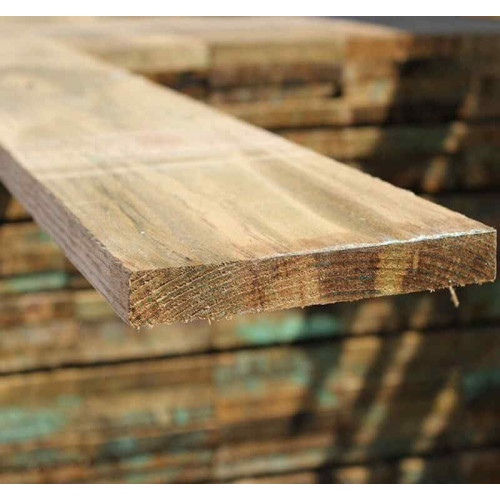
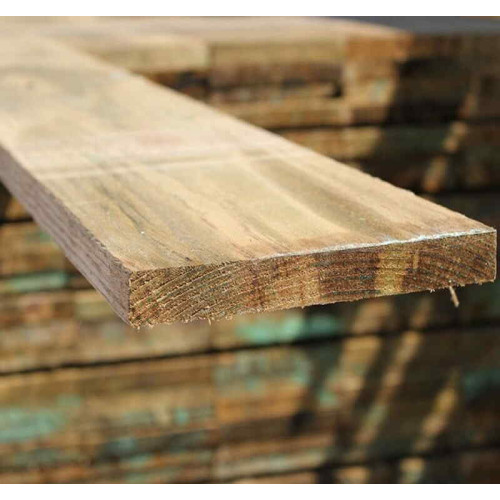
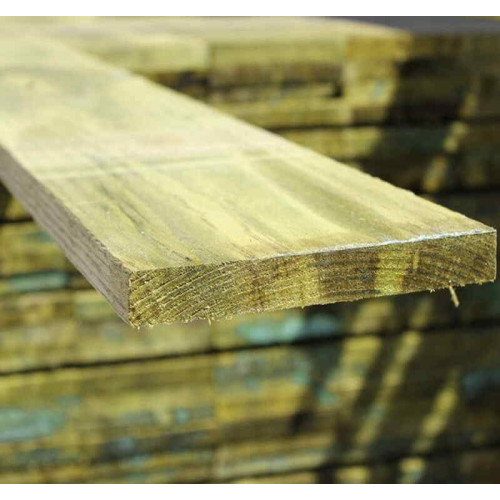
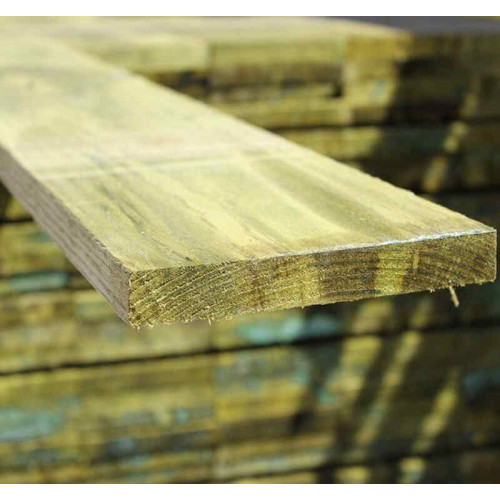
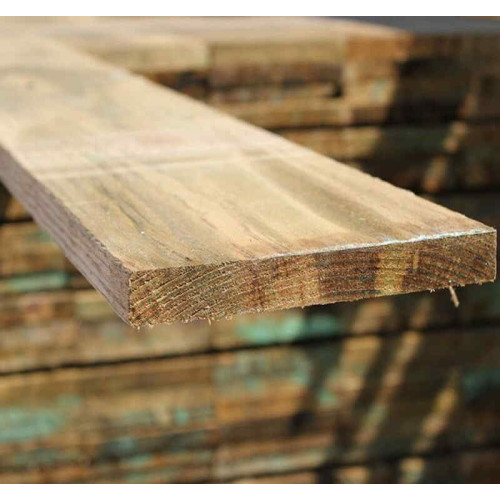
The current East Coast Fencing wooden gravel board range is pressure treated for exterior use. Pressure treatment helps improve resistance to rot and fungal decay.
It does not make timber:
- Waterproof
- Maintenance free
- Immune to prolonged moisture
- A substitute for a retaining wall
The treatment works alongside sensible installation rather than replacing it.
Keeping unnecessary wet material away from the timber is still worthwhile.
Why Is The Bottom Of The Fence So Vulnerable?
The lowest part of a fence experiences different conditions from the timber higher up.
It is exposed to:
- Rain bouncing from the ground
- Damp soil
- Long wet grass
- Fallen leaves
- Mud
- Garden irrigation
- Lawn maintenance
A fence panel installed directly against these conditions puts its bottom frame and boards in the wettest part of the boundary.
A gravel board creates a replaceable lower section instead.
If that board eventually needs replacing, the main fence panel may still be perfectly serviceable.
What Size Are Wooden Gravel Boards?
The current East Coast Fencing wooden gravel board range uses boards approximately 150mm high and 22mm thick.
Available lengths include:
- 1.83m
- 2.4m
- 3.0m
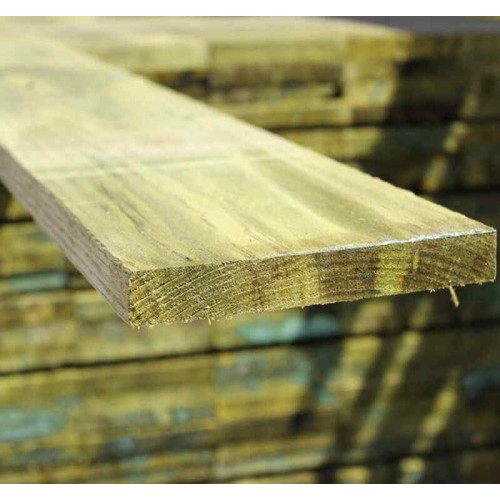
Pressure-treated brown and green or natural finishes are available across suitable products.
The different lengths serve different types of fencing.
| Board Length | Typical Use | Main Consideration |
|---|---|---|
| 1.83m | Standard panel-width bays | Measure existing post spacing |
| 2.4m | Custom and site-built fencing | Can be cut to suit the bay |
| 3.0m | Longer custom fence sections | Needs support while setting out and fixing |
Do not assume an old fence bay is exactly 1.83m simply because it originally held a nominal 6ft panel.
Posts can move over time.
Should A Wooden Gravel Board Touch The Ground?
A wooden gravel board is specifically intended for use at the bottom of a fence, so some proximity to the ground is unavoidable.
That does not mean it should be unnecessarily buried.
Where practical, avoid covering the face of the board with:
- Soil
- Compost
- Mulch
- Grass cuttings
- Wet leaves
The important distinction is between a board forming the bottom edge of the fence and a board being permanently enclosed by damp material.
The latter creates much poorer drying conditions.
Should You Bury Wooden Gravel Boards?
Unnecessary burial should generally be avoided.
Burying a large proportion of the board can keep both faces damp for long periods.
It also makes inspection more difficult.
If the ground slopes, it may be better to plan stepped sections rather than burying progressively more of each board simply to follow the soil line.
The best arrangement depends on the actual garden levels, but a gravel board should not be treated as a convenient piece of timber to bury until all gaps disappear.
Can Soil Against A Wooden Gravel Board Cause Rot?
Persistent soil contact increases moisture exposure.
This is especially relevant where the soil:
- Drains slowly
- Contains a lot of clay
- Is regularly irrigated
- Is shaded for much of the day
- Has dense planting immediately beside the fence
The front of a gravel board may look dry while the hidden face remains wet against soil.
When inspecting an older board, check more than the visible surface where access allows.
Can You Use A Wooden Gravel Board As A Retaining Wall?
A standard wooden gravel board should not automatically be treated as a retaining wall.
There is a major difference between holding back a small amount of loose surface material and retaining a substantial raised bed or change in garden level.
Wet soil creates sideways pressure.
That can cause a timber gravel board to:
- Bow
- Pull away from its fixings
- Split
- Push against the fence posts
- Remain continuously damp
If a boundary needs to retain a meaningful difference in ground level, the retaining structure should be considered separately from the fence.
Do Raised Beds Cause Wooden Gravel Boards To Rot?
They can contribute if the raised bed is built directly against the fence and wet soil is allowed to remain against the timber.
A common mistake is using the existing fence as one side of a raised bed.
The fence was not necessarily designed for:
- Permanent soil contact
- Water held within the bed
- Sideways soil pressure
- Additional structural load
Where possible, build the raised bed as an independent structure and leave suitable space for the fence to dry and be maintained.
Can Wet Leaves Damage Wooden Gravel Boards?
Wet leaves are easy to overlook because they seem harmless.
A deep layer of autumn leaves can remain damp for a long time, particularly on shaded boundaries.
They can hold moisture against the gravel board even after the surrounding garden surface has dried.
Regularly clear:
- Leaves
- Grass clippings
- Pruned vegetation
- Compost
- Loose mulch
from the base of timber fencing.
Does Long Grass Affect Wooden Gravel Boards?
It can.
Long grass holds moisture and reduces airflow around the bottom of the fence.
It can also hide early deterioration.
Keeping a narrow strip beside the fence reasonably clear makes inspection easier and helps the timber dry after rain.
Take care when using a strimmer around a wooden gravel board. Repeated physical damage can remove timber from the surface and create grooves along the board.
Can A Strimmer Damage A Wooden Gravel Board?
Yes.
One purpose of a gravel board is to take everyday wear that might otherwise reach the panel above, but repeated strimmer contact can still damage timber.
You may see:
- Grooves
- Frayed wood fibres
- Chipped edges
- Localised loss of surface timber
A damaged surface does not automatically mean the complete board needs replacing.
However, deep or repeated damage can reduce the remaining timber section and make moisture management more difficult.
How Can You Tell If A Wooden Gravel Board Is Rotten?
Colour alone is not enough.
Outdoor timber naturally weathers and can develop algae, dirt and staining without being structurally rotten.
More useful warning signs include:
- Soft timber
- Wood crumbling under light pressure
- Large sections breaking away
- Fixings no longer holding securely
- The board bowing or collapsing
- Severe deterioration around the ends
- A board that can no longer support the fence arrangement properly
Green surface growth is different from structural decay.
A dirty board may simply need cleaning.
A soft board needs more serious attention.
Why Do The Ends Of Wooden Gravel Boards Rot First?
The ends can be vulnerable because they contain exposed end grain and often sit close to posts where water, leaves and debris collect.
Cut ends deserve particular attention.
Current East Coast Fencing timber gravel boards can be cut to suit non-standard bays, but any newly exposed end should be treated before installation.
Cutting a pressure-treated board reveals timber that was previously inside the section.
Do not simply cut the board and immediately place that fresh end into a damp location.
Can You Cut A Wooden Gravel Board?
Yes.
This is one of the main advantages of timber over concrete gravel boards.
A 2.4m or 3.0m wooden gravel board can be shortened for:
- Non-standard fence bays
- Traditional closeboard fencing
- Repairs
- Stepped boundaries
- Custom post spacing
Measure the actual opening before cutting.
Then treat newly exposed timber at the cut end with a suitable product for the treated timber specification.
Can You Paint A Wooden Gravel Board?
Yes, once the timber is sufficiently dry and the chosen exterior coating is suitable.
Painting or staining may change the appearance and provide a surface finish, but it should not be treated as a cure for poor drainage or permanent wet soil contact.
Before coating:
- Remove dirt and algae
- Allow the board to dry
- Check for rot
- Repair or replace failed timber first
- Follow the coating manufacturer's preparation instructions
There is little value painting over timber that is already structurally deteriorating.
Can You Pressure Wash Wooden Gravel Boards?
They can be cleaned, but aggressive pressure washing is unnecessary and can damage softwood.
Wooden gravel boards are already exposed to substantial moisture at ground level.
For ordinary dirt and algae, start with gentle brushing and appropriate timber-safe cleaning.
If using a pressure washer, avoid concentrated jets that can:
- Raise the grain
- Cut grooves into the timber
- Drive water into splits
- Damage weathered sections
Cleaning rotten timber does not restore its strength.
Can A Wooden Gravel Board Be Repaired?
Minor local damage may not justify replacement.
For example, a superficial chip or isolated fixing issue can sometimes be dealt with while the main board remains sound.
Replacement is generally more sensible where:
- Rot affects a significant part of the board
- The board has broken
- It has bowed substantially
- Fixings no longer hold
- The timber has become soft along much of its length
- The fence panel above is no longer correctly supported
A gravel board is intended to be a separate replaceable component.
There is little reason to preserve a badly rotten board if the rest of the fence can remain in place.
Can You Replace A Wooden Gravel Board Without Replacing The Fence?
Usually, yes, if the surrounding posts and fence panel remain sound.
The exact method depends on how the fence has been constructed.
A separately fixed wooden gravel board beneath a panel may be removable without dismantling the entire bay, provided the panel remains properly supported.
Before removing anything, check:
- How the fence panel is fixed
- Whether the panel rests on the gravel board
- Where the gravel board is fixed to the posts
- Whether the posts remain secure
Never remove a lower structural component and assume the timber above will remain safely in position.
Should You Replace A Rotten Wooden Gravel Board With Another Wooden One?
Often, particularly where the fence uses wooden posts and an all-timber appearance is wanted.
Before fitting the replacement, work out why the old board failed.
If the cause was simply age and ordinary outdoor exposure, a pressure-treated replacement may be appropriate.
If the old board was permanently buried in waterlogged soil, replacing it without changing those conditions may produce the same problem again.
Consider:
- Improving drainage
- Reducing soil build-up
- Moving raised beds away from the fence
- Clearing vegetation
- Using concrete where ground-level moisture is persistently severe
Should You Replace Wooden Gravel Boards With Concrete?
Concrete can be worth considering where ground-level moisture repeatedly causes timber deterioration.
Concrete does not rot.
It is, however, much heavier and less adaptable than timber.
| Consideration | Wooden Gravel Board | Concrete Gravel Board |
|---|---|---|
| Rot | Can deteriorate if persistently damp | Does not rot |
| Cutting | Straightforward with suitable tools | Should not normally be cut |
| Handling | Relatively easy | Much heavier |
| Appearance | All-timber finish | Visible concrete base |
| Custom Bays | Easy to shorten | Accurate post spacing required |
| Common Post System | Wooden posts | Slotted concrete posts |
Do not assume a concrete board can simply replace timber in every existing fence.
The posts, supports, dimensions and weight all need to be compatible.
Can Wooden Gravel Boards Be Used With Concrete Posts?
They can where their dimensions suit the post slots.
A current 1.83m East Coast Fencing wooden gravel board is approximately 150mm high and 22mm thick.
Existing concrete posts should still be measured.
Check:
- Clear distance between posts
- Slot width
- Board thickness
- Required gravel-board height
- Fence panel position above
Older posts may have moved, so actual measurements are more useful than nominal dimensions.
How Do You Help Wooden Gravel Boards Last Longer?
The most useful measures are generally simple.
- Use pressure-treated timber intended for exterior fencing.
- Do not bury the board unnecessarily.
- Keep wet leaves away from the base.
- Prevent mulch and compost building up against the timber.
- Keep dense grass and vegetation under control.
- Improve drainage where water regularly collects.
- Do not use the fence as the back of a raised bed.
- Avoid repeated strimmer and mower impact.
- Treat newly cut ends before installation.
- Inspect the hidden face where practical.
The aim is not to keep outdoor timber completely dry.
That is unrealistic.
The aim is to prevent conditions that keep it continuously wet.
How Often Should Wooden Gravel Boards Be Checked?
There is no need for a complicated maintenance schedule.
A sensible inspection once or twice through the year, particularly after winter, can reveal problems early.
Look for:
- Soil build-up
- Wet leaves
- Algae
- Physical damage
- Soft timber
- Loose fixings
- Bowing
- Movement in the posts
Also inspect after landscaping work that changes the soil level beside the fence.
What If Several Wooden Gravel Boards Are Rotting?
If one old board has deteriorated, an isolated replacement may be all that is required.
If several boards are failing along the same section, look for a common cause.
For example:
- The complete boundary may drain poorly
- A raised bed may run along the fence
- Soil may have been built up against every board
- The fence may remain permanently shaded
- Vegetation may prevent drying
Repeated deterioration along an entire fence run is useful evidence that the surrounding conditions need attention.
Common Wooden Gravel Board Mistakes
- Burying most of the board unnecessarily
- Piling soil against the fence after landscaping
- Using the gravel board as a retaining wall
- Building a raised bed directly against it
- Leaving wet leaves against the timber all winter
- Allowing vegetation to hide the board completely
- Ignoring damaged or exposed cut ends
- Using indoor or untreated timber as a replacement
- Repeatedly striking the board with a strimmer
- Painting over rotten timber instead of replacing it
- Replacing a failed board without investigating persistent damp
FAQs
Do Wooden Gravel Boards Rot?
They can. Pressure treatment improves durability, but wooden gravel boards remain timber and can deteriorate if they stay persistently damp.
Should Wooden Gravel Boards Be Pressure Treated?
Pressure-treated timber is the appropriate choice because gravel boards sit close to damp soil, wet grass and rain splash.
Can Wooden Gravel Boards Touch Soil?
They are designed for use at ground level, but unnecessary burial and prolonged wet soil contact should be avoided where practical.
Can You Bury A Wooden Gravel Board?
Partial contact may be unavoidable on some boundaries, but burying large sections unnecessarily can keep timber damp and make inspection difficult.
Can You Cut A Wooden Gravel Board?
Yes. Timber boards can be cut to suit non-standard fence bays. Treat newly exposed cut ends before installation.
Can A Rotten Gravel Board Be Replaced Without Replacing The Fence?
Usually, provided the surrounding panel and posts remain structurally sound. The exact method depends on how the gravel board and panel are fixed.
Are Concrete Gravel Boards Better In Wet Ground?
Concrete has the advantage that it does not rot, making it worth considering where ground-level moisture repeatedly damages timber. Compatibility with the existing fence system still needs checking.
Does Green Algae Mean A Wooden Gravel Board Is Rotten?
No. Algae is usually surface growth associated with damp conditions. Check the timber itself for softness, crumbling or structural deterioration before deciding it is rotten.
Keep The Replaceable Part Of The Fence Replaceable
A wooden gravel board protects the more substantial fencing above by taking the punishment at ground level.
That makes it a useful part of an all-timber fence, especially where easy cutting, lighter handling and a consistent timber appearance matter.
Pressure treatment improves durability, but installation conditions still matter. Avoid unnecessary burial, clear wet leaves and soil from the timber, manage vegetation and deal with persistent drainage problems.
If a gravel board eventually becomes soft or structurally unsound, replace the board rather than allowing deterioration to spread into the fencing above.
And if several replacements keep failing in the same damp location, look beyond the timber itself. Changing the drainage, soil contact or gravel-board material may be more useful than repeatedly fitting another board into the same conditions.